
A Global Regional and South African Macro Perspective
A Global, Regional and South African Macro Perspective July 2016 A summary presentation A Global, Regional and South African Macro Perspective July 2016
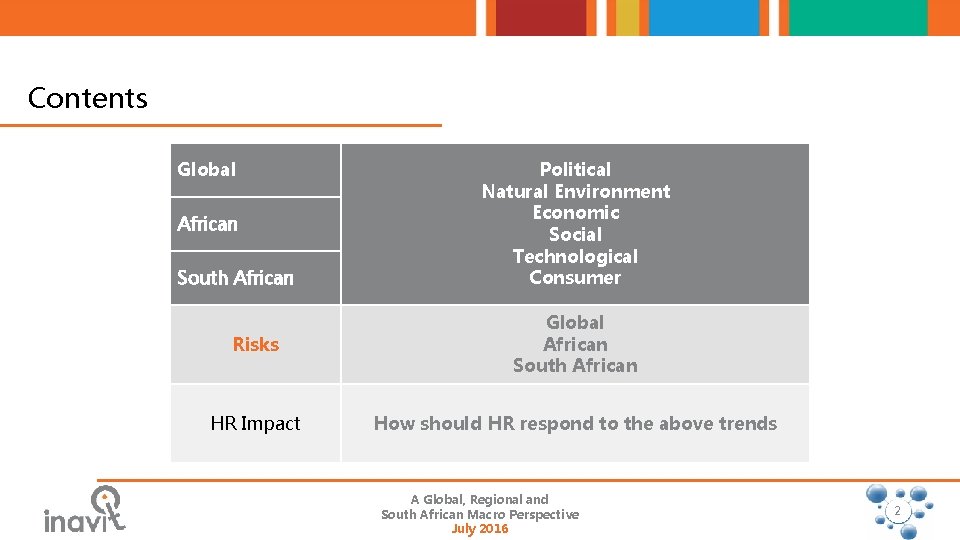
Contents Global African South African Political Natural Environment Economic Social Technological Consumer Risks Global African South African HR Impact How should HR respond to the above trends A Global, Regional and South African Macro Perspective July 2016 2

Global Trends The 2016 Davos agenda has reflected the world’s focus on managing successive waves of economic crisis: • stabilising the financial system; • countering concerns of regional disintegration; and • increasing urgency about unemployment, unfulfilled social contracts and inequality for the global economy. A Global, Regional and South African Macro Perspective July 2016 3
Section 1: Political/Regulatory Continued global violent extremism Geopolitical realignment Cyber insecurity Changing nature of power relationships Fragmentation of the Internet A Global, Regional and South African Macro Perspective July 2016 4
Section 2: Natural Environment Accelerating global climate change Extreme weather events Threats to food security Global warming A Global, Regional and South African Macro Perspective July 2016 5
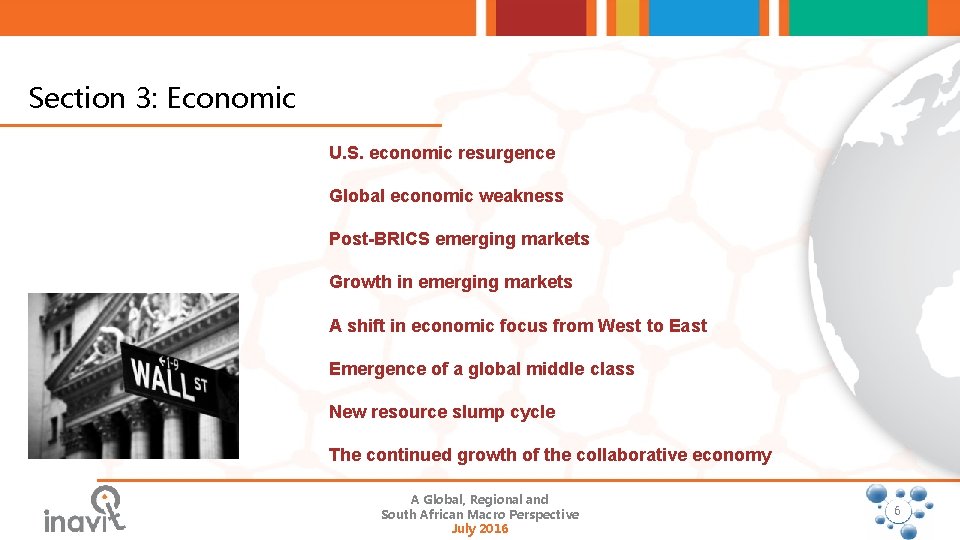
Section 3: Economic U. S. economic resurgence Global economic weakness Post-BRICS emerging markets Growth in emerging markets A shift in economic focus from West to East Emergence of a global middle class New resource slump cycle The continued growth of the collaborative economy A Global, Regional and South African Macro Perspective July 2016 6
Section 4: Social Depopulation and Migration Increasing income disparity The rise of the (dis)empowered citizen Increasing levels of unemployment, underemployment and vulnerable employment Values will drive new generations A Global, Regional and South African Macro Perspective July 2016 7
Section 5: Technology Virtual becomes real Rise of the machines Evolving artificial intelligence (AI): Rising cybercrime Government for the people A Global, Regional and South African Macro Perspective July 2016 8

Regional Risks A Global, Regional and South African Macro Perspective July 2016

African Trends According to the World Economic Forum (2015 a) seven of the 10 fastest- growing economies in the world are in Africa and the continent is increasingly moving more into the global limelight as a promising investment destination – despite perceived risks of investing in turbulent times. A Global, Regional and South African Macro Perspective July 2016 10
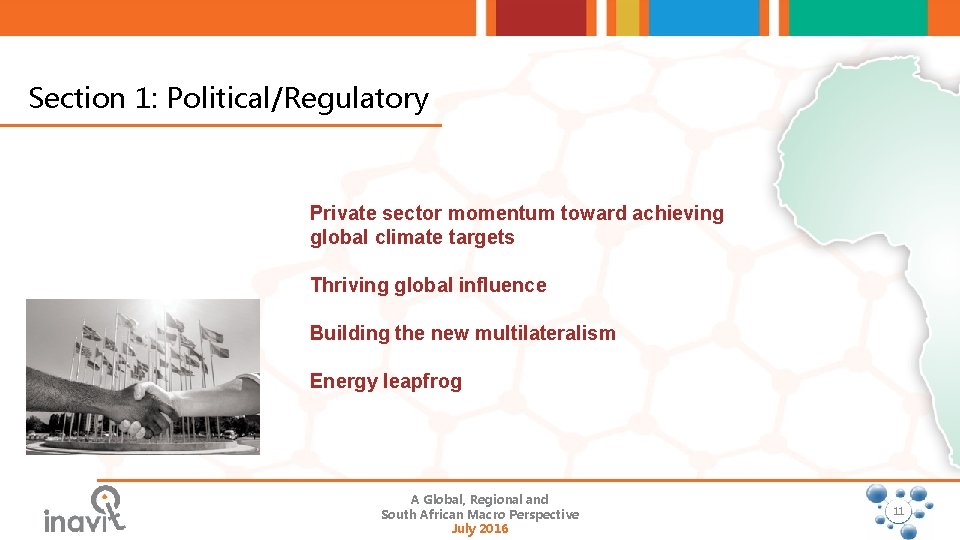
Section 1: Political/Regulatory Private sector momentum toward achieving global climate targets Thriving global influence Building the new multilateralism Energy leapfrog A Global, Regional and South African Macro Perspective July 2016 11
Section 2: Natural Environment Resources stress and inclusive prosperity A Global, Regional and South African Macro Perspective July 2016 12
Section 3: Economic Falling commodity prices drive diversification Africa’s green and blue revolutions Financing forward Economic interconnectedness Public debt A Global, Regional and South African Macro Perspective July 2016 13
Section 4: Social Demographics Managing migration Rise of the individual Urbanisation A Global, Regional and South African Macro Perspective July 2016 14
Section 5: Technology Fourth Industrial Revolution Enabling technology A Global, Regional and South African Macro Perspective July 2016 15
South African Trends Due to the impact of globalisation, South Africa is to a very large extent subjected to the global macro environment. It is for this reason that it is important to take cognisance of the macro trends manifesting within the South African context. A Global, Regional and South African Macro Perspective July 2016 16
Section 1: Political/Regulatory Political instability Chronic corruption Increasing crime Good governance A Global, Regional and South African Macro Perspective July 2016 17
Section 2: Natural Environment Protection of rich biodiversity A Global, Regional and South African Macro Perspective July 2016 18
Section 3: Economic The SARB, the ZAR and the shuffle Negative industrial action Unemployment and graduate surplus Insufficient critical infrastructure A Global, Regional and South African Macro Perspective July 2016 19
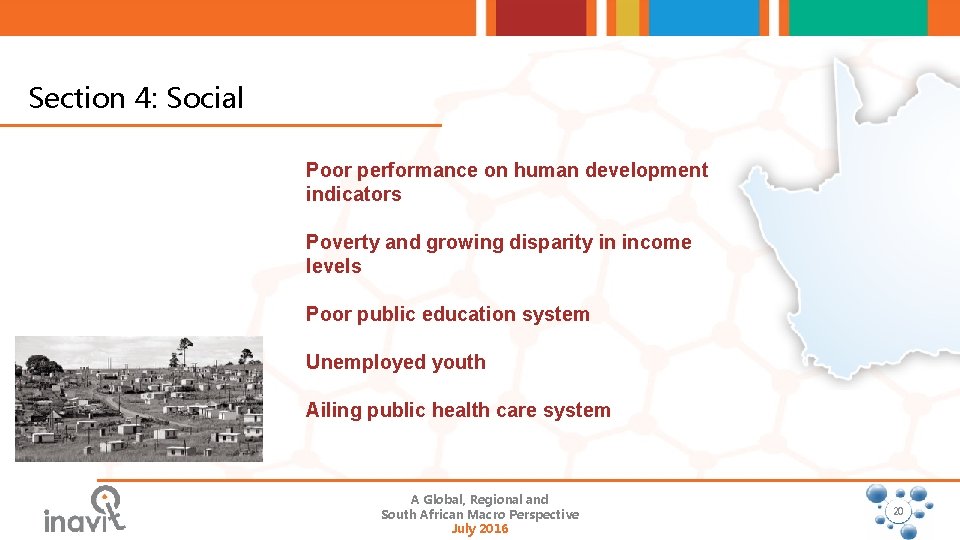
Section 4: Social Poor performance on human development indicators Poverty and growing disparity in income levels Poor public education system Unemployed youth Ailing public health care system A Global, Regional and South African Macro Perspective July 2016 20
Section 5: Technology Structure and Policies Research and Development Digital transformation and regional integration Information democratisation Digital piracy A Global, Regional and South African Macro Perspective July 2016 21
Risks South African Global African • Climate change • Weapons of mass destruction • Water crisis • Large scale involuntarily migration • Severe energy price shock • Dwindling confidence in the • Unemployment ruling party • Energy prices • Volatile economic • Political deadlock • Failure of national governance environment • Poor public education system • Unemployed youth A Global, Regional and South African Macro Perspective July 2016 22
Consumer Trends According to Marsland (2016) being cognisant of the trends dominating consumer culture and industry in the next five to 10 years is the key to strategic planning and being prepared for challenges such as the current economic slowdown globally, particularly in the developing world. A Global, Regional and South African Macro Perspective July 2016 23
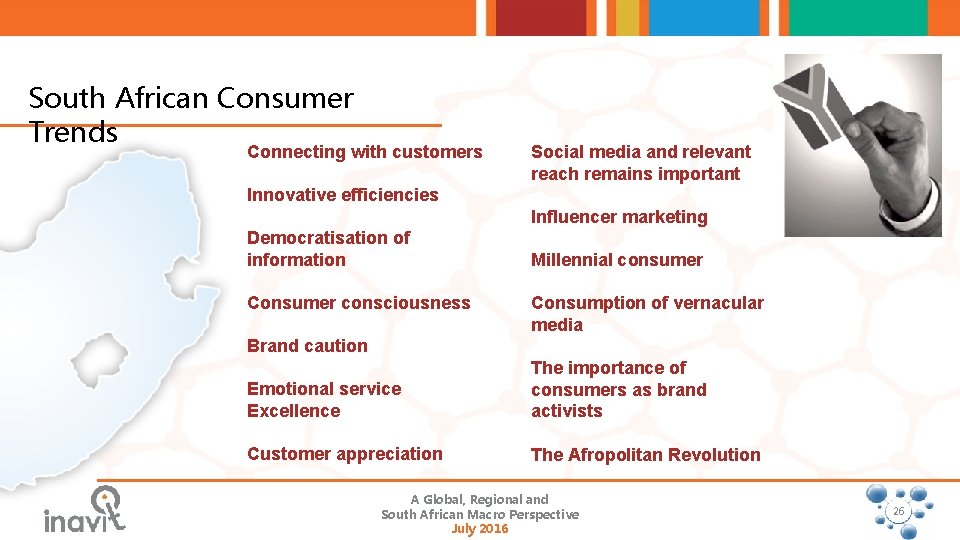
South African Consumer Trends Connecting with customers Social media and relevant reach remains important Innovative efficiencies Influencer marketing Democratisation of information Consumer consciousness Millennial consumer Consumption of vernacular media Brand caution Emotional service Excellence The importance of consumers as brand activists Customer appreciation The Afropolitan Revolution A Global, Regional and South African Macro Perspective July 2016 26
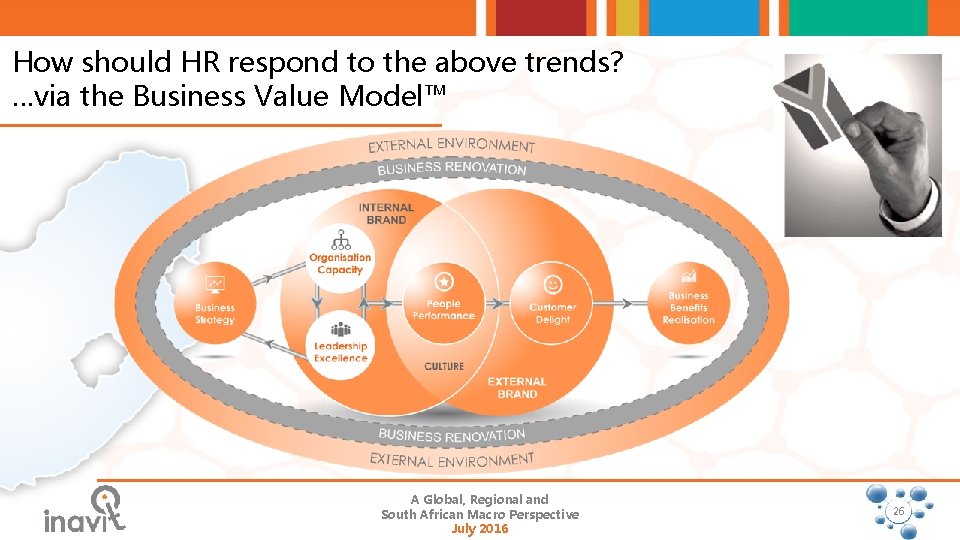
How should HR respond to the above trends? …via the Business Value Model™ A Global, Regional and South African Macro Perspective July 2016 26
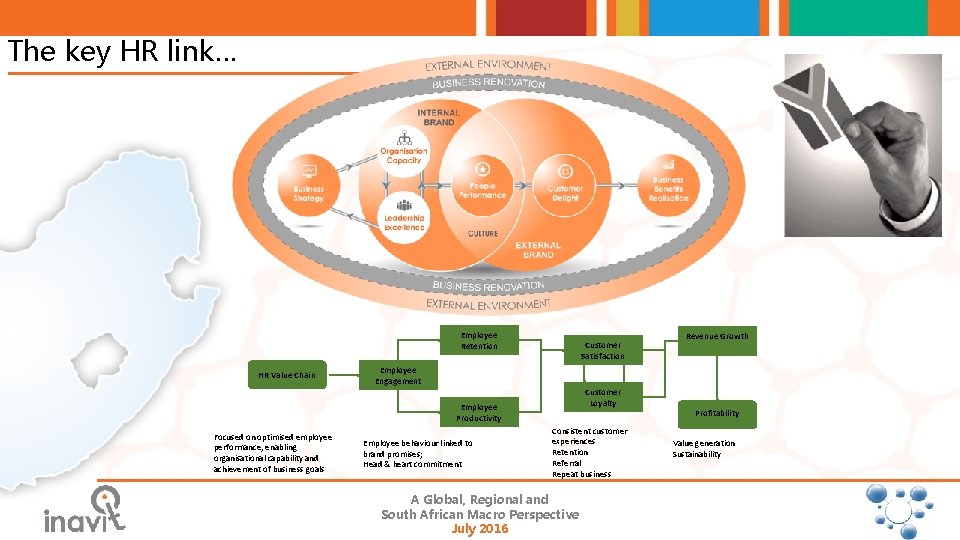
The key HR link… Employee Retention HR Value Chain Customer Satisfaction Employee Engagement Customer Loyalty Employee Productivity Focused on optimised employee performance, enabling organisational capability and achievement of business goals Revenue Growth Employee behaviour linked to brand promises; Head & heart commitment Consistent customer experiences Retention Referral Repeat business A Global, Regional and South African Macro Perspective July 2016 Profitability Value generation Sustainability
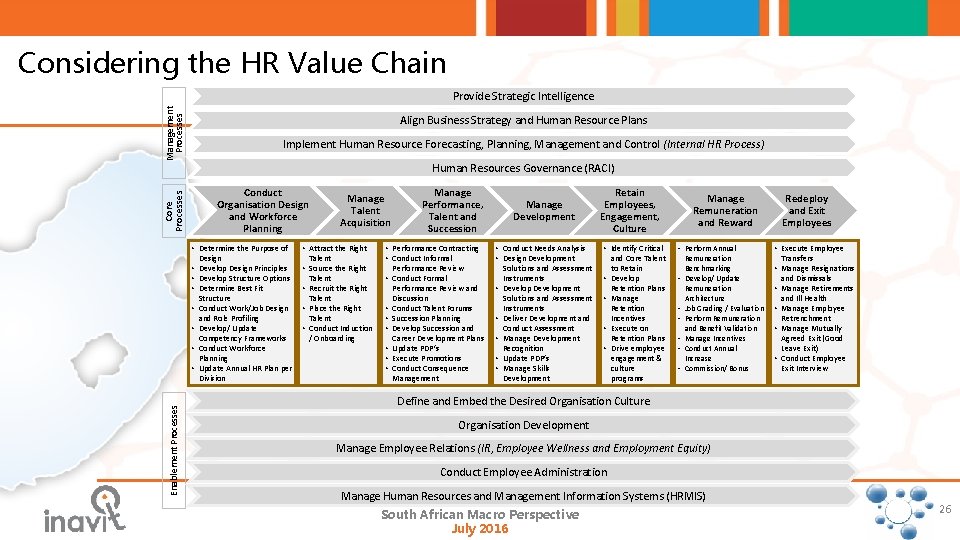
Considering the HR Value Chain Management Processes Provide Strategic Intelligence Align Business Strategy and Human Resource Plans Implement Human Resource Forecasting, Planning, Management and Control (Internal HR Process) Human Resources Governance (RACI) Core Processes Conduct Organisation Design and Workforce Planning • Determine the Purpose of • • • Enablement Processes • Design Develop Design Principles Develop Structure Options Determine Best Fit Structure Conduct Work/Job Design and Role Profiling Develop/ Update Competency Frameworks Conduct Workforce Planning Update Annual HR Plan per Division Manage Talent Acquisition • Attract the Right • • Talent Source the Right Talent Recruit the Right Talent Place the Right Talent Conduct Induction / Onboarding Manage Performance, Talent and Succession • Performance Contracting • Conduct Informal • • Performance Review Conduct Formal Performance Review and Discussion Conduct Talent Forums Succession Planning Develop Succession and Career Development Plans Update PDP’s Execute Promotions Conduct Consequence Management Manage Development • Conduct Needs Analysis • Design Development • • • Solutions and Assessment Instruments Development Solutions and Assessment Instruments Deliver Development and Conduct Assessment Manage Development Recognition Update PDP’s Manage Skills Development Retain Employees, Engagement, Culture • Identify Critical • • and Core Talent to Retain Develop Retention Plans Manage Retention Incentives Execute on Retention Plans Drive employee engagement & culture programs Manage Remuneration and Reward • Perform Annual • • • Remuneration Benchmarking Develop/ Update Remuneration Architecture Job Grading / Evaluation Perform Remuneration and Benefit Validation Manage Incentives Conduct Annual Increase Commission/ Bonus Redeploy and Exit Employees • Execute Employee Transfers • Manage Resignations and Dismissals • Manage Retirements and Ill Health • Manage Employee Retrenchment • Manage Mutually Agreed Exit (Good Leave Exit) • Conduct Employee Exit Interview Define and Embed the Desired Organisation Culture Organisation Development Manage Employee Relations (IR, Employee Wellness and Employment Equity) Conduct Employee Administration Manage Human and Management A Resources Global, Regional and Information Systems (HRMIS) South African Macro Perspective July 2016 26
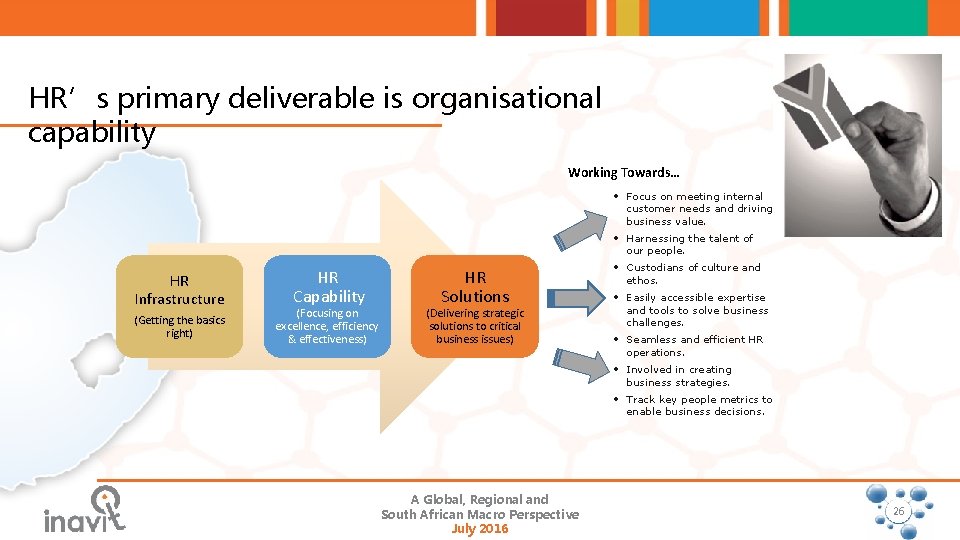
HR’s primary deliverable is organisational capability Working Towards… • Focus on meeting internal customer needs and driving business value. • Harnessing the talent of our people. HR Infrastructure (Getting the basics right) HR Capability (Focusing on excellence, efficiency & effectiveness) HR Solutions (Delivering strategic solutions to critical business issues) • Custodians of culture and ethos. • Easily accessible expertise and tools to solve business challenges. • Seamless and efficient HR operations. • Involved in creating business strategies. • Track key people metrics to enable business decisions. A Global, Regional and South African Macro Perspective July 2016 26
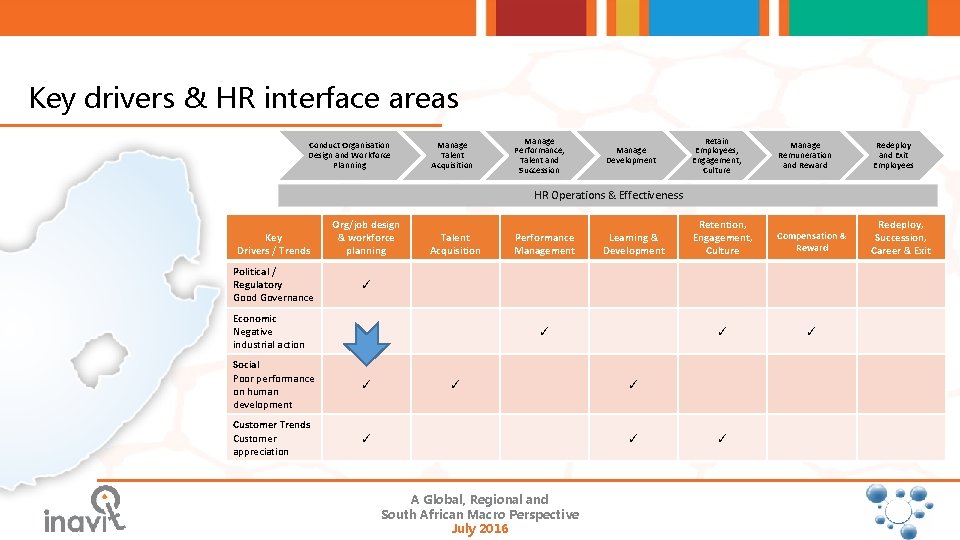
Key drivers & HR interface areas Conduct Organisation Design and Workforce Planning Manage Talent Acquisition Manage Performance, Talent and Succession Manage Development Retain Employees, Engagement, Culture Manage Remuneration and Reward Redeploy and Exit Employees Retention, Engagement, Culture Compensation & Reward Redeploy, Succession, Career & Exit ✓ ✓ HR Operations & Effectiveness Key Drivers / Trends Political / Regulatory Good Governance Org/job design & workforce planning Talent Acquisition Performance Management Learning & Development ✓ Economic Negative industrial action ✓ Social Poor performance on human development ✓ Customer Trends Customer appreciation ✓ ✓ A Global, Regional and South African Macro Perspective July 2016 ✓
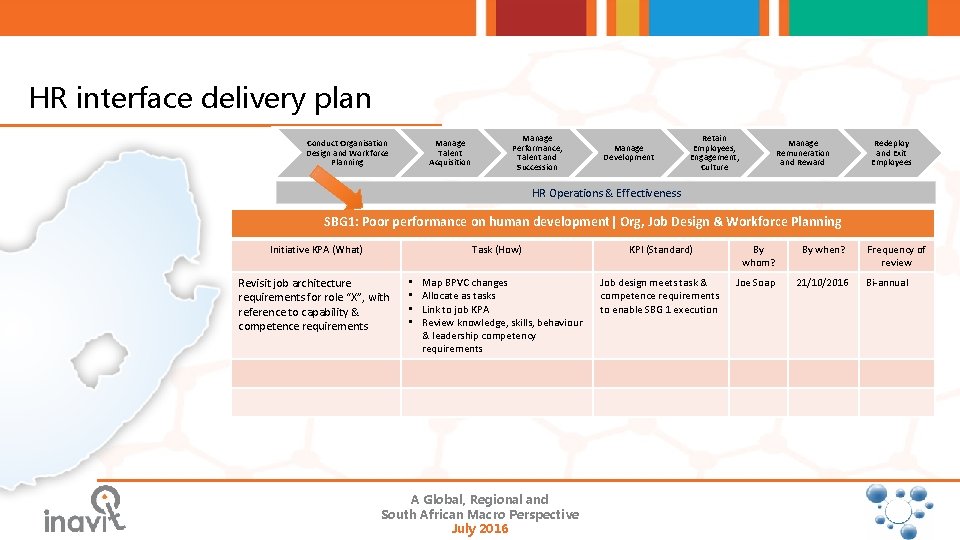
HR interface delivery plan Conduct Organisation Design and Workforce Planning Manage Talent Acquisition Manage Performance, Talent and Succession Manage Development Retain Employees, Engagement, Culture Manage Remuneration and Reward Redeploy and Exit Employees HR Operations & Effectiveness SBG 1: Poor performance on human development| Org, Job Design & Workforce Planning Initiative KPA (What) Task (How) Revisit job architecture requirements for role “X”, with reference to capability & competence requirements • • Map BPVC changes Allocate as tasks Link to job KPA Review knowledge, skills, behaviour & leadership competency requirements A Global, Regional and South African Macro Perspective July 2016 KPI (Standard) By whom? By when? Job design meets task & competence requirements to enable SBG 1 execution Joe Soap 21/10/2016 Frequency of review Bi-annual
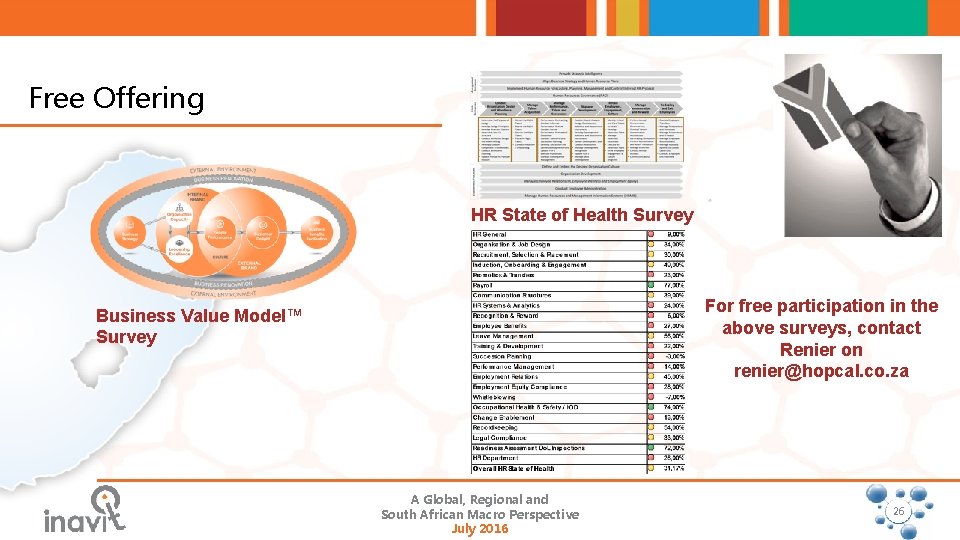
Free Offering HR State of Health Survey For free participation in the above surveys, contact Renier on renier@hopcal. co. za Business Value Model™ Survey A Global, Regional and South African Macro Perspective July 2016 26

Contact Info: Francois du Plessis fduplessis@inavitiq. com +2783 270 8920 Dr Anton Verwey averwey@inavitiq. com +2782 853 8603 9 th Ave & Rugby St, Roodepoort, 1709, South Africa www. inavitiq. com A Global, Regional and South African Macro Perspective July 2016 46
- Slides: 32