
A GLOBAL LEADER IN MOLTEN METAL FLOW ENGINEERING
A GLOBAL LEADER IN MOLTEN METAL FLOW ENGINEERING
Introduction Linked. In: Jorrit Meijerink Jorrit. Meijerink@vesuvius. com Current : Global Director Business Processes at Vesuvius Previous: Senior Director Purchasing at Vesuvius Executive MBA (SGH Warsaw School of Economics) Executive MBA (The University of Calgary) ir. , Business Engineering (University of Twente)
Agenda Introduction About Vesuvius Current Structure Solution Needed SCM Apps (Business Networks) Conclusion
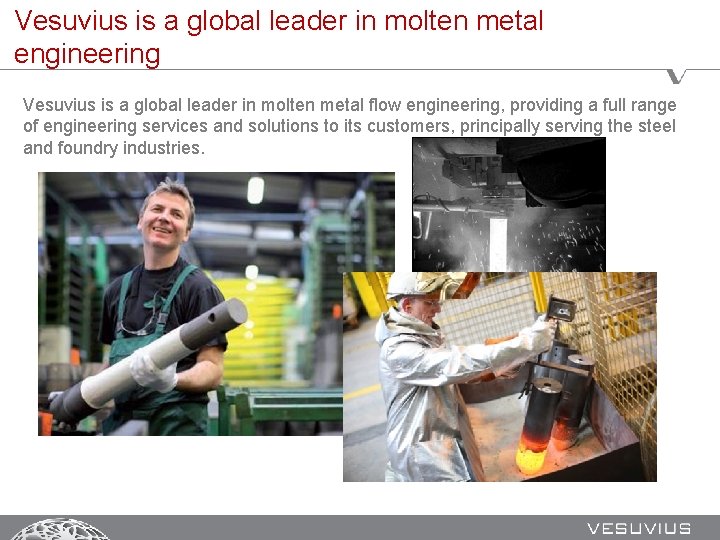
Vesuvius is a global leader in molten metal engineering Vesuvius is a global leader in molten metal flow engineering, providing a full range of engineering services and solutions to its customers, principally serving the steel and foundry industries. 4
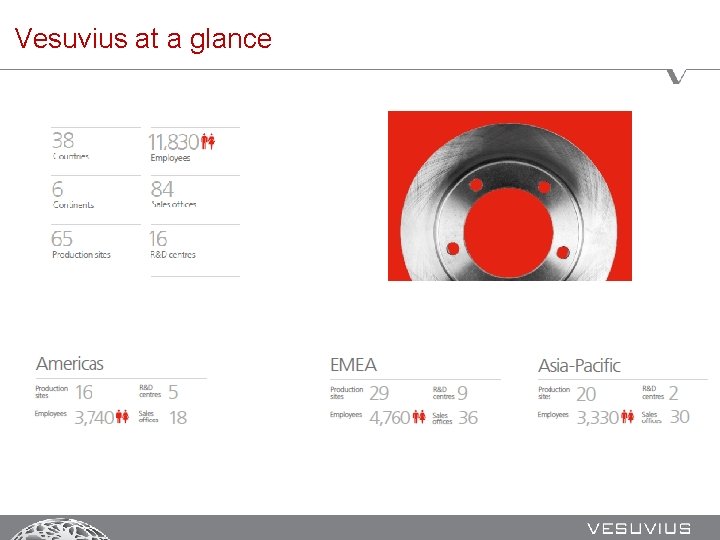
Vesuvius at a glance 5
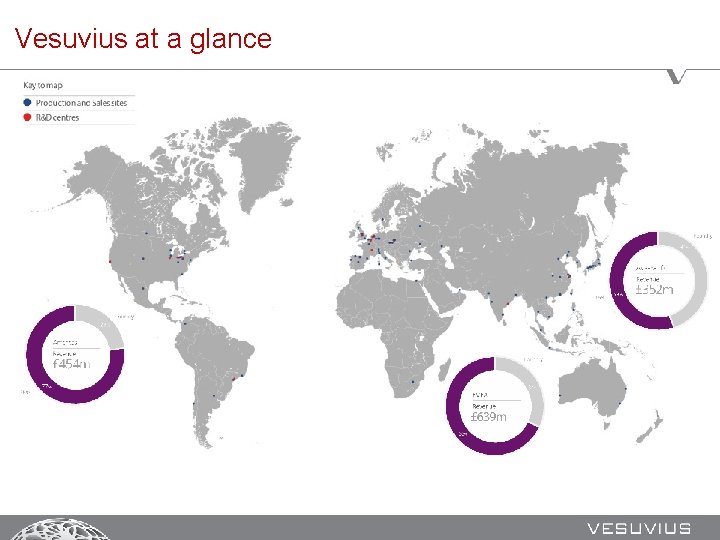
Vesuvius at a glance 6
Vesuvius at a glance • Revenue of £ 1, 445 million • Trading profit of £ 143 million • Listed on the London Stock Exchange 7
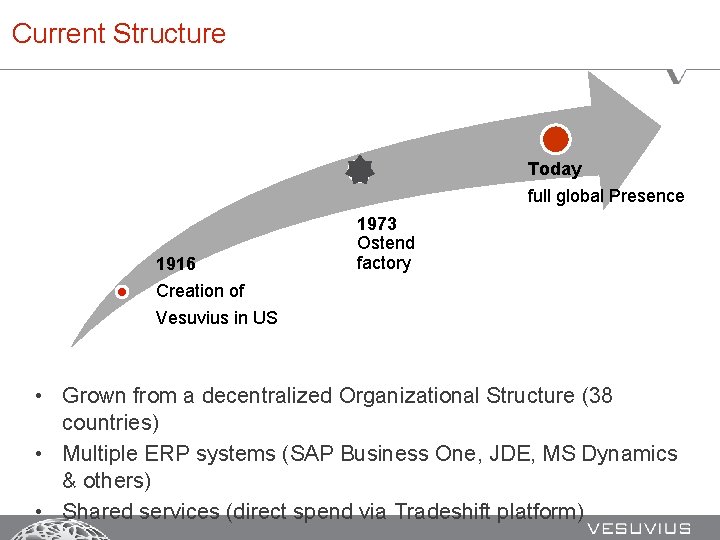
Current Structure Today full global Presence 1916 1973 Ostend factory Creation of Vesuvius in US • Grown from a decentralized Organizational Structure (38 countries) • Multiple ERP systems (SAP Business One, JDE, MS Dynamics & others) • Shared services (direct spend via Tradeshift platform)
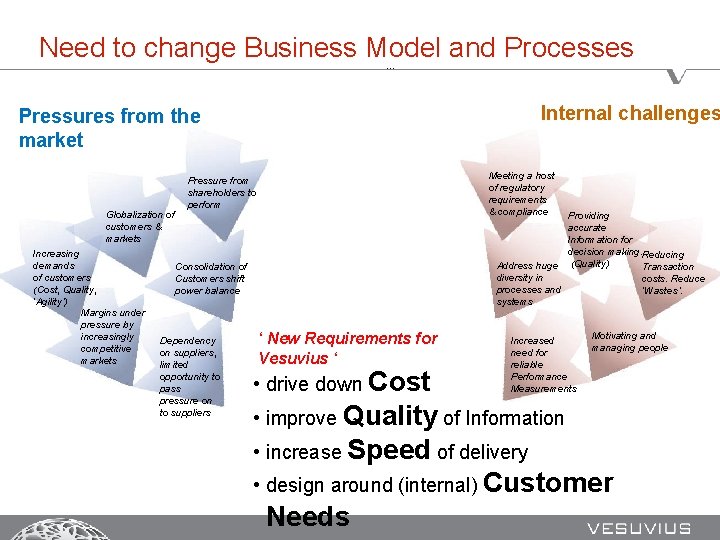
Need to change Business Model and Processes … Internal challenges Pressures from the market Globalization of customers & markets Increasing demands of customers (Cost, Quality, ‘Agility’) Margins under pressure by increasingly competitive markets Meeting a host of regulatory requirements & compliance Pressure from shareholders to perform Providing accurate Information for decision making. Reducing Address huge (Quality) Transaction diversity in costs. Reduce processes and ‘Wastes’. systems Consolidation of Customers shift power balance Dependency on suppliers, limited opportunity to pass pressure on to suppliers ‘ New Requirements for Vesuvius ‘ • drive down Cost Increased need for reliable Performance Measurements Motivating and managing people • improve Quality of Information • increase Speed of delivery • design around (internal) Customer Needs
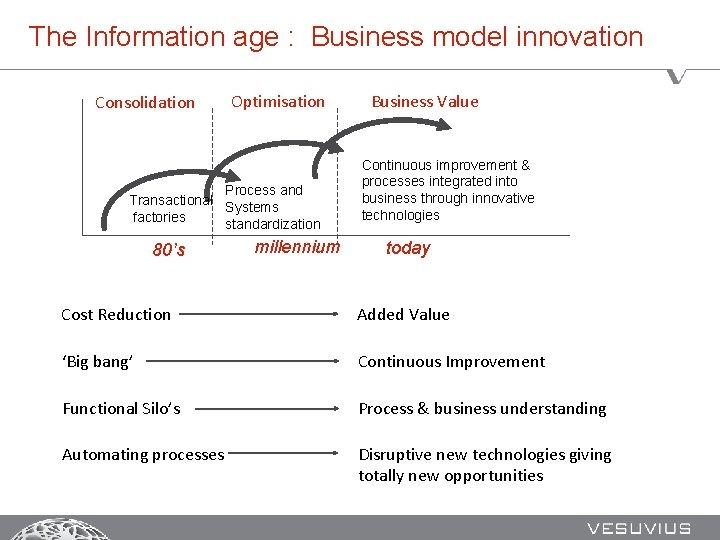
The Information age : Business model innovation Consolidation Optimisation Process and Transactional Systems factories standardization 80’s millennium Business Value Continuous improvement & processes integrated into business through innovative technologies today Cost Reduction Added Value ‘Big bang’ Continuous Improvement Functional Silo’s Process & business understanding Automating processes Disruptive new technologies giving totally new opportunities
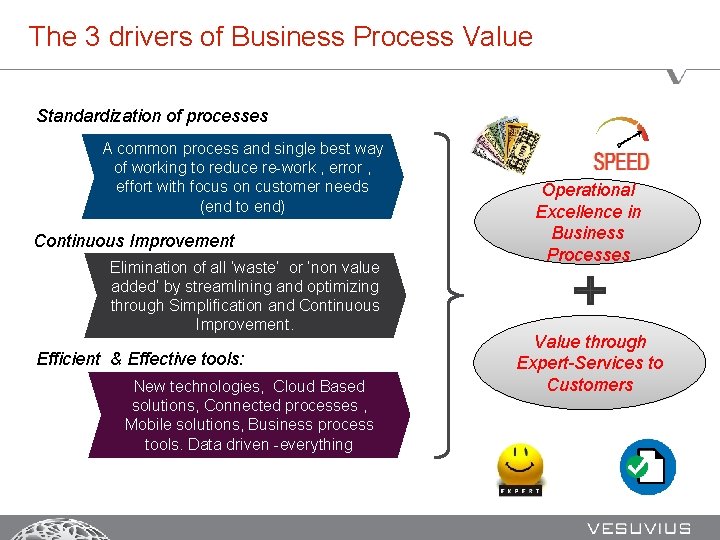
The 3 drivers of Business Process Value Standardization of processes A common process and single best way of working to reduce re-work , error , effort with focus on customer needs (end to end) Continuous Improvement Elimination of all ‘waste’ or ‘non value added’ by streamlining and optimizing through Simplification and Continuous Improvement. Efficient & Effective tools: New technologies, Cloud Based solutions, Connected processes , Mobile solutions, Business process tools. Data driven -everything Operational Excellence in Business Processes Value through Expert-Services to Customers
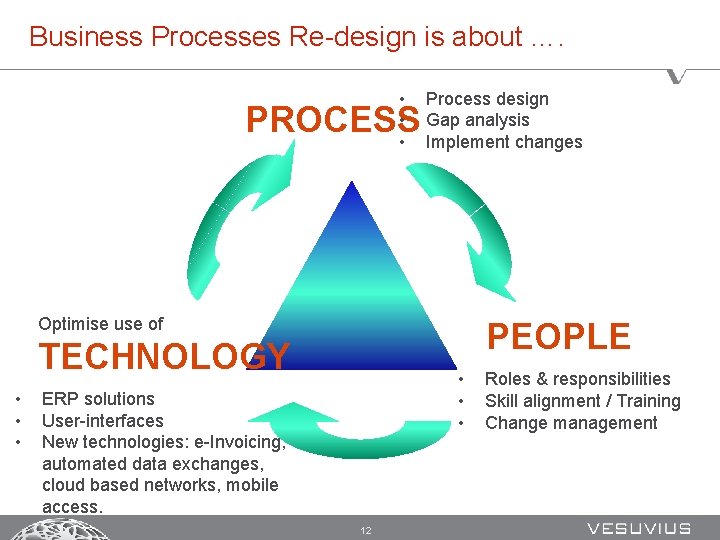
Business Processes Re-design is about …. • • • PROCESS Process design Gap analysis Implement changes Optimise use of PEOPLE TECHNOLOGY • • • ERP solutions User-interfaces New technologies: e-Invoicing, automated data exchanges, cloud based networks, mobile access. 12 Roles & responsibilities Skill alignment / Training Change management
To manage external Supply Chain – what solution needed • To streamline and support the business with tools designed around the end to end business process – O 2 C , R 2 R , P 2 P , … • To implement new and massively scalable ways of communicating and connecting, for creating and sharing content with suppliers • Manage by exception & automate standard processes • End to end process solution / integrators as layers over the multi ERP environment
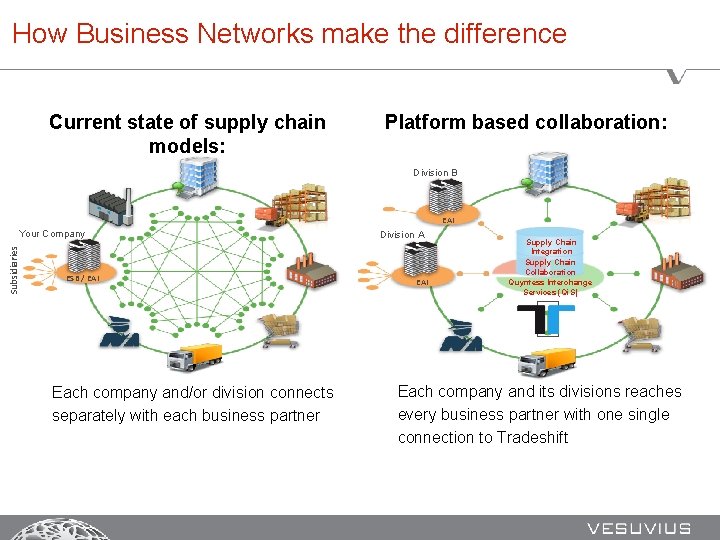
How Business Networks make the difference Current state of supply chain models: Platform based collaboration: Division B EAI Subsidiaries Your Company ESB / EAI Each company and/or division connects separately with each business partner Division A EAI Supply Chain Integration Supply Chain Collaboration Quyntess Interchange Services (Qi. S) Each company and its divisions reaches every business partner with one single connection to Tradeshift
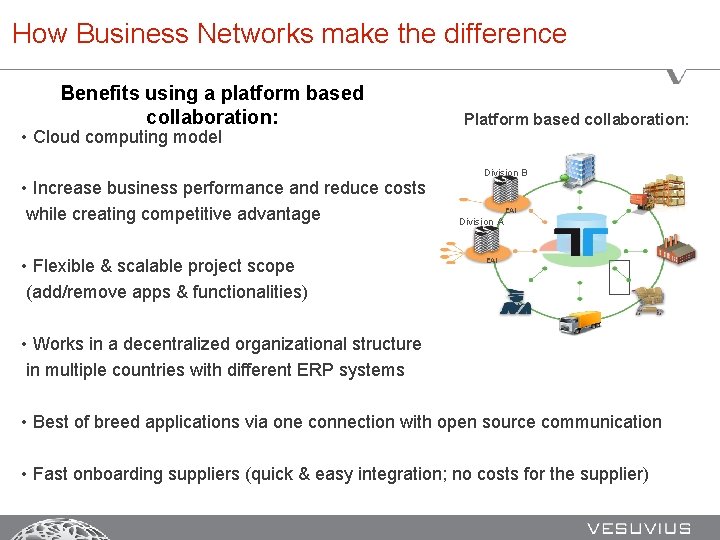
How Business Networks make the difference Benefits using a platform based collaboration: • Cloud computing model Platform based collaboration: Division B • Increase business performance and reduce costs while creating competitive advantage • Flexible & scalable project scope (add/remove apps & functionalities) EAI Division A EAI • Works in a decentralized organizational structure in multiple countries with different ERP systems • Best of breed applications via one connection with open source communication • Fast onboarding suppliers (quick & easy integration; no costs for the supplier)
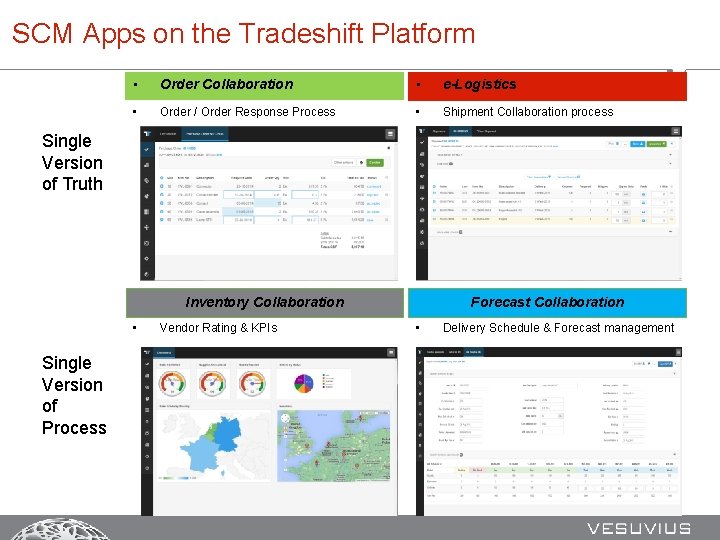
SCM Apps on the Tradeshift Platform • Order Collaboration • e-Logistics • Order / Order Response Process • Shipment Collaboration process Single Version of Truth Inventory Collaboration • Single Version of Process Vendor Rating & KPIs Forecast Collaboration • Delivery Schedule & Forecast management
to finish…. • If your supply chain innovation challenges are: Decentralized organizational structure with eventually different ERP systems Difficulties finding a solution that covers all your requirements Want to avoid joining a proprietary network High risks in inflexible SC solution commitments in a fast moving environment o Integration with several hundred business partners in a short period o o • A platform approach is revolutionizing supply chain management • A Business Network solution is future proof

19
• Thank You 20
• Questions ? 21
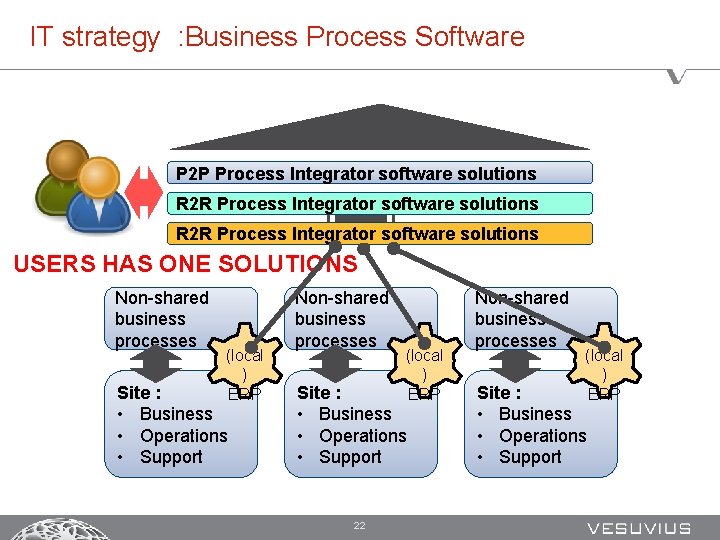
IT strategy : Business Process Software P 2 P Process Integrator software solutions R 2 R Process Integrator software solutions USERS HAS ONE SOLUTIONS Non-shared business processes (local ) ERP Site : • Business • Operations • Support 22 Non-shared business processes (local ) ERP Site : • Business • Operations • Support
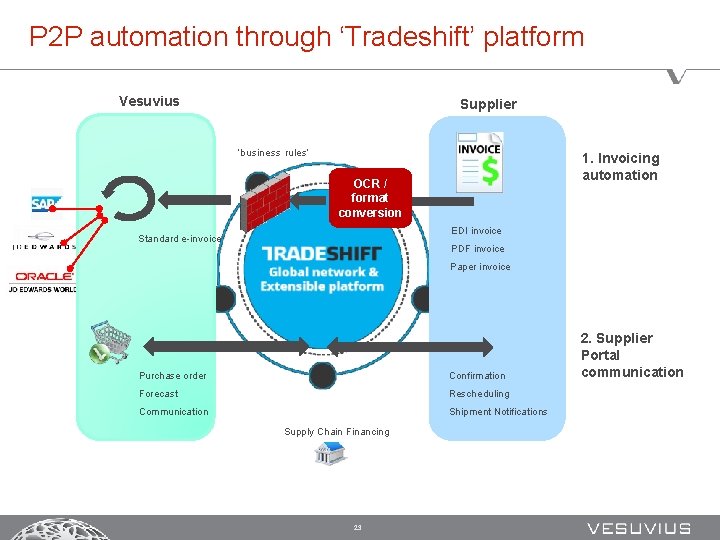
P 2 P automation through ‘Tradeshift’ platform Vesuvius Supplier ‘business rules’ 1. Invoicing automation OCR / format conversion EDI invoice Standard e-invoice PDF invoice Paper invoice Purchase order Confirmation Forecast Rescheduling Communication Shipment Notifications Supply Chain Financing 23 2. Supplier Portal communication
- Slides: 22