
A GeometryBased Soft Shadow Volume Algorithm Using Graphics
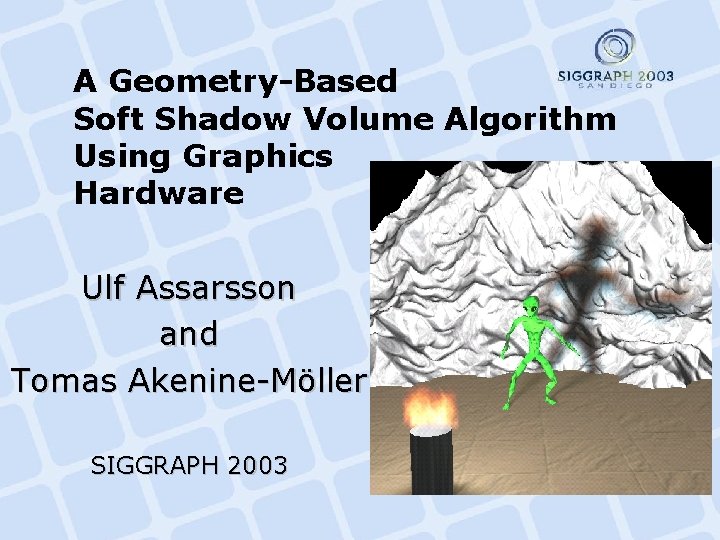
A Geometry-Based Soft Shadow Volume Algorithm Using Graphics Hardware Ulf Assarsson and Tomas Akenine-Möller SIGGRAPH 2003
We present: A Soft Shadow Volume Algorithm: • Area light sources • Simple volumetric light sources • Textures and short video textures as lights • Real-time performance with programmable graphics hardware • Approximate soft shadows – Trade speed vs accuracy

Intro demo
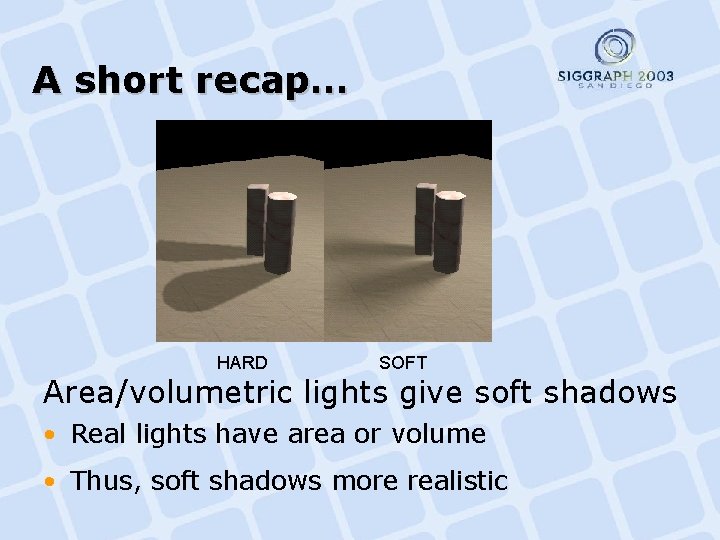
A short recap… HARD SOFT Area/volumetric lights give soft shadows • Real lights have area or volume • Thus, soft shadows more realistic
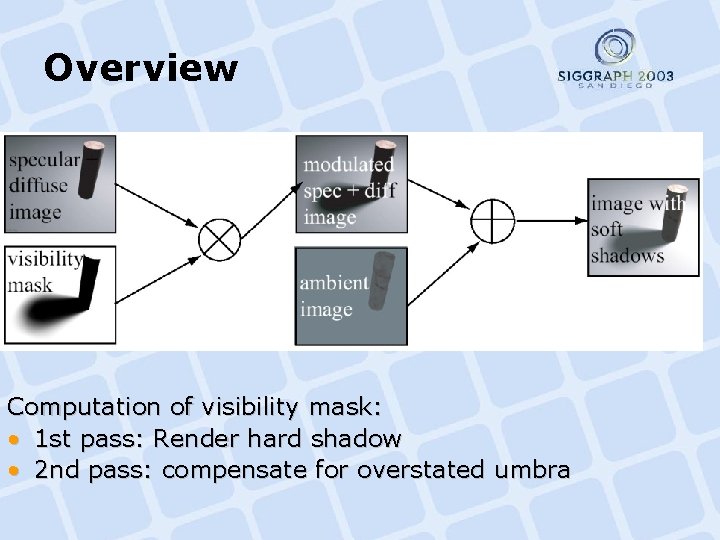
Overview Computation of visibility mask: • 1 st pass: Render hard shadow • 2 nd pass: compensate for overstated umbra
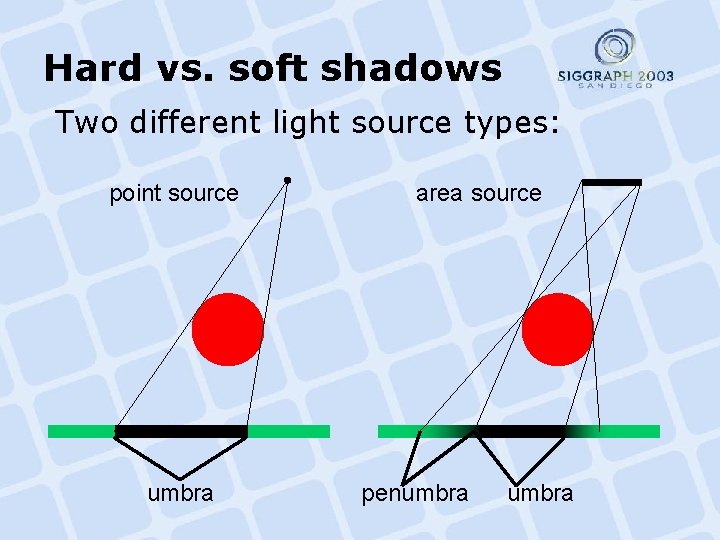
Hard vs. soft shadows Two different light source types: point source umbra area source penumbra

A Real-Time Soft Shadow Volume Algorithm
Wedges • Each silhouette edge has a corresponding wedge – Provides a piece of penumbra contribution – Rasterized by pixelshader
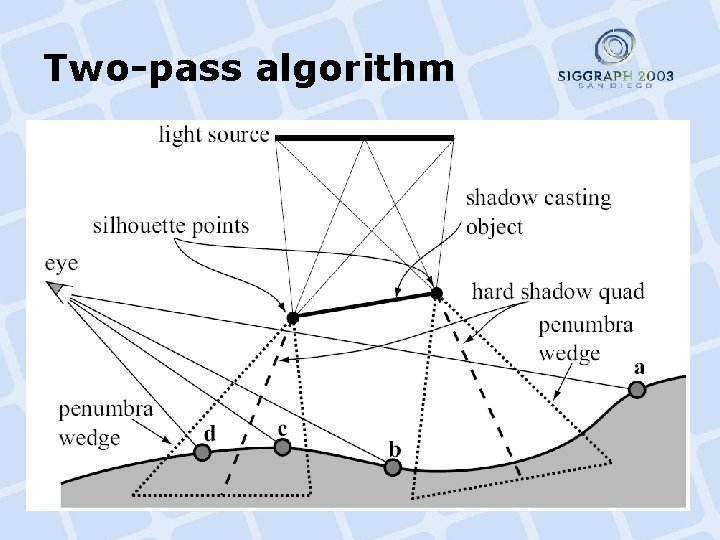
Two-pass algorithm
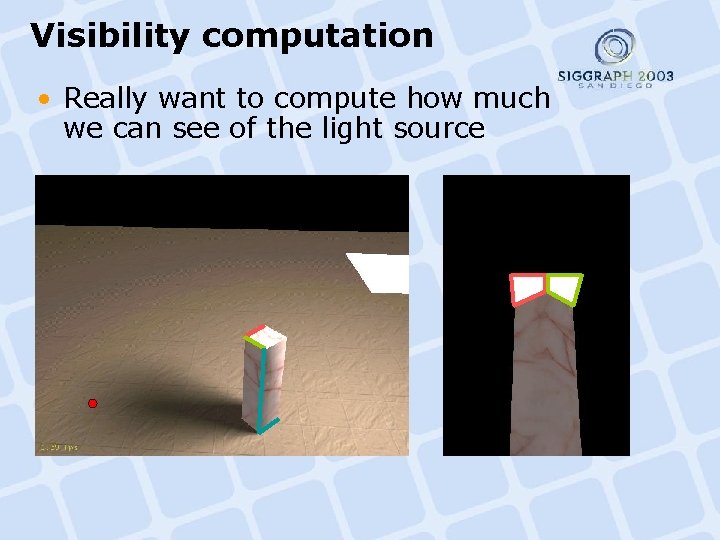
Visibility computation • Really want to compute how much we can see of the light source

Visibility computation
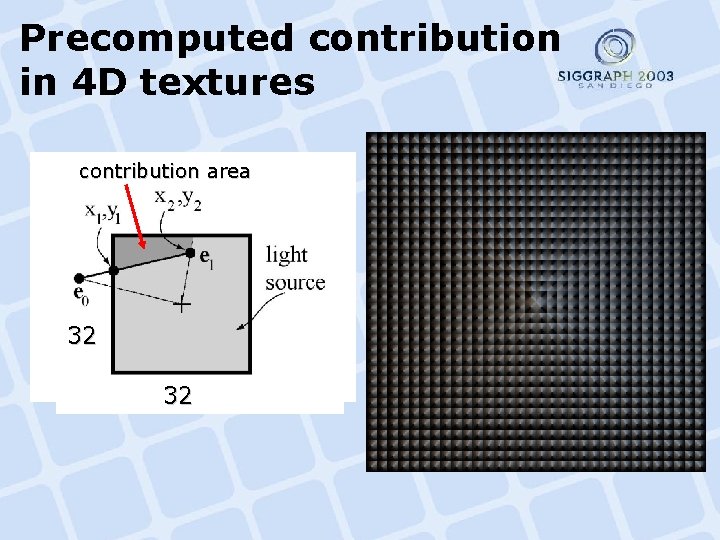
Precomputed contribution in 4 D textures contribution area 32 32
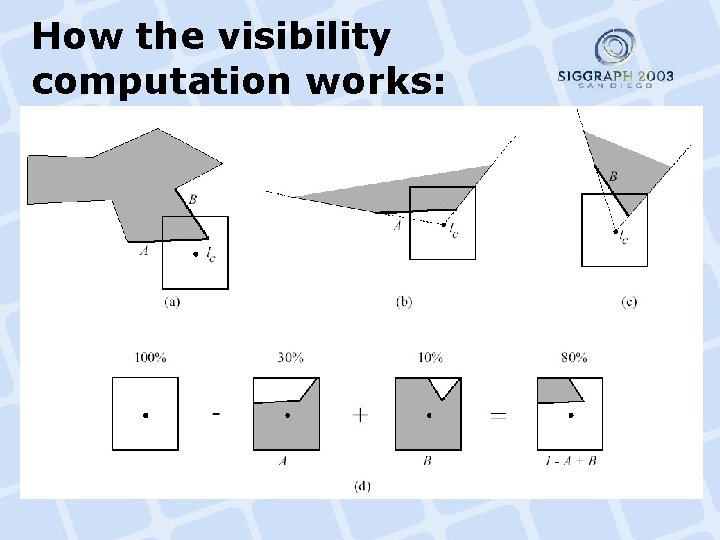
How the visibility computation works:
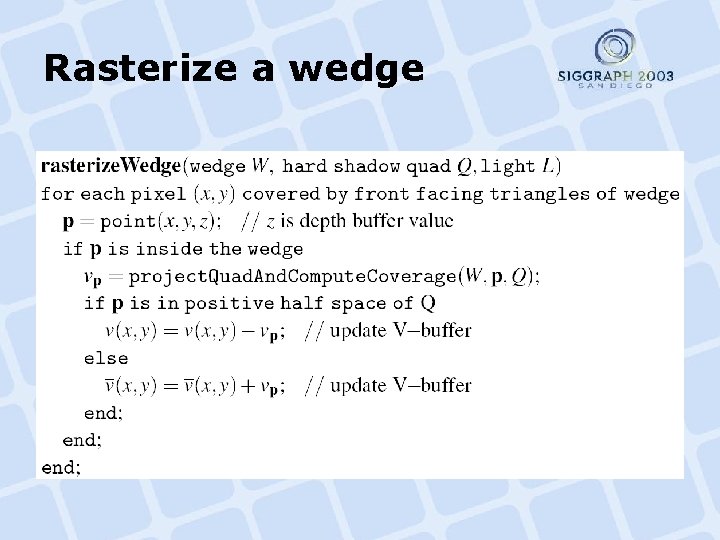
Rasterize a wedge
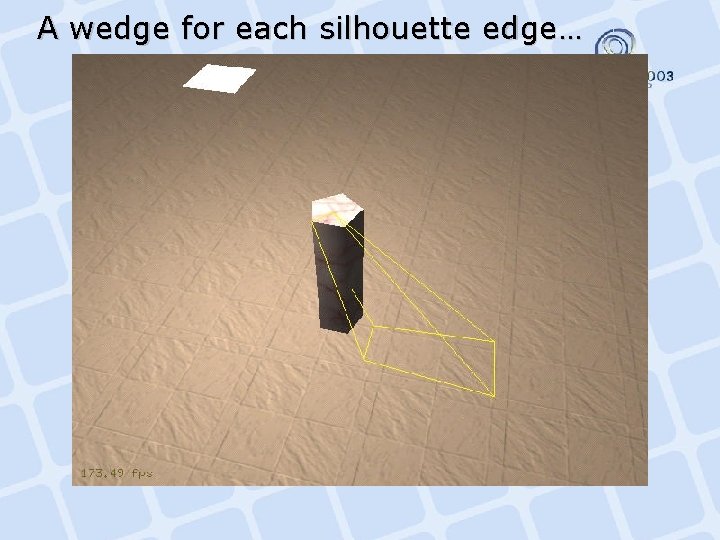
A wedge for each silhouette edge…
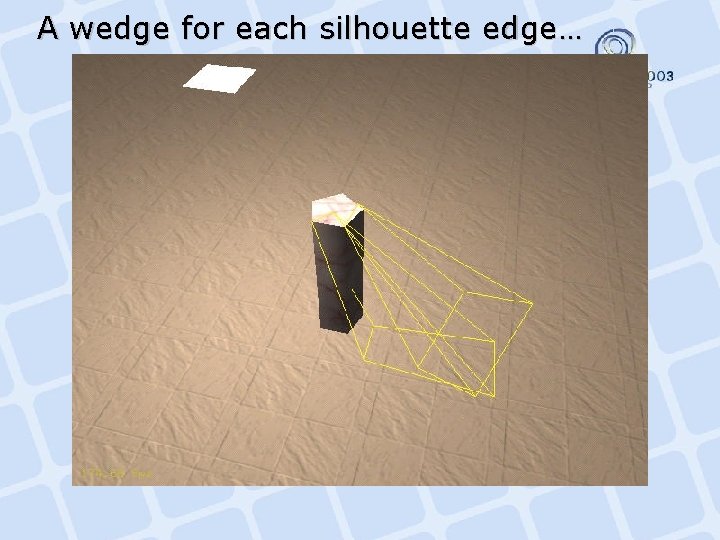
A wedge for each silhouette edge…
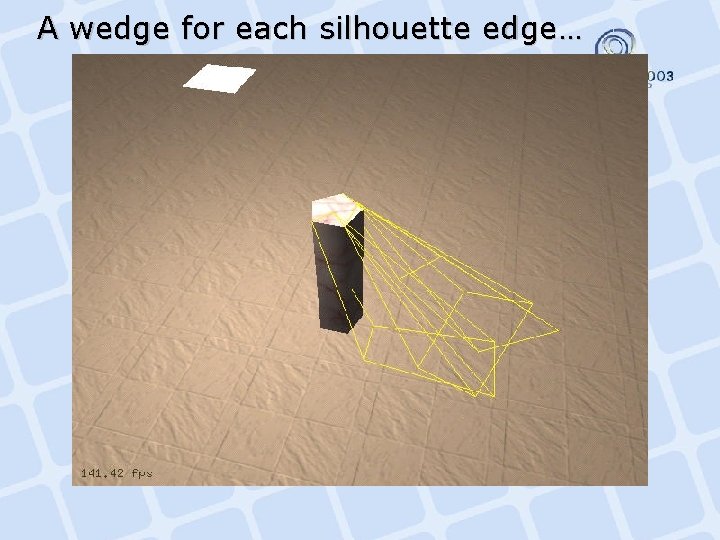
A wedge for each silhouette edge…
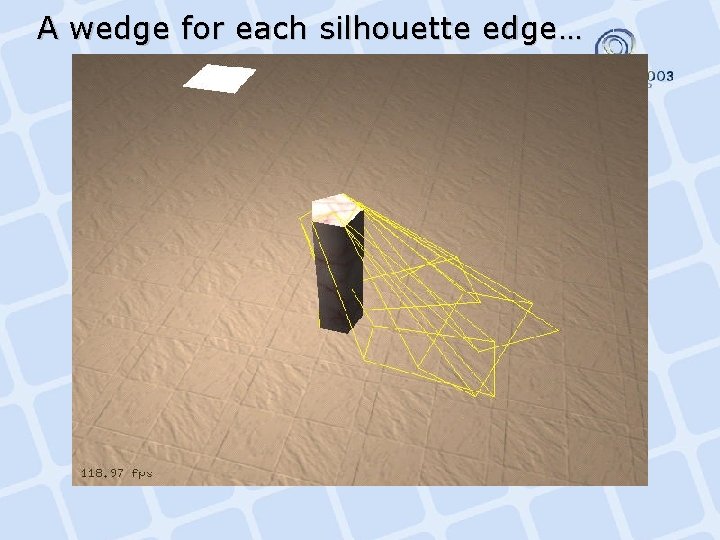
A wedge for each silhouette edge…
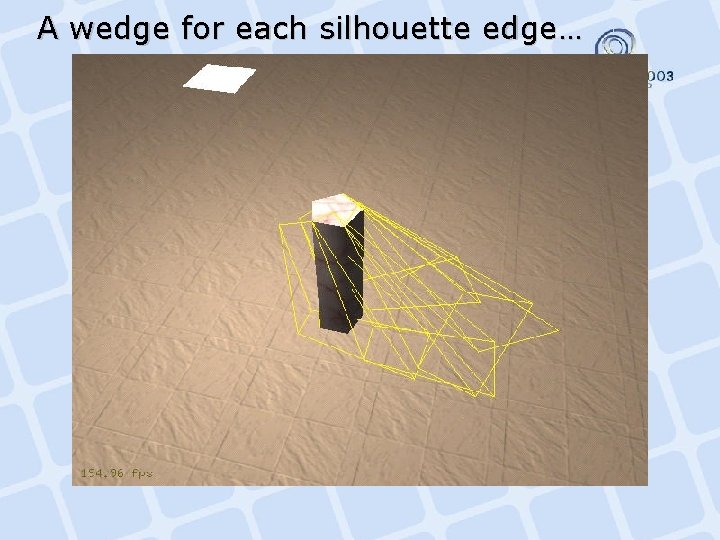
A wedge for each silhouette edge…
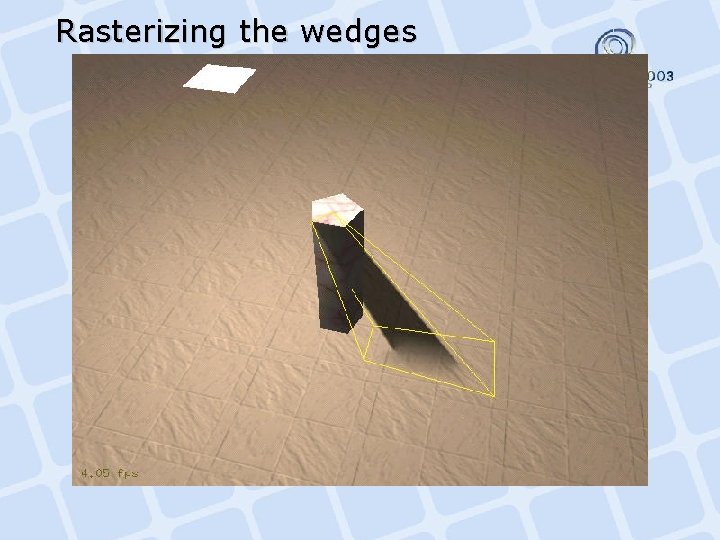
Rasterizing the wedges
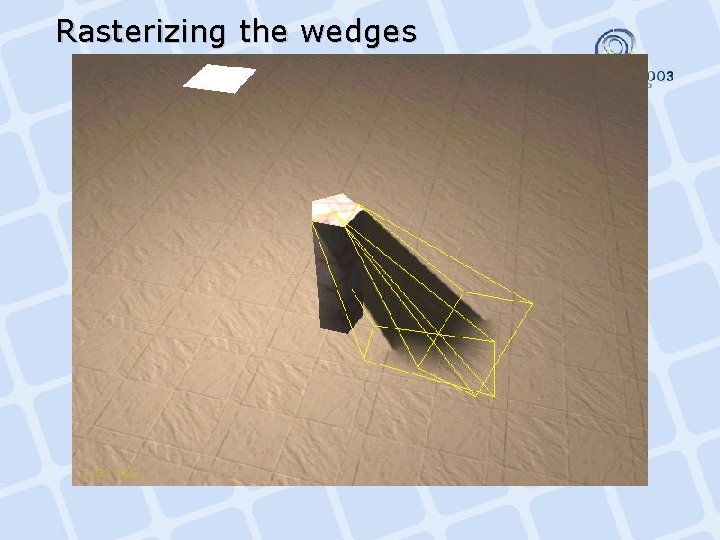
Rasterizing the wedges
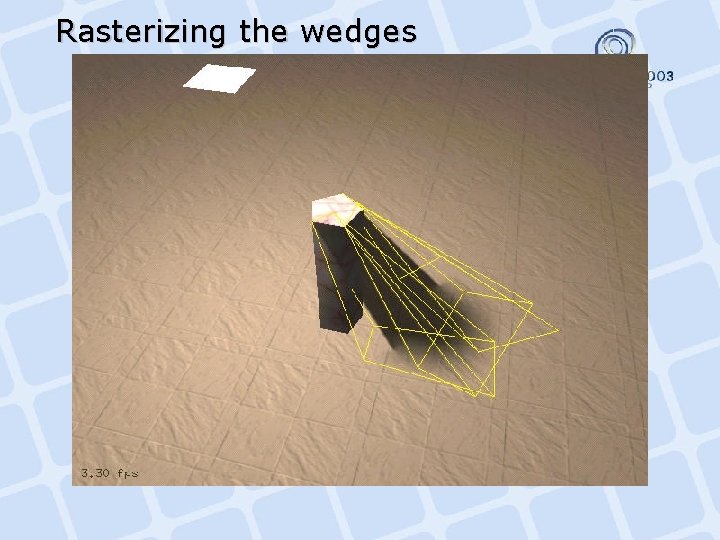
Rasterizing the wedges
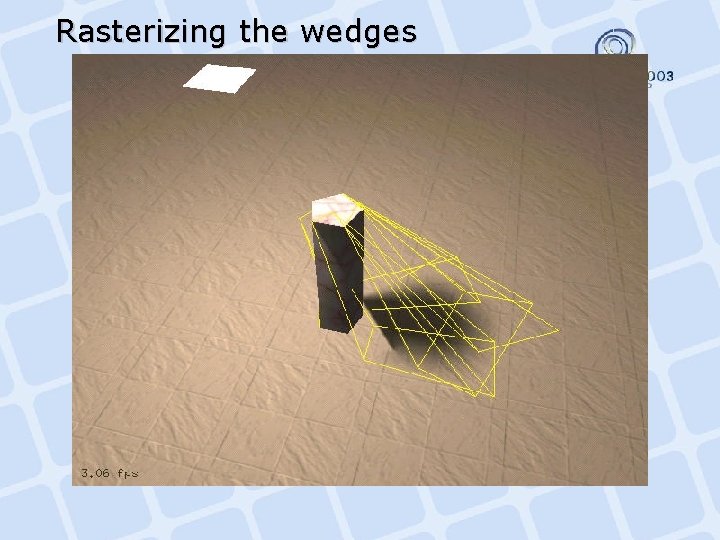
Rasterizing the wedges
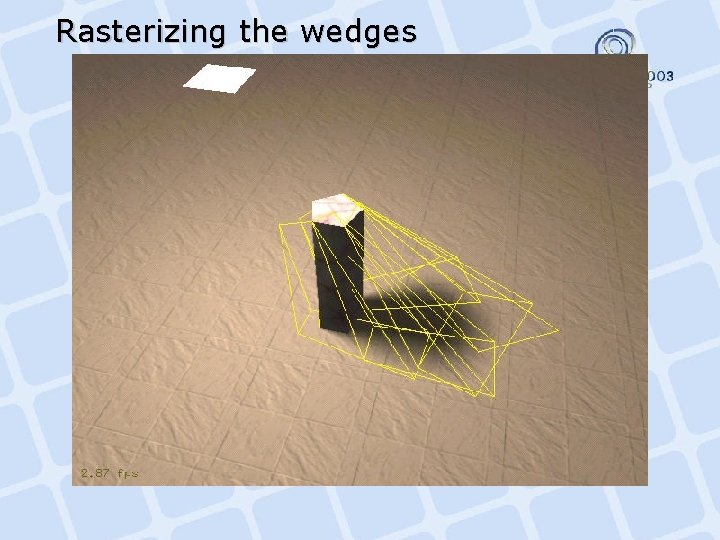
Rasterizing the wedges
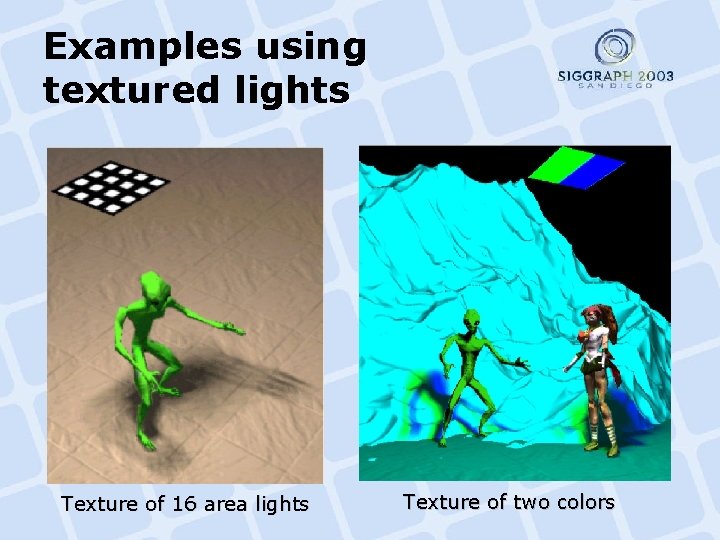
Examples using textured lights Texture of 16 area lights Texture of two colors
Fire Demo
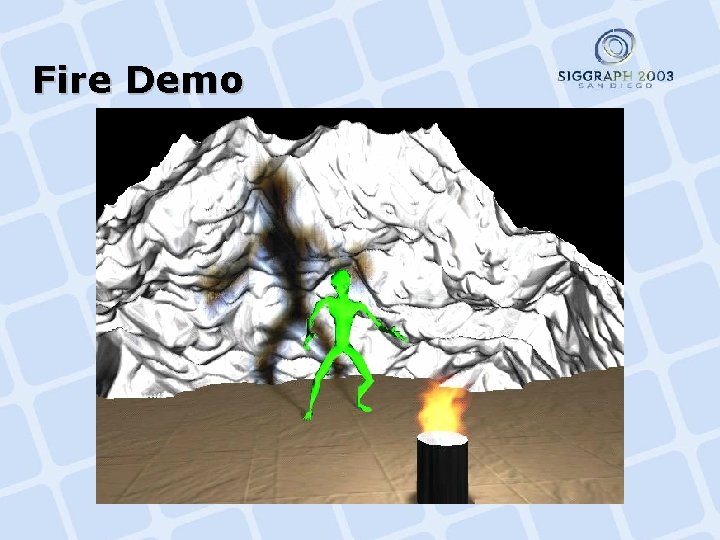
Fire Demo
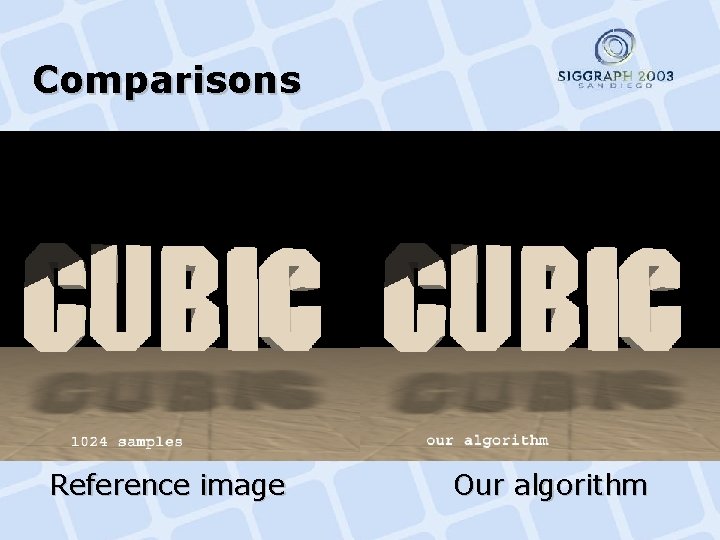
Comparisons Reference image Our algorithm
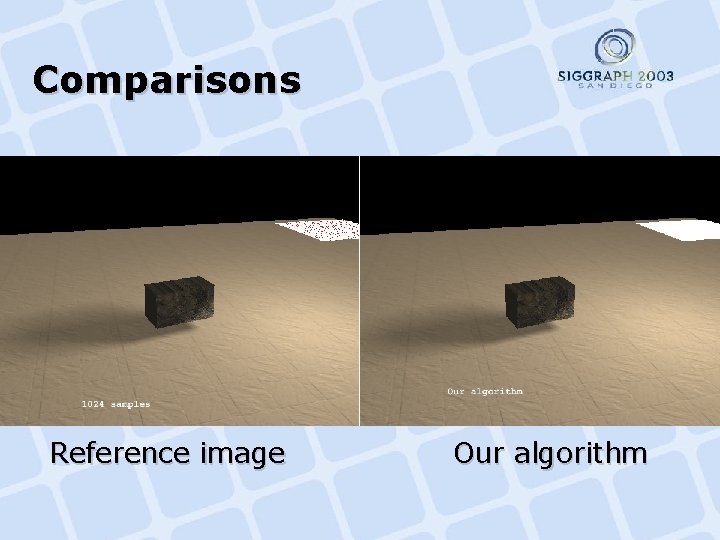
Comparisons Reference image Our algorithm
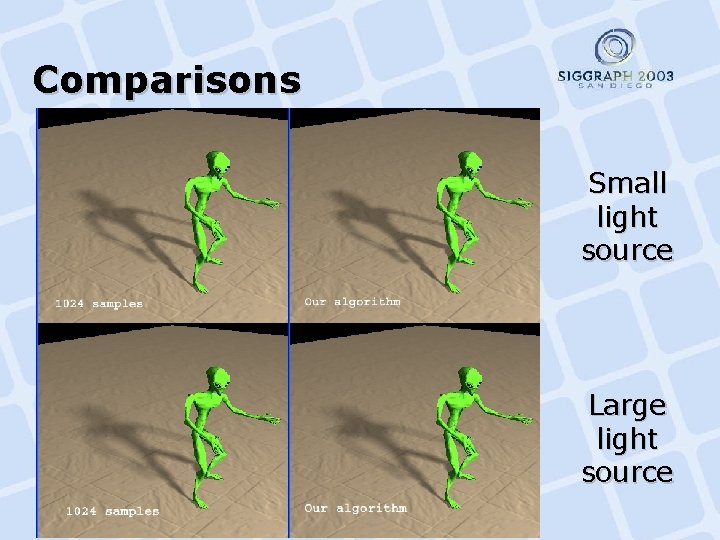
Comparisons Small light source Large light source
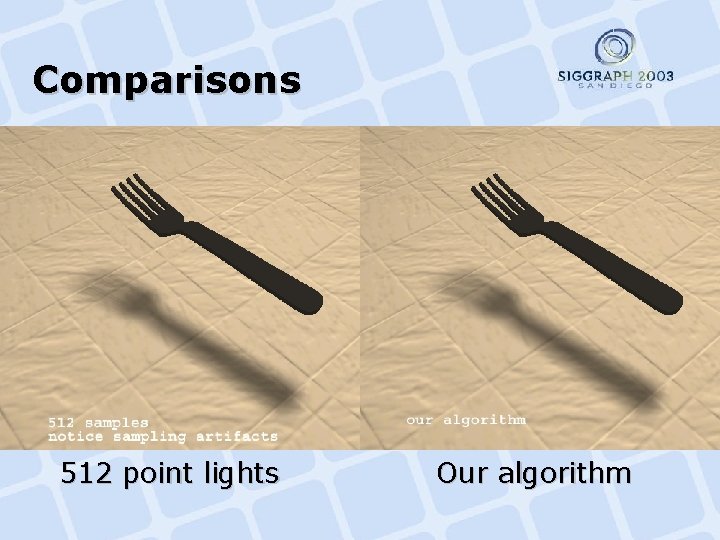
Comparisons 512 point lights Our algorithm
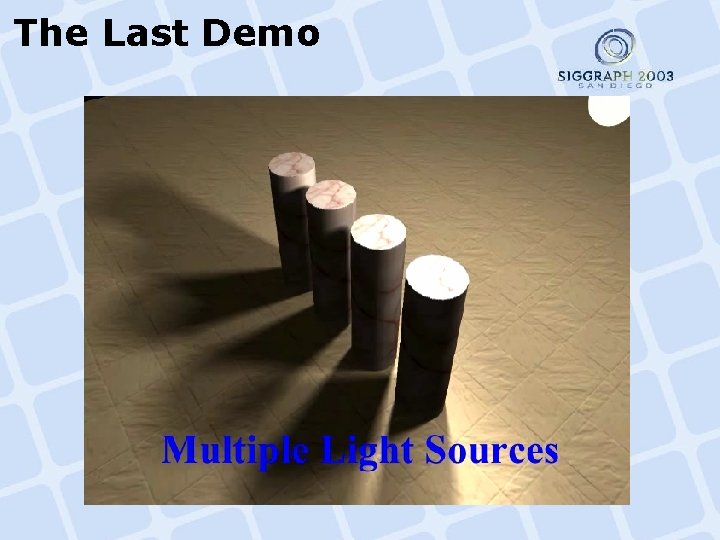
The Last Demo
- Slides: 32