
A Geographic Analysis of Homeless Management Information System
- Slides: 21
A Geographic Analysis of Homeless Management Information System (HMIS) Data for North GA Tim Branscomb Geog 596 A Capstone Proposal Penn State MGIS Program May 2015 1
Outline • • Background Goals Project Phases Potential Focus Areas Project Status Schedule Beyond Final Project 2
Background • Homelessness in Atlanta • Multiple homeless organizations in Atlanta • Desire to utilize GIS for homeless purposes • Arrival at the Pathways Organization • What is Pathways? • Discussions lead to using GIS with Homeless Management Information Systems (HMIS) data • What is HMIS? 3
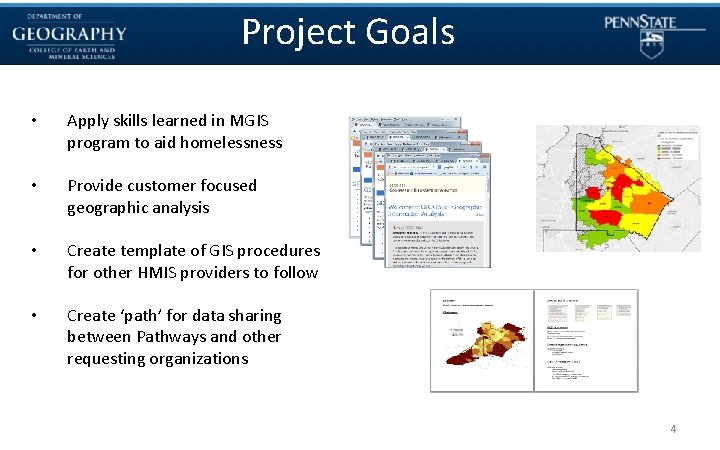
Project Goals • Apply skills learned in MGIS program to aid homelessness • Provide customer focused geographic analysis • Create template of GIS procedures for other HMIS providers to follow • Create ‘path’ for data sharing between Pathways and other requesting organizations 4
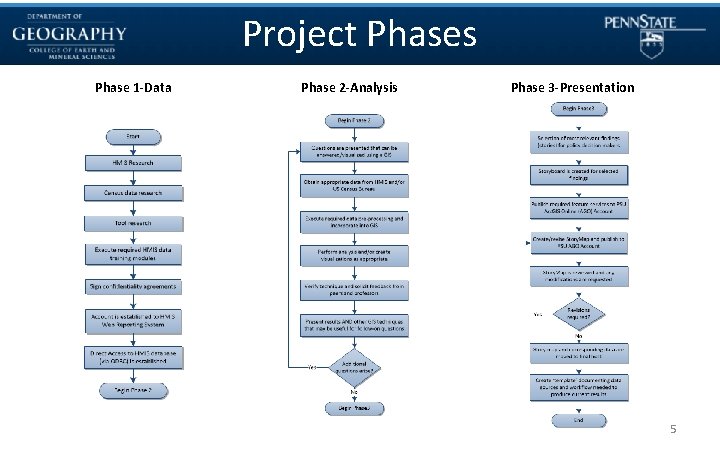
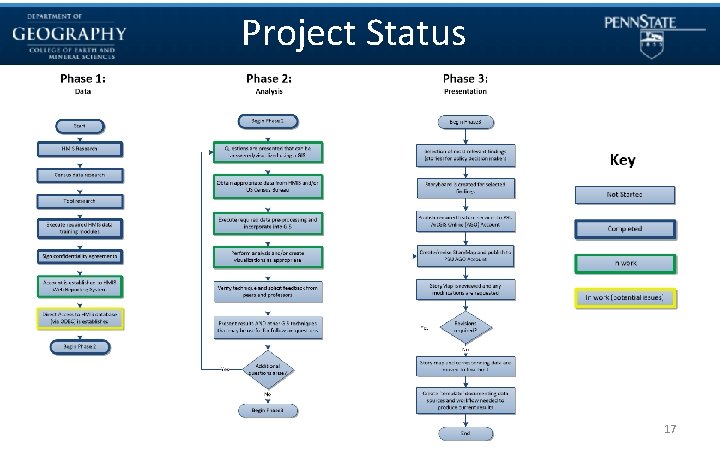
Project Phases Phase 1 -Data Phase 2 -Analysis Phase 3 -Presentation 5
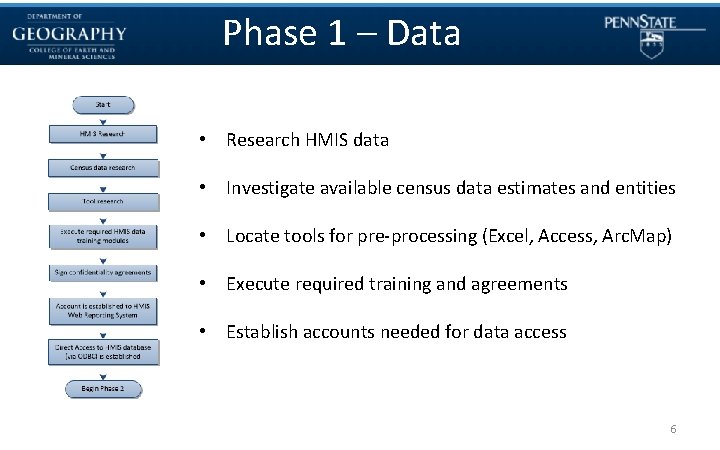
Phase 1 – Data • Research HMIS data • Investigate available census data estimates and entities • Locate tools for pre-processing (Excel, Access, Arc. Map) • Execute required training and agreements • Establish accounts needed for data access 6
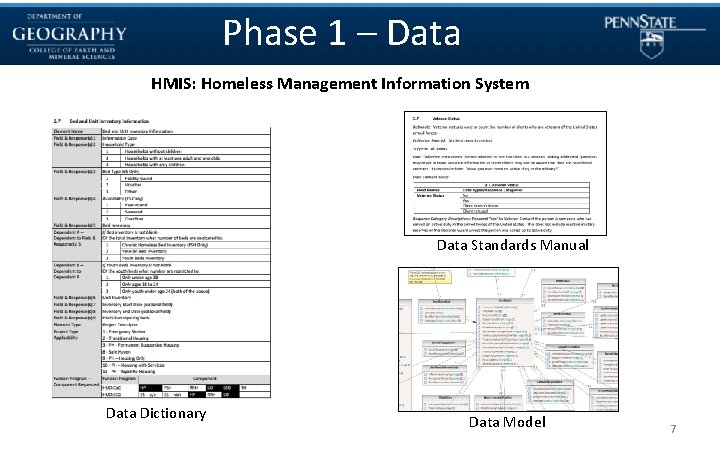
Phase 1 – Data HMIS: Homeless Management Information System Data Standards Manual Data Dictionary Data Model 7
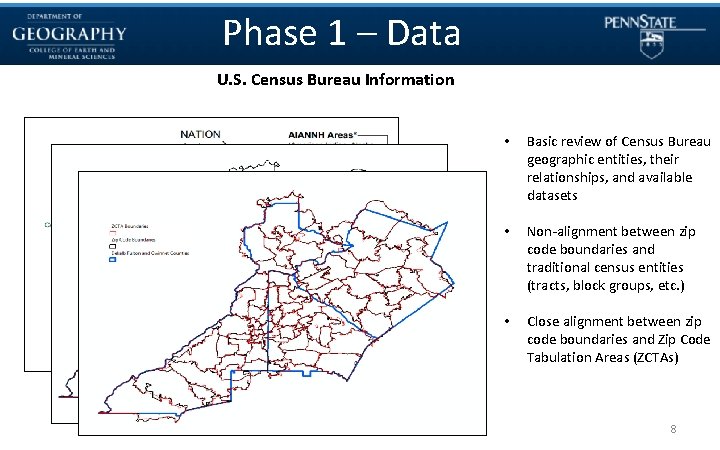
Phase 1 – Data U. S. Census Bureau Information • Basic review of Census Bureau geographic entities, their relationships, and available datasets • Non-alignment between zip code boundaries and traditional census entities (tracts, block groups, etc. ) • Close alignment between zip code boundaries and Zip Code Tabulation Areas (ZCTAs) 8
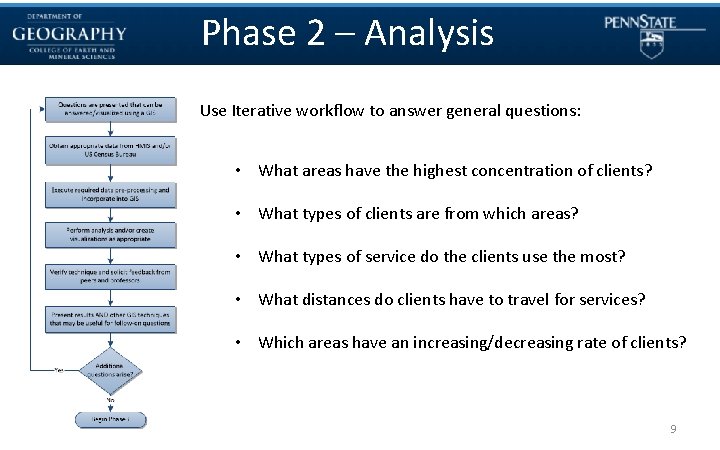
Phase 2 – Analysis Use Iterative workflow to answer general questions: • What areas have the highest concentration of clients? • What types of clients are from which areas? • What types of service do the clients use the most? • What distances do clients have to travel for services? • Which areas have an increasing/decreasing rate of clients? 9
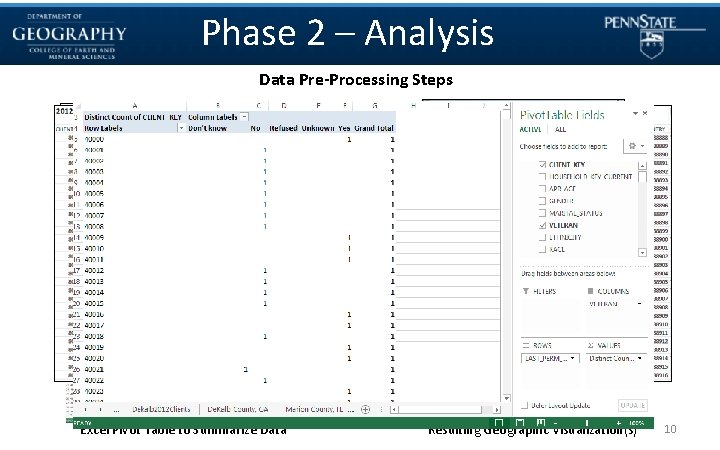
Phase 2 – Analysis Data Pre-Processing Steps Original HMIS Report Data Excel Pivot Table to Summarize Data Imported and Linked to ZCTAs Resulting Geographic Visualization(s) 10
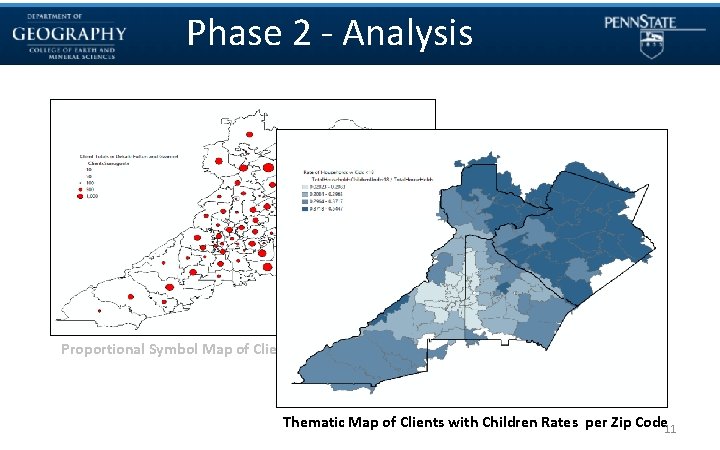
Phase 2 - Analysis Proportional Symbol Map of Client Totals per Zip Code Thematic Map of Clients with Children Rates per Zip Code 11
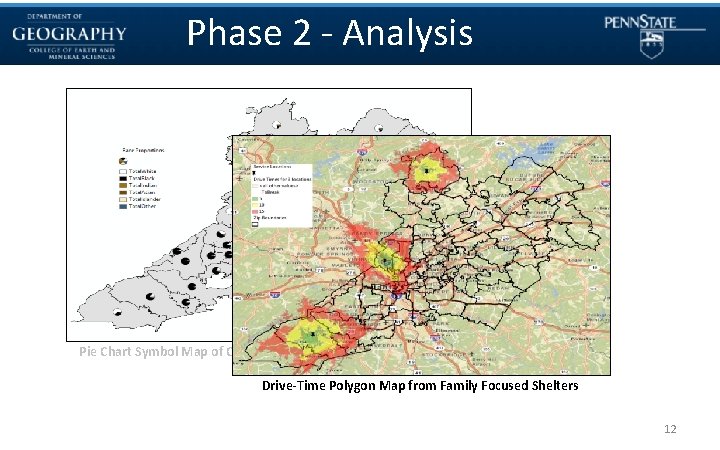
Phase 2 - Analysis Pie Chart Symbol Map of Client Race Proportions per Zip Code Drive-Time Polygon Map from Family Focused Shelters 12
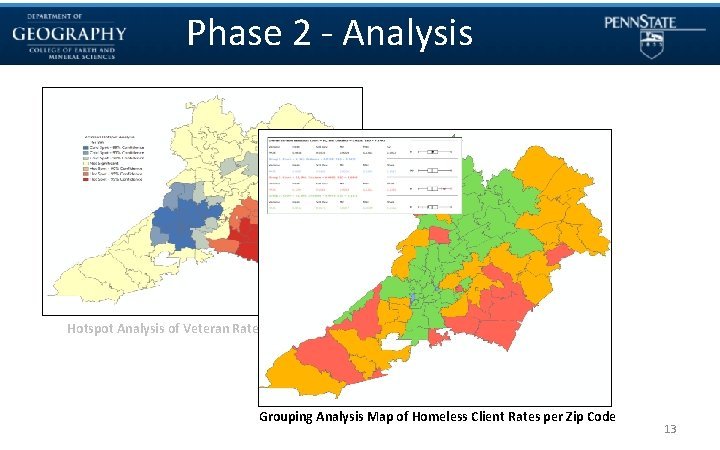
Phase 2 - Analysis Hotspot Analysis of Veteran Rate per Zip Code Grouping Analysis Map of Homeless Client Rates per Zip Code 13
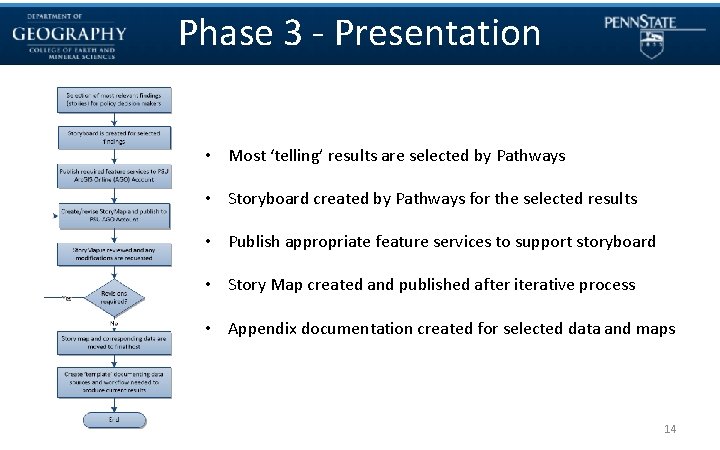
Phase 3 - Presentation • Most ‘telling’ results are selected by Pathways • Storyboard created by Pathways for the selected results • Publish appropriate feature services to support storyboard • Story Map created and published after iterative process • Appendix documentation created for selected data and maps 14
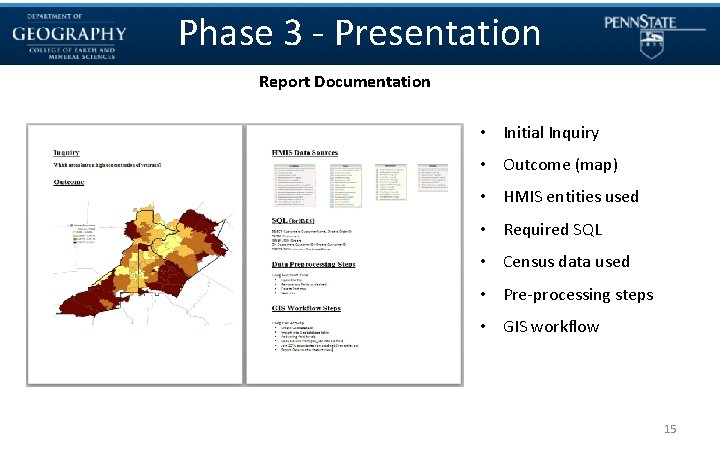
Phase 3 - Presentation Report Documentation • Initial Inquiry • Outcome (map) • HMIS entities used • Required SQL • Census data used • Pre-processing steps • GIS workflow 15
Potential Focus Areas • Regression modelling • Custom modification of Story Maps (using Java. Script) • Significant focus on template for other HMIS organizations • Windows utility application creation for pulling and aggregating data as needed (via ODBC connection) • Arc. Map Python scripts and/or models for pre-processing needs • Excel VBA scripts for converting data and/or producing necessary pivot tables 16
Project Status 17
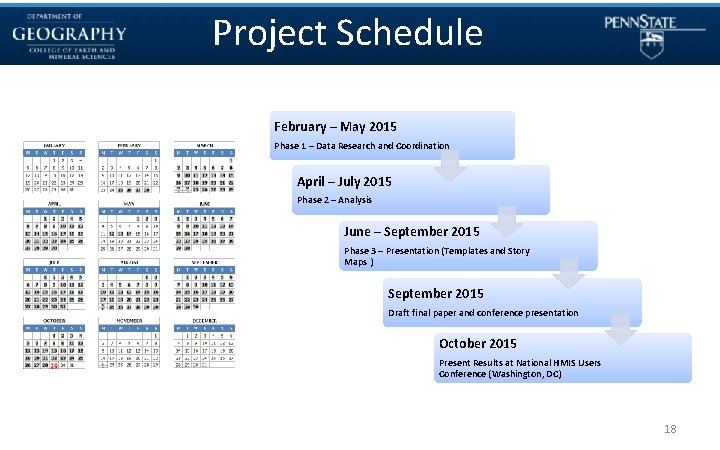
Project Schedule February – May 2015 Phase 1 – Data Research and Coordination April – July 2015 Phase 2 – Analysis June – September 2015 Phase 3 – Presentation (Templates and Story Maps ) September 2015 Draft final paper and conference presentation October 2015 Present Results at National HMIS Users Conference (Washington, DC) 18
Beyond Capstone Project • Continued involvement/analysis for Pathways • Obtain non-profit Arc. GIS software for Pathways 2016… • GIS Training for Pathways • Take basic approach to one of several non-profit Ref: ESRI 2015 organizations I would like to work GIS for • Adapt methods to open source products 19
Acknowledgements Dr. Douglas Miller – Project Advisor Dr. Josie Parker – Pathway’s Research Project Manager Dr. Jack Barile– Pathway’s Data Researcher Dr. Justine Blanford – Future geo-statistical consultant Meghan Branscomb – Supporting Wife! 20
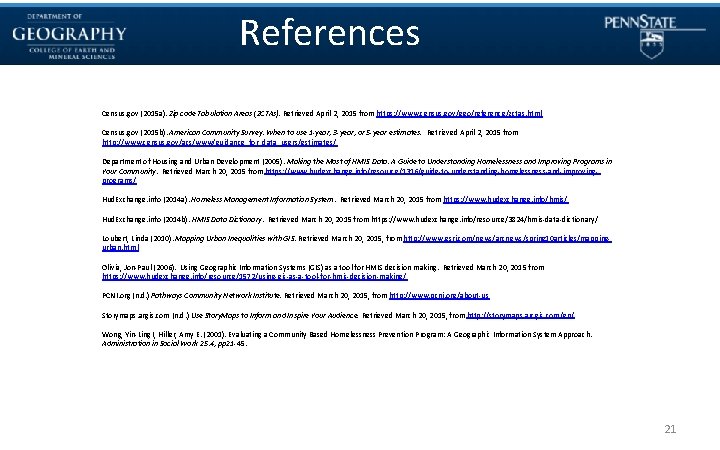
References Census. gov (2015 a). Zip code Tabulation Areas (ZCTAs). Retrieved April 2, 2015 from https: //www. census. gov/geo/reference/zctas. html Census. gov (2015 b). American Community Survey: When to use 1 -year, 3 -year, or 5 -year estimates. Retrieved April 2, 2015 from http: //www. census. gov/acs/www/guidance_for_data_users/estimates/ Department of Housing and Urban Development (2005). Making the Most of HMIS Data: A Guide to Understanding Homelessness and Improving Programs in Your Community. Retrieved March 20, 2015 from https: //www. hudexchange. info/resource/1316/guide-to-understanding-homelessness-and-improvingprograms/ Hud. Exchange. info (2014 a). Homeless Management Information System. Retrieved March 20, 2015 from https: //www. hudexchange. info/hmis/ Hud. Exchange. info (2014 b). HMIS Data Dictionary. Retrieved March 20, 2015 from https: //www. hudexchange. info/resource/3824/hmis-data-dictionary/ Loubert, Linda (2010). Mapping Urban Inequalities with GIS. Retrieved March 20, 2015, from http: //www. esri. com/news/arcnews/spring 10 articles/mappingurban. html Olivia, Jon-Paul (2006). Using Geographic Information Systems (GIS) as a tool for HMIS decision making. Retrieved March 20, 2015 from https: //www. hudexchange. info/resource/1572/using-gis-as-a-tool-for-hmis-decision-making/ PCNI. org (n. d. ) Pathways Community Network Institute. Retrieved March 20, 2015, from http: //www. pcni. org/about-us Storymaps. argis. com (n. d. ) Use Story. Maps to Inform and Inspire Your Audience. Retrieved March 20, 2015, from http: //storymaps. arcgis. com/en/ Wong, Yin-Ling I, Hiller, Amy E. (2001). Evaluating a Community Based Homelessness Prevention Program: A Geographic Information System Approach. Administration in Social Work 25: 4, pp 21 -45. 21