
A Geographers World Chapter 1 Studying Geography Geography
- Slides: 24
A Geographer’s World Chapter 1: Studying Geography
Geography • Discussion question: What is Geography? • Count off 1 -12
Activity • What animal do you have? • Where does this animal live? • What is the geography like where your animal lives? – Things to think about… food, climate, physical features of the land, human interaction
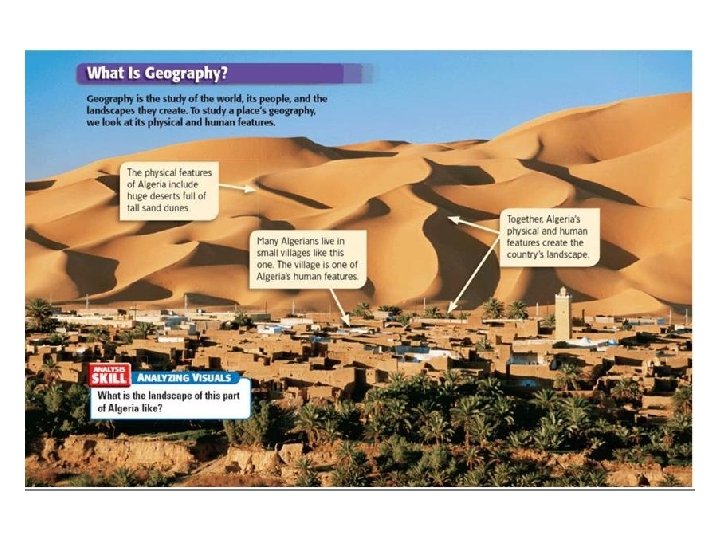
Geography Science: Geographers ask questions about how the world works Geographers gather and interpret data Social Science: Geography studies people and the relationships with the world around them Geographers ask questions, gathering data about peoples lives and communities
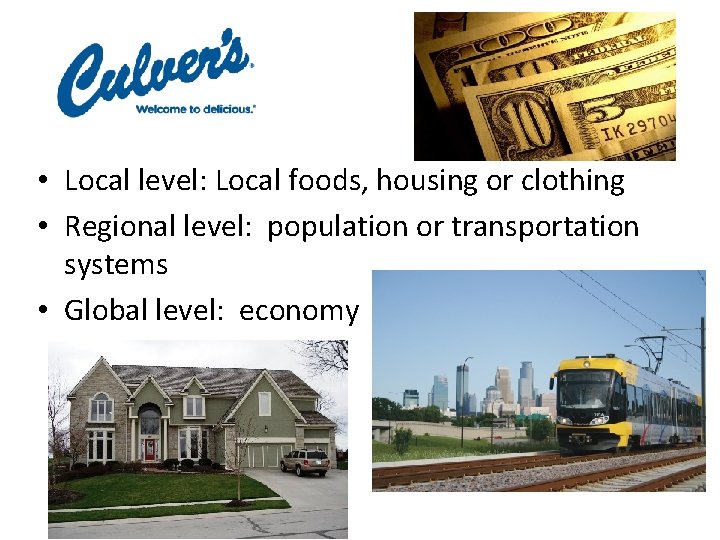
• Local level: Local foods, housing or clothing • Regional level: population or transportation systems • Global level: economy
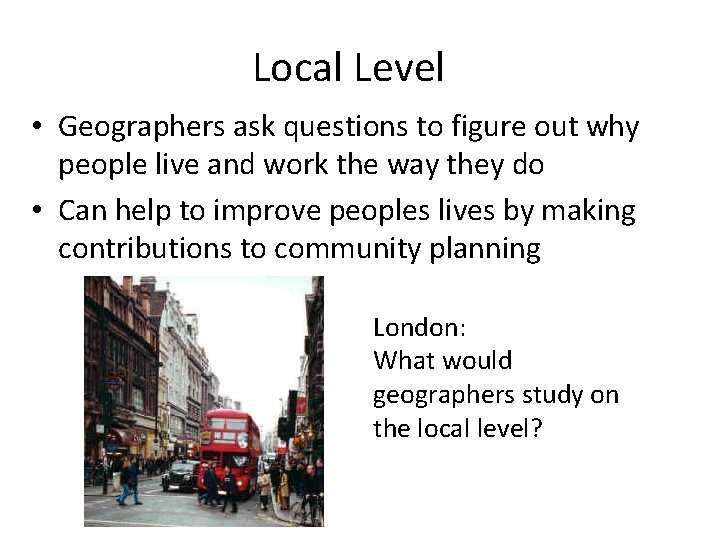
Local Level • Geographers ask questions to figure out why people live and work the way they do • Can help to improve peoples lives by making contributions to community planning London: What would geographers study on the local level?
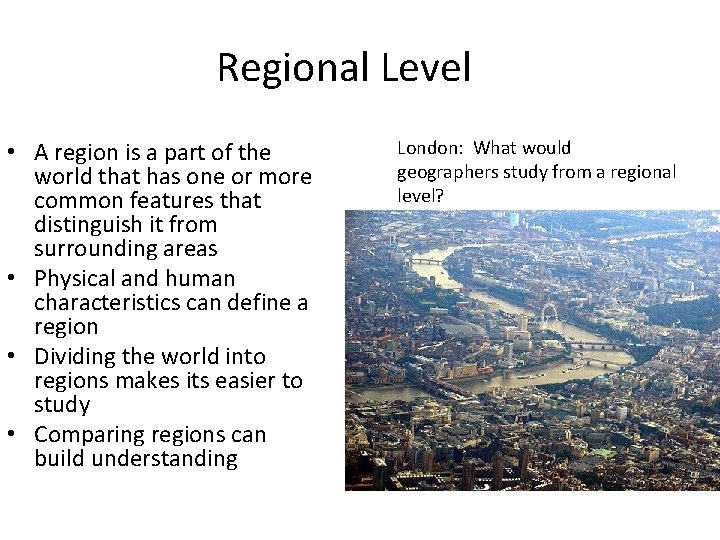
Regional Level • A region is a part of the world that has one or more common features that distinguish it from surrounding areas • Physical and human characteristics can define a region • Dividing the world into regions makes its easier to study • Comparing regions can build understanding London: What would geographers study from a regional level?
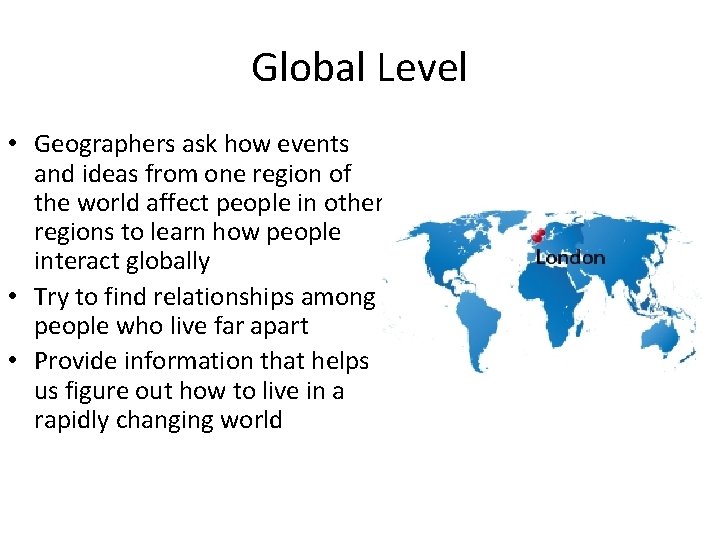
Global Level • Geographers ask how events and ideas from one region of the world affect people in other regions to learn how people interact globally • Try to find relationships among people who live far apart • Provide information that helps us figure out how to live in a rapidly changing world
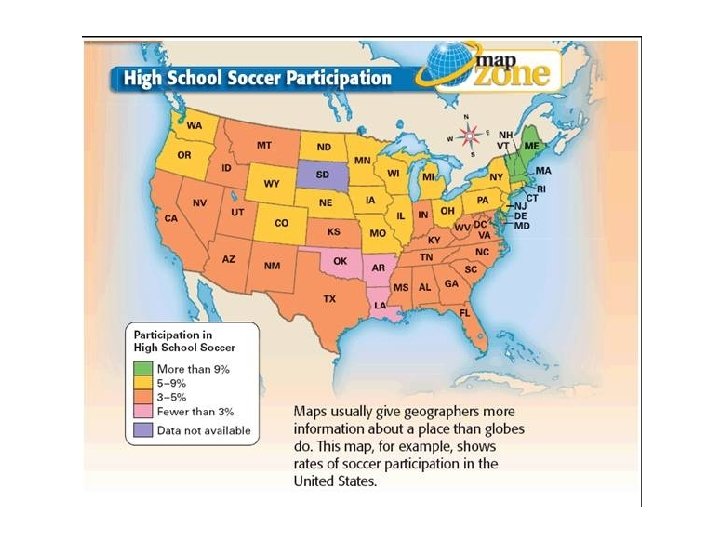
Geographers Tools • Maps – A map is a flat drawing that shows all or part of the earths surface – Details can be distorted, or altered, in order to show on a flat surface – Easy to work with – Can show a great variety of information
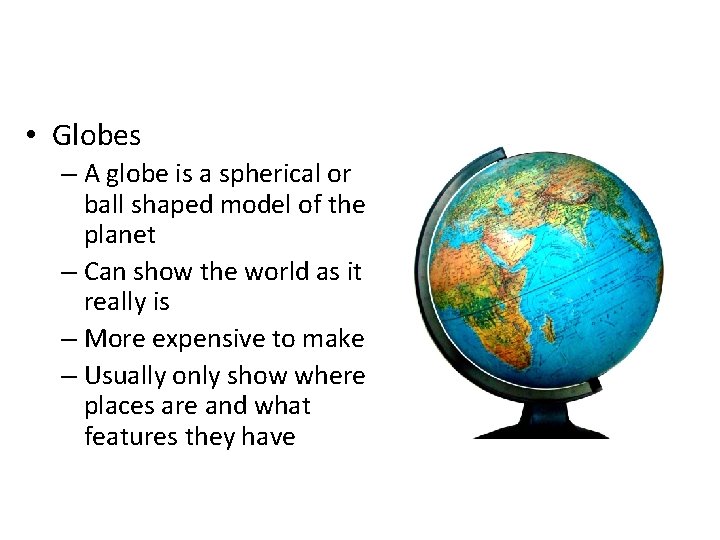
• Globes – A globe is a spherical or ball shaped model of the planet – Can show the world as it really is – More expensive to make – Usually only show where places are and what features they have
Other Tools • Satellite images – Show what an area looks like from above Earth – Collect information that can’t be seen from the planet’s surface • Computer programs – Create, update, and compare maps • Measuring devices to record data • Notebook and recorder to take notes
Five Themes of Geography 1. 2. 3. 4. 5. Location Place Human-Environment Interaction Movement Regions
Location • Every point on Earth has a location • Absolute location: specific description of where a place is, such as an address • Relative location: general description of where a place is • What examples can you think of?
Place • An area’s landscape: The features that define the area and make it different from other places • Can include land, climate, and people • Examples?
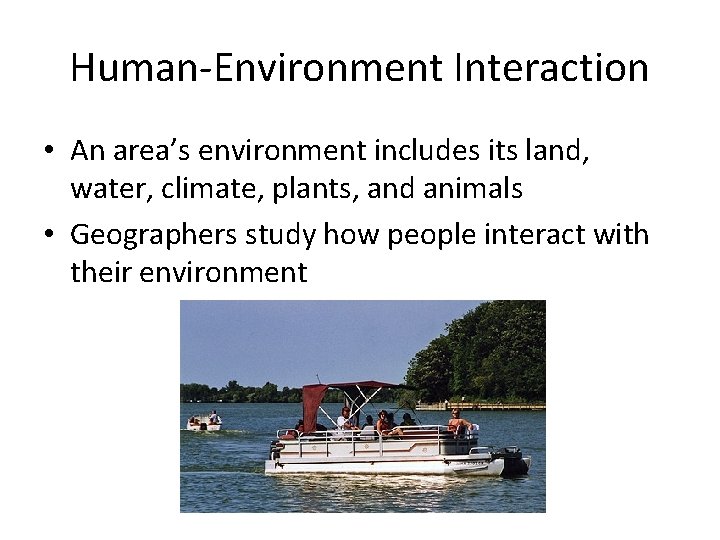
Human-Environment Interaction • An area’s environment includes its land, water, climate, plants, and animals • Geographers study how people interact with their environment
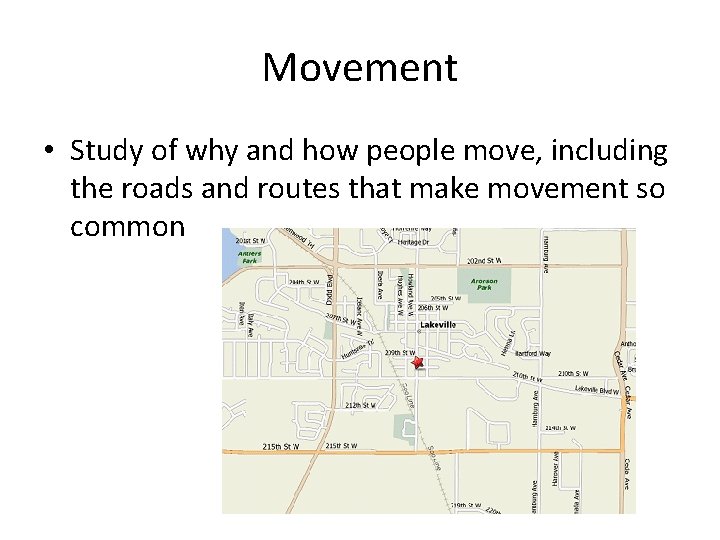
Movement • Study of why and how people move, including the roads and routes that make movement so common
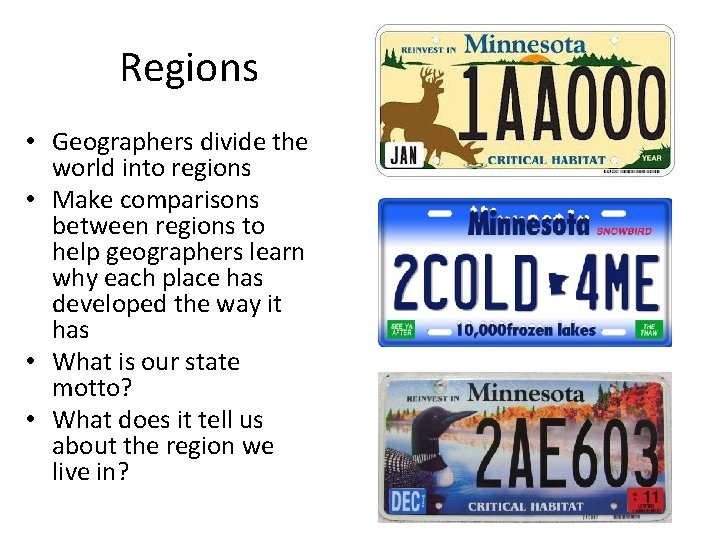
Regions • Geographers divide the world into regions • Make comparisons between regions to help geographers learn why each place has developed the way it has • What is our state motto? • What does it tell us about the region we live in?
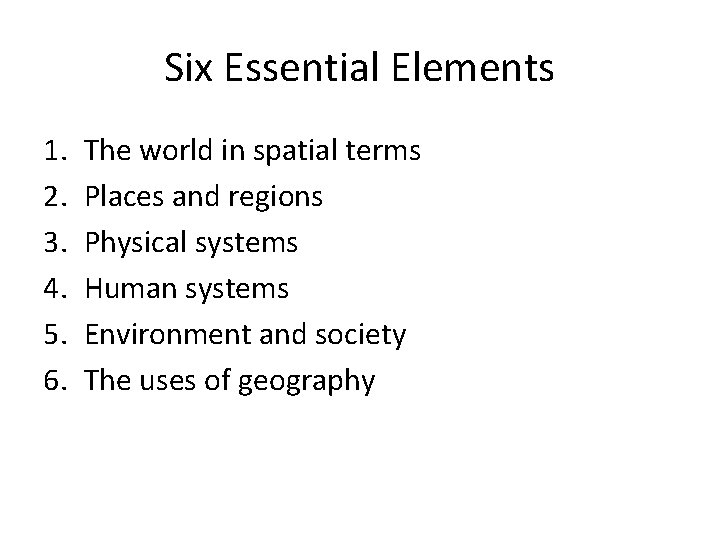
Six Essential Elements • Each element is a big idea that link several standards together. • The six essential elements build on the five themes of geography, so they are closely related • Page 13 lists the six essential elements
Six Essential Elements 1. 2. 3. 4. 5. 6. The world in spatial terms Places and regions Physical systems Human systems Environment and society The uses of geography
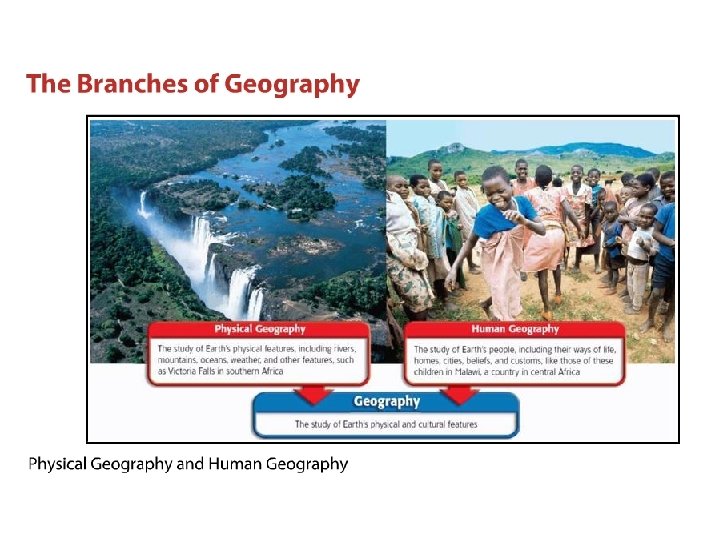
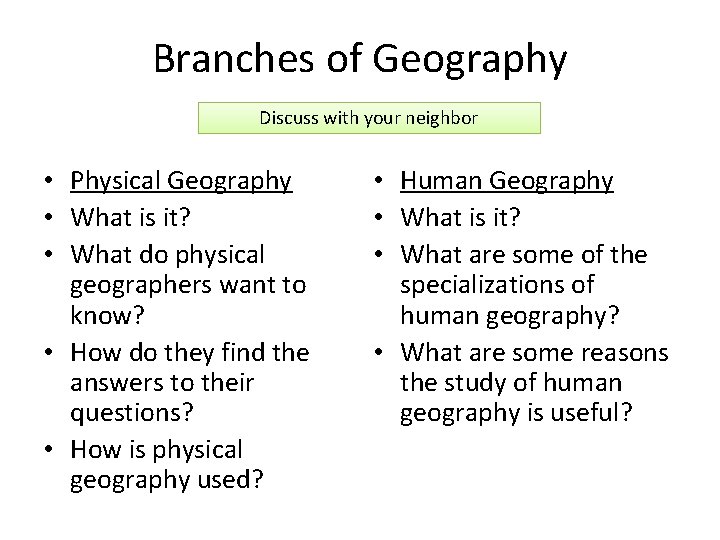
Branches of Geography Discuss with your neighbor • Physical Geography • What is it? • What do physical geographers want to know? • How do they find the answers to their questions? • How is physical geography used? • Human Geography • What is it? • What are some of the specializations of human geography? • What are some reasons the study of human geography is useful?
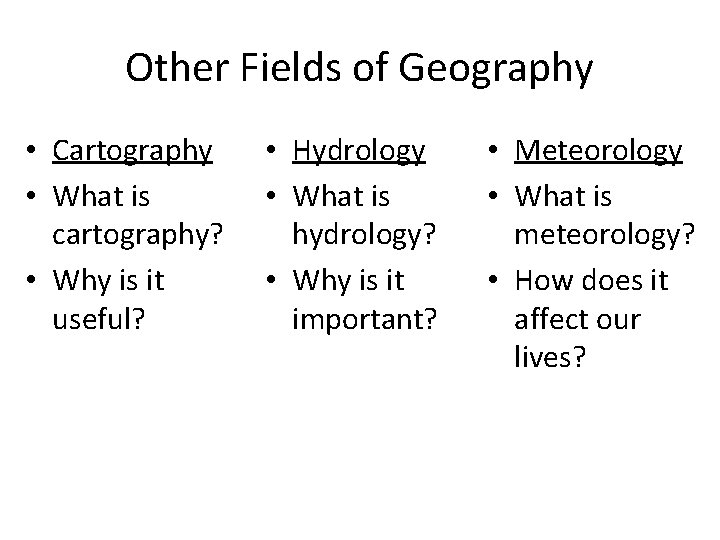
Other Fields of Geography • Cartography • What is cartography? • Why is it useful? • Hydrology • What is hydrology? • Why is it important? • Meteorology • What is meteorology? • How does it affect our lives?