
A Gene Expression Screen Zhou Wang and Donald
- Slides: 20
A Gene Expression Screen Zhou Wang and Donald D. Brown Presented By: Neema Izadi
Introduction • In Amphibian Tadpole 1) Thyroid hormone is known to cause tail degeneration. 2) Study done to figure out which genes are up regulated and down regulated. 3) Used genetic screening • • • Estimate number of genes involved Identify genes involved Guarantee genes are involved in process
Background 1) Microarray techniques are presently used to identify differing gene expression 2) Instead of ~20 genes, DNA Microarray can find hundreds. 3) Microarray techniques did not become available until 1995. 4) This study was done in 1991
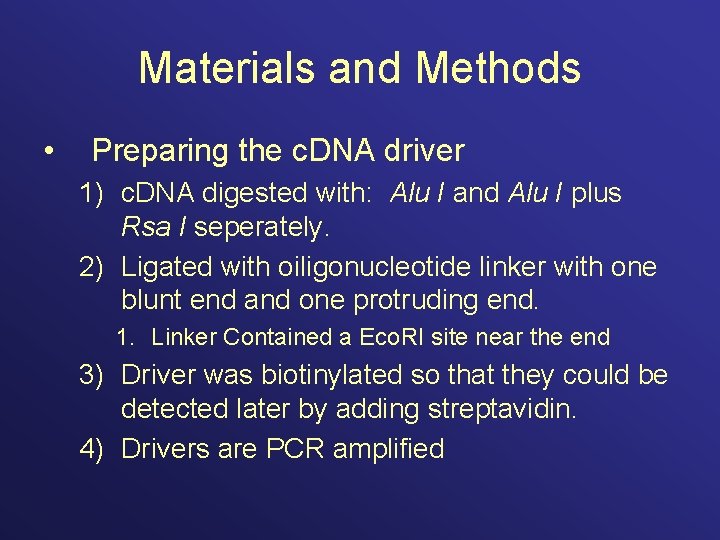
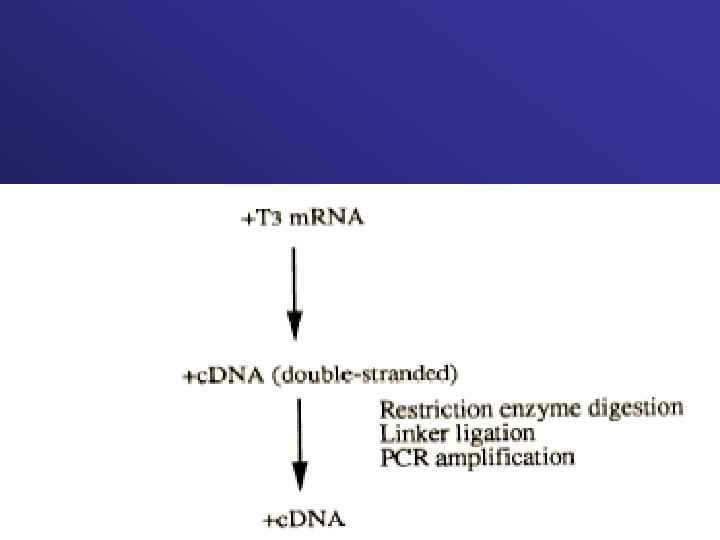
Materials and Methods • Preparing the c. DNA 1) Amputated tadpole tails and created: (-) control and (+) T 3 -treated 2) Oligo(d. T) used to prime first c. DNA strand 3) Average size insert was 2 to 3 kb, largest was 5 kb.
Materials and Methods • Preparing the c. DNA driver 1) c. DNA digested with: Alu I and Alu I plus Rsa I seperately. 2) Ligated with oiligonucleotide linker with one blunt end and one protruding end. 1. Linker Contained a Eco. RI site near the end 3) Driver was biotinylated so that they could be detected later by adding streptavidin. 4) Drivers are PCR amplified
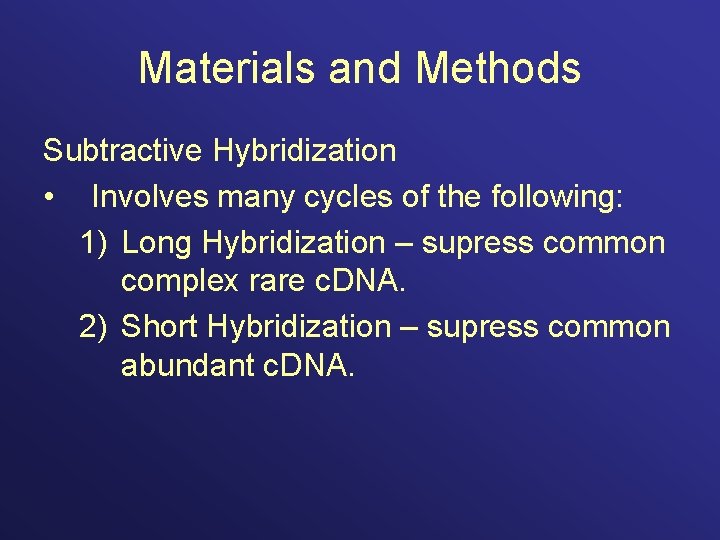
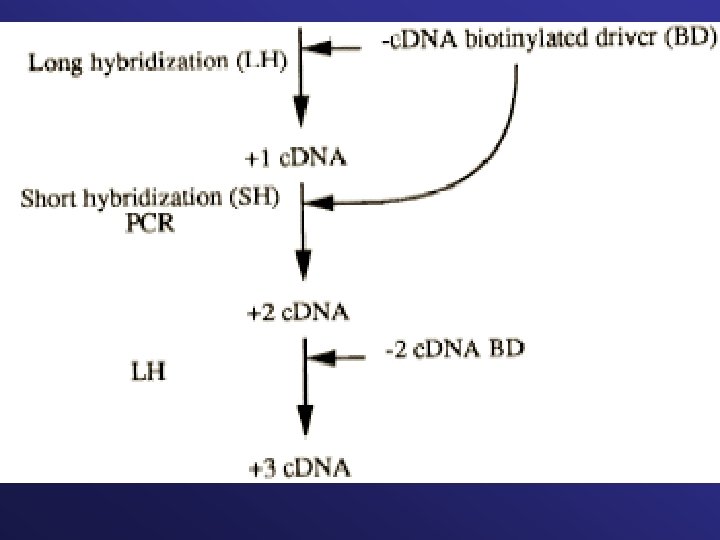
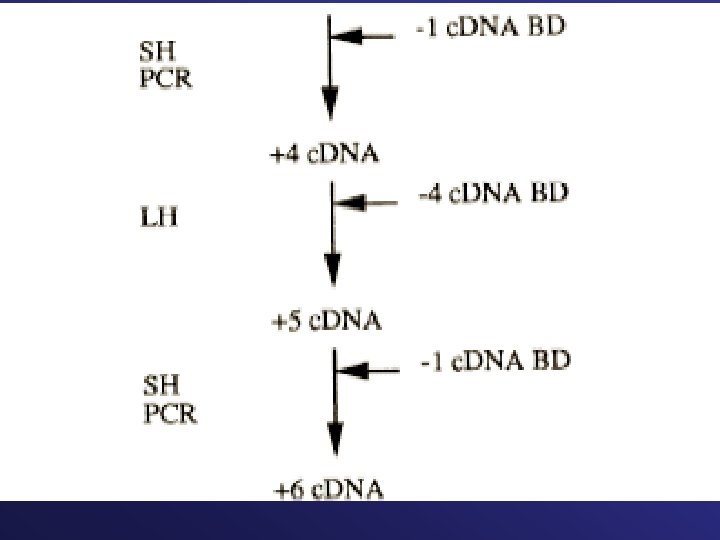
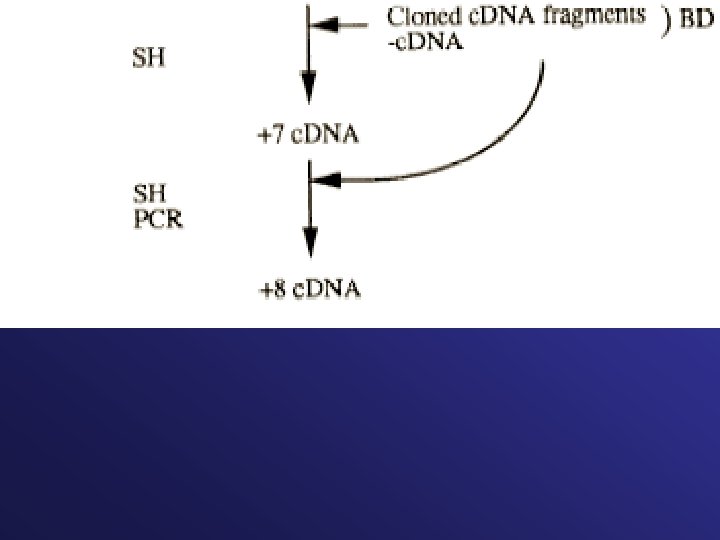
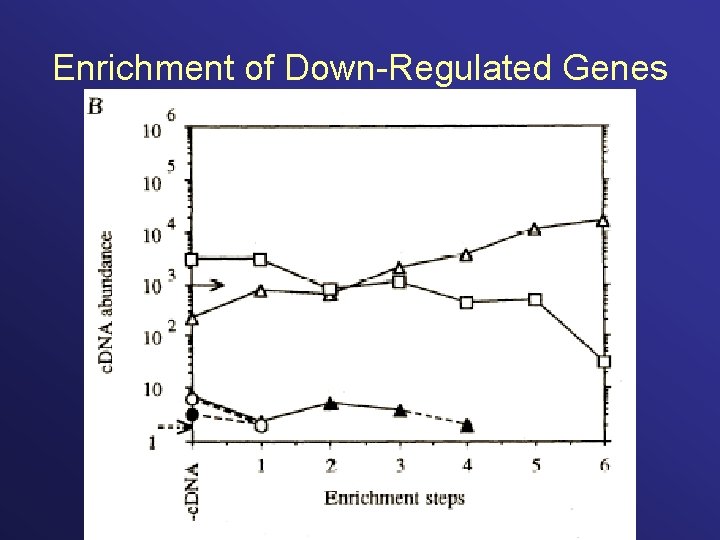
Materials and Methods Subtractive Hybridization • Involves many cycles of the following: 1) Long Hybridization – supress common complex rare c. DNA. 2) Short Hybridization – supress common abundant c. DNA.
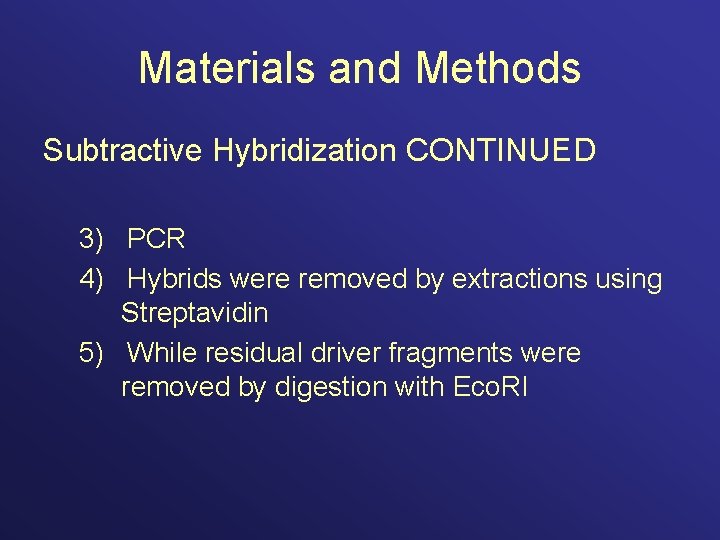
Materials and Methods Subtractive Hybridization CONTINUED 3) PCR 4) Hybrids were removed by extractions using Streptavidin 5) While residual driver fragments were removed by digestion with Eco. RI
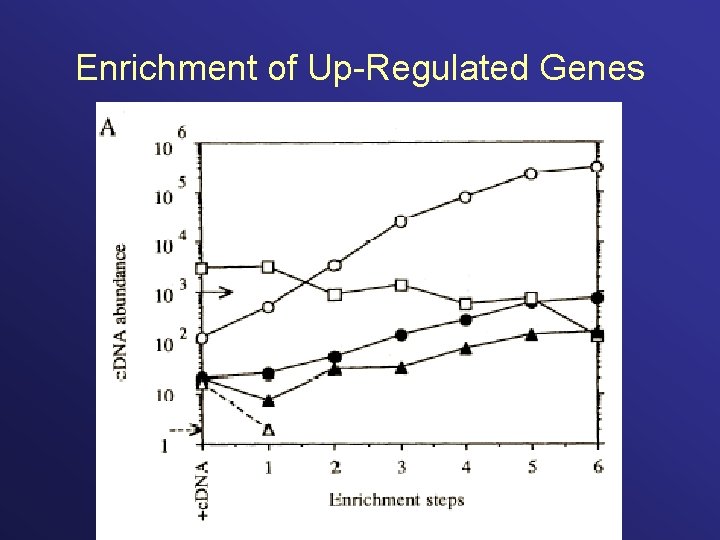
Enrichment of Up-Regulated Genes
Enrichment of Down-Regulated Genes
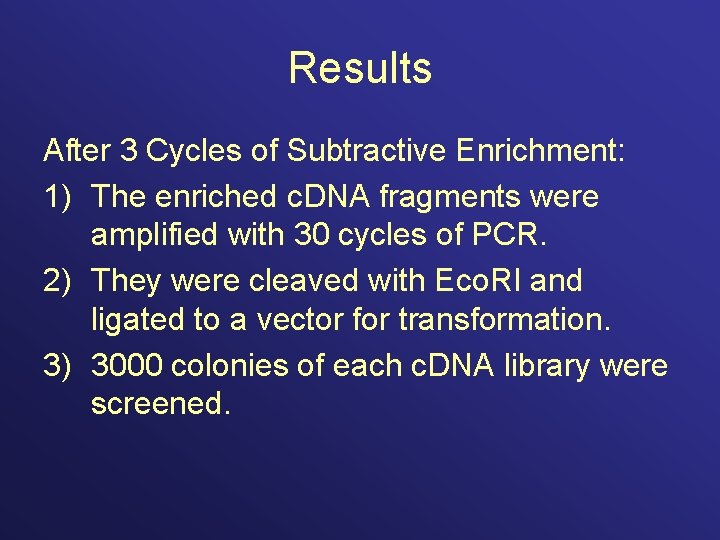
Results After 3 Cycles of Subtractive Enrichment: 1) The enriched c. DNA fragments were amplified with 30 cycles of PCR. 2) They were cleaved with Eco. RI and ligated to a vector for transformation. 3) 3000 colonies of each c. DNA library were screened.
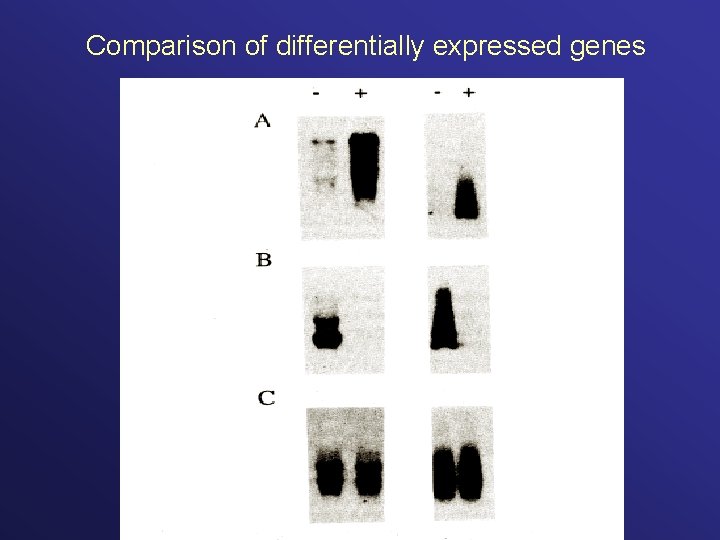
Comparison of differentially expressed genes
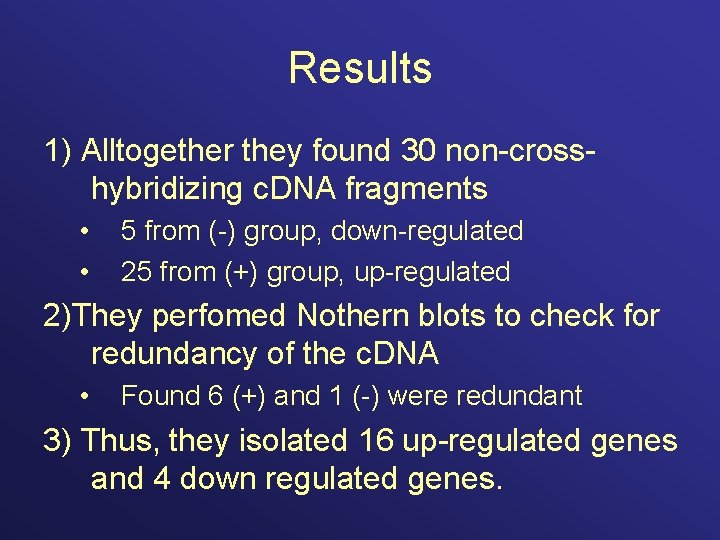
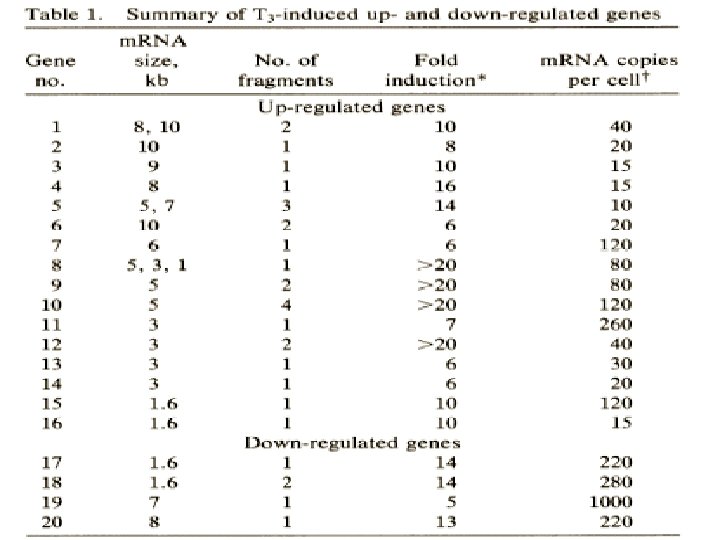
Results 1) Alltogether they found 30 non-crosshybridizing c. DNA fragments • • 5 from (-) group, down-regulated 25 from (+) group, up-regulated 2)They perfomed Nothern blots to check for redundancy of the c. DNA • Found 6 (+) and 1 (-) were redundant 3) Thus, they isolated 16 up-regulated genes and 4 down regulated genes.
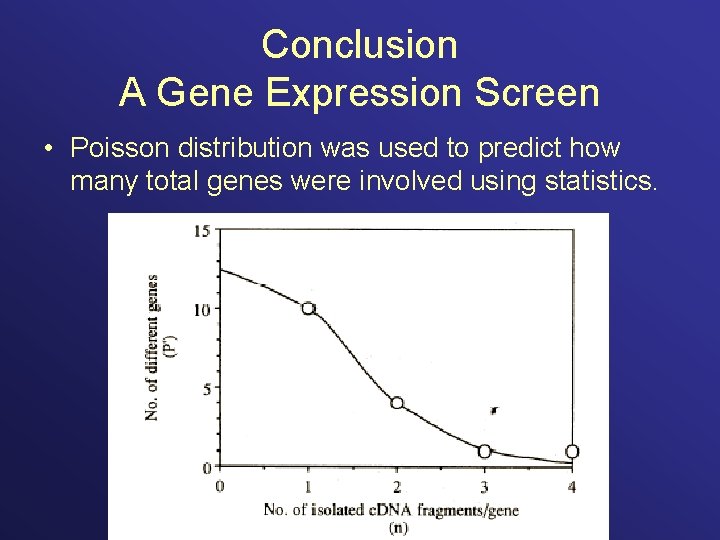
Conclusion A Gene Expression Screen • Poisson distribution was used to predict how many total genes were involved using statistics.
Limitations 1)Gene expression screen will not detect: • genes that lack a poly(A) tail • Genes that are small enough to escape restriction enzyme digestion • Genes that can not be amplified by PCR 2)PCR also provides its own bias • PCR does not amplify everything uniformly so biases in frequency may result.
In Case You Want More. . . • The thyroid hormone-induced tail resorption program during Xenopus laevis metamorphosis Donald D. Brown et al. 1995 • Application of Suppression Subtractive Hybridization (SSH) to Cloning Differentially Expressed c. DNA in Dunaliella salina (Chlorophyta) Under Hyperosmotic Shock Xiao-Ning Zhang et al. 2002 • Thyroid Hormone-Dependent Gene Expression in Differentiated Embryonic Stem Cells and Embryonal Carcinoma Cells: Identification of Novel Thyroid Hormone Target Genes by Deoxyribonucleic Acid Microarray Analysis Y. -Y. Liu et al. 2005