
A Framework for Understanding The Open Revolution How
- Slides: 27
A Framework for Understanding The Open Revolution How the Open Source movement is changing the world
Agenda What – Definition Why – Economics Why Now – Disruption – Participation What Next – Business Models
What
What is the Open Source Revolution Technical “Commun” Socialist Movement Hobby Disruptive Technology / Economic Fight Definition (The Innovator's Dilemma - Christensen) Open Source is a disruptive technology that will restructure the computer industry and bring pervasive, customized computing to all.
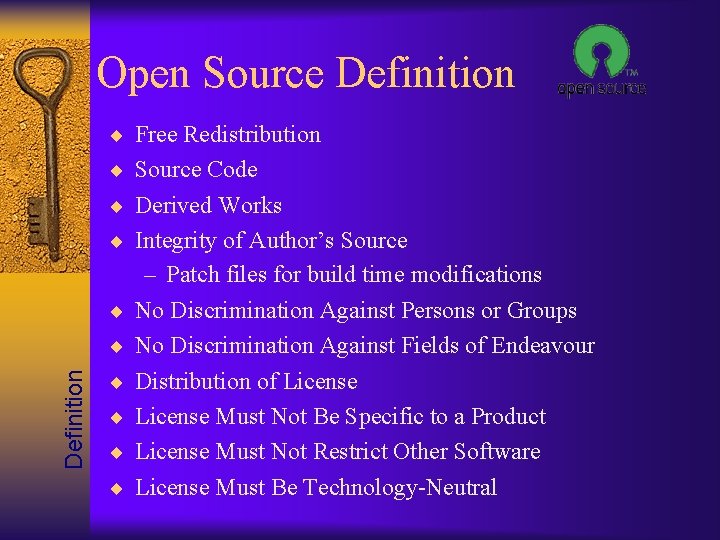
Open Source Definition Free Redistribution Source Code Derived Works Integrity of Author’s Source Definition – Patch files for build time modifications No Discrimination Against Persons or Groups No Discrimination Against Fields of Endeavour Distribution of License Must Not Be Specific to a Product License Must Not Restrict Other Software License Must Be Technology-Neutral
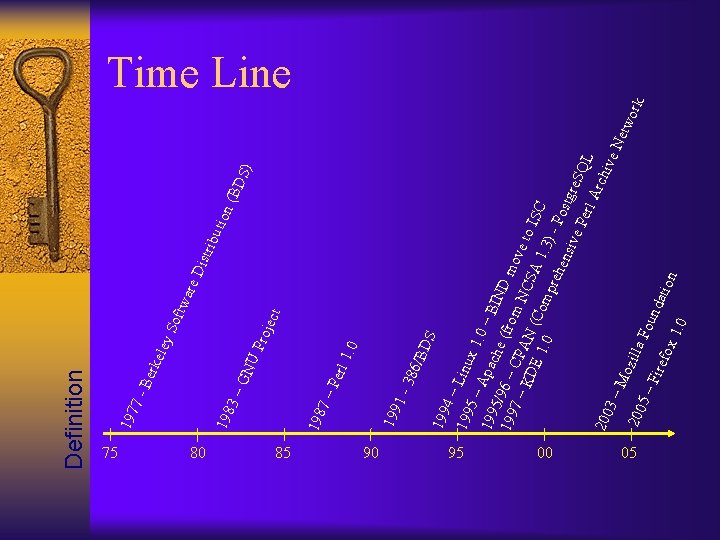
75 80 85 90 0 ct Sof twa roje 386 /BD l 1. Per GN UP kel ey Ber istr re D ibu tion S) (BD S 199 4– 199 Linu x 1 5– A 199 pac. 0 – B I h 5 199 /96 – e (fro ND m ov 7 – CPA m N KD CS e to I N A 1 SC E 1 (Co. 3) mp. 0 reh ens Postg ive r Per e. SQL l. A rch 200 ive 3– Net Mo wo z illa 200 rk Fou 5– Fire nda tion fox 1. 0 1 - 199 7– 198 3– 198 7 - 197 Definition Time Line 95 00 05
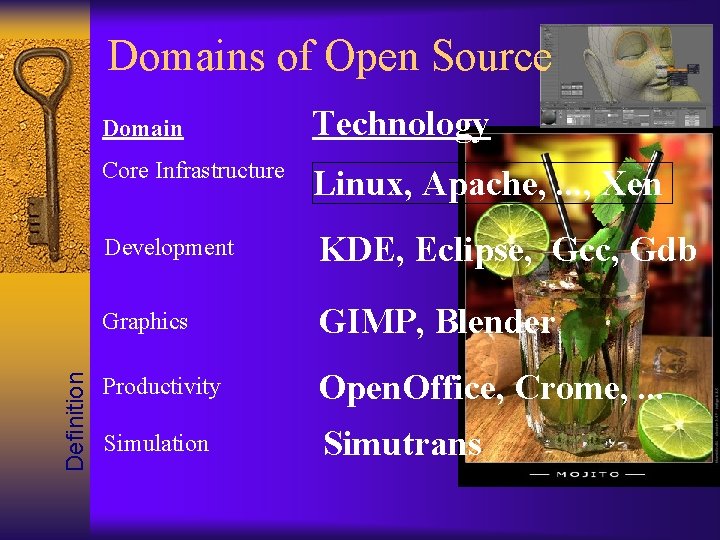
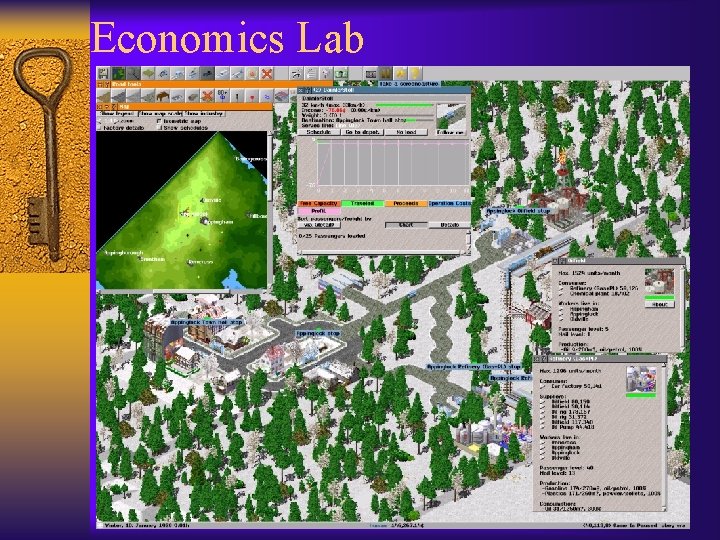
Definition Domains of Open Source Domain Technology Core Infrastructure Linux, Apache, . . . , Xen Development KDE, Eclipse, Gcc, Gdb Graphics GIMP, Blender Productivity Open. Office, Crome, . . . Simulation Simutrans
Economics Lab
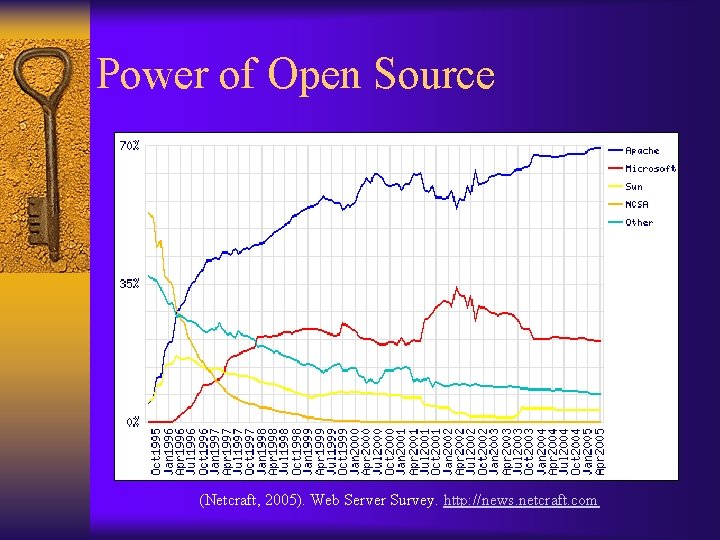
Power of Open Source (Netcraft, 2005). Web Server Survey. http: //news. netcraft. com
Why
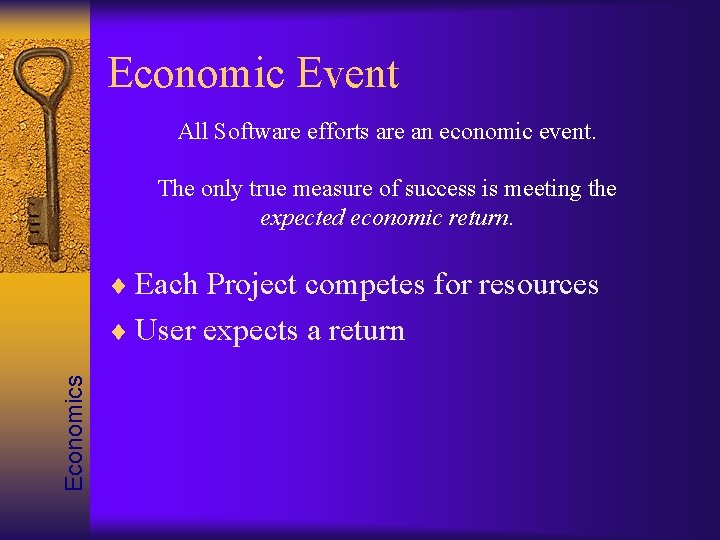
Economic Event All Software efforts are an economic event. The only true measure of success is meeting the expected economic return. Each Project competes for resources Economics User expects a return
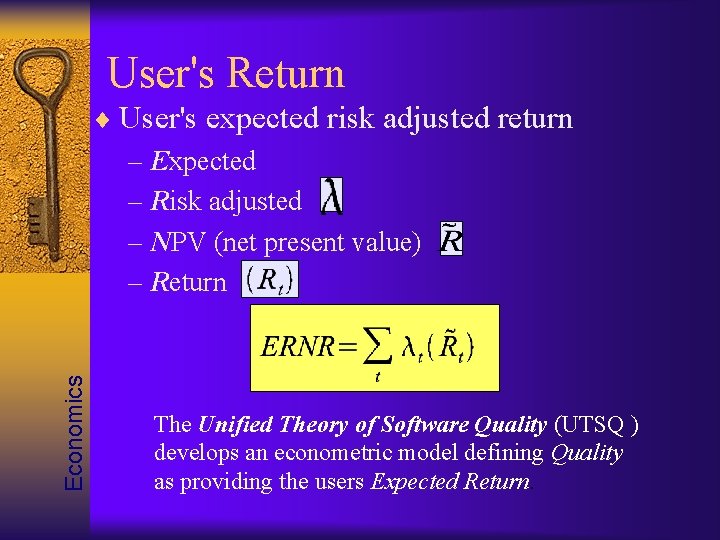
User's Return Economics User's expected risk adjusted return – Expected – Risk adjusted – NPV (net present value) – Return The Unified Theory of Software Quality (UTSQ ) develops an econometric model defining Quality as providing the users Expected Return.
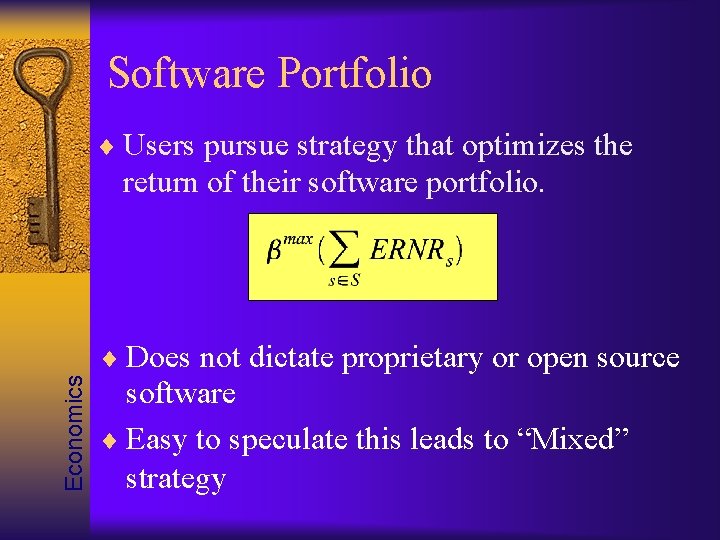
Software Portfolio Users pursue strategy that optimizes the return of their software portfolio. Economics Does not dictate proprietary or open source software Easy to speculate this leads to “Mixed” strategy
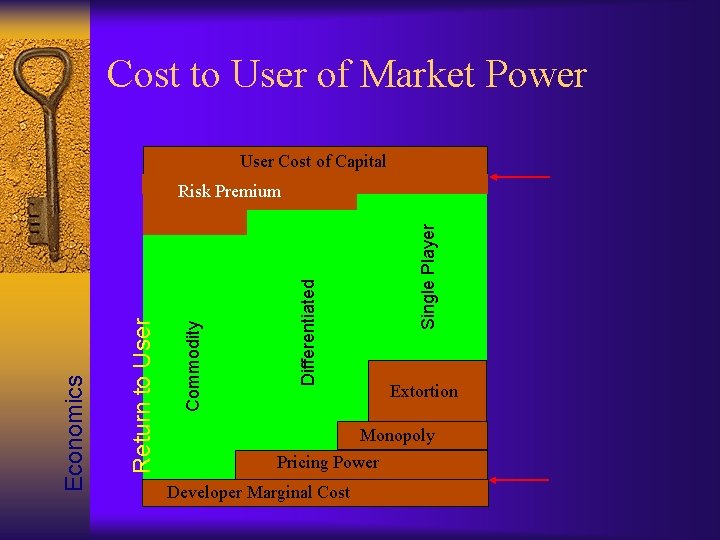
Cost to User of Market Power User Cost of Capital Single Player Differentiated Commodity Return to User Economics Risk Premium Extortion Monopoly Pricing Power Developer Marginal Cost
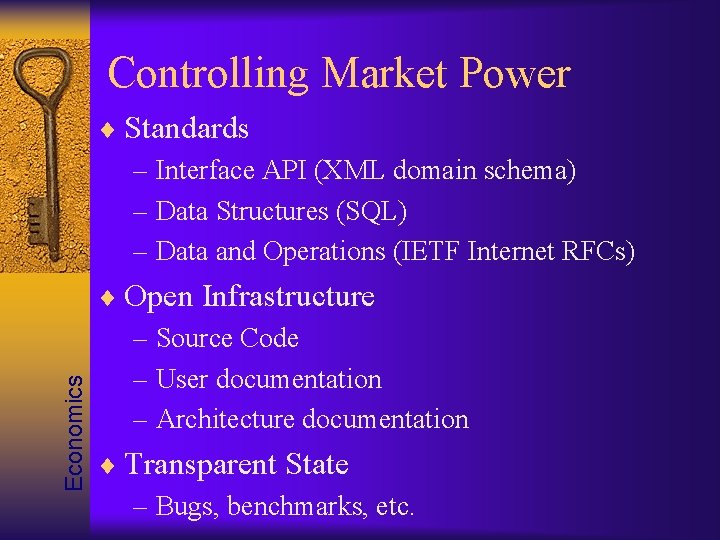
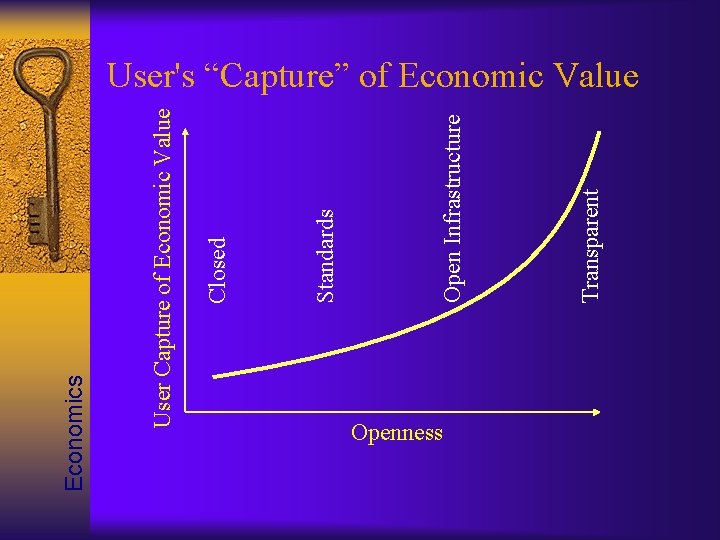
Controlling Market Power Economics Standards – Interface API (XML domain schema) – Data Structures (SQL) – Data and Operations (IETF Internet RFCs) Open Infrastructure – Source Code – User documentation – Architecture documentation Transparent State – Bugs, benchmarks, etc.
Openness Transparent Open Infrastructure Standards Closed User Capture of Economic Value Economics User's “Capture” of Economic Value
Why Now
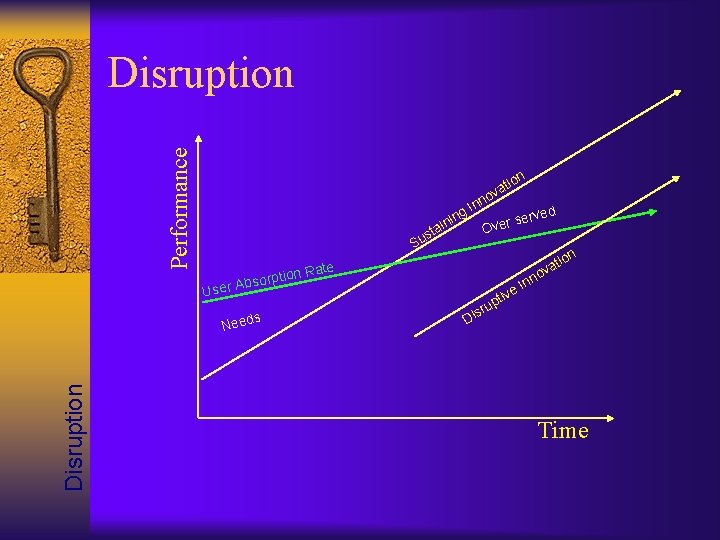
Disruption Framework to understand how technology Paradigm shifts happen – Why do the market leader always expose themselves to competition from upstarts – Paradigm shifts always change the winners and losers See the Open Source Revolution as part of a normal Disruption market dynamic
Disruption The theory of Disruptive Innovations developed in The Innovator's Dilemma and The Innovator's Solution – This is a shortcut to understanding the economics – C. Christensen, Harvard School of Business Disruption Presents the dynamics of why established firms always create an opportunity for disruptive technologies – They innovate faster than the clients can adopt new features or performance – Thus, they always create a market segment that is over-served
Performance Disruption nn g. I n i sta u S d erve s Over n Rate orptio er Abs s Need n tio a ov nn I ive Us Disruption n tio a ov pt u r is D Time
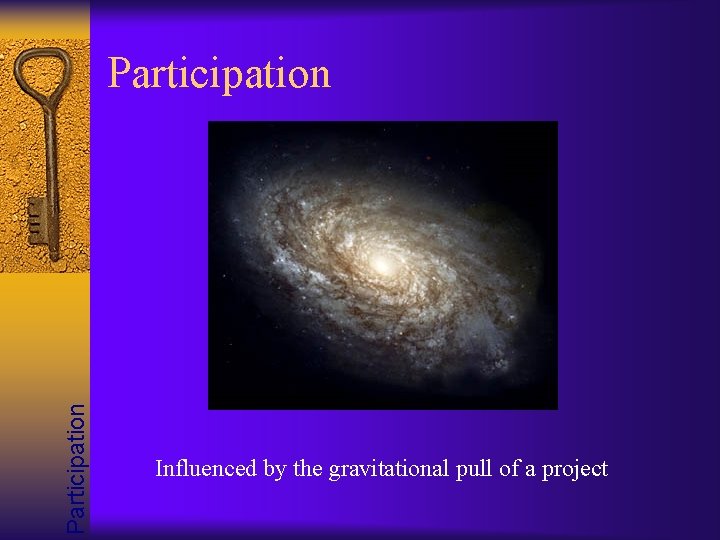
Participation Influenced by the gravitational pull of a project
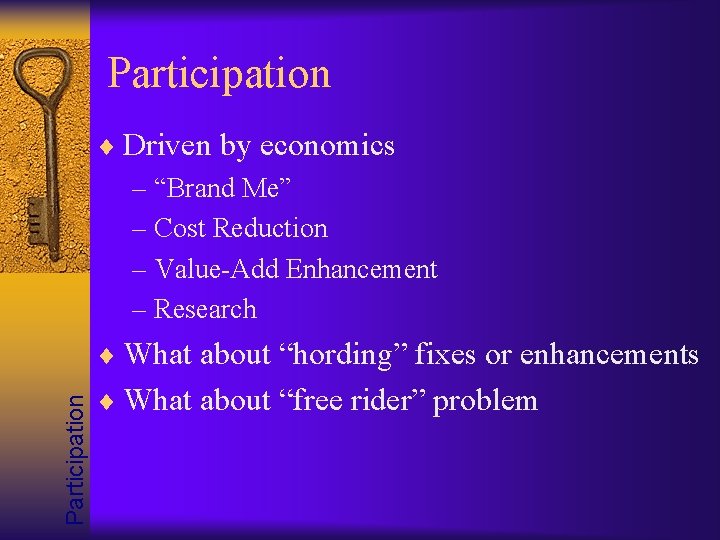
Participation Driven by economics – “Brand Me” – Cost Reduction – Value-Add Enhancement – Research Participation What about “hording” fixes or enhancements What about “free rider” problem
What Next
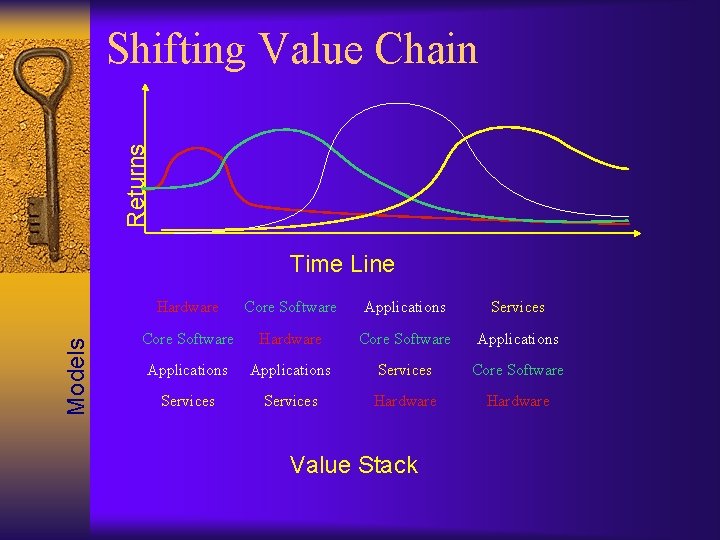
Returns Shifting Value Chain Models Time Line Hardware Core Software Applications Services Core Software Hardware Core Software Applications Services Core Software Services Hardware Value Stack
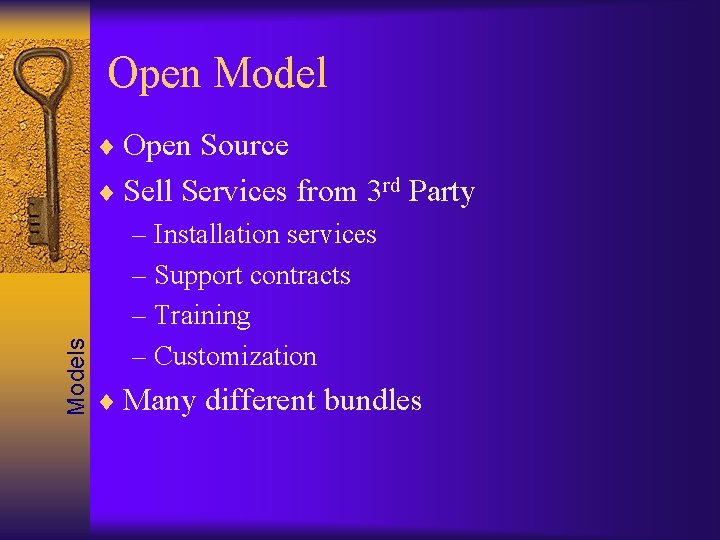
Open Models Open Source Sell Services from 3 rd Party – Installation services – Support contracts – Training – Customization Many different bundles
Presentation and References www. osnv. org