
A Formal Literary Paragraph What is a formal


- Slides: 18
A Formal Literary Paragraph
What is a formal literary paragraph? �A FLP is an analytical paragraph that makes and supports an argument. �You will be given a topic to discuss. �Your task is to create an idea based on the topic and to find relevant and supporting examples in the text to support your idea.
The FLP is the starting point � A FLP is written using similar techniques to an essay. �By practicing writing the FLP, you will also be establishing necessary essay writing skills.
Step 1 – The Hook �Write a catchy first sentence to interest your reader. �Make sure you connect it to your topic sentence. �Remember, there are lots of different ways to start your paragraph.
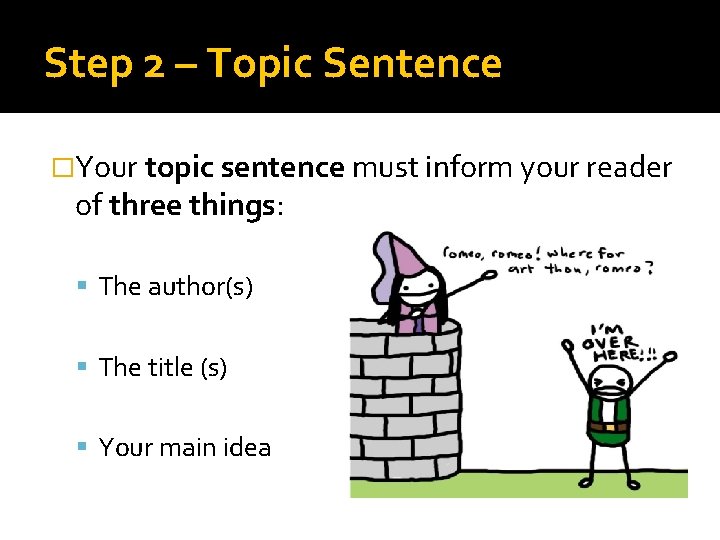
Step 2 – Topic Sentence �Your topic sentence must inform your reader of three things: The author(s) The title (s) Your main idea
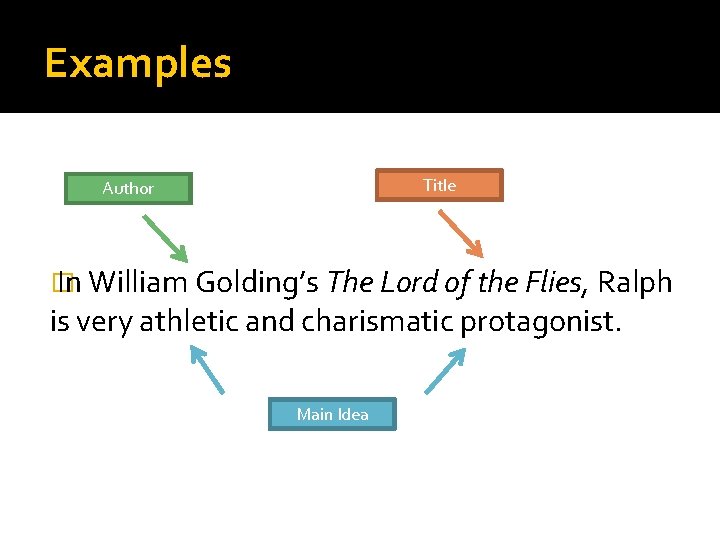
Examples Title Author � In William Golding’s The Lord of the Flies, Ralph is very athletic and charismatic protagonist. Main Idea
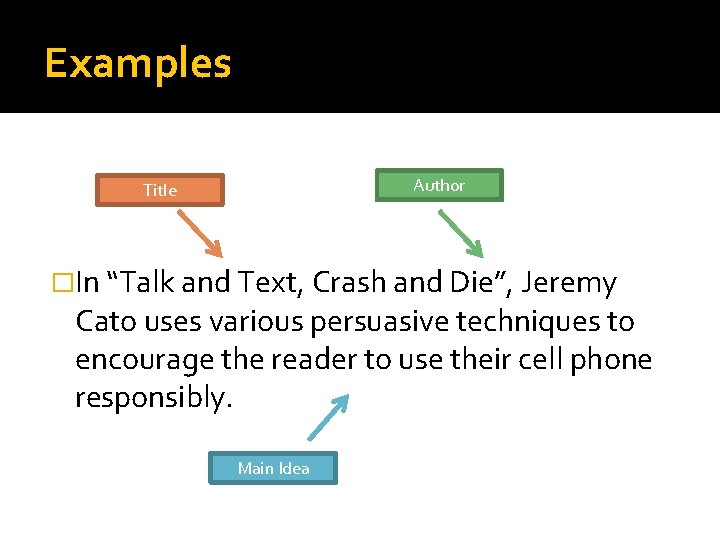
Examples Author Title �In “Talk and Text, Crash and Die”, Jeremy Cato uses various persuasive techniques to encourage the reader to use their cell phone responsibly. Main Idea
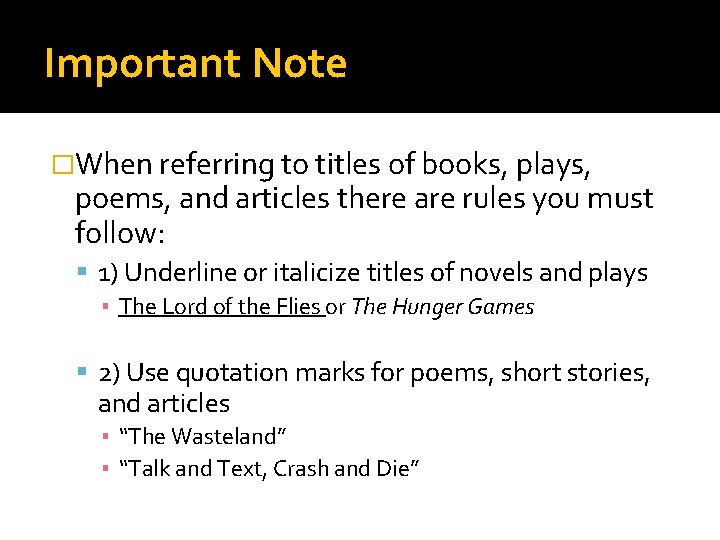
Important Note �When referring to titles of books, plays, poems, and articles there are rules you must follow: 1) Underline or italicize titles of novels and plays ▪ The Lord of the Flies or The Hunger Games 2) Use quotation marks for poems, short stories, and articles ▪ “The Wasteland” ▪ “Talk and Text, Crash and Die”
Step 3 – Make your 3 points �You want to include a minimum of three points in your paragraph. �The best way to present your points is to use the ACE structure. �You will need to use the ACE structure three times.
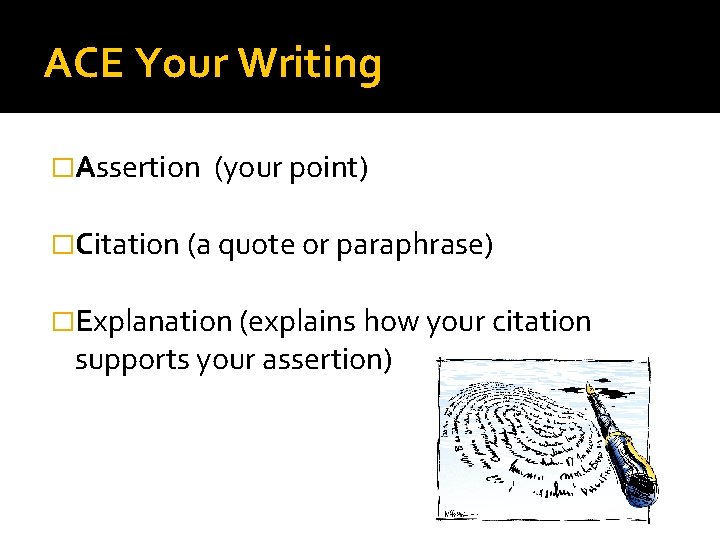
ACE Your Writing �Assertion (your point) �Citation (a quote or paraphrase) �Explanation (explains how your citation supports your assertion)
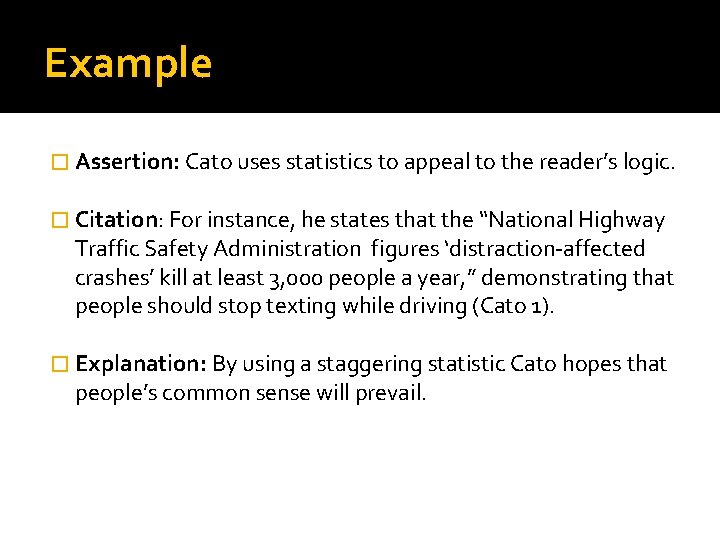
Example � Assertion: Cato uses statistics to appeal to the reader’s logic. � Citation: For instance, he states that the “National Highway Traffic Safety Administration figures ‘distraction-affected crashes’ kill at least 3, 000 people a year, ” demonstrating that people should stop texting while driving (Cato 1). � Explanation: By using a staggering statistic Cato hopes that people’s common sense will prevail.
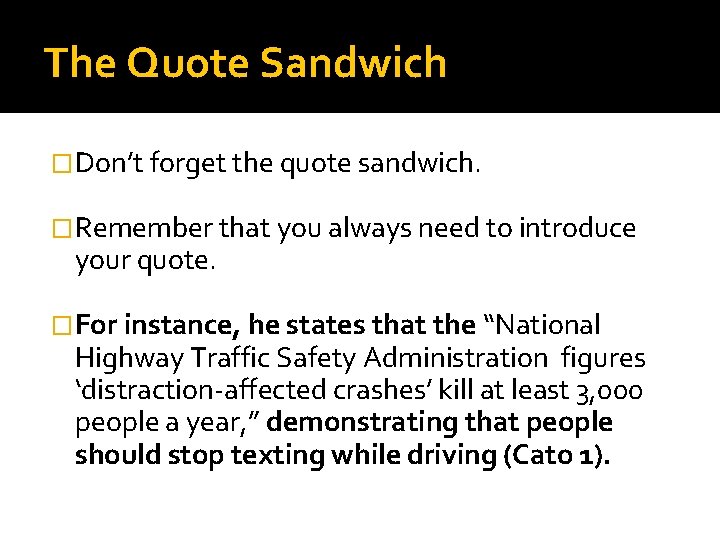
The Quote Sandwich �Don’t forget the quote sandwich. �Remember that you always need to introduce your quote. �For instance, he states that the “National Highway Traffic Safety Administration figures ‘distraction-affected crashes’ kill at least 3, 000 people a year, ” demonstrating that people should stop texting while driving (Cato 1).
Step 4 – A thoughtful conclusion �A strong concluding statement is extremely important. �You want to restate your main idea in a new and thought provoking way!
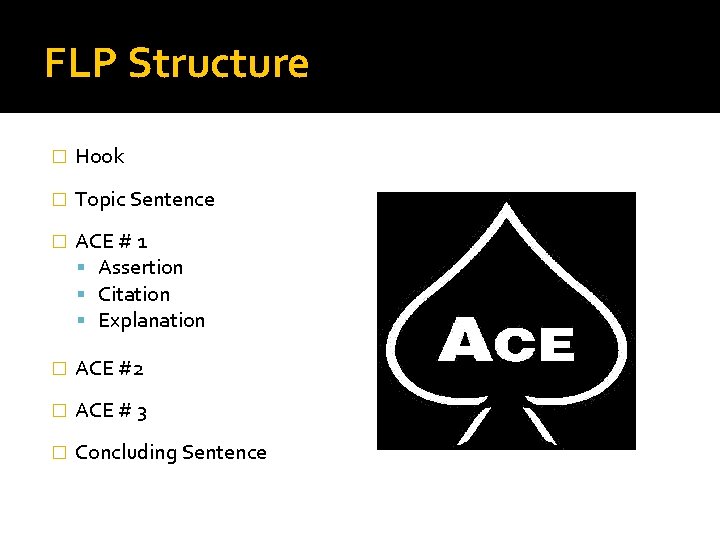
FLP Structure � Hook � Topic Sentence � ACE # 1 Assertion Citation Explanation � ACE #2 � ACE # 3 � Concluding Sentence
Formal Writing Rules �Avoid summarizing. You should assume your reader is very familiar with the text. �Always use the present tense. Ex. Romeo was in love with Juliet. ▪ This means Romeo is no longer in love with Juliet. Ex. Romeo is in love with Juliet.
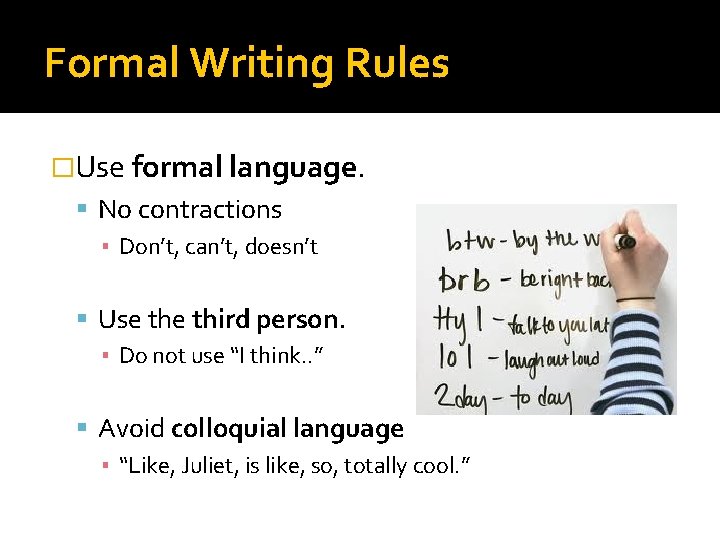
Formal Writing Rules �Use formal language. No contractions ▪ Don’t, can’t, doesn’t Use third person. ▪ Do not use “I think. . ” Avoid colloquial language ▪ “Like, Juliet, is like, so, totally cool. ”
Formal Writing Rules �Use transition words to connect your ideas
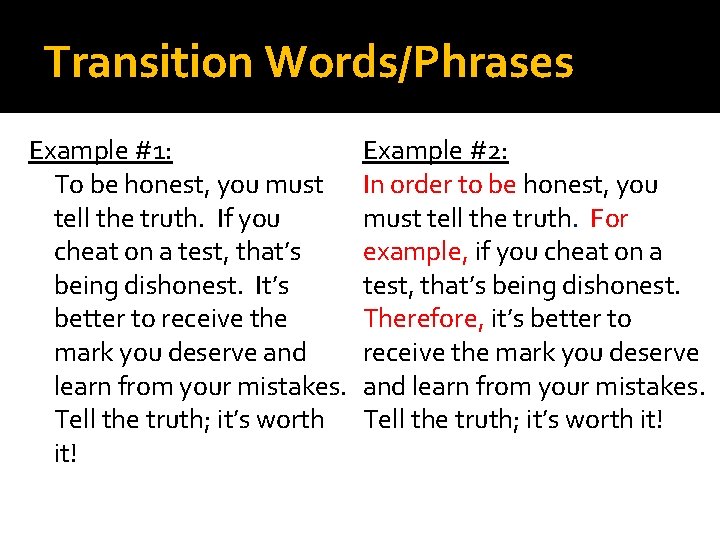
Transition Words/Phrases Example #1: To be honest, you must tell the truth. If you cheat on a test, that’s being dishonest. It’s better to receive the mark you deserve and learn from your mistakes. Tell the truth; it’s worth it! Example #2: In order to be honest, you must tell the truth. For example, if you cheat on a test, that’s being dishonest. Therefore, it’s better to receive the mark you deserve and learn from your mistakes. Tell the truth; it’s worth it!