
A Flexible Method for COBIT 2019 Process Selection
A Flexible Method for COBIT 2019 Process Selection André Fernandes, Rafael Almeida, Miguel Mira da Silva

Agenda • Introduction • Research Question • Theoretical Background • Proposal • Demonstration • Evaluation • Conclusion 2
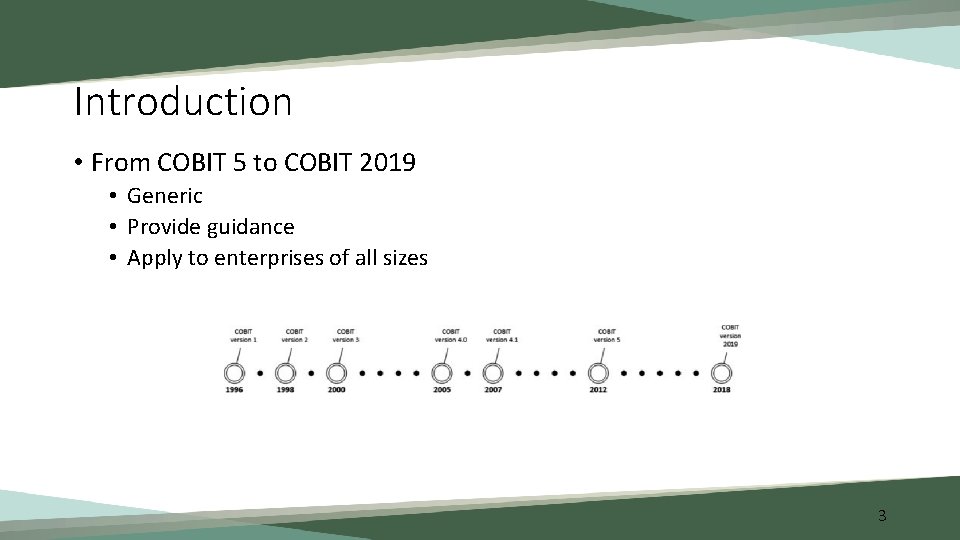
Introduction • From COBIT 5 to COBIT 2019 • Generic • Provide guidance • Apply to enterprises of all sizes 3
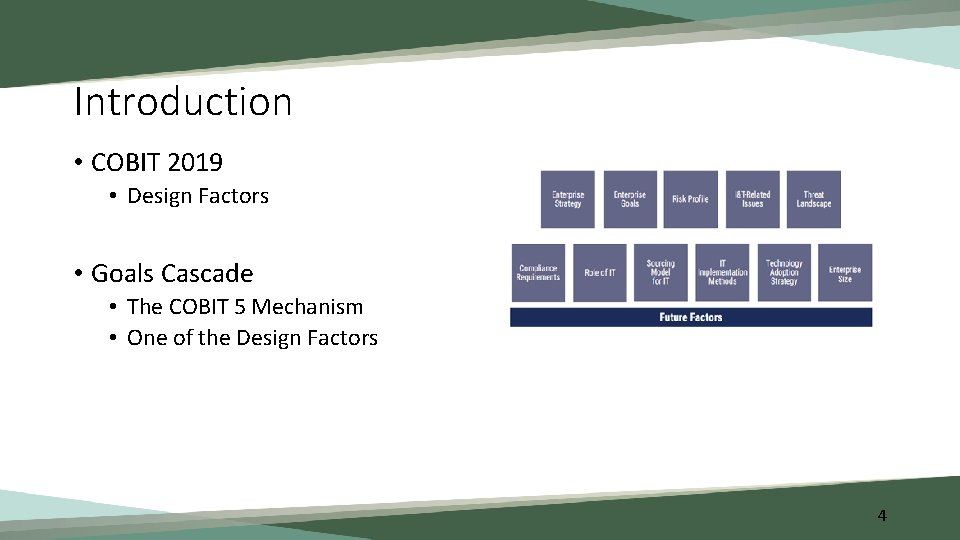
Introduction • COBIT 2019 • Design Factors • Goals Cascade • The COBIT 5 Mechanism • One of the Design Factors 4
Research Question • Addition or removal of Design Factors • Design Factor has its own set of evaluation parameters that are impossible to be modified, added or deleted • With the absence of customisation possibilities, this process cannot be adapted to the particular context of an organisation or improved based on the experiences and knowledge of expert • There is a lack of theoretical evidence that supports COBIT 2019 method 5
Theoretical Background • Contingency Factors: • Factors that, depending on organizations context, may influence the EGIT implementation. (Pereira & Mira da Silva, 2012) • These factors are called EGIT contingency factors 6
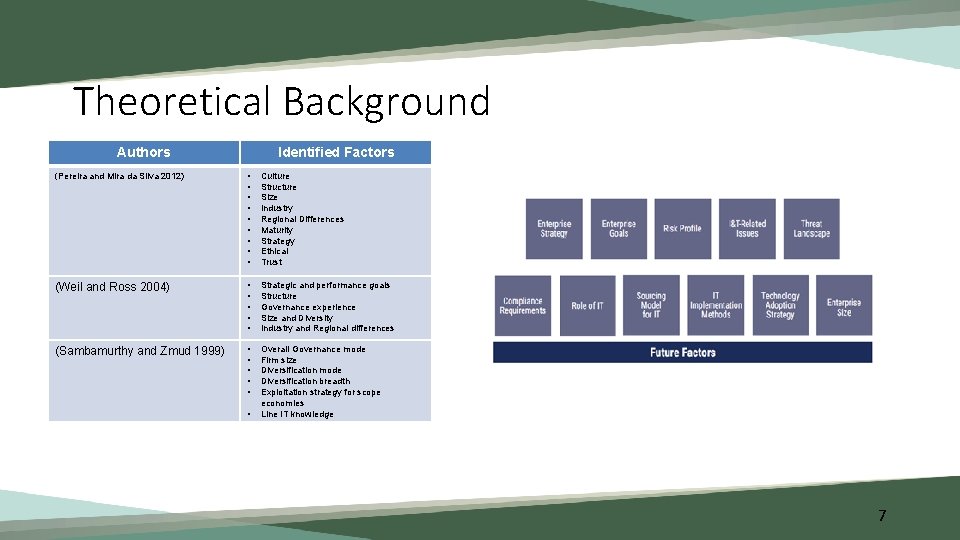
Theoretical Background Authors Identified Factors (Pereira and Mira da Silva 2012) • • • Culture Structure Size Industry Regional Differences Maturity Strategy Ethical Trust (Weil and Ross 2004) • • • Strategic and performance goals Structure Governance experience Size and Diversity Industry and Regional differences (Sambamurthy and Zmud 1999) • • • Overall Governance mode Firm size Diversification mode Diversification breadth Exploitation strategy for scope economies Line IT knowledge • 7
Theoretical Background • Multi-Criteria Decision Making (MCDM) • Methods that support decision making in the presence of multiple criteria factors • Can be applied into diverse real-world decisions. 8
Theoretical Background • Analytic Hierarchy Process (AHP) • Method for ranking decisions alternatives and selecting the best one • Works with multiple criteria • One of the most recognized methods in the literature (Velasquez & Hester, 2013) • Consistency Ratio 9
Proposal • Universality: The method should be applicable to all Design Factors. • Customisable Criteria: The method should allow the organisation to determine the weight of each of the criteria. • Flexibility: The method should allow the addition or removal of criteria as intended by the organisation. • Automatic: Part of the process should be completely automated. The level of automation should be similar to that presented by the COBIT 2019 Toolkit. 10
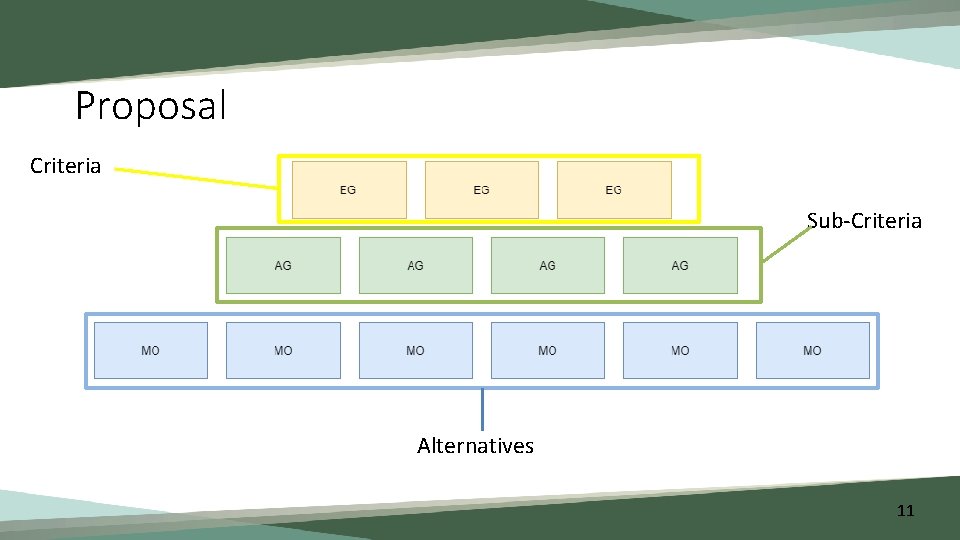
Proposal Criteria Sub-Criteria Alternatives 11
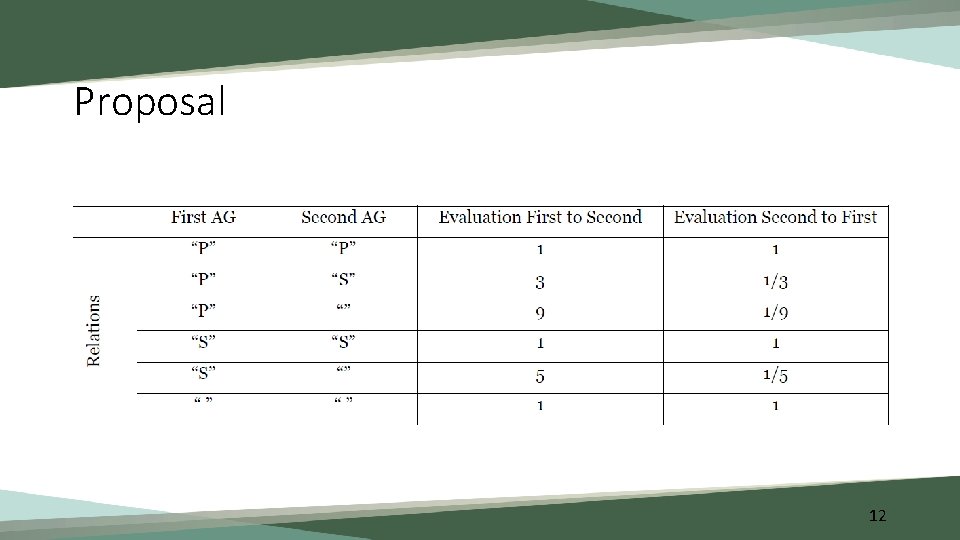
Proposal 12
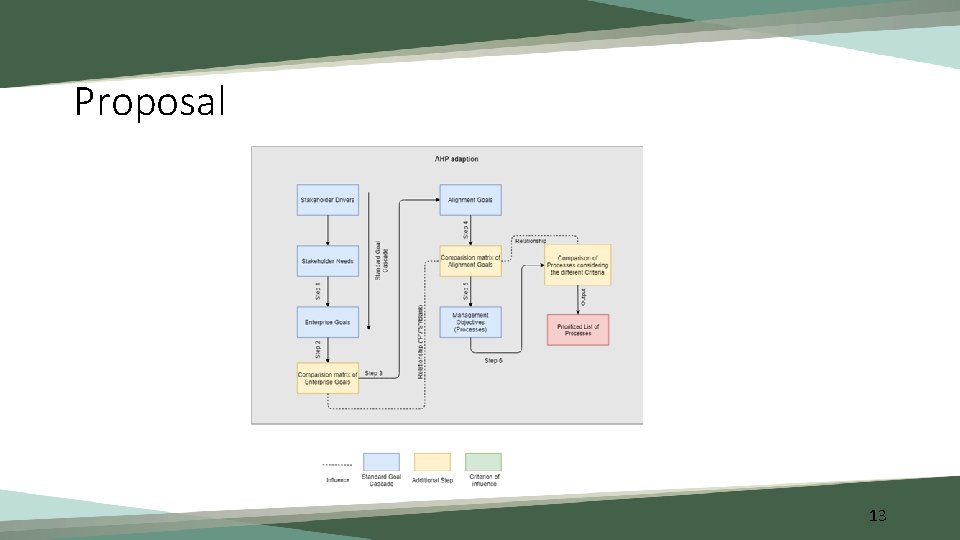
Proposal 13
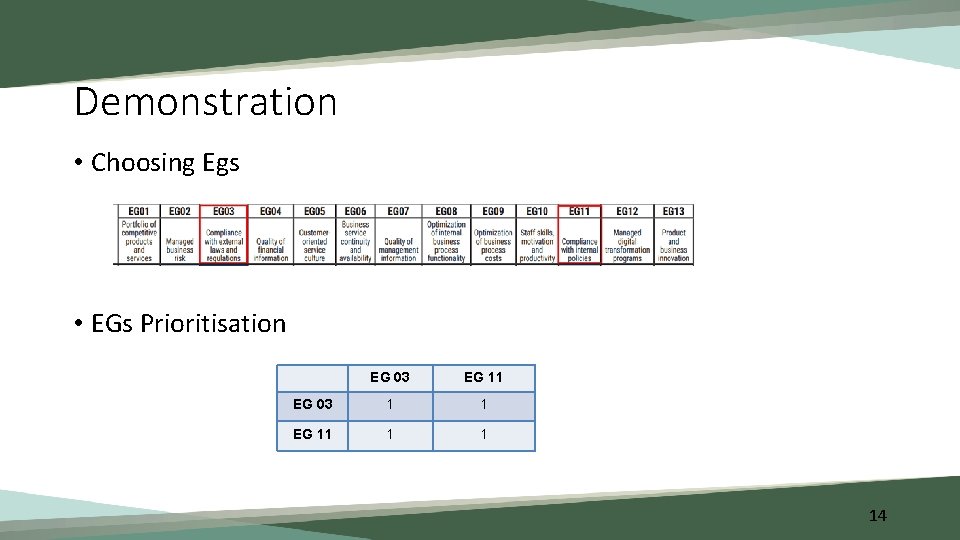
Demonstration • Choosing Egs • EGs Prioritisation EG 03 EG 11 EG 03 1 1 EG 11 1 1 14
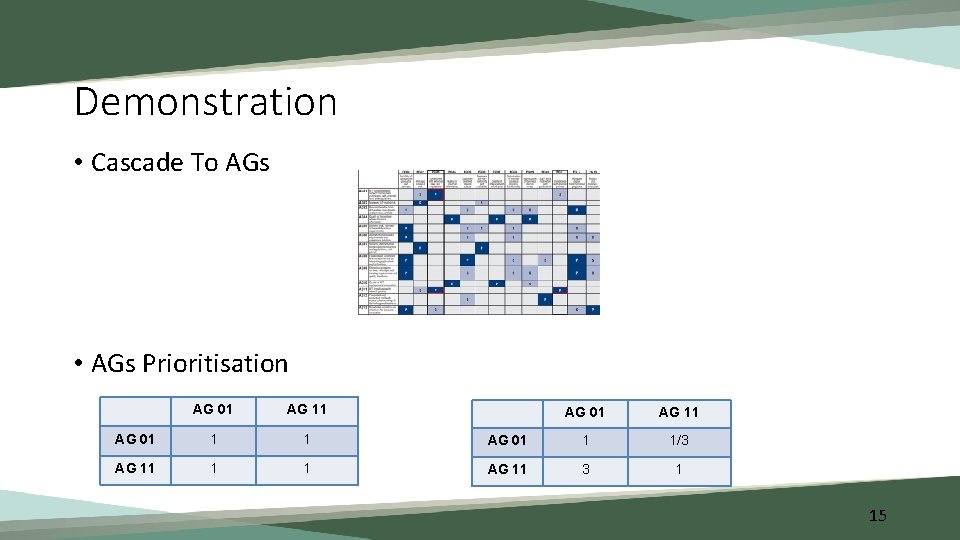
Demonstration • Cascade To AGs • AGs Prioritisation AG 01 AG 11 AG 01 1 1 AG 11 1 1 AG 01 AG 11 AG 01 1 1/3 AG 11 3 1 15
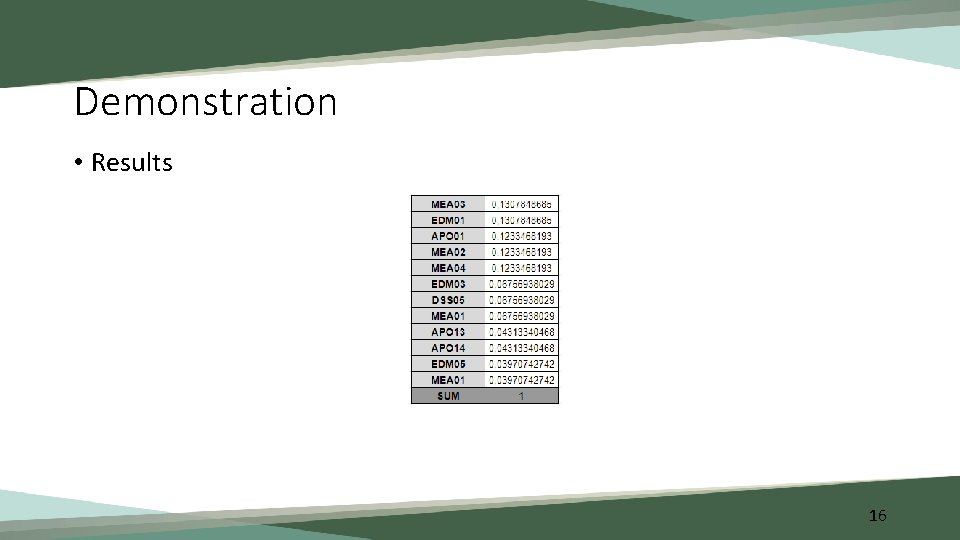
Demonstration • Results 16
Evaluation: First round of Interviews • 20 IT managers and COBIT specialists were invited • 14 accepted the invitation • Categorization of the candidates 1. 2. 3. 4. 5. Fundamental Awareness (basic knowledge) Novice (limited experience) Intermediate (practical application) Advanced (applied theory) Expert (recognized authority) 17
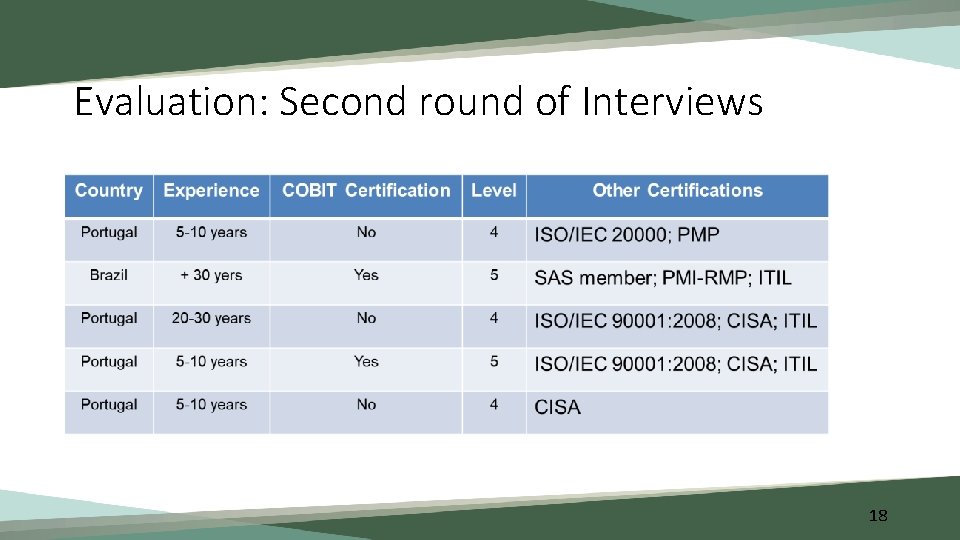
Evaluation: Second round of Interviews 18
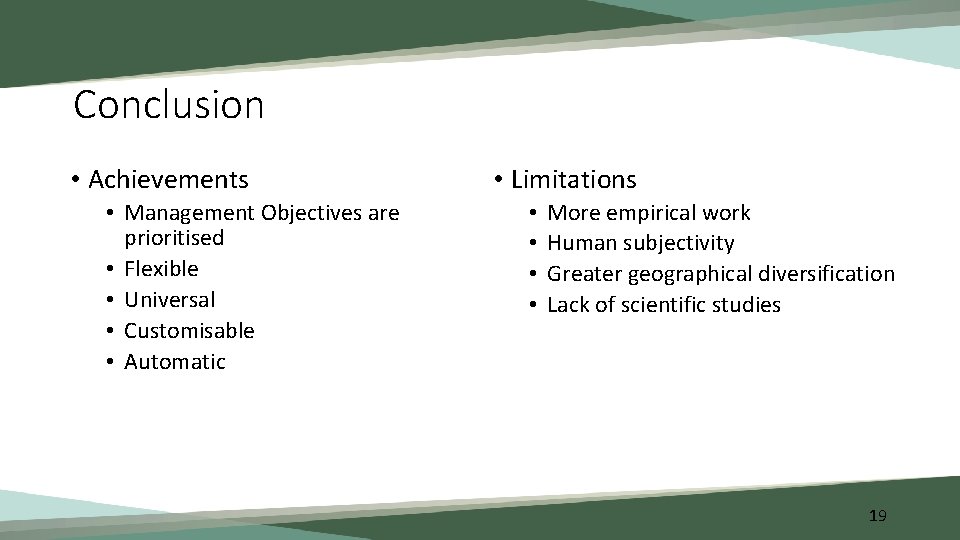
Conclusion • Achievements • Management Objectives are prioritised • Flexible • Universal • Customisable • Automatic • Limitations • • More empirical work Human subjectivity Greater geographical diversification Lack of scientific studies 19
A Flexible Method for COBIT 2019 Process Selection André Fernandes, Rafael Almeida, Miguel Mira da Silva
- Slides: 20