
A fictional construct a character is the representation
- Slides: 36
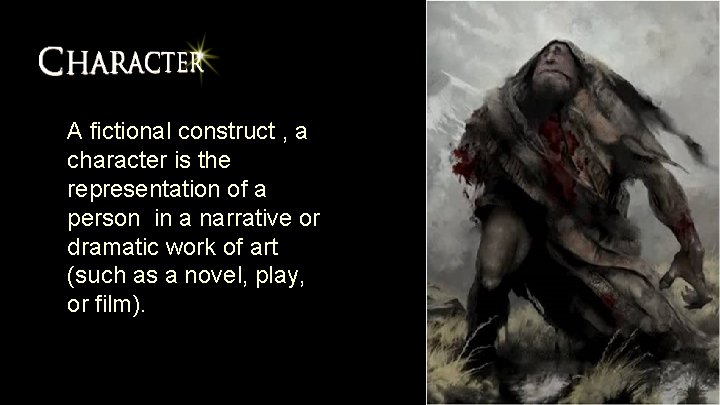
A fictional construct , a character is the representation of a person in a narrative or dramatic work of art (such as a novel, play, or film).
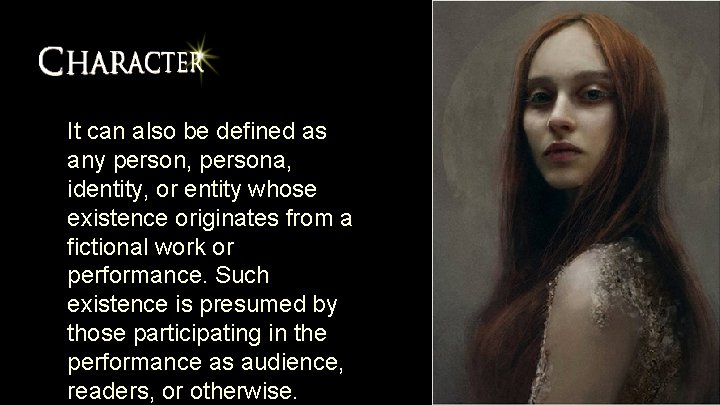
It can also be defined as any person, persona, identity, or entity whose existence originates from a fictional work or performance. Such existence is presumed by those participating in the performance as audience, readers, or otherwise.
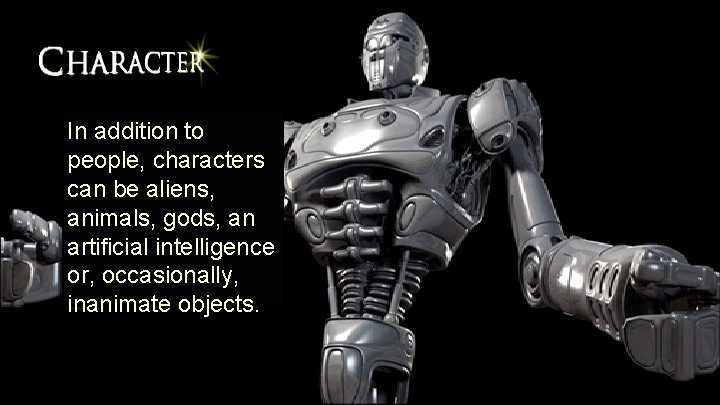
In addition to people, characters can be aliens, animals, gods, an artificial intelligence or, occasionally, inanimate objects.
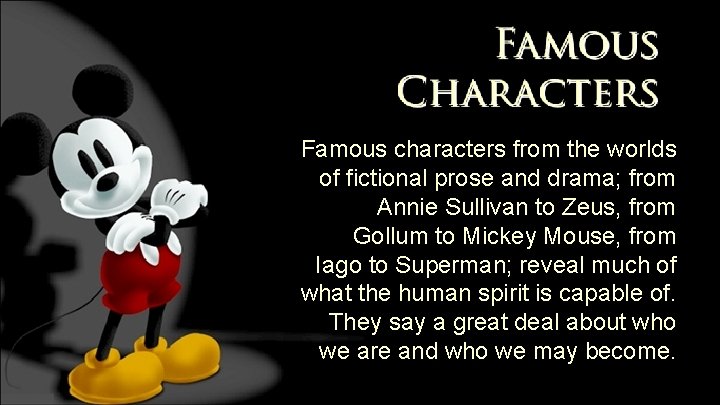
Famous characters from the worlds of fictional prose and drama; from Annie Sullivan to Zeus, from Gollum to Mickey Mouse, from Iago to Superman; reveal much of what the human spirit is capable of. They say a great deal about who we are and who we may become.
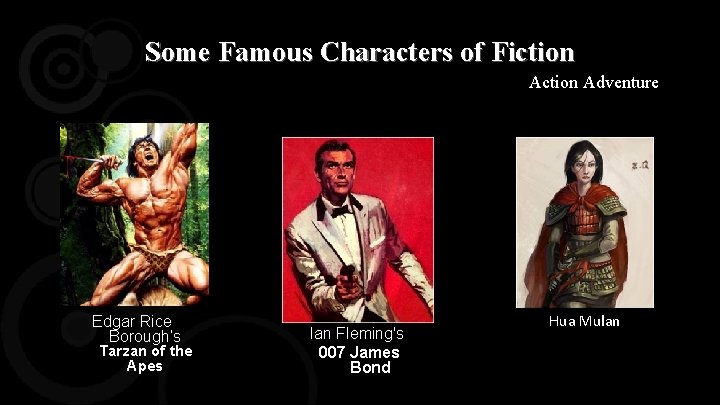
Some Famous Characters of Fiction Adventure Edgar Rice Borough’s Tarzan of the Apes Ian Fleming's 007 James Bond Hua Mulan
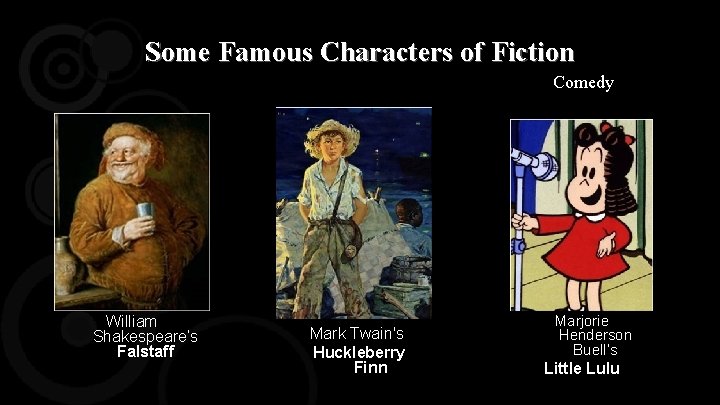
Some Famous Characters of Fiction Comedy William Shakespeare’s Falstaff Mark Twain's Huckleberry Finn Marjorie Henderson Buell’s Little Lulu
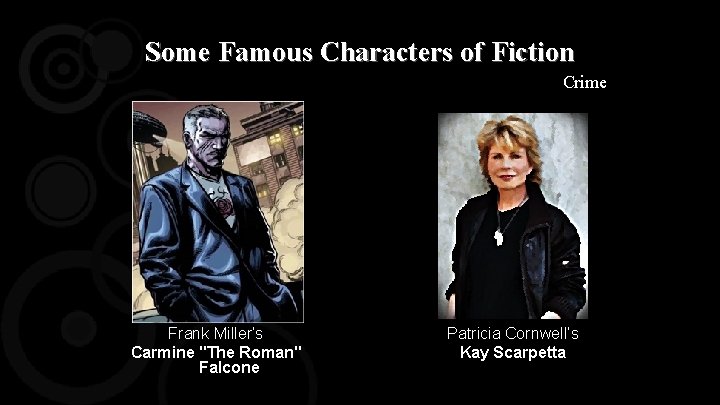
Some Famous Characters of Fiction Crime Frank Miller’s Carmine "The Roman" Falcone Patricia Cornwell’s Kay Scarpetta
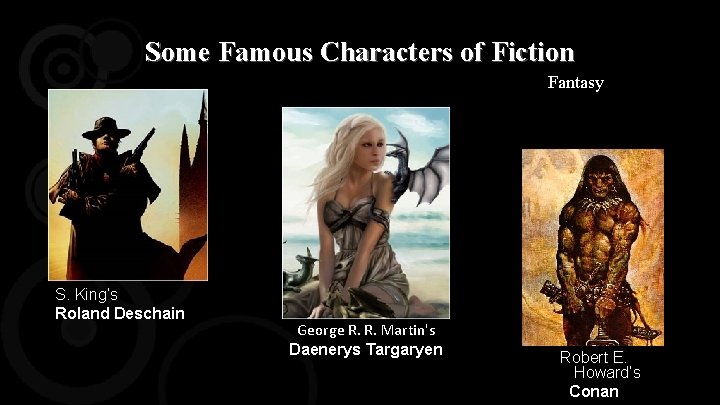
Some Famous Characters of Fiction Fantasy S. King’s Roland Deschain George R. R. Martin's Daenerys Targaryen Robert E. Howard’s Conan
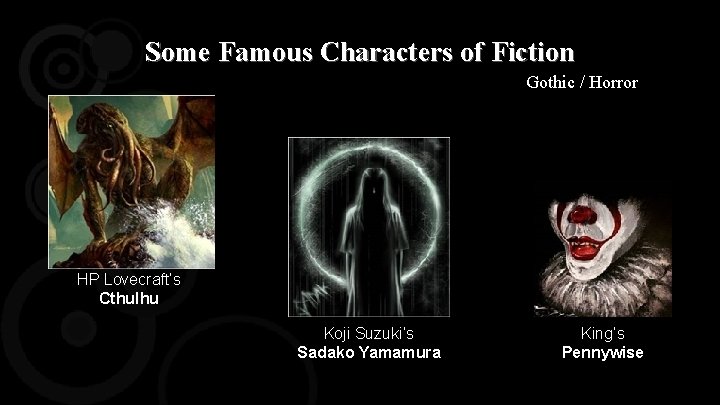
Some Famous Characters of Fiction Gothic / Horror HP Lovecraft’s Cthulhu Koji Suzuki’s Sadako Yamamura King’s Pennywise
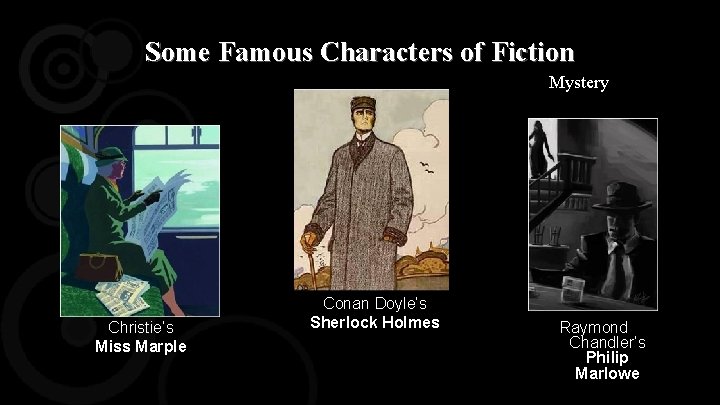
Some Famous Characters of Fiction Mystery Christie’s Miss Marple Conan Doyle’s Sherlock Holmes Raymond Chandler’s Philip Marlowe
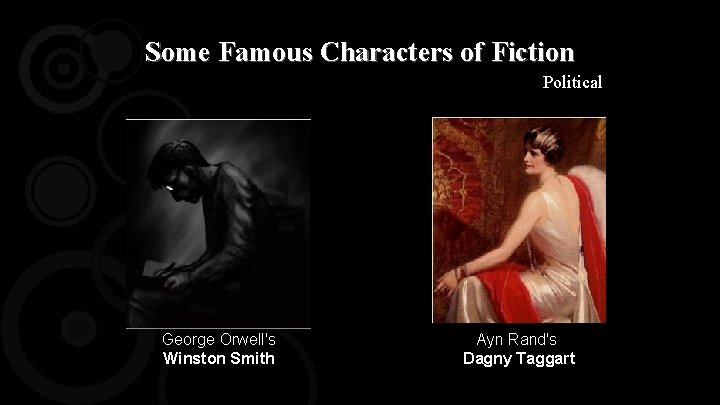
Some Famous Characters of Fiction Political George Orwell's Winston Smith Ayn Rand's Dagny Taggart
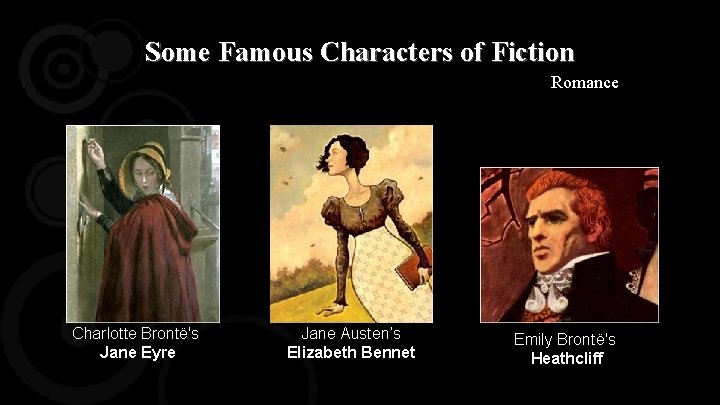
Some Famous Characters of Fiction Romance Charlotte Brontë's Jane Eyre Jane Austen’s Elizabeth Bennet Emily Brontë's Heathcliff
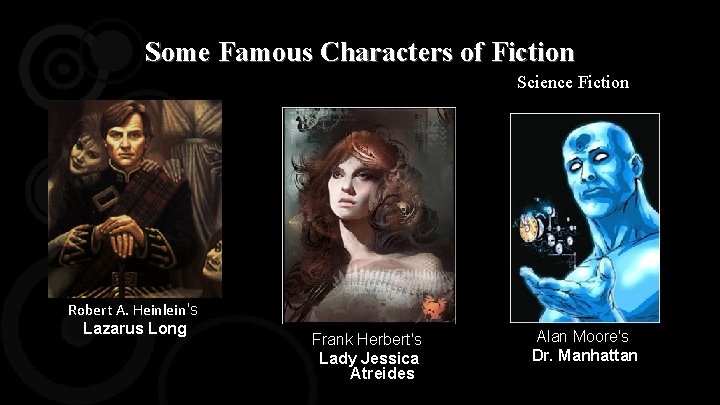
Some Famous Characters of Fiction Science Fiction Robert A. Heinlein's Lazarus Long Frank Herbert's Lady Jessica Atreides Alan Moore's Dr. Manhattan
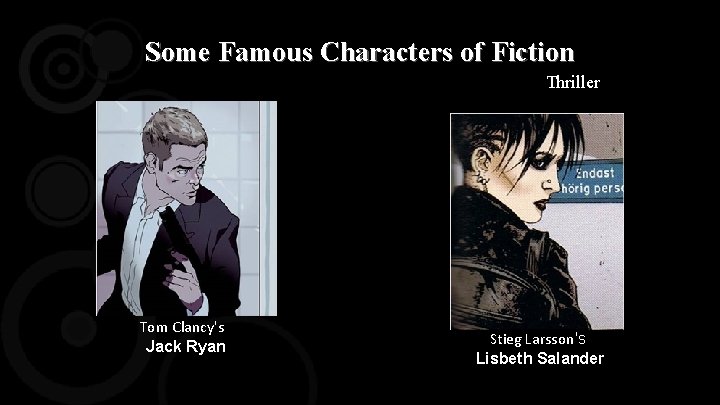
Some Famous Characters of Fiction Thriller Tom Clancy's Jack Ryan Stieg Larsson's Lisbeth Salander
Character Archetypes A character may be based on a particular archetype, which is a common characterological pattern like those listed later. Archetypes are modeled after mythology, legend, and folk tales.
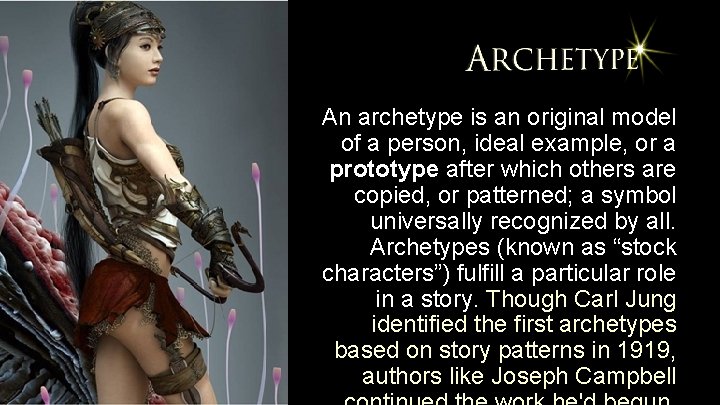
An archetype is an original model of a person, ideal example, or a prototype after which others are copied, or patterned; a symbol universally recognized by all. Archetypes (known as “stock characters”) fulfill a particular role in a story. Though Carl Jung identified the first archetypes based on story patterns in 1919, authors like Joseph Campbell
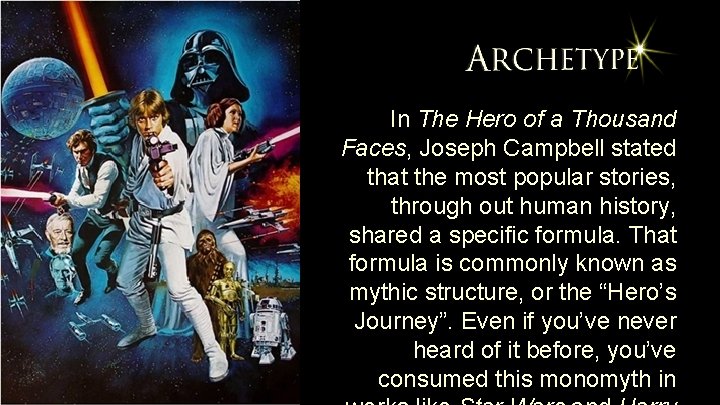
In The Hero of a Thousand Faces, Joseph Campbell stated that the most popular stories, through out human history, shared a specific formula. That formula is commonly known as mythic structure, or the “Hero’s Journey”. Even if you’ve never heard of it before, you’ve consumed this monomyth in
Other authors have reorganized the information. Some authors define eight different archetypes that are defined by their "Action" and "Decision" characteristics.
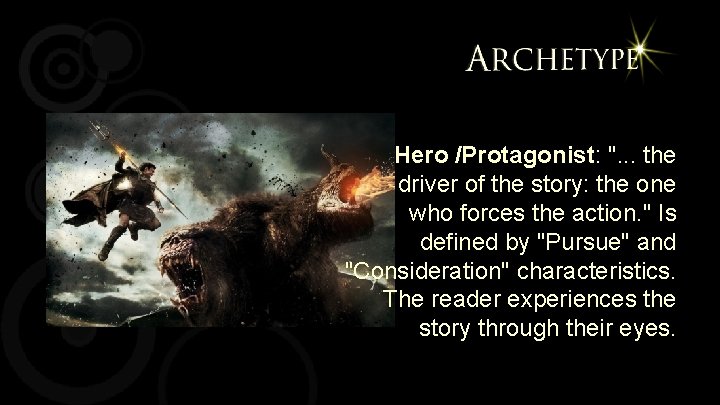
Hero /Protagonist: ". . . the driver of the story: the one who forces the action. " Is defined by "Pursue" and "Consideration" characteristics. The reader experiences the story through their eyes.
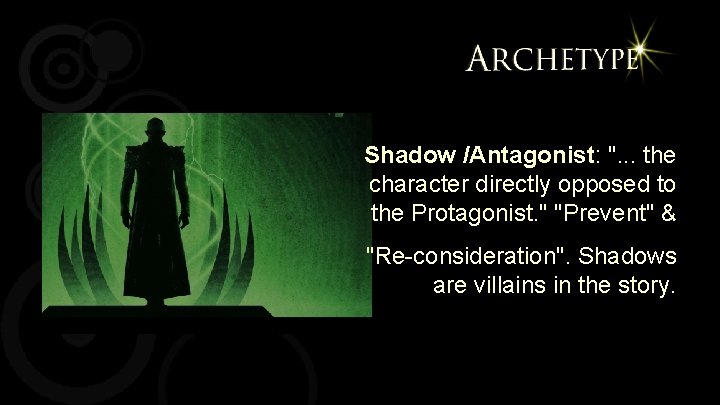
Shadow /Antagonist: ". . . the character directly opposed to the Protagonist. " "Prevent" & "Re-consideration". Shadows are villains in the story.
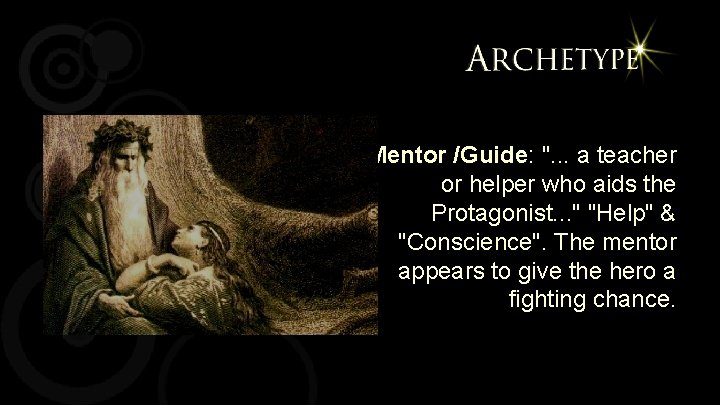
Mentor /Guide: ". . . a teacher or helper who aids the Protagonist. . . " "Help" & "Conscience". The mentor appears to give the hero a fighting chance.
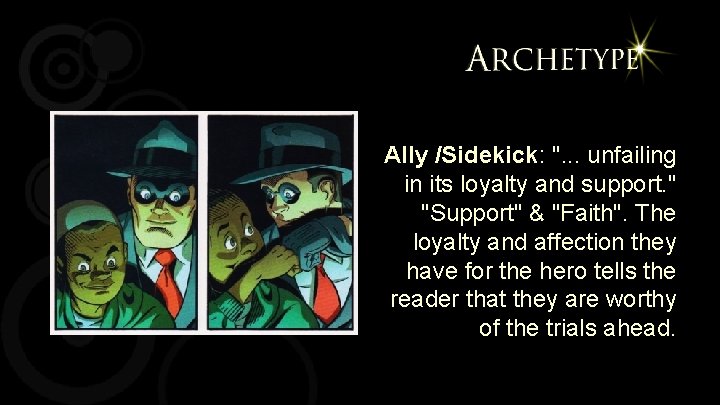
Ally /Sidekick: ". . . unfailing in its loyalty and support. " "Support" & "Faith". The loyalty and affection they have for the hero tells the reader that they are worthy of the trials ahead.
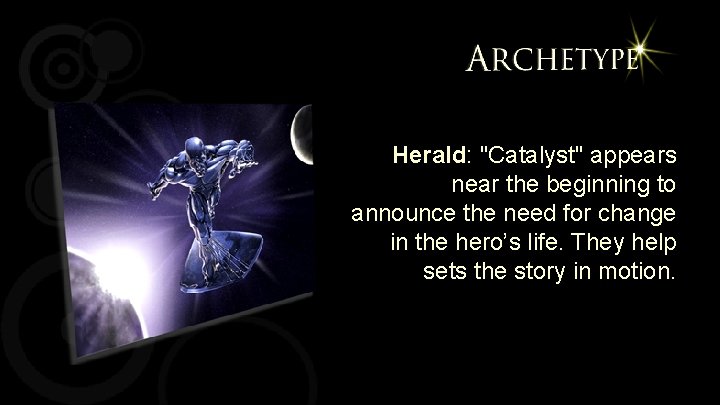
Herald: "Catalyst" appears near the beginning to announce the need for change in the hero’s life. They help sets the story in motion.
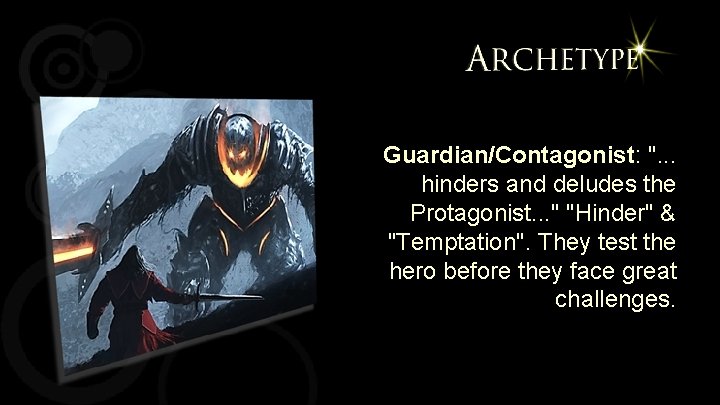
Guardian/Contagonist: ". . . hinders and deludes the Protagonist. . . " "Hinder" & "Temptation". They test the hero before they face great challenges.
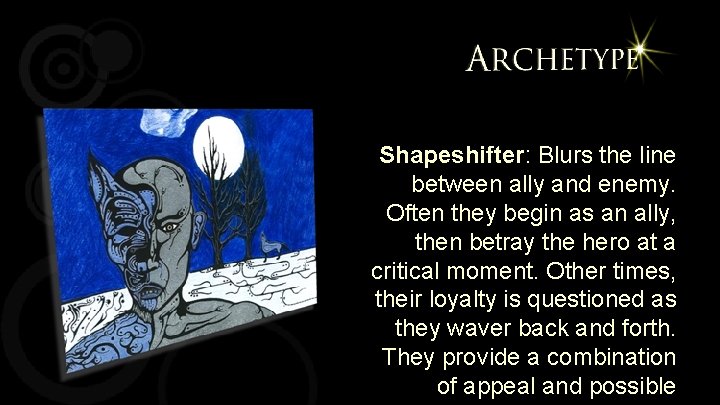
Shapeshifter: Blurs the line between ally and enemy. Often they begin as an ally, then betray the hero at a critical moment. Other times, their loyalty is questioned as they waver back and forth. They provide a combination of appeal and possible
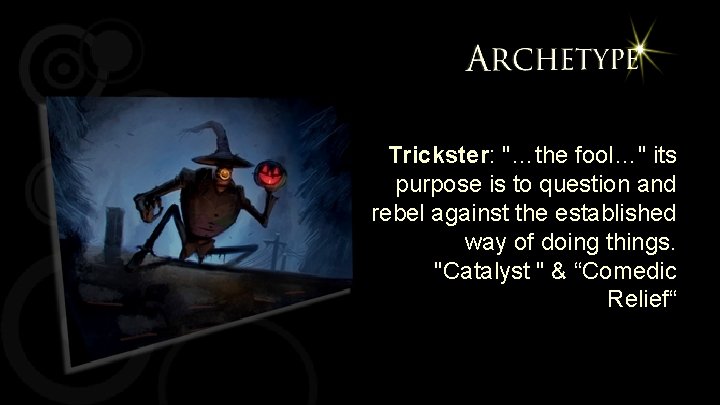
Trickster: "…the fool…" its purpose is to question and rebel against the established way of doing things. "Catalyst " & “Comedic Relief“
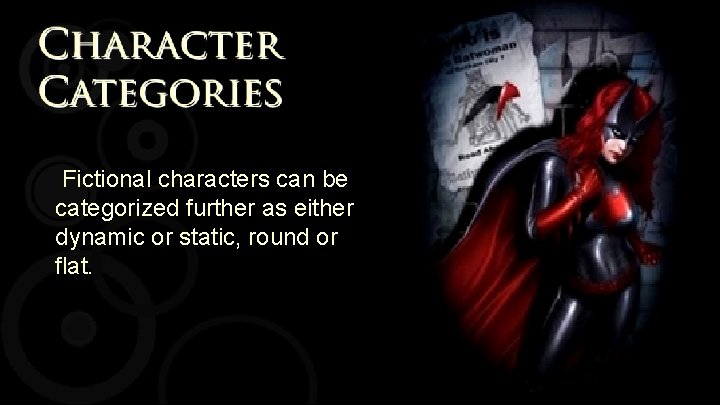
Fictional characters can be categorized further as either dynamic or static, round or flat.
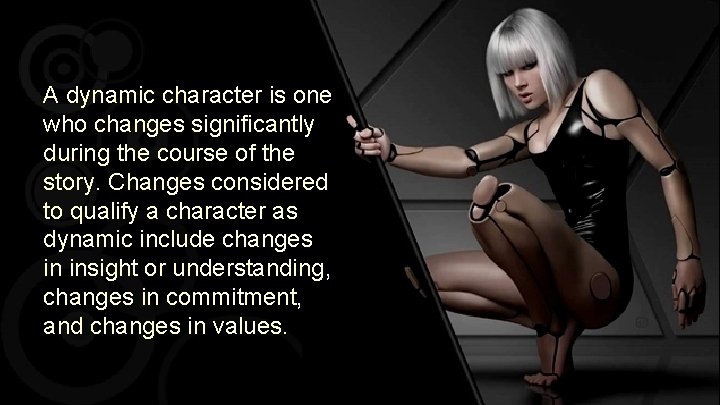
A dynamic character is one who changes significantly during the course of the story. Changes considered to qualify a character as dynamic include changes in insight or understanding, changes in commitment, and changes in values.
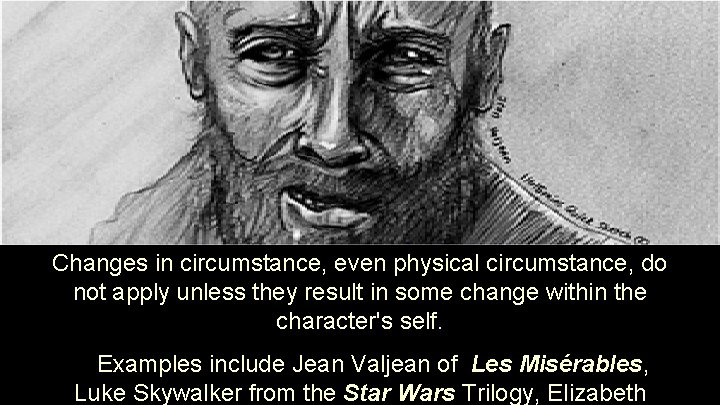
Changes in circumstance, even physical circumstance, do not apply unless they result in some change within the character's self. Examples include Jean Valjean of Les Misérables, Luke Skywalker from the Star Wars Trilogy, Elizabeth
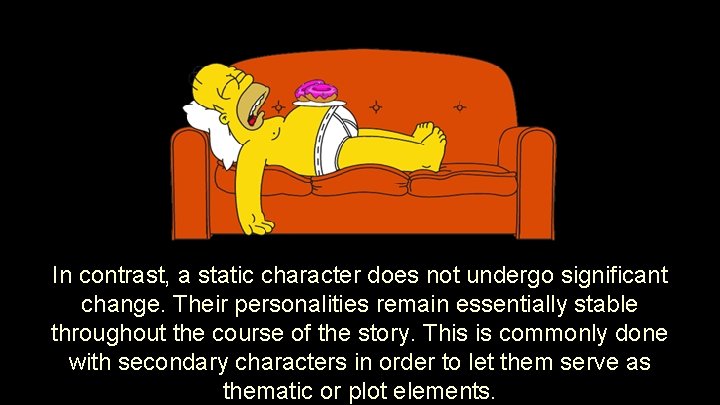
In contrast, a static character does not undergo significant change. Their personalities remain essentially stable throughout the course of the story. This is commonly done with secondary characters in order to let them serve as thematic or plot elements.
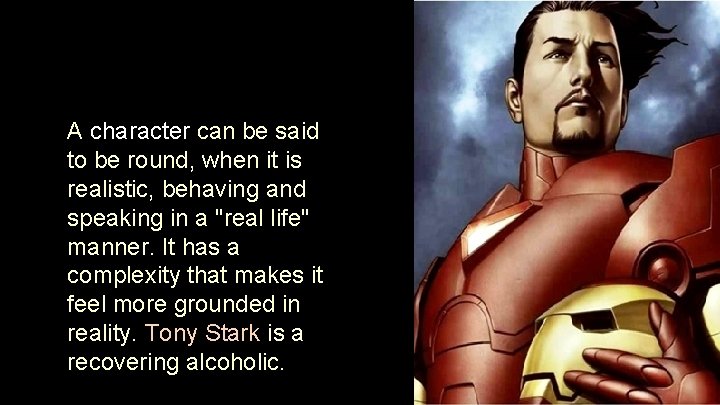
A character can be said to be round, when it is realistic, behaving and speaking in a "real life" manner. It has a complexity that makes it feel more grounded in reality. Tony Stark is a recovering alcoholic.
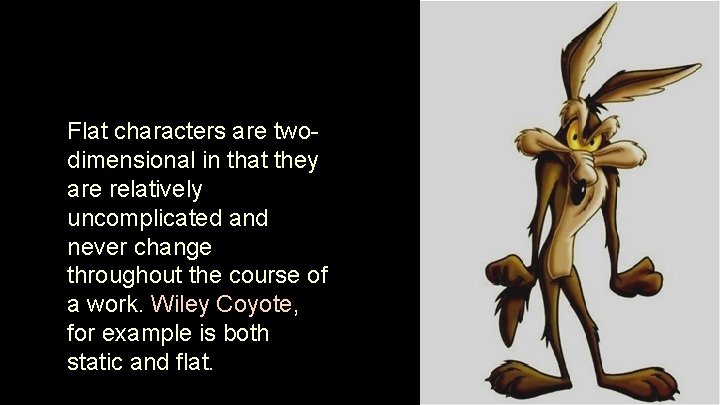
Flat characters are twodimensional in that they are relatively uncomplicated and never change throughout the course of a work. Wiley Coyote, for example is both static and flat.
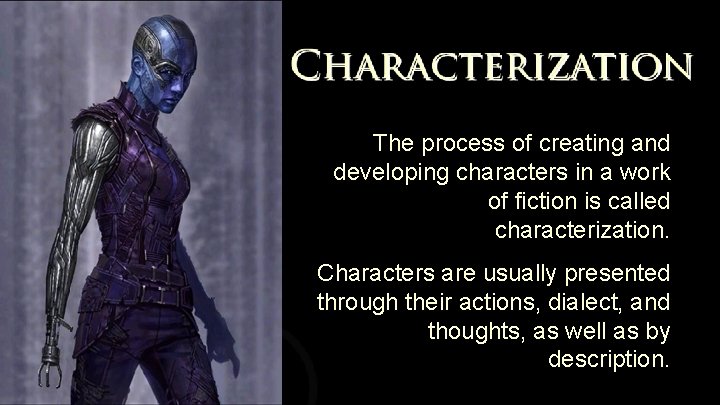
The process of creating and developing characters in a work of fiction is called characterization. Characters are usually presented through their actions, dialect, and thoughts, as well as by description.
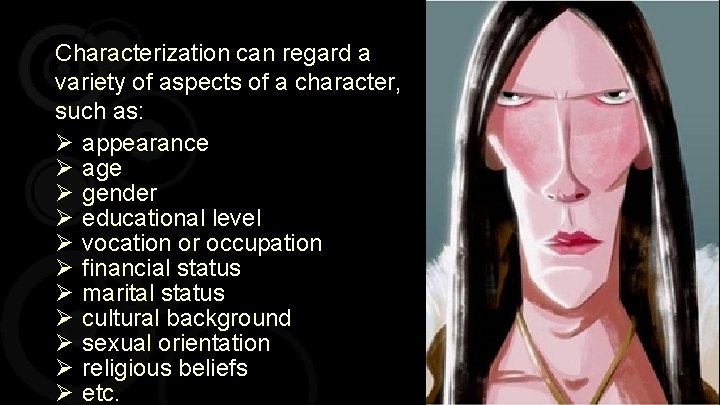
Characterization can regard a variety of aspects of a character, such as: Ø appearance Ø age Ø gender Ø educational level Ø vocation or occupation Ø financial status Ø marital status Ø cultural background Ø sexual orientation Ø religious beliefs Ø etc.
1. Mention 6 famous characters and their respective genres. 2. Explain the “Guardian” archetype and its function in a narrative. 3. What are the major differences between a dynamic and a static character? 4. What are the major differences between a flat and a round character? 5. Mention 5 aspects of characterization.