
A dualpolarization QPE method based on the NCAR
A dual-polarization QPE method based on the NCAR Particle ID algorithm Description and preliminary results AMS 37 th Conference on Radar Meteorology Norman, Oklahoma, USA 2015 -09 -17 Michael J. Dixon 1, J. W. Wilson 1, T. M. Weckwerth 1, D. Albo 1 and E. J. Thompson 2 1 National Center for Atmospheric Research(NCAR), Boulder, Colorado 2 Colorado State University, Fort Collins, Colorado 1 NCAR is sponsored by the US National Science Foundation. 1

Hybrid QPE rule-based algorithms based on decision thresholds Figure 1: Flowchart describing the CSU-ICE algorithm (Cifelli et al. , 2011). Block diagram illustrating the rain-rate retrieval method using a variant of the Ryzhkov et al. (2005) approach and adapted for C-band. (Bringi et al. 2009). 2
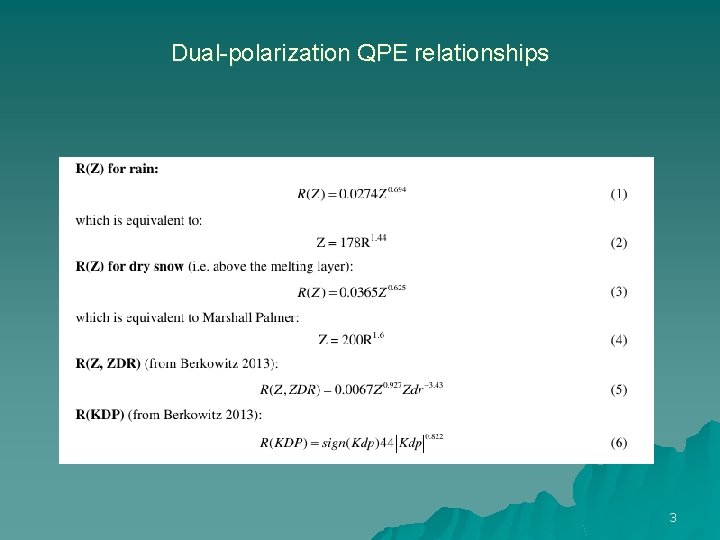
Dual-polarization QPE relationships 3
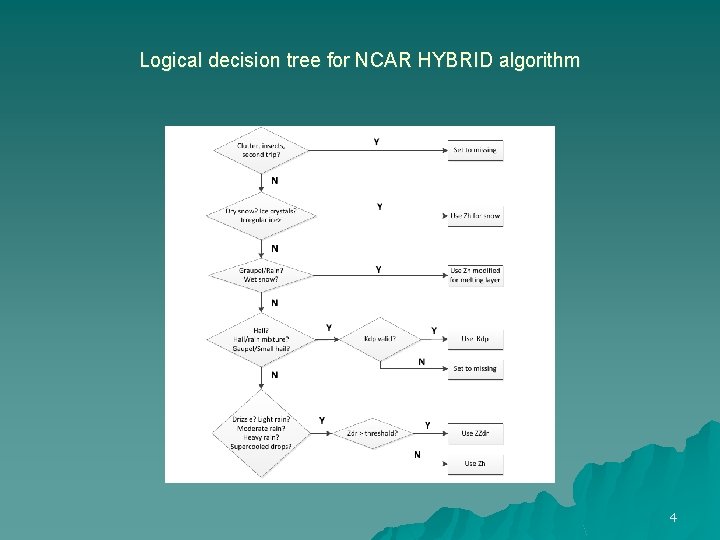
Logical decision tree for NCAR HYBRID algorithm 4
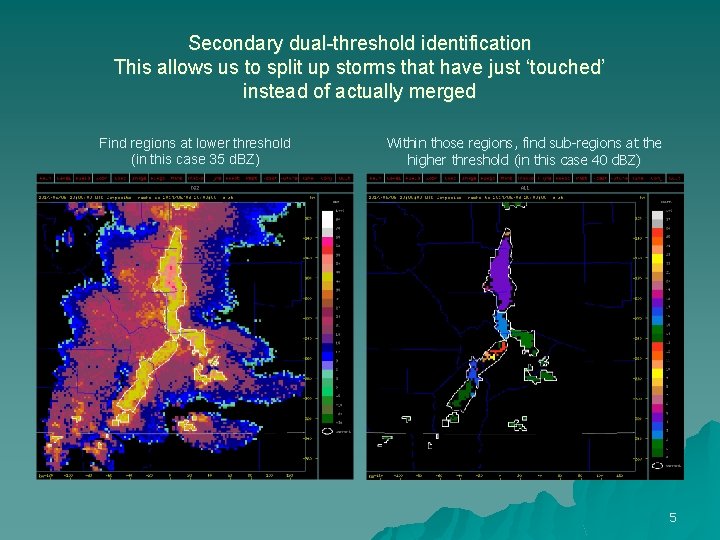
Secondary dual-threshold identification This allows us to split up storms that have just ‘touched’ instead of actually merged Find regions at lower threshold (in this case 35 d. BZ) Within those regions, find sub-regions at the higher threshold (in this case 40 d. BZ) 5
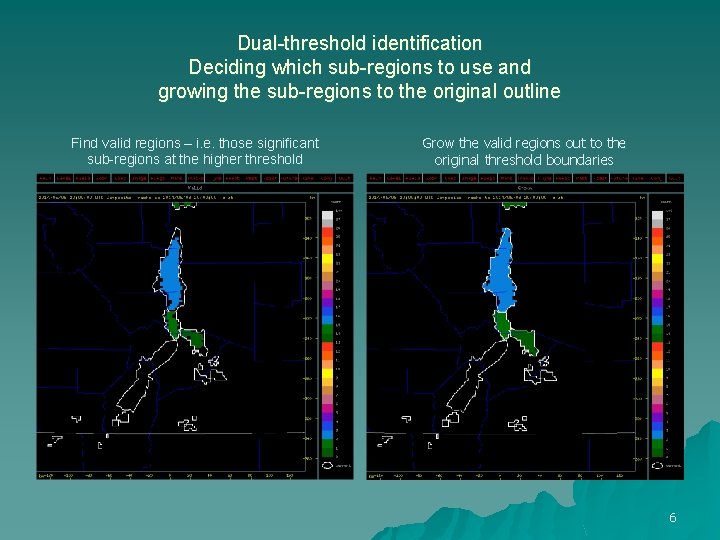
Dual-threshold identification Deciding which sub-regions to use and growing the sub-regions to the original outline Find valid regions – i. e. those significant sub-regions at the higher threshold Grow the valid regions out to the original threshold boundaries 6
Handling mixed convective/stratiform situations (a) Identify the convective regions within the radar volume (b) Constrain the storm identification to the convective regions only 7
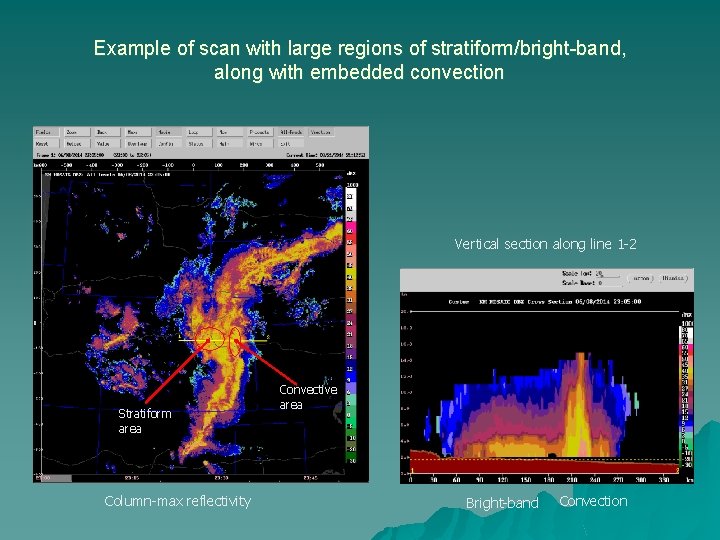
Example of scan with large regions of stratiform/bright-band, along with embedded convection Vertical section along line 1 -2 Stratiform area Convective area 8 Column-max reflectivity Bright-band Convection
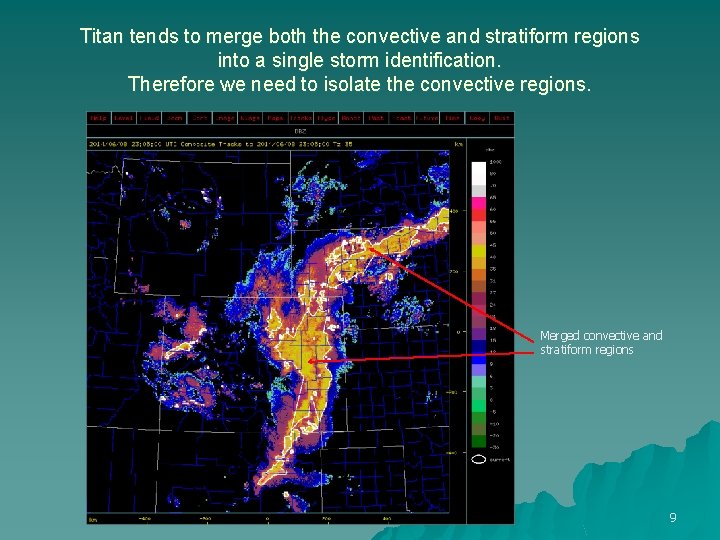
Titan tends to merge both the convective and stratiform regions into a single storm identification. Therefore we need to isolate the convective regions. Merged convective and stratiform regions 9
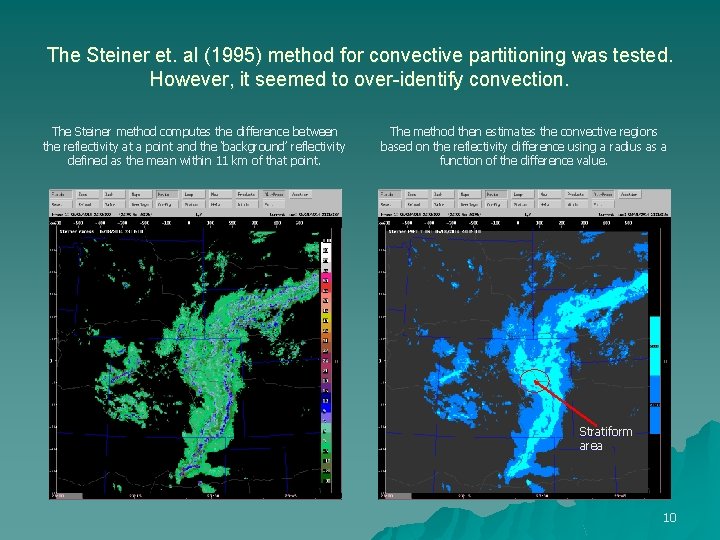
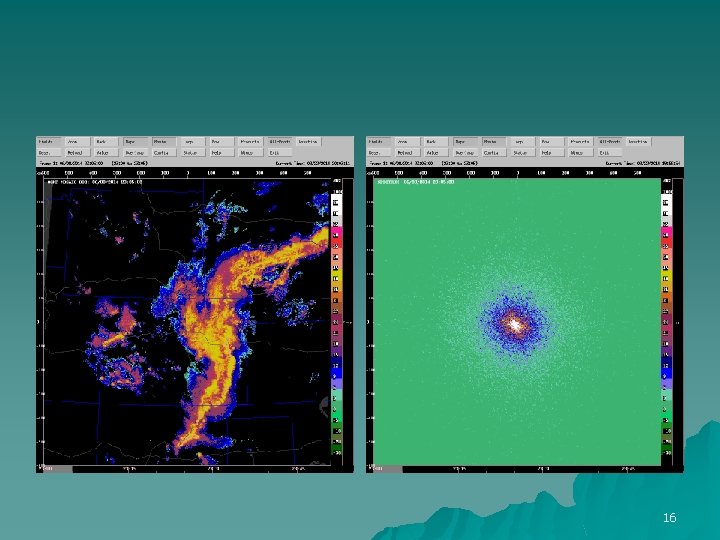
The Steiner et. al (1995) method for convective partitioning was tested. However, it seemed to over-identify convection. The Steiner method computes the difference between the reflectivity at a point and the ‘background’ reflectivity defined as the mean within 11 km of that point. The method then estimates the convective regions based on the reflectivity difference using a radius as a function of the difference value. Stratiform area 10
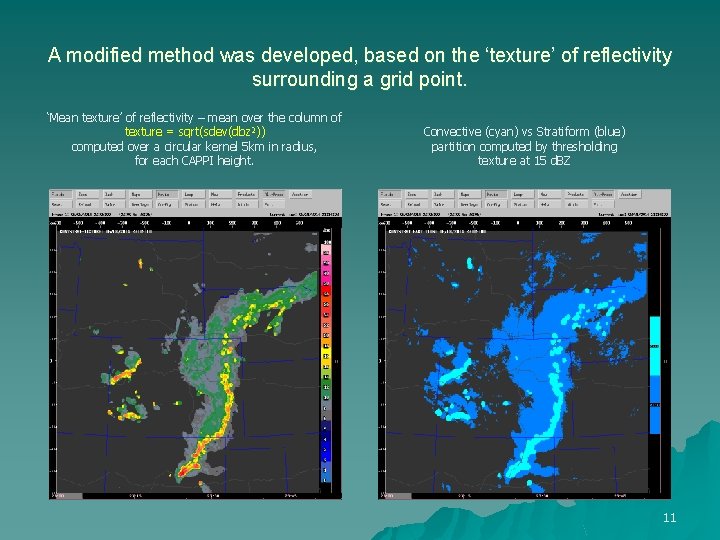
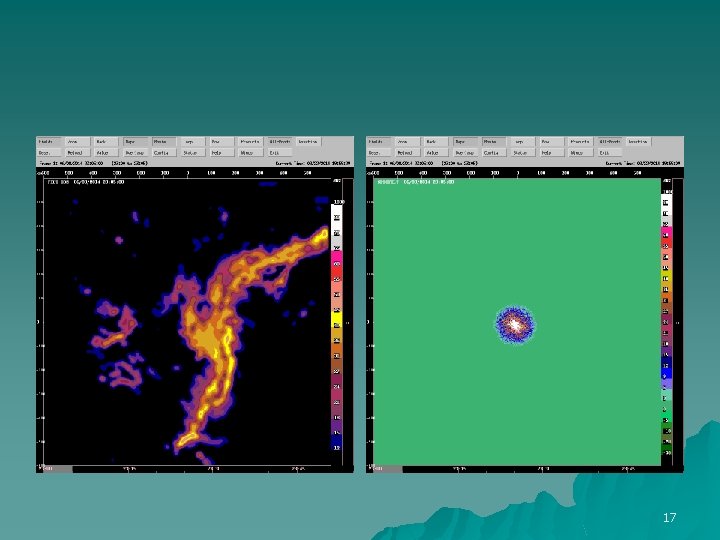
A modified method was developed, based on the ‘texture’ of reflectivity surrounding a grid point. ‘Mean texture’ of reflectivity – mean over the column of texture = sqrt(sdev(dbz 2)) computed over a circular kernel 5 km in radius, for each CAPPI height. Convective (cyan) vs Stratiform (blue) partition computed by thresholding texture at 15 d. BZ 11
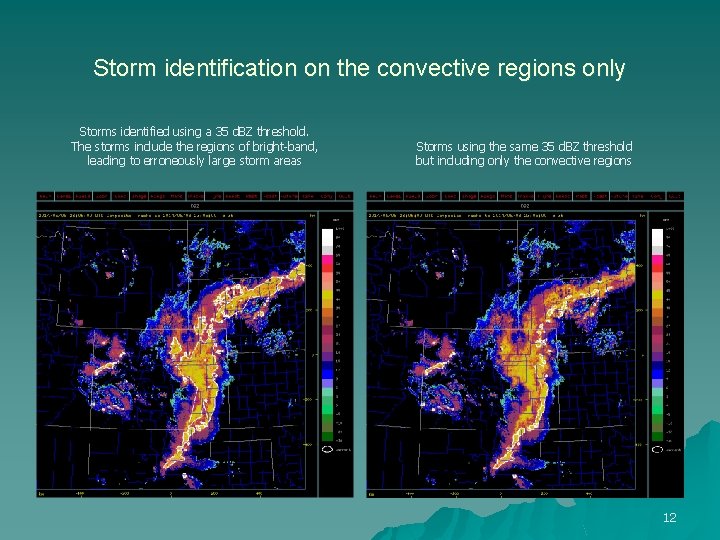
Storm identification on the convective regions only Storms identified using a 35 d. BZ threshold. The storms include the regions of bright-band, leading to erroneously large storm areas Storms using the same 35 d. BZ threshold but including only the convective regions 12
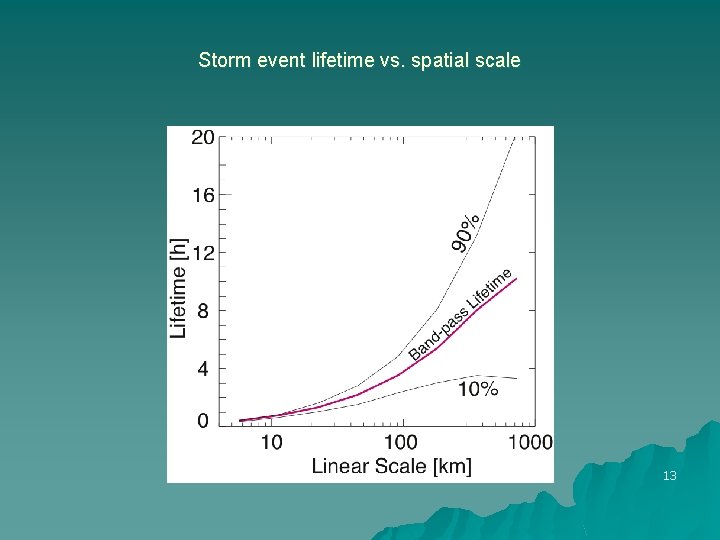
Storm event lifetime vs. spatial scale 13
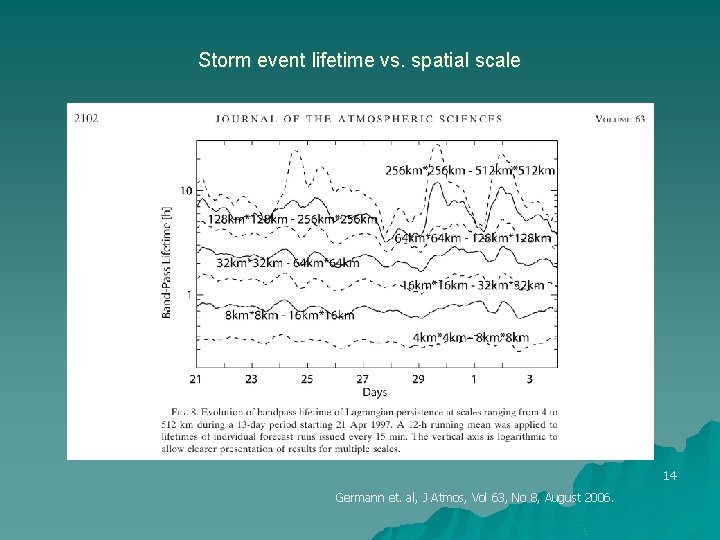
Storm event lifetime vs. spatial scale 14 Germann et. al, J Atmos, Vol 63, No 8, August 2006.
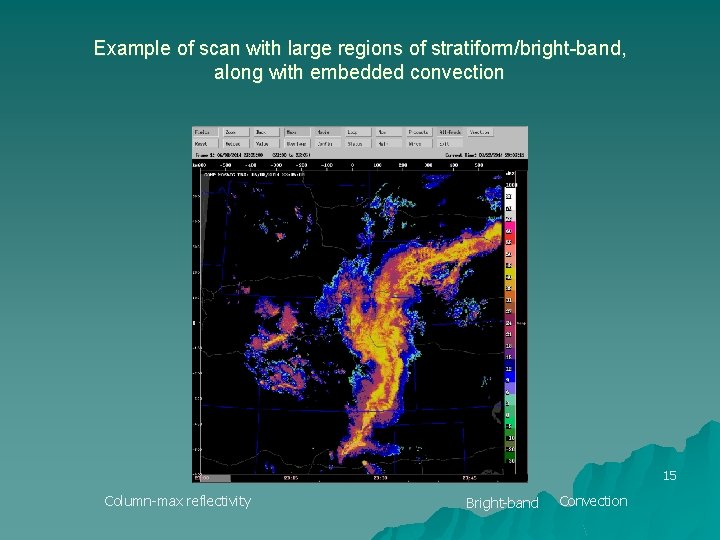
Example of scan with large regions of stratiform/bright-band, along with embedded convection 15 Column-max reflectivity Bright-band Convection
16
17
18
Correcting for tracking errors by using a field tracker, such as Optical Flow 19
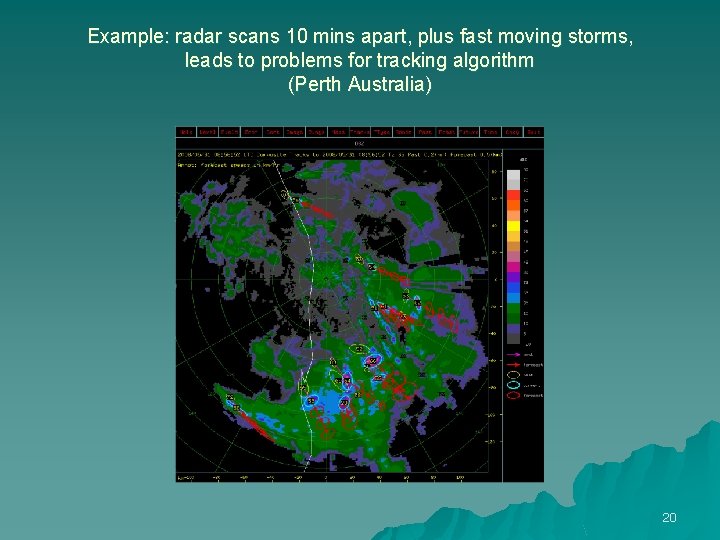
Example: radar scans 10 mins apart, plus fast moving storms, leads to problems for tracking algorithm (Perth Australia) 20
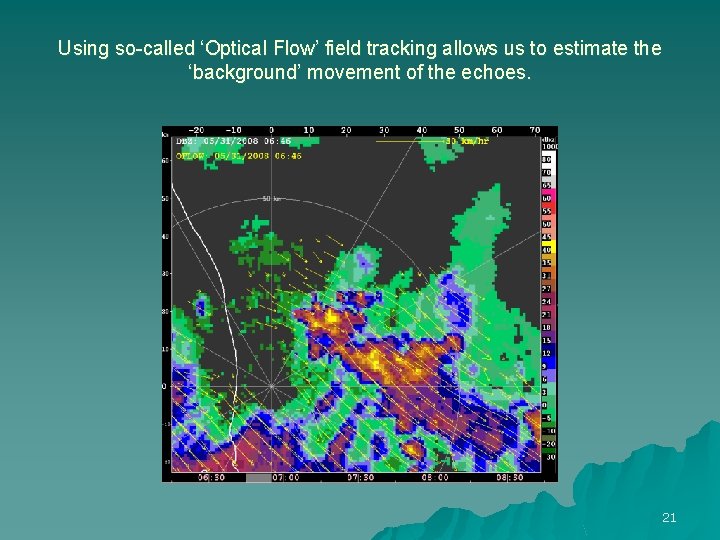
Using so-called ‘Optical Flow’ field tracking allows us to estimate the ‘background’ movement of the echoes. 21
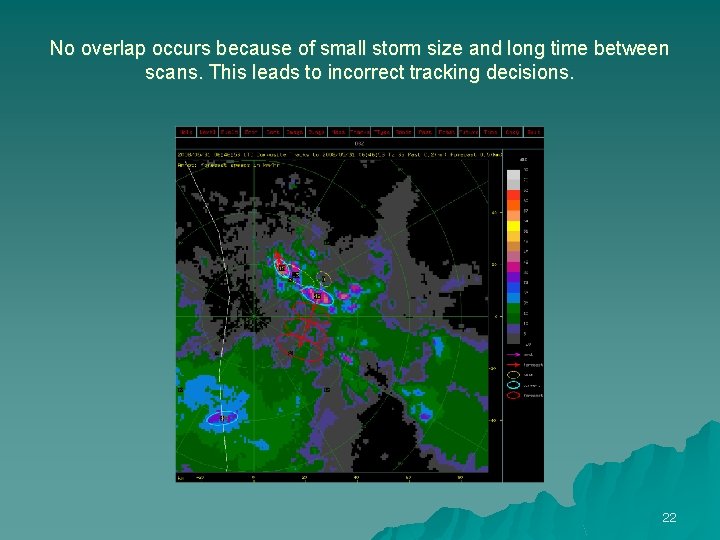
No overlap occurs because of small storm size and long time between scans. This leads to incorrect tracking decisions. 22
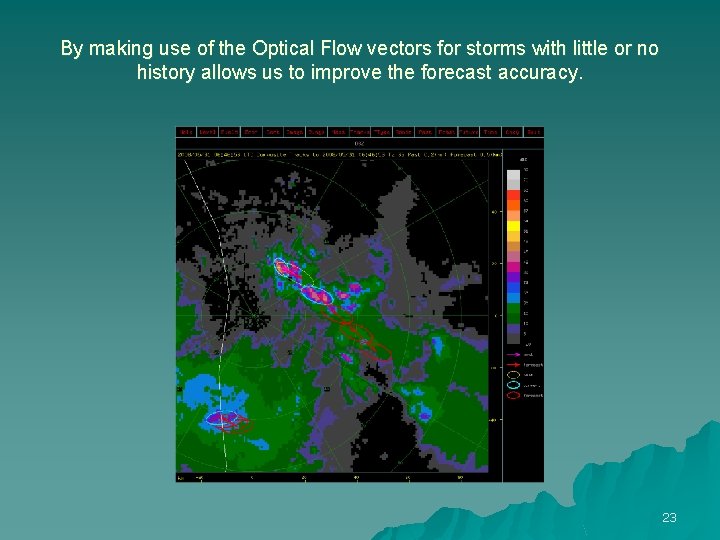
By making use of the Optical Flow vectors for storms with little or no history allows us to improve the forecast accuracy. 23

THANK YOU 24
- Slides: 24