
A D B C Mechanisms of narrowing airways
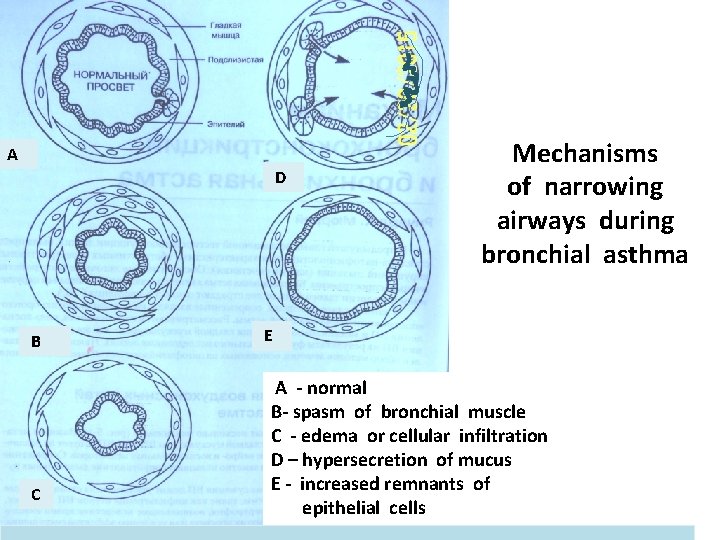
A D B C Mechanisms of narrowing airways during bronchial asthma E A - normal B- spasm of bronchial muscle C - edema or cellular infiltration D – hypersecretion of mucus E - increased remnants of epithelial cells
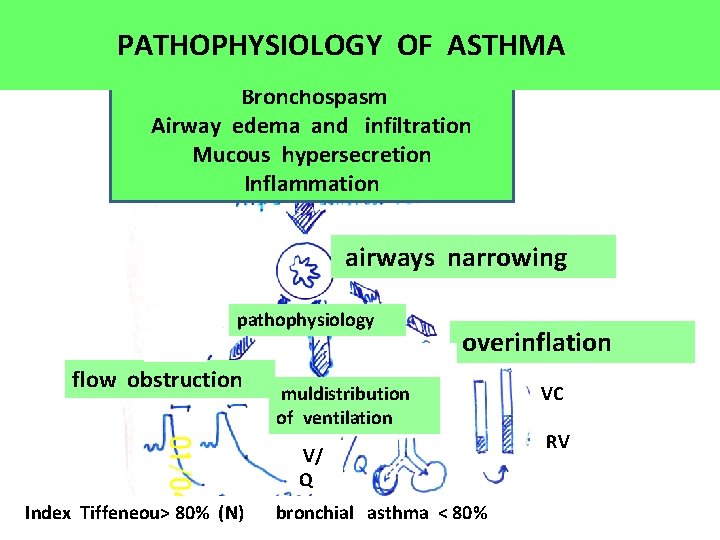
PATHOPHYSIOLOGY OF ASTHMA Bronchospasm Airway edema and infiltration Mucous hypersecretion Inflammation airways narrowing pathophysiology flow obstruction overinflation muldistribution of ventilation V/ Q Index Tiffeneou> 80% (N) bronchial asthma < 80% VC RV
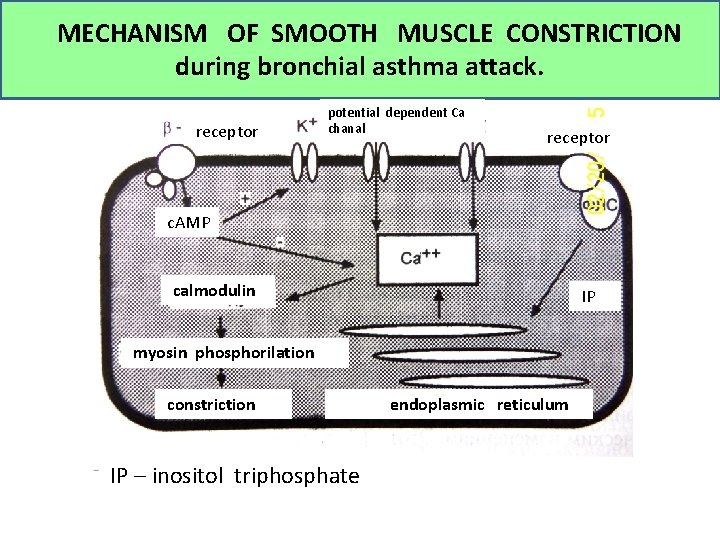
MECHANISM OF SMOOTH MUSCLE CONSTRICTION during bronchial asthma attack. receptor potential dependent Ca chanal receptor c. AMP calmodulin IP myosin phosphorilation constriction IP – inositol triphosphate endoplasmic reticulum
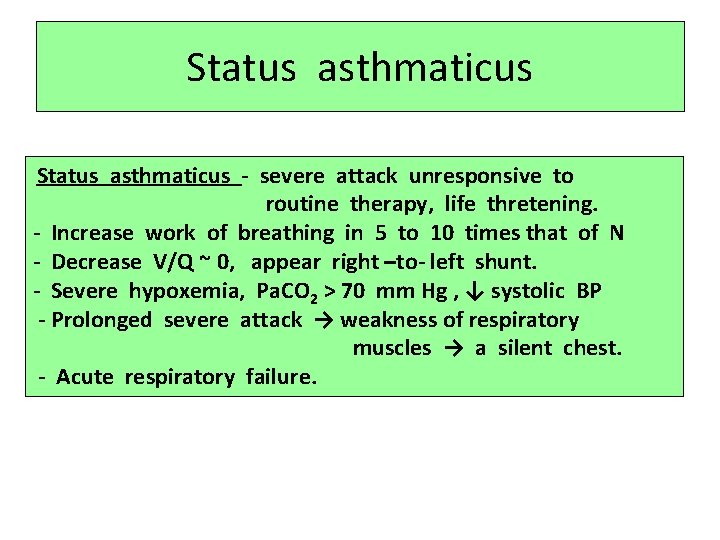
Status asthmaticus - severe attack unresponsive to routine therapy, life thretening. - Increase work of breathing in 5 to 10 times that of N - Decrease V/Q ~ 0, appear right –to- left shunt. - Severe hypoxemia, Pa. CO 2 > 70 mm Hg , ↓ systolic BP - Prolonged severe attack → weakness of respiratory muscles → a silent chest. - Acute respiratory failure.
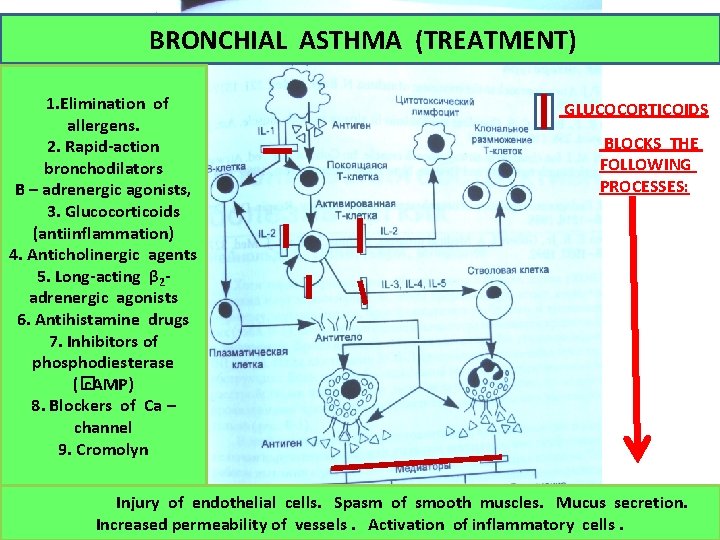
BRONCHIAL ASTHMA (TREATMENT) 1. Elimination of allergens. 2. Rapid-action bronchodilators Β – adrenergic agonists, 3. Glucocorticoids (antiinflammation) 4. Anticholinergic agents 5. Long-acting β 2 adrenergic agonists 6. Antihistamine drugs 7. Inhibitors of phosphodiesterase (� c. AMP) 8. Blockers of Ca – channel 9. Cromolyn GLUCOCORTICOIDS BLOCKS THE FOLLOWING PROCESSES: Injury of endothelial cells. Spasm of smooth muscles. Mucus secretion. Increased permeability of vessels. Activation of inflammatory cells.
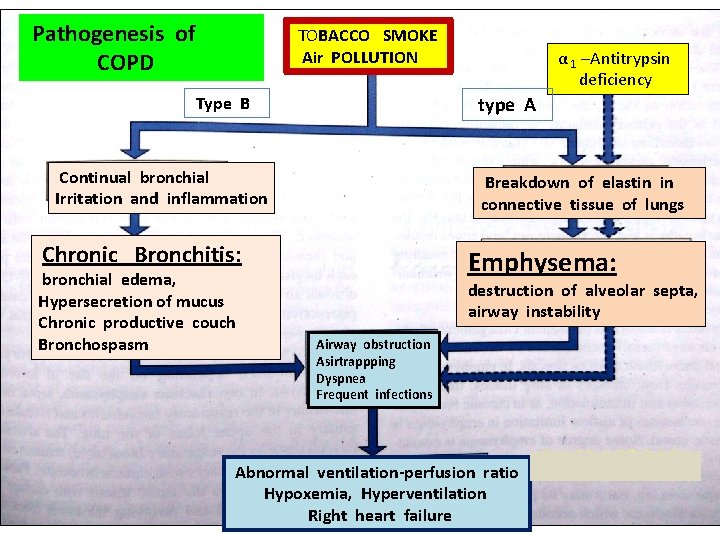
Pathogenesis of COPD TOBACCO SMOKE Air POLLUTION type A Type B Continual bronchial Irritation and inflammation Breakdown of elastin in connective tissue of lungs Chronic Bronchitis: bronchial edema, Hypersecretion of mucus Chronic productive couch Bronchospasm α 1 –Antitrypsin deficiency Emphysema: destruction of alveolar septa, airway instability Airway obstruction Asirtrappping Dyspnea Frequent infections Abnormal ventilation-perfusion ratio Hypoxemia, Hyperventilation Right heart failure
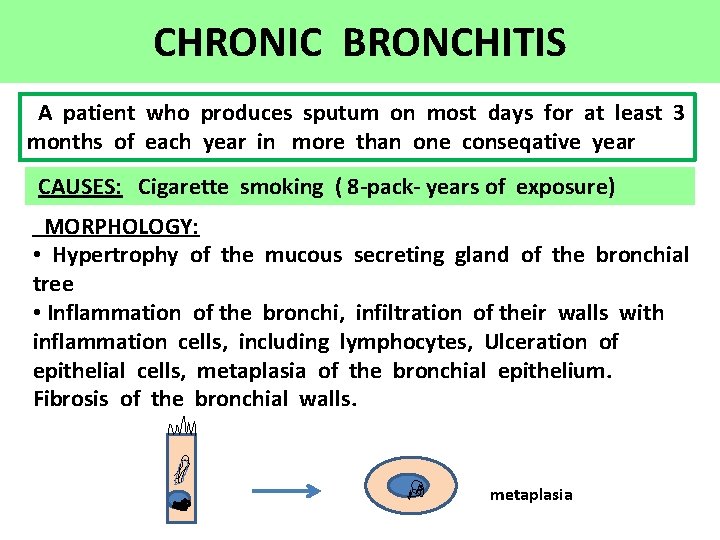
CHRONIC BRONCHITIS A patient who produces sputum on most days for at least 3 months of each year in more than one conseqative year CAUSES: Cigarette smoking ( 8 -pack- years of exposure) MORPHOLOGY: • Hypertrophy of the mucous secreting gland of the bronchial tree • Inflammation of the bronchi, infiltration of their walls with inflammation cells, including lymphocytes, Ulceration of epithelial cells, metaplasia of the bronchial epithelium. Fibrosis of the bronchial walls. metaplasia
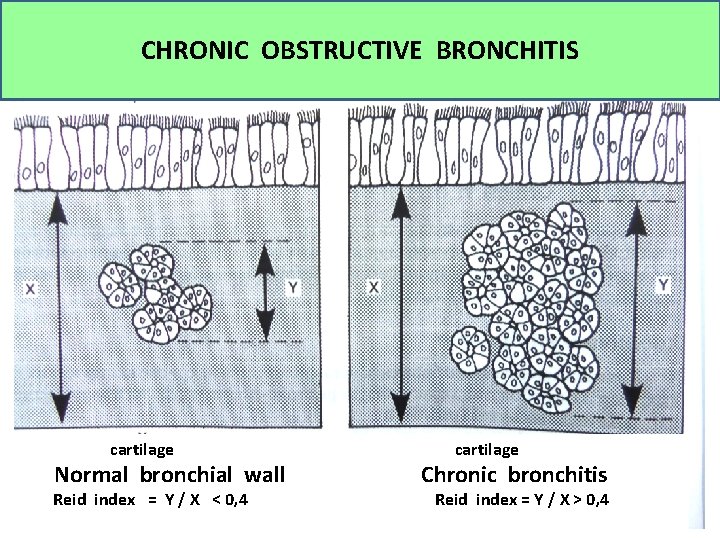
CHRONIC OBSTRUCTIVE BRONCHITIS cartilage Normal bronchial wall Reid index = Y / X < 0, 4 cartilage Chronic bronchitis Reid index = Y / X > 0, 4
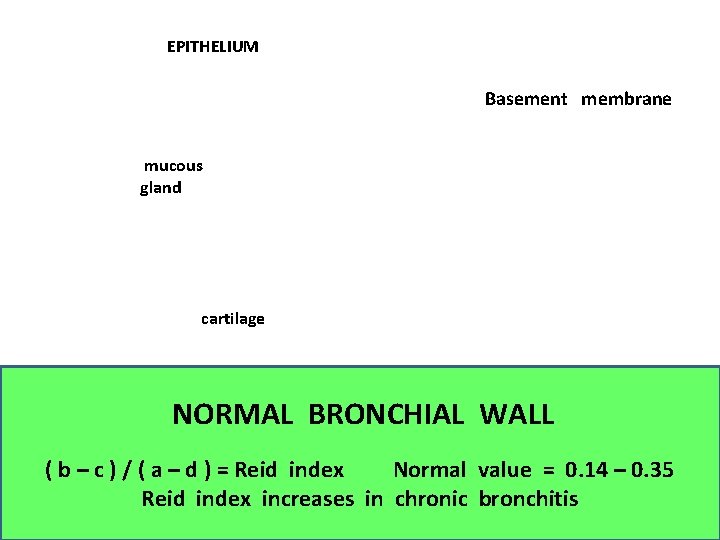
EPITHELIUM Basement membrane mucous gland cartilage NORMAL BRONCHIAL WALL ( b – c ) / ( a – d ) = Reid index Normal value = 0. 14 – 0. 35 Reid index increases in chronic bronchitis
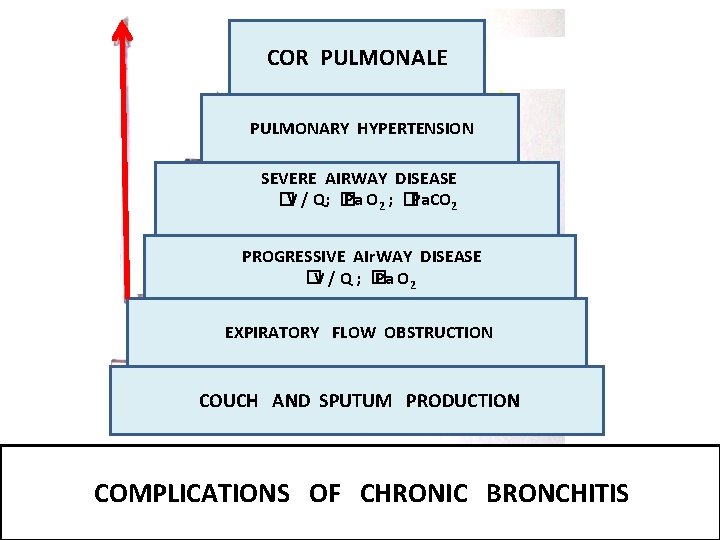
COR PULMONALE PULMONARY HYPERTENSION SEVERE AIRWAY DISEASE �V / Q; � Pa O 2 ; �Pa. CO 2 PROGRESSIVE AIr. WAY DISEASE �V / Q ; � Pa O 2 EXPIRATORY FLOW OBSTRUCTION COUCH AND SPUTUM PRODUCTION COMPLICATIONS OF CHRONIC BRONCHITIS
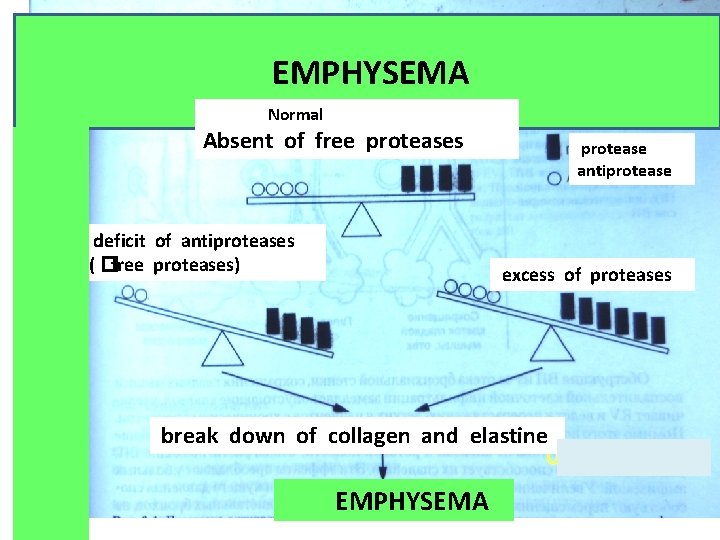
EMPHYSEMA Normal Absent of free proteases deficit of antiproteases ( �free proteases) protease antiprotease excess of proteases break down of collagen and elastine EMPHYSEMA
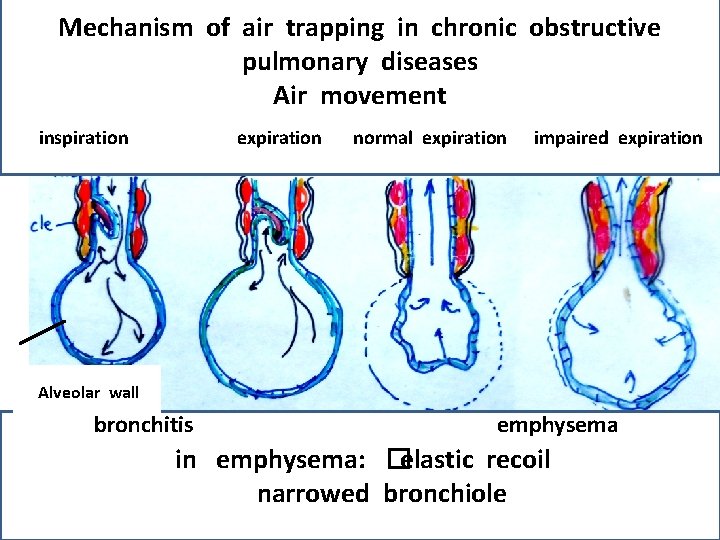
Mechanism of air trapping in chronic obstructive pulmonary diseases Air movement inspiration expiration normal expiration impaired expiration Alveolar wall bronchitis emphysema in emphysema: �elastic recoil narrowed bronchiole
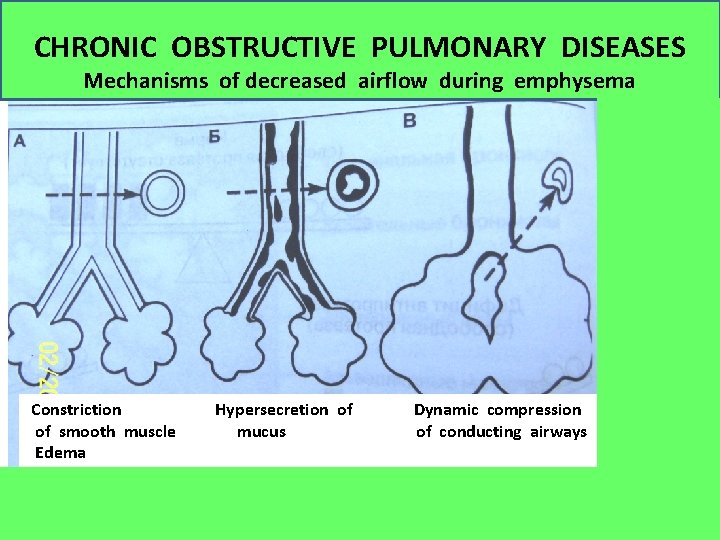
CHRONIC OBSTRUCTIVE PULMONARY DISEASES Mechanisms of decreased airflow during emphysema Constriction of smooth muscle Edema Hypersecretion of mucus Dynamic compression of conducting airways
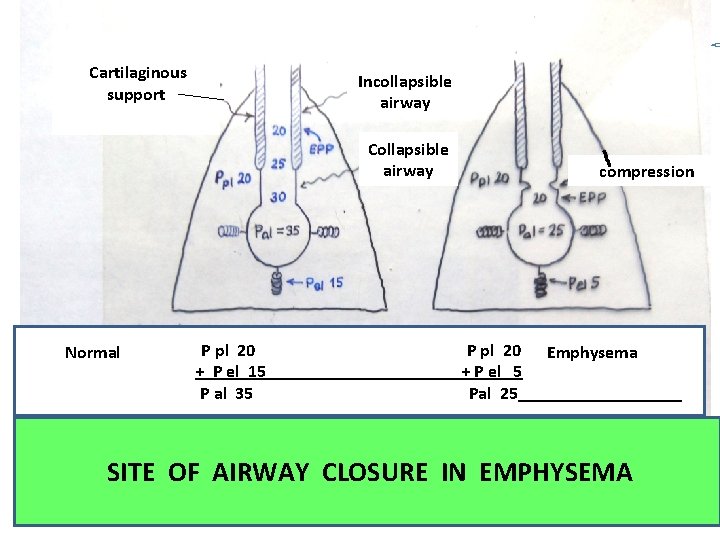
Cartilaginous support Incollapsible airway Collapsible airway Normal P pl 20 + P el 15 P al 35 compression P pl 20 + P el 5 Pal 25 Emphysema SITE OF AIRWAY CLOSURE IN EMPHYSEMA
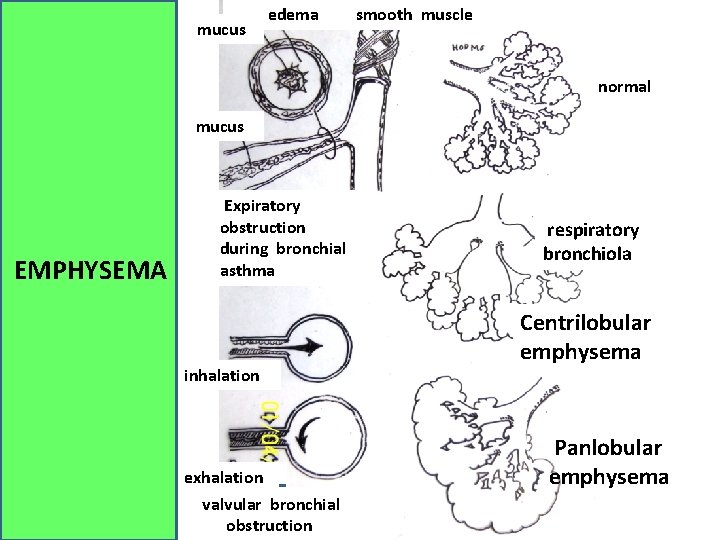
mucus edema smooth muscle normal mucus EMPHYSEMA Expiratory obstruction during bronchial asthma inhalation exhalation valvular bronchial obstruction respiratory bronchiola Centrilobular emphysema Panlobular emphysema
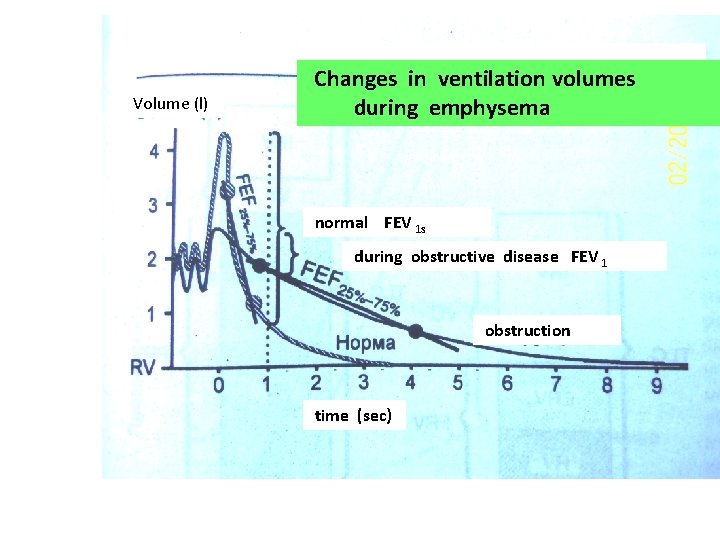
Volume (l) Changes in ventilation volumes during emphysema normal FEV 1 s during obstructive disease FEV 1 obstruction time (sec)
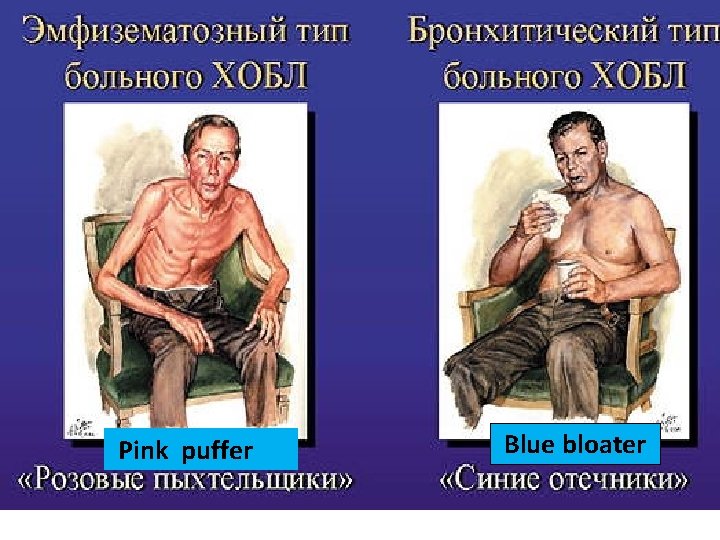
Pink puffer Blue bloater
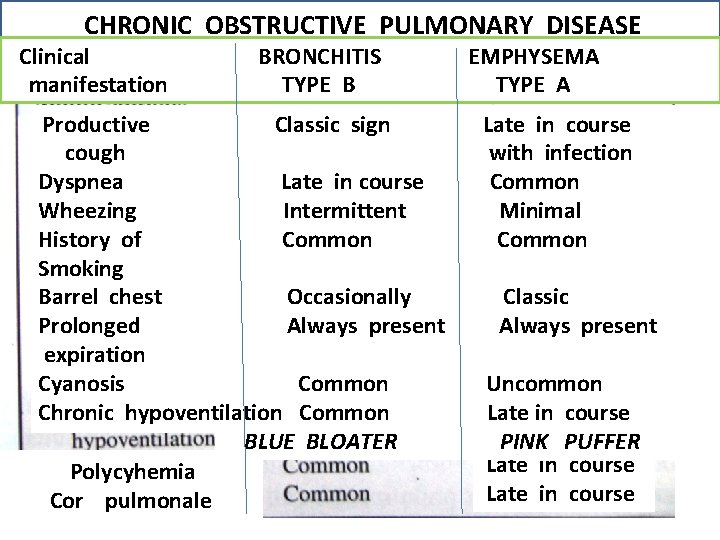
CHRONIC OBSTRUCTIVE PULMONARY DISEASE Clinical manifestation BRONCHITIS TYPE B Productive Classic sign cough Dyspnea Late in course Wheezing Intermittent History of Common Smoking Barrel chest Occasionally Prolonged Always present expiration Cyanosis Common Chronic hypoventilation Common BLUE BLOATER Polycyhemia Cor pulmonale EMPHYSEMA TYPE A Late in course with infection Common Minimal Common Classic Always present Uncommon Late in course PINK PUFFER Late in course
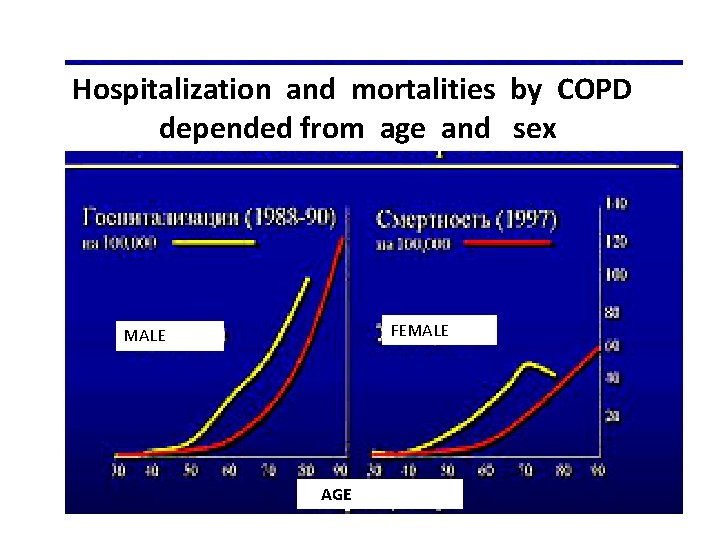
Hospitalization and mortalities by COPD depended from age and sex FEMALE AGE
- Slides: 19