
A Culture of Apprenticeship How Creating Useful Students
- Slides: 48
A Culture of Apprenticeship How Creating Useful Students Enhances Learning and Improves Preceptor Satisfaction Wayne Altman, MD, FAAFP -Director of Medical Student Education -Tufts University School of Medicine Kristen Goodell, MD -Director of Innovation in Medical Education -Harvard Medical School Center for Primary Care Sarah Ledbetter -Third Year Medical Student -Tufts University School of Medicine
New Curriculum Features… Competency-based Apprenticeship in Primary care
Competency-based o Experience-based Competency-based o Ensure students are competent at basic clinical skills when they start 3 rd year
Apprenticeship o Relationship b/n student & preceptor o Educational Home for students: students comfortable both learning and contributing o Students helpful in the office: Time saved Better teaching
Primary care o Continuity o Wide range of patients and problems gives chance to develop many types of skills. o Opportunity to start “from scratch” with patients
Logistics o End of 1 st year End of Second Year o 20 Mondays or Tuesdays o 85 Pairs of students placed with 85 primary care community faculty
Competency Cards o 28 required cards (22 optional) o 20 signed off by preceptor (1/week) n Students responsible for getting them signed o Some by the preceptor o Some by your student partner o Some by office staff
History 1. HPI 2. PMH 3. Social History 4. Family History 5. Cultural History 6. Complete History 7. Adolescent History
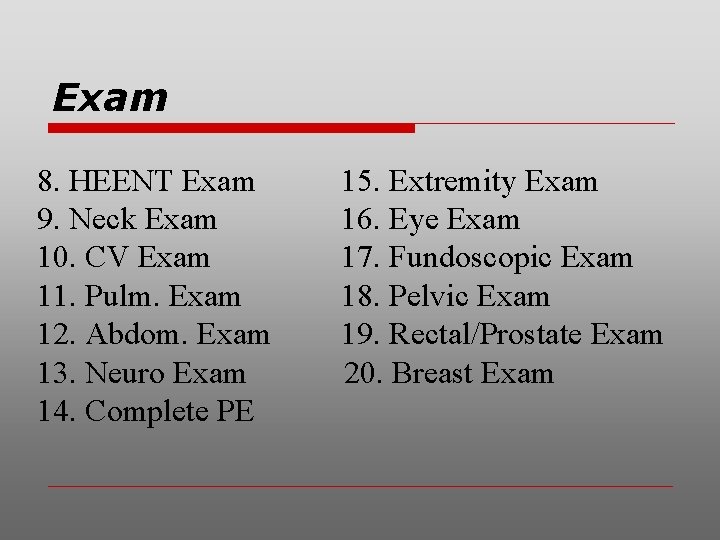
Exam 8. HEENT Exam 9. Neck Exam 10. CV Exam 11. Pulm. Exam 12. Abdom. Exam 13. Neuro Exam 14. Complete PE 15. Extremity Exam 16. Eye Exam 17. Fundoscopic Exam 18. Pelvic Exam 19. Rectal/Prostate Exam 20. Breast Exam
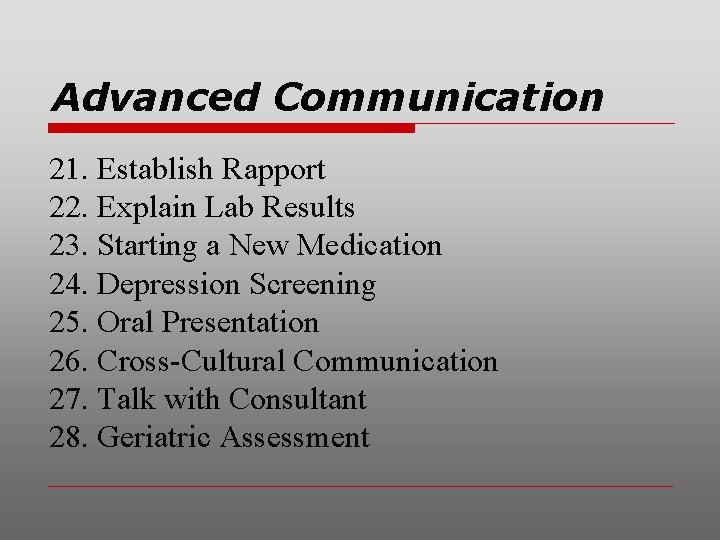
Advanced Communication 21. Establish Rapport 22. Explain Lab Results 23. Starting a New Medication 24. Depression Screening 25. Oral Presentation 26. Cross-Cultural Communication 27. Talk with Consultant 28. Geriatric Assessment
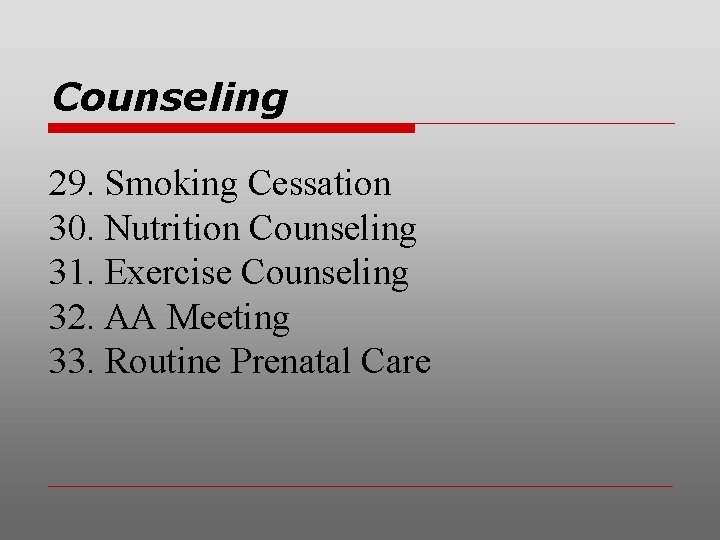
Counseling 29. Smoking Cessation 30. Nutrition Counseling 31. Exercise Counseling 32. AA Meeting 33. Routine Prenatal Care
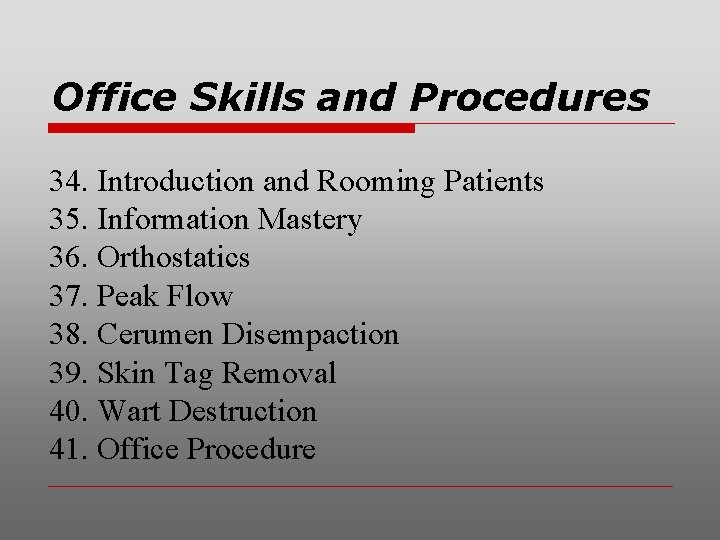
Office Skills and Procedures 34. Introduction and Rooming Patients 35. Information Mastery 36. Orthostatics 37. Peak Flow 38. Cerumen Disempaction 39. Skin Tag Removal 40. Wart Destruction 41. Office Procedure
Documentation 42. Updating Med List 43. SOAP Note 44. Documenting Annual Physical Exam 45. Prescription Writing
Pediatric 46. 47. 48. 49. 50. Growth and Development Pediatric Communication Newborn Exam Pediatric Social History Infant Medical History
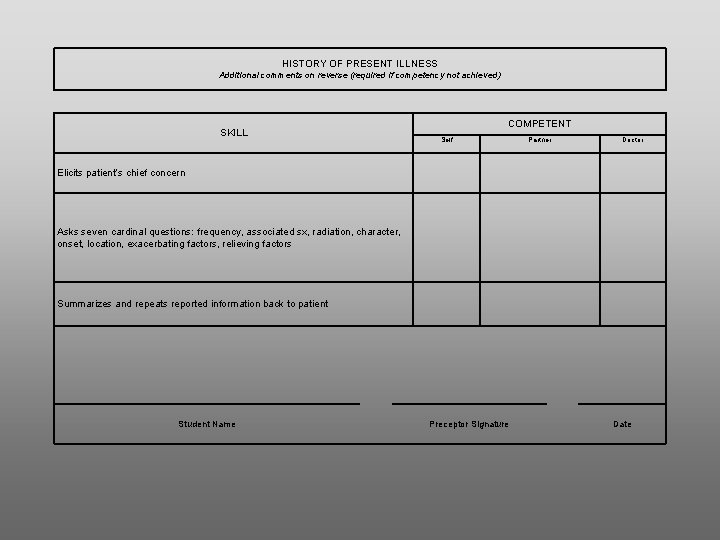
HISTORY OF PRESENT ILLNESS Additional comments on reverse (required if competency not achieved) SKILL COMPETENT Self Partner Doctor Elicits patient’s chief concern Asks seven cardinal questions: frequency, associated sx, radiation, character, onset, location, exacerbating factors, relieving factors Summarizes and repeats reported information back to patient Student Name Preceptor Signature Date
Challenges 1. 85 Faculty to Recruit 2. Pair of Students 3. Inadequate Observation 4. Inadequate Feedback 5. Complete 20 Cards
Solution n Apprenticeship o Apprentice does work that helps the mentor o Mentor helps apprentice build skills
Apprenticeship o Examples?
Student Helpfulness Skills Faculty Development/Surveys Workshops
Top 10 Ways To Be Helpful With Your Preceptor
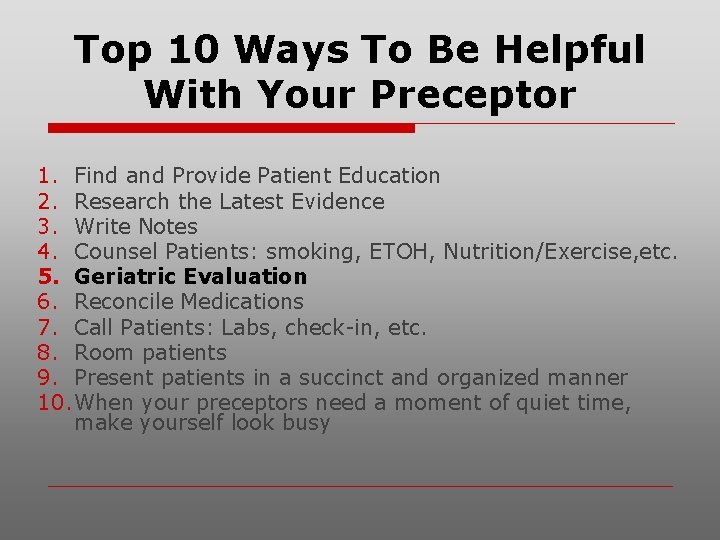
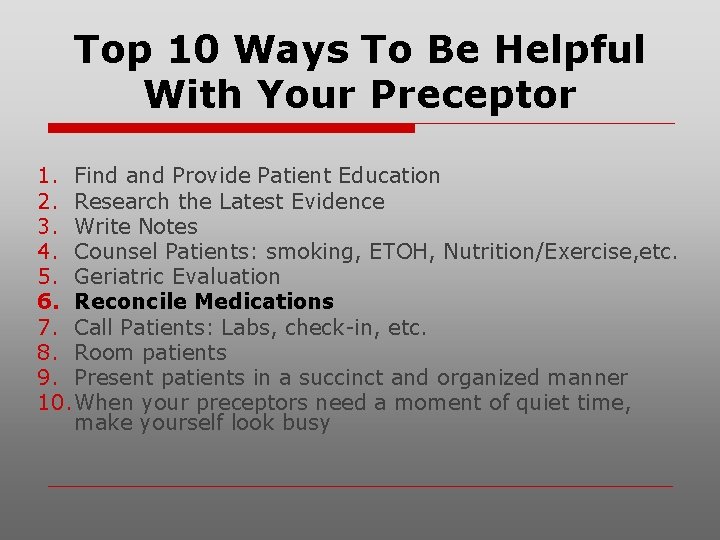
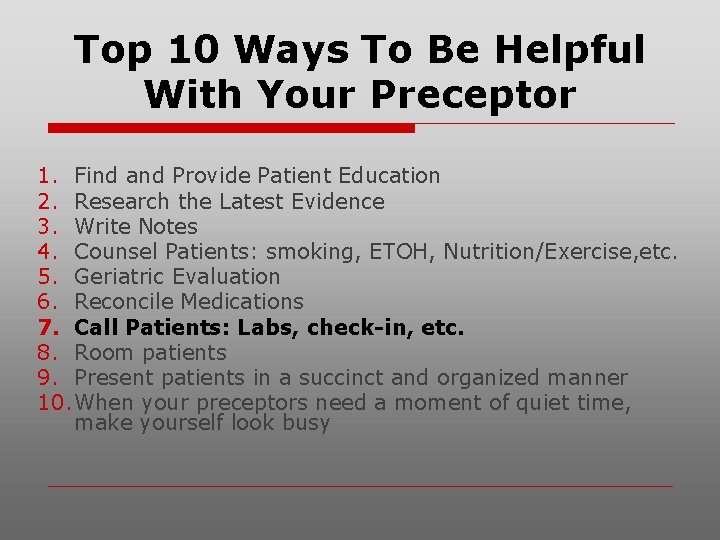
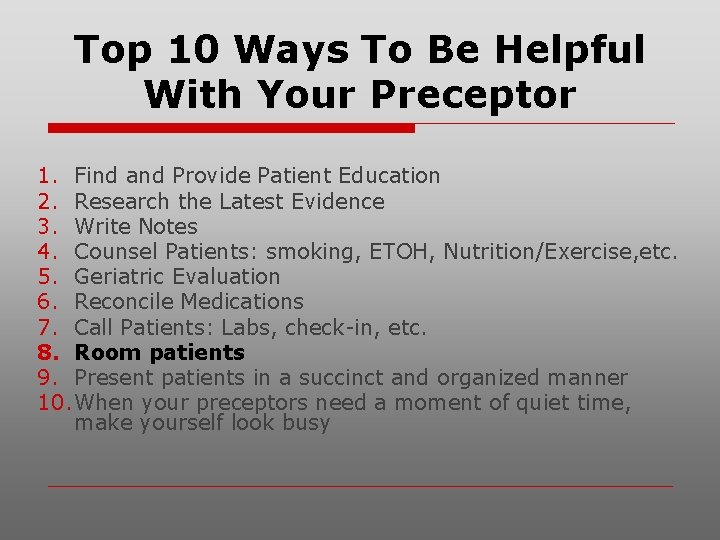
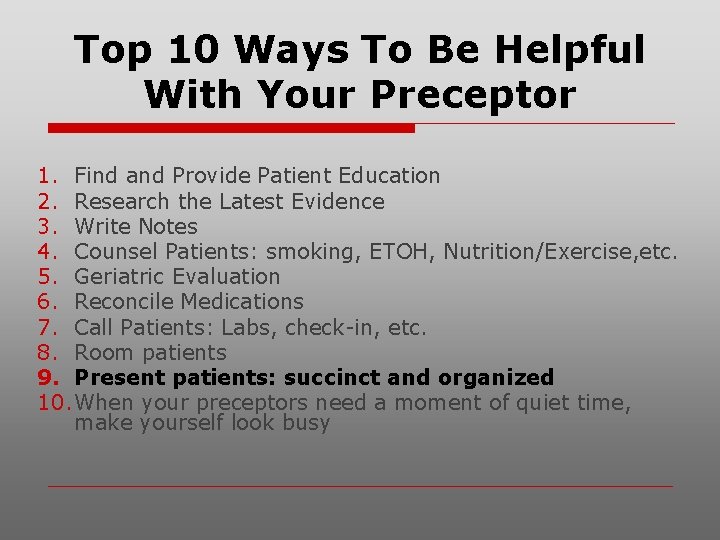
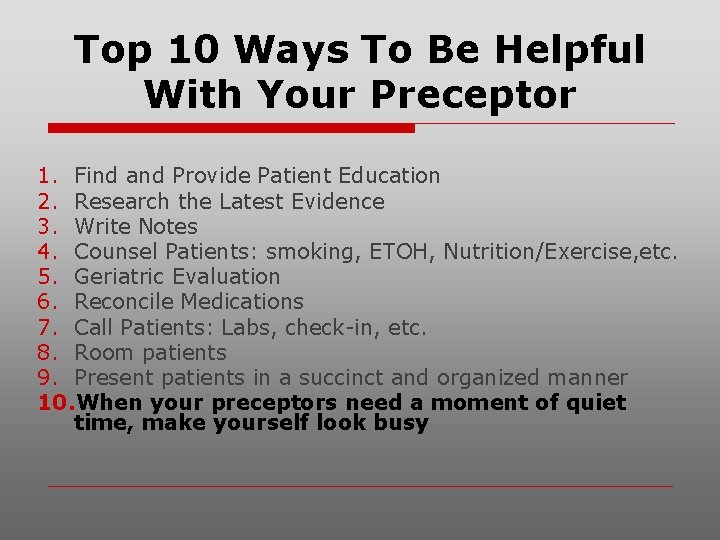
Top 10 Ways To Be Helpful With Your Preceptor 1. Find and Provide Patient Education 2. Research the Latest Evidence 3. Write Notes 4. Counsel Patients: smoking, ETOH, Nutrition/Exercise, etc. 5. Geriatric Evaluation 6. Reconcile Medications 7. Call Patients: Labs, check-in, etc. 8. Room patients 9. Present patients in a succinct and organized manner 10. When your preceptors need a moment of quiet time, make yourself look busy
Top 10 Ways To Be Helpful With Your Preceptor 1. Find and Provide Patient Education 2. Research the Latest Evidence 3. Write Notes 4. Counsel Patients: smoking, ETOH, Nutrition/Exercise, etc. 5. Geriatric Evaluation 6. Reconcile Medications 7. Call Patients: Labs, check-in, etc. 8. Room patients 9. Present patients in a succinct and organized manner 10. When your preceptors need a moment of quiet time, make yourself look busy
Top 10 Ways To Be Helpful With Your Preceptor 1. Find and Provide Patient Education 2. Research the Latest Evidence 3. Write Notes 4. Counsel Patients: smoking, ETOH, Nutrition/Exercise, etc. 5. Geriatric Evaluation 6. Reconcile Medications 7. Call Patients: Labs, check-in, etc. 8. Room patients 9. Present patients in a succinct and organized manner 10. When your preceptors need a moment of quiet time, make yourself look busy
Top 10 Ways To Be Helpful With Your Preceptor 1. Find and Provide Patient Education 2. Research the Latest Evidence 3. Write Notes 4. Counseling: smoking, ETOH, Nutrition/Exercise, etc. 5. Geriatric Evaluation 6. Reconcile Medications 7. Call Patients: Labs, check-in, etc. 8. Room patients 9. Present patients in a succinct and organized manner 10. When your preceptors need a moment of quiet time, make yourself look busy
Top 10 Ways To Be Helpful With Your Preceptor 1. Find and Provide Patient Education 2. Research the Latest Evidence 3. Write Notes 4. Counsel Patients: smoking, ETOH, Nutrition/Exercise, etc. 5. Geriatric Evaluation 6. Reconcile Medications 7. Call Patients: Labs, check-in, etc. 8. Room patients 9. Present patients in a succinct and organized manner 10. When your preceptors need a moment of quiet time, make yourself look busy
Top 10 Ways To Be Helpful With Your Preceptor 1. Find and Provide Patient Education 2. Research the Latest Evidence 3. Write Notes 4. Counsel Patients: smoking, ETOH, Nutrition/Exercise, etc. 5. Geriatric Evaluation 6. Reconcile Medications 7. Call Patients: Labs, check-in, etc. 8. Room patients 9. Present patients in a succinct and organized manner 10. When your preceptors need a moment of quiet time, make yourself look busy
Top 10 Ways To Be Helpful With Your Preceptor 1. Find and Provide Patient Education 2. Research the Latest Evidence 3. Write Notes 4. Counsel Patients: smoking, ETOH, Nutrition/Exercise, etc. 5. Geriatric Evaluation 6. Reconcile Medications 7. Call Patients: Labs, check-in, etc. 8. Room patients 9. Present patients in a succinct and organized manner 10. When your preceptors need a moment of quiet time, make yourself look busy
Top 10 Ways To Be Helpful With Your Preceptor 1. Find and Provide Patient Education 2. Research the Latest Evidence 3. Write Notes 4. Counsel Patients: smoking, ETOH, Nutrition/Exercise, etc. 5. Geriatric Evaluation 6. Reconcile Medications 7. Call Patients: Labs, check-in, etc. 8. Room patients 9. Present patients in a succinct and organized manner 10. When your preceptors need a moment of quiet time, make yourself look busy
Top 10 Ways To Be Helpful With Your Preceptor 1. Find and Provide Patient Education 2. Research the Latest Evidence 3. Write Notes 4. Counsel Patients: smoking, ETOH, Nutrition/Exercise, etc. 5. Geriatric Evaluation 6. Reconcile Medications 7. Call Patients: Labs, check-in, etc. 8. Room patients 9. Present patients: succinct and organized 10. When your preceptors need a moment of quiet time, make yourself look busy
Top 10 Ways To Be Helpful With Your Preceptor 1. Find and Provide Patient Education 2. Research the Latest Evidence 3. Write Notes 4. Counsel Patients: smoking, ETOH, Nutrition/Exercise, etc. 5. Geriatric Evaluation 6. Reconcile Medications 7. Call Patients: Labs, check-in, etc. 8. Room patients 9. Present patients in a succinct and organized manner 10. When your preceptors need a moment of quiet time, make yourself look busy
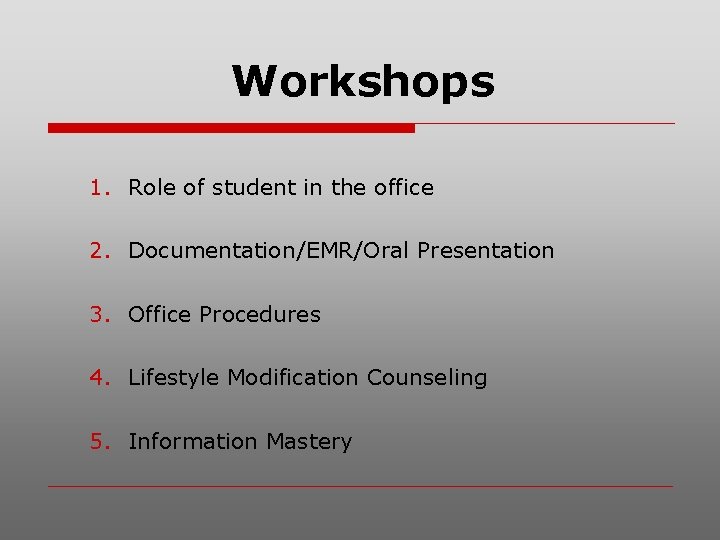
Workshops 1. Role of student in the office 2. Documentation/EMR/Oral Presentation 3. Office Procedures 4. Lifestyle Modification Counseling 5. Information Mastery
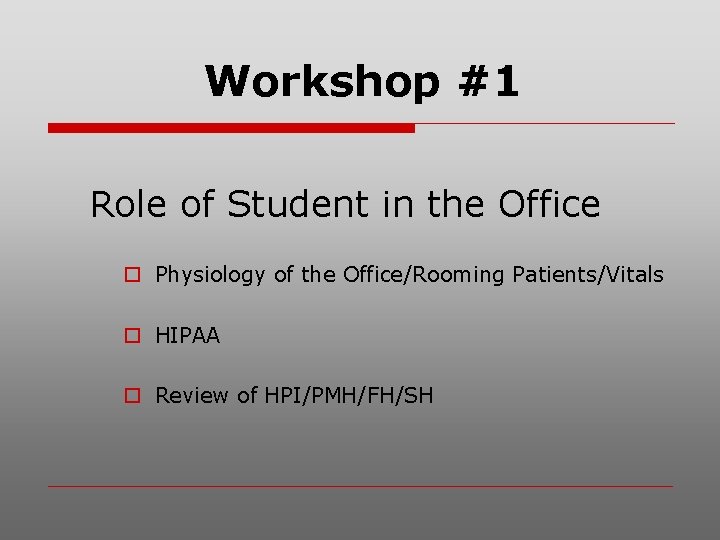
Workshop #1 Role of Student in the Office o Physiology of the Office/Rooming Patients/Vitals o HIPAA o Review of HPI/PMH/FH/SH
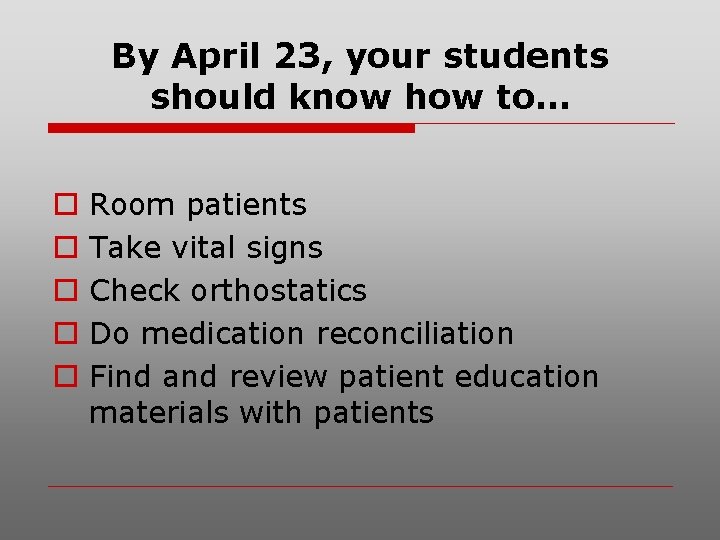
By April 23, your students should know how to… o o o Room patients Take vital signs Check orthostatics Do medication reconciliation Find and review patient education materials with patients
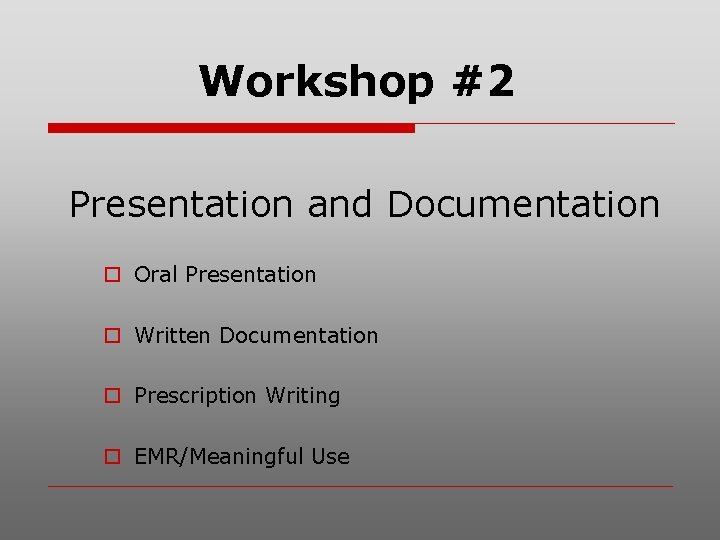
Workshop #2 Presentation and Documentation o Oral Presentation o Written Documentation o Prescription Writing o EMR/Meaningful Use
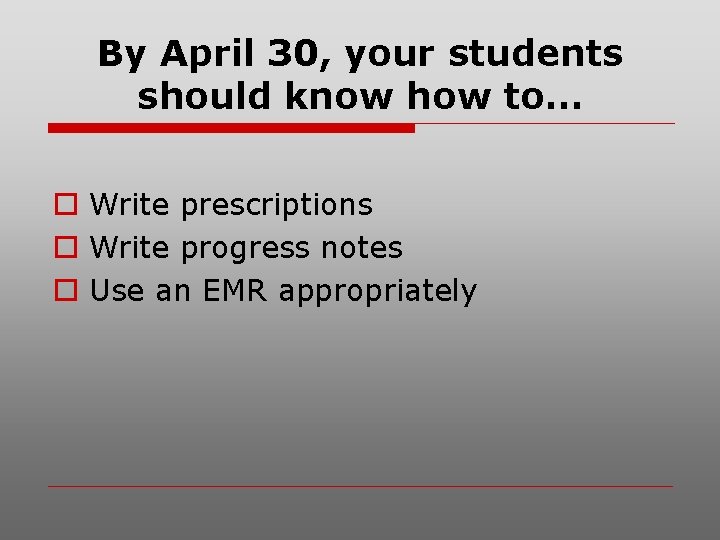
By April 30, your students should know how to… o Write prescriptions o Write progress notes o Use an EMR appropriately
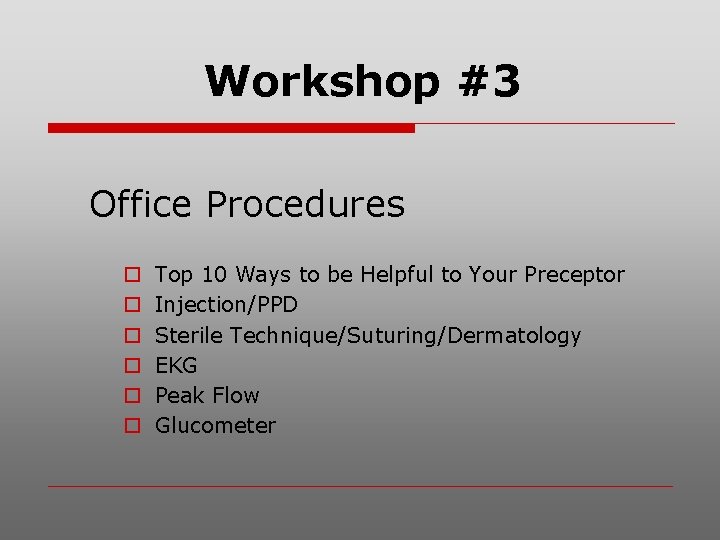
Workshop #3 Office Procedures o o o Top 10 Ways to be Helpful to Your Preceptor Injection/PPD Sterile Technique/Suturing/Dermatology EKG Peak Flow Glucometer
By May 7, your students should know how to… o o Perform (not read) an EKG Give IM injections, PPDs Help patients perform a peak flow Maintain sterility while assisting in surgical procedures
Workshop #4 Lifestyle Modification Counseling o Motivational Interviewing o Smoking Cessation o Nutrition/Exercise o Alcohol Abuse Screening (AUDIT)
By May 14, your students should know how to… o Counsel patients on smoking cessation o Counsel patients on nutrition for HTN, lipids, DM, and obesity o Screen patients for alcohol addition
Workshop #5 Information Mastery o How to ask a question o Where to find the answer o Emphasis on what is useful in the office
By September 10, your students should know how to… o Find high quality evidence for clinical questions in real time o Communicate this evidence to your patients
Does Apprenticeship Work? o Faculty Feedback o Research
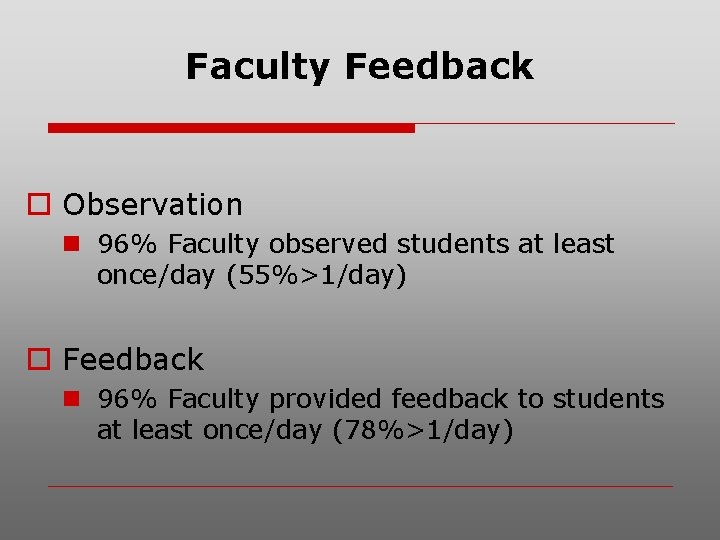
Faculty Feedback o Observation n 96% Faculty observed students at least once/day (55%>1/day) o Feedback n 96% Faculty provided feedback to students at least once/day (78%>1/day)
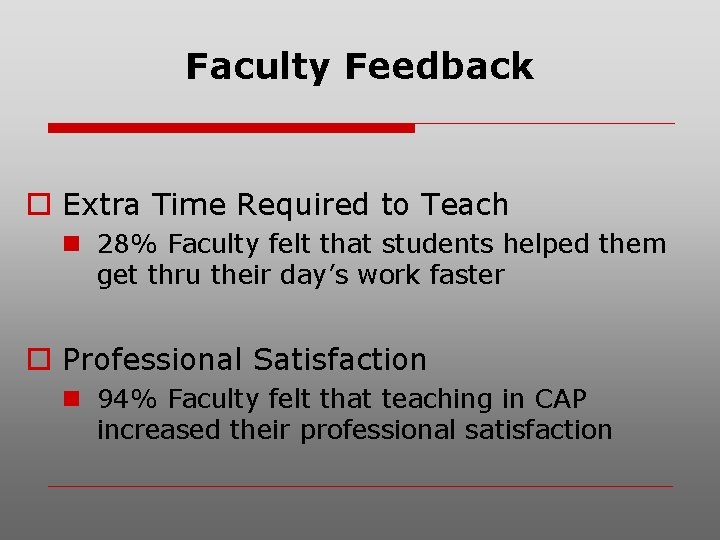
Faculty Feedback o Extra Time Required to Teach n 28% Faculty felt that students helped them get thru their day’s work faster o Professional Satisfaction n 94% Faculty felt that teaching in CAP increased their professional satisfaction
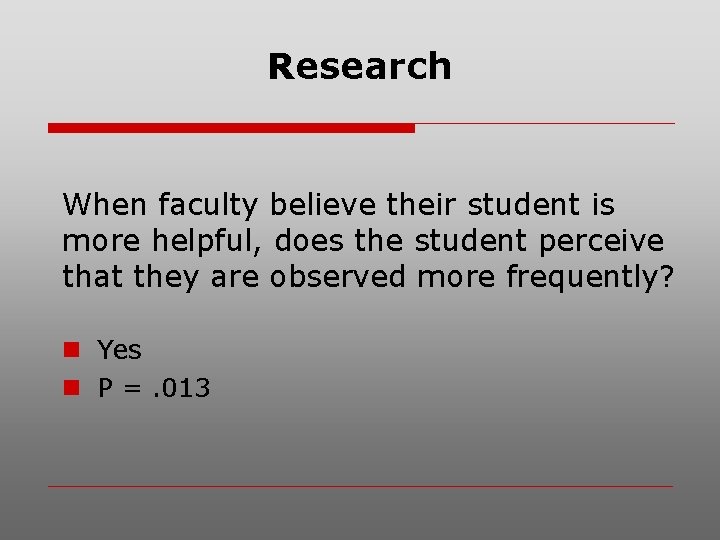
Research When faculty believe their student is more helpful, does the student perceive that they are observed more frequently? n Yes n P =. 013
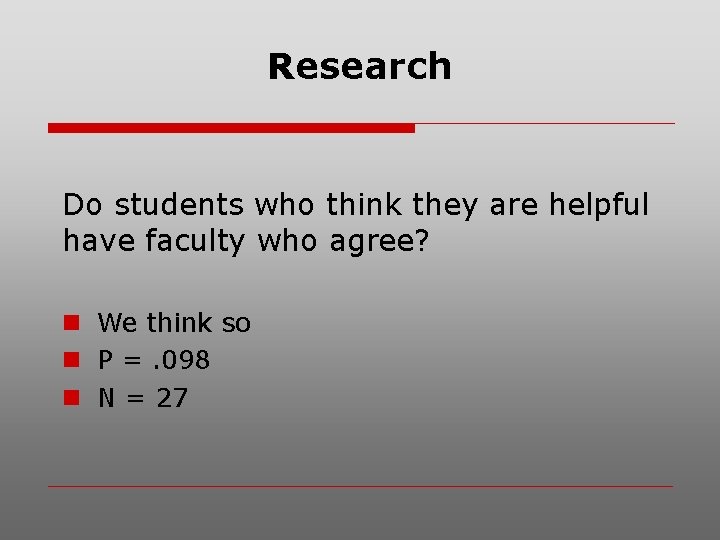
Research Do students who think they are helpful have faculty who agree? n We think so n P =. 098 n N = 27
Next Steps o For us n Larger study n What to measure o For you
QUESTIONS? ? ? o Wayne. altman@tufts. edu o Kristen. Goodell@gmail. com o Sarah. Ledbetter@tufts. edu