
A continuous monitoring system of terrestrial ecosystem for
- Slides: 14
A continuous monitoring system of terrestrial ecosystem for satellite validation "Phenological Eyes Network (PEN)"
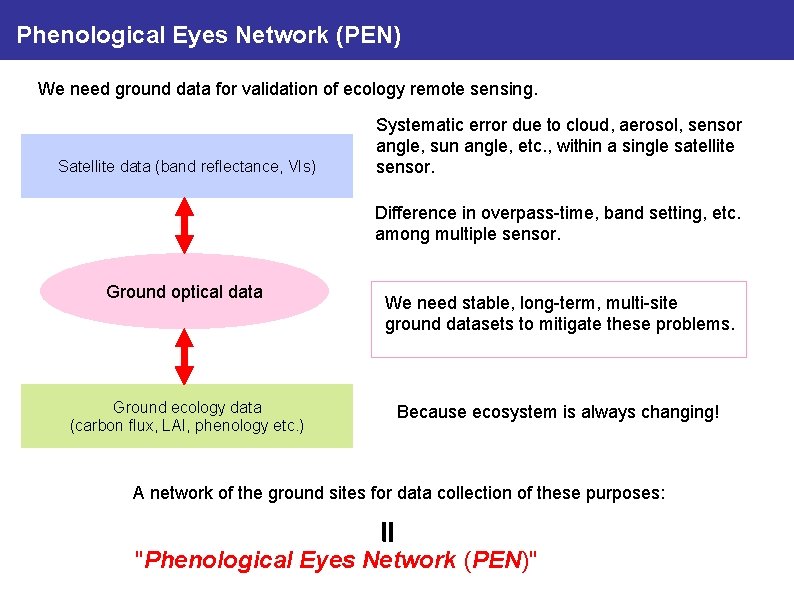
Phenological Eyes Network (PEN) We need ground data for validation of ecology remote sensing. Satellite data (band reflectance, VIs) Systematic error due to cloud, aerosol, sensor angle, sun angle, etc. , within a single satellite sensor. Difference in overpass-time, band setting, etc. among multiple sensor. Ground optical data Ground ecology data (carbon flux, LAI, phenology etc. ) We need stable, long-term, multi-site ground datasets to mitigate these problems. Because ecosystem is always changing! A network of the ground sites for data collection of these purposes: "Phenological Eyes Network (PEN)"
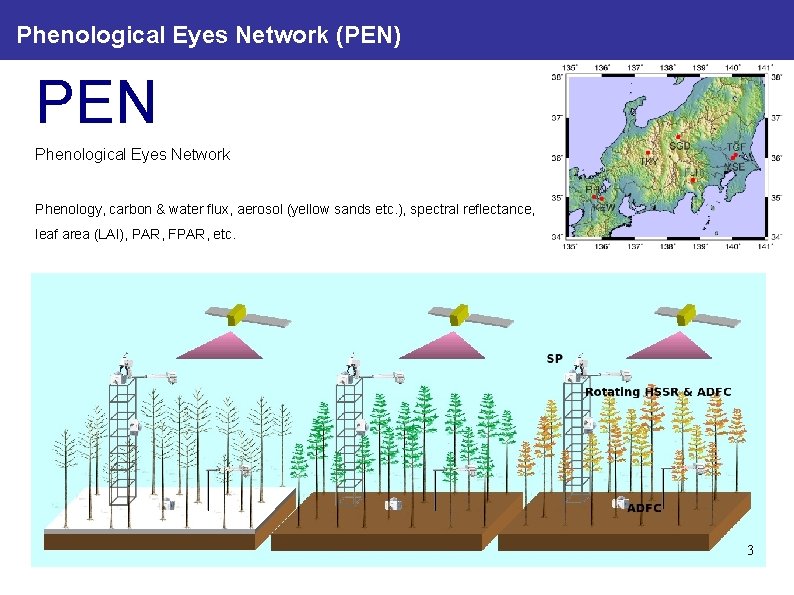
Phenological Eyes Network (PEN) PEN Phenological Eyes Network Phenology, carbon & water flux, aerosol (yellow sands etc. ), spectral reflectance, leaf area (LAI), PAR, FPAR, etc. 3
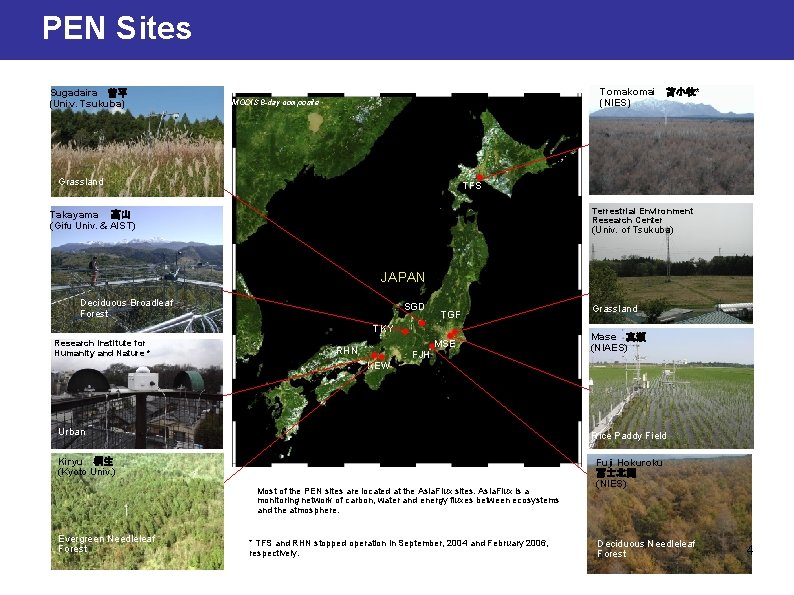
PEN Sites Sugadaira 菅平 (Univ. Tsukuba) Tomakomai 苫小牧* (NIES) MODIS 8 -day composite Grassland TFS Terrestrial Environment Research Center Takayama 高山 (Gifu Univ. & AIST) (Univ. of Tsukuba) JAPAN Deciduous Broadleaf Forest SGD TGF TKY Research Institute for Humanity and Nature * MSE RHN KEW FJH Urban Mase 真瀬 (NIAES) Rice Paddy Field Kiryu 桐生 (Kyoto Univ. ) Most of the PEN sites are located at the Asia. Flux sites. Asia. Flux is a monitoring network of carbon, water and energy fluxes between ecosystems and the atmosphere. Evergreen Needleleaf Forest Grassland * TFS and RHN stopped operation in September, 2004 and February 2006, respectively. Fuji Hokuroku 富士北麓 (NIES) Deciduous Needleleaf Forest 4
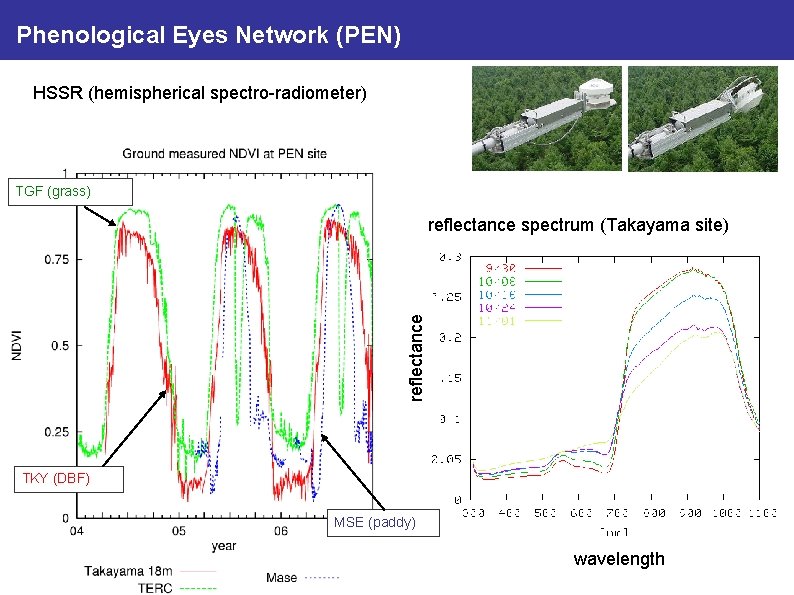
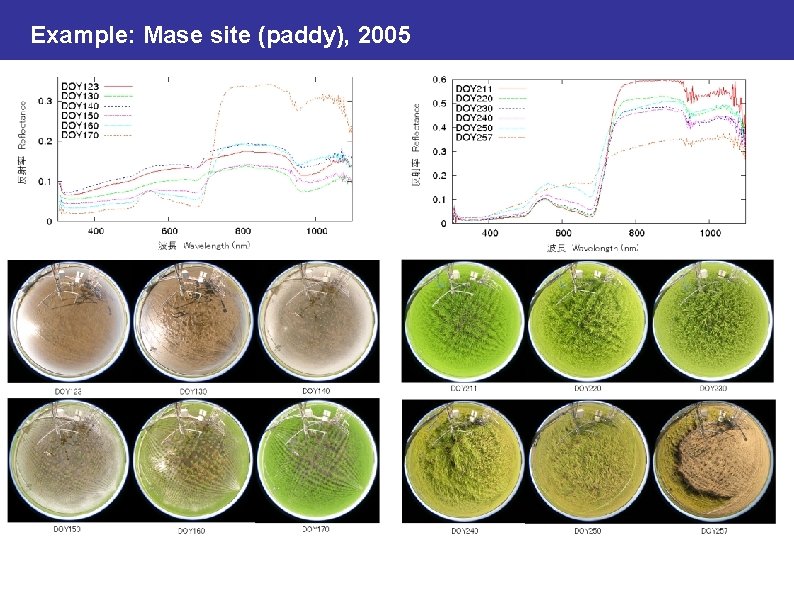
Phenological Eyes Network (PEN) HSSR (hemispherical spectro-radiometer) TGF (grass) reflectance spectrum (Takayama site) TKY (DBF) MSE (paddy) wavelength
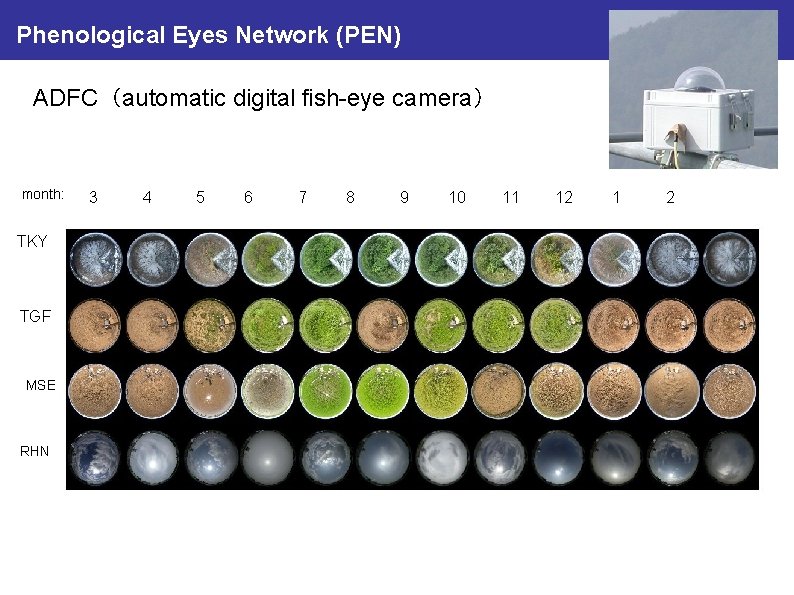
Phenological Eyes Network (PEN) ADFC(automatic digital fish-eye camera) month: TKY TGF MSE RHN 3 4 5 6 7 8 9 10 11 12 1 2
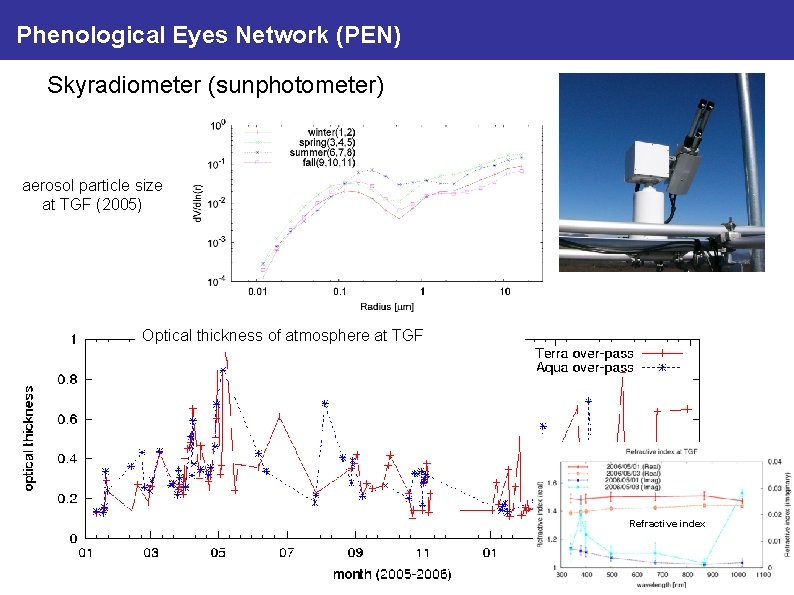
Phenological Eyes Network (PEN) Skyradiometer (sunphotometer) aerosol particle size at TGF (2005) Optical thickness of atmosphere at TGF Refractive index
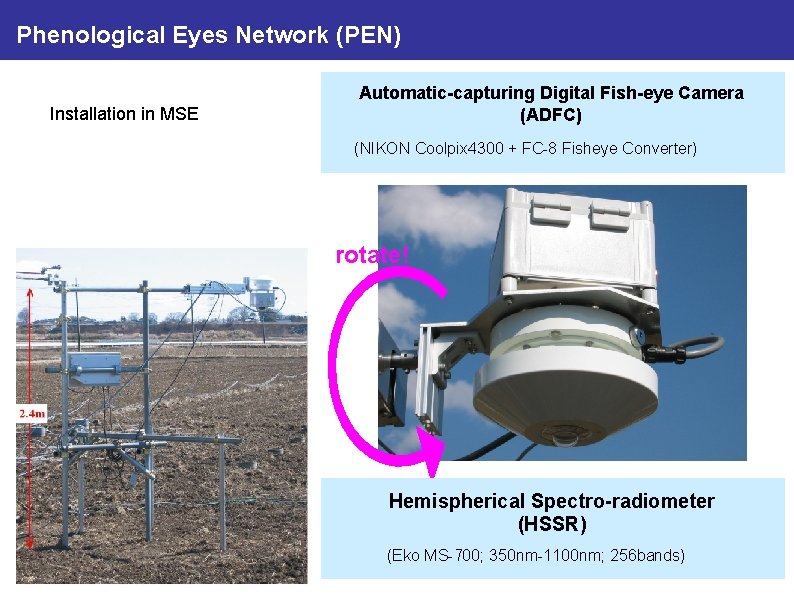
Phenological Eyes Network (PEN) Installation in MSE Automatic-capturing Digital Fish-eye Camera (ADFC) (NIKON Coolpix 4300 + FC-8 Fisheye Converter) rotate! Hemispherical Spectro-radiometer (HSSR) (Eko MS-700; 350 nm-1100 nm; 256 bands)
Example: Mase site (paddy), 2005
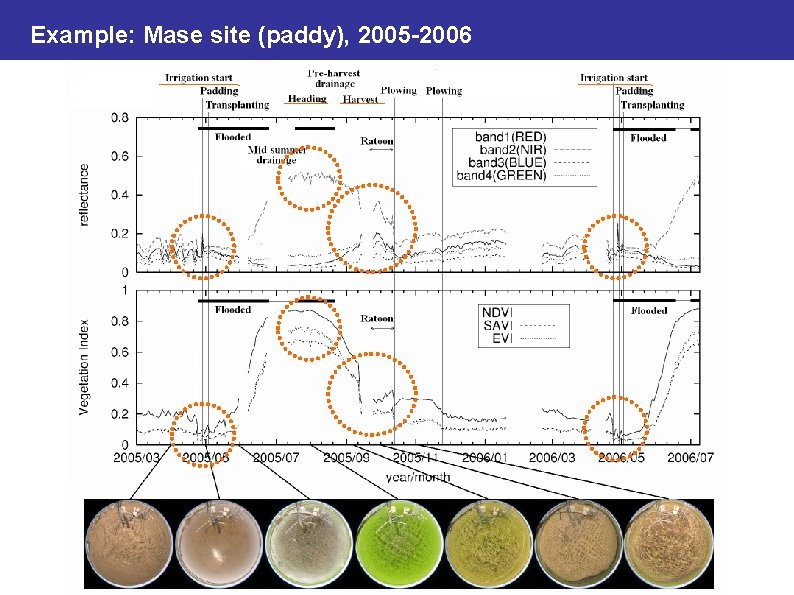
Example: Mase site (paddy), 2005 -2006
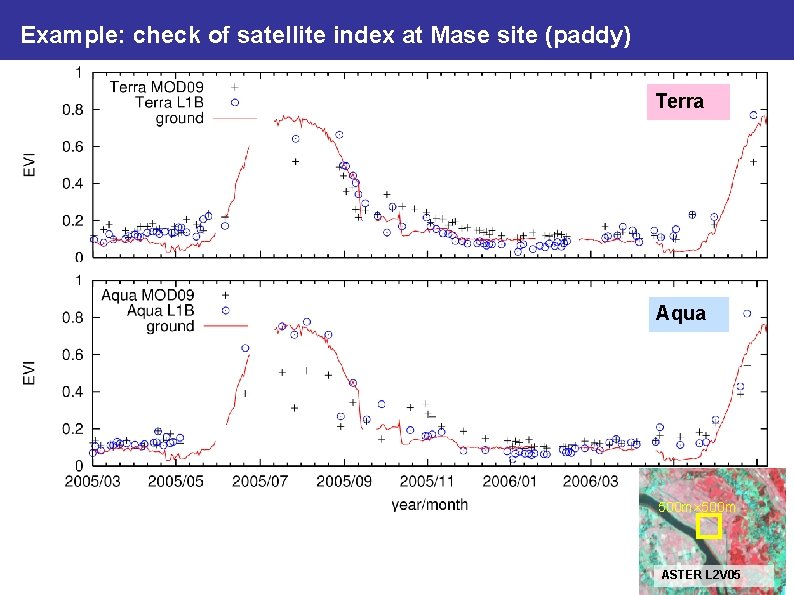
Example: check of satellite index at Mase site (paddy) Terra Aqua 500 m× 500 m ASTER L 2 V 05
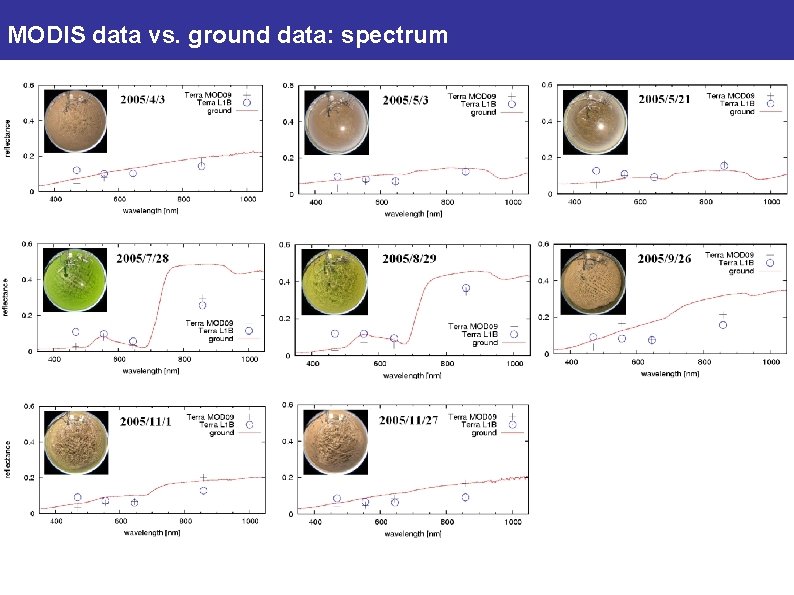
MODIS data vs. ground data: spectrum
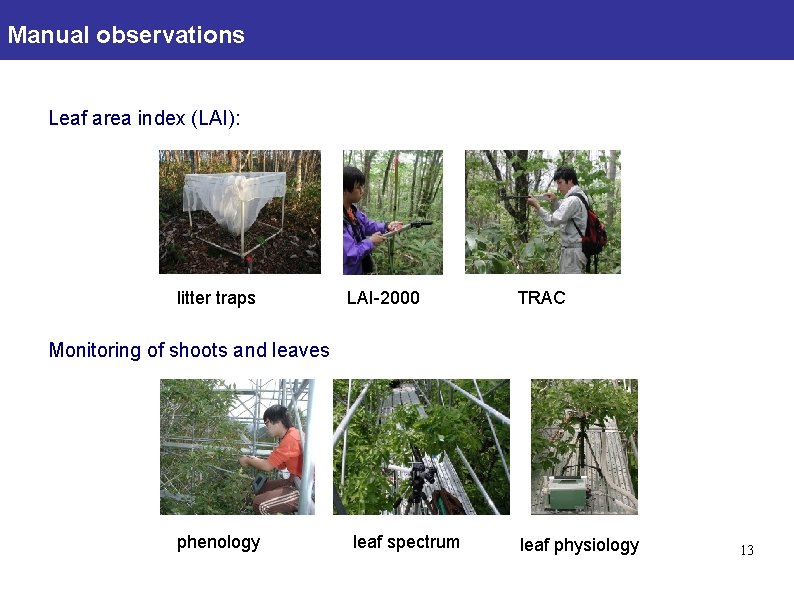
Manual observations Leaf area index (LAI): litter traps LAI-2000 TRAC Monitoring of shoots and leaves phenology leaf spectrum leaf physiology 13
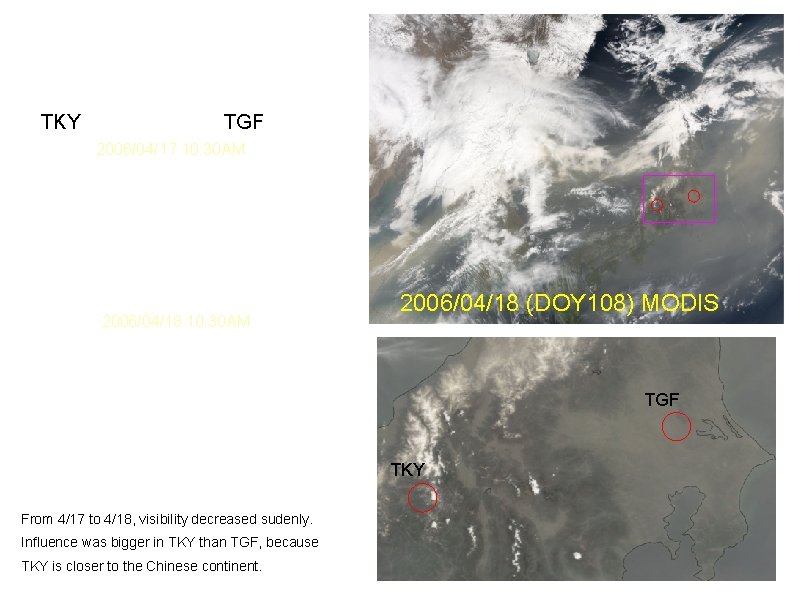
TKY TGF 2006/04/17 10: 30 AM 2006/04/18 (DOY 108) MODIS TGF TKY From 4/17 to 4/18, visibility decreased sudenly. Influence was bigger in TKY than TGF, because TKY is closer to the Chinese continent.