
A Constructivist Approach to Improving Numeracy at Hareleeshill
- Slides: 13
A Constructivist Approach to Improving Numeracy at Hareleeshill Kate Fisher, Head Teacher Chiara Moscardini Mc. Kenna, Acting Principal Teacher ASN
Overview • Where we were • Model of Change • Examples • Impact • Where we are now
Previously at Hareleeshill • Initial pace in the early years was too fast • Moved away from concrete materials • Not enough time to talk to share practice • Maths as an individual activity not a group activity • Algorithm to word problem • Resource-led numeracy : (A to B) + Z pages/Y days • Behaviourist/transmission teaching
What we changed • Cognitively Guided Instruction (CGI) • Research-based • Pupils learning mathematical concepts in context through specific word problems • Building on intuitive mathematical understanding- not teaching processes or procedures to follow
Making Connections • Professional noticing: teachers carefully observing children’s mathematical thinking and using this to inform their planning and next steps • Assessing children’s thinking- Considering not just if a child got the correct answer, but how they got the answer they did • Heavy focus on discussion of thinking and understandingdynamic assessment and questioning to challenge • Connecting mathematical ideas and concrete to abstract
Model of Change • Not using a trickle down approach • Masters module: Children’s development in numeracy- An introduction to CGI • Working directly with original CGI researchers from USA through Strathclyde Numeracy Project • Appointing a Numeracy Specialist Teacher in school • Numeracy Working party- all staff • Ongoing peer observations • Shared learning board in staffroom
Numeracy Clinics • Twice weekly sessions for teachers • Voluntary • Led by Numeracy Teacher • Monday- group study and development • Thursday- planning support sessions • Have now introduced Literacy and ASN clinics following on from the success of these
Strathclyde Numeracy Project • Connecting with CPD leaders and ‘experts’ in an ongoing manner • Ongoing CPD in school- CAT sessions, working party and in-service • Regular Skype sessions with professors from USA • Structured support visits from professors and senior lecturer- demonstrations, observations, support and guidance
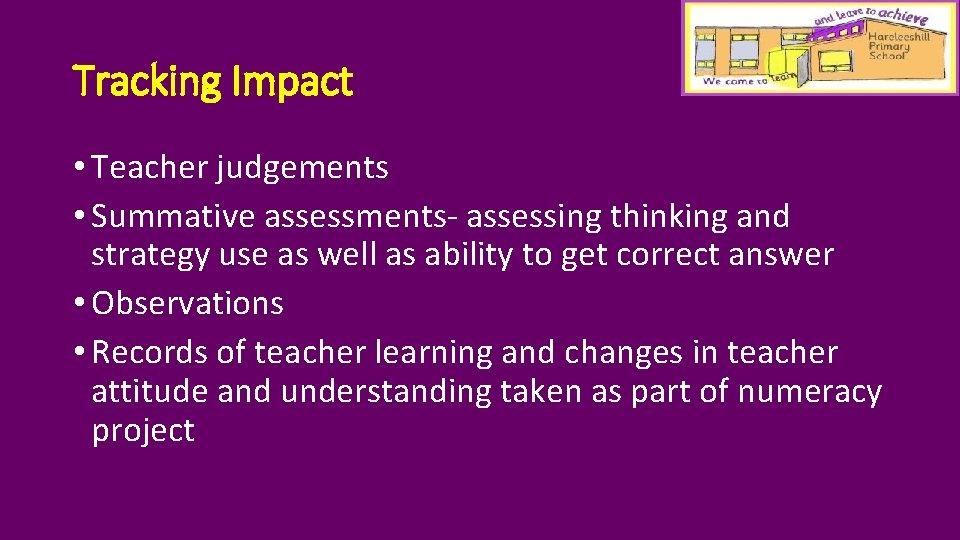
Tracking Impact • Teacher judgements • Summative assessments- assessing thinking and strategy use as well as ability to get correct answer • Observations • Records of teacher learning and changes in teacher attitude and understanding taken as part of numeracy project
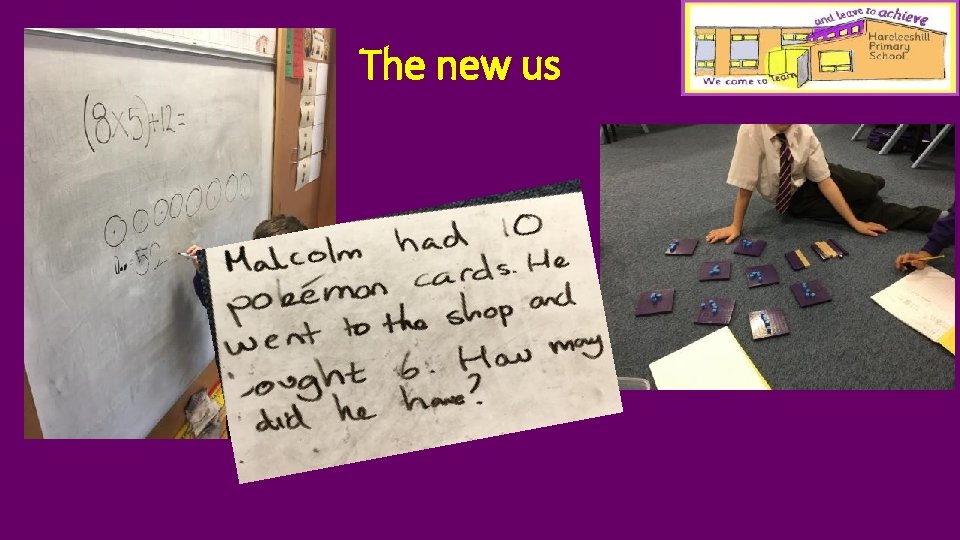
The new us
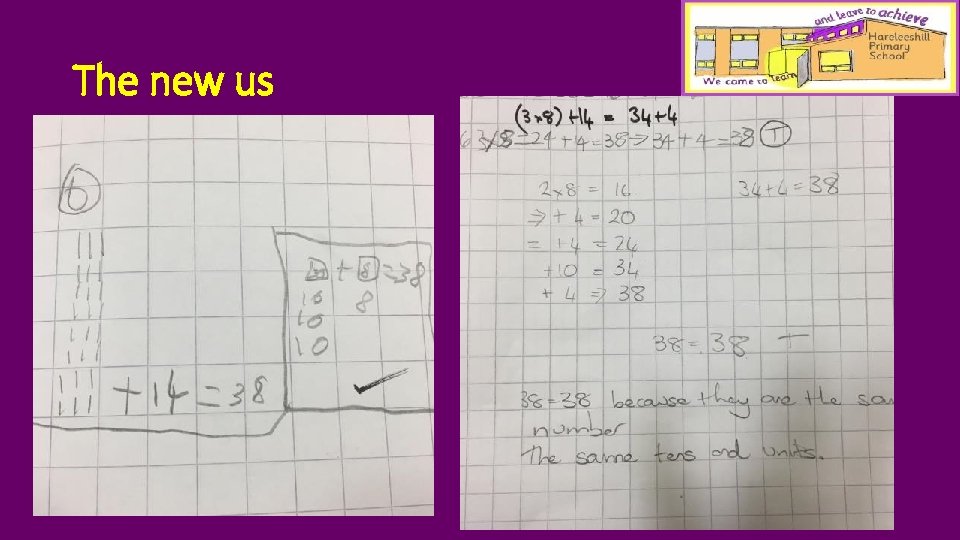
The new us
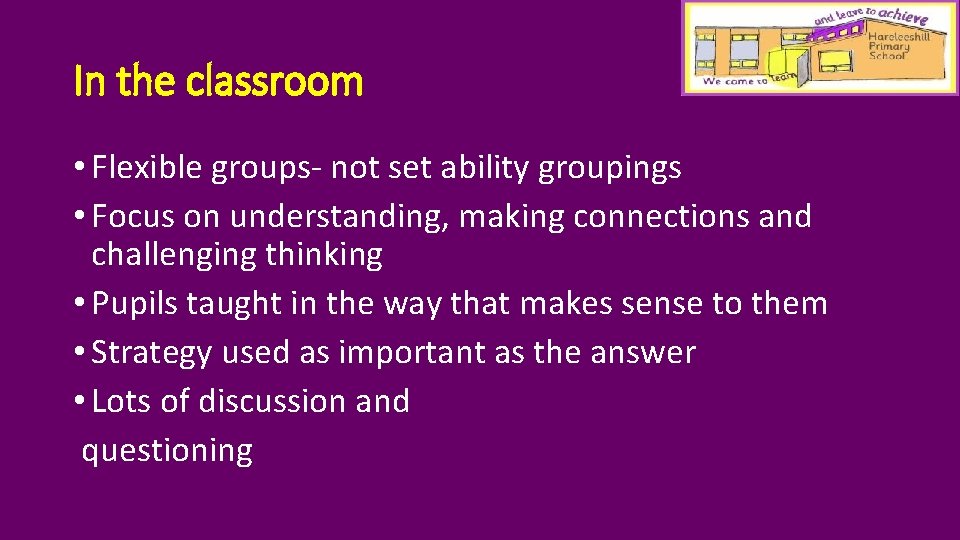
In the classroom • Flexible groups- not set ability groupings • Focus on understanding, making connections and challenging thinking • Pupils taught in the way that makes sense to them • Strategy used as important as the answer • Lots of discussion and questioning
Impact • Supporting pupils as individuals • Improved teacher understanding and knowledge • Less stress and more positive attitude towards maths • Improved engagement • Assessment is dynamic • Development of problem solving skills, higher order thinking • Children operating at a level far beyond previously thought • Pupils becoming more independent