
A Conceptual Framework For Mapping Business Rules To
A Conceptual Framework For Mapping Business Rules To The Enterprise Data Model Sudha Ram, Jun Liu Department of Management Information Systems The University of Arizona
Objectives • Provide data sourcing service for business rules • Design a conceptual model that captures semantics of business rules and associates business rules with the data objects they reference
Challenging Issues • A “semantic gap” between business rules and the data model - Business experts specify business rules in natural language without referring to the enterprise data models • Business rules are subject to frequent changes
Related Work • Explicitly express the content and structure of business rules. - Guide Project (The Business Rule Group, 2000) • Achieve an integrated conceptual model of business rules - Ross Method (Ross, 1997) - ORM (Object Role Model) (Halpin, 1996) • Business Rule Classification (Ram & Khatri, 2004)
Our Conceptual Framework
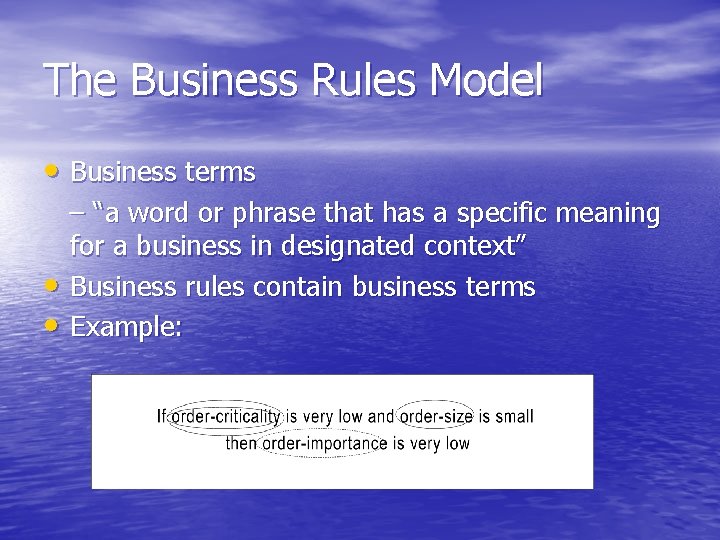
The Business Rules Model • Business terms • • – “a word or phrase that has a specific meaning for a business in designated context” Business rules contain business terms Example:
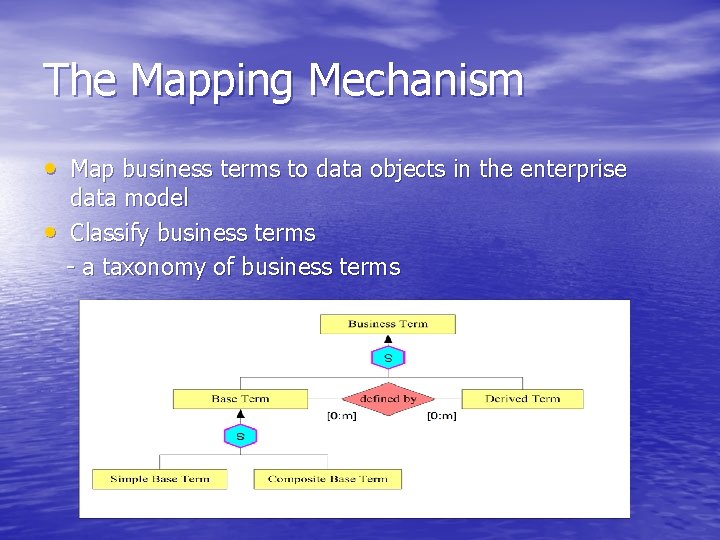
The Mapping Mechanism • Map business terms to data objects in the enterprise • data model Classify business terms - a taxonomy of business terms
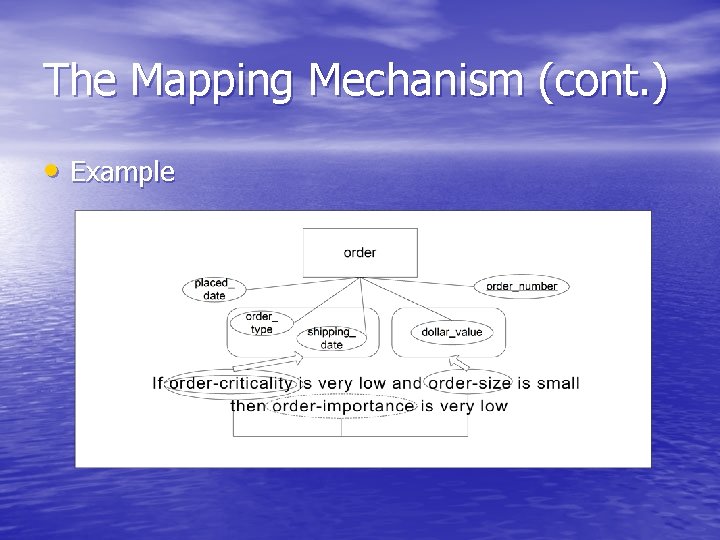
The Mapping Mechanism (cont. ) • Example
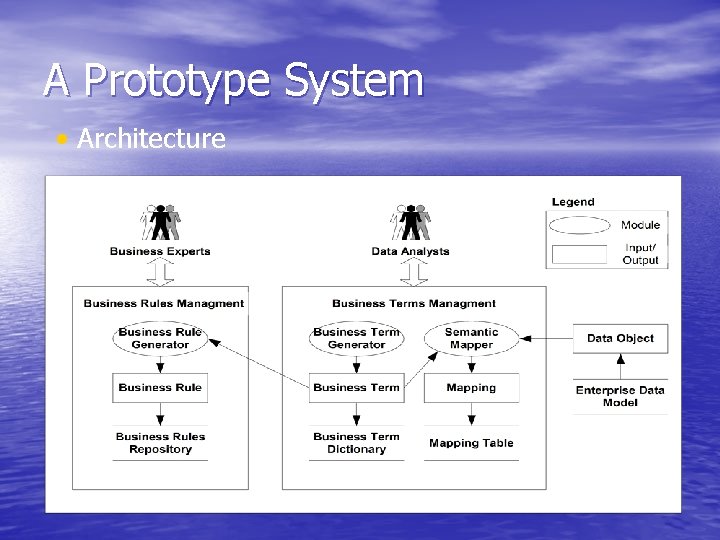
A Prototype System • Architecture
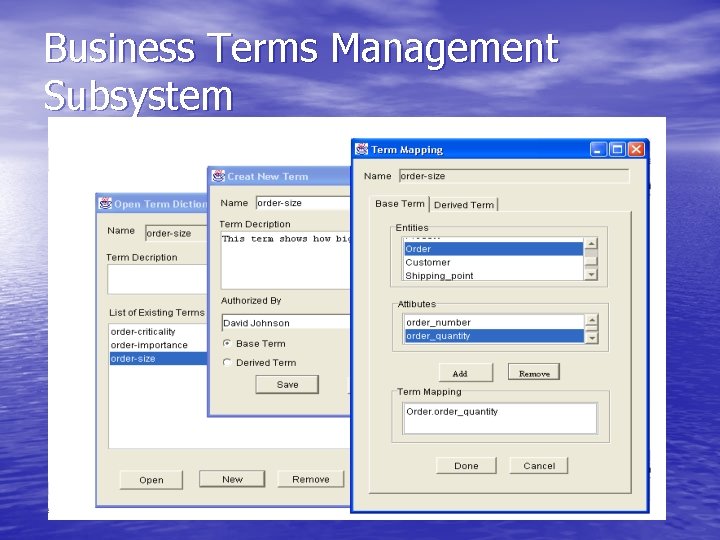
Business Terms Management Subsystem
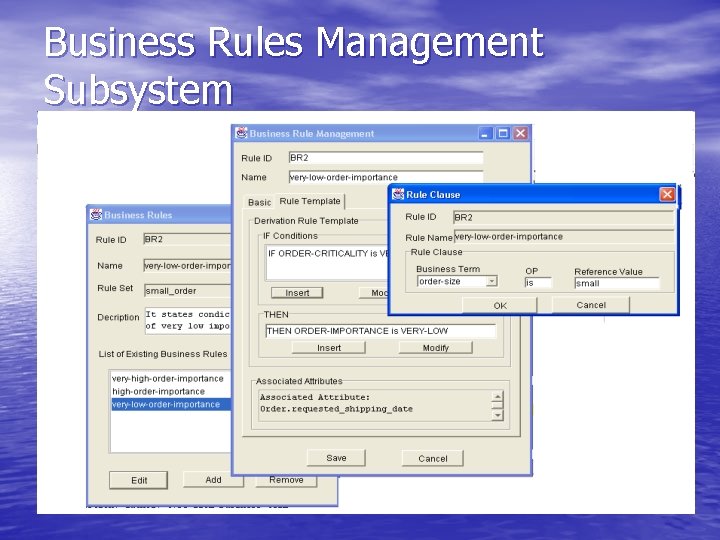
Business Rules Management Subsystem
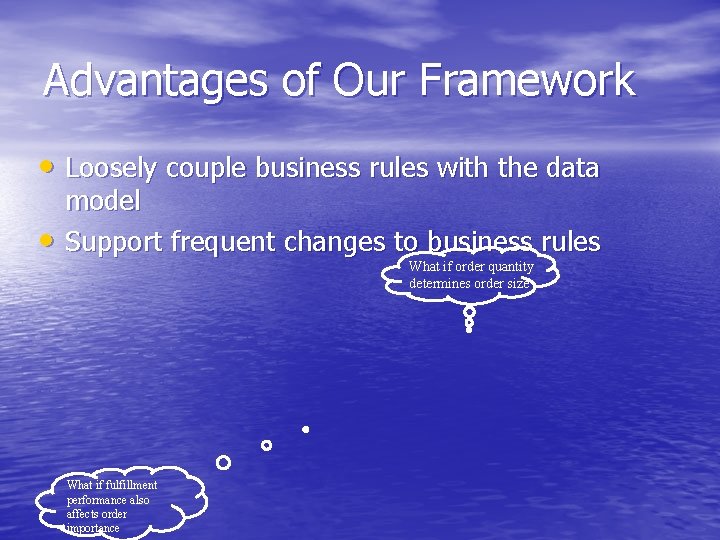
Advantages of Our Framework • Loosely couple business rules with the data • model Support frequent changes to business rules What if order quantity determines order size What if fulfillment performance also affects order importance
Future Research • Create a framework for possible mappings between business terms and data objects in the data model • Model business rules based on an enterprise ontology that shows the relationship between business terms

Questions ?
- Slides: 14