
A Comprehensive Heart Failure Management Program for the

- Slides: 19
A Comprehensive Heart Failure Management Program for the Portland VA Medical Center A Collaboration of Primary Care, Specialty Care, Nursing and Pharmacy
This Presentation • Adapted and shortened from a more detailed “sales” presentation made to Portland VA leadership at an ACA retreat in August, 2005. • I am happy to send the full slide set if it will be of use to you • Email me: greg. larsen@va. gov
What is Wrong With the Status Quo at PVAMC, 2005? • For CHF in-patients: – 29% readmission rate within 30 days • For CHF out-patients: – Inadequate dosing of life saving drugs • ACE Inhibitors • Beta Blockers
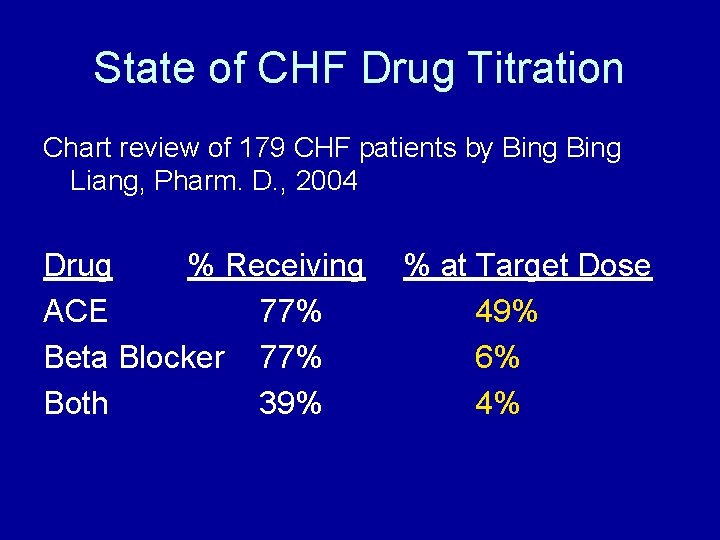
State of CHF Drug Titration Chart review of 179 CHF patients by Bing Liang, Pharm. D. , 2004 Drug % Receiving ACE 77% Beta Blocker 77% Both 39% % at Target Dose 49% 6% 4%
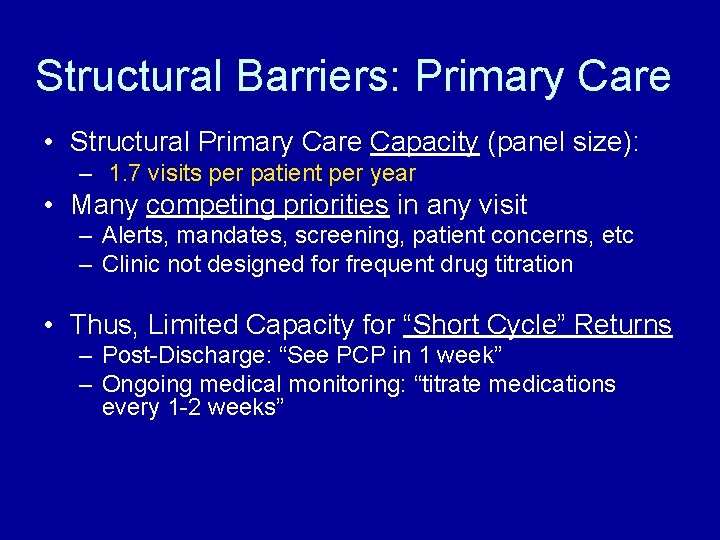
Structural Barriers: Primary Care • Structural Primary Care Capacity (panel size): – 1. 7 visits per patient per year • Many competing priorities in any visit – Alerts, mandates, screening, patient concerns, etc – Clinic not designed for frequent drug titration • Thus, Limited Capacity for “Short Cycle” Returns – Post-Discharge: “See PCP in 1 week” – Ongoing medical monitoring: “titrate medications every 1 -2 weeks”
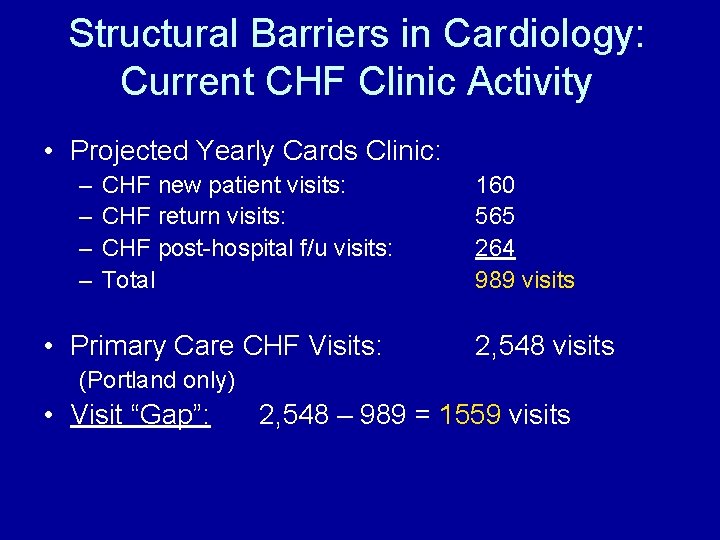
Structural Barriers in Cardiology: Current CHF Clinic Activity • Projected Yearly Cards Clinic: – – CHF new patient visits: CHF return visits: CHF post-hospital f/u visits: Total • Primary Care CHF Visits: 160 565 264 989 visits 2, 548 visits (Portland only) • Visit “Gap”: 2, 548 – 989 = 1559 visits
The Case for A Comprehensive CHF Management Program
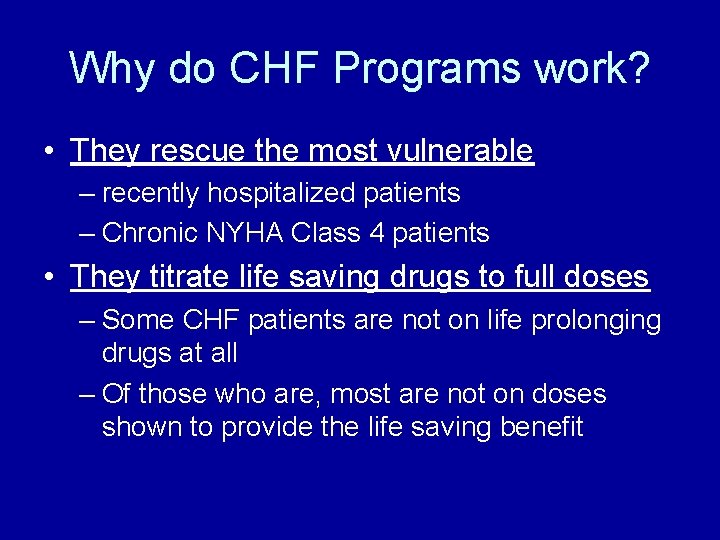
Why do CHF Programs work? • They rescue the most vulnerable – recently hospitalized patients – Chronic NYHA Class 4 patients • They titrate life saving drugs to full doses – Some CHF patients are not on life prolonging drugs at all – Of those who are, most are not on doses shown to provide the life saving benefit
The Proposal
CHF Clinic Structure • Most activities already ongoing, most FTE already in place, but scattered and under-supported. Thus, we propose: – – – A weekly clinic Supervised by Cardiologist, CHF ANP Educational—pre-clinic conference weekly Consultative for new patients Focused on effective diuresis and up-titration of life saving medications (“The Spin Cycle”) – Multidisciplinary: “Primary care CHF care for Primary Care patients” – Staff supported for between-clinic continuity and drop-in care
The Pivotal Role of Primary Care • We believe this to be PVAMC’s first integrated collaboration between Primary Care and Medical Subspecialty practitioners for the care of a specific population of patients • The plan: to have 2 PCP’s (MD or ANP) at a time rotate into the CHF clinic for a limited time (3 months) • A Heart Failure “Practicum”: – “Heart Failure Care, for Primary Care, by Primary Care” – Learn the critical importance of diagnosing the cause of CHF in every patient – Learn in detail the algorithms of CHF drug management – Improve the care of CHF patients in the outpatient setting – Become resources and role models for CHF care after returning full time to primary care
How to Balance PCP Workload? • A Negotiation with Primary Care Leadership • Suspend requirement to see new PCP patients while in CHF clinic • Encourage Self-Referral: send your challenging patients to yourself in CHF clinic – Still caring for your patient panel while not in your routine clinic
The Use of a Hospitalist: A Focus on Recently Discharged CHF Patients • Most CHF patients who relapse do so in the first 3 weeks • 6 PVAMC Hospitalists rotate in seeing recently discharged CHF patients to insure they have successfully made the transition from inpatient to outpatient status (~ 6 pts per week) – Begin med titration – Address other medical concerns – Plan for further CHF clinic visits for continued medicine up-titration
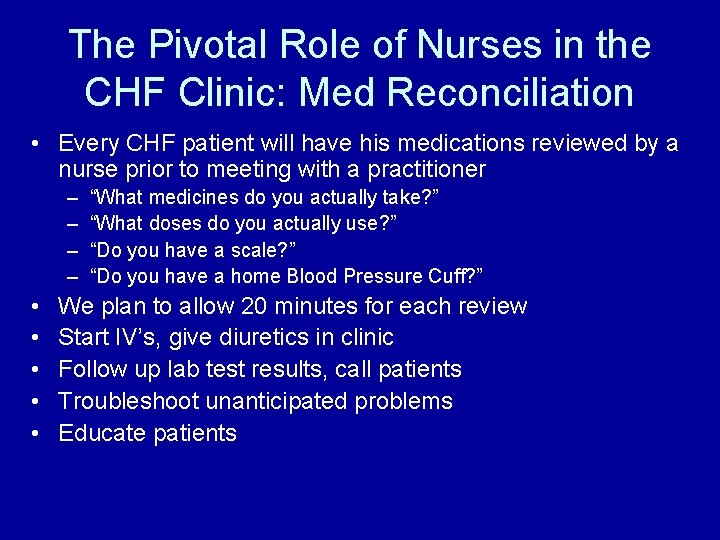
The Pivotal Role of Nurses in the CHF Clinic: Med Reconciliation • Every CHF patient will have his medications reviewed by a nurse prior to meeting with a practitioner – – • • • “What medicines do you actually take? ” “What doses do you actually use? ” “Do you have a scale? ” “Do you have a home Blood Pressure Cuff? ” We plan to allow 20 minutes for each review Start IV’s, give diuretics in clinic Follow up lab test results, call patients Troubleshoot unanticipated problems Educate patients
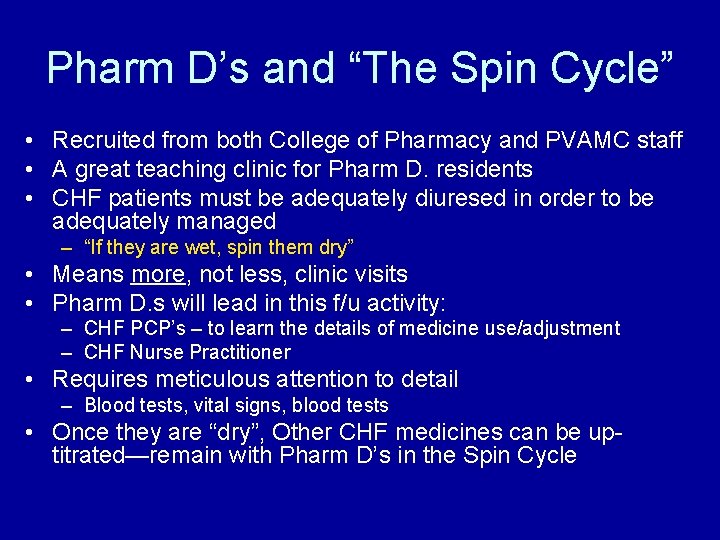
Pharm D’s and “The Spin Cycle” • Recruited from both College of Pharmacy and PVAMC staff • A great teaching clinic for Pharm D. residents • CHF patients must be adequately diuresed in order to be adequately managed – “If they are wet, spin them dry” • Means more, not less, clinic visits • Pharm D. s will lead in this f/u activity: – CHF PCP’s – to learn the details of medicine use/adjustment – CHF Nurse Practitioner • Requires meticulous attention to detail – Blood tests, vital signs, blood tests • Once they are “dry”, Other CHF medicines can be uptitrated—remain with Pharm D’s in the Spin Cycle
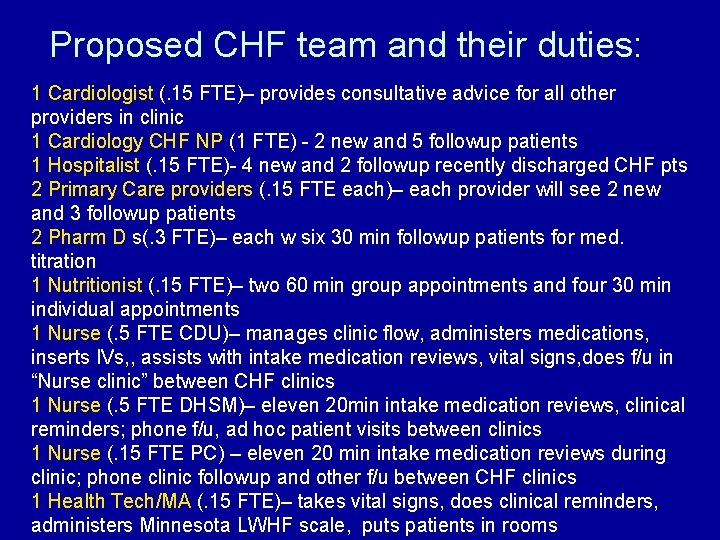
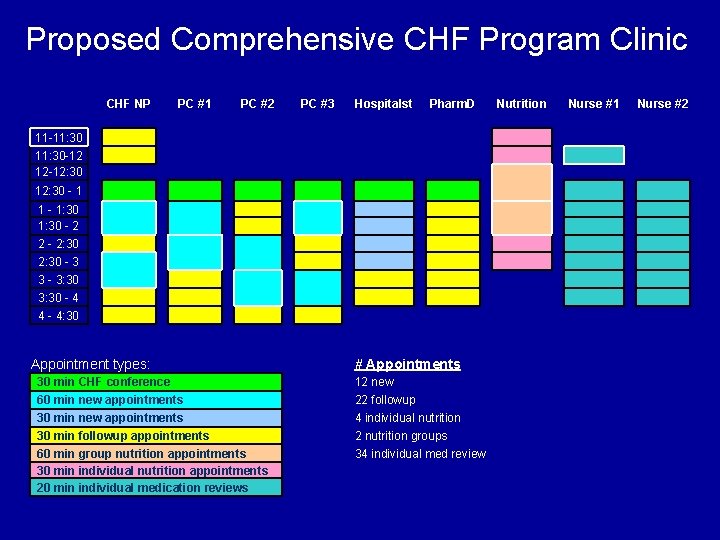
Proposed CHF team and their duties: 1 Cardiologist (. 15 FTE)– provides consultative advice for all other providers in clinic 1 Cardiology CHF NP (1 FTE) - 2 new and 5 followup patients 1 Hospitalist (. 15 FTE)- 4 new and 2 followup recently discharged CHF pts 2 Primary Care providers (. 15 FTE each)– each provider will see 2 new and 3 followup patients 2 Pharm D s(. 3 FTE)– each w six 30 min followup patients for med. titration 1 Nutritionist (. 15 FTE)– two 60 min group appointments and four 30 min individual appointments 1 Nurse (. 5 FTE CDU)– manages clinic flow, administers medications, inserts IVs, , assists with intake medication reviews, vital signs, does f/u in “Nurse clinic” between CHF clinics 1 Nurse (. 5 FTE DHSM)– eleven 20 min intake medication reviews, clinical reminders; phone f/u, ad hoc patient visits between clinics 1 Nurse (. 15 FTE PC) – eleven 20 min intake medication reviews during clinic; phone clinic followup and other f/u between CHF clinics 1 Health Tech/MA (. 15 FTE)– takes vital signs, does clinical reminders, administers Minnesota LWHF scale, puts patients in rooms
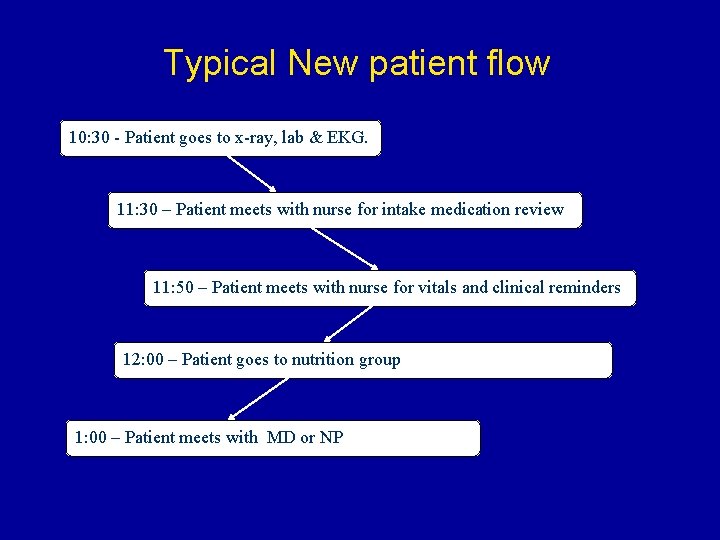
Typical New patient flow 10: 30 - Patient goes to x-ray, lab & EKG. 11: 30 – Patient meets with nurse for intake medication review 11: 50 – Patient meets with nurse for vitals and clinical reminders 12: 00 – Patient goes to nutrition group 1: 00 – Patient meets with MD or NP
Proposed Comprehensive CHF Program Clinic CHF NP PC #1 PC #2 PC #3 Hospitalst Pharm. D 11 -11: 30 -12 12 -12: 30 - 1 1 - 1: 30 - 2 2 - 2: 30 - 3 3 - 3: 30 - 4 4 - 4: 30 Appointment types: 30 min CHF conference 60 min new appointments 30 min followup appointments 60 min group nutrition appointments 30 min individual nutrition appointments 20 min individual medication reviews # Appointments 12 new 22 followup 4 individual nutrition 2 nutrition groups 34 individual med review Nutrition Nurse #1 Nurse #2
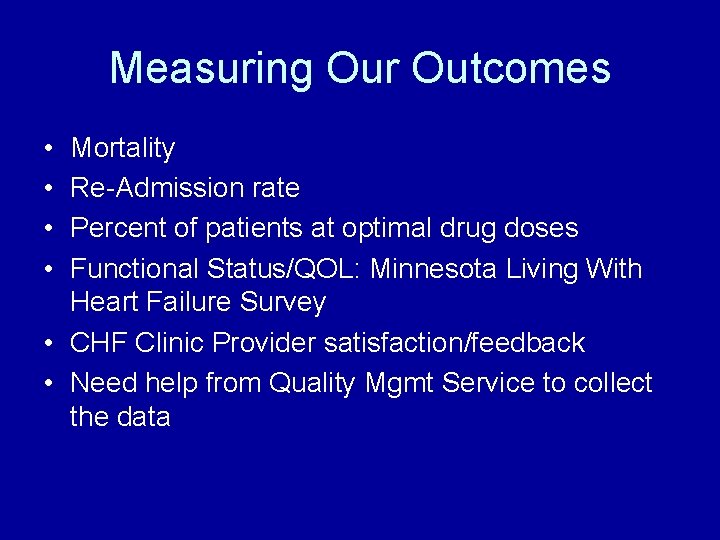
Measuring Our Outcomes • • Mortality Re-Admission rate Percent of patients at optimal drug doses Functional Status/QOL: Minnesota Living With Heart Failure Survey • CHF Clinic Provider satisfaction/feedback • Need help from Quality Mgmt Service to collect the data