
A Comprehensive Cognitive Approach to Science Teacher Training
- Slides: 9
A Comprehensive Cognitive Approach to Science Teacher Training Physics and Chemistry Cyrill Slezak Hillsdale College
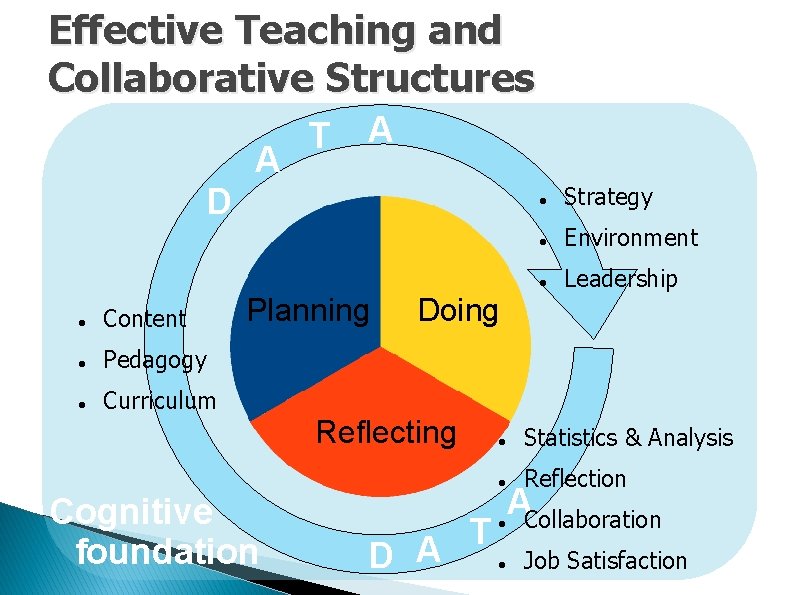
Effective Teaching and Collaborative Structures A T A D Content Pedagogy Curriculum Planning Cognitive foundation Doing Reflecting D A T Strategy Environment Leadership Statistics & Analysis Reflection ACollaboration Job Satisfaction
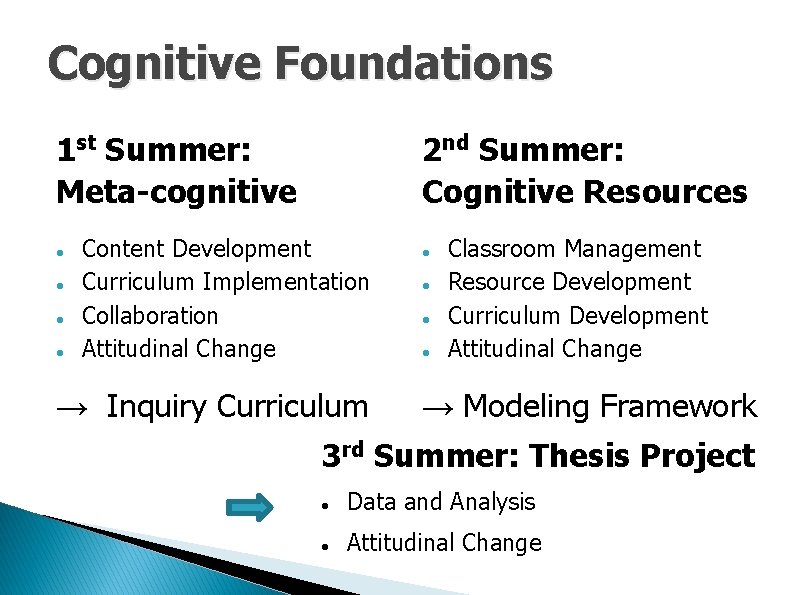
Cognitive Foundations 1 st Summer: Meta-cognitive 2 nd Summer: Cognitive Resources Content Development Curriculum Implementation Collaboration Attitudinal Change → Inquiry Curriculum Classroom Management Resource Development Curriculum Development Attitudinal Change → Modeling Framework 3 rd Summer: Thesis Project Data and Analysis Attitudinal Change
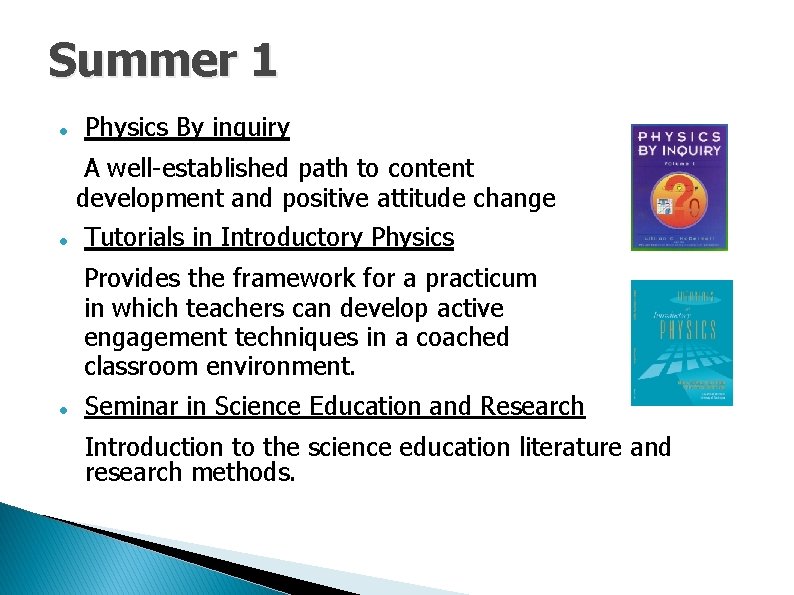
Summer 1 Physics By inquiry A well-established path to content development and positive attitude change Tutorials in Introductory Physics Provides the framework for a practicum in which teachers can develop active engagement techniques in a coached classroom environment. Seminar in Science Education and Research Introduction to the science education literature and research methods.
Summer 2 Chemistry Modeling: The main aim is the modeling of best practices in identifying cognitive student resources and how to best develop them. Seminar in Science Education and Research Further development of science education research methods and sample project.
Evaluation Concept Inventory Tests Force Concept Inventory (FCI) and Electric Circuits Concept Evaluation (ECCE) Content Exams Pb. I section pre-tests and final evaluation of Pb. I units Attitude Surveys Colorado Learning Attitudes about Science Survey (CLASS), smile-sheets
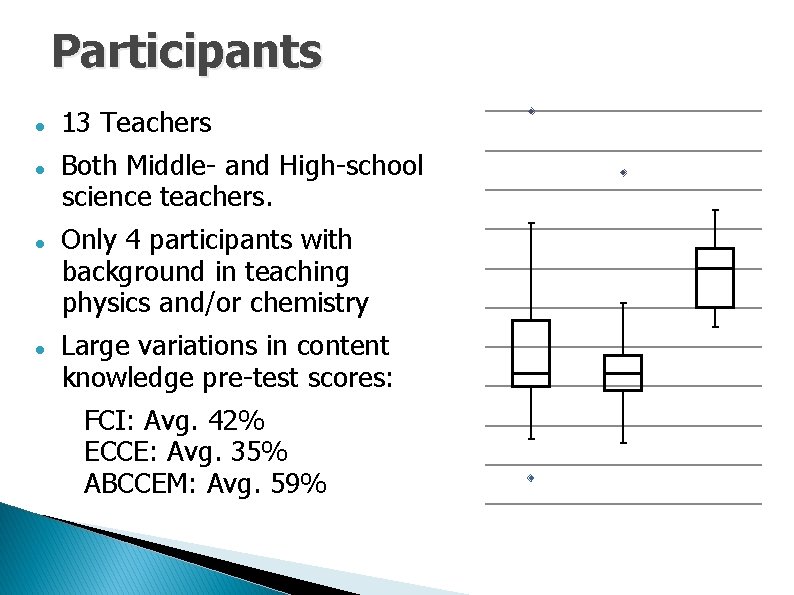
Participants 13 Teachers Both Middle- and High-school science teachers. Only 4 participants with background in teaching physics and/or chemistry Large variations in content knowledge pre-test scores: FCI: Avg. 42% ECCE: Avg. 35% ABCCEM: Avg. 59%
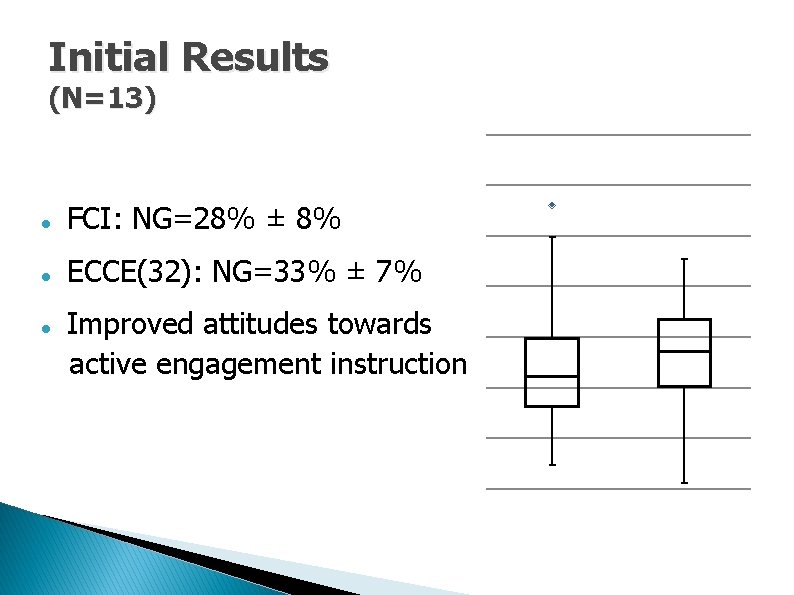
Initial Results (N=13) FCI: NG=28% ± 8% ECCE(32): NG=33% ± 7% Improved attitudes towards active engagement instruction
Future Work Instructional Resource Development Retain and train future program instructors Long-term Content Retention Set of concept inventory tests. Persistent Attitude Change Attitude surveys and smile-sheets Modification of Classroom Practice Classroom observations RTOP (self-assessment, Drew Isola, 2008)