
A complementary approach to shape coexistence in nuclei
![Two-state mixing calculations (Po) Energy [ke. V] 194 Po unperturbed ME 2’s - Po:](https://slidetodoc.com/presentation_image_h2/5de65a8c7d9bca22d46d47830fc2eaf8/image-20.jpg "Two-state mixing calculations (Po) Energy [ke. V] 194 Po unperturbed ME 2’s - Po:")

![RDDS lifetime results: 184 Hg e. g. [1] L. P. Gaffney et al, Phys.](https://slidetodoc.com/presentation_image_h2/5de65a8c7d9bca22d46d47830fc2eaf8/image-29.jpg "RDDS lifetime results: 184 Hg e. g. [1] L. P. Gaffney et al, Phys.")
- Slides: 32
A complementary approach to shape coexistence in nuclei Liam P. Gaffney ISOLDE, CERN ISOLDE Seminar - 7 -1 -2022
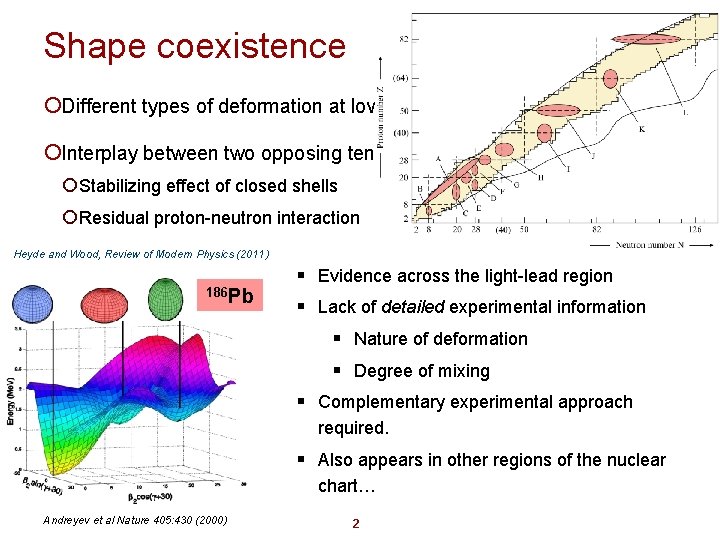
Shape coexistence ¡Different types of deformation at low excitation energy ¡Interplay between two opposing tendencies ¡Stabilizing effect of closed shells ¡Residual proton-neutron interaction Heyde and Wood, Review of Modern Physics (2011) 186 Pb § Evidence across the light-lead region § Lack of detailed experimental information § Nature of deformation § Degree of mixing § Complementary experimental approach required. § Also appears in other regions of the nuclear chart… Andreyev et al Nature 405: 430 (2000) 2
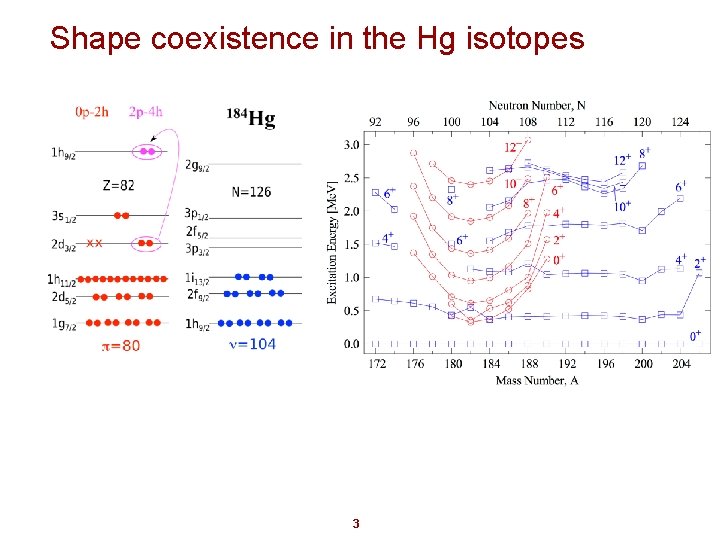
Shape coexistence in the Hg isotopes 3
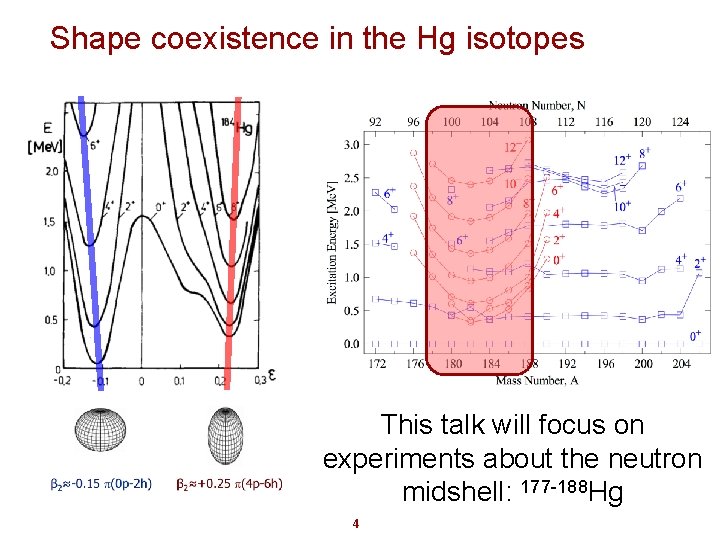
Shape coexistence in the Hg isotopes This talk will focus on experiments about the neutron midshell: 177 -188 Hg 4
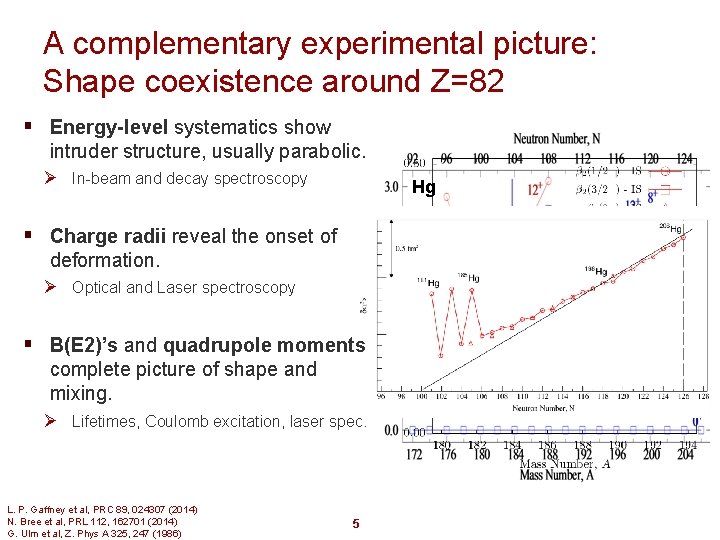
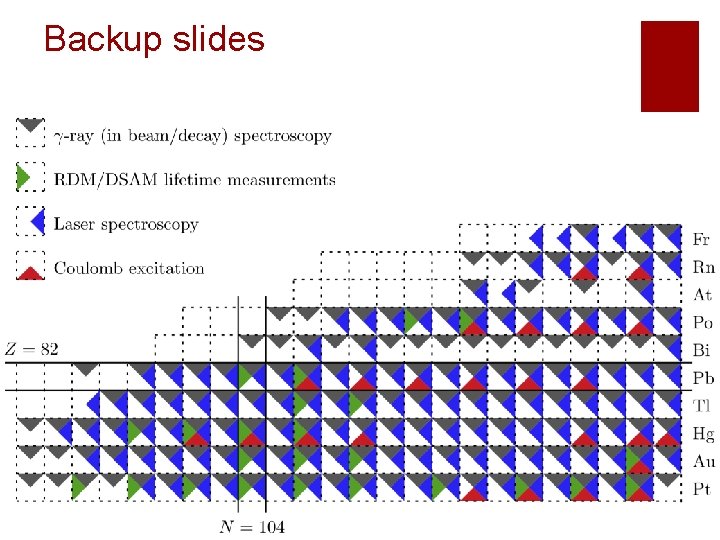
A complementary experimental picture: Shape coexistence around Z=82 § Energy-level systematics show intruder structure, usually parabolic. Ø In-beam and decay spectroscopy Hg § Charge radii reveal the onset of deformation. Ø Optical and Laser spectroscopy § B(E 2)’s and quadrupole moments complete picture of shape and mixing. Ø Lifetimes, Coulomb excitation, laser spec. L. P. Gaffney et al, PRC 89, 024307 (2014) N. Bree et al, PRL 112, 162701 (2014) G. Ulm et al, Z. Phys A 325, 247 (1986) 5
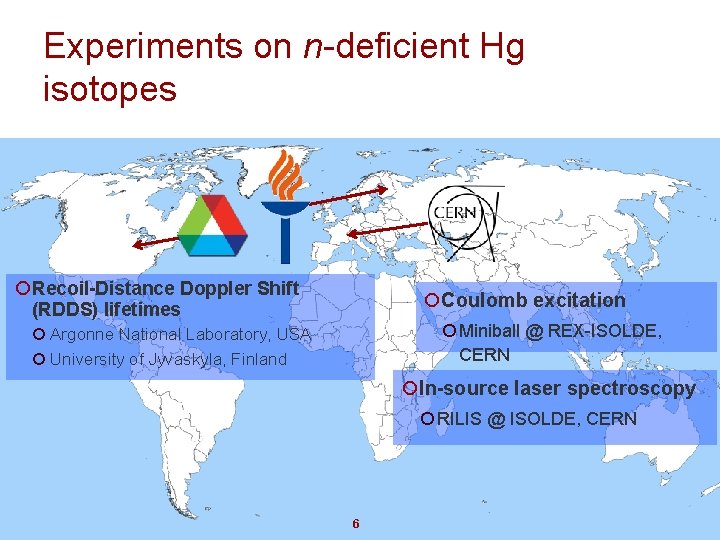
Experiments on n-deficient Hg isotopes ¡ Recoil-Distance Doppler Shift (RDDS) lifetimes ¡Coulomb excitation ¡ Miniball @ REX-ISOLDE, CERN ¡ Argonne National Laboratory, USA ¡ University of Jyvaskyla, Finland ¡In-source laser spectroscopy ¡ RILIS @ ISOLDE, CERN 6
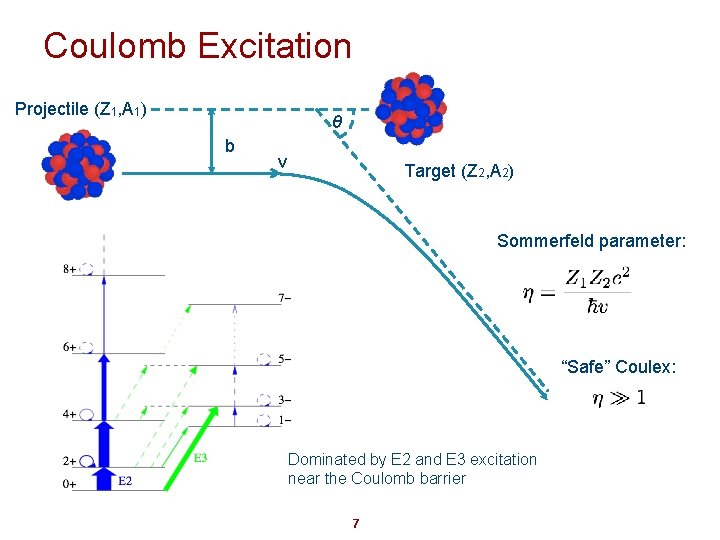
Coulomb Excitation Projectile (Z 1, A 1) θ b v Target (Z 2, A 2) Sommerfeld parameter: “Safe” Coulex: Dominated by E 2 and E 3 excitation near the Coulomb barrier 7
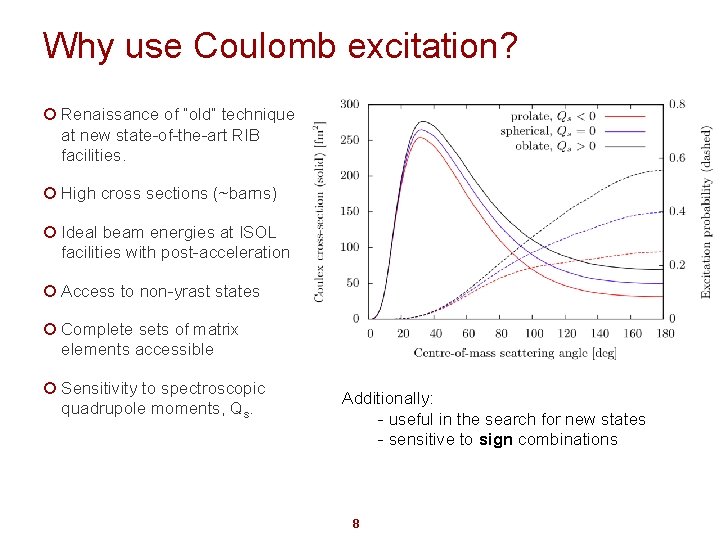
Why use Coulomb excitation? ¡ Renaissance of “old” technique at new state-of-the-art RIB facilities. ¡ High cross sections (~barns) ¡ Ideal beam energies at ISOL facilities with post-acceleration ¡ Access to non-yrast states ¡ Complete sets of matrix elements accessible ¡ Sensitivity to spectroscopic quadrupole moments, Qs. Additionally: - useful in the search for new states - sensitive to sign combinations 88
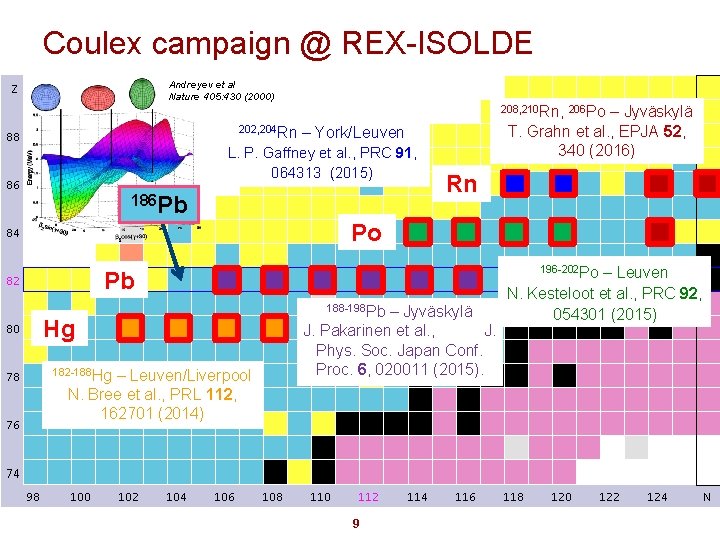
Coulex campaign @ REX-ISOLDE Andreyev et al Nature 405: 430 (2000) 208, 210 Rn, 206 Po 202, 204 Rn – Jyväskylä T. Grahn et al. , EPJA 52, 340 (2016) – York/Leuven L. P. Gaffney et al. , PRC 91, 064313 (2015) 186 Pb Rn Po 196 -202 Po Pb Hg 182 -188 Hg – Leuven/Liverpool N. Bree et al. , PRL 112, 162701 (2014) 188 -198 Pb – Jyväskylä J. Pakarinen et al. , J. Phys. Soc. Japan Conf. Proc. 6, 020011 (2015). 9 – Leuven N. Kesteloot et al. , PRC 92, 054301 (2015)
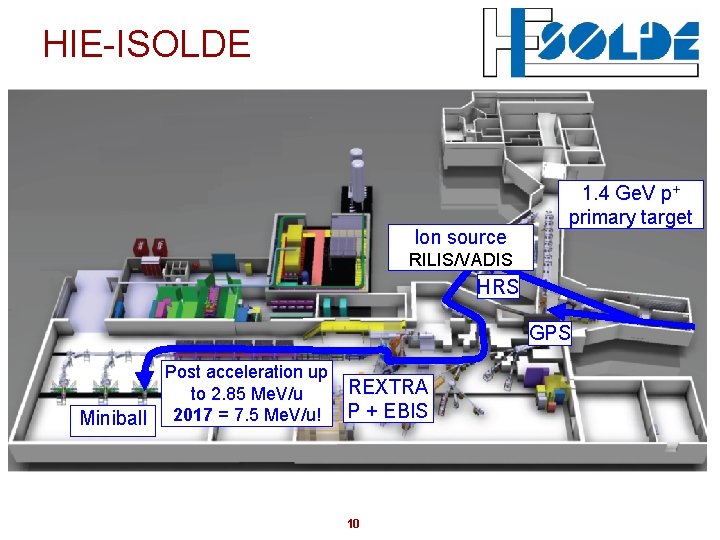
HIE-ISOLDE REX-ISOLDE Ion source 1. 4 Ge. V p+ primary target RILIS/VADIS HRS GPS Miniball Post acceleration up to 2. 85 Me. V/u 2017 = 7. 5 Me. V/u! REXTRA P + EBIS 10
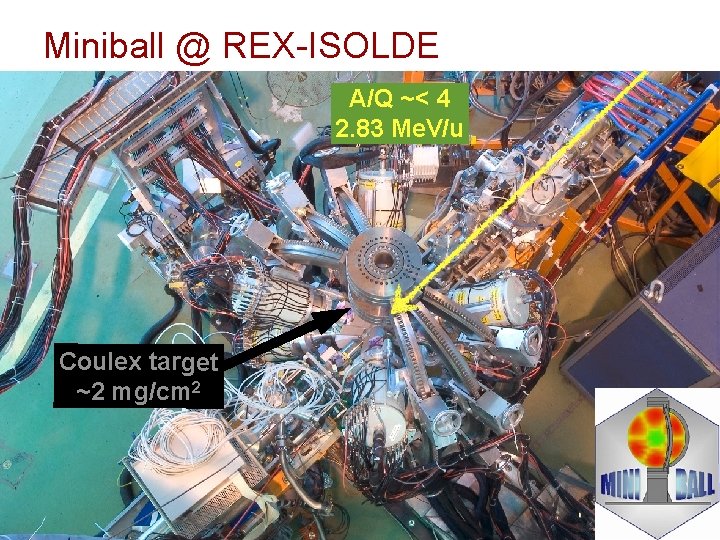
Miniball @ REX-ISOLDE A/Q ~< 4 2. 83 Me. V/u Coulex target ~2 mg/cm 2
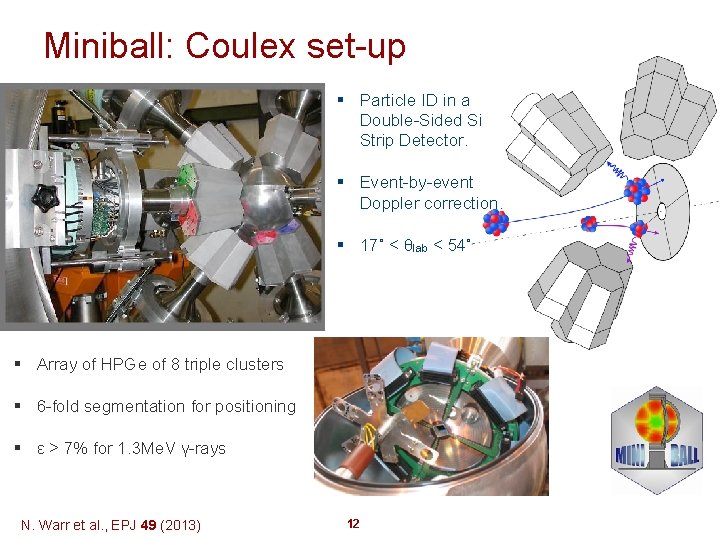
Miniball: Coulex set-up § Particle ID in a Double-Sided Si Strip Detector. § Event-by-event Doppler correction. § 17˚ < θlab < 54˚ § Array of HPGe of 8 triple clusters § 6 -fold segmentation for positioning § ε > 7% for 1. 3 Me. V γ-rays N. Warr et al. , EPJ 49 (2013) 12
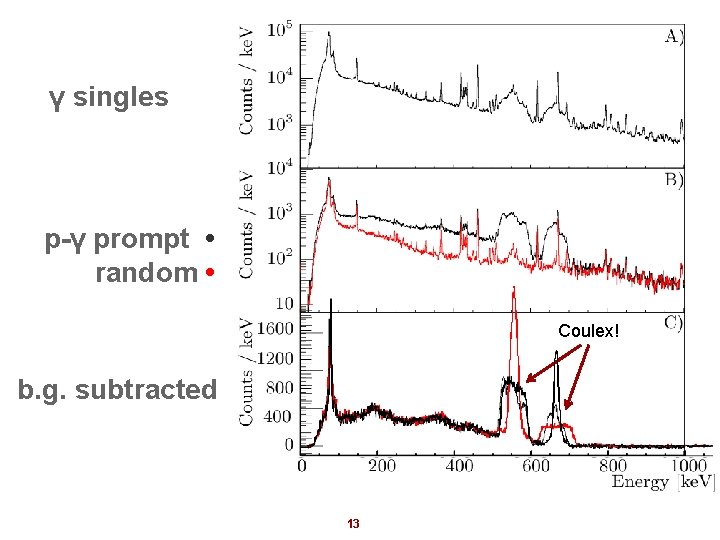
γ singles p-γ prompt • random • Coulex! b. g. subtracted 13
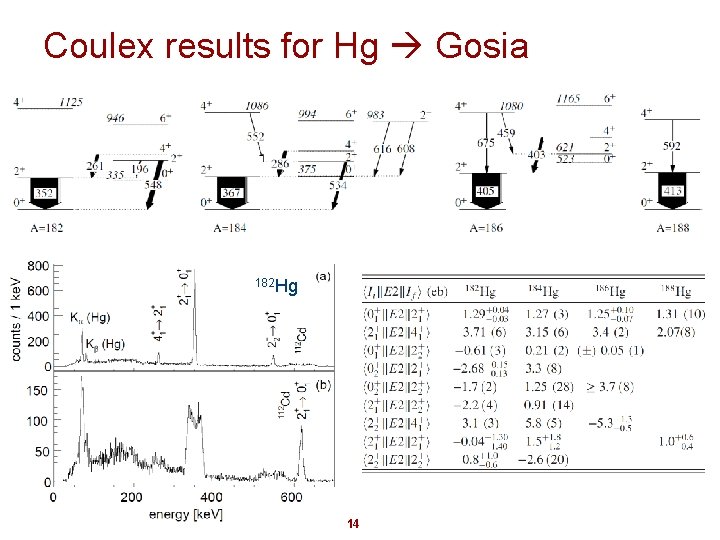
Coulex results for Hg Gosia 0 182 Hg 14
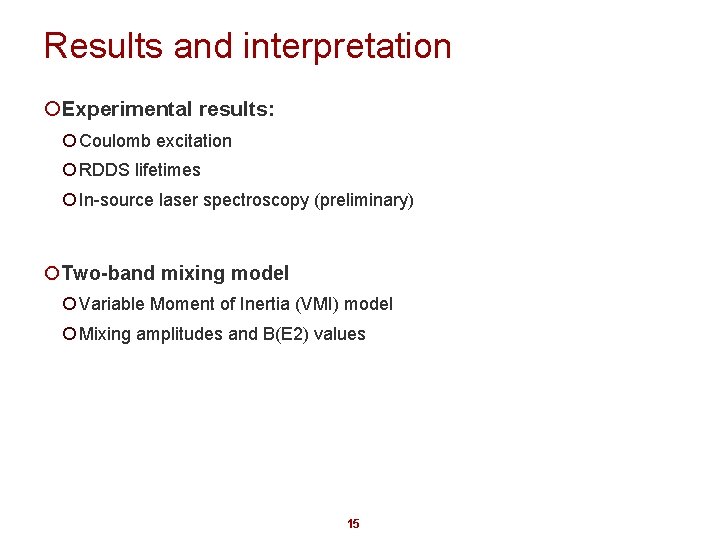
Results and interpretation ¡Experimental results: ¡ Coulomb excitation ¡ RDDS lifetimes ¡ In-source laser spectroscopy (preliminary) ¡Two-band mixing model ¡ Variable Moment of Inertia (VMI) model ¡ Mixing amplitudes and B(E 2) values 15 15
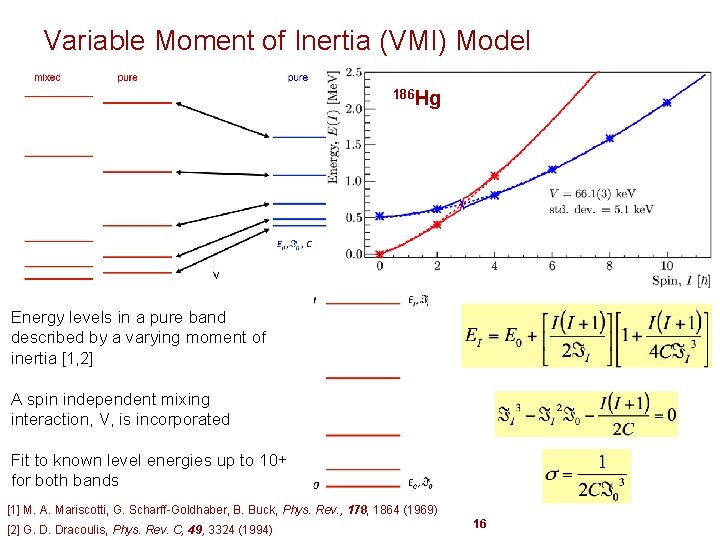
Variable Moment of Inertia (VMI) Model 186 Hg Energy levels in a pure band described by a varying moment of inertia [1, 2] A spin independent mixing interaction, V, is incorporated Fit to known level energies up to 10+ for both bands [1] M. A. Mariscotti, G. Scharff-Goldhaber, B. Buck, Phys. Rev. , 178, 1864 (1969) [2] G. D. Dracoulis, Phys. Rev. C, 49, 3324 (1994) 16
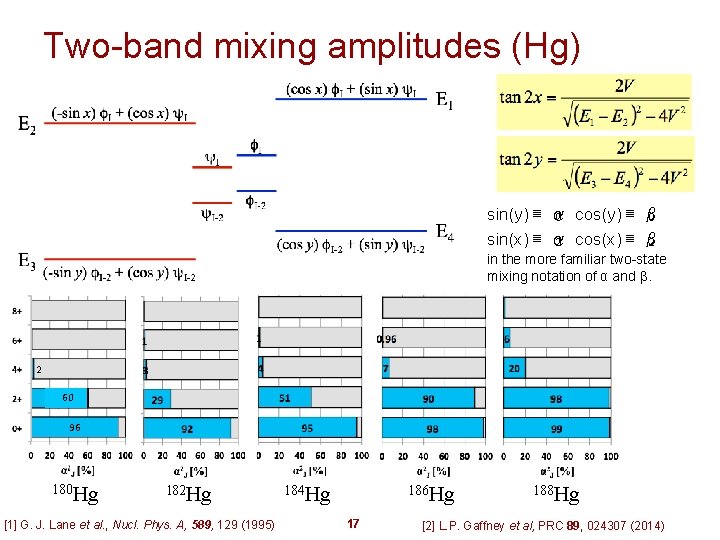
Two-band mixing amplitudes (Hg) sin(y) ≣ α 0 cos(y) ≣ β 0 sin(x) ≣ α 2 cos(x) ≣ β 2 in the more familiar two-state mixing notation of α and β. 2 60 96 180 Hg 182 Hg [1] G. J. Lane et al. , Nucl. Phys. A, 589, 129 (1995) 184 Hg 186 Hg 17 188 Hg [2] L. P. Gaffney et al, PRC 89, 024307 (2014)
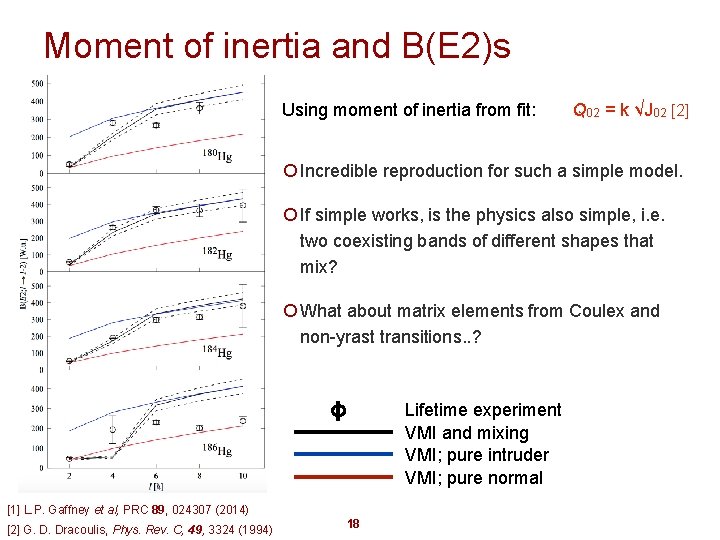
Moment of inertia and B(E 2)s Using moment of inertia from fit: Q 02 = k √J 02 [2] ¡ Incredible reproduction for such a simple model. ¡ If simple works, is the physics also simple, i. e. two coexisting bands of different shapes that mix? ¡ What about matrix elements from Coulex and non-yrast transitions. . ? Lifetime experiment VMI and mixing VMI; pure intruder VMI; pure normal [1] L. P. Gaffney et al, PRC 89, 024307 (2014) [2] G. D. Dracoulis, Phys. Rev. C, 49, 3324 (1994) 1818
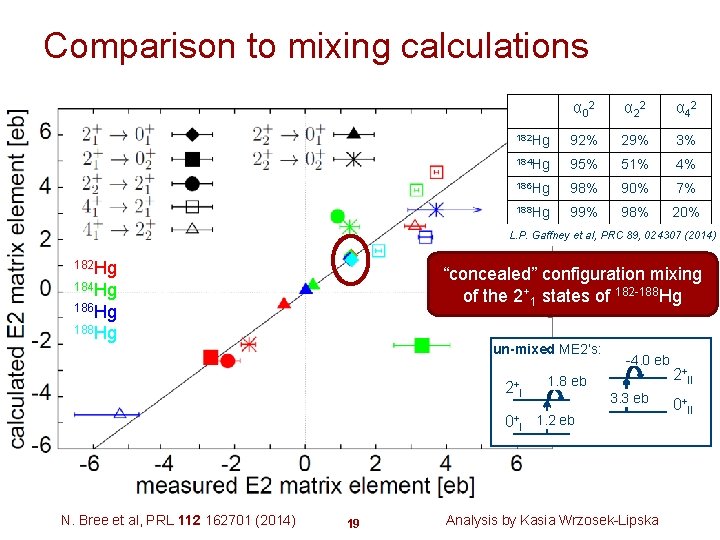
Comparison to mixing calculations α 0 2 α 2 2 α 4 2 182 Hg 92% 29% 3% 184 Hg 95% 51% 4% 186 Hg 98% 90% 7% 188 Hg 99% 98% 20% L. P. Gaffney et al, PRC 89, 024307 (2014) 182 Hg “concealed” configuration mixing of the 2+1 states of 182 -188 Hg 184 Hg 186 Hg 188 Hg un-mixed ME 2’s: 2+I -4. 0 eb 1. 8 eb 3. 3 eb 0+I 1. 2 eb N. Bree et al, PRL 112 162701 (2014) 19 Analysis by Kasia Wrzosek-Lipska 2+II 0+II
Two-state mixing calculations (Po) Energy [ke. V] 194 Po unperturbed ME 2’s - Po: 1. 8 eb 2+II -0. 4 eb + 2 I 1. 5 eb 0+II + 0 I 1. 1 eb 196 Po 198 Po 200 Po 202 Po V = 200 ke. V A α 0² 194 12% 29% 196 85% 50% 198 94% 69%/31% 200 97% 92%/8% 202 99% 88% Spin α 2² Use VMI to fit intruder band in 194, 196 Po Extrapolate to 2+ and 0+ energies unperturbed ME 2’s - Hg: -4. 0 eb 2+I 1. 8 eb 3. 3 eb 0+I 1. 2 eb 20 2+II 0+II
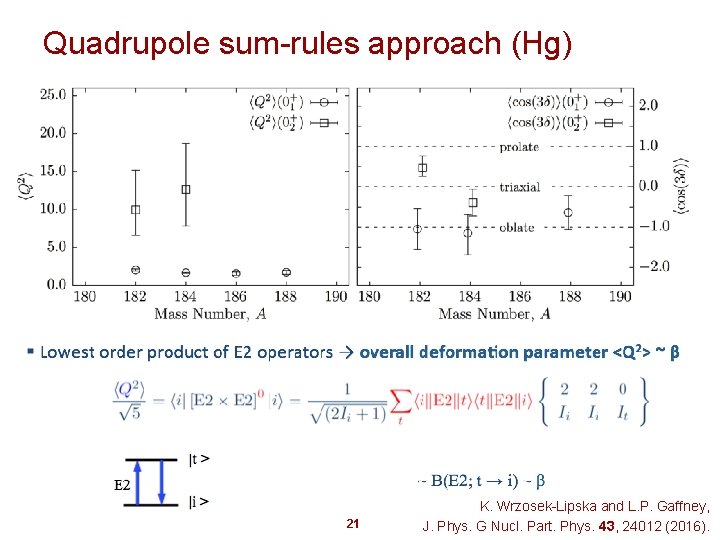
Quadrupole sum-rules approach (Hg) 21 K. Wrzosek-Lipska and L. P. Gaffney, J. Phys. G Nucl. Part. Phys. 43, 24012 (2016).
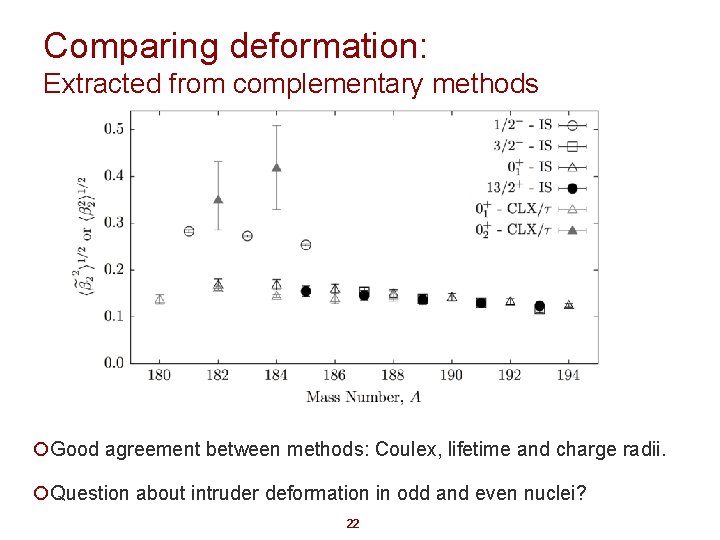
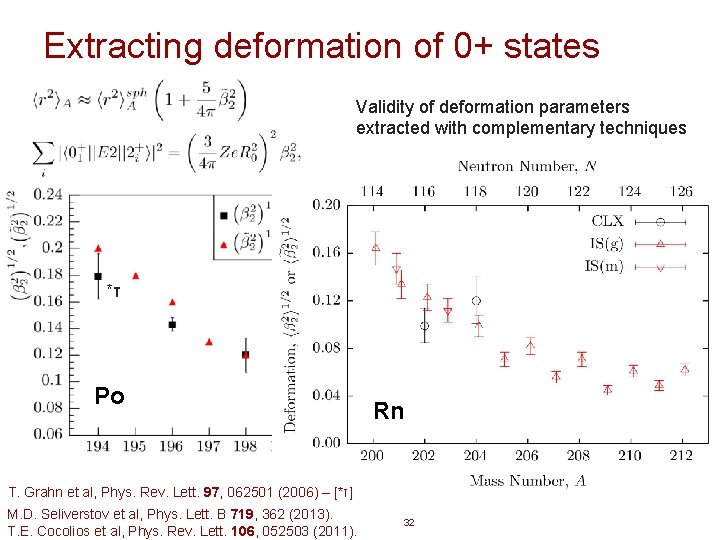
Comparing deformation: Extracted from complementary methods ¡Good agreement between methods: Coulex, lifetime and charge radii. ¡Question about intruder deformation in odd and even nuclei? 22
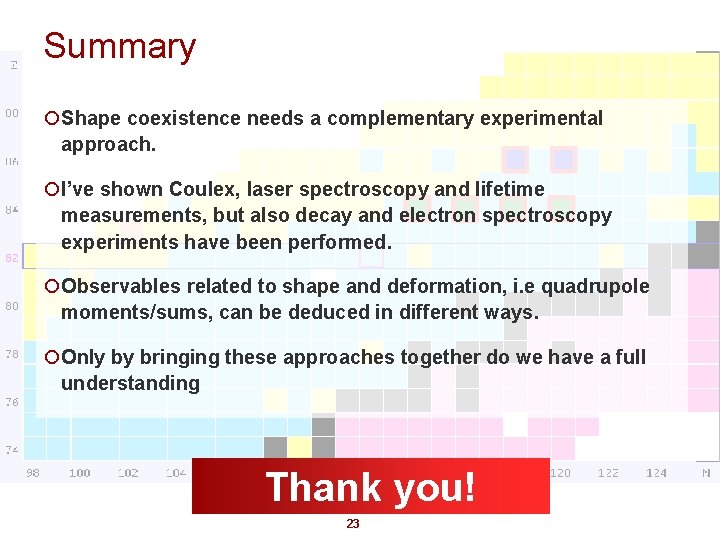
Summary ¡Shape coexistence needs a complementary experimental approach. ¡I’ve shown Coulex, laser spectroscopy and lifetime measurements, but also decay and electron spectroscopy experiments have been performed. ¡Observables related to shape and deformation, i. e quadrupole moments/sums, can be deduced in different ways. ¡Only by bringing these approaches together do we have a full understanding Thank you! 23
Backup slides
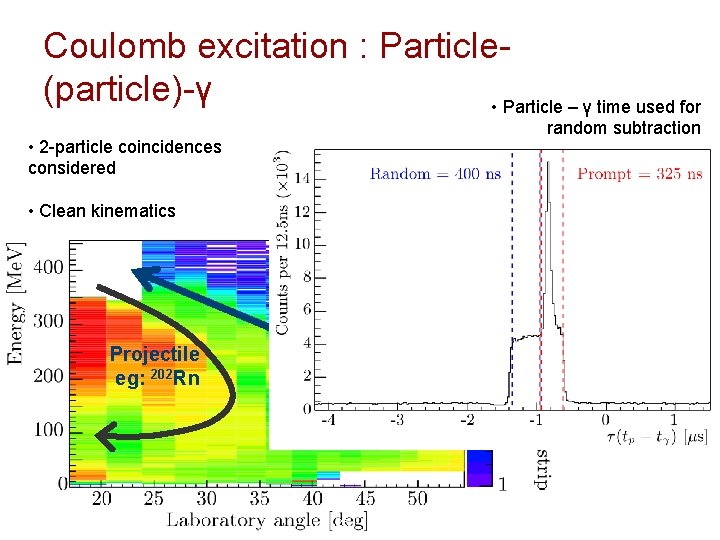
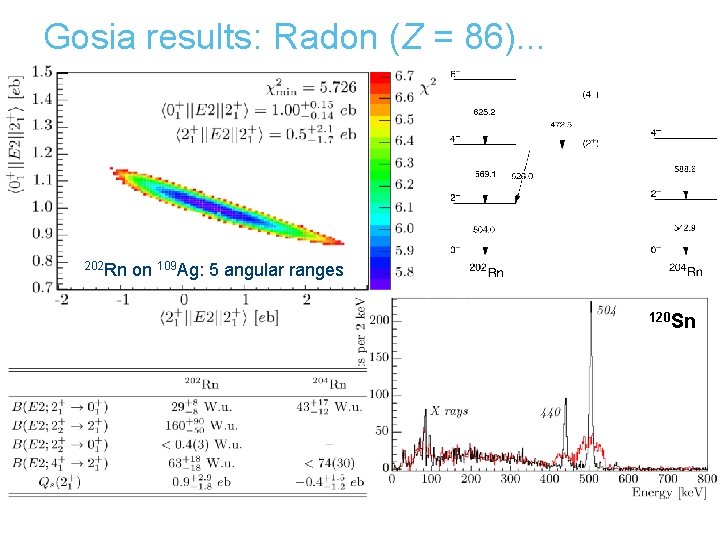
Coulomb excitation : Particle(particle)-γ • Particle – γ time used for random subtraction • 2 -particle coincidences considered • Clean kinematics Projectile eg: 202 Rn Target eg: 109 Ag 26
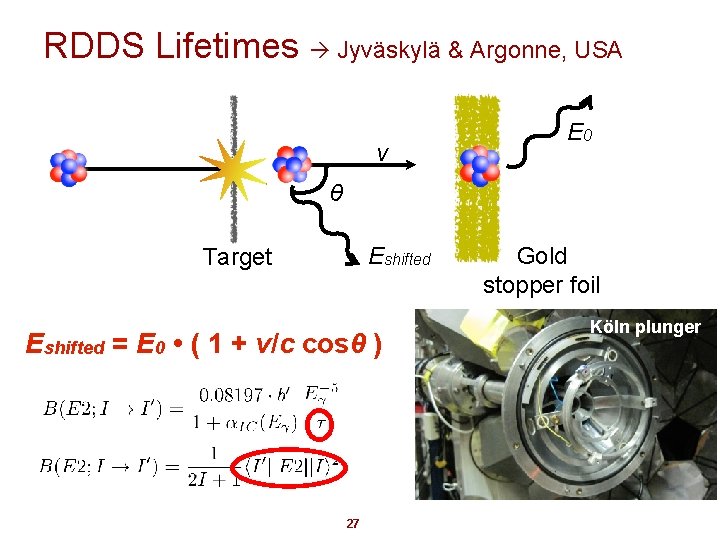
RDDS Lifetimes Jyväskylä & Argonne, USA v E 0 θ Eshifted Target Eshifted = E 0 • ( 1 + v/c cosθ ) 27 Gold stopper foil Köln plunger
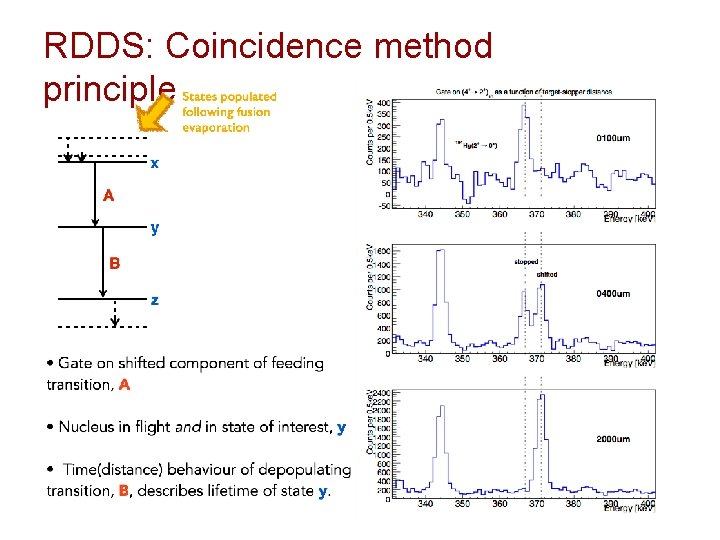
RDDS: Coincidence method principle
RDDS lifetime results: 184 Hg e. g. [1] L. P. Gaffney et al, Phys. Rev. C 89, 024307 (2014). [2] T. Grahn et al, Phys. Rev. C 80, 014324 (2009). 2929
Gosia results: Radon (Z = 86). . . 202 Rn on 109 Ag: 5 angular ranges 120 Sn 30
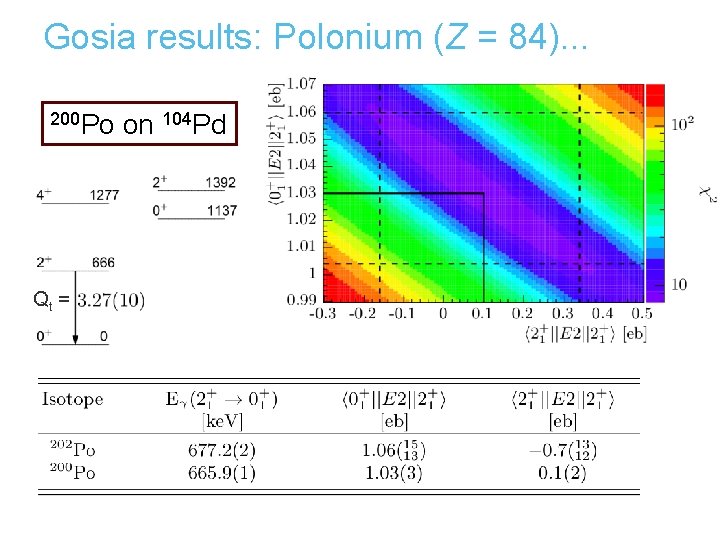
Gosia results: Polonium (Z = 84). . . 200 Po on 104 Pd Qt = 31
Extracting deformation of 0+ states Validity of deformation parameters extracted with complementary techniques *τ Po Rn T. Grahn et al, Phys. Rev. Lett. 97, 062501 (2006) – [*τ] M. D. Seliverstov et al, Phys. Lett. B 719, 362 (2013). T. E. Cocolios et al, Phys. Rev. Lett. 106, 052503 (2011). 32