
A Comparison of Traditional vs Competencybased Education Faculty
A Comparison of Traditional vs. Competency-based Education Faculty Roles Angela Au, DBA (ABD) Pat Neely, Ed. D Jan Tucker, Ph. D
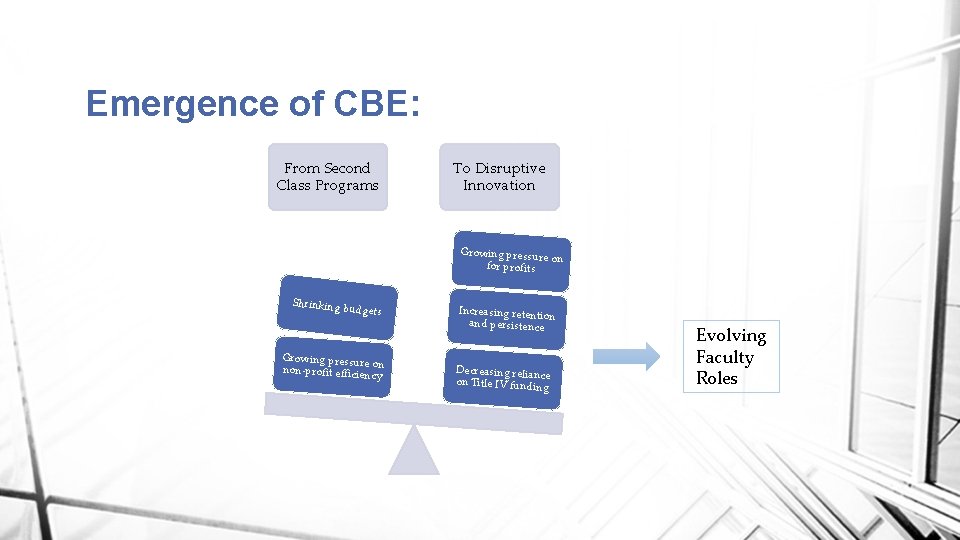
Emergence of CBE: From Second Class Programs To Disruptive Innovation Growing pressure on for profits Shrinking budgets Growing pressure on non-profit efficie ncy Increasing retent ion and persistence Decreasing relianc e on Title IV fundin g Evolving Faculty Roles
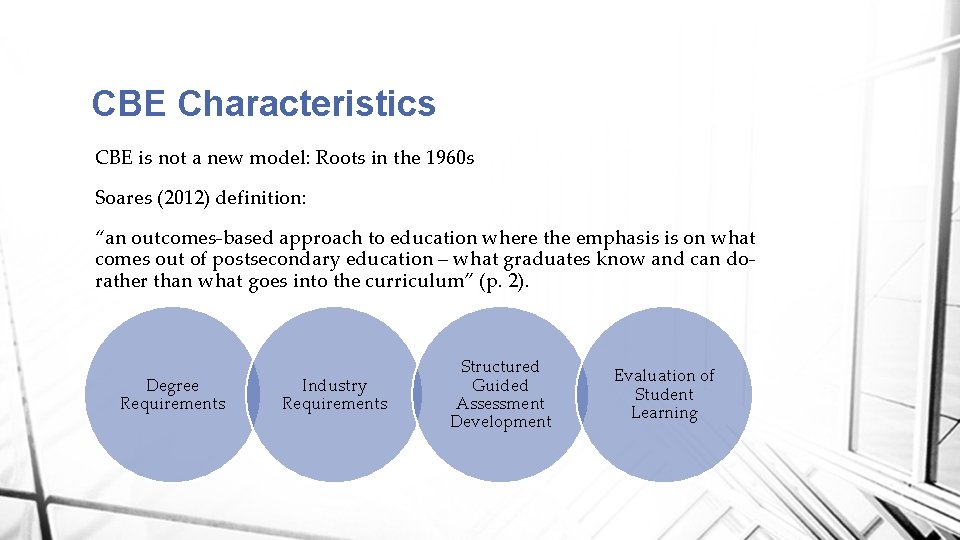
CBE Characteristics CBE is not a new model: Roots in the 1960 s Soares (2012) definition: “an outcomes-based approach to education where the emphasis is on what comes out of postsecondary education – what graduates know and can dorather than what goes into the curriculum” (p. 2). Degree Requirements Industry Requirements Structured Guided Assessment Development Evaluation of Student Learning
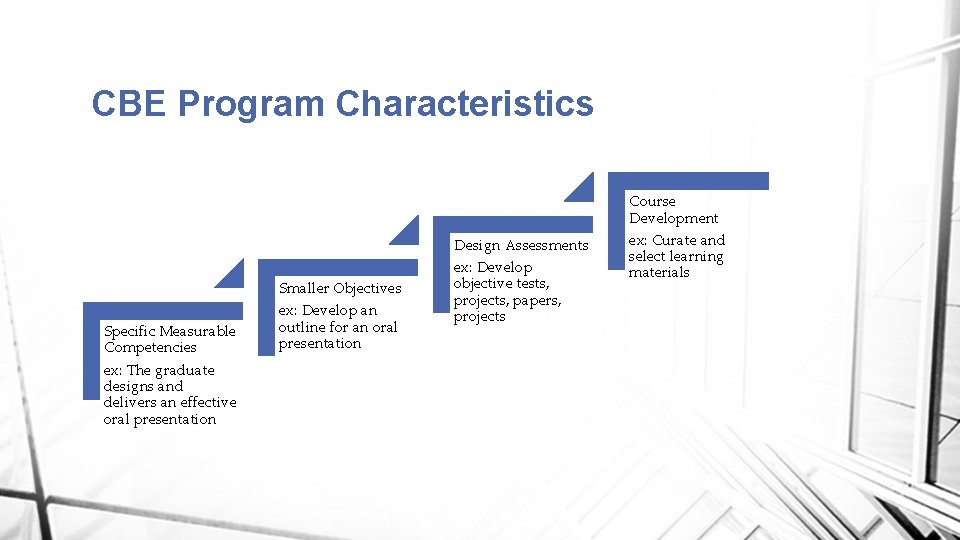
CBE Program Characteristics Specific Measurable Competencies ex: The graduate designs and delivers an effective oral presentation Smaller Objectives ex: Develop an outline for an oral presentation Design Assessments ex: Develop objective tests, projects, papers, projects Course Development ex: Curate and select learning materials
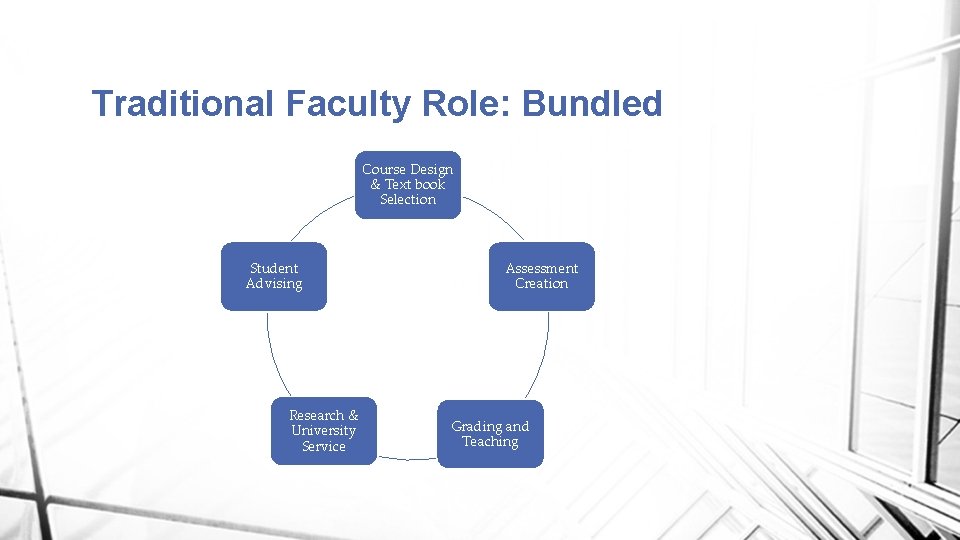
Traditional Faculty Role: Bundled Course Design & Text book Selection Student Advising Research & University Service Assessment Creation Grading and Teaching
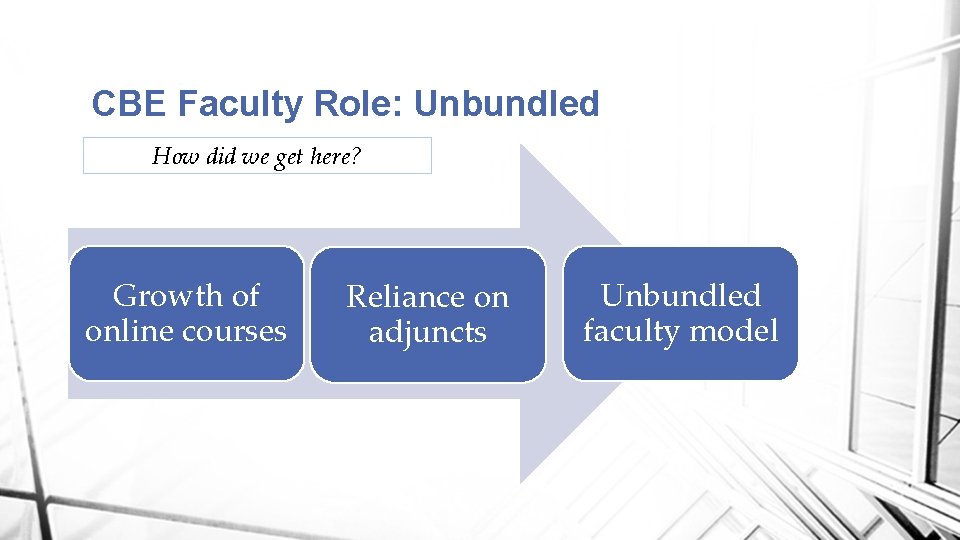
CBE Faculty Role: Unbundled How did we get here? Growth of online courses Reliance on adjuncts Unbundled faculty model
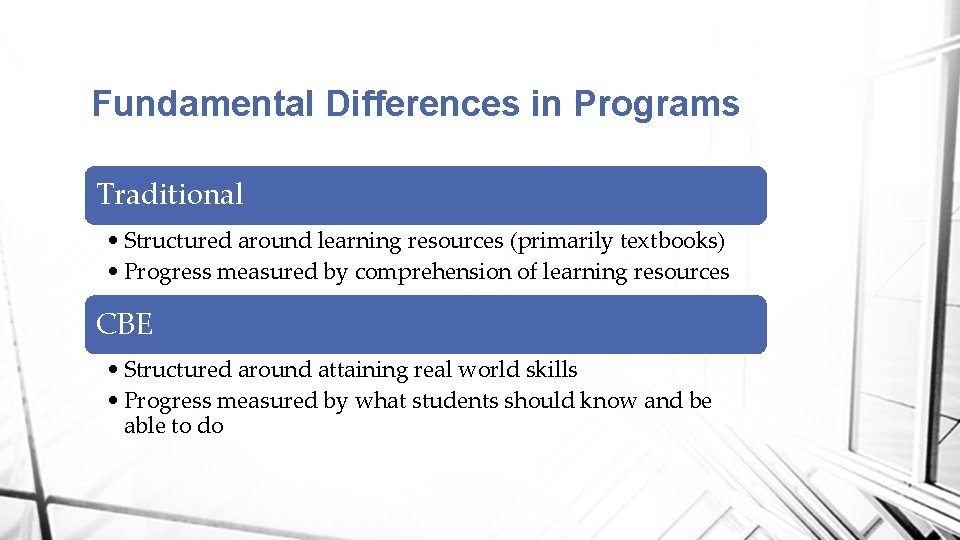
Fundamental Differences in Programs Traditional • Structured around learning resources (primarily textbooks) • Progress measured by comprehension of learning resources CBE • Structured around attaining real world skills • Progress measured by what students should know and be able to do
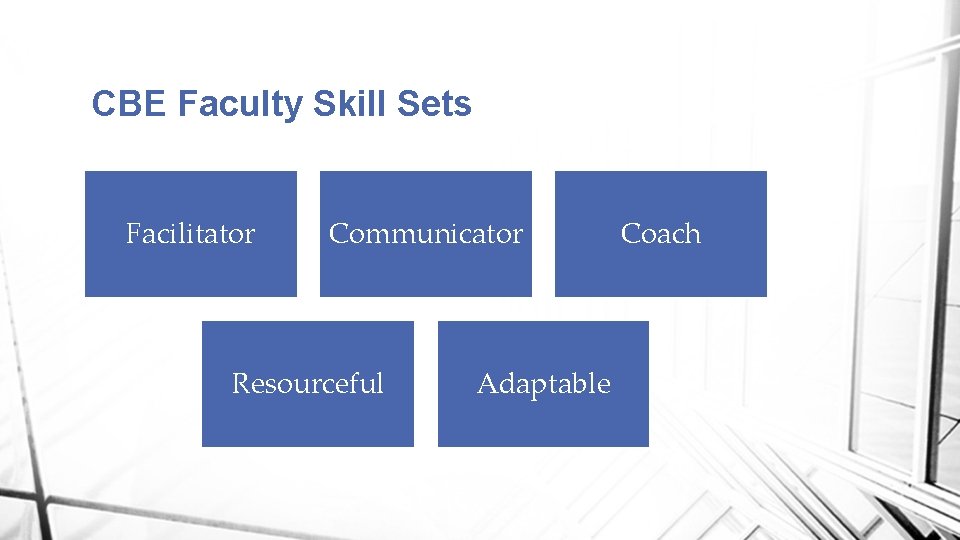
CBE Faculty Skill Sets Facilitator Communicator Resourceful Adaptable Coach
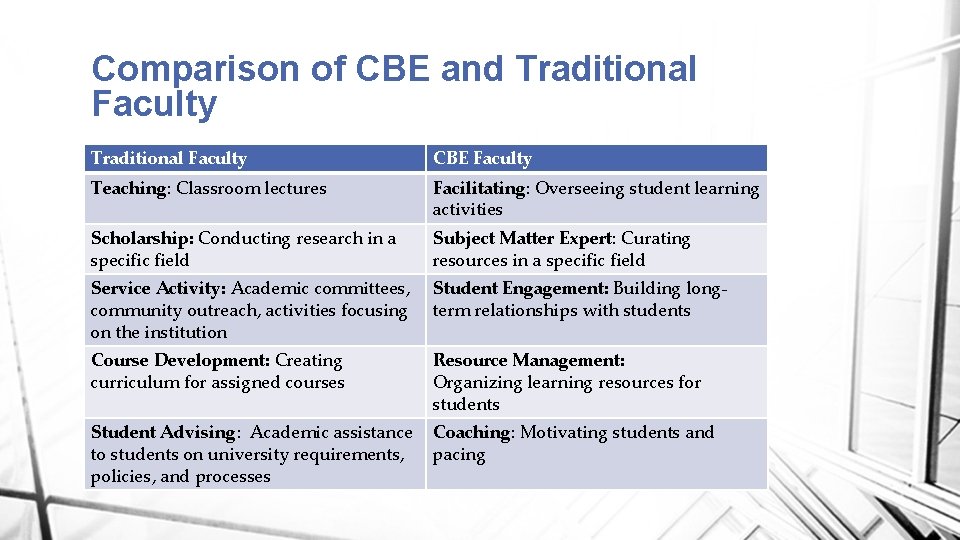
Comparison of CBE and Traditional Faculty CBE Faculty Teaching: Classroom lectures Facilitating: Overseeing student learning activities Scholarship: Conducting research in a specific field Subject Matter Expert: Curating resources in a specific field Service Activity: Academic committees, community outreach, activities focusing on the institution Student Engagement: Building longterm relationships with students Course Development: Creating curriculum for assigned courses Resource Management: Organizing learning resources for students Student Advising: Academic assistance to students on university requirements, policies, and processes Coaching: Motivating students and pacing
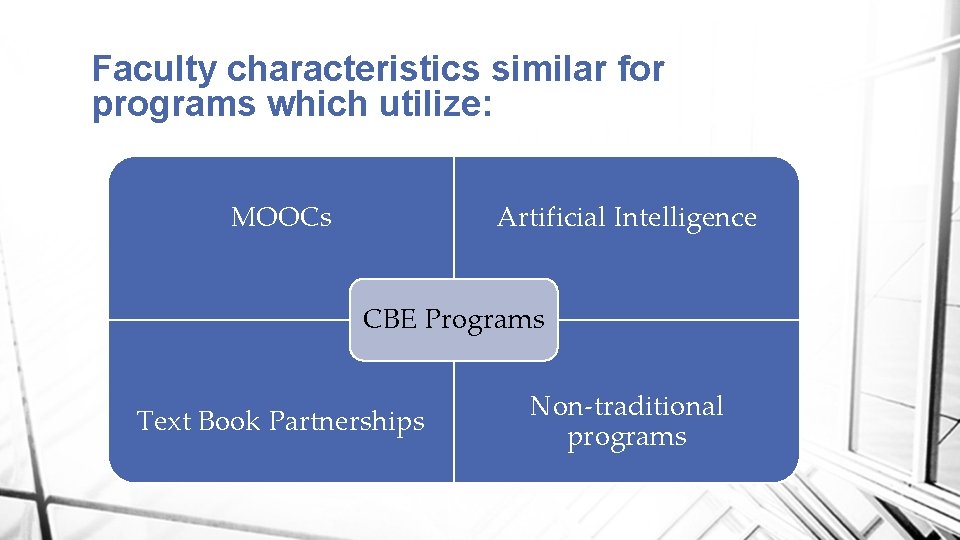
Faculty characteristics similar for programs which utilize: MOOCs Artificial Intelligence CBE Programs Text Book Partnerships Non-traditional programs
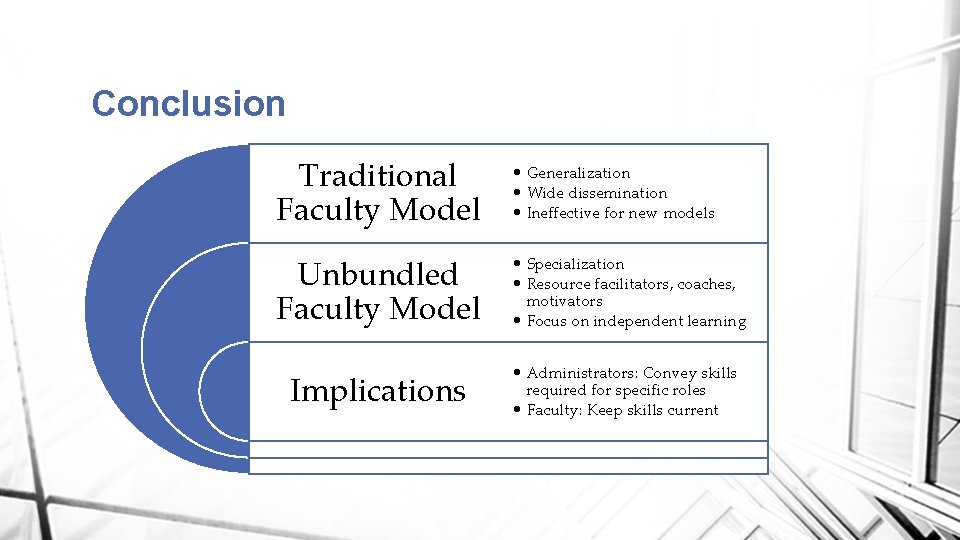
Conclusion Traditional Faculty Model • Generalization • Wide dissemination • Ineffective for new models Unbundled Faculty Model • Specialization • Resource facilitators, coaches, motivators • Focus on independent learning Implications • Administrators: Convey skills required for specific roles • Faculty: Keep skills current
Questions? • Email us info@higherlearninginstitute. org • Call us (813) 708 -9964 • To get a copy of this presentation, go to http: //www. higherlearninginstitute. org/publications-andpresentations. html
- Slides: 12