
A Comparison of Air Emissions from Natural Gas
- Slides: 27
A Comparison of Air Emissions from Natural Gas Pathways for Road Transportation Fan Tong, Paulina Jaramillo, Ines Azevedo Department of Engineering and Public Policy Carnegie Mellon University 2013 -14 Northrop Grumman Fellowship 1
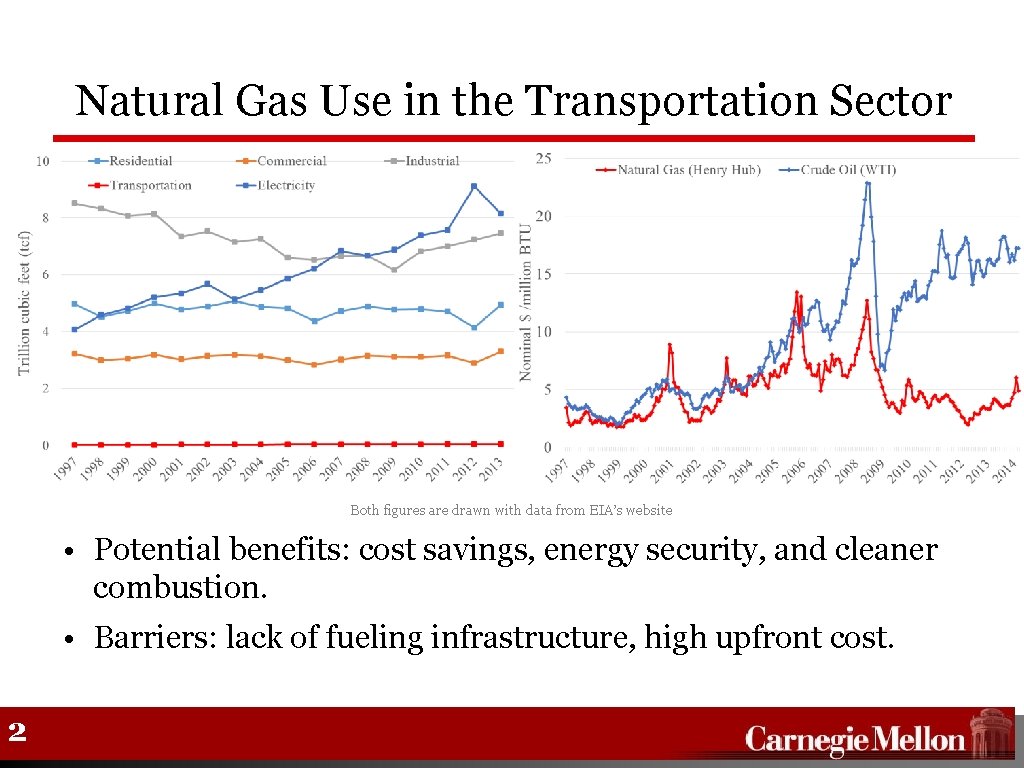
Natural Gas Use in the Transportation Sector Both figures are drawn with data from EIA’s website • Potential benefits: cost savings, energy security, and cleaner combustion. • Barriers: lack of fueling infrastructure, high upfront cost. 2
Research Questions • What are the life-cycle greenhouse gas emissions of natural gas pathways? • Which pathway or which vehicle application provides the largest greenhouse gas emission reduction compared to conventional liquid pathways? • How does methane leakage affect the life-cycle greenhouse gas emissions of natural gas pathways? • What are the key parameters/stages to reduce life-cycle greenhouse gas emissions of natural gas pathways? 3
Research Gap • Limitations of existing studies • Hard to compare the results because studies tend to use different assumptions and system boundaries. (Wang et al. , 2002; Jaramillo et al. , 2008; Samaras et al. , 2008; Sioshansi et al. , 2009; Michalek et al. , 2011). • There a few natural gas-centered studies on light-duty vehicles (LDVs), but they are either limited in pathways considered (Venkatesh et al. , 2011; NRC, 2013) or comprehensive but outdated (Wang et al. , 2000; NRC, 2010 a). • There is relatively few existing studies on air emissions from alternative fuels for heavy-duty vehicles except for transit buses. (Beer et al. , 2002; Ally, et al. , 2007; Clark et al. , 2007; Graham et al. , 2008; Hesterberg, et al. , 2013; Weigel, 2009; Krupnick, 2010; NRC, 2010 b & 2014; EPA, 2011; Meyer et al. , 2011; Meier, et al. , 2013; MJB&A, 2014) • Few studies treated uncertainty and variability explicitly (Venkatesh et al. , 2011). • Estimates of natural gas upstream GHG emissions have been controversial. However, new on-site measurements of natural gas upstream emissions (Allen et al. , 2013; EPA GHGRP 2013) are available. 4
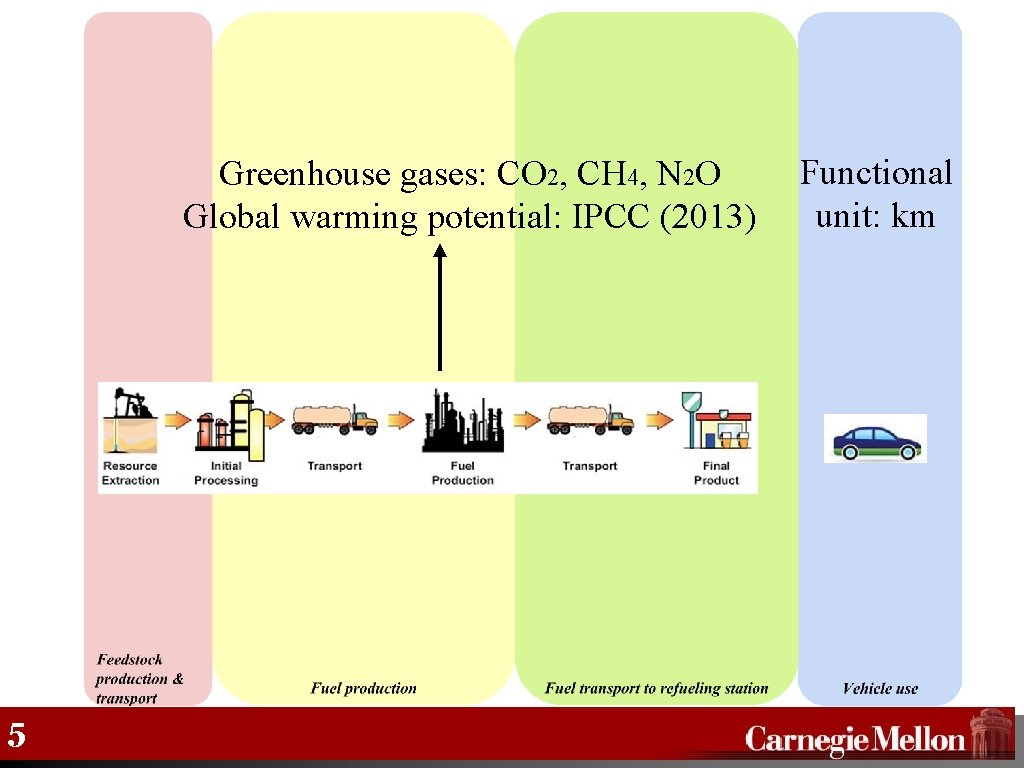
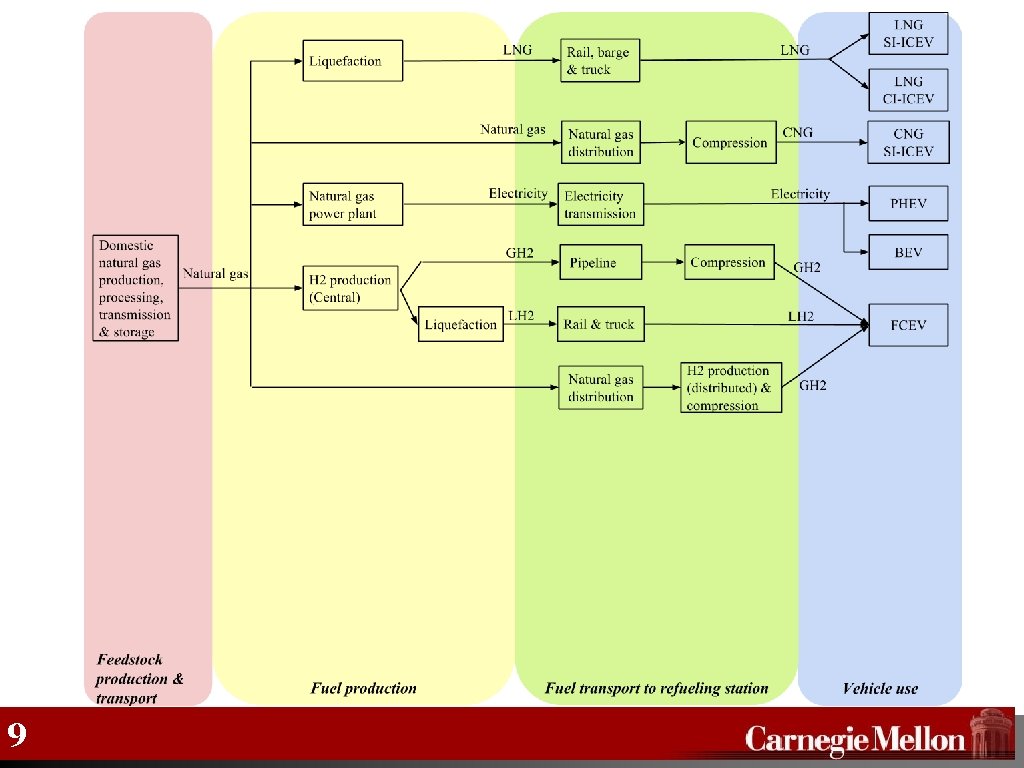
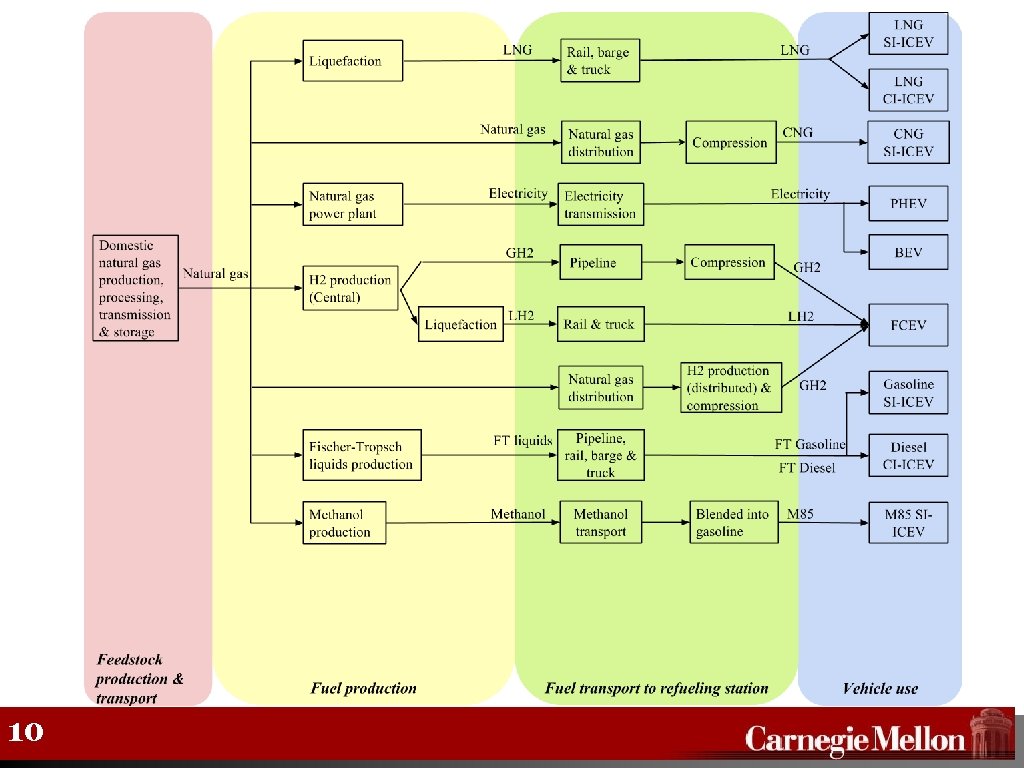
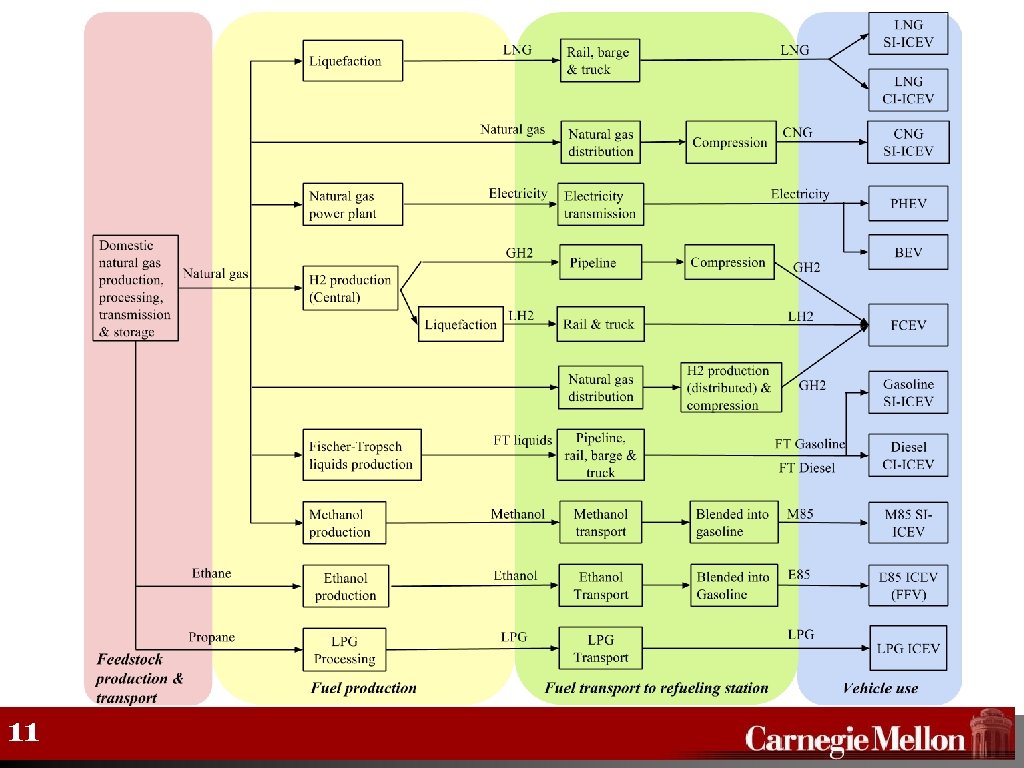
Greenhouse gases: CO 2, CH 4, N 2 O Global warming potential: IPCC (2013) 5 Functional unit: km
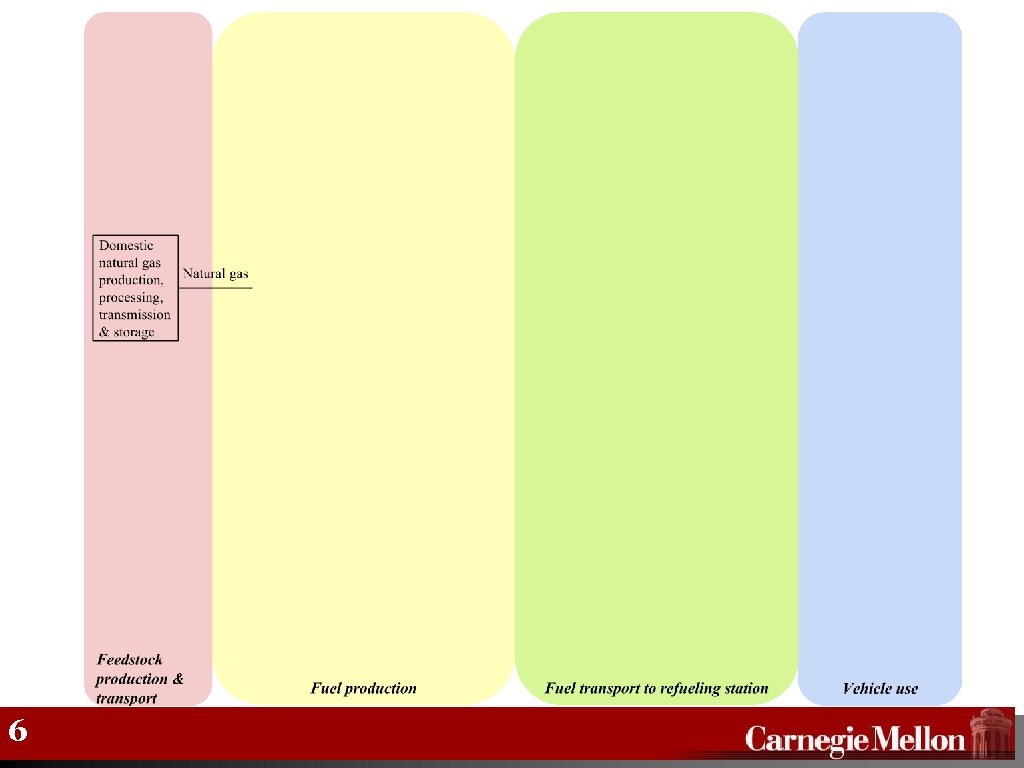
6
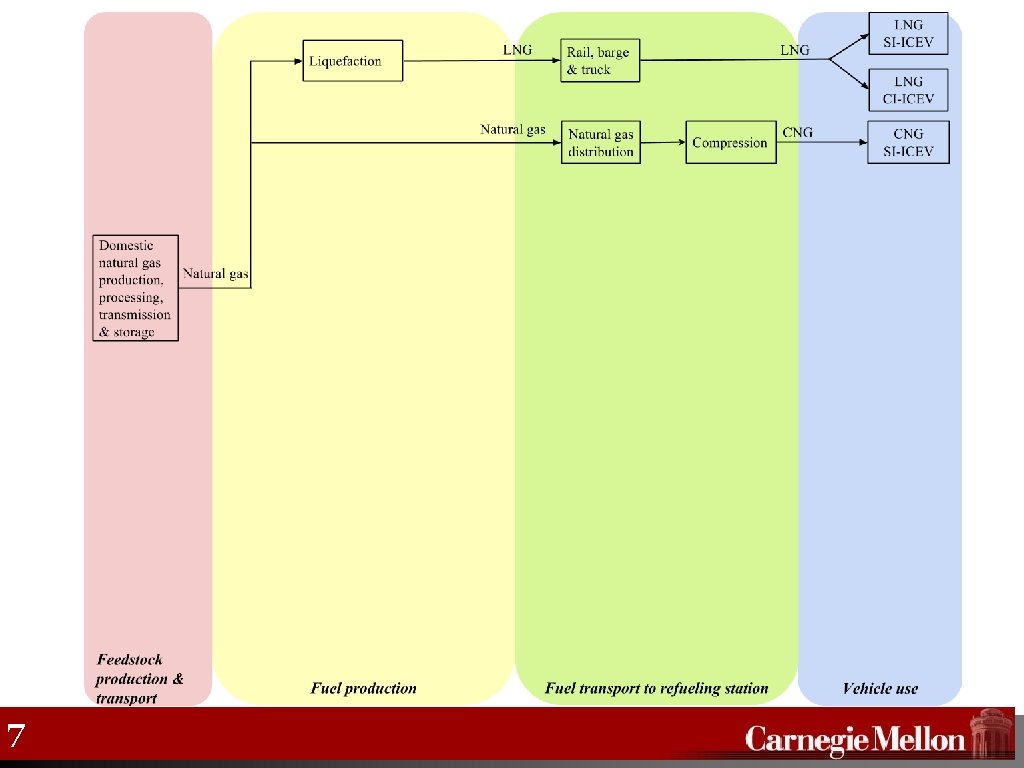
7
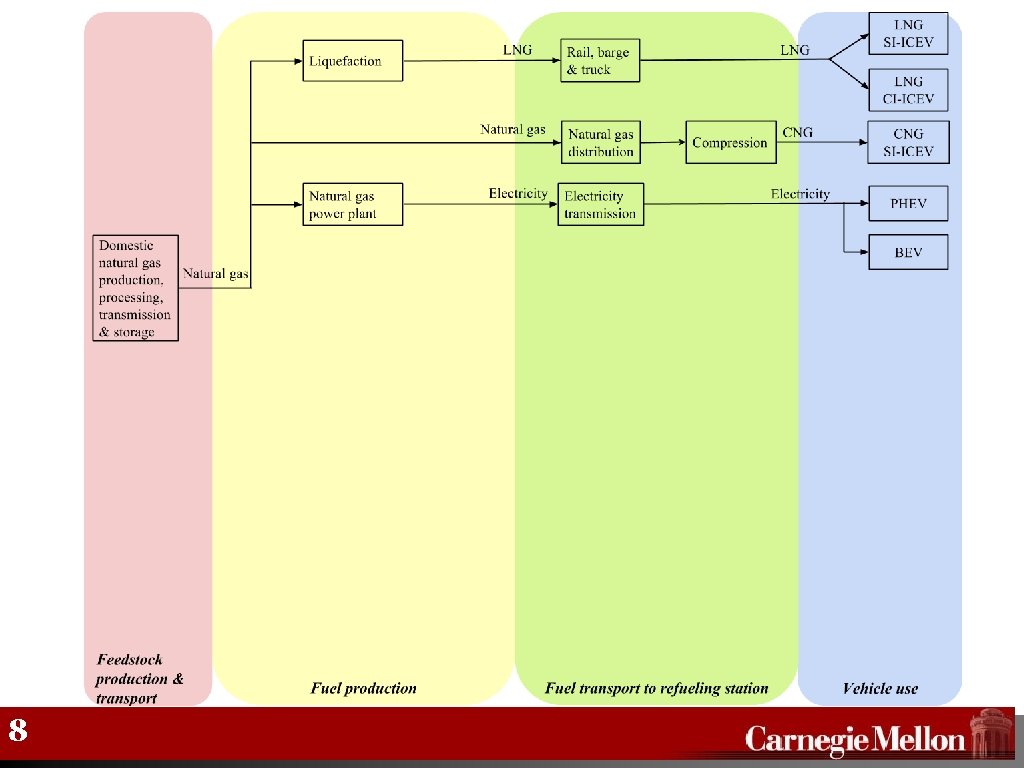
8
9
10
11
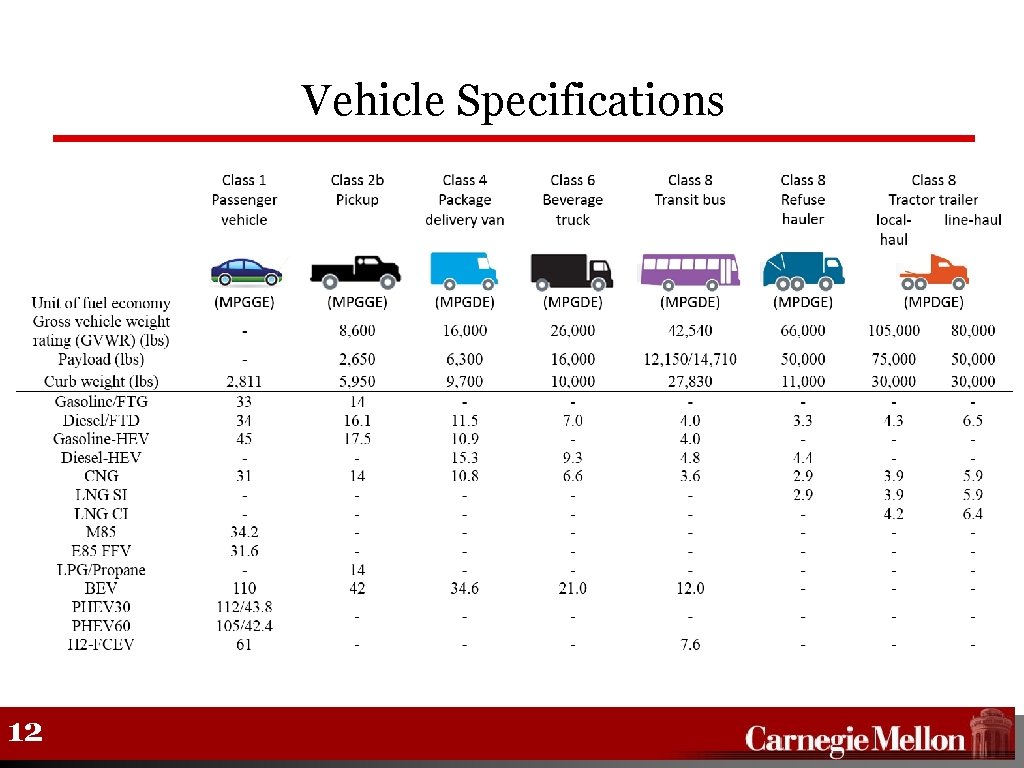
Vehicle Specifications 12
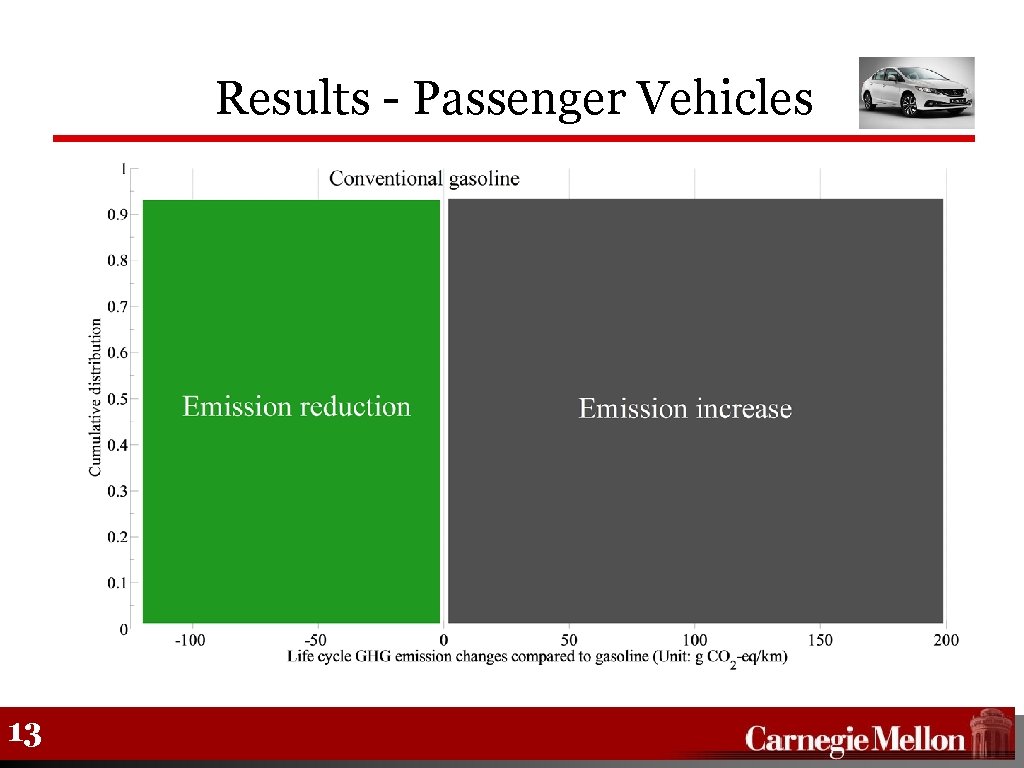
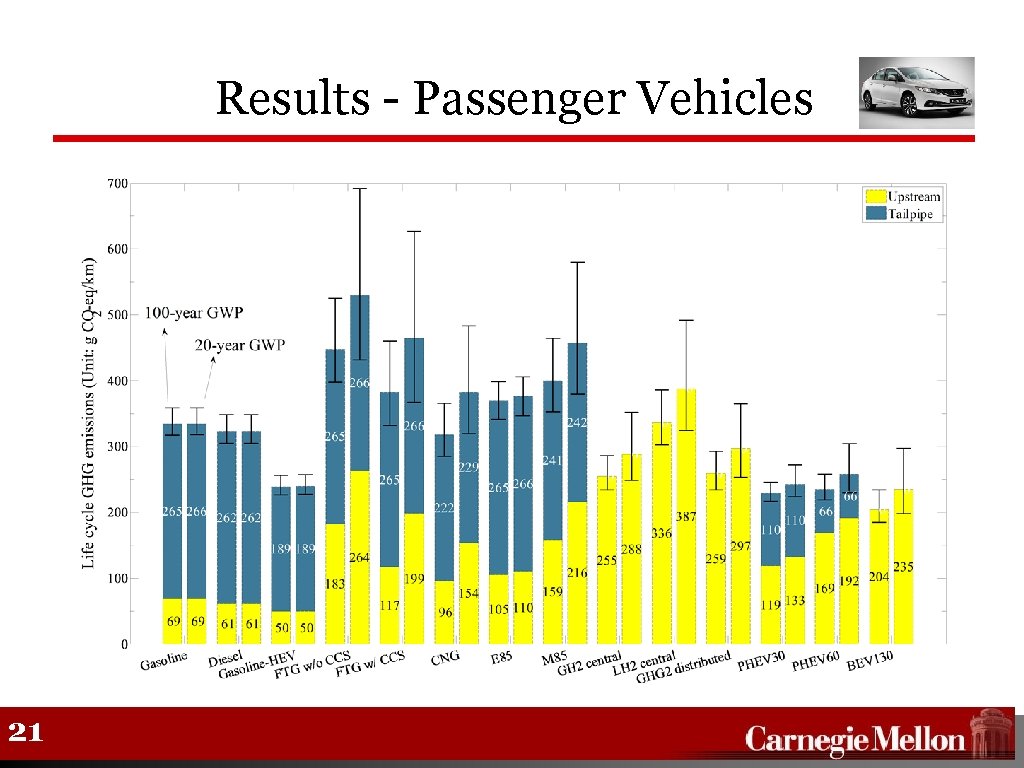
Results - Passenger Vehicles 13
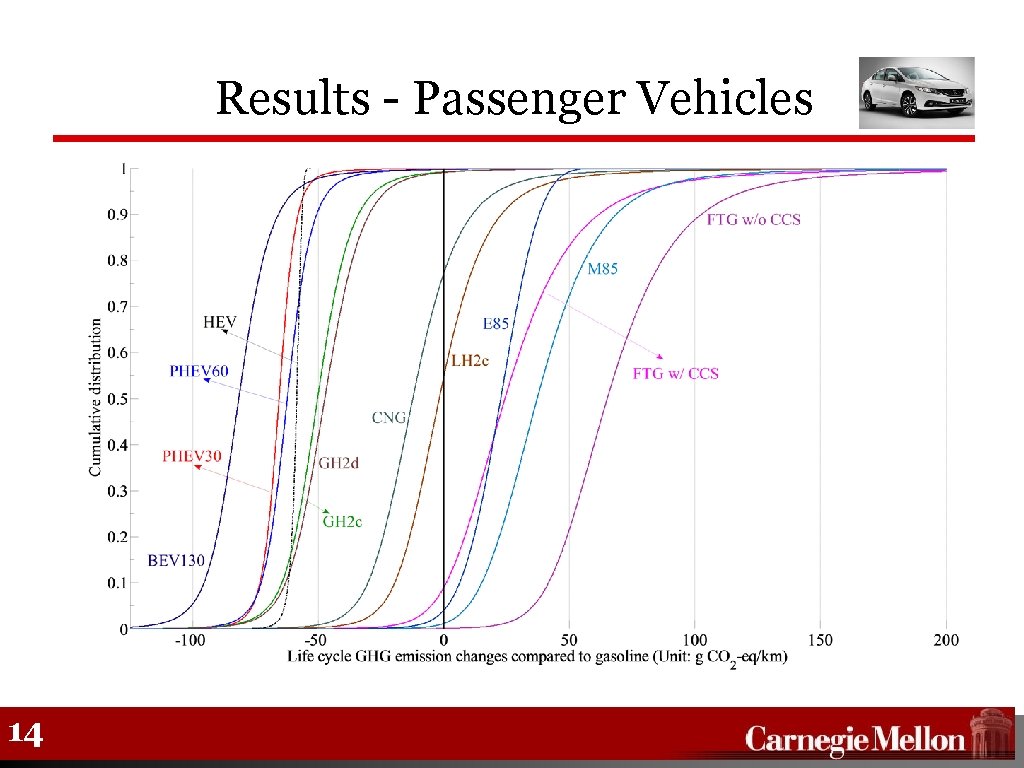
Results - Passenger Vehicles 14
Results – Line-haul Tractor Trailers 15
Results – Line-haul Tractor Trailers 16
What roles do leakage rate and fuel economy play for CNG and LNG pathways? 17
Break-even leakage rate is a linear function of relative fuel economy of NGVs 18
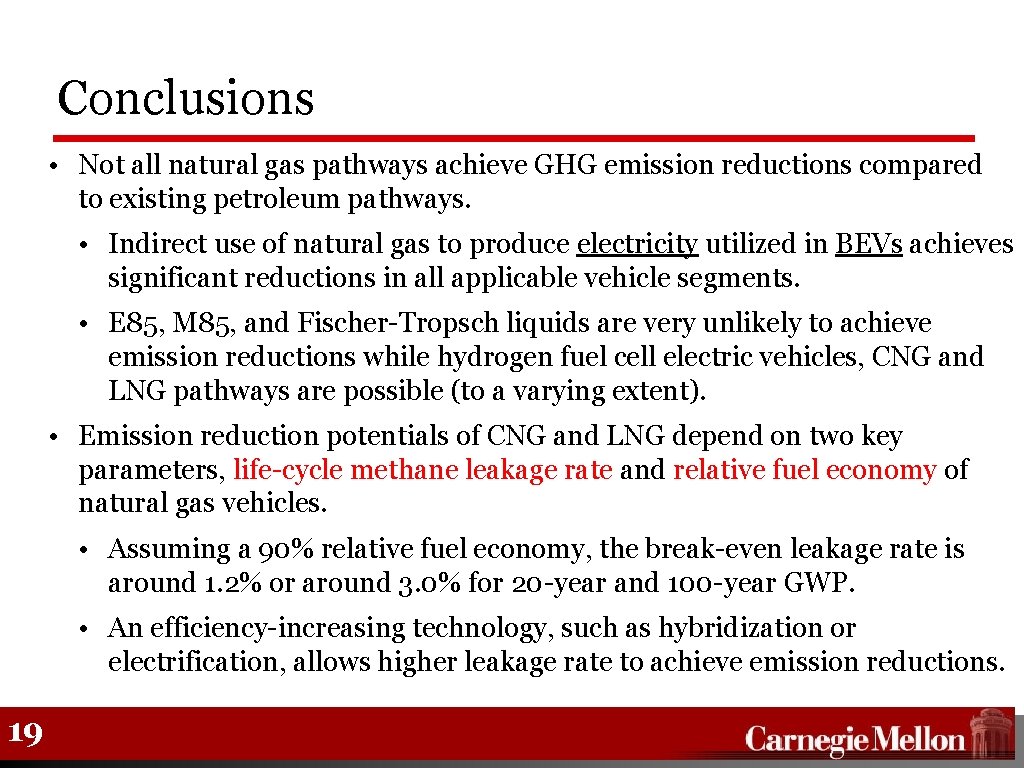
Conclusions • Not all natural gas pathways achieve GHG emission reductions compared to existing petroleum pathways. • Indirect use of natural gas to produce electricity utilized in BEVs achieves significant reductions in all applicable vehicle segments. • E 85, M 85, and Fischer-Tropsch liquids are very unlikely to achieve emission reductions while hydrogen fuel cell electric vehicles, CNG and LNG pathways are possible (to a varying extent). • Emission reduction potentials of CNG and LNG depend on two key parameters, life-cycle methane leakage rate and relative fuel economy of natural gas vehicles. • Assuming a 90% relative fuel economy, the break-even leakage rate is around 1. 2% or around 3. 0% for 20 -year and 100 -year GWP. • An efficiency-increasing technology, such as hybridization or electrification, allows higher leakage rate to achieve emission reductions. 19
Thank you! ftong@Andrew. cmu. edu Supported by 2013 -14 Northrop Grumman Fellowship 20
Results - Passenger Vehicles 21
Results – Line-haul Tractor Trailers 22
Results – Transit Buses 23
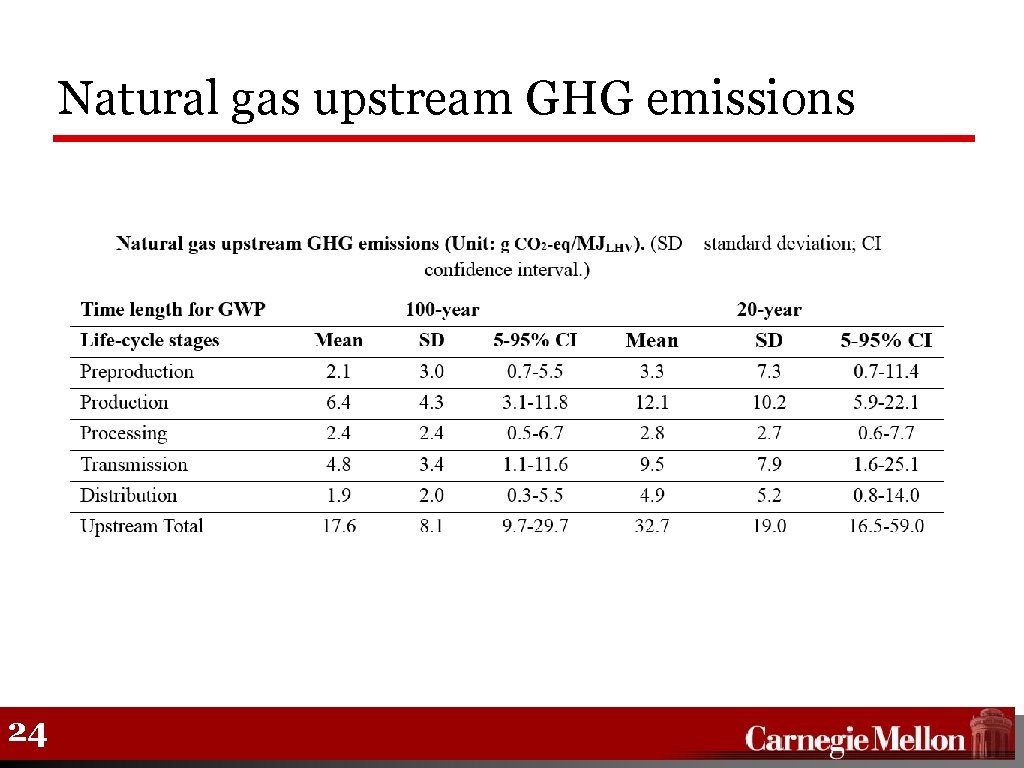
Natural gas upstream GHG emissions 24
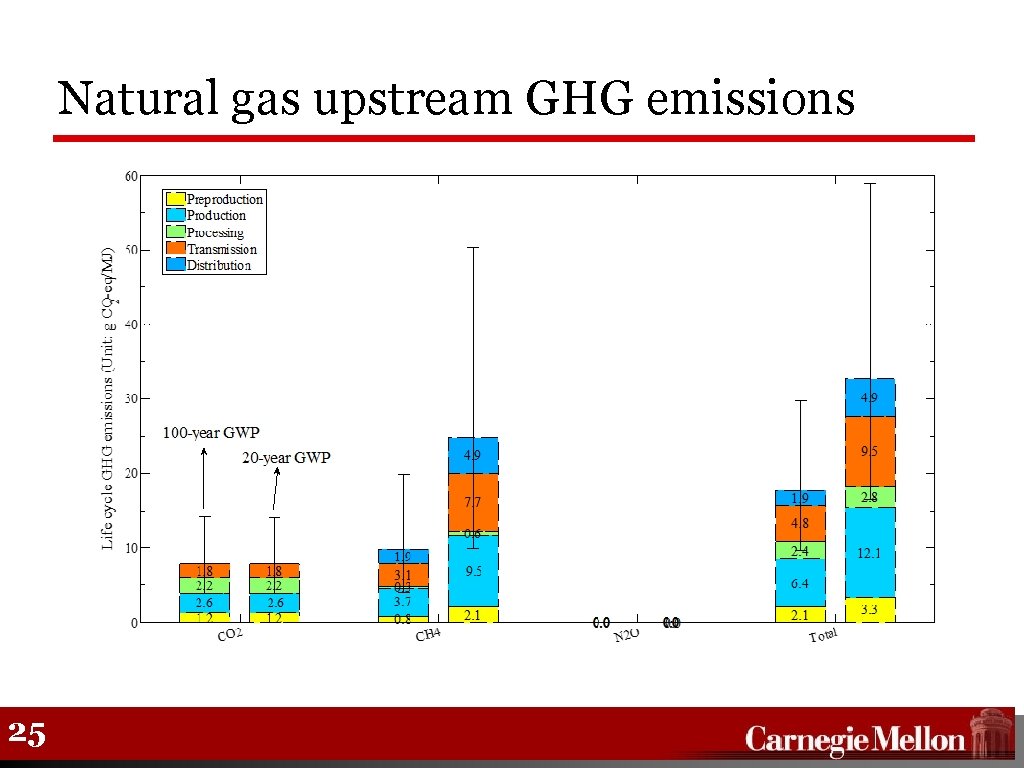
Natural gas upstream GHG emissions 25
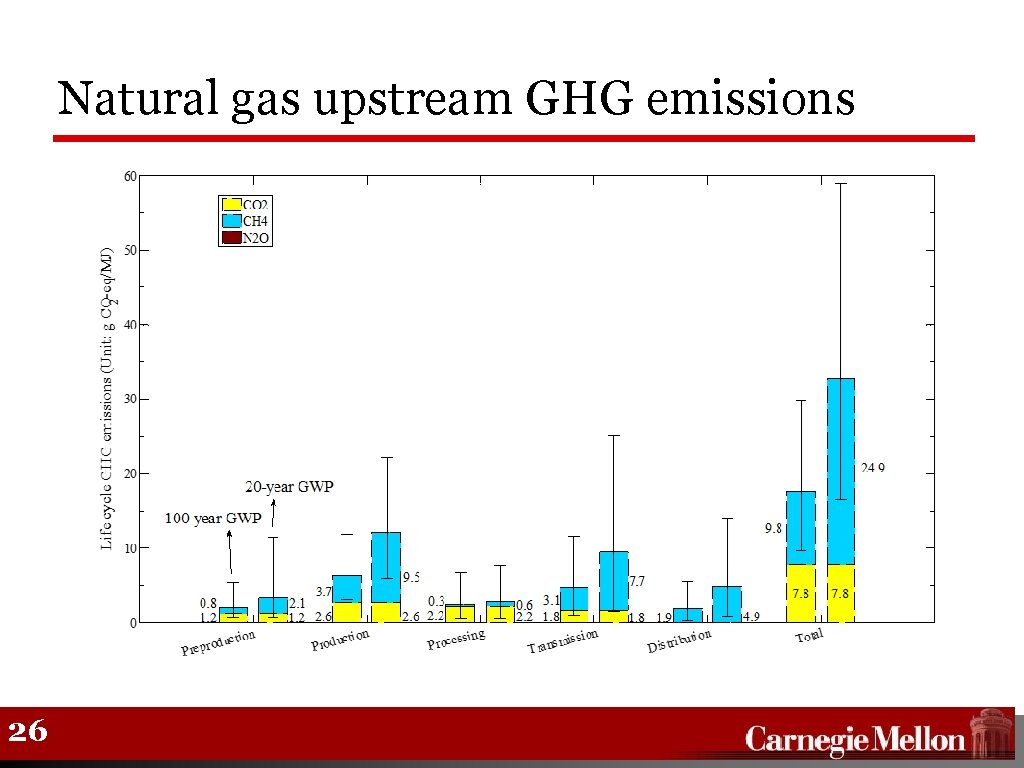
Natural gas upstream GHG emissions 26
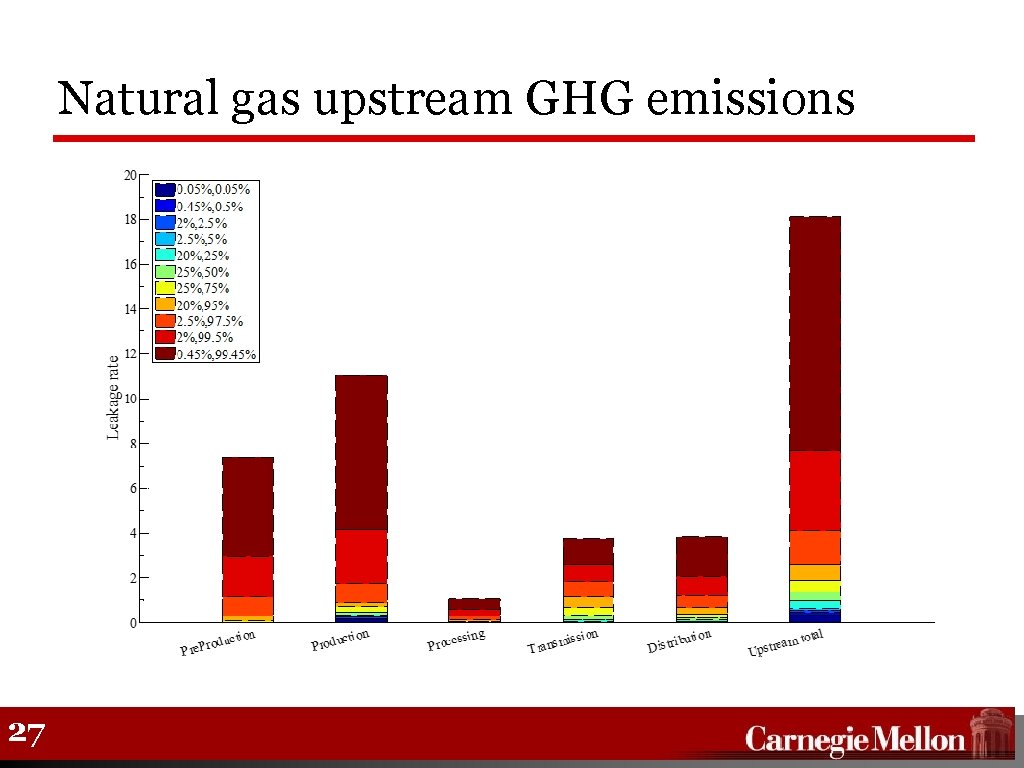
Natural gas upstream GHG emissions 27