
A Comparison Mesopotamia and Ancient Egypt Geography of
- Slides: 28
A Comparison: Mesopotamia and Ancient Egypt
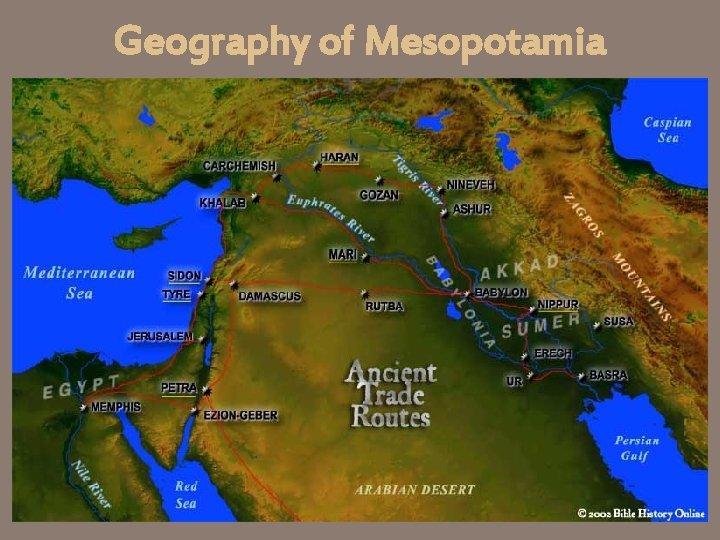
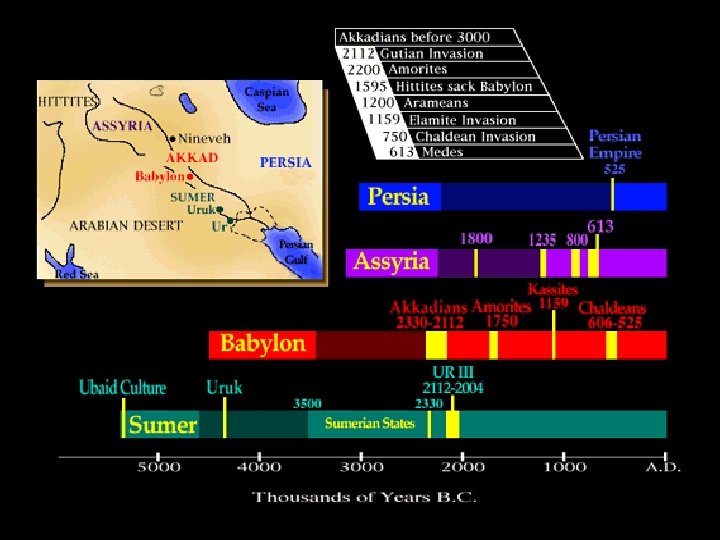
Geography of Mesopotamia
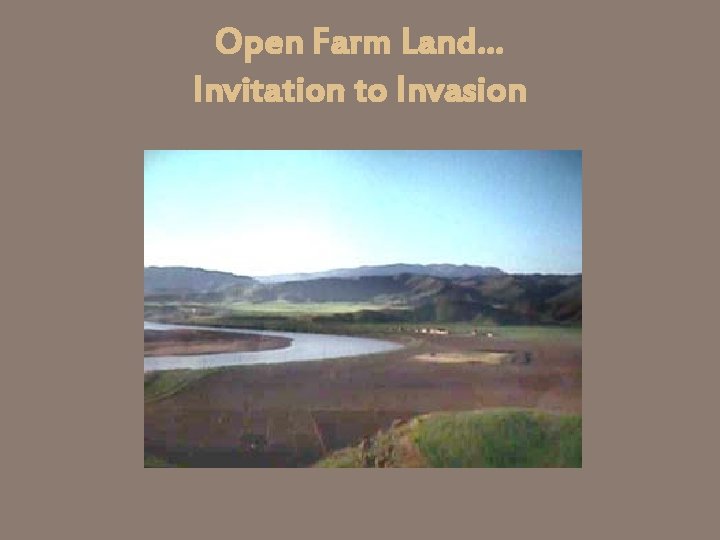
Open Farm Land… Invitation to Invasion
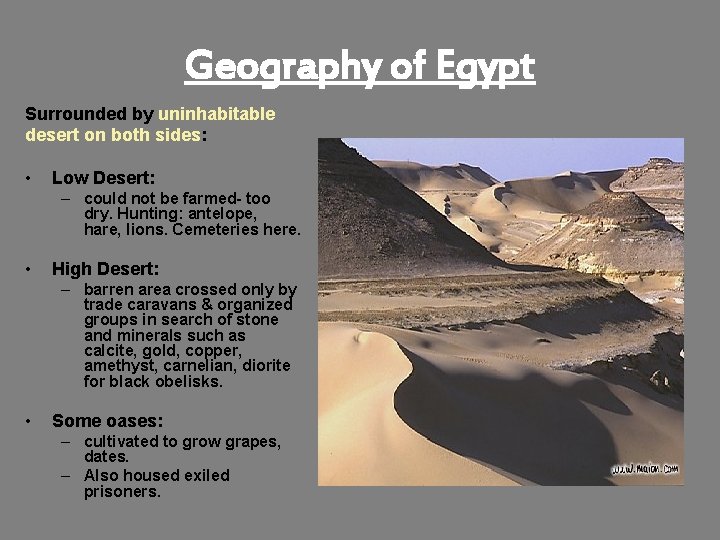
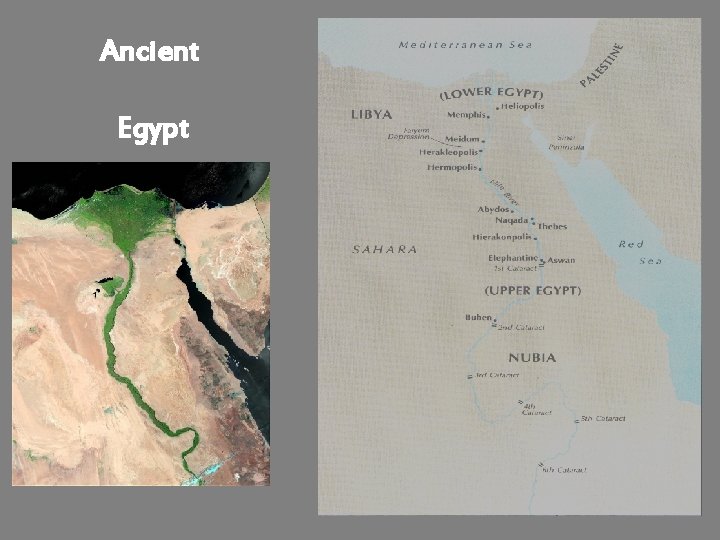
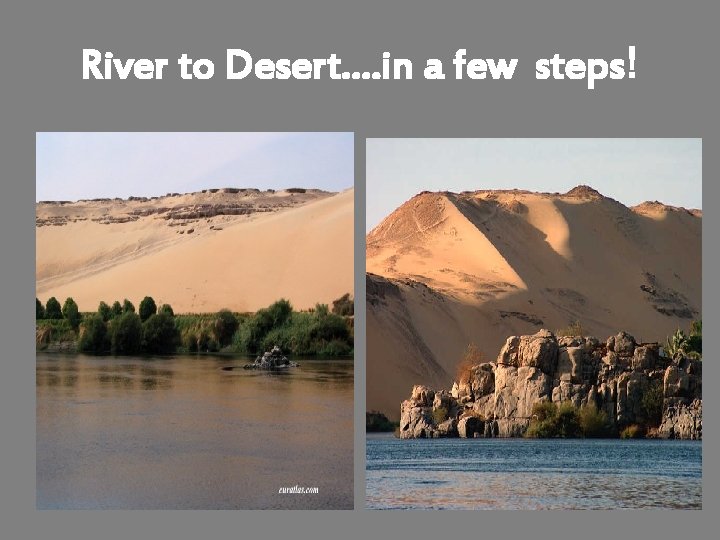
Geography of Egypt Surrounded by uninhabitable desert on both sides: • Low Desert: – could not be farmed- too dry. Hunting: antelope, hare, lions. Cemeteries here. • High Desert: – barren area crossed only by trade caravans & organized groups in search of stone and minerals such as calcite, gold, copper, amethyst, carnelian, diorite for black obelisks. • Some oases: – cultivated to grow grapes, dates. – Also housed exiled prisoners.
Ancient Egypt
River to Desert…. in a few steps!
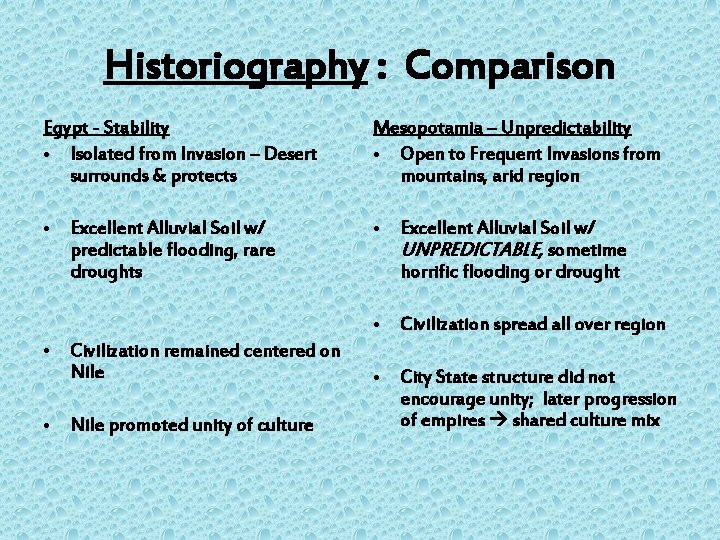
Historiography : Comparison Egypt - Stability • Isolated from Invasion – Desert surrounds & protects Mesopotamia – Unpredictability • Open to Frequent Invasions from mountains, arid region • Excellent Alluvial Soil w/ predictable flooding, rare droughts • Excellent Alluvial Soil w/ UNPREDICTABLE, sometime horrific flooding or drought • Civilization spread all over region • Civilization remained centered on Nile • Nile promoted unity of culture • City State structure did not encourage unity; later progression of empires shared culture mix
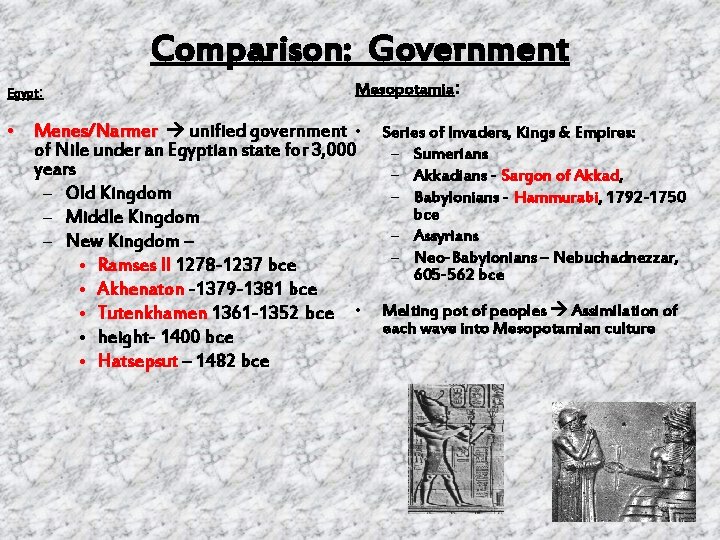
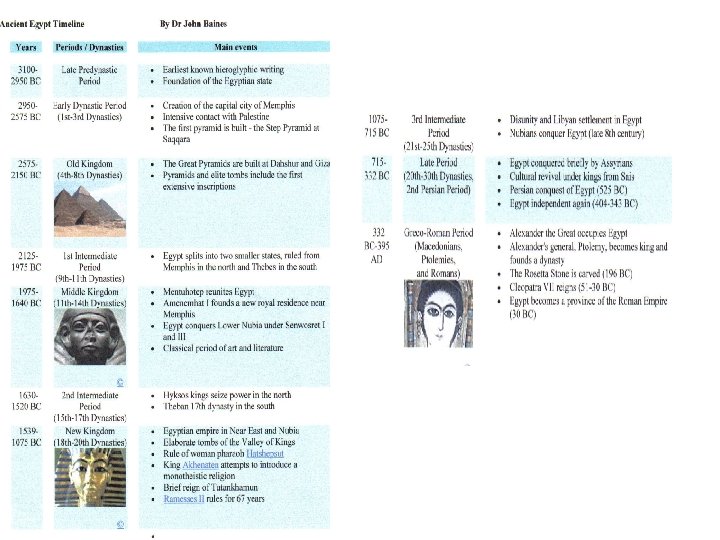
Comparison: Government Egypt: Mesopotamia: • Menes/Narmer unified government • Series of Invaders, Kings & Empires: of Nile under an Egyptian state for 3, 000 – Sumerians years – Akkadians - Sargon of Akkad, – Old Kingdom – Babylonians - Hammurabi, 1792 -1750 bce – Middle Kingdom – Assyrians – New Kingdom – – Neo-Babylonians – Nebuchadnezzar, • Ramses II 1278 -1237 bce 605 -562 bce • Akhenaton -1379 -1381 bce • Tutenkhamen 1361 -1352 bce • Melting pot of peoples Assimilation of each wave into Mesopotamian culture • height- 1400 bce • Hatsepsut – 1482 bce
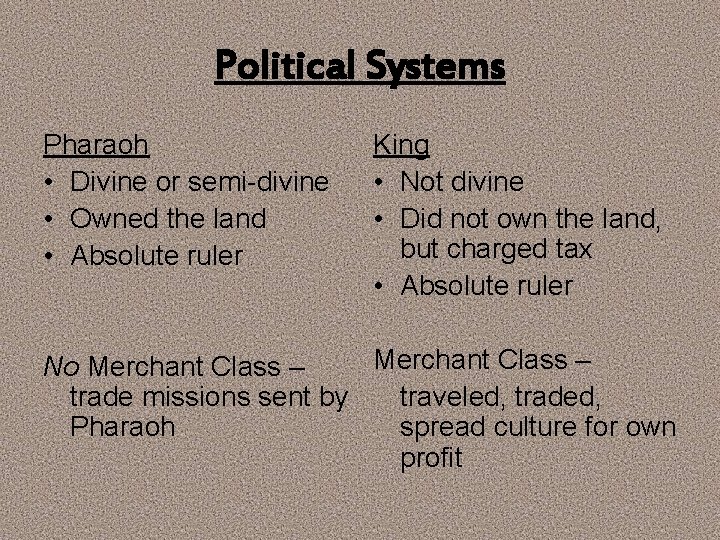
Political Systems Pharaoh • Divine or semi-divine • Owned the land • Absolute ruler King • Not divine • Did not own the land, but charged tax • Absolute ruler Merchant Class – No Merchant Class – trade missions sent by traveled, traded, Pharaoh spread culture for own profit
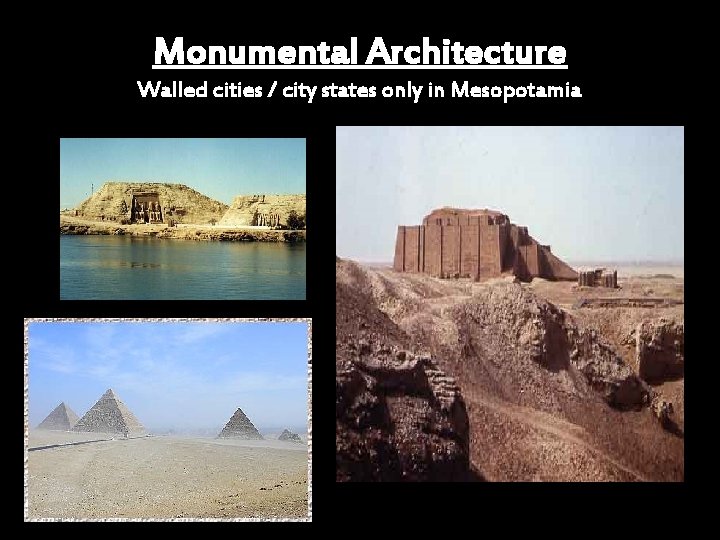
Monumental Architecture Walled cities / city states only in Mesopotamia
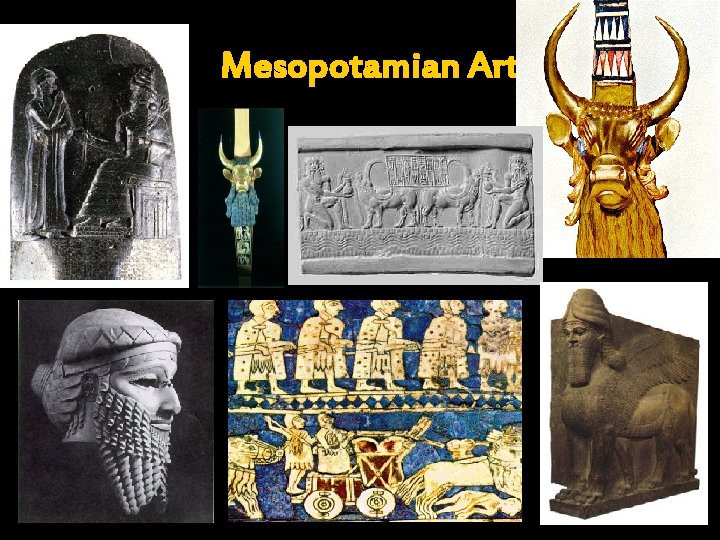
Mesopotamian Art
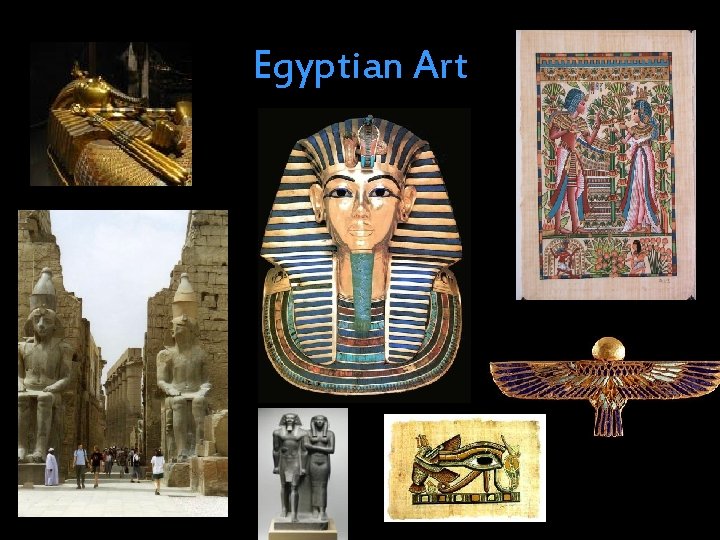
Egyptian Art
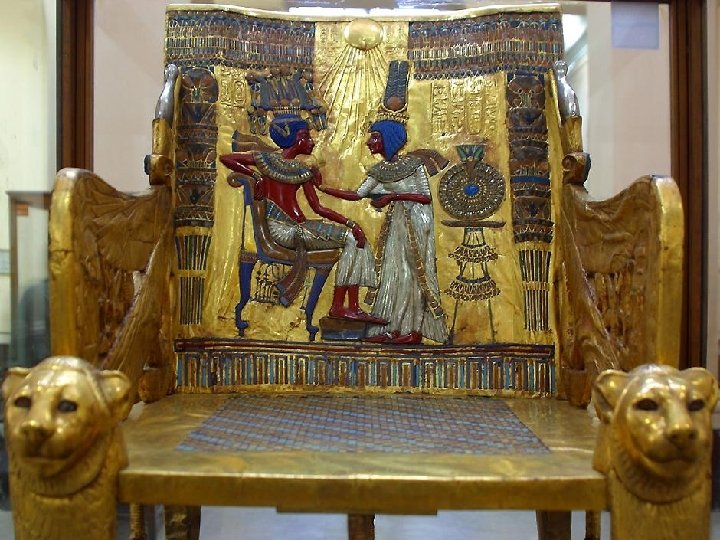
Egyptian Art
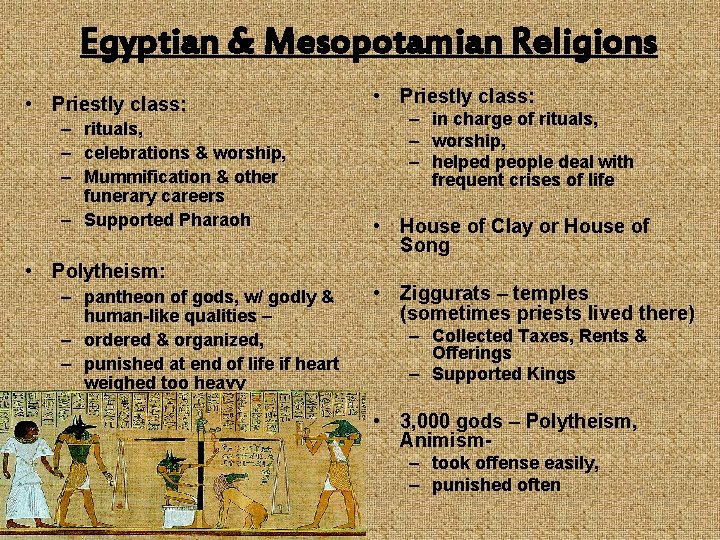
Egyptian & Mesopotamian Religions • Priestly class: – rituals, – celebrations & worship, – Mummification & other funerary careers – Supported Pharaoh • Polytheism: – pantheon of gods, w/ godly & human-like qualities – – ordered & organized, – punished at end of life if heart weighed too heavy • Priestly class: – in charge of rituals, – worship, – helped people deal with frequent crises of life • House of Clay or House of Song • Ziggurats – temples (sometimes priests lived there) – Collected Taxes, Rents & Offerings – Supported Kings • 3, 000 gods – Polytheism, Animism– took offense easily, – punished often
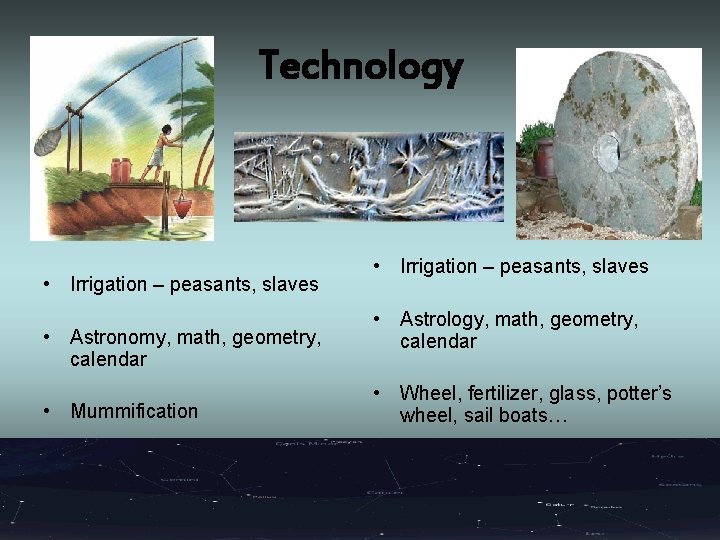
Technology • Irrigation – peasants, slaves • Astronomy, math, geometry, calendar • Mummification • Irrigation – peasants, slaves • Astrology, math, geometry, calendar • Wheel, fertilizer, glass, potter’s wheel, sail boats…
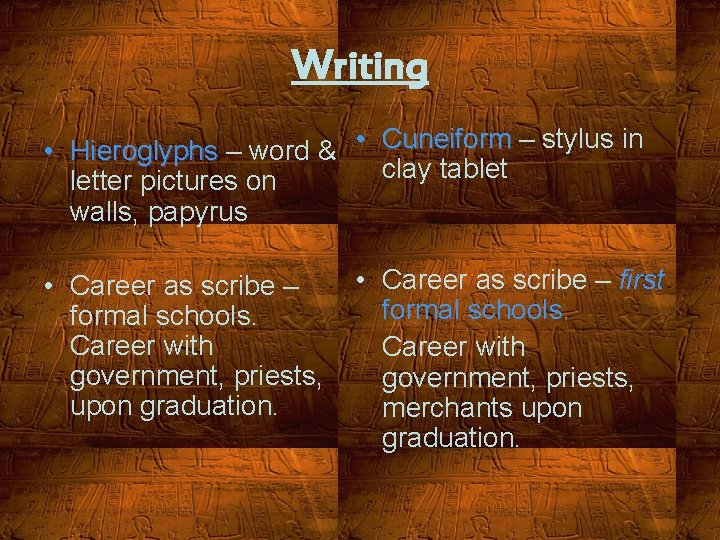
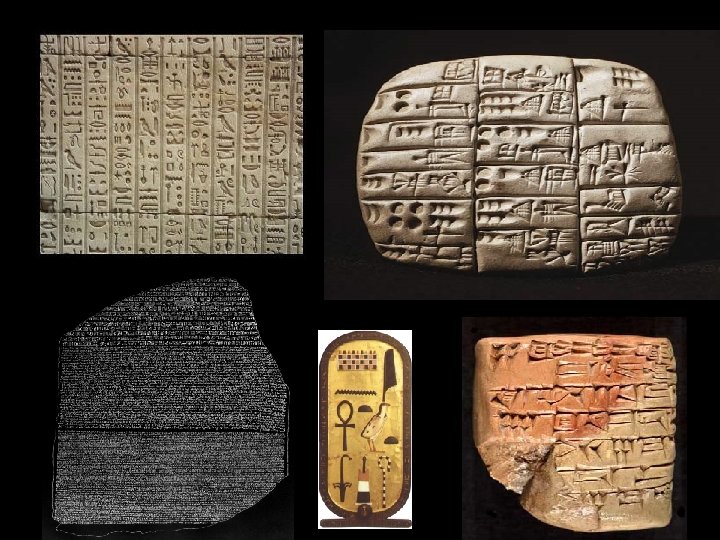
Writing • Hieroglyphs – word & • Cuneiform – stylus in clay tablet letter pictures on walls, papyrus • Career as scribe – formal schools. Career with government, priests, upon graduation. • Career as scribe – first formal schools. Career with government, priests, merchants upon graduation.
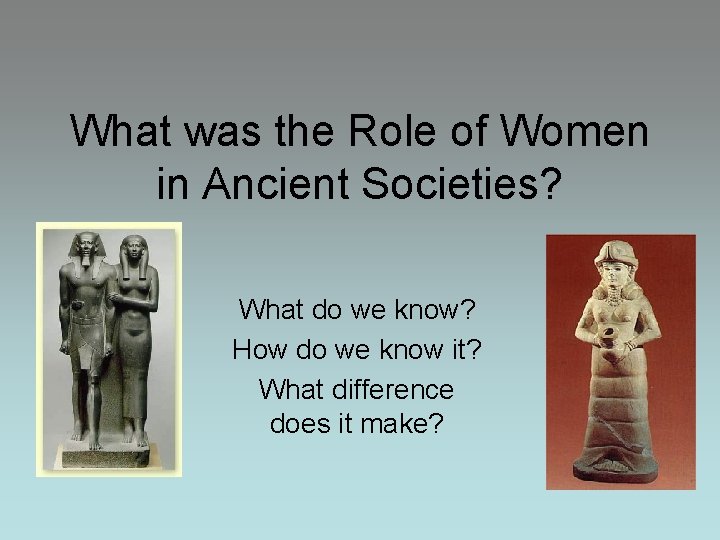
What was the Role of Women in Ancient Societies? What do we know? How do we know it? What difference does it make?
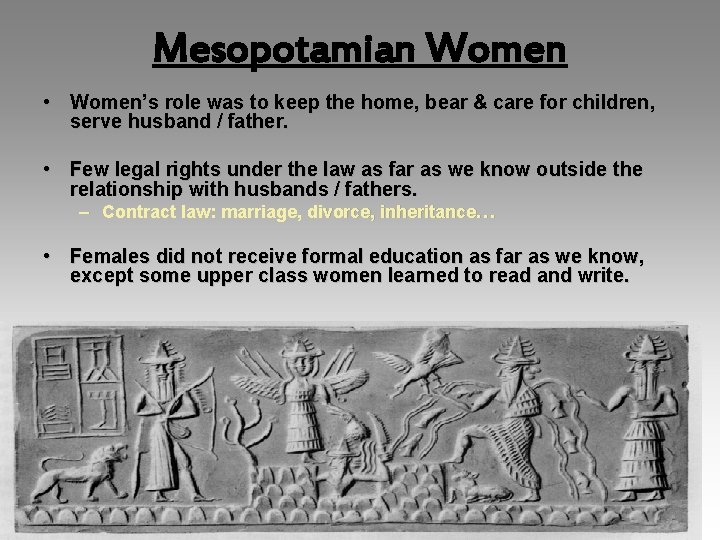
Mesopotamian Women • Women’s role was to keep the home, bear & care for children, serve husband / father. • Few legal rights under the law as far as we know outside the relationship with husbands / fathers. – Contract law: marriage, divorce, inheritance… • Females did not receive formal education as far as we know, except some upper class women learned to read and write.
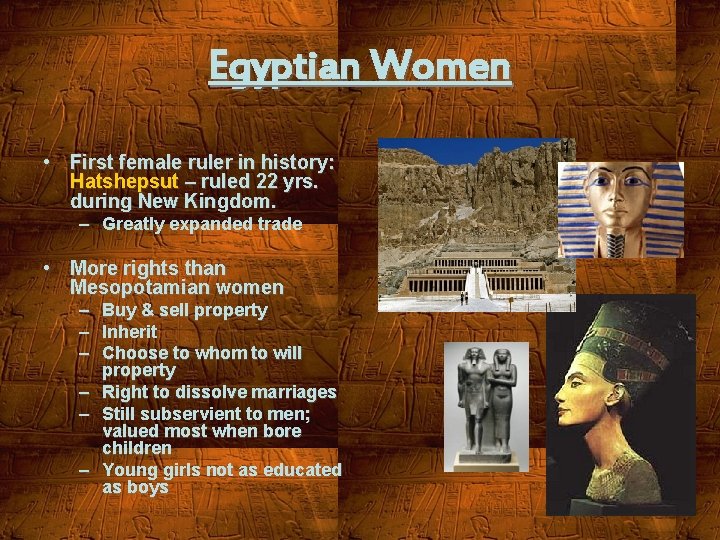
Egyptian Women • First female ruler in history: Hatshepsut – ruled 22 yrs. during New Kingdom. – Greatly expanded trade • More rights than Mesopotamian women – – – Buy & sell property Inherit Choose to whom to will property Right to dissolve marriages Still subservient to men; valued most when bore children Young girls not as educated as boys
Social Structure: Pyramidal, of course! • • Pharaoh - Divine Priests- funerals, rituals Nobles Skilled artisans, incl. Physicians, Architects • Peasants – – worked land & generated most of the kingdom’s wealth – Give over half of produce to Kingdom, as Pharaoh owned the land • Slaves at bottom, but fewer than peasants– POW & descendents – Life not much worse than peasants’ – Building & irrigation projects; sometimes appointed to trusted positions in government or in palaces • • King Priests – Advised people on ritual – Performed rituals, ceremonies – Collected taxes, rents, owned most of the land • • Nobles Merchants • Artisans • Peasants – Worked for themselves; kept profit – Farmers mostly – paid percent to government & priests • Slaves – One could sell oneself or family members into slavery to work off debts – POW – Criminals
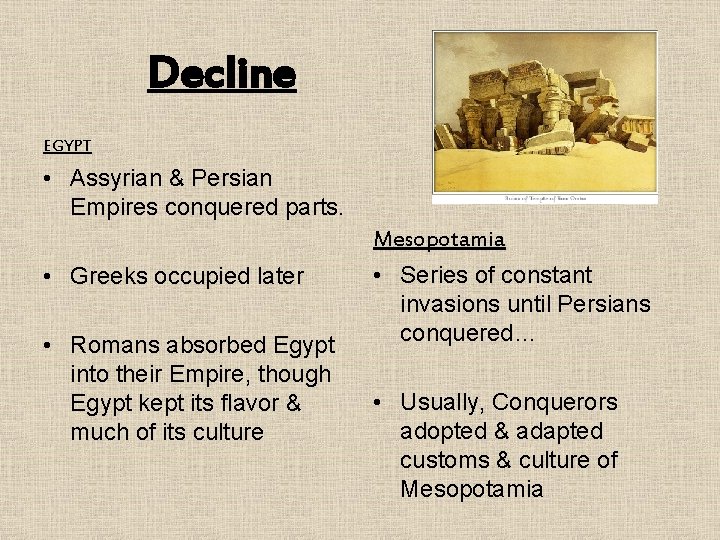
Decline EGYPT • Assyrian & Persian Empires conquered parts. Mesopotamia • Greeks occupied later • Romans absorbed Egypt into their Empire, though Egypt kept its flavor & much of its culture • Series of constant invasions until Persians conquered… • Usually, Conquerors adopted & adapted customs & culture of Mesopotamia
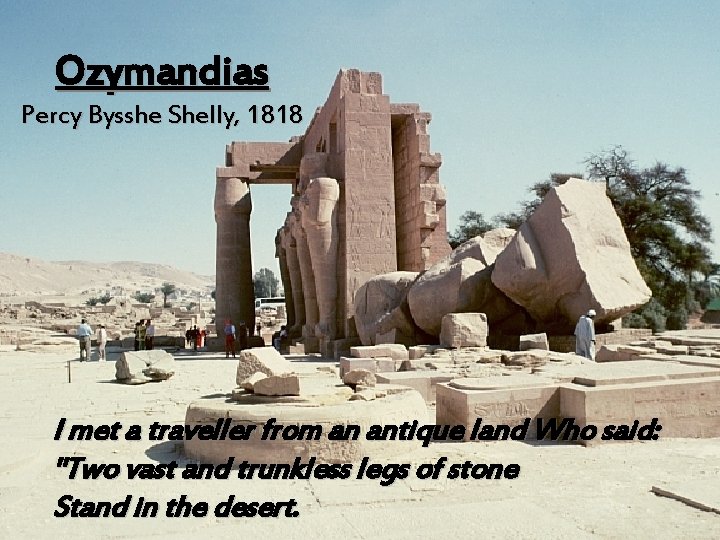
Ozymandias Percy Bysshe Shelly, 1818 I met a traveller from an antique land Who said: "Two vast and trunkless legs of stone Stand in the desert.
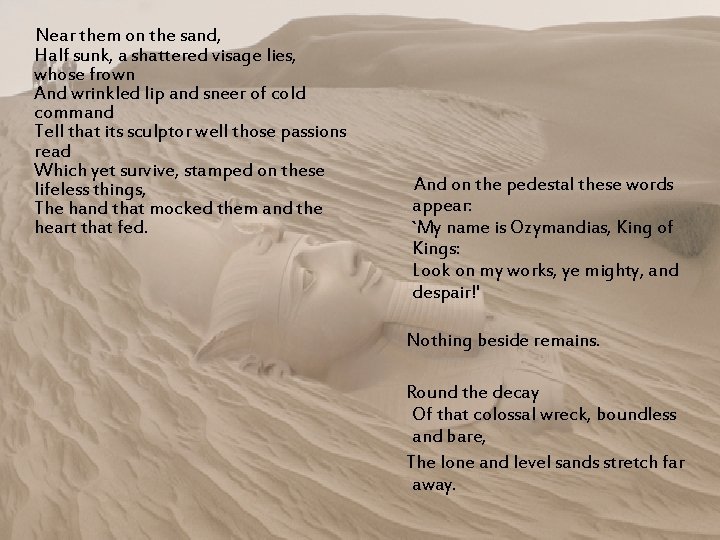
Near them on the sand, Half sunk, a shattered visage lies, whose frown And wrinkled lip and sneer of cold command Tell that its sculptor well those passions read Which yet survive, stamped on these lifeless things, The hand that mocked them and the heart that fed. And on the pedestal these words appear: `My name is Ozymandias, King of Kings: Look on my works, ye mighty, and despair!' Nothing beside remains. Round the decay Of that colossal wreck, boundless and bare, The lone and level sands stretch far away.
Rule of Thumb: Decline of Civilizations • Civilization becomes powerful & prosperous attracts attention & envy of neighbors Conquest. • Wealthy civilization so big & complex, it can’t adequately protect all its borders, so over time it begins to weaken. • True of Empires that arose in Mesopotamia, ancient Egypt, …Greece, Rome…
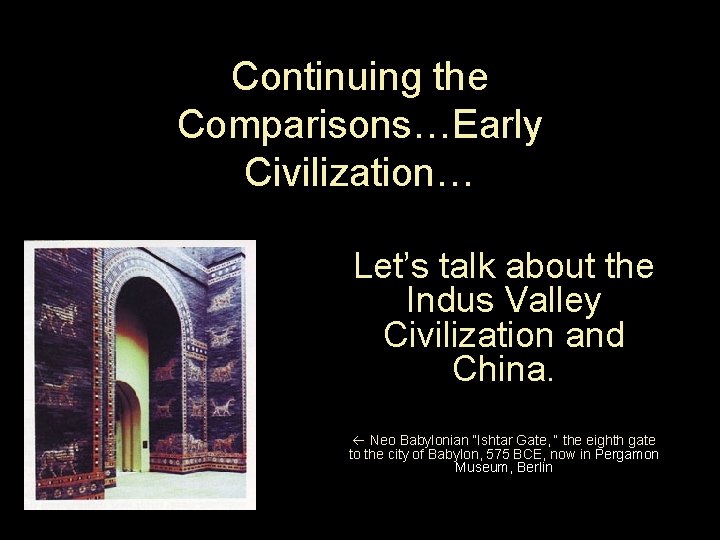
Continuing the Comparisons…Early Civilization… Let’s talk about the Indus Valley Civilization and China. Neo Babylonian “Ishtar Gate, “ the eighth gate to the city of Babylon, 575 BCE, now in Pergamon Museum, Berlin