
A Comparative Analysis of English Feature Articles in

- Slides: 16
A Comparative Analysis of English Feature Articles in Magazines Published in Thailand Britain : Linguistic Aspects Wannapa Trakulkasemsuk
World Englishes “A language achieves a genuinely global status when it develops a special role that is recognized in every country. ” Crystal (1997) How? 1. 2. The language is set as an official language of that country. The language is recognized as a special language that is taught as a foreign language to children in school; or adults in the country mostly know or learn it as a common foreign language.
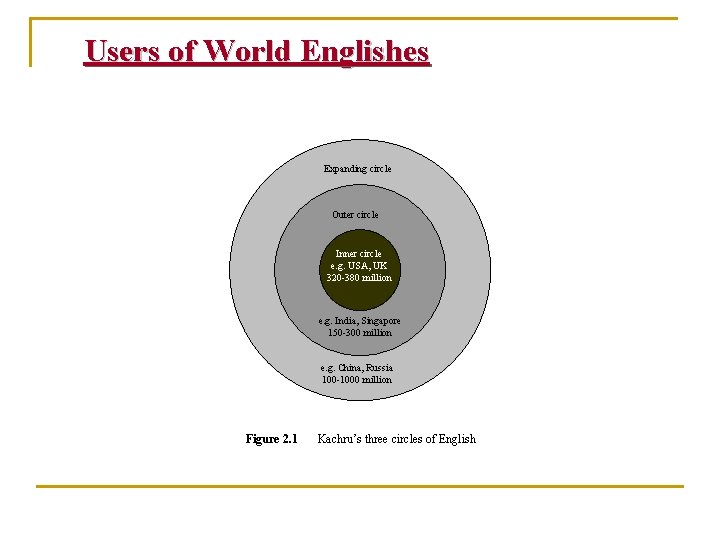
Users of World Englishes Expanding circle Outer circle Inner circle e. g. USA, UK 320 -380 million e. g. India, Singapore 150 -300 million e. g. China, Russia 100 -1000 million Figure 2. 1 Kachru’s three circles of English
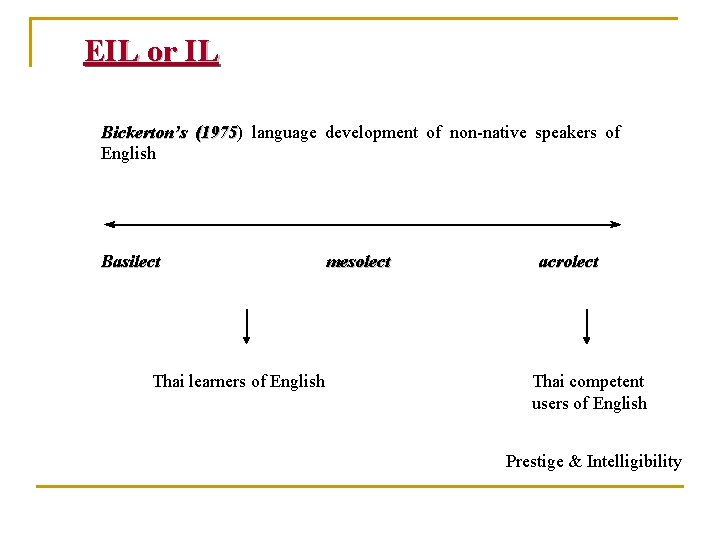
EIL or IL Bickerton’s (1975) (1975 language development of non-native speakers of English Basilect Thai learners of English mesolect acrolect Thai competent users of English Prestige & Intelligibility
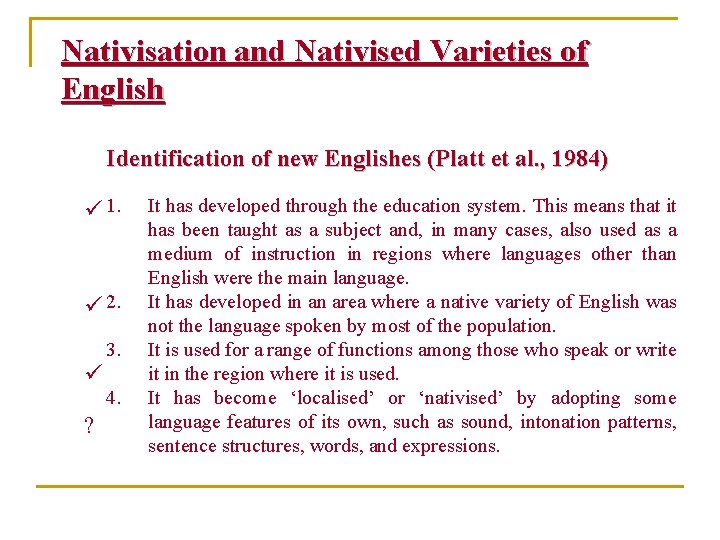
Nativisation and Nativised Varieties of English Identification of new Englishes (Platt et al. , 1984) 1. 2. 3. ? 4. It has developed through the education system. This means that it has been taught as a subject and, in many cases, also used as a medium of instruction in regions where languages other than English were the main language. It has developed in an area where a native variety of English was not the language spoken by most of the population. It is used for a range of functions among those who speak or write it in the region where it is used. It has become ‘localised’ or ‘nativised’ by adopting some language features of its own, such as sound, intonation patterns, sentence structures, words, and expressions.
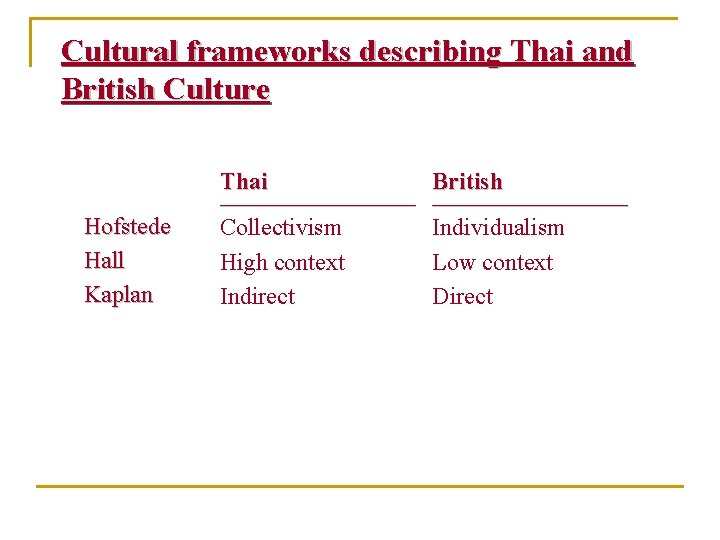
Cultural frameworks describing Thai and British Culture Hofstede Hall Kaplan Thai British _________________________________________________ Collectivism High context Indirect Individualism Low context Direct
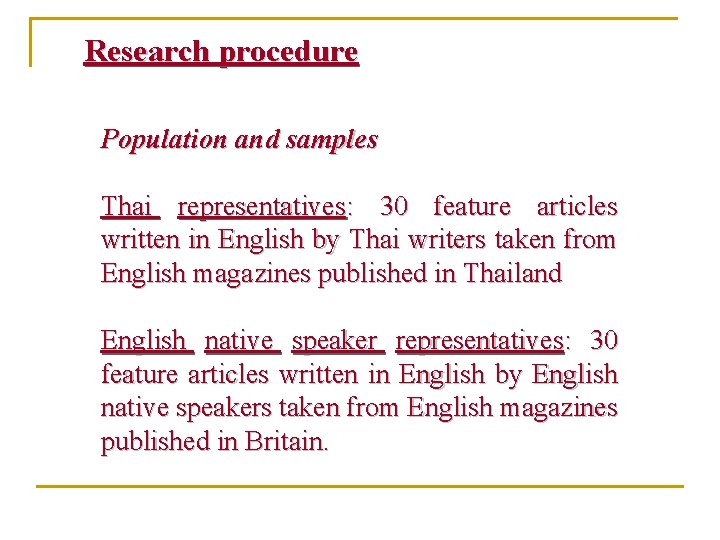
Research procedure Population and samples Thai representatives: 30 feature articles written in English by Thai writers taken from English magazines published in Thailand English native speaker representatives: 30 feature articles written in English by English native speakers taken from English magazines published in Britain.
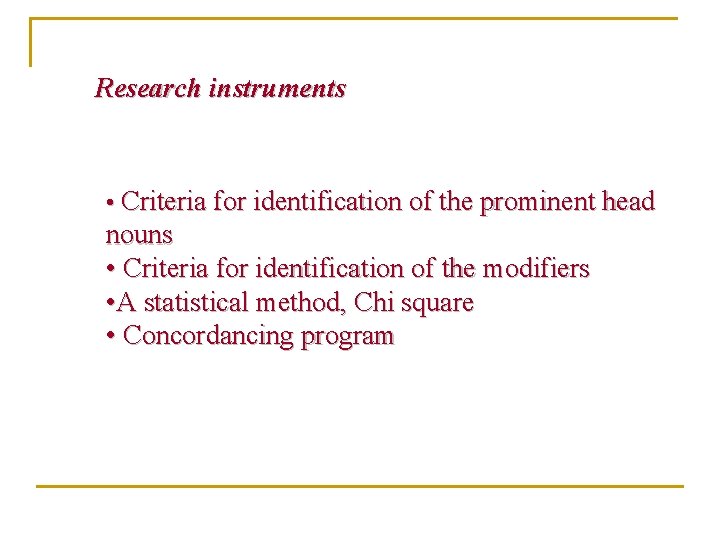
Research instruments • Criteria for identification of the prominent head nouns • Criteria for identification of the modifiers • A statistical method, Chi square • Concordancing program
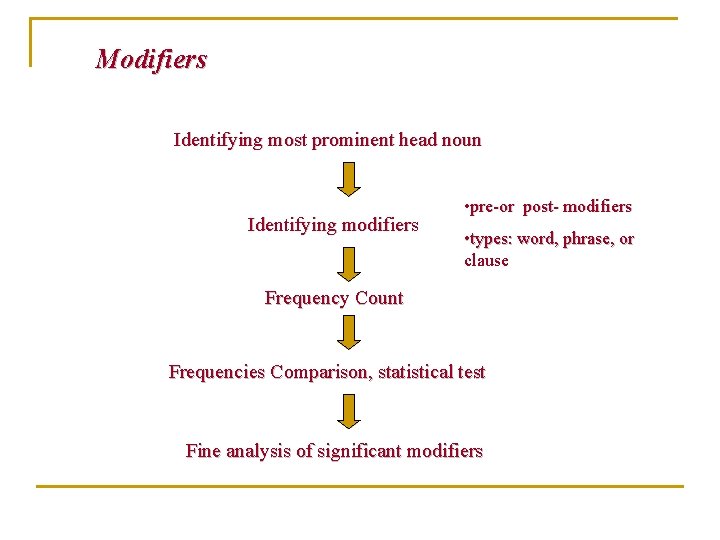
Modifiers Identifying most prominent head noun Identifying modifiers • pre-or post- modifiers • types: word, phrase, or clause Frequency Count Frequencies Comparison, statistical test Fine analysis of significant modifiers
Findings Noun modifiers
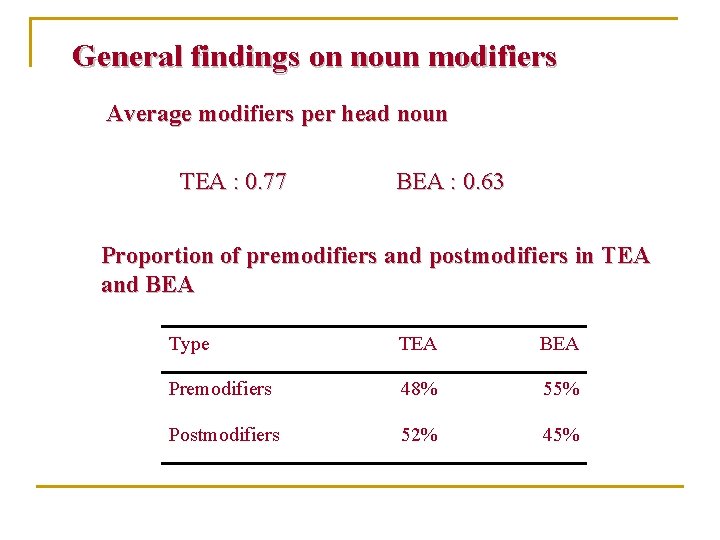
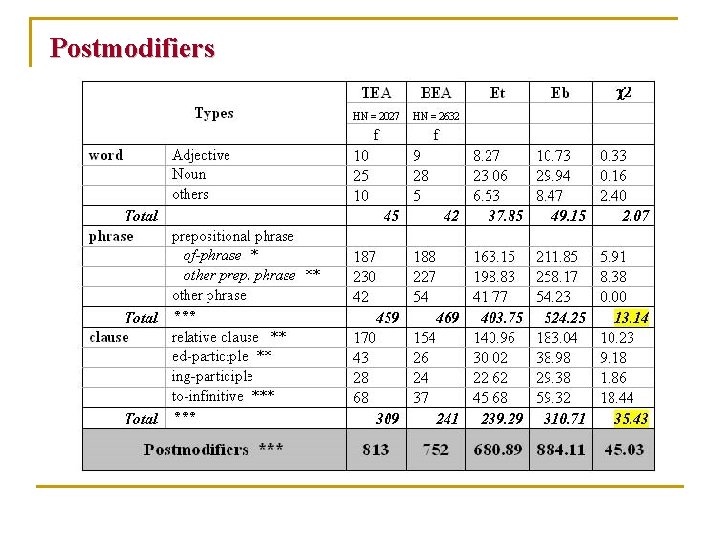
General findings on noun modifiers Average modifiers per head noun TEA : 0. 77 BEA : 0. 63 Proportion of premodifiers and postmodifiers in TEA and BEA Type TEA BEA Premodifiers 48% 55% Postmodifiers 52% 45%
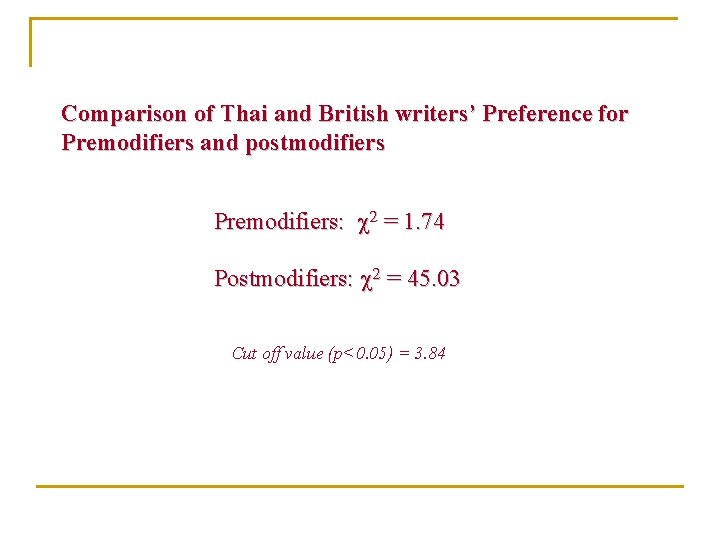
Comparison of Thai and British writers’ Preference for Premodifiers and postmodifiers Premodifiers: c 2 = 1. 74 Postmodifiers: c 2 = 45. 03 Cut off value (p<0. 05) = 3. 84
Postmodifiers
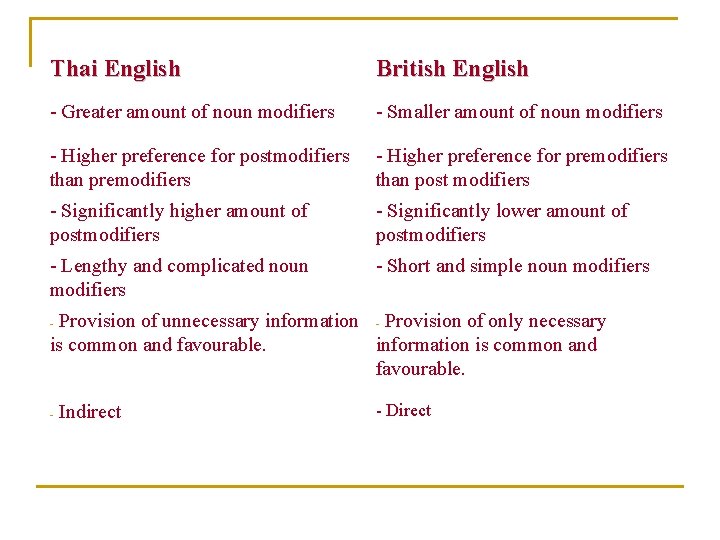
Thai English British English - Greater amount of noun modifiers - Smaller amount of noun modifiers - Higher preference for postmodifiers than premodifiers - Higher preference for premodifiers than post modifiers - Significantly higher amount of postmodifiers - Significantly lower amount of postmodifiers - Lengthy and complicated noun modifiers - Short and simple noun modifiers Provision of unnecessary information - Provision of only necessary is common and favourable. information is common and favourable. - - Indirect - Direct
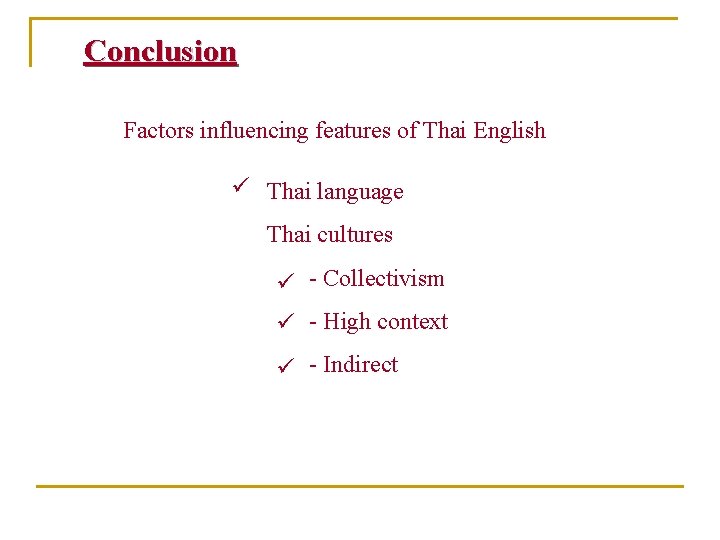
Conclusion Factors influencing features of Thai English Thai language Thai cultures - Collectivism - High context - Indirect
Thank You