
A comer Gramtica 2 Direct objects and direct
¡A comer! Gramática 2 Direct objects and direct object pronouns Preview • Direct objects • Direct object pronouns with infinitives • Direct object pronouns with commands
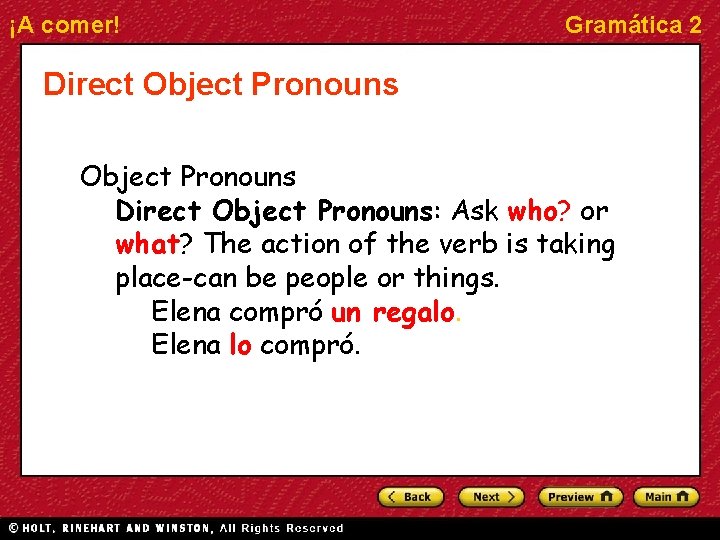
¡A comer! Gramática 2 Direct Object Pronouns: Ask who? or what? The action of the verb is taking place-can be people or things. Elena compró un regalo. Elena lo compró.
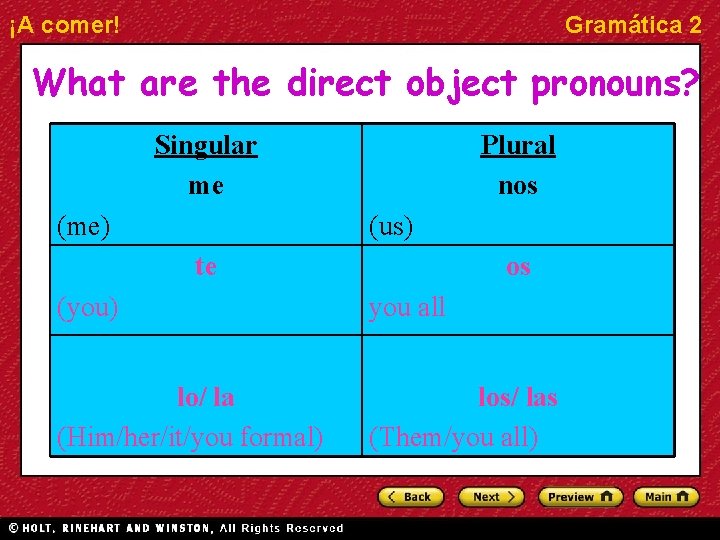
¡A comer! Gramática 2 What are the direct object pronouns? Singular me (me) Plural nos (us) te os (you) you all lo/ la (Him/her/it/you formal) los/ las (Them/you all)
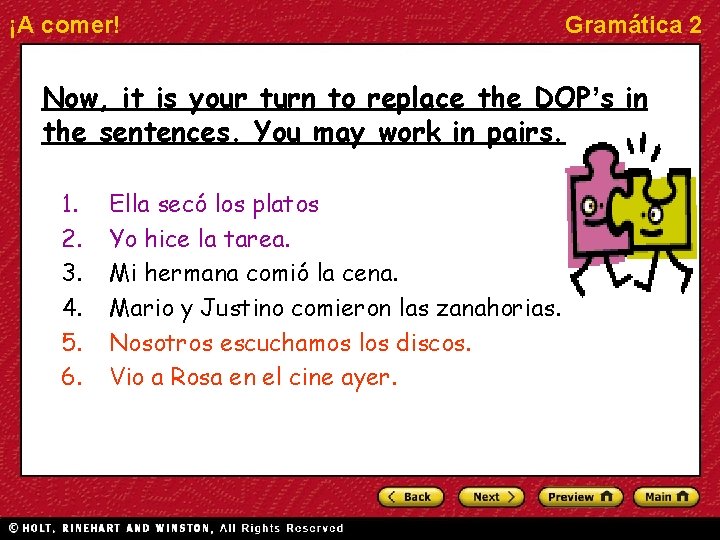
¡A comer! Gramática 2 Now, it is your turn to replace the DOP’s in the sentences. You may work in pairs. 1. 2. 3. 4. 5. 6. Ella secó los platos Yo hice la tarea. Mi hermana comió la cena. Mario y Justino comieron las zanahorias. Nosotros escuchamos los discos. Vio a Rosa en el cine ayer.
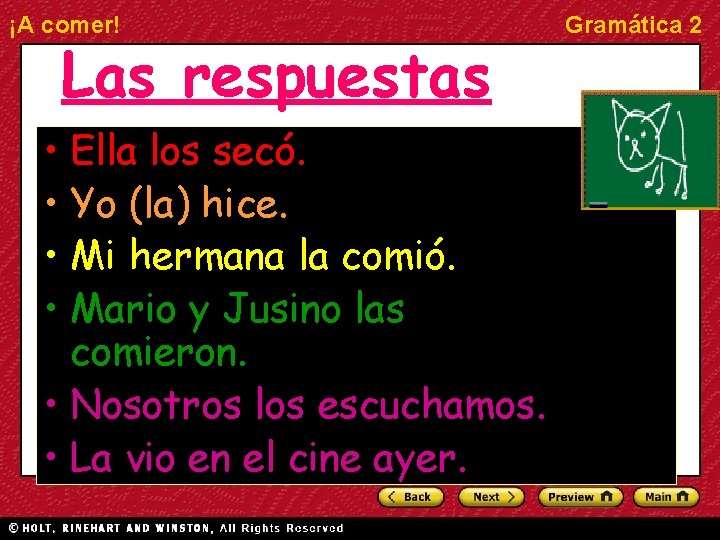
¡A comer! Las respuestas • Ella los secó. • Yo (la) hice. • Mi hermana la comió. • Mario y Jusino las comieron. Nacho no lo vi. • Nosotros los escuchamos. • La vio en el cine ayer. Gramática 2
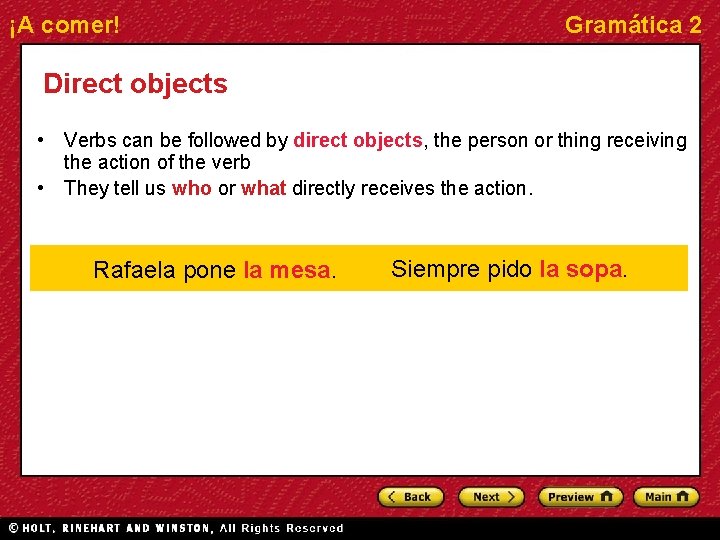
¡A comer! Gramática 2 Direct objects • Verbs can be followed by direct objects, the person or thing receiving the action of the verb • They tell us who or what directly receives the action. Rafaela pone la mesa. Siempre pido la sopa.
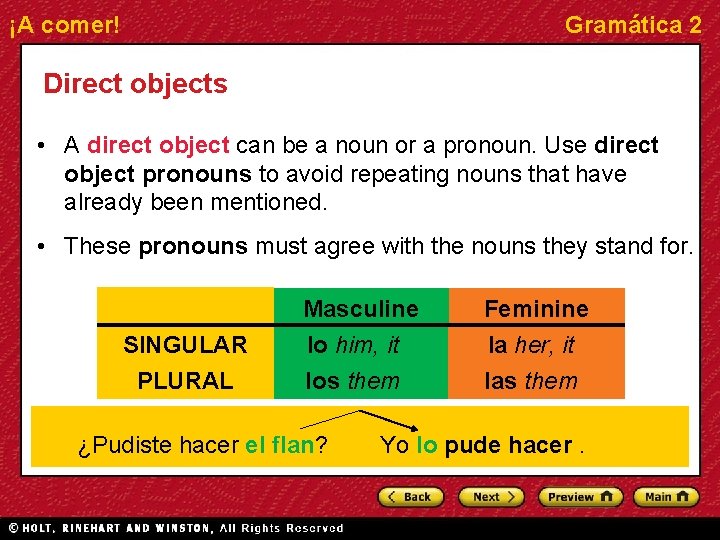
¡A comer! Gramática 2 Direct objects • A direct object can be a noun or a pronoun. Use direct object pronouns to avoid repeating nouns that have already been mentioned. • These pronouns must agree with the nouns they stand for. SINGULAR PLURAL Masculine lo him, it los them ¿Pudiste hacer el flan? Feminine la her, it las them Yo lo pude hacer.
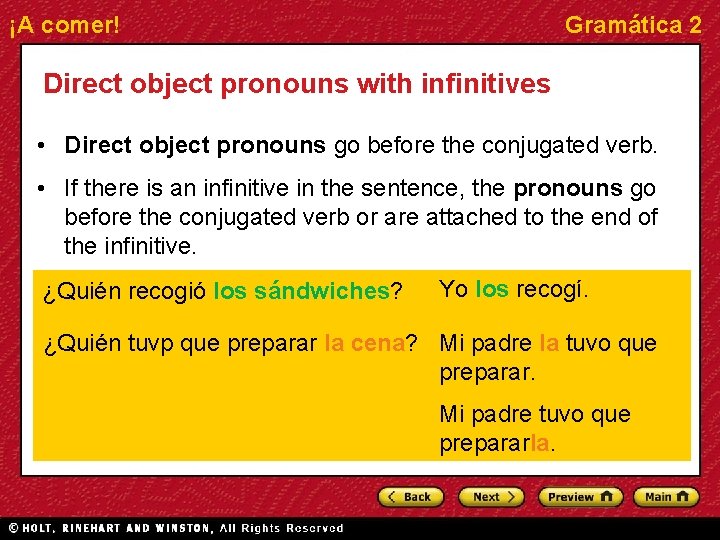
¡A comer! Gramática 2 Direct object pronouns with infinitives • Direct object pronouns go before the conjugated verb. • If there is an infinitive in the sentence, the pronouns go before the conjugated verb or are attached to the end of the infinitive. ¿Quién recogió los sándwiches? Yo los recogí. ¿Quién tuvp que preparar la cena? Mi padre la tuvo que preparar. Mi padre tuvo que prepararla.
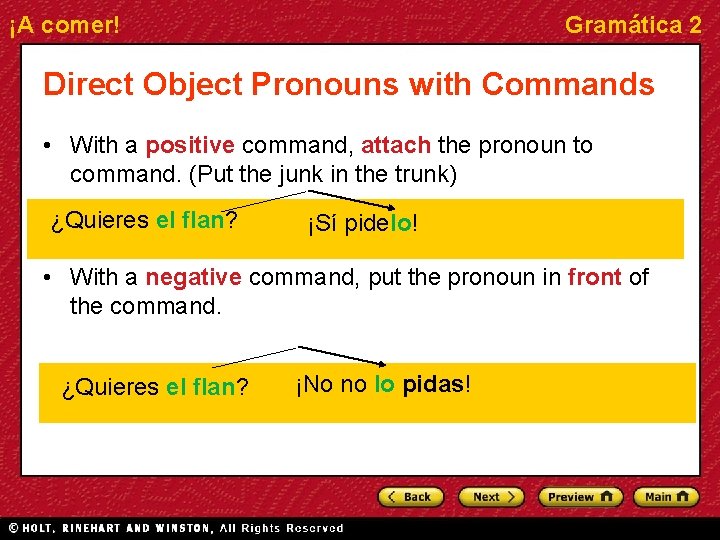
¡A comer! Gramática 2 Direct Object Pronouns with Commands • With a positive command, attach the pronoun to command. (Put the junk in the trunk) ¿Quieres el flan? ¡Sí pidelo! • With a negative command, put the pronoun in front of the command. ¿Quieres el flan? ¡No no lo pidas!
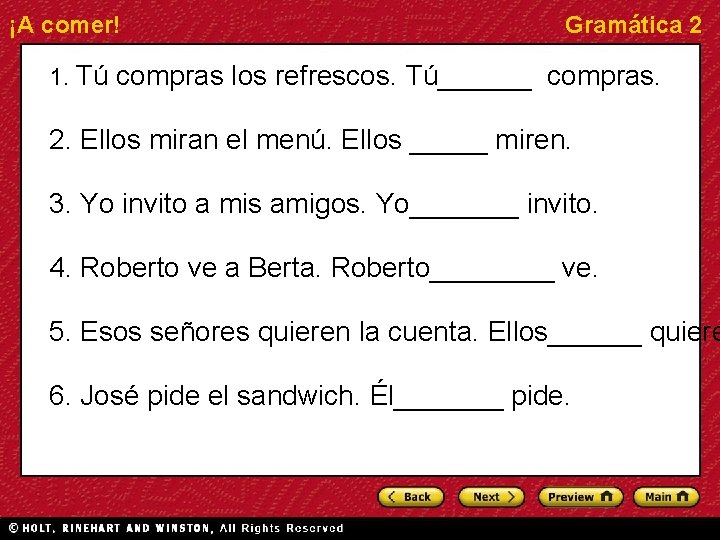
¡A comer! Gramática 2 1. Tú compras los refrescos. Tú______ compras. 2. Ellos miran el menú. Ellos _____ miren. 3. Yo invito a mis amigos. Yo_______ invito. 4. Roberto ve a Berta. Roberto____ ve. 5. Esos señores quieren la cuenta. Ellos______ quiere 6. José pide el sandwich. Él_______ pide.
- Slides: 10