
A Cognitive Approach to Resilience Dr Craig W


- Slides: 27
A Cognitive Approach to Resilience Dr. Craig W. Gilbert, LPCMH Dover AFB Violence Prevention Integrator (302) 677 -3275
First Things First Holistic View of Human Existence • Focus on Behavior • Triune Nature of People – Thinking, Feeling, Doing • Cannot be broken into individual parts without loosing context • Each influences the others • What one thinks, influences how one feels and acts
What is Resilience? • The ability to withstand, recover and/or grow in the face of stressors and changing demands • Withstand (Current), Recover (Past), Grow Future • Enables one to overcome daily stressors and major obstacles • Allows you to cope and adapt to adversity or stress to be successful even when under significant stress • Being resilient doesn’t mean you won’t experience adversity. But it can protect you from the adverse effects of stressful life events • Resilience can be learned, reinforced by others and practiced
Benefits of Being Resilient • Stronger performance and better health • Lower blood pressure, sleep better, increase immune functioning, longer life span • Increased creativity, academic achievement & decision making • Protect against mental health problems, greater emotional stability • Greater social support networks and increased social connectedness
Resilience Cognitive Skills Building • ABCs of Resilience • Check Your Playbook
ABCs of Resilience
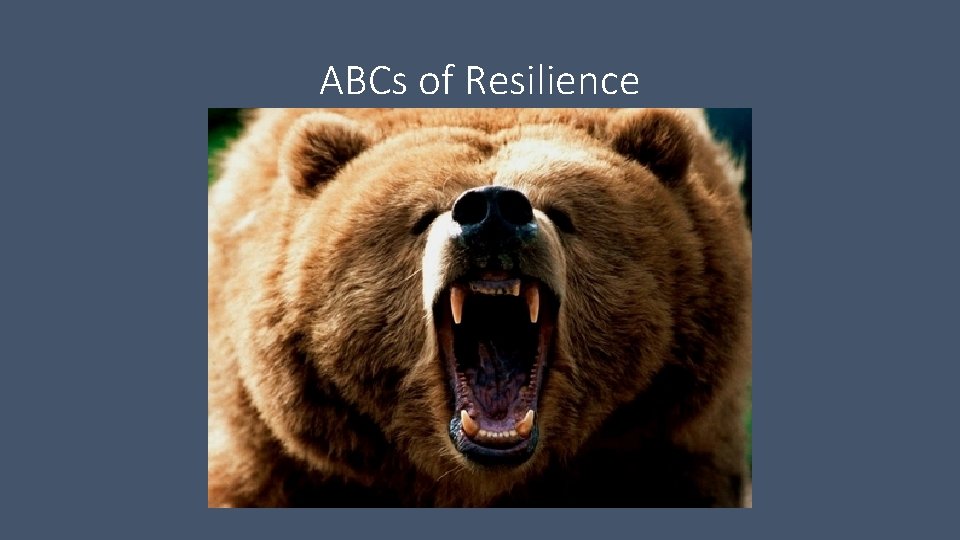
What Would Your Reaction Be? • Imagine you are in the woods alone and unarmed and run into this bear • Emotional Reaction? • Physical Reaction?
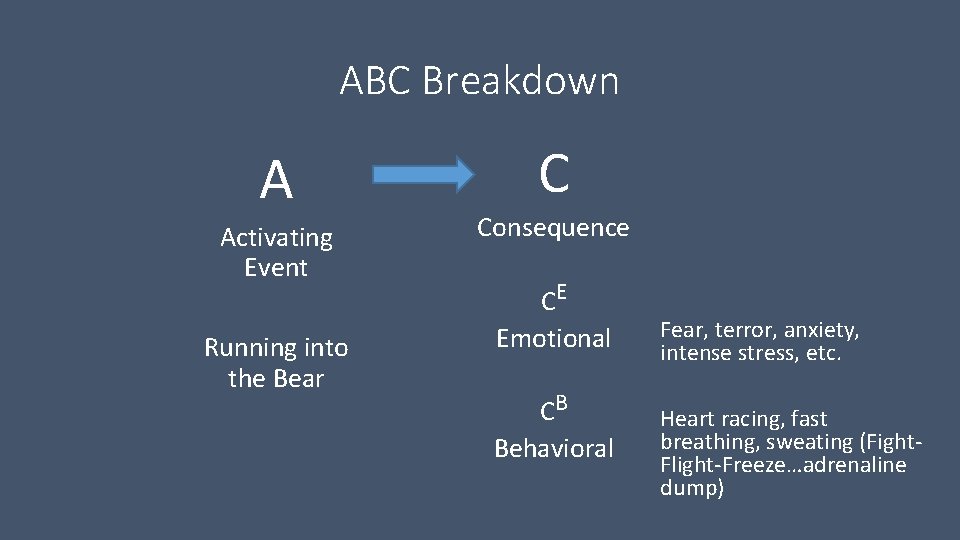
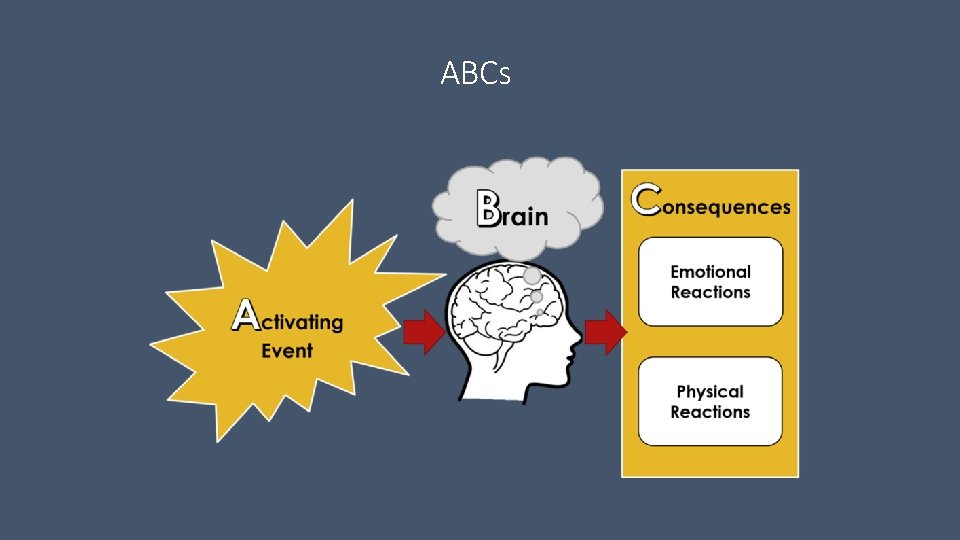
ABC Breakdown A Activating Event Running into the Bear C Consequence CE Emotional CB Behavioral Fear, terror, anxiety, intense stress, etc. Heart racing, fast breathing, sweating (Fight. Flight-Freeze…adrenaline dump)
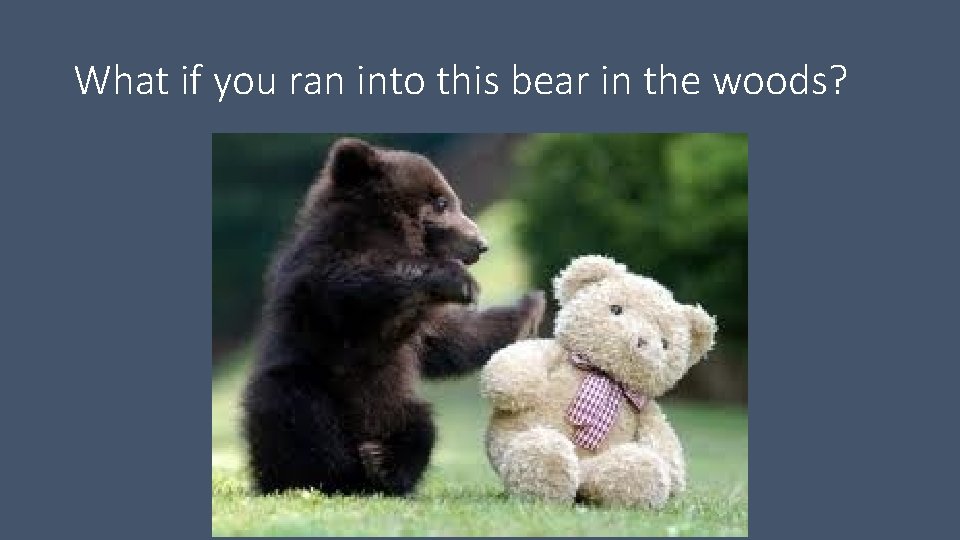
What if you ran into this bear in the woods?
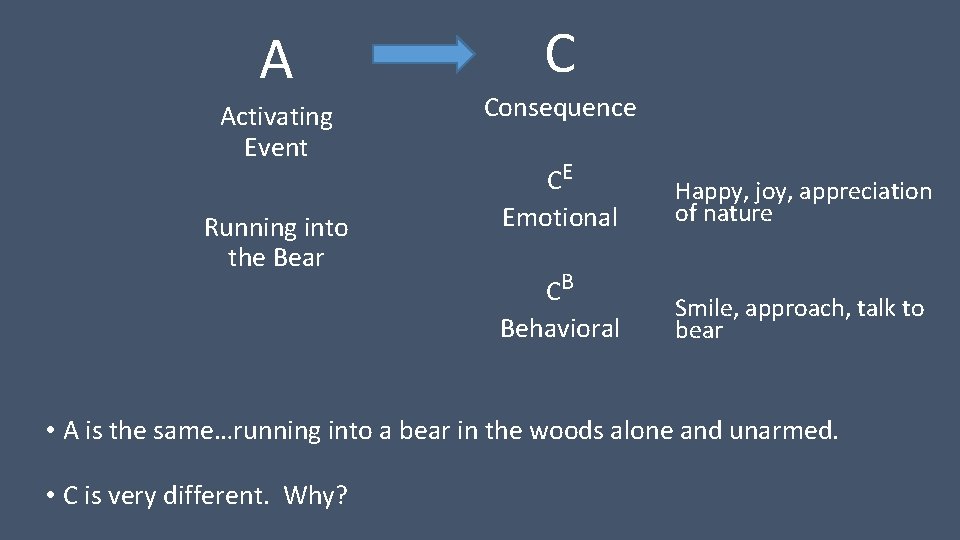
A Activating Event Running into the Bear C Consequence CE Emotional Happy, joy, appreciation of nature CB Behavioral Smile, approach, talk to bear • A is the same…running into a bear in the woods alone and unarmed. • C is very different. Why?
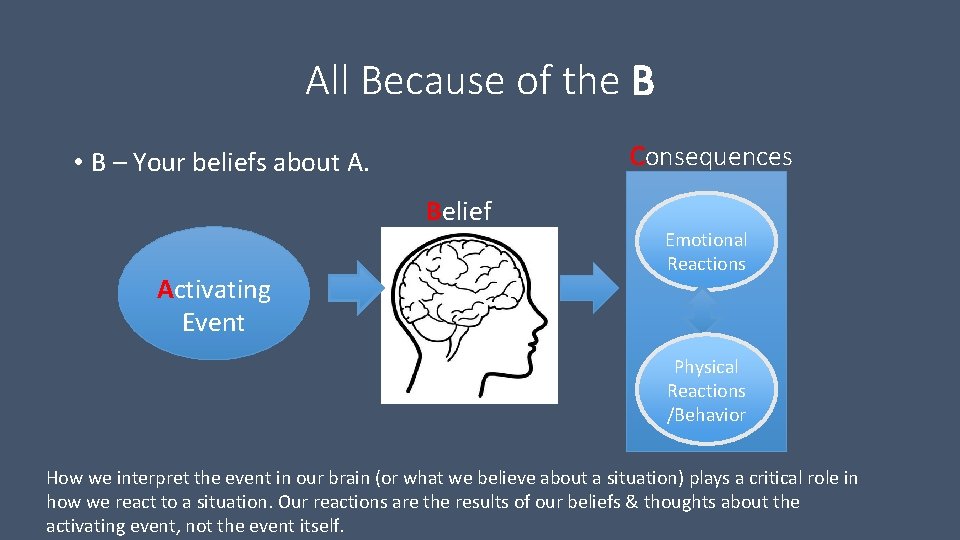
All Because of the B Consequences • B – Your beliefs about A. Belief Activating Event Emotional Reactions Physical Reactions /Behavior How we interpret the event in our brain (or what we believe about a situation) plays a critical role in how we react to a situation. Our reactions are the results of our beliefs & thoughts about the activating event, not the event itself.
Internal Monologue • Our Internal Monologue or “Self-Talk” greatly influences our reactions • Self-talk stems from our beliefs and reinforces those beliefs at the same time • Negative self-talk will likely lead to negative reactions • Recognizing and confronting negative self-talk can lead to more positive outcomes
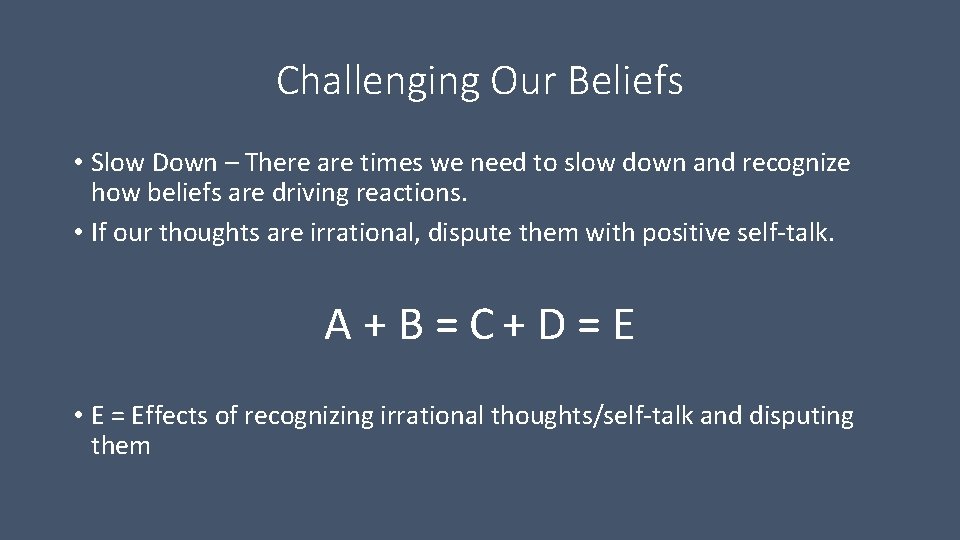
Challenging Our Beliefs • Slow Down – There are times we need to slow down and recognize how beliefs are driving reactions. • If our thoughts are irrational, dispute them with positive self-talk. A + B = C+ D = E • E = Effects of recognizing irrational thoughts/self-talk and disputing them
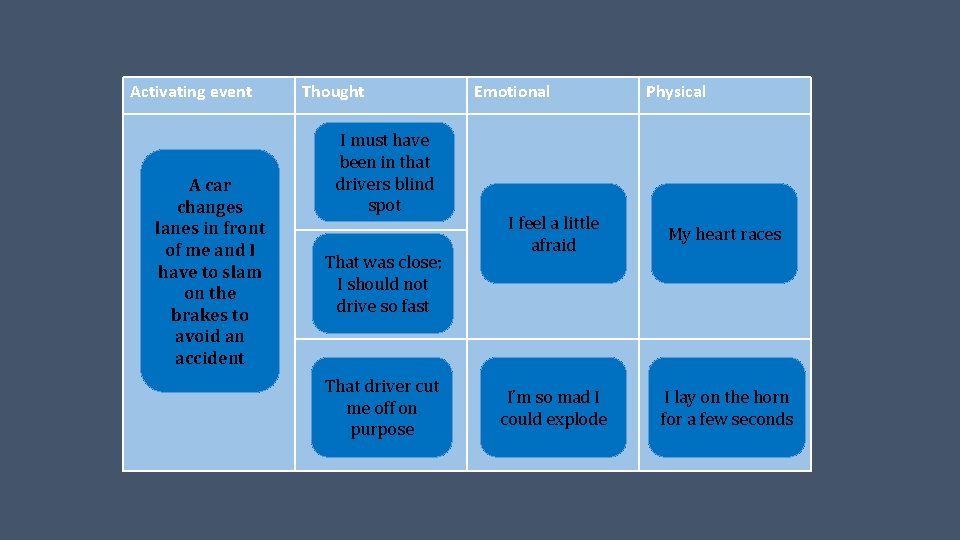
Activating event A car changes lanes in front of me and I have to slam on the brakes to avoid an accident Thought I must have been in that drivers blind spot That was close; I should not drive so fast That driver cut me off on purpose Emotional Physical I feel a little afraid My heart races I’m so mad I could explode I lay on the horn for a few seconds
Activating event Thought Emotional Physical My boss is a jerk! He’s just taking advantage of me My boss keeps piling new tasks on me lately and I’m way behind. I’m no good at this job; I should be able to do what boss ask of me It’s not my fault I’m behind; This is a lot of work for anyone to do alone My boss must think my work is good if he keeps giving me more to do. I feel guilty about letting my bossdown I yell at a subordinate I’m proud of my accomplishments I take a deep breath
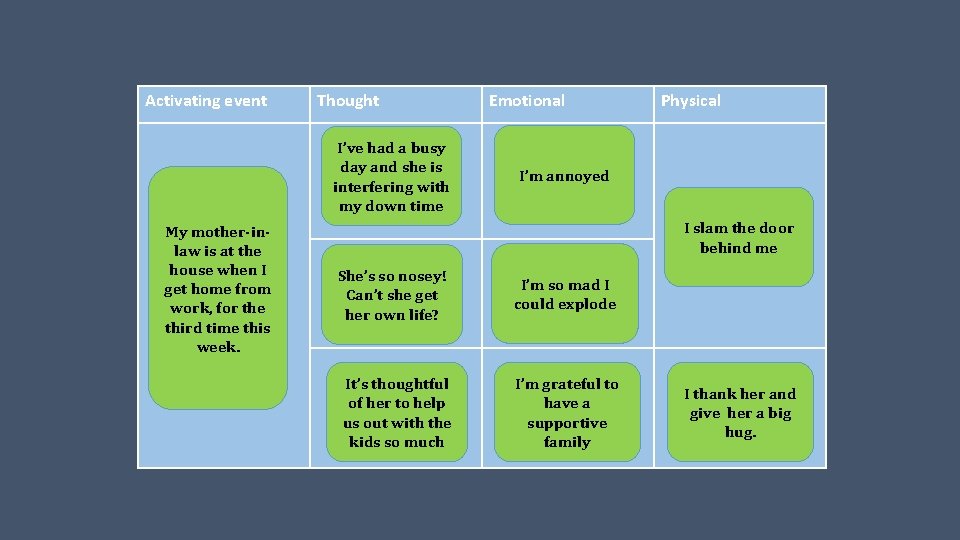
Activating event Thought I’ve had a busy day and she is interfering with my down time My mother-inlaw is at the house when I get home from work, for the third time this week. Emotional Physical I’m annoyed I slam the door behind me She’s so nosey! Can’t she get her own life? It’s thoughtful of her to help us out with the kids so much I’m so mad I could explode I’m grateful to have a supportive family I thank her and give her a big hug.
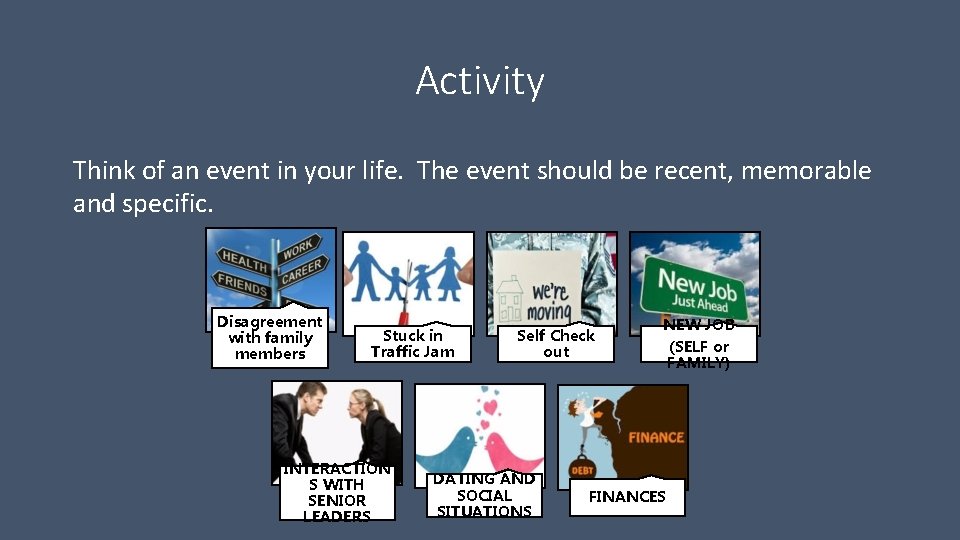
Activity Think of an event in your life. The event should be recent, memorable and specific. Disagreement with family members Stuck in Traffic Jam INTERACTION S WITH SENIOR LEADERS Self Check out DATING AND SOCIAL SITUATIONS NEW JOB (SELF or FAMILY) FINANCES
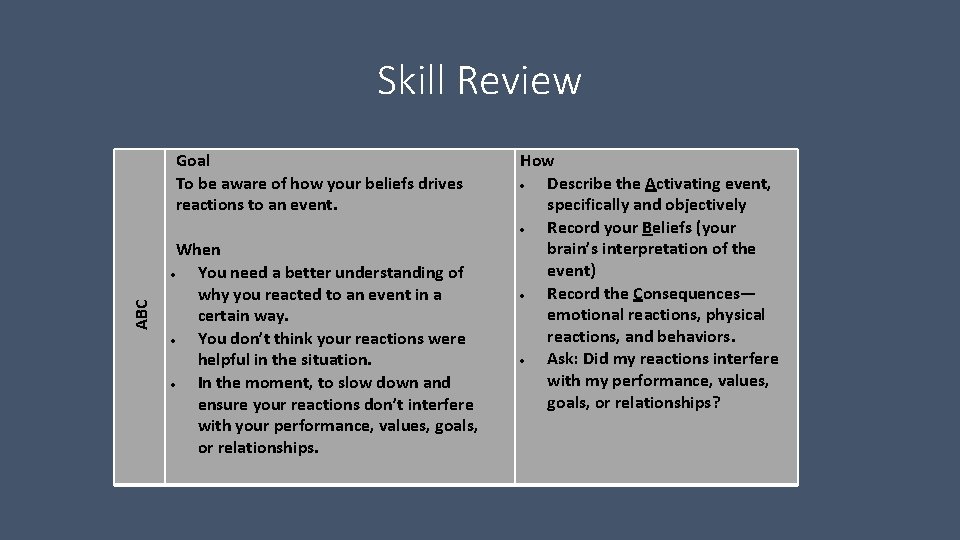
ABC Skill Review Goal To be aware of how your beliefs drives reactions to an event. When You need a better understanding of why you reacted to an event in a certain way. You don’t think your reactions were helpful in the situation. In the moment, to slow down and ensure your reactions don’t interfere with your performance, values, goals, or relationships. How Describe the Activating event, specifically and objectively Record your Beliefs (your brain’s interpretation of the event) Record the Consequences— emotional reactions, physical reactions, and behaviors. Ask: Did my reactions interfere with my performance, values, goals, or relationships?
Check Your Playbook
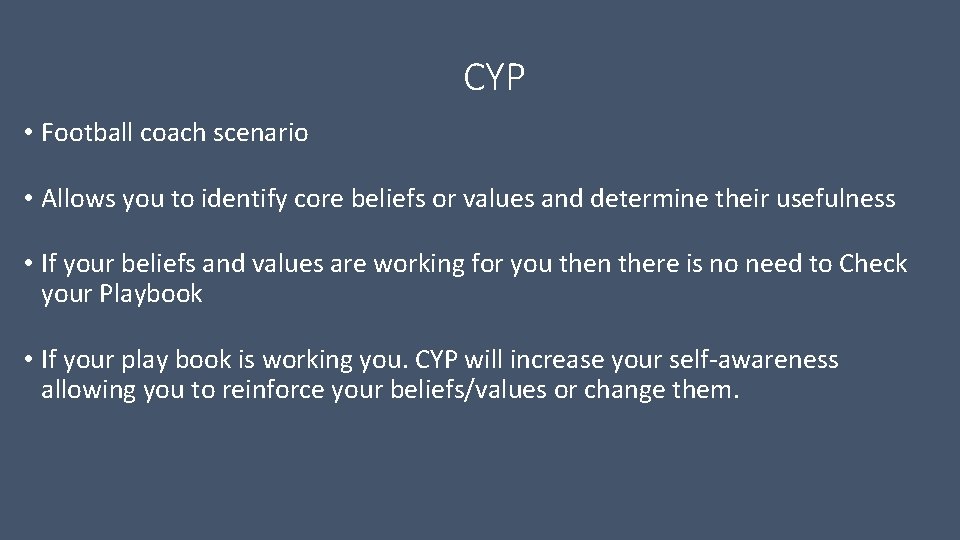
CYP • Football coach scenario • Allows you to identify core beliefs or values and determine their usefulness • If your beliefs and values are working for you then there is no need to Check your Playbook • If your play book is working you. CYP will increase your self-awareness allowing you to reinforce your beliefs/values or change them.
ABCs
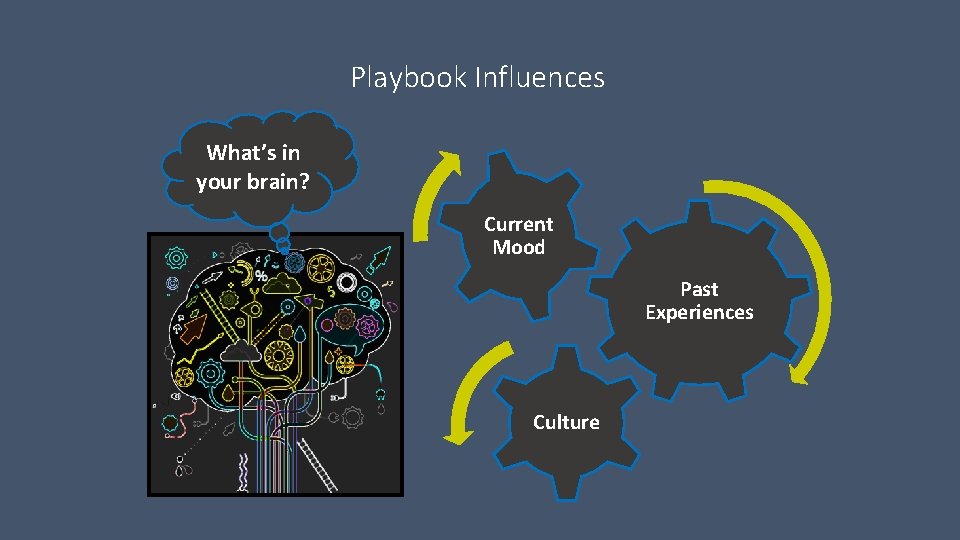
Playbook Influences What’s in your brain? Current Mood Past Experiences Culture
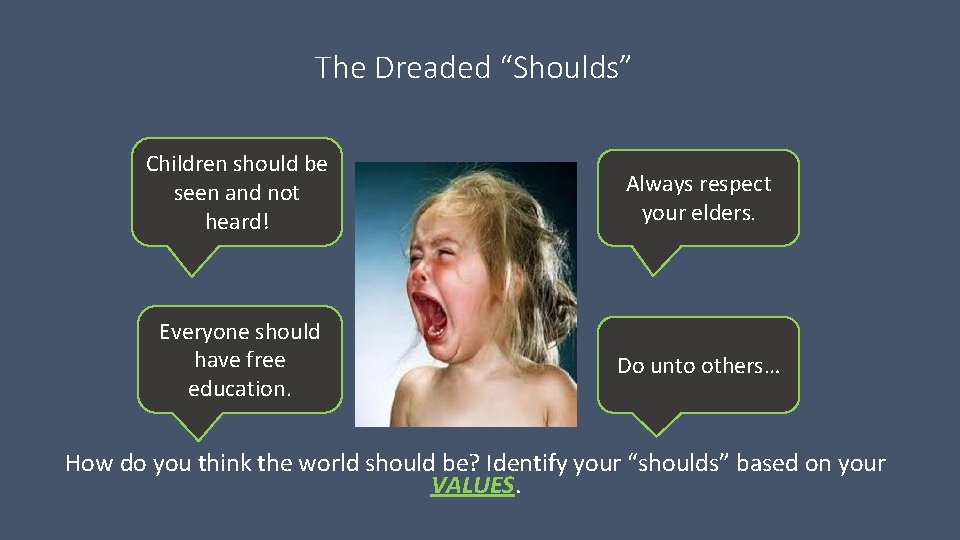
The Dreaded “Shoulds” Children should be seen and not heard! Always respect your elders. Everyone should have free education. Do unto others… How do you think the world should be? Identify your “shoulds” based on your VALUES.
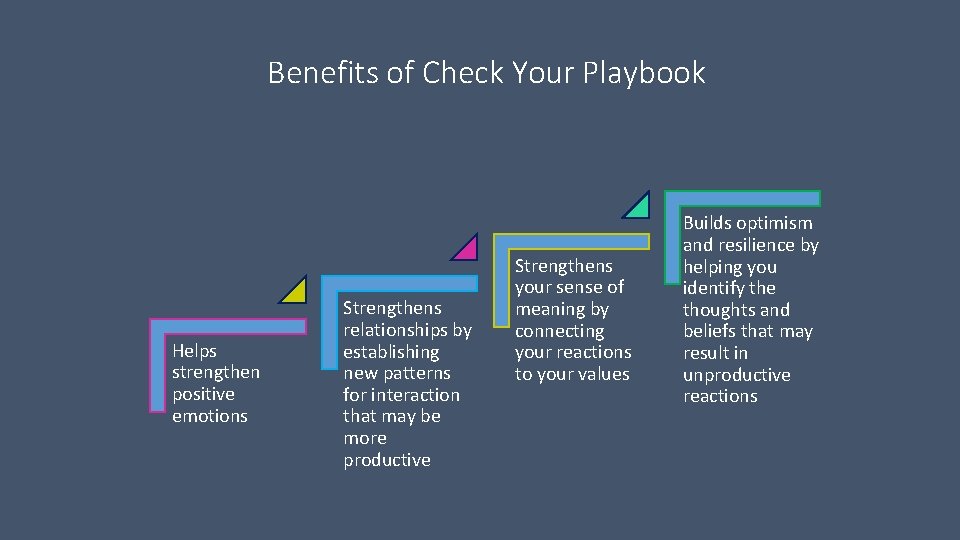
Benefits of Check Your Playbook Helps strengthen positive emotions Strengthens relationships by establishing new patterns for interaction that may be more productive Strengthens your sense of meaning by connecting your reactions to your values Builds optimism and resilience by helping you identify the thoughts and beliefs that may result in unproductive reactions
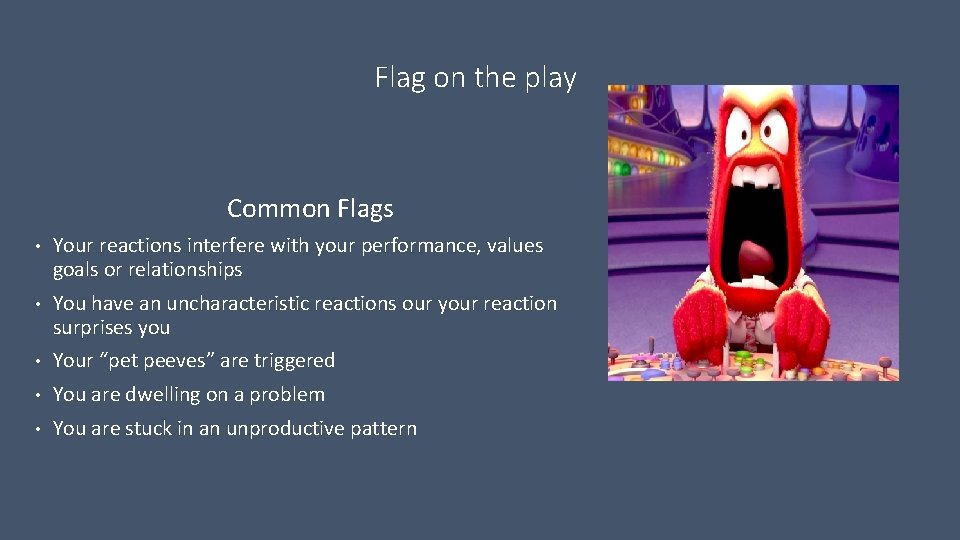
Flag on the play Common Flags • Your reactions interfere with your performance, values goals or relationships • You have an uncharacteristic reactions our your reaction surprises you • Your “pet peeves” are triggered • You are dwelling on a problem • You are stuck in an unproductive pattern
ASK… What is most important right now? Do I need to change my play?
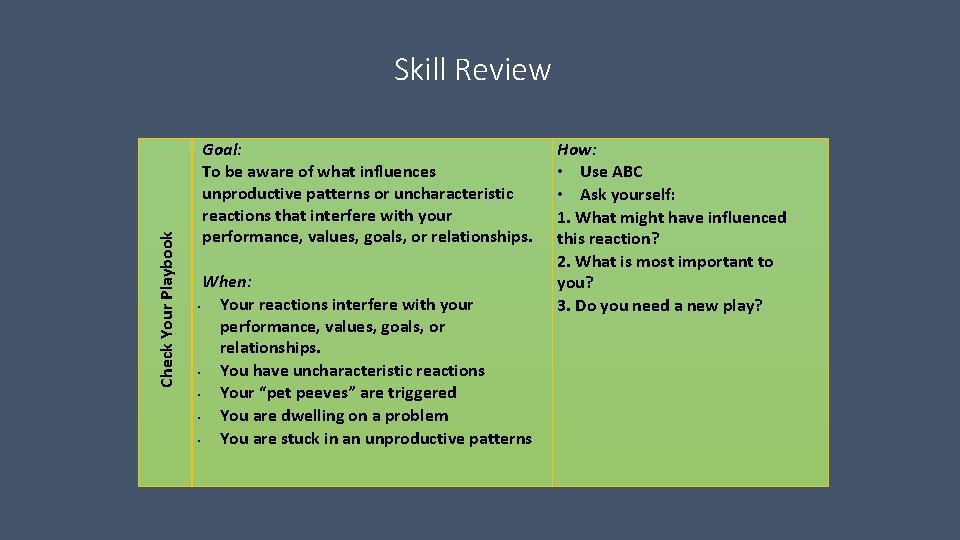
Check Your Playbook Skill Review Goal: To be aware of what influences unproductive patterns or uncharacteristic reactions that interfere with your performance, values, goals, or relationships. When: • Your reactions interfere with your performance, values, goals, or relationships. • You have uncharacteristic reactions • Your “pet peeves” are triggered • You are dwelling on a problem • You are stuck in an unproductive patterns How: • Use ABC • Ask yourself: 1. What might have influenced this reaction? 2. What is most important to you? 3. Do you need a new play?