
A Closer Look at Conception The Developing Child
- Slides: 21
A Closer Look at Conception The Developing Child
The Genetic Package • 46 chromosomes • 23 pairs • • • Dominant = stronger gene Recessive = weaker gene A person receives two copies of a geneone from the mother and one from the father
The Genetic Package • The father’s sperm and the mother’s ovum both contribute a chromosome to each pair. • When both are the same, the child has that characteristic (two genes for blue eyes give the child blue eyes).
Sex Chromosome • Every ovum contains an X chromosome. • Each sperm cell contains either an X or Y chromosome. • If sperm carries X…results in an XX combination…becomes a girl. • If sperm carries Y…results in XY combination…becomes a boy.
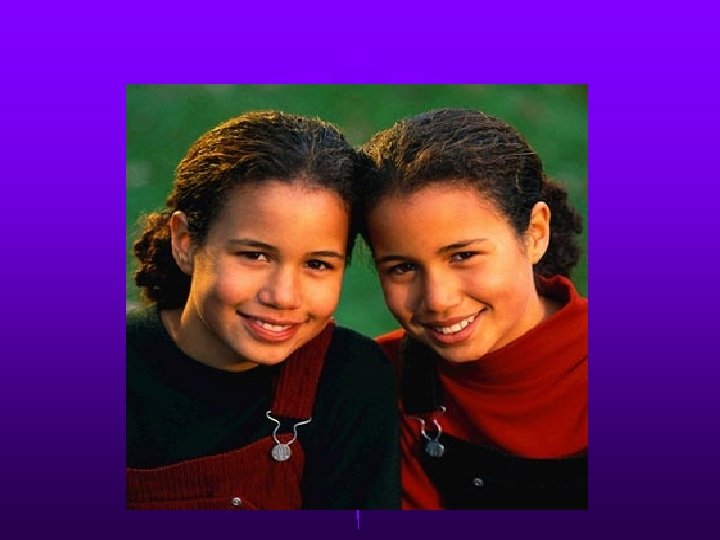
Multiple Births • Identical Twins • When a fertilized egg starts growing, it divides into two cells…these cells continue to divide. • Sometimes the mass of cells splits in half soon after fertilization…results in identical twins • Always the same sex and have very similar characteristics because both began as one zygote
Multiple Births • Fraternal Twins • 2 eggs are released from the ovary and both are fertilized by different sperm • No more alike than siblings born at different times
Infertility • A condition of the reproductive system that prevents the conception of children • Adoption: • The couple legally takes all responsibilities and rights for raising a child already born
Infertility • Artificial Insemination • A doctor injects sperm into a woman’s uterus with a special needle • The sperm may be the husband’s. • If he has a history of genetic disorders or is unable to produce sperm…the sperm may come from another male…called a donor
Infertility • In vitro fertilization • When the woman has damaged fallopian tubes that prevent pregnancy. • In a small glass dish, a doctor combines a mature egg from the woman and sperm from her husband or donor. • If fertilization takes place, the doctor places the zygote in the woman’s uterus. • If the zygote attaches to the uterine wall, normal pregnancy takes place.
Infertility • Ovum Transfer • May be used by women who lack working ovaries or who have inherited disorders. • The procedure uses an egg taken from a female donor combined with in vitro fertilization.
Infertility • Surrogate Mother • This occurs when another woman becomes pregnant for another couple. • Artificial insemination, in vitro fertilization, and/or ovum transfer may be used. • When the woman gives birth, she gives the baby to the couple. • Legal arrangements are made and they must meet state laws.
Problems in Prenatal Development • Losing a baby…can cause a great deal of pain…usually happens naturally • Miscarriage • When the developing baby dies between 1 -20 weeks of pregnancy • Stillbirth • When the developing baby dies after 20 weeks of pregnancy
Causes of Birth Defects • Hereditary Causes • Genes may be imperfect (dominant or recessive) • Environmental Causes • • • Nutritional balance of pregnant woman Diseases or infections during pregnancy Harmful substances during pregnancy • Alcohol • Tobacco • Drugs • Some medications can hurt the baby • Exposure to outside hazards…radiation
Examples of Birth Defects • • Cerebral Palsy Cleft Lip/Palate Cystic Fibrosis Down Syndrome Muscular Dystrophy Sickle Cell Anemia Spina Bifida or Hydrocephalus Tay Sachs Disease
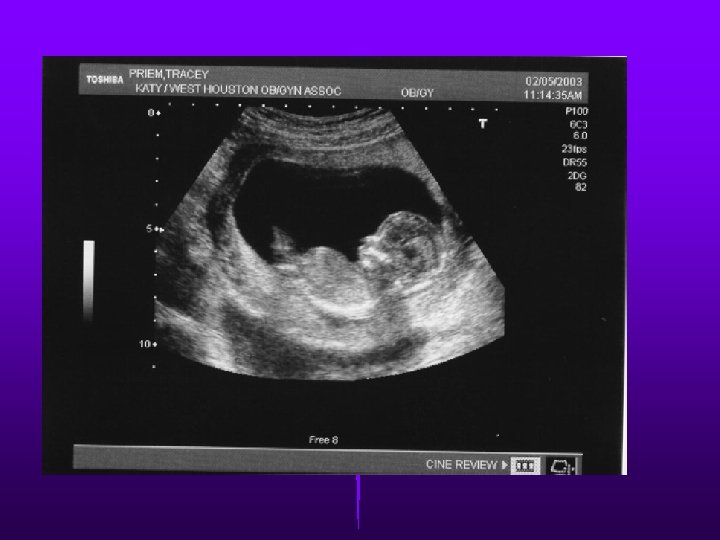
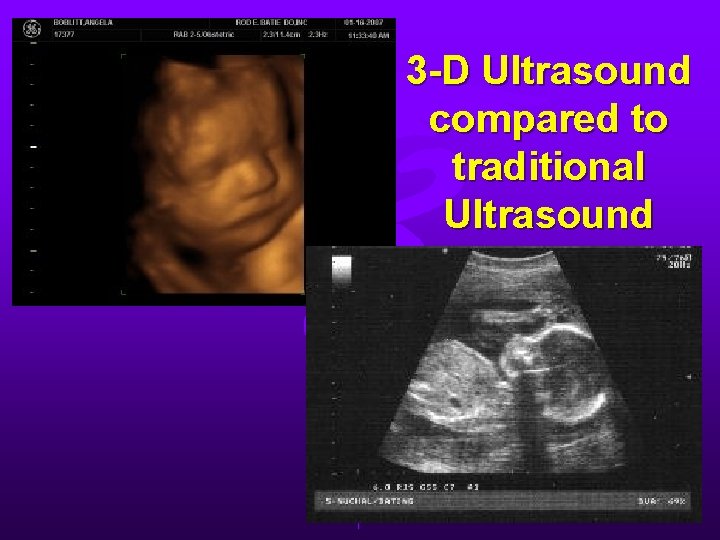
Prenatal Tests • Ultrasound • Uses sound waves to make a video image of an unborn baby to check for specific health problems • It can show whether the fetus is developing on schedule • Can confirm: due date, multiples, gender
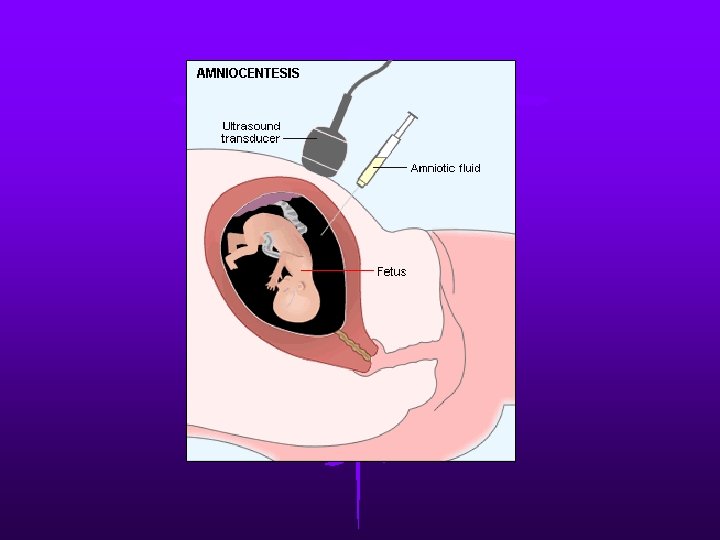
Prenatal Tests • Amniocentesis • The process of withdrawing a sample of the amniotic fluid surrounding an unborn baby • Can test the amniotic fluid for indications of specific birth defects or other health problems • Risk: 1 in every 200 can result in miscarriage…only performed when there is a strong medical reason
Prenatal Tests • Chronic Villi Sampling • • Used to test for specific birth defects Can be done earlier than an amniocentesis • Guided by an ultra sound image, a doctor inserts a small tube through the vagina into the uterus…then samples of the tissue are snipped or suctioned off for analysis.
3 -D Ultrasound compared to traditional Ultrasound