
A Closer Look at Cell Membranes Aim How
A Closer Look at Cell Membranes § Aim: How do large particles enter and exit cells? § Do Now: Name some molecules/materials that enter and exit the cell. How would you describe the cell membrane that allows passage of these materials?
Exocytosis and Endocytosis § Exocytosis (out of the cell) • The fusion of a vesicle with the cell membrane, releasing its contents to the surroundings § Endocytosis (into the cell) • The formation of a vesicle from cell membrane, enclosing materials near the cell surface and bringing them into the cell
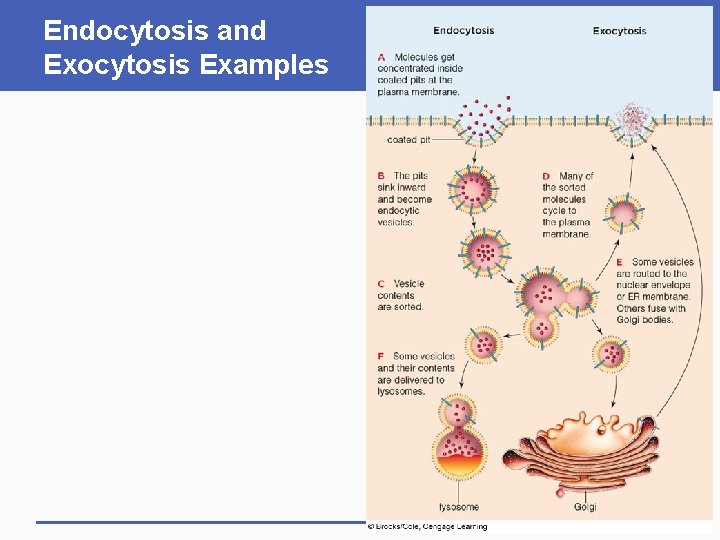
Endocytosis and Exocytosis Examples
Three Pathways of Endocytosis § Bulk-phase endocytosis • Extracellular fluid is captured in a vesicle and brought into the cell; the reverse of exocytosis § Receptor-mediated endocytosis • Specific molecules bind to surface receptors, which are then enclosed in an endocytic vesicle § Phagocytosis • Pseudopods engulf target particle and merge as a vesicle, which fuses with a lysosome in the cell

Phagocytosis (“engulfment”)
Membrane Cycling § Exocytosis and endocytosis continually replace and withdraw patches of the plasma membrane § New membrane proteins and lipids are made in the ER, modified in Golgi bodies, and form vesicles that fuse with plasma membrane

Exocytic Vesicle
5. 5 Key Concepts: Membrane Trafficking § Large packets of substances and engulfed cells move across the plasma membrane by processes of endocytosis and exocytosis § Membrane lipids and proteins move to and from the plasma membrane during these processes
- Slides: 8