
A Classroom Framework For Supporting Student Wellbeing Essential

A Classroom Framework For Supporting Student Well-being

Essential Question What are the benefits of students’ feeling safe in the classroom?
Objectives ● ● Analyze how the Applied Educational Neuroscience framework can transform teaching practice into more trauma-informed classroom strategies. Reflect on how to integrate the framework into the classroom.

Student Safety Reflection and Discussion Visit the four posters and answer each of the questions on one of the provided sticky notes.
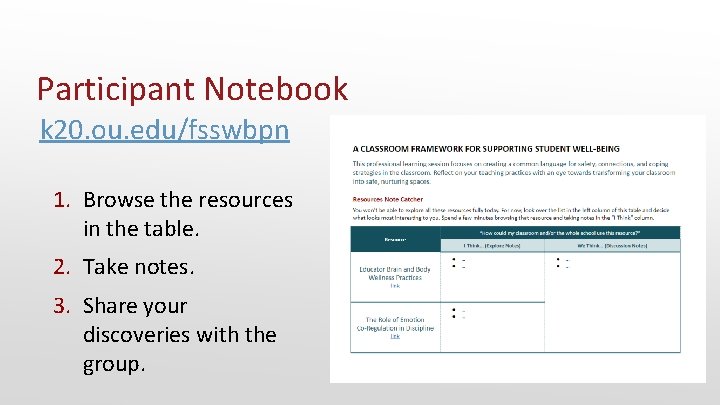
Participant Notebook k 20. ou. edu/fsswbpn 1. Browse the resources in the table. 2. Take notes. 3. Share your discoveries with the group.
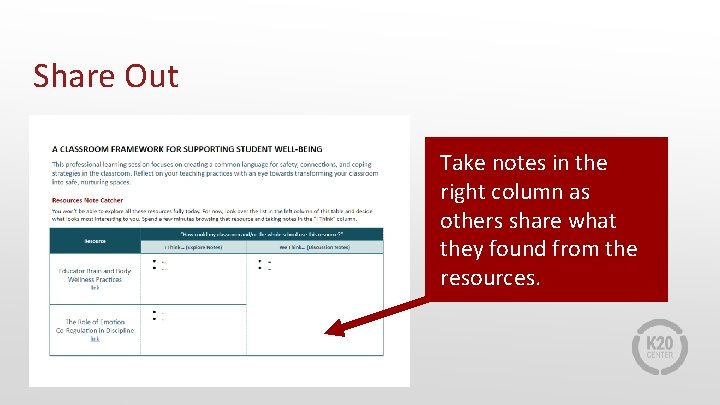
Share Out Take notes in the right column as others share what they found from the resources.
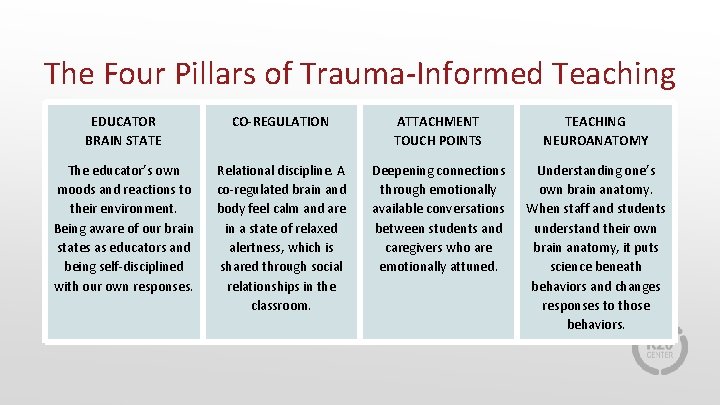
The Four Pillars of Trauma-Informed Teaching EDUCATOR BRAIN STATE CO-REGULATION ATTACHMENT TOUCH POINTS TEACHING NEUROANATOMY The educator’s own moods and reactions to their environment. Being aware of our brain states as educators and being self-disciplined with our own responses. Relational discipline. A co-regulated brain and body feel calm and are in a state of relaxed alertness, which is shared through social relationships in the classroom. Deepening connections through emotionally available conversations between students and caregivers who are emotionally attuned. Understanding one’s own brain anatomy. When staff and students understand their own brain anatomy, it puts science beneath behaviors and changes responses to those behaviors.
The Four Pillars of Trauma-Informed Teaching
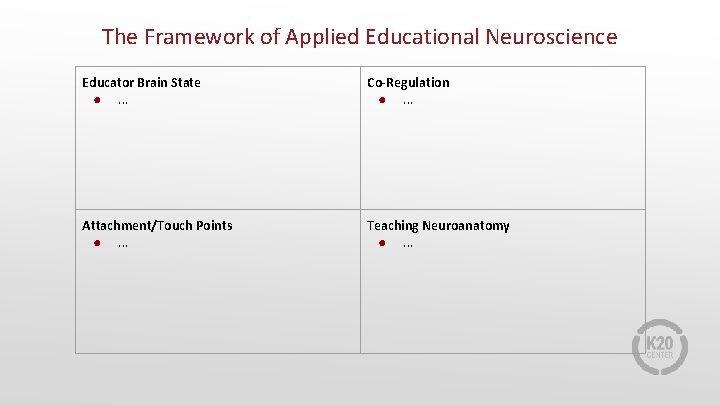
The Framework of Applied Educational Neuroscience Educator Brain State ●. . . Co-Regulation ●. . . Attachment/Touch Points ●. . . Teaching Neuroanatomy ●. . .

How will you support student well-being in your classroom? Make a plan using the prompts in your participant notebook.
- Slides: 11