
A CHRISTMAS CAROL Introduction to the Play Focus
- Slides: 14
A CHRISTMAS CAROL Introduction to the Play
Focus At the end of this lesson we will have made predictions about the text, and have started reading the first chapter.
In table groups, come up with a list of things that you typically associate with the following themes at Christmas: Table 1 – Food Table 2 – Drink Table 3 – Entertainment Table 4 – People Table 5 – Plants Table 6 – Weather Table 7 – Animals Table 8 – Gifts Table 9 - Activities
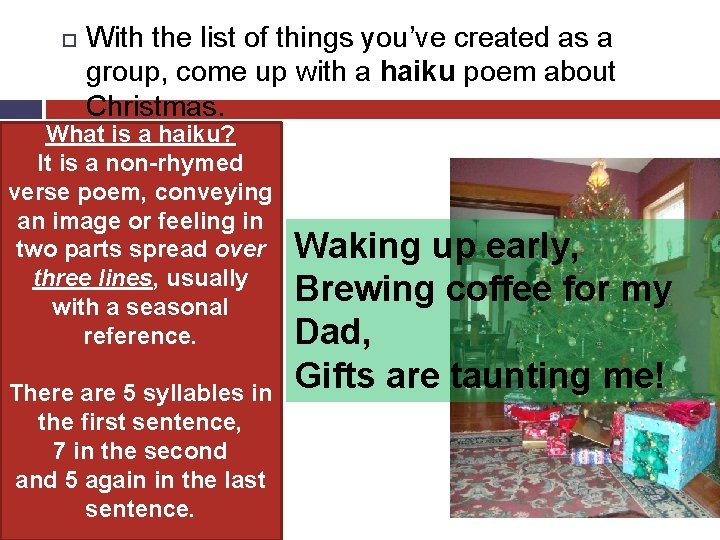
With the list of things you’ve created as a group, come up with a haiku poem about Christmas. What is a haiku? It is a non-rhymed verse poem, conveying an image or feeling in two parts spread over three lines, usually with a seasonal reference. There are 5 syllables in the first sentence, 7 in the second and 5 again in the last sentence. Waking up early, Brewing coffee for my Dad, Gifts are taunting me!
Lets share some of our Christmas Haiku’s with the
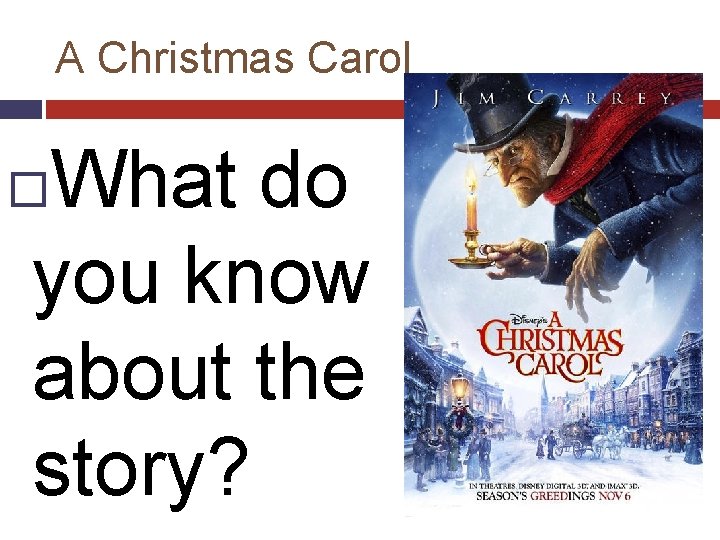
A Christmas Carol What do you know about the story?
A Christmas Carol is a short novel (a novella) by Charles Dickens. It tells the tale of a grumpy old man, and how he decides to change his life after being visited by four ghosts on
The book was first published on 19 December 1843 with illustrations by John Leech, and was very successful. The tale has been viewed as a glimpse into nineteenth century industrial capitalism and has been credited with returning the holiday to one of merriment and festivity in Britain and America after a period of sobriety and sombreness. A Christmas Carol remains popular, has never been out of print. It has also been adapted to film, opera, and other media.
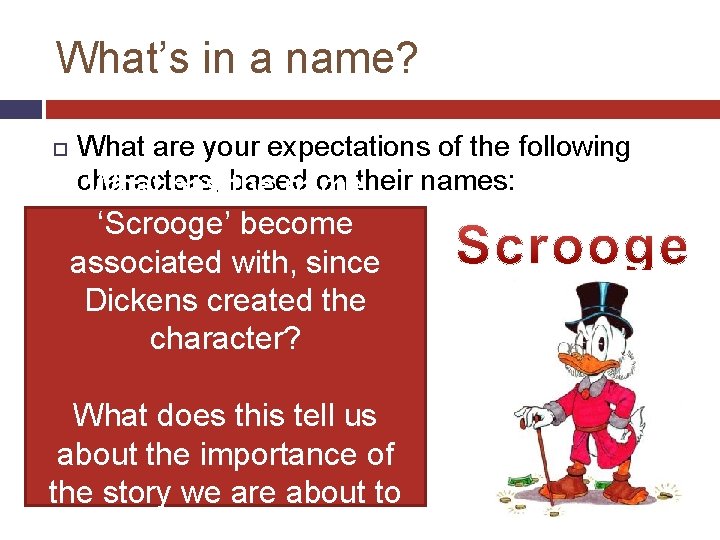
What’s in a name? What are your expectations of the following characters, on their names: What has based the name ‘Scrooge’ become associated with, since Dickens created the character? What does this tell us about the importance of the story we are about to
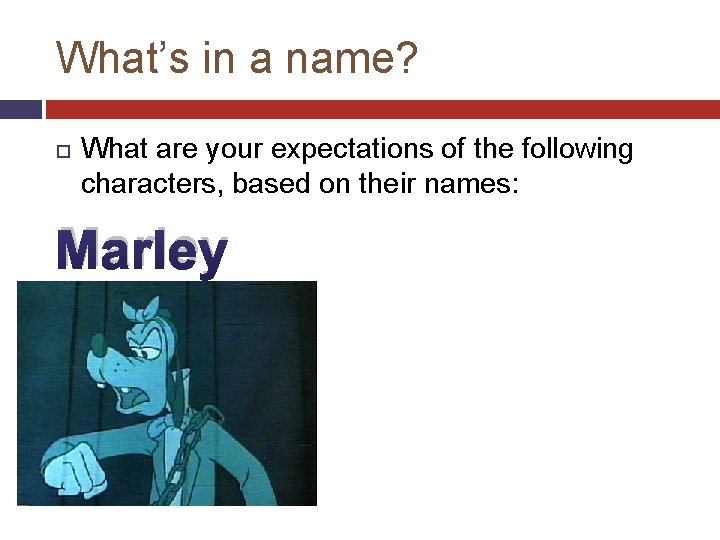
What’s in a name? What are your expectations of the following characters, based on their names: Marley
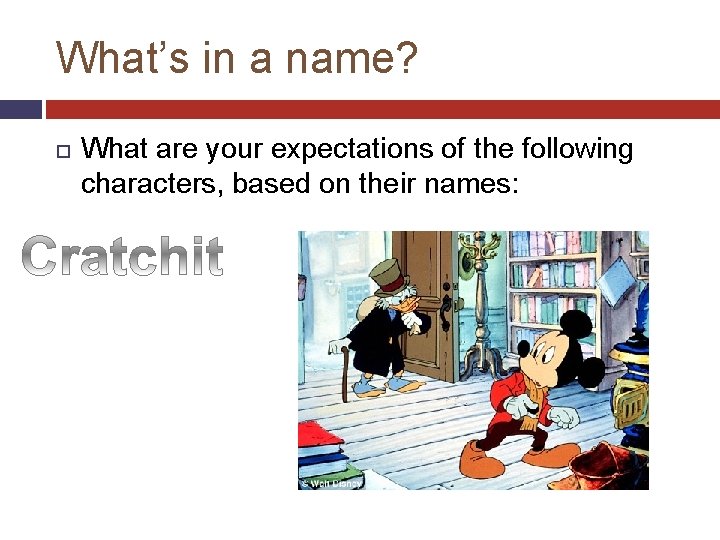
What’s in a name? What are your expectations of the following characters, based on their names:
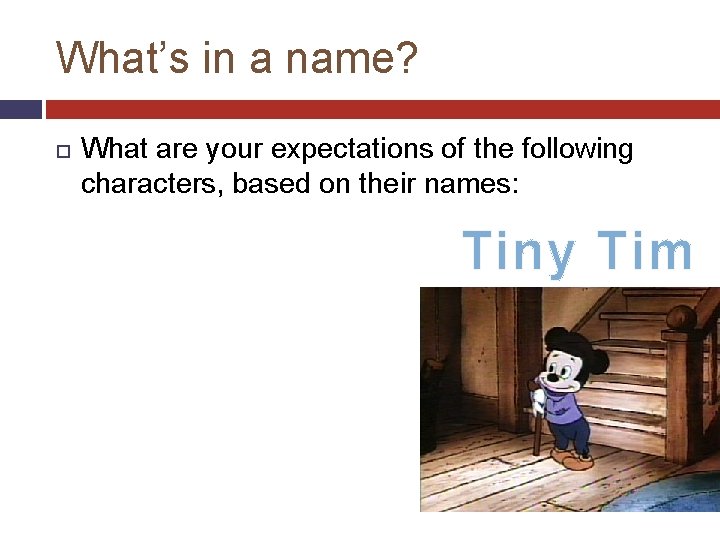
What’s in a name? What are your expectations of the following characters, based on their names: Tiny Tim
Act 1, Scene 1 As a class, read along in your own text, as the teacher reads the start of the story aloud. As you are listening, write down any unfamiliar words in your workbook. Using a dictionary, try to find the definition of the words. Why do you suppose you were unfamiliar with some of the words used? What does this suggest about the English language?
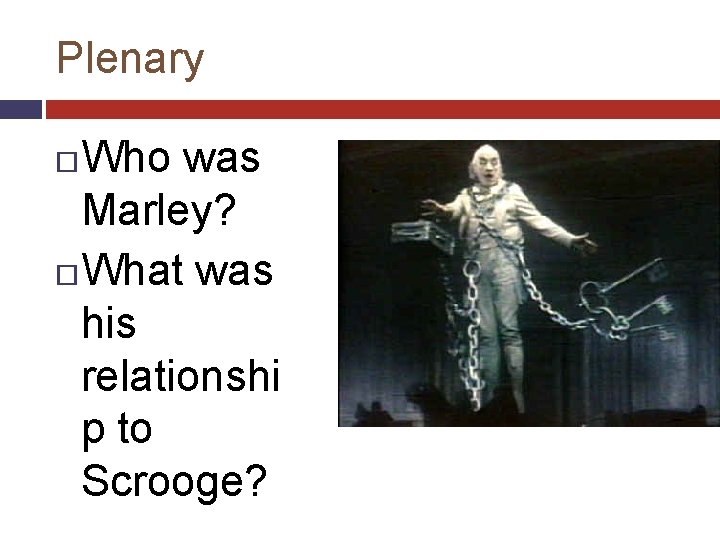
Plenary Who was Marley? What was his relationshi p to Scrooge?