
A CENTURY OF CHANGE The Isms 1815 to
- Slides: 24
A CENTURY OF CHANGE The Isms: 1815 to 1914 The End of Napoleon to the beginning of World War I
Society in the Cen. Of Change � � � Population explodes from 200 million in 1815 to 450 million in 1914. At first things go back to the way it was before the Revolution Kings are scared that more Revolutions will occur so they allow Constitutions to give people some rights There was a sense of vulnerability There was a sense of tension There was a sense of apprehension
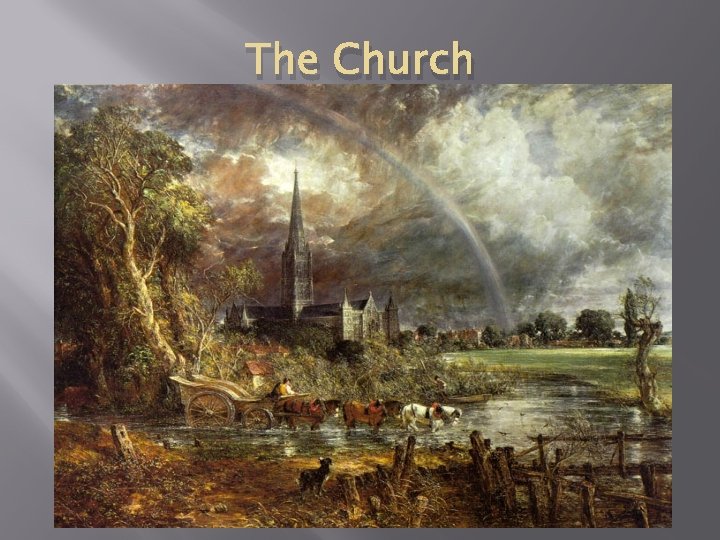
The Church
� � � The Church suffered under the Revolution The weak hearted dropped away, but in the end, it actually benefitted the church because this left the strong to begin reshaping the church CATHOLIC � Ultra-Montanism- making the church powerful again Recover influence with public End Cleavage (differences in the church) Gain concordances with all countries (contracts to practice in those countries) Begin Catholic political parties
q. Protestants q“Old Lights” (Anglicans, Congregationalists, Presbyterians, and Quakers) start to lose population q“New Lights” (Methodists, Baptists, etc. ) all begin to gain followers- Methodists are the largest growing group. q. Government tries to regain ties to the church in hopes that they both can go back to the old days where they shared the power. Both want to keep the revolutionary spirit down.
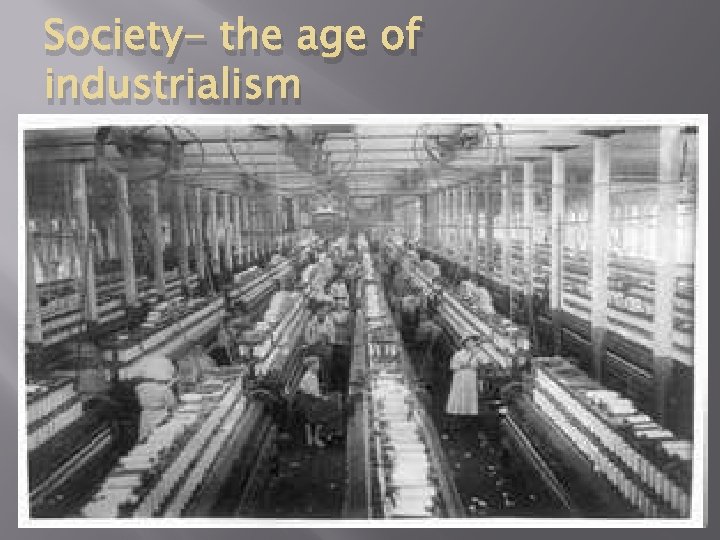
Society- the age of industrialism
v. Master Craftsman going out, Factory system coming in. v 1815 – 50% of all textiles still handmade. By 1820 98% of all textiles were made in factories. v. Railroads become the big business of the day. v. Wrenching change to society, it really disrupted it. v. People come to the cities which were not prepared for the influx of newcomers. No facilities, no homes, no room in schools, most times not really any work. v. The upper middle class starts to become the drivers of manufacturing.
v v Mass starvation has ended in all of Europeexcept Ireland (1840’s Potato Famine) Peasants made up 80 -90% of population in 1815 by 1914 population was more 50 -50. Death rate going down, Birth rate increasing (except in Russia still the same -sorry Yulia , and Irelands Potato Famine kills half of their population) Even though society would change it takes a while, most still conservative (not wanting to change)
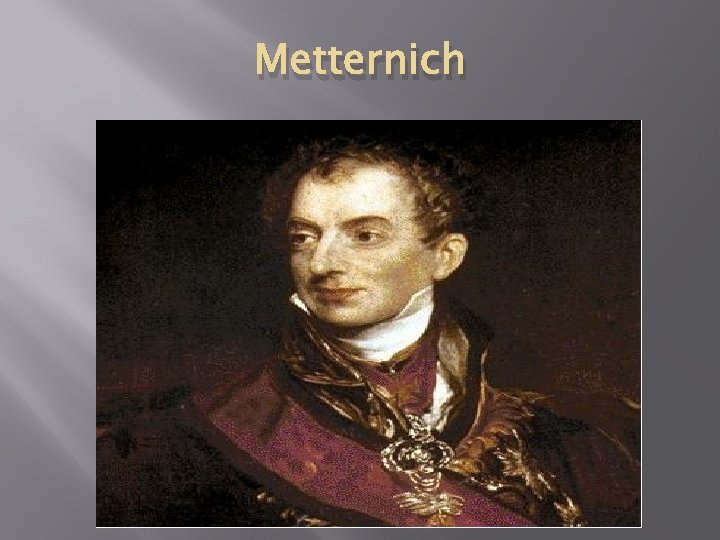
� Conservatism � Metternich (Austrian leader) was poster boy for conservatism Afraid of social revolution Wanted to keep things the same “One real problem in Europe- Revolution” he meant social revolution
Metternich
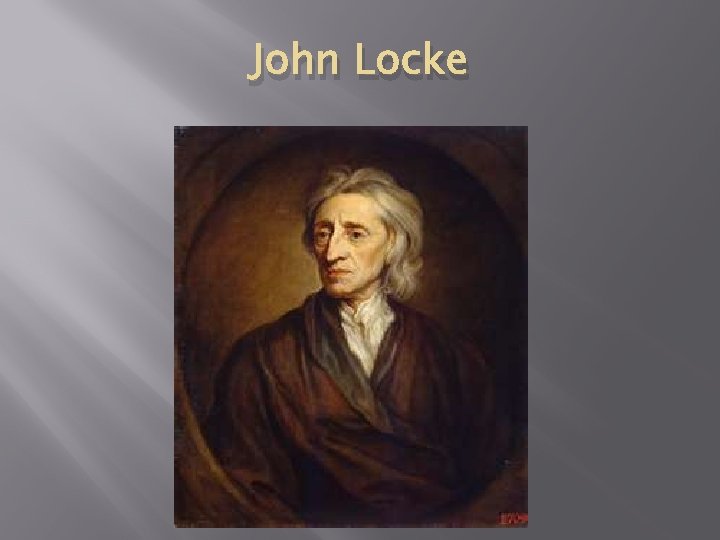
v Liberalism v John Locke was the poster boy for liberalism v Not like today’s liberals v They did not want wholesale change and weren’t all that adaptable v Mostly just want society to become a little more even v Locke’s big idea was that the human experience united us “We are born with a blank slate and experience fills us in”.
John Locke
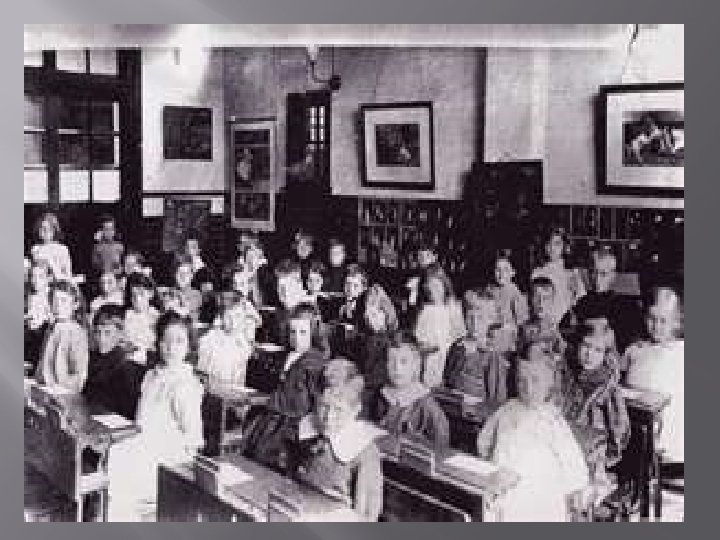
Education � � � Beginning of mass education Governments are starting to rely on educated people to work within the framework as more democracies emerge Prussia was the best, Russia was the worst (not really fair, they didn’t have an education system) of the organized countries England was the worst. France was a good middle
Prussia � � � Mandatory through 6 th grade Real curriculum for both sexes People could work in just about any field, so they all needed education. (Army still held to the old ways with upper class as leaders)
France � � Napoleon starts mandatory education Kind of modeled after Prussia, kids went through the 6 th grade Pass/fail- you had to pass tests to continue on in education, if you fail- it was into the trade schools and then jobs. Very few make it all the way into college, most are out by what we would call middle school.
England � � � Had what were called Public (which means private) and Dame (what we would call public) schools. No mandatory attendance Most only went through the 3 rd grade Dame schools were mostly baby-sitting services Public schools were for the upper class and they were not really governed
Science and Medicine � Before 1815 you could only be diagnosed in one of four ways � Tumor- you have a growth that could be seen Solution-cut it off � Humor- some thing was wrong with the fluids in your body Solution- drain it from your body � Fever Cool it down with water � Miasma- everything else Variety of things- salves, herbal essences, etc.
� � First half of century was Gross Anatomy and second half was Pathology (finding out about diseases) Still have a division between Doctors and Surgeons � Doctors would diagnose but little else � Surgeons would only cut off/out things, had no real training in medicine � A very few would do both The measure of how good you were was how fast you were. Man who was considered the best was Dr. Joseph Lister (yes Listerine) who once cut a man’s leg off in seven seconds (and also three of his assistants fingers)
� Two problems with surgery � It was NOT painless- everything was done with the patient awake. � Infection was almost guaranteed � 1842 - OW Holmes invents ether- it was originally used for dental procedures. This eventually makes surgery painless. � Advances in obstetrics (births) Dr. Alfred Semelwiess �Follows a midwife who had an excellent record of mothers not dying after birth. �He finds out the only difference between his practice and her practice was that she washed her equipment after each birth and washed her hands after touching any patient.
Science of medicine � Virchow, Koch (pronounced Cook), and Pasteur � Big innovation was improvement in microscope � Virchow Makes the connection between sores and bacteria
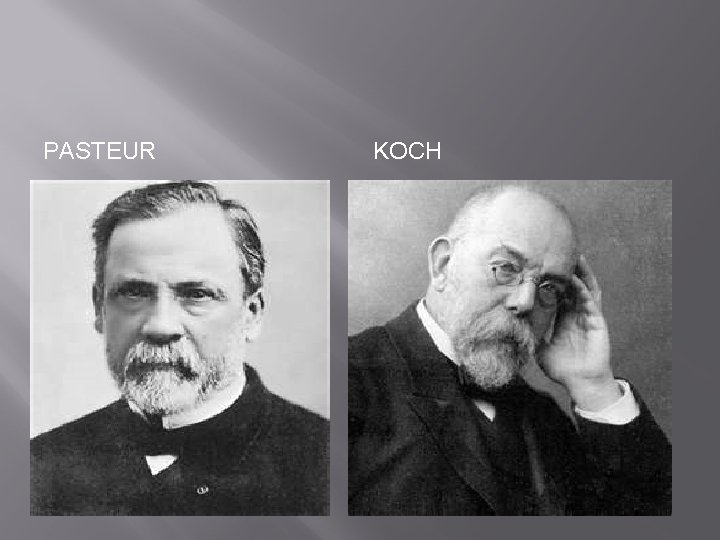
� Koch and Pasteur � Working separately in Germany and France, they begin to isolate pathogens Koch isolated tuberculosis (1882), Typhis (1883), and Bubonic (1894) Pasteur isolates anthrax and discovers amino acids, diabetes, then pasteurization saves milk industry.
PASTEUR KOCH
PUBLIC HEALTH J. Snow tracks cholera in London to bad well water. He tracked cases of cholera by plotting them on a map and zeros in on the well that caused the problems. q Syphilis is the AIDS of the 19 th century q q Most of the countries begin to outlaw prostitution q They also will begin to use quarantine when sickness is present to keep outbreaks from happening q Death rates drop appreciably