
A CASE STUDY ORGANIZATION AND WORKFORCE AT CALTRANS
- Slides: 9
A CASE STUDY: ORGANIZATION AND WORKFORCE AT CALTRANS DISTRICT 7, L. A. -TRAFFIC OPERATIONS Joan Sollenberger, Chief Office of Strategic Development Division of Traffic Operations, CA Dept. of Transportation (Caltrans) 1
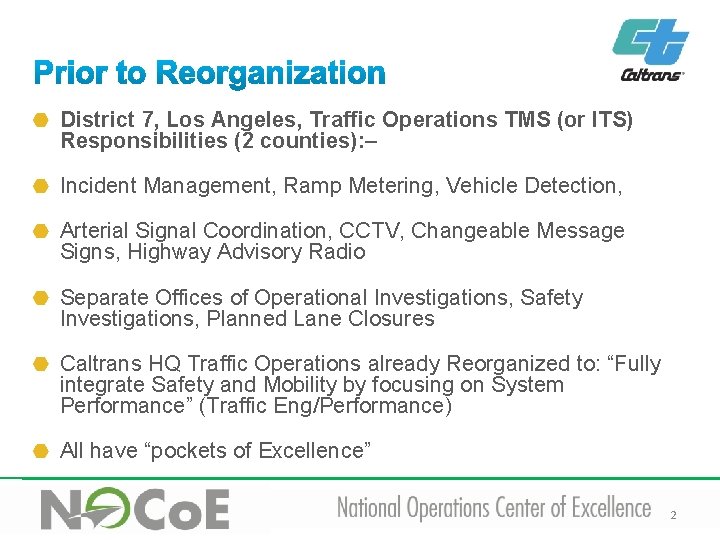
District 7, Los Angeles, Traffic Operations TMS (or ITS) Responsibilities (2 counties): – Incident Management, Ramp Metering, Vehicle Detection, Arterial Signal Coordination, CCTV, Changeable Message Signs, Highway Advisory Radio Separate Offices of Operational Investigations, Safety Investigations, Planned Lane Closures Caltrans HQ Traffic Operations already Reorganized to: “Fully integrate Safety and Mobility by focusing on System Performance” (Traffic Eng/Performance) All have “pockets of Excellence” 2
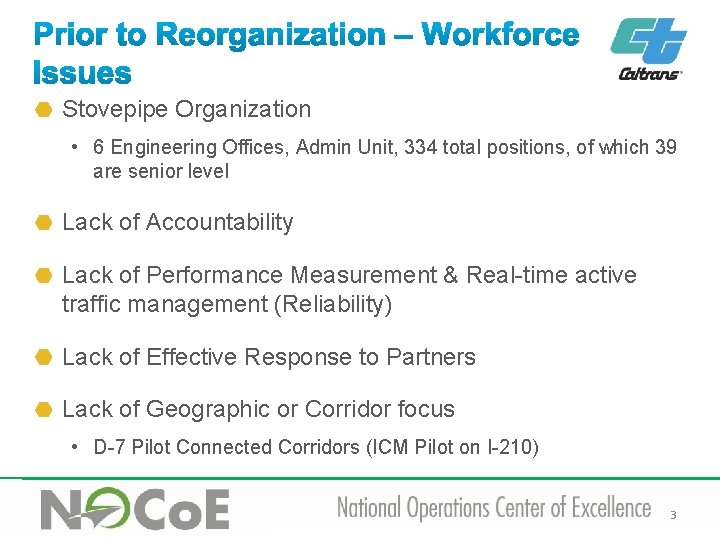
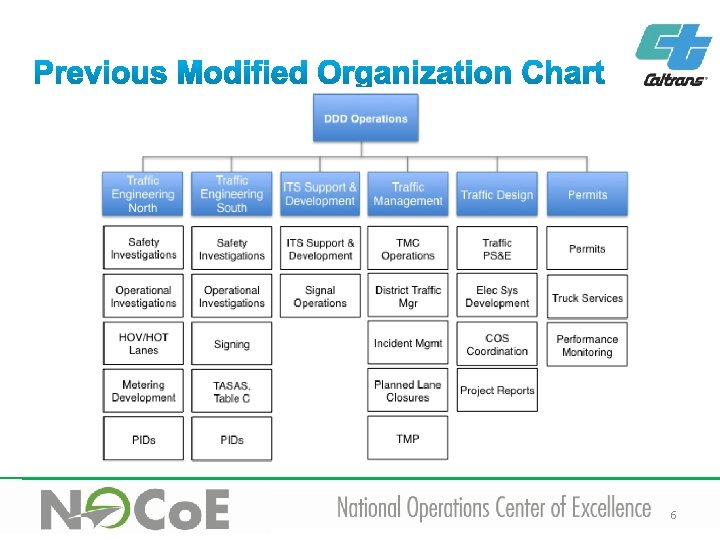
Stovepipe Organization • 6 Engineering Offices, Admin Unit, 334 total positions, of which 39 are senior level Lack of Accountability Lack of Performance Measurement & Real-time active traffic management (Reliability) Lack of Effective Response to Partners Lack of Geographic or Corridor focus • D-7 Pilot Connected Corridors (ICM Pilot on I-210) 3
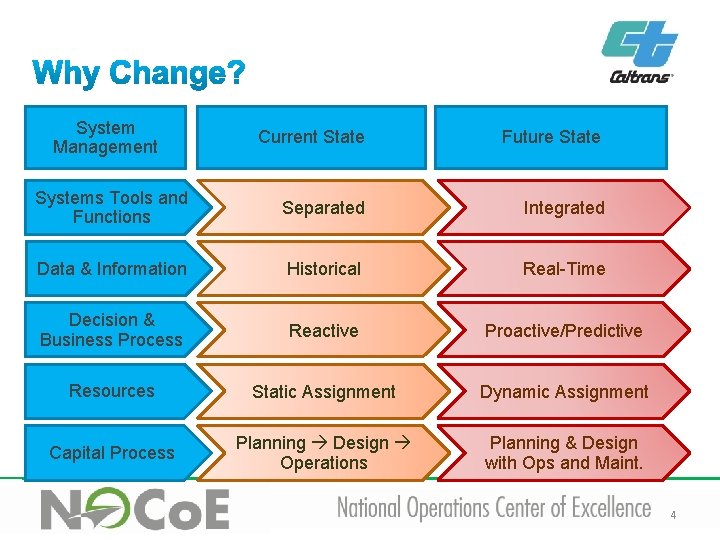
System Management Current State Future State Systems Tools and Functions Separated Integrated Data & Information Historical Real-Time Decision & Business Process Reactive Proactive/Predictive Resources Static Assignment Dynamic Assignment Capital Process Planning Design Operations Planning & Design with Ops and Maint. 4
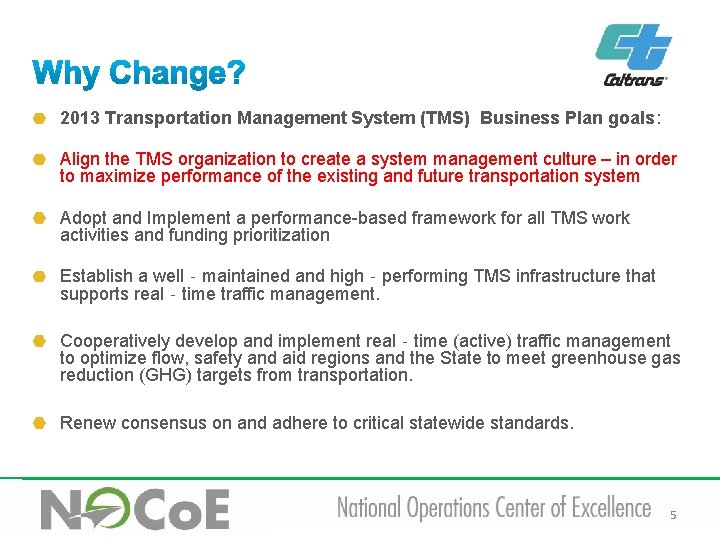
2013 Transportation Management System (TMS) Business Plan goals: Align the TMS organization to create a system management culture – in order to maximize performance of the existing and future transportation system Adopt and Implement a performance-based framework for all TMS work activities and funding prioritization Establish a well‐maintained and high‐performing TMS infrastructure that supports real‐time traffic management. Cooperatively develop and implement real‐time (active) traffic management to optimize flow, safety and aid regions and the State to meet greenhouse gas reduction (GHG) targets from transportation. Renew consensus on and adhere to critical statewide standards. 5
6
7
8
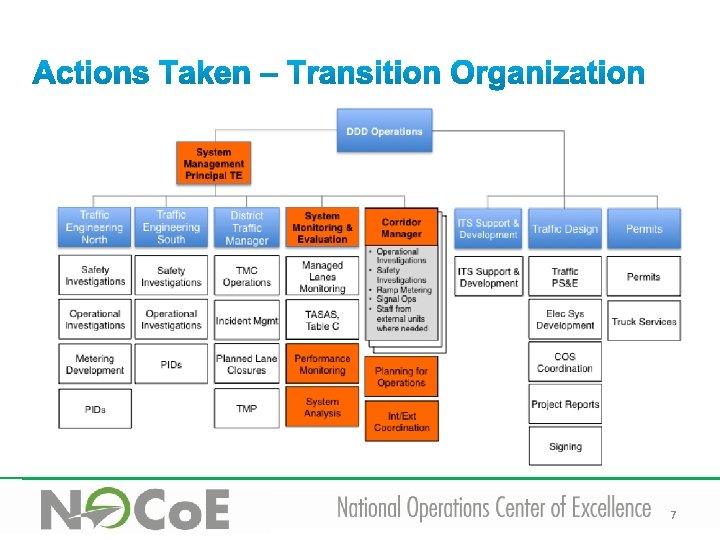
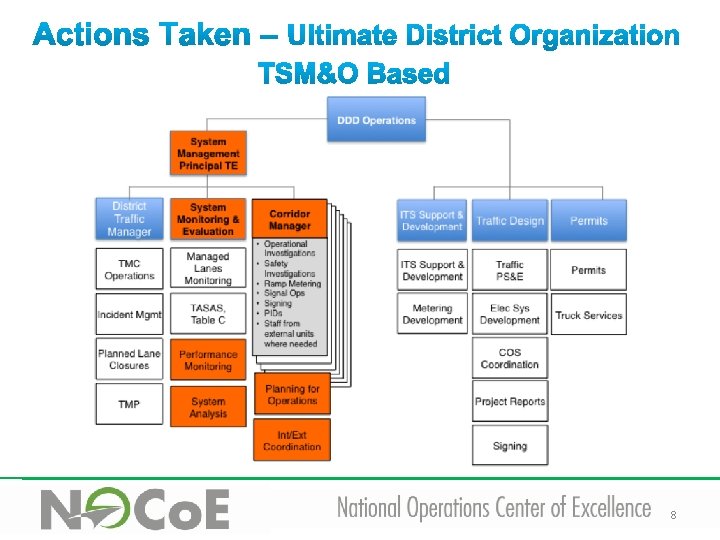
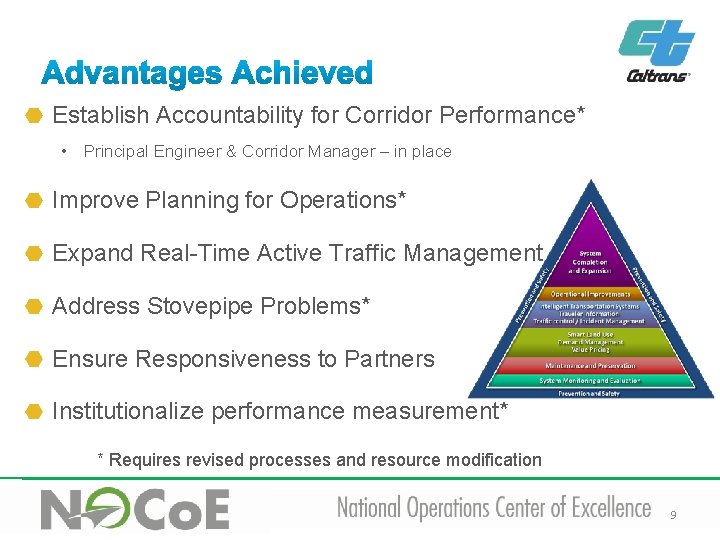
Establish Accountability for Corridor Performance* • Principal Engineer & Corridor Manager – in place Improve Planning for Operations* Expand Real-Time Active Traffic Management Address Stovepipe Problems* Ensure Responsiveness to Partners Institutionalize performance measurement* * Requires revised processes and resource modification 9