
A Case Study Building a Compensation Management Structure

A Case Study: Building a Compensation Management Structure Mark Tocco and Blair Johanson
Agenda • • What is compensation management? Framework for understanding Components Case study
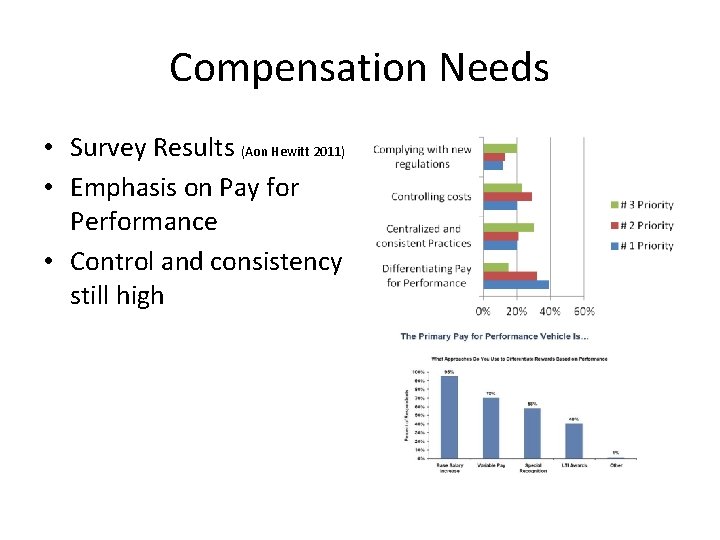
Compensation Needs • Survey Results (Aon Hewitt 2011) • Emphasis on Pay for Performance • Control and consistency still high
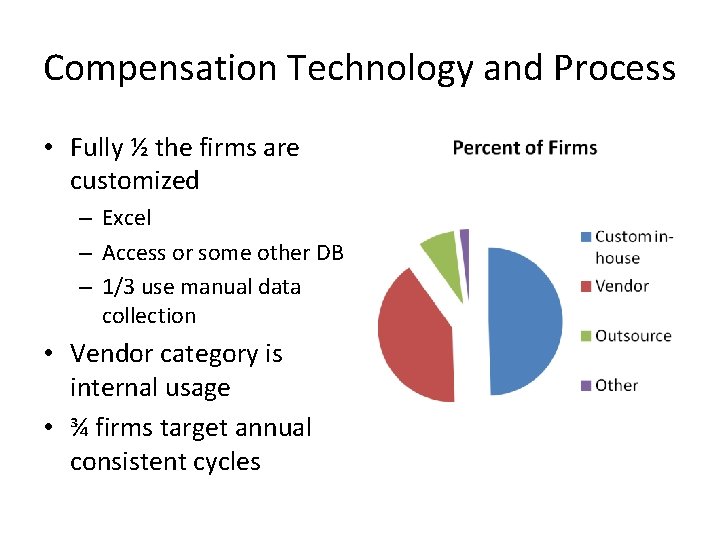
Compensation Technology and Process • Fully ½ the firms are customized – Excel – Access or some other DB – 1/3 use manual data collection • Vendor category is internal usage • ¾ firms target annual consistent cycles
So Many Definitions, So Little Clarity • Textbook – Definition, structure and execution of system(s) to reward employees for work performed • Systems – Software solution that simplifies and streamlines the administration of salary and benefits • HR – Integral part of HR function that helps motivate employees and increase organizational effectiveness • Business – Complex and strategically critical issues affecting our key abilities to compete and profit
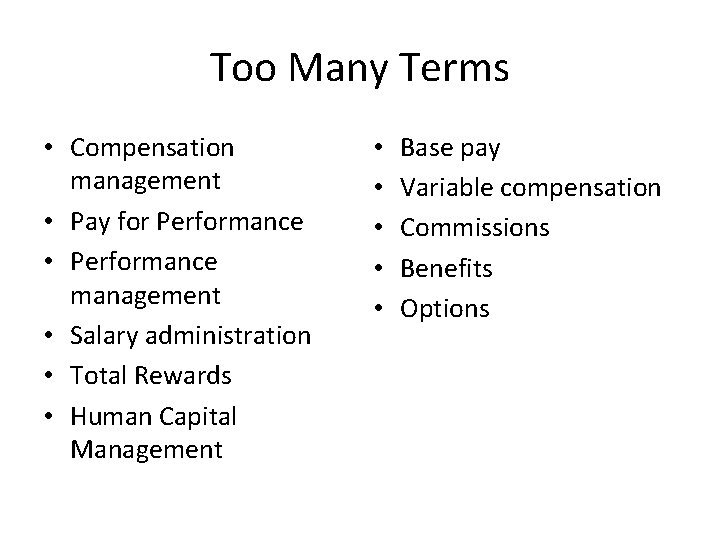
Too Many Terms • Compensation management • Pay for Performance • Performance management • Salary administration • Total Rewards • Human Capital Management • • • Base pay Variable compensation Commissions Benefits Options
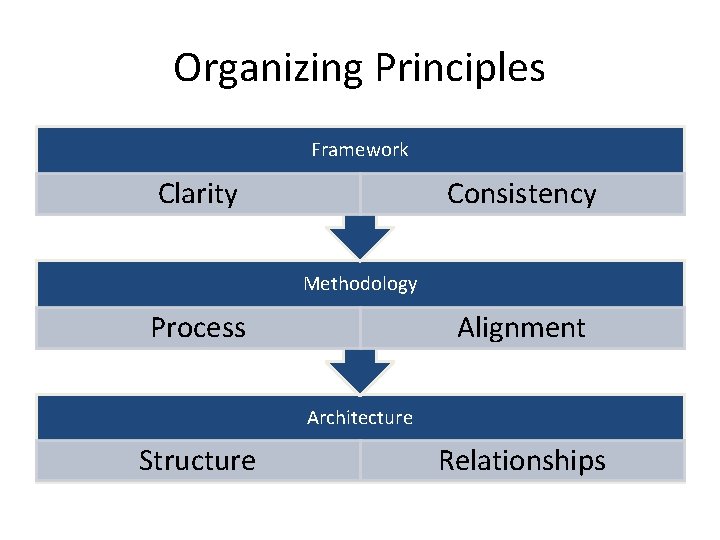
Organizing Principles Framework Clarity Consistency Methodology Process Alignment Architecture Structure Relationships
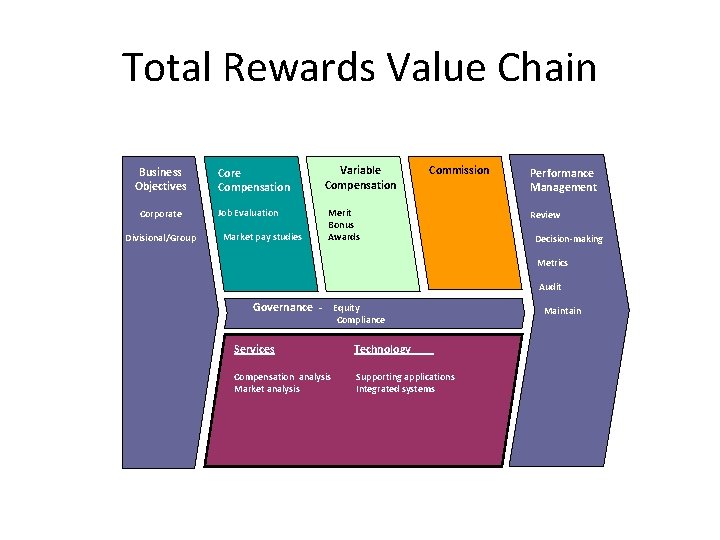
Total Rewards Value Chain Business Objectives Corporate Divisional/Group Core Compensation Job Evaluation Market pay studies Variable Compensation Commission Merit Bonus Awards Performance Management Review Decision-making Metrics Audit Governance - Equity Compliance Services Technology Compensation analysis Market analysis Supporting applications Integrated systems Maintain
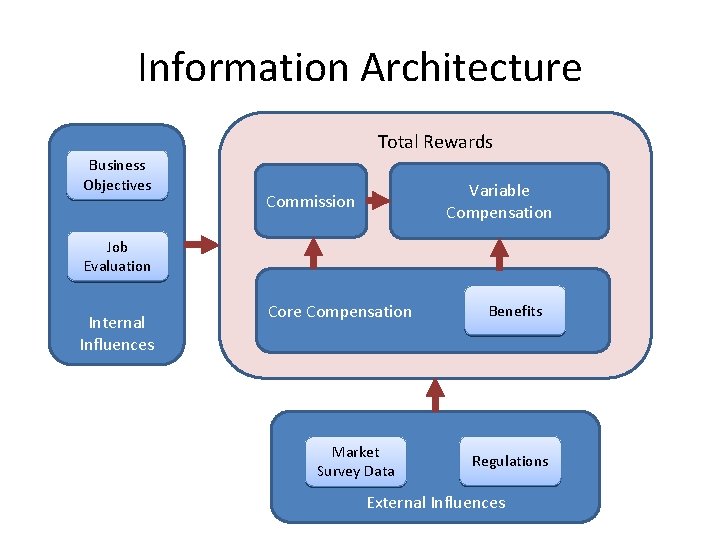
Information Architecture Total Rewards Business Objectives Variable Compensation Commission Job Evaluation Internal Influences Core Compensation Market Survey Data Benefits Regulations External Influences
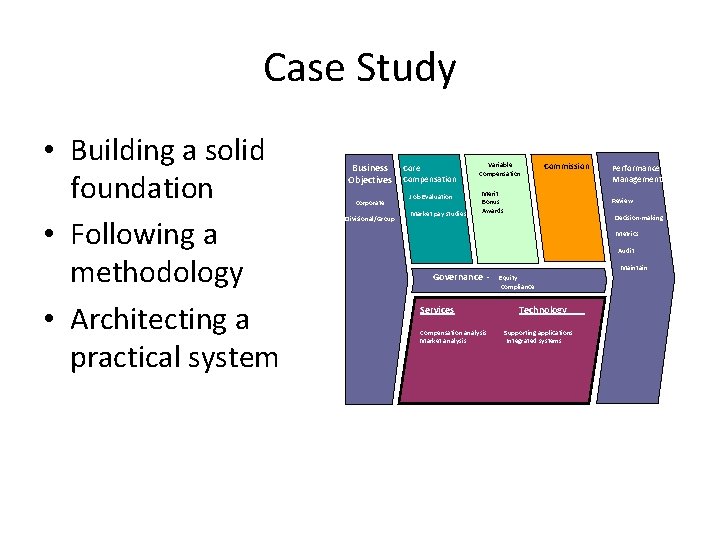
Case Study • Building a solid foundation • Following a methodology • Architecting a practical system Business Objectives Corporate Divisional/Group Core Compensation J ob Evaluation Market pay studies Variable Compensation Commission Merit Bonus Awards Performance Management Review Decision-making Metrics Audit Governance Services Compensation analysis Market analysis Maintain Equity Compliance Technology Supporting applications Integrated systems
Business Objectives Business Overview • • Utilities sector 3 Divisions 4, 500 Employees Stakeholders – Finance – HR – Directors/Managers Business Objectives • Align compensation • Reduce salary administration costs • Improve recruiting • Increase retention of key roles • Integrate HRIS system
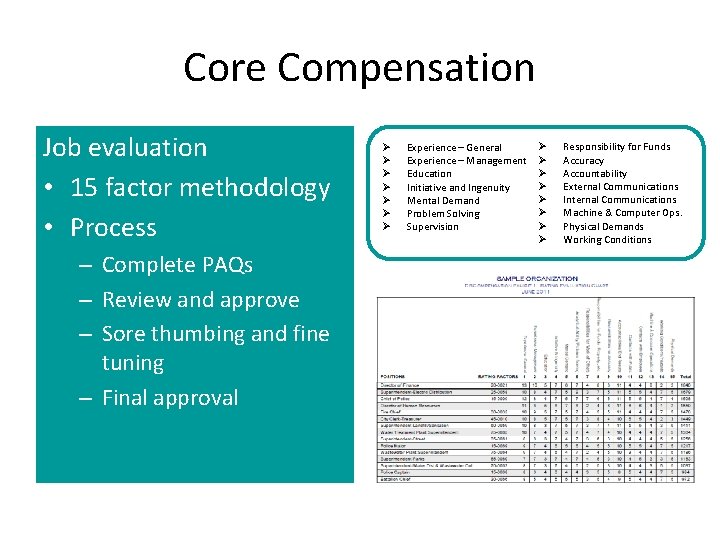
Core Compensation Job evaluation • 15 factor methodology • Process – Complete PAQs – Review and approve – Sore thumbing and fine tuning – Final approval Ø Ø Ø Ø Experience – General Experience – Management Education Initiative and Ingenuity Mental Demand Problem Solving Supervision Ø Ø Ø Ø Responsibility for Funds Accuracy Accountability External Communications Internal Communications Machine & Computer Ops. Physical Demands Working Conditions
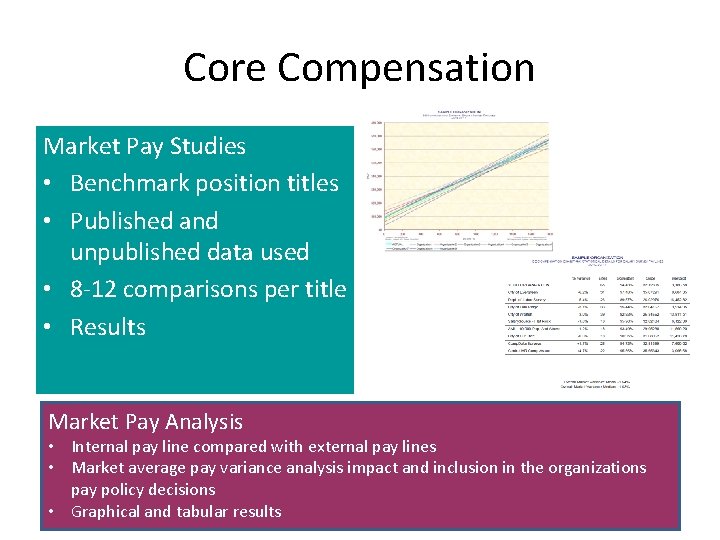
Core Compensation Market Pay Studies • Benchmark position titles • Published and unpublished data used • 8 -12 comparisons per title • Results Market Pay Analysis • Internal pay line compared with external pay lines • Market average pay variance analysis impact and inclusion in the organizations pay policy decisions • Graphical and tabular results
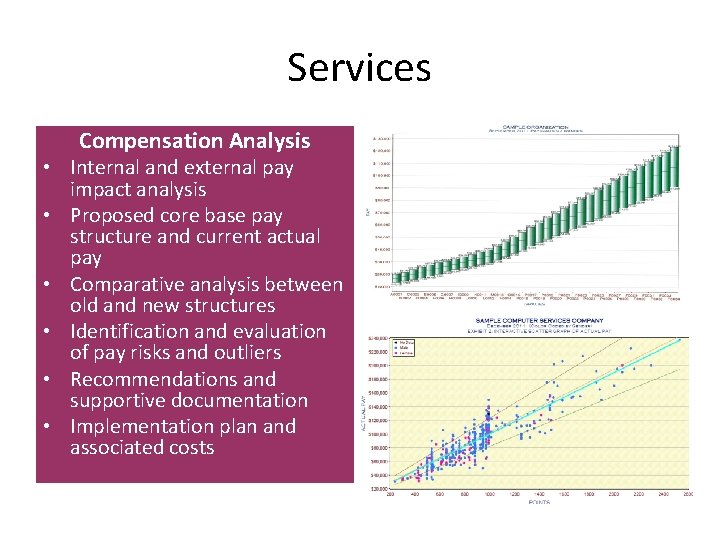
Services Compensation Analysis • Internal and external pay impact analysis • Proposed core base pay structure and current actual pay • Comparative analysis between old and new structures • Identification and evaluation of pay risks and outliers • Recommendations and supportive documentation • Implementation plan and associated costs
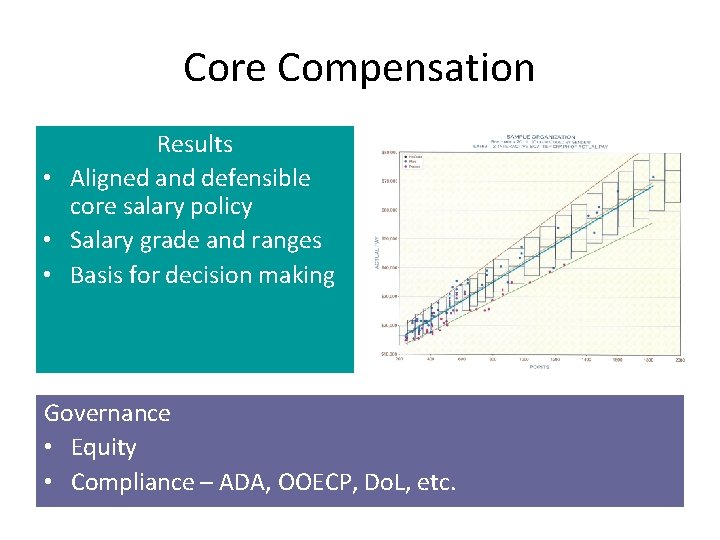
Core Compensation Results • Aligned and defensible core salary policy • Salary grade and ranges • Basis for decision making Governance • Equity • Compliance – ADA, OOECP, Do. L, etc.
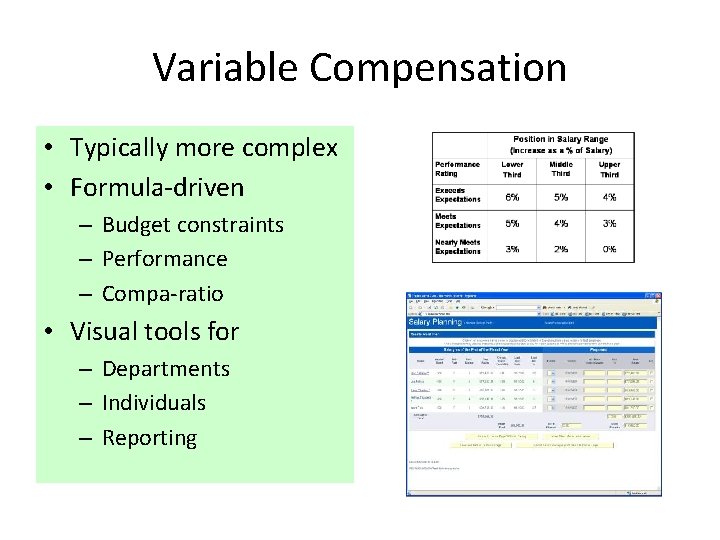
Variable Compensation • Typically more complex • Formula-driven – Budget constraints – Performance – Compa-ratio • Visual tools for – Departments – Individuals – Reporting
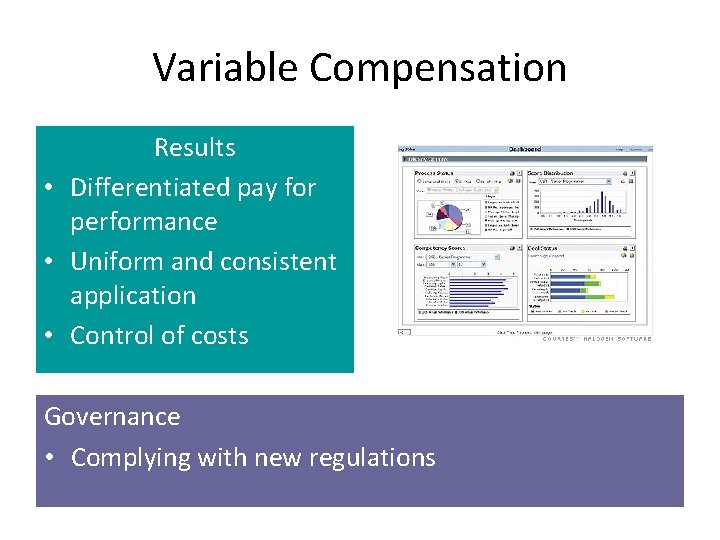
Variable Compensation Results • Differentiated pay for performance • Uniform and consistent application • Control of costs Governance • Complying with new regulations
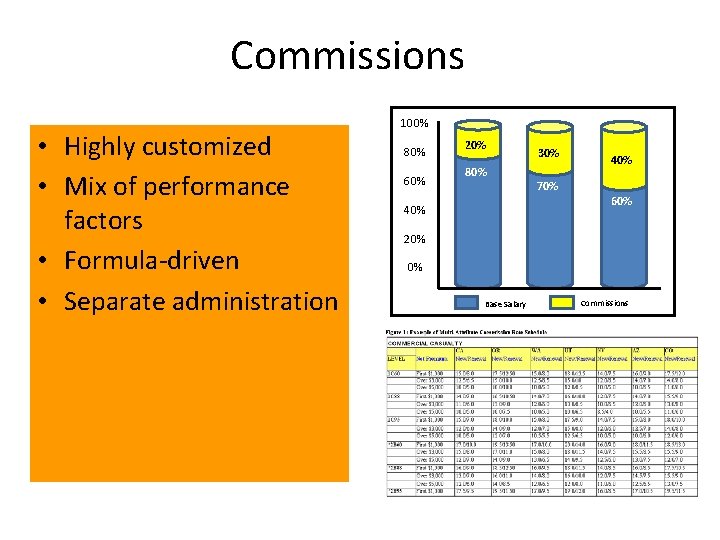
Commissions • Highly customized • Mix of performance factors • Formula-driven • Separate administration 100% 80% 60% 20% 80% 30% 40% 70% 60% 40% 20% 0% Base Salary Commissions
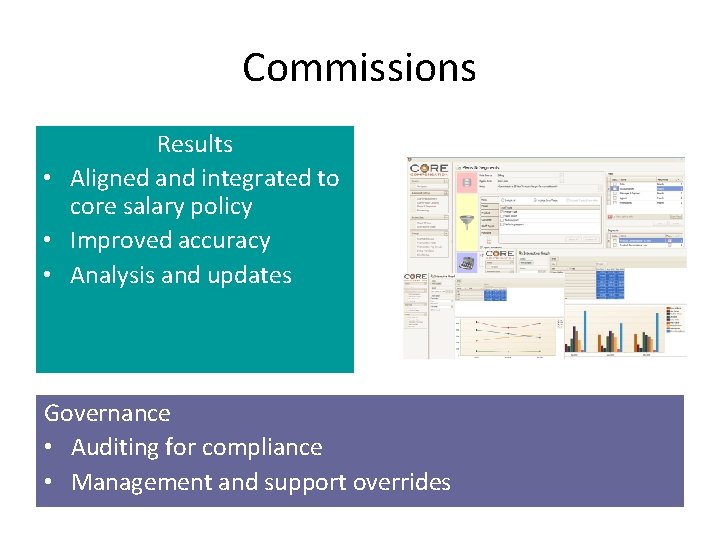
Commissions Results • Aligned and integrated to core salary policy • Improved accuracy • Analysis and updates Governance • Auditing for compliance • Management and support overrides
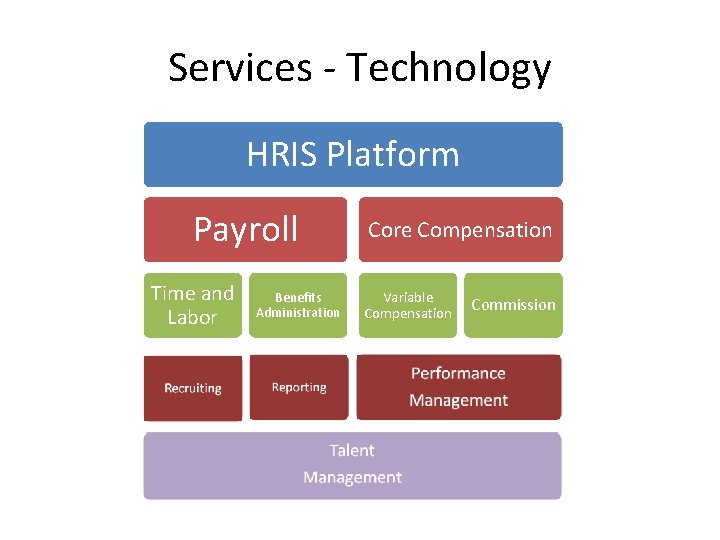
Services - Technology HRIS Platform Payroll Time and Labor Benefits Administration Core Compensation Variable Compensation Commission
Results - Performance Management Program Results • February – December • 425 Job descriptions • Centralized pay structure • Automated core comp. system integrated with HRIS system • Internal and external job valuing – Pay equity analysis Business Value • Greater HR Efficiency • Interactive Core Comp. System with Managers • Compensation system aligned with business objectives and HRIS • Core compensation structure updated aligned with variable pay program
QUESTIONS mark. tocco@dbsquared. com blair. johanson@dbsquared. com
- Slides: 22