
A case scenario A 19 year old male









- Slides: 52
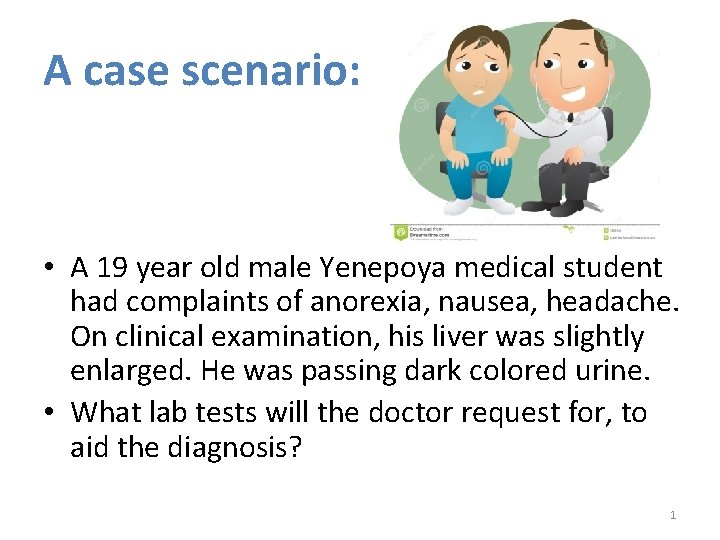
A case scenario: • A 19 year old male Yenepoya medical student had complaints of anorexia, nausea, headache. On clinical examination, his liver was slightly enlarged. He was passing dark colored urine. • What lab tests will the doctor request for, to aid the diagnosis? 1
• You will know that after you learn these topics 2
LIVER, KIDNEY & THYROID FUNCTION TESTS Lecture for MBBS by: Dr. Nivedita L. Rao 3
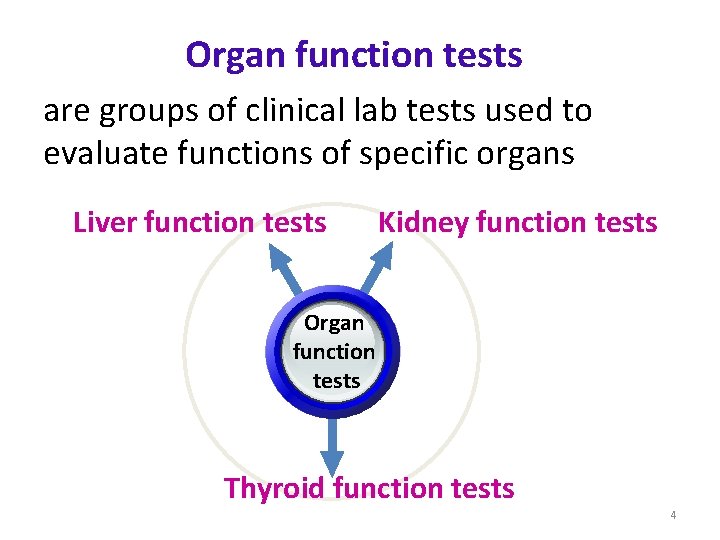
Organ function tests are groups of clinical lab tests used to evaluate functions of specific organs Liver function tests Kidney function tests Organ function tests Thyroid function tests 4
These tests enable, Diagnosis determination of the nature and cause of a patient’s illness by a doctor Prognosis doctor’s opinion regarding the progress and eventual outcome of the disease Monitoring following up the response to treatment given for the disease by repeating tests at intervals
LIVER FUNCTION TESTS (LFTs): Introduction : • Liver has critical biochemical functions in-Metabolism -Digestion -Detoxification -Excretion of substances from body • These functions are often deranged in liver diseases 6
Definition of LFTs Liver function tests (LFTs) are groups of biochemical tests done to evaluate the functional state of the liver. 7
Classification of LFTs: Group I II Tests based on hepatic synthetic function III Tests based on hepatic detoxification and excretion functions Measurement of serum enzymes 8
LFTs Group I: Based on hepatic detoxification and excretion functions 1 2 Serum Bilirubin Urine - Bilirubin, Bile salts, Urobilinogen 9
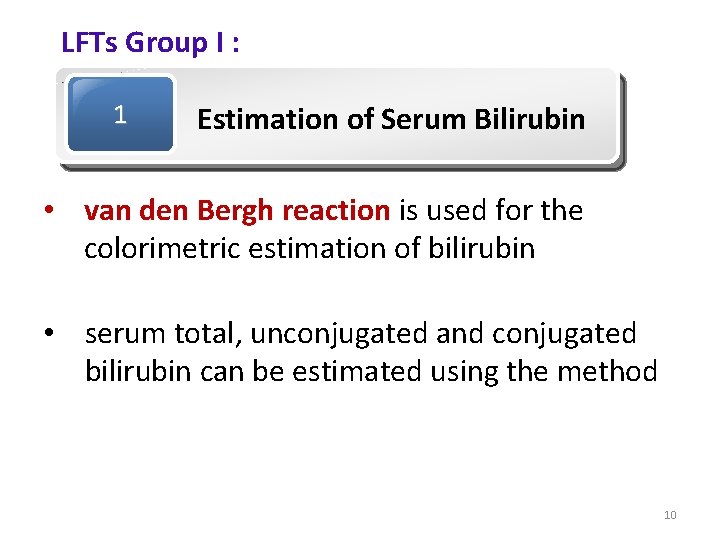
LFTs Group I : 1 Estimation of Serum Bilirubin • van den Bergh reaction is used for the colorimetric estimation of bilirubin • serum total, unconjugated and conjugated bilirubin can be estimated using the method 10
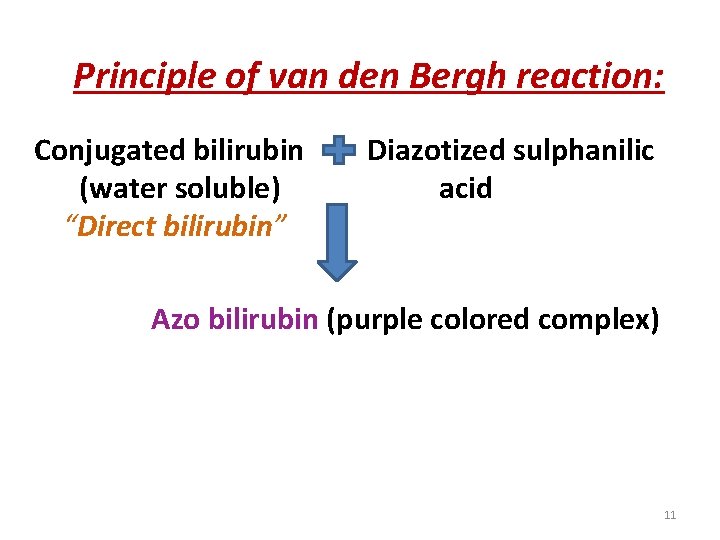
Principle of van den Bergh reaction: Conjugated bilirubin (water soluble) “Direct bilirubin” Diazotized sulphanilic acid Azo bilirubin (purple colored complex) 11
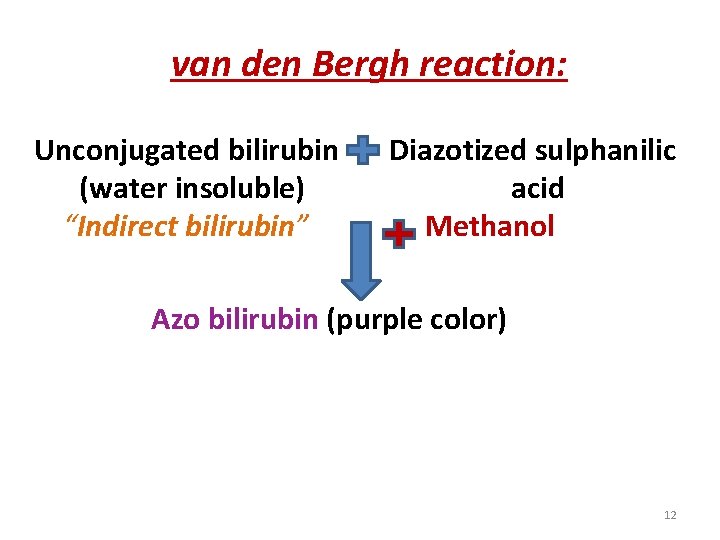
van den Bergh reaction: Unconjugated bilirubin Diazotized sulphanilic (water insoluble) acid “Indirect bilirubin” Methanol Azo bilirubin (purple color) 12
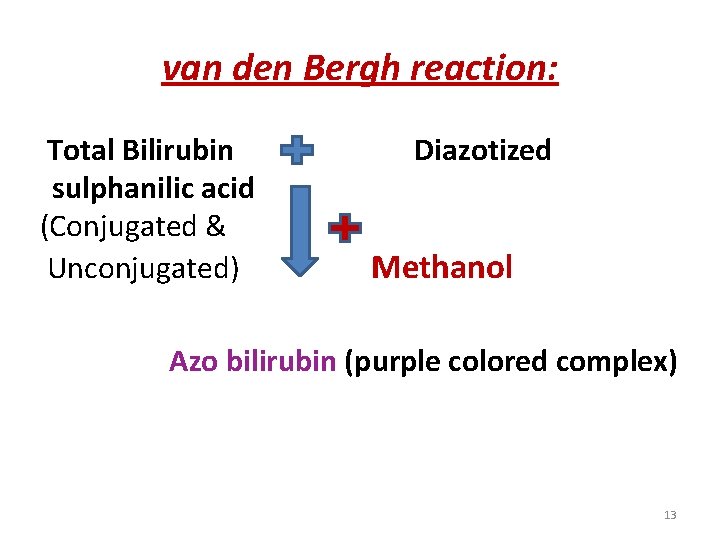
van den Bergh reaction: Total Bilirubin Diazotized sulphanilic acid (Conjugated & Unconjugated) Methanol Azo bilirubin (purple colored complex) 13
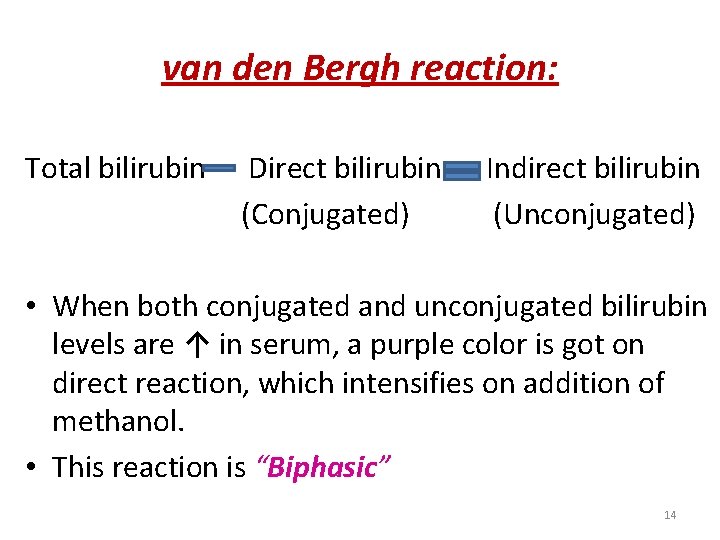
van den Bergh reaction: Total bilirubin Direct bilirubin Indirect bilirubin (Conjugated) (Unconjugated) • When both conjugated and unconjugated bilirubin levels are ↑ in serum, a purple color is got on direct reaction, which intensifies on addition of methanol. • This reaction is “Biphasic” 14
Normal serum bilirubin levels: Normal Range Serum total bilirubin 0. 2 – 0. 8 mg /d. L Serum unconjugated bilirubin 0. 2 – 0. 6 mg /d. L Serum conjugated bilirubin 0 – 0. 2 mg / d. L 15
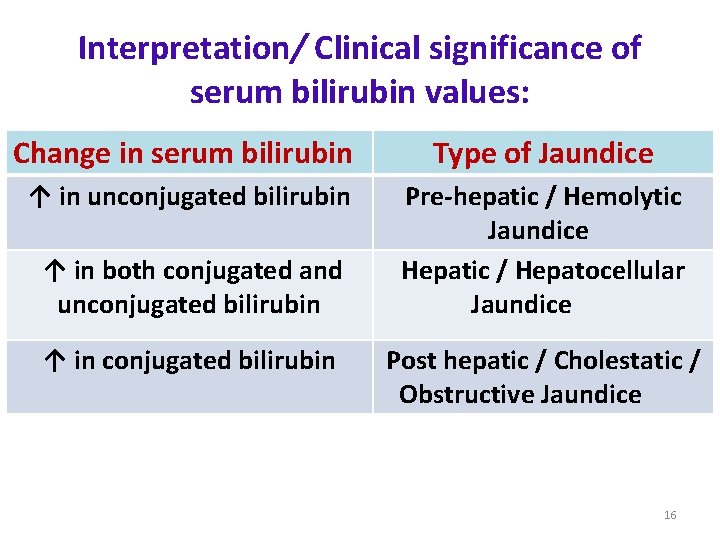
Interpretation/ Clinical significance of serum bilirubin values: Change in serum bilirubin ↑ in unconjugated bilirubin ↑ in both conjugated and unconjugated bilirubin ↑ in conjugated bilirubin Type of Jaundice Pre-hepatic / Hemolytic Jaundice Hepatic / Hepatocellular Jaundice Post hepatic / Cholestatic / Obstructive Jaundice 16
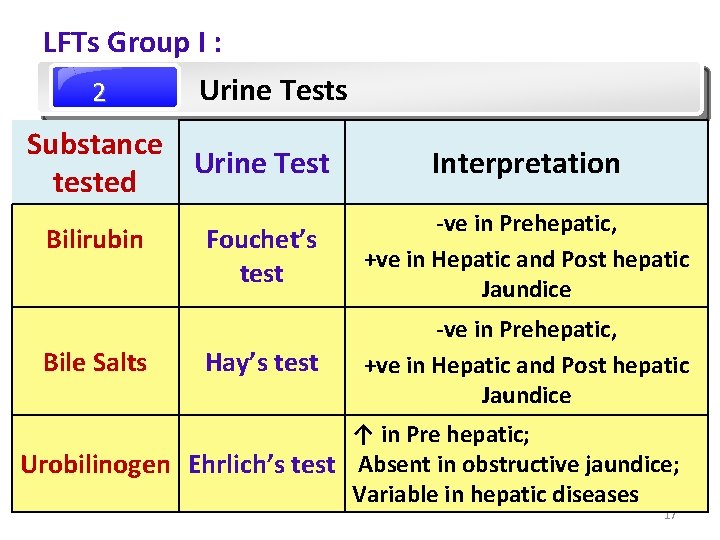
LFTs Group I : Urine Tests 2 Substance Urine Test tested Bilirubin Bile Salts Interpretation Fouchet’s test -ve in Prehepatic, +ve in Hepatic and Post hepatic Jaundice Hay’s test -ve in Prehepatic, +ve in Hepatic and Post hepatic Jaundice ↑ in Pre hepatic; Urobilinogen Ehrlich’s test Absent in obstructive jaundice; Variable in hepatic diseases 17
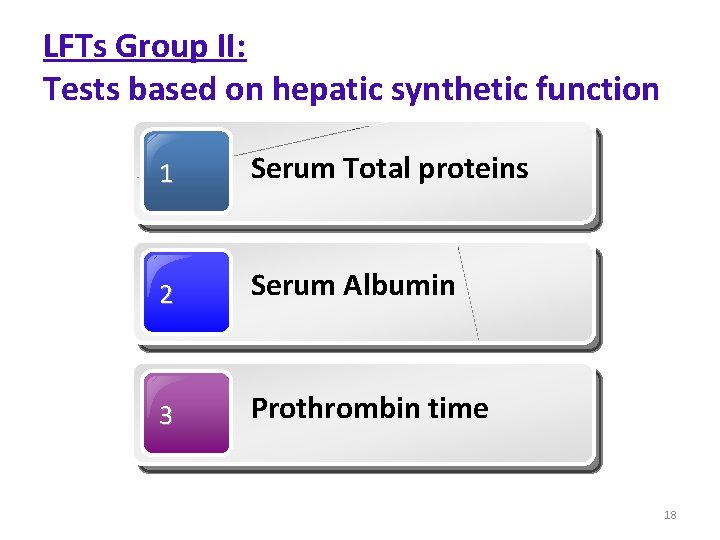
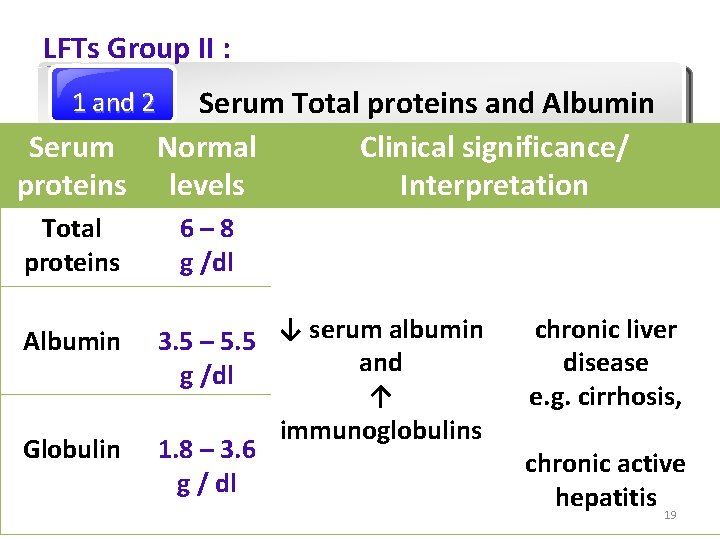
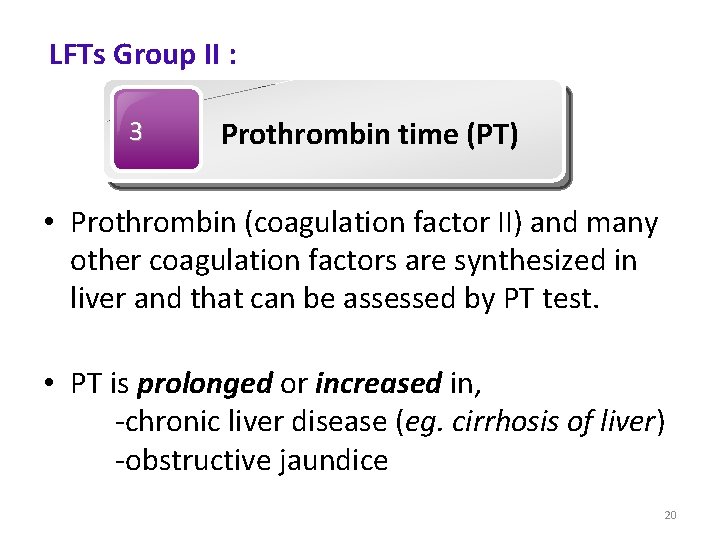
LFTs Group II: Tests based on hepatic synthetic function 1 Serum Total proteins 2 Serum Albumin 3 Prothrombin time 18
LFTs Group II : Serum Total proteins and Albumin Serum Normal Clinical significance/ proteins levels Interpretation 1 and 2 Total proteins Albumin Globulin 6 – 8 g /dl 3. 5 – 5. 5 ↓ serum albumin and g /dl ↑ immunoglobulins 1. 8 – 3. 6 g / dl chronic liver disease e. g. cirrhosis, chronic active hepatitis 19
LFTs Group II : 3 Prothrombin time (PT) • Prothrombin (coagulation factor II) and many other coagulation factors are synthesized in liver and that can be assessed by PT test. • PT is prolonged or increased in, -chronic liver disease (eg. cirrhosis of liver) -obstructive jaundice 20
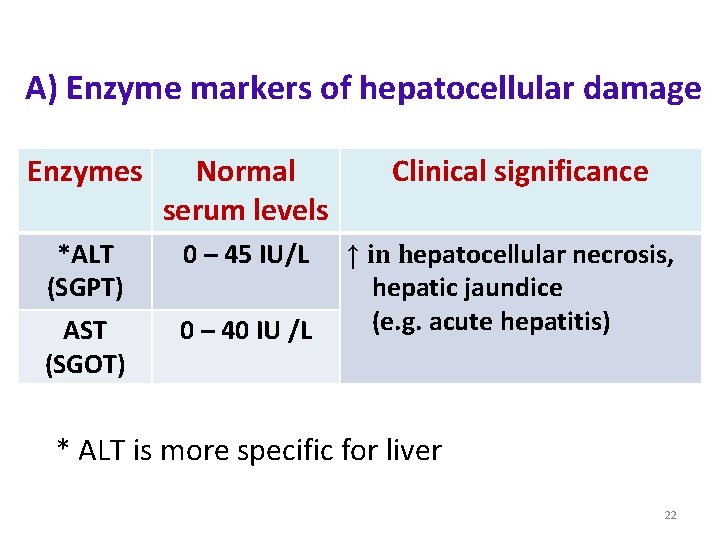
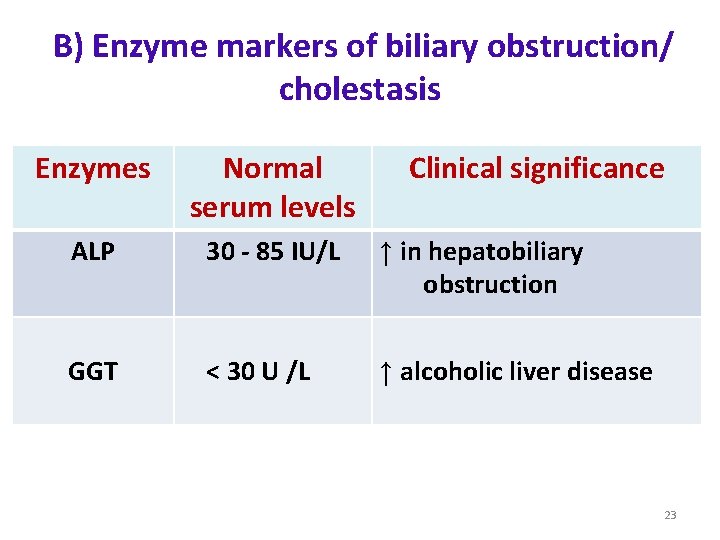
LFTs Group III Measurement of serum enzymes 1 Alanine transaminase (ALT) 2 Aspartate transaminase (AST) 3 Alkaline phosphatase (ALP) 4 Gamma glutamyl transferase (GGT) 21
A) Enzyme markers of hepatocellular damage Enzymes Normal serum levels *ALT (SGPT) 0 – 45 IU/L AST (SGOT) 0 – 40 IU /L Clinical significance ↑ in hepatocellular necrosis, hepatic jaundice (e. g. acute hepatitis) * ALT is more specific for liver 22
B) Enzyme markers of biliary obstruction/ cholestasis Enzymes Normal serum levels Clinical significance ALP 30 - 85 IU/L ↑ in hepatobiliary obstruction GGT < 30 U /L ↑ alcoholic liver disease 23
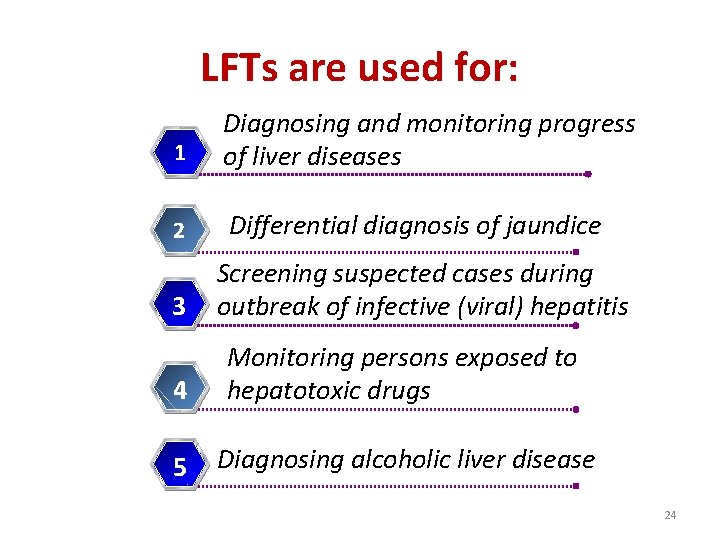
LFTs are used for: 1 Diagnosing and monitoring progress of liver diseases 2 Differential diagnosis of jaundice 3 Screening suspected cases during outbreak of infective (viral) hepatitis 4 Monitoring persons exposed to hepatotoxic drugs 5 Diagnosing alcoholic liver disease 24
Learning check: Answer this… Detoxification and excretion function of liver can be assessed by estimation of seruma) Albumin b) Globulins c) Bilirubin d) Alkaline phosphatase 25
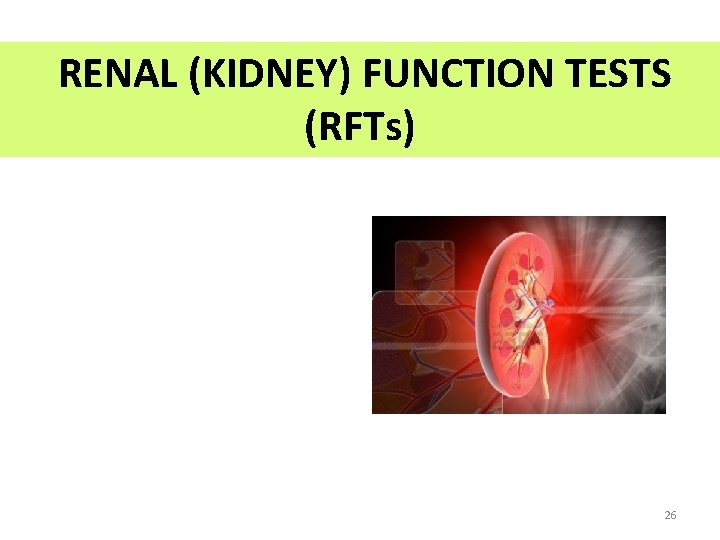
RENAL (KIDNEY) FUNCTION TESTS (RFTs) 26
Functions of kidneys: ØExcretory function: elimination of wastes ØMaintenance of p. H, water and electrolyte balance ØEndocrine function: production of erythropoietin, calcitriol (active form of Vitamin D) and prostaglandins 27
Definition: • Renal function tests are groups of biochemical tests done to evaluate the functional state of the kidneys. 28
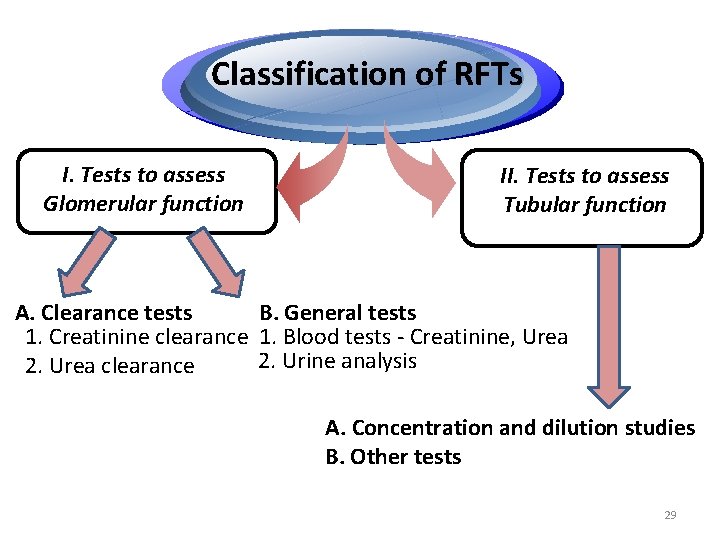
Classification of RFTs I. Tests to assess Glomerular function II. Tests to assess Tubular function A. Clearance tests B. General tests 1. Creatinine clearance 1. Blood tests - Creatinine, Urea 2. Urine analysis 2. Urea clearance A. Concentration and dilution studies B. Other tests 29
Definition of clearance: It is the volume of plasma that contains the amount of substance excreted (cleared) by the kidneys in one minute. Clearance of a substance from plasma depends on GFR. 30
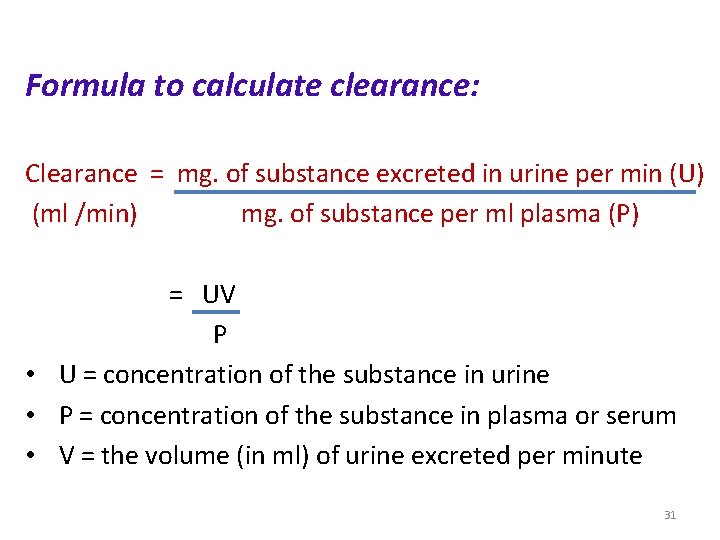
Formula to calculate clearance: Clearance = mg. of substance excreted in urine per min (U) (ml /min) mg. of substance per ml plasma (P) = UV P • U = concentration of the substance in urine • P = concentration of the substance in plasma or serum • V = the volume (in ml) of urine excreted per minute 31
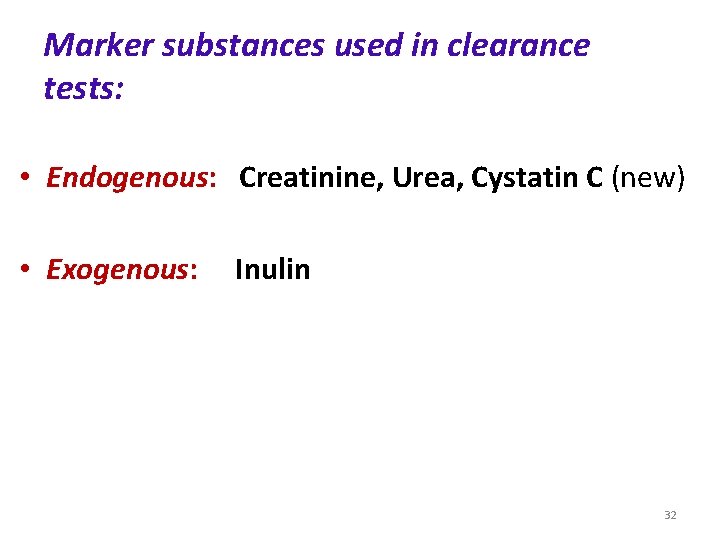
Marker substances used in clearance tests: • Endogenous: Creatinine, Urea, Cystatin C (new) • Exogenous: Inulin 32
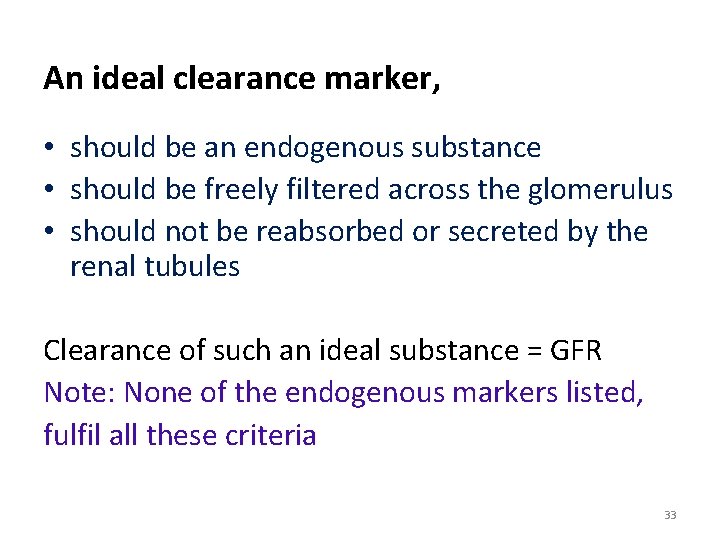
An ideal clearance marker, • should be an endogenous substance • should be freely filtered across the glomerulus • should not be reabsorbed or secreted by the renal tubules Clearance of such an ideal substance = GFR Note: None of the endogenous markers listed, fulfil all these criteria 33
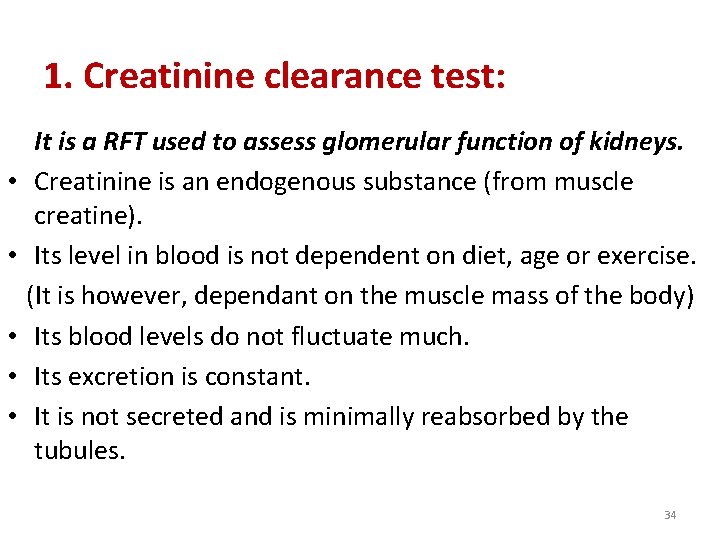
1. Creatinine clearance test: It is a RFT used to assess glomerular function of kidneys. • Creatinine is an endogenous substance (from muscle creatine). • Its level in blood is not dependent on diet, age or exercise. (It is however, dependant on the muscle mass of the body) • Its blood levels do not fluctuate much. • Its excretion is constant. • It is not secreted and is minimally reabsorbed by the tubules. 34
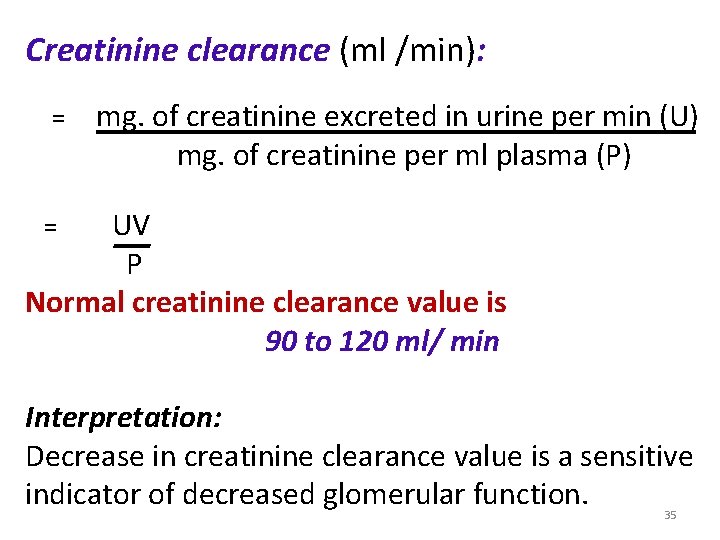
Creatinine clearance (ml /min): = mg. of creatinine excreted in urine per min (U) mg. of creatinine per ml plasma (P) = UV P Normal creatinine clearance value is 90 to 120 ml/ min Interpretation: Decrease in creatinine clearance value is a sensitive indicator of decreased glomerular function. 35
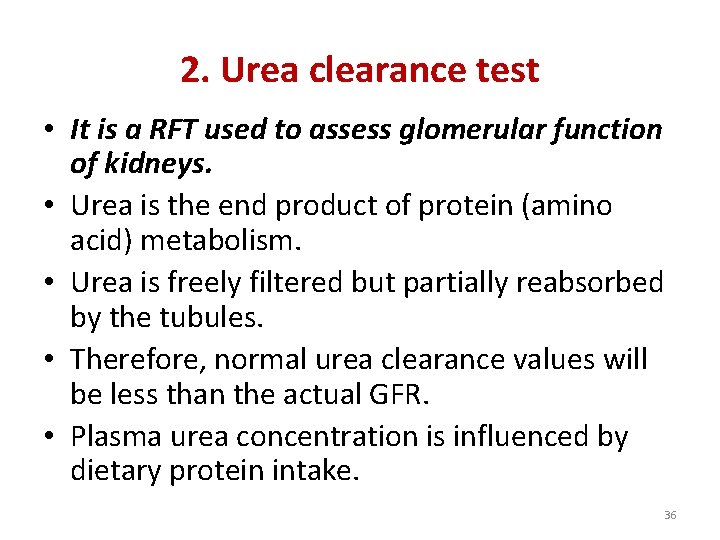
2. Urea clearance test • It is a RFT used to assess glomerular function of kidneys. • Urea is the end product of protein (amino acid) metabolism. • Urea is freely filtered but partially reabsorbed by the tubules. • Therefore, normal urea clearance values will be less than the actual GFR. • Plasma urea concentration is influenced by dietary protein intake. 36
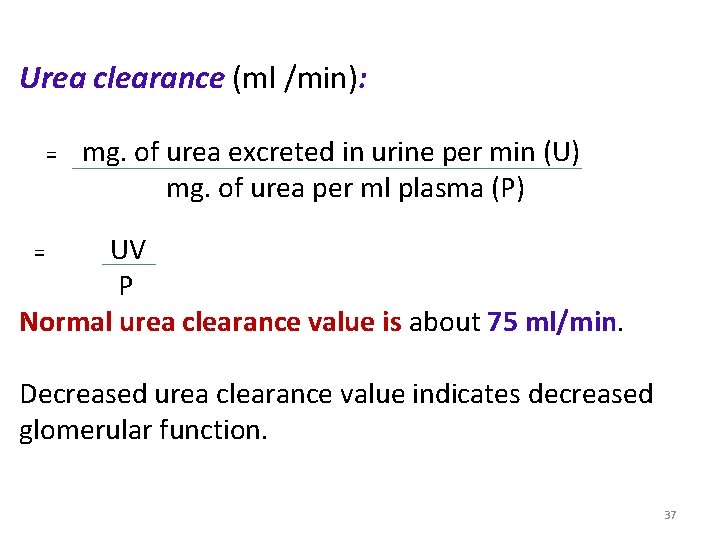
Urea clearance (ml /min): = mg. of urea excreted in urine per min (U) mg. of urea per ml plasma (P) = UV P Normal urea clearance value is about 75 ml/min. Decreased urea clearance value indicates decreased glomerular function. 37
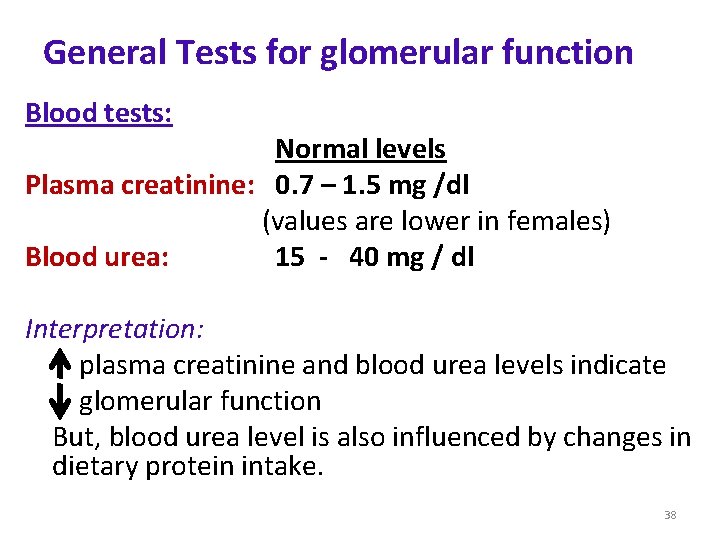
General Tests for glomerular function Blood tests: Normal levels Plasma creatinine: 0. 7 – 1. 5 mg /dl (values are lower in females) Blood urea: 15 - 40 mg / dl Interpretation: plasma creatinine and blood urea levels indicate glomerular function But, blood urea level is also influenced by changes in dietary protein intake. 38
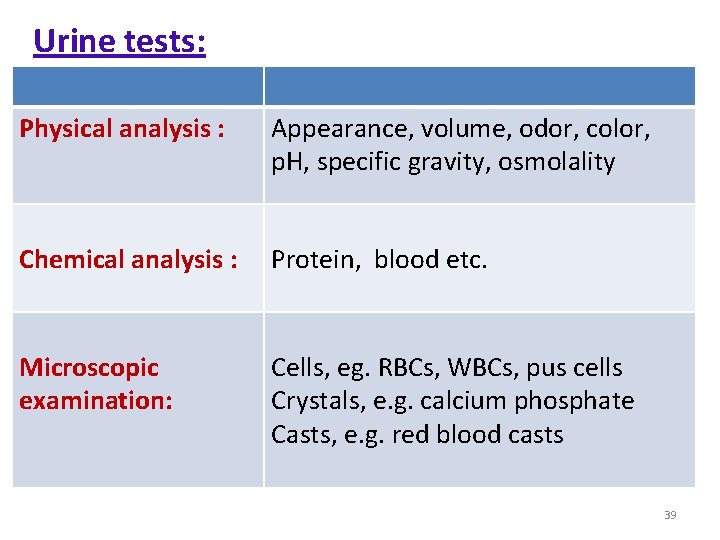
Urine tests: Physical analysis : Appearance, volume, odor, color, p. H, specific gravity, osmolality Chemical analysis : Protein, blood etc. Microscopic examination: Cells, eg. RBCs, WBCs, pus cells Crystals, e. g. calcium phosphate Casts, e. g. red blood casts 39
RFTs are used for: • • Diagnosis of renal disease Monitoring progression of renal disease Assessment of extent of renal damage Monitoring renal function during treatment using nephrotoxic drugs 40
Learning checks: Answer this MCQ…. The most common clearance marker which is used for assessment of glomerular function is, a) Inulin b) Urea c) Uric acid d) Creatinine 41
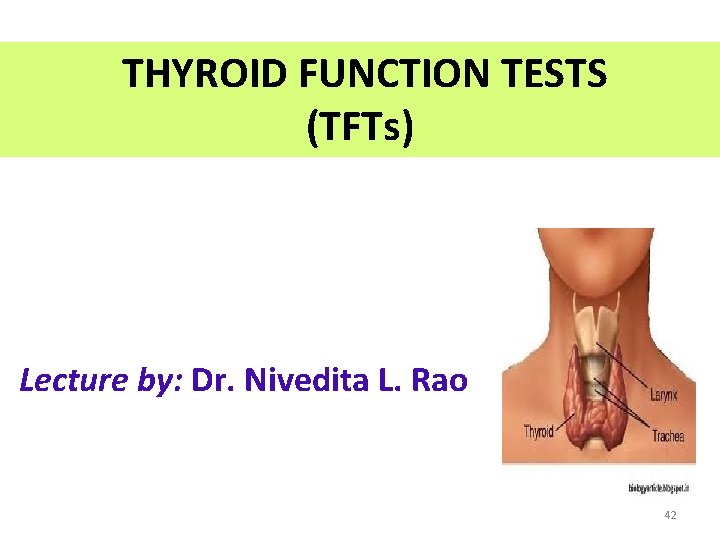
THYROID FUNCTION TESTS (TFTs) Lecture by: Dr. Nivedita L. Rao 42
Introduction • Thyroid hormones regulate gene expression, tissue differentiation, metabolism (cholesterol degradation, gluconeogenesis) and BMR. • Thermogenesis is a major effect of thyroid hormones. 43
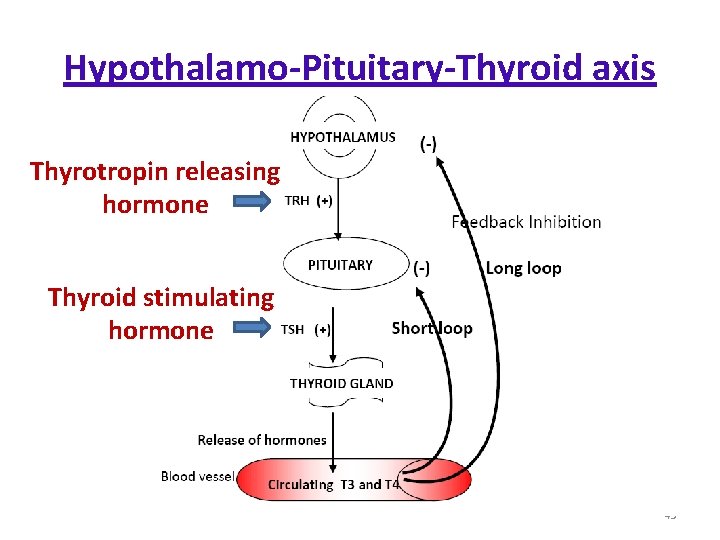
Thyroid hormones produced by follicular cells of the thyroid gland are – • Triiodothyronine (T 3) • Thyroxine/tetraiodothyronine (T 4) Secretion of thyroid hormones by thyroid gland is regulated by the Hypothalamo-Pituitary-Thyroid axis 44
Hypothalamo-Pituitary-Thyroid axis Thyrotropin releasing hormone Thyroid stimulating hormone 45
Definition of TFTs: • Thyroid function tests are groups of biochemical tests done to evaluate the functional state of the thyroid gland. Application of TFTs: • They aid diagnosis and monitoring of thyroid disorders. 46
Biochemical Tests of Thyroid Function The ‘standard profile’ of TFTs includes estimation of blood levels of- • Total T 4 and Total T 3 (free + protein bound) • TSH • Free T 4 (FT 4) and Free T 3 (FT 3) Chemiluminiscence (CLIA) method is used to measure T 3, T 4 and TSH. 47
Other tests These are done if required by clinical circumstances: Ø Detection of antibodies to proteins of the thyroid gland: -Anti-thyroperoxidase antibodies (TPOAb) -Anti thyroglobulin antibodies(Tg. Ab) Ø Radioactive Iodine uptake 48
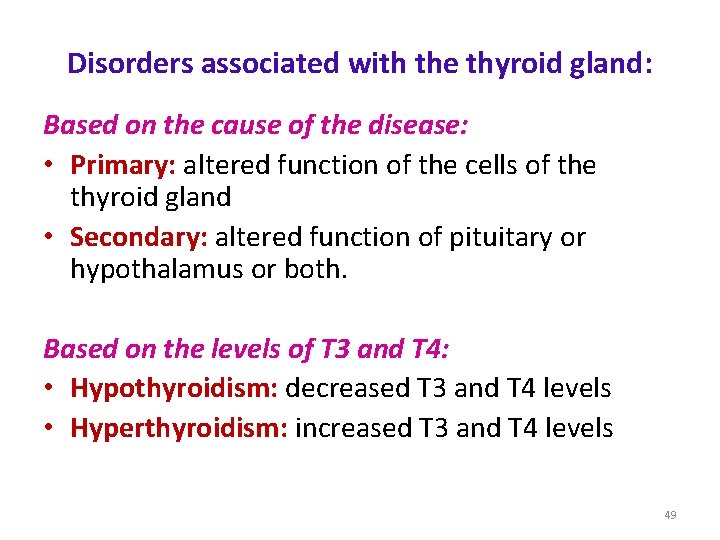
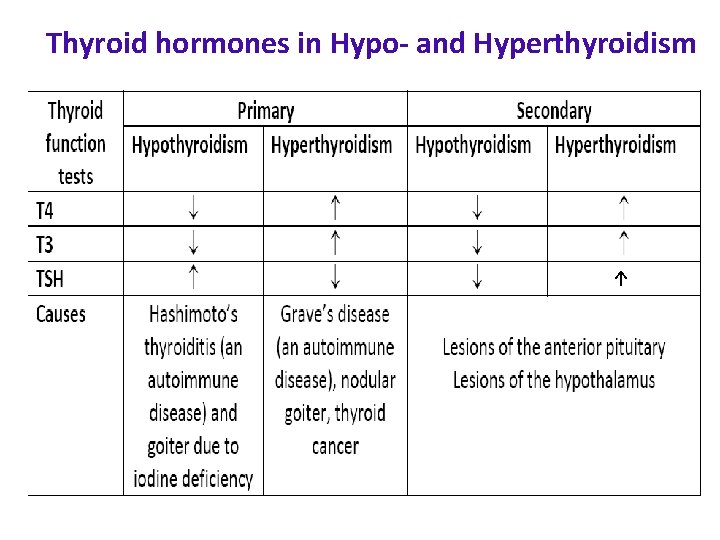
Disorders associated with the thyroid gland: Based on the cause of the disease: • Primary: altered function of the cells of the thyroid gland • Secondary: altered function of pituitary or hypothalamus or both. Based on the levels of T 3 and T 4: • Hypothyroidism: decreased T 3 and T 4 levels • Hyperthyroidism: increased T 3 and T 4 levels 49
Thyroid hormones in Hypo- and Hyperthyroidism ↑ 50
A Learning Tip: Day-to-day active learning Choose the safer way Studying just before exams
Reach the top! 52