
A Case of Neonatal Long QT Syndrome and
- Slides: 24
A Case of Neonatal Long QT Syndrome and Torsades de Pointes Requiring Novel Therapies and Multidisciplinary Collaboration Melissa Busovsky-Mc. Neal, MD, Frank Cecchin, MD, Meghan Farrell, CPNP-AC, Michelle Ramirez, MD, Puneet Bhatla, MD, Ralph Mosca, MD, and Sujata Chakravarti, MD Congenital Cardiovascular Care Unit 12/12/2014
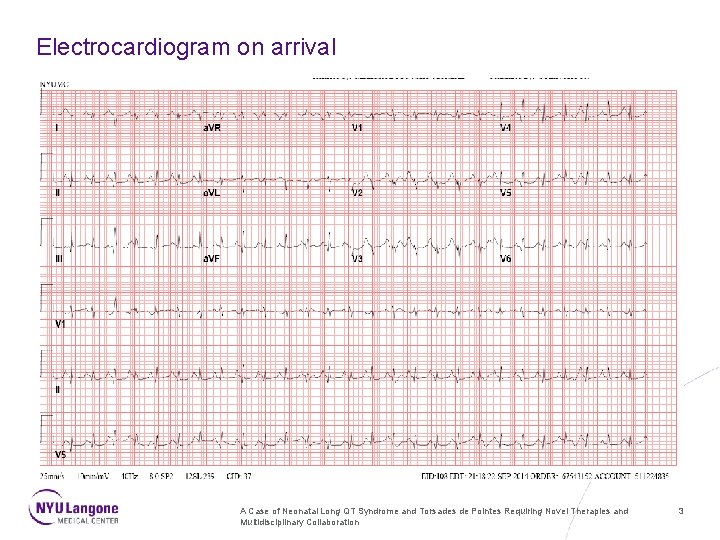
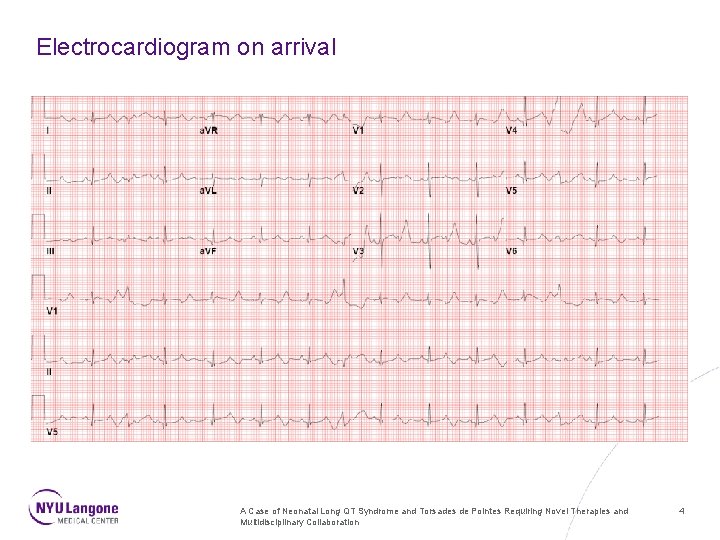
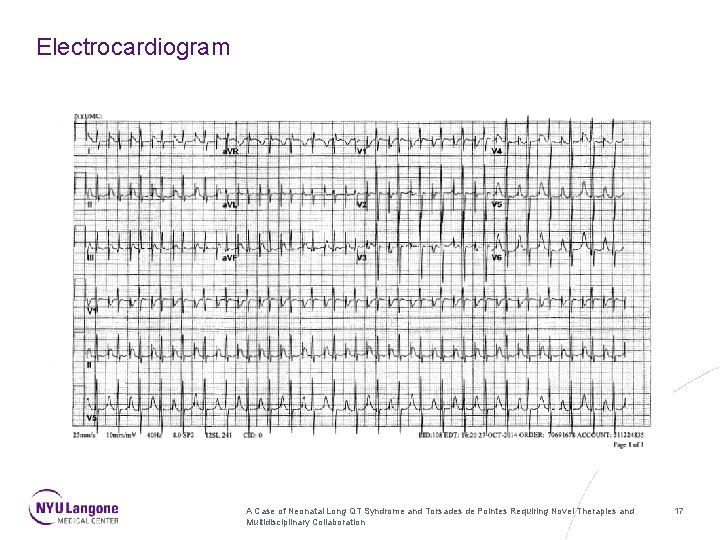
History of Present Illness • A full term female infant was delivered by emergency cesarean section for non-reassuring fetal heart rate • Mother was a gravida one with limited prenatal care • At birth, the patient was noted to be bradycardic with a heart rate of 50 -60 beats per minute • An ECG was performed and it demonstrated 2: 1 AV block with a corrected QT interval of 620 milliseconds with multiple episodes of Td. P • She was treated with IV magnesium and emergently transferred to our institution for further management A Case of Neonatal Long QT Syndrome and Torsades de Pointes Requiring Novel Therapies and Multidisciplinary Collaboration 2
Electrocardiogram on arrival A Case of Neonatal Long QT Syndrome and Torsades de Pointes Requiring Novel Therapies and Multidisciplinary Collaboration 3
Electrocardiogram on arrival A Case of Neonatal Long QT Syndrome and Torsades de Pointes Requiring Novel Therapies and Multidisciplinary Collaboration 4
Hospital Course • On arrival to our institution, she was noticed to be in cardiogenic shock • She developed Multi-Organ Dysfunction Syndrome including: • Acute lung injury • Acute kidney injury • Necrotizing enterocolitis (NEC) requiring exploratory laparotomy • Due to unstable hemodynamics, she was emergently intubated and mechanically ventilated, and inotropic and vasopressor support was initiated • Repeat ECG showed a QTc of 690 milliseconds A Case of Neonatal Long QT Syndrome and Torsades de Pointes Requiring Novel Therapies and Multidisciplinary Collaboration 5
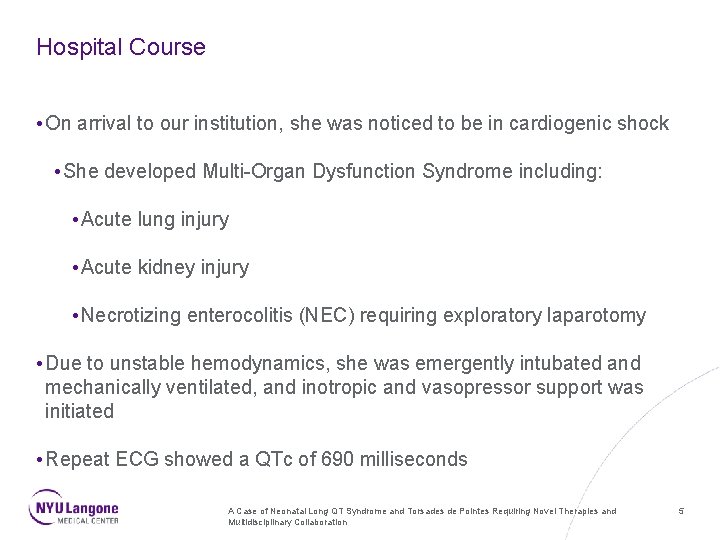
Echocardiography A Case of Neonatal Long QT Syndrome and Torsades de Pointes Requiring Novel Therapies and Multidisciplinary Collaboration 6
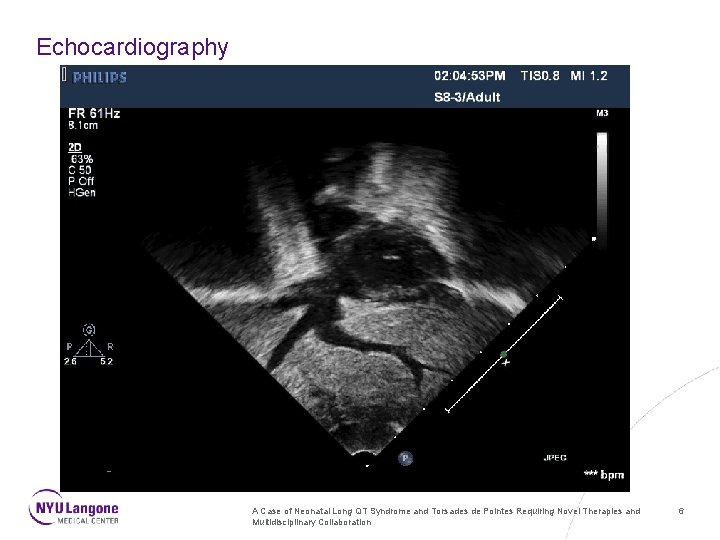
Echocardiography A Case of Neonatal Long QT Syndrome and Torsades de Pointes Requiring Novel Therapies and Multidisciplinary Collaboration 7
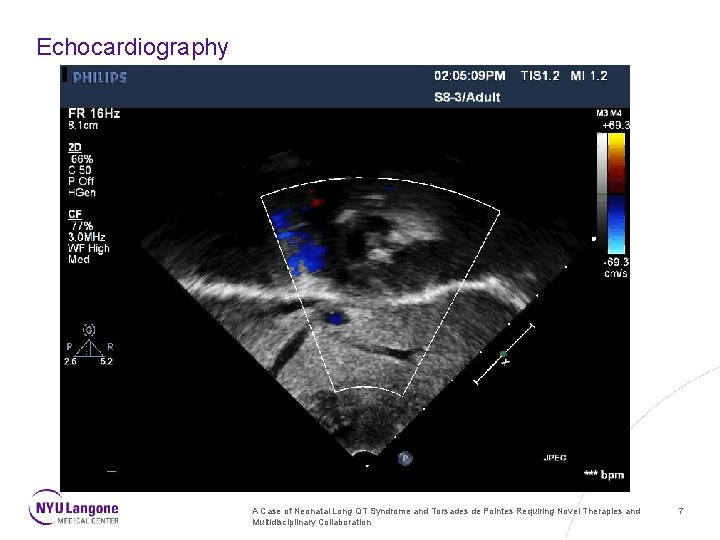
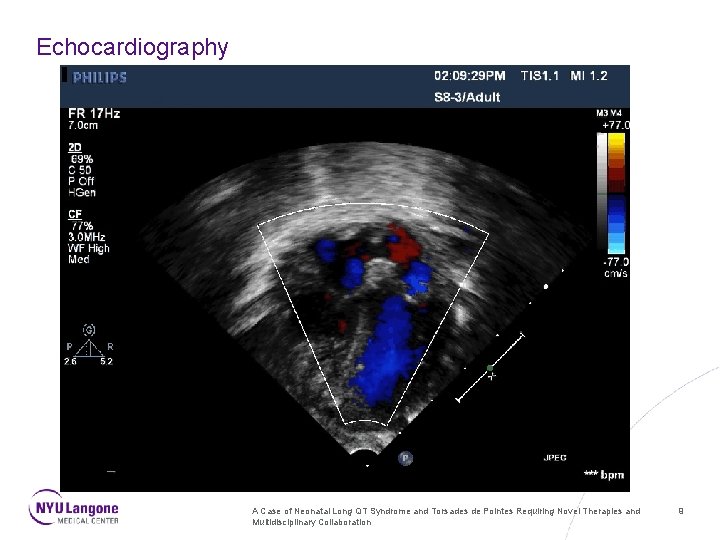
Echocardiography A Case of Neonatal Long QT Syndrome and Torsades de Pointes Requiring Novel Therapies and Multidisciplinary Collaboration 8
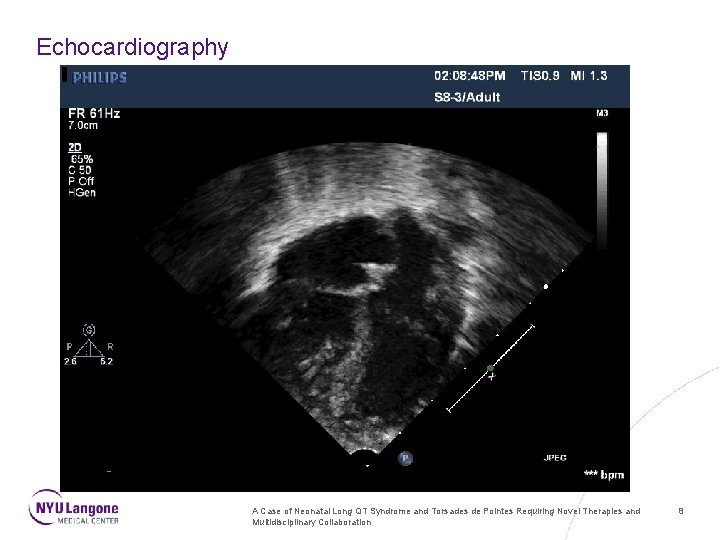
Echocardiography A Case of Neonatal Long QT Syndrome and Torsades de Pointes Requiring Novel Therapies and Multidisciplinary Collaboration 9
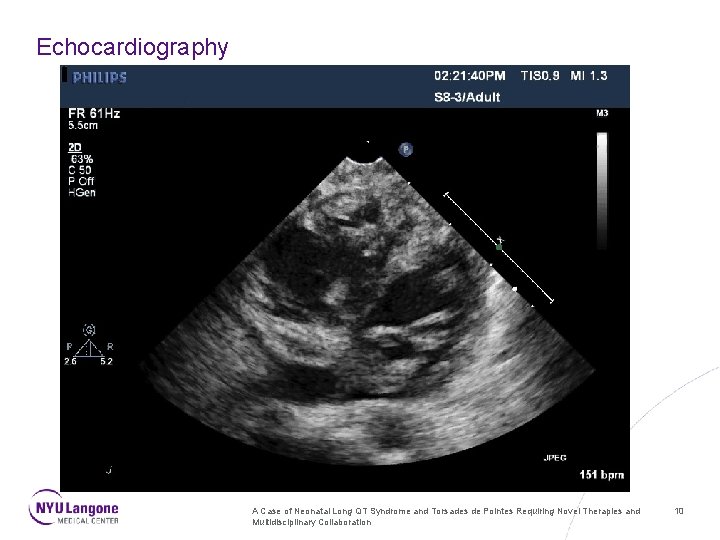
Echocardiography A Case of Neonatal Long QT Syndrome and Torsades de Pointes Requiring Novel Therapies and Multidisciplinary Collaboration 10
Hospital Course (cont. ) • Due to the inability to administer enteral antiarrhythmics after her episode of NEC, the patient was initiated on IV infusions of Isoproterenol and Magnesium • In spite of these, she continued to have multiple prolonged, but selfterminating episodes of Td. P with persistent 2: 1 block requiring frequent chest compressions • Once her bowel healed and her gut was tolerating enteral feeds, Propranolol and Mexiletine were initiated A Case of Neonatal Long QT Syndrome and Torsades de Pointes Requiring Novel Therapies and Multidisciplinary Collaboration 11
Hospital Course (cont. ) • A trial of Flecainide was also attempted to help control persistent Td. P • The patient developed increased frequency of Td. P as well as widened QRS complex consistent with Flecainide toxicity • Flecainide was discontinued • At 1 week of age, the patient underwent insertion of a transvenous atrial pacing lead which was externalized to allow for atrial pacing • This resulted in decreased frequency of Td. P • Epicardial PM/ICD placement was precluded due to recent laparotomy A Case of Neonatal Long QT Syndrome and Torsades de Pointes Requiring Novel Therapies and Multidisciplinary Collaboration 12
Hospital Course (cont. ) • The patient continued to have periods of 2: 1 block and Td. P in the setting of a persistent, severely prolonged QTc despite improved ventricular function, end organ function and overall clinical status • Ranolazine was added at 4 mg/kg/day • At two weeks of age, the patient underwent LCSD and placement of an epicardial dual chambered PM/ICD. • Weight at this time was 3. 28 kg. • Periods of 2: 1 block and Td. P continued • Three days later Ranolazine was increased to 8 mg/kg/day. A Case of Neonatal Long QT Syndrome and Torsades de Pointes Requiring Novel Therapies and Multidisciplinary Collaboration 13
Hospital Course (cont. ) • Subsequently, she was weaned off the Isoproterenol and Magnesium infusions • Due to persistent 2: 1 block and periods of Torsades with atrial pacing, the patient’s pacemaker mode was changed to VVI 100 with a hysteresis of 30 • Although her QTc remains prolonged, she now persistently has 1: 1 conduction and she has been free of Td. P • Studies confirmed the diagnosis of type III LQTS A Case of Neonatal Long QT Syndrome and Torsades de Pointes Requiring Novel Therapies and Multidisciplinary Collaboration 14
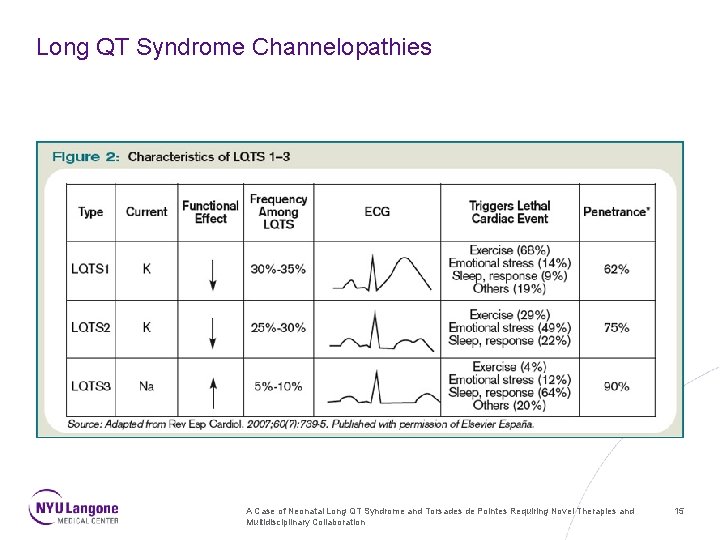
Long QT Syndrome Channelopathies A Case of Neonatal Long QT Syndrome and Torsades de Pointes Requiring Novel Therapies and Multidisciplinary Collaboration 15
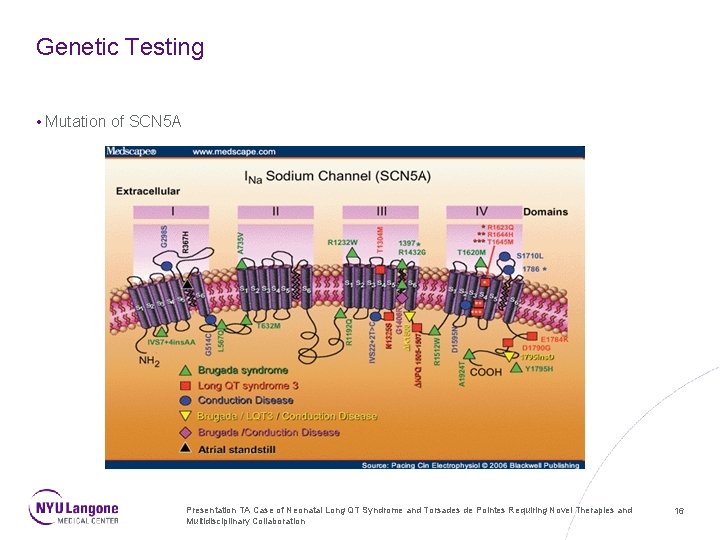
Genetic Testing • Mutation of SCN 5 A Presentation TA Case of Neonatal Long QT Syndrome and Torsades de Pointes Requiring Novel Therapies and Multidisciplinary Collaboration 16
Electrocardiogram A Case of Neonatal Long QT Syndrome and Torsades de Pointes Requiring Novel Therapies and Multidisciplinary Collaboration 17
QTc Progression During The Hospital Stay A Case of Neonatal Long QT Syndrome and Torsades de Pointes Requiring Novel Therapies and Multidisciplinary Collaboration 18
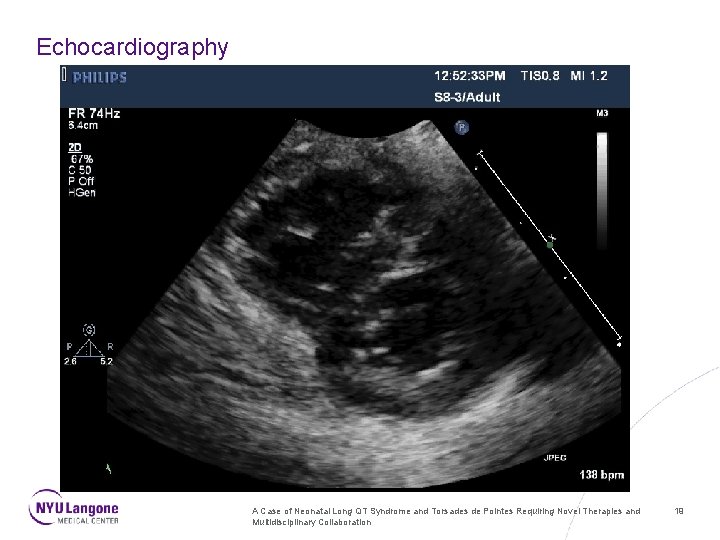
Echocardiography A Case of Neonatal Long QT Syndrome and Torsades de Pointes Requiring Novel Therapies and Multidisciplinary Collaboration 19
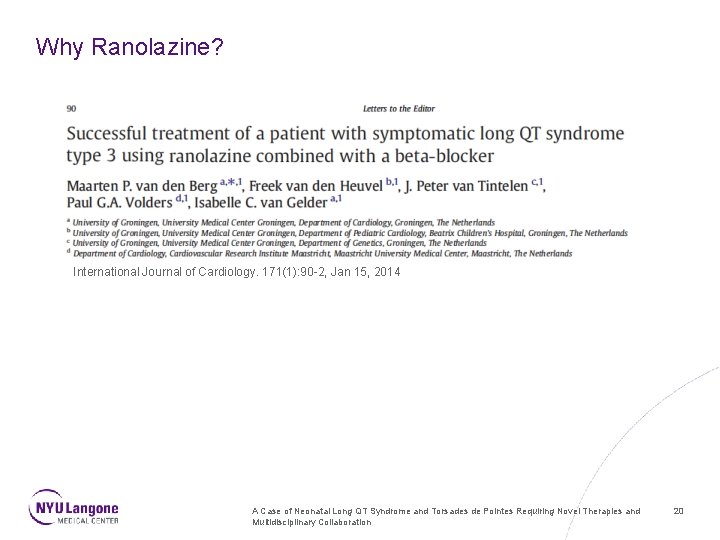
Why Ranolazine? International Journal of Cardiology. 171(1): 90 -2, Jan 15, 2014 A Case of Neonatal Long QT Syndrome and Torsades de Pointes Requiring Novel Therapies and Multidisciplinary Collaboration 20
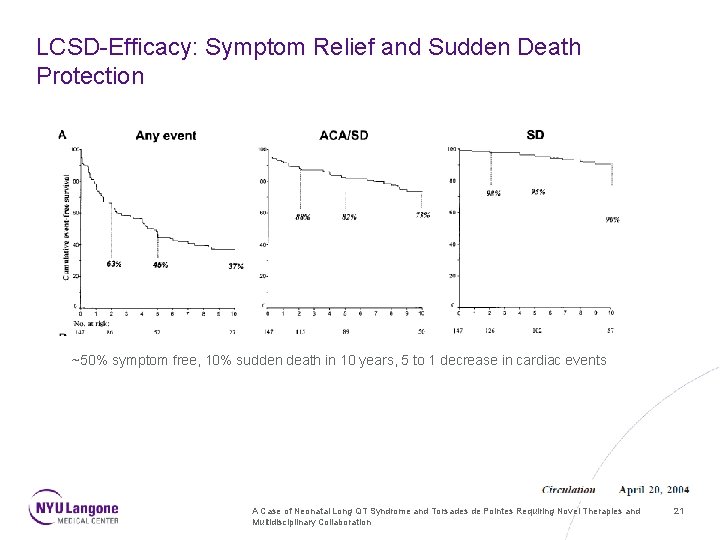
LCSD-Efficacy: Symptom Relief and Sudden Death Protection International Journal of Cardiology. 171(1): 90 -2, Jan 15, 2014 ~50% symptom free, 10% sudden death in 10 years, 5 to 1 decrease in cardiac events A Case of Neonatal Long QT Syndrome and Torsades de Pointes Requiring Novel Therapies and Multidisciplinary Collaboration 21
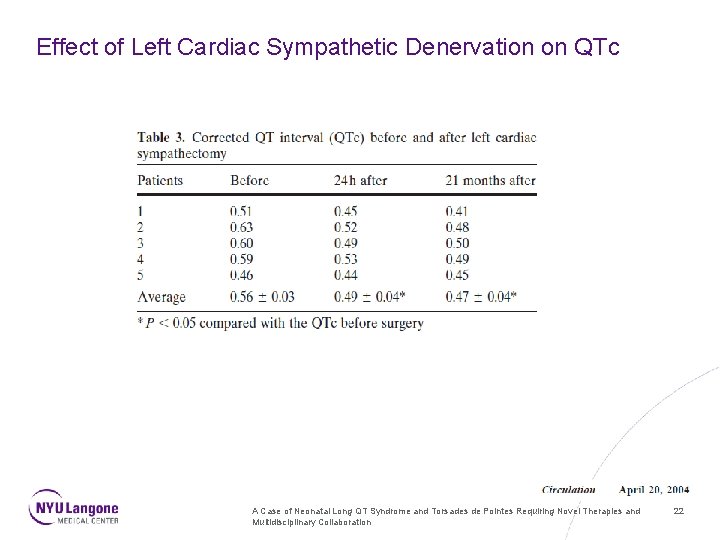
Effect of Left Cardiac Sympathetic Denervation on QTc A Case of Neonatal Long QT Syndrome and Torsades de Pointes Requiring Novel Therapies and Multidisciplinary Collaboration 22
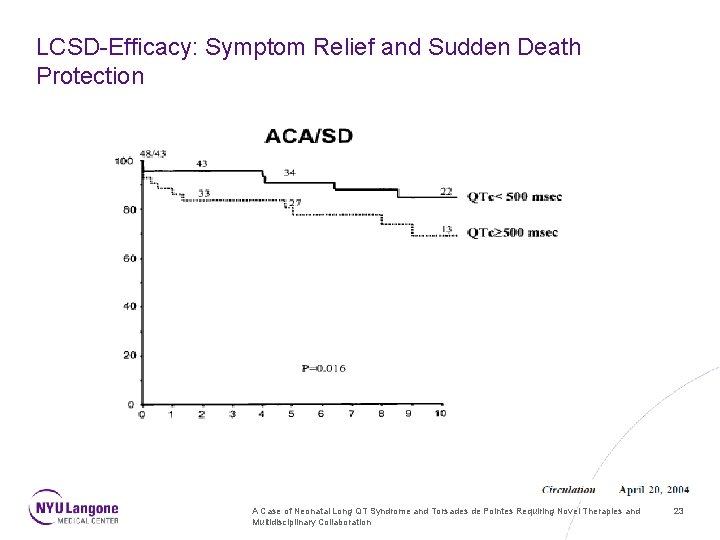
LCSD-Efficacy: Symptom Relief and Sudden Death Protection A Case of Neonatal Long QT Syndrome and Torsades de Pointes Requiring Novel Therapies and Multidisciplinary Collaboration 23
Thank You Questions? Presentation Title Goes Here 24