
A case of Dengue Virus Ricketssia coinfection Department

- Slides: 16
A case of Dengue Virus & Ricketssia co-infection Department of Microbiology Dr. Prachi C. Bhide
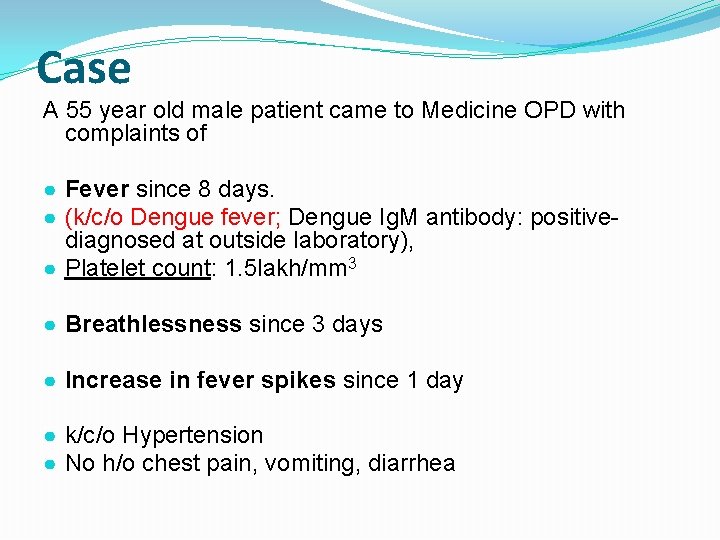
Case A 55 year old male patient came to Medicine OPD with complaints of ● Fever since 8 days. ● (k/c/o Dengue fever; Dengue Ig. M antibody: positive- diagnosed at outside laboratory), ● Platelet count: 1. 5 lakh/mm 3 ● Breathlessness since 3 days ● Increase in fever spikes since 1 day ● k/c/o Hypertension ● No h/o chest pain, vomiting, diarrhea
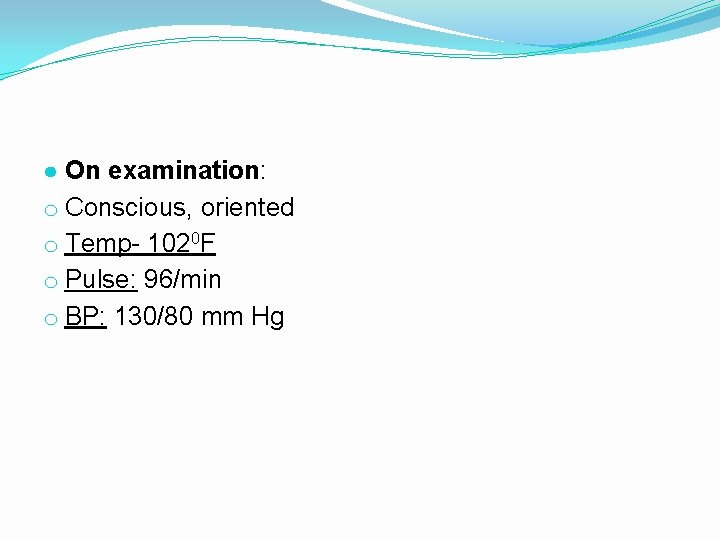
● On examination: o Conscious, oriented o Temp- 1020 F o Pulse: 96/min o BP: 130/80 mm Hg
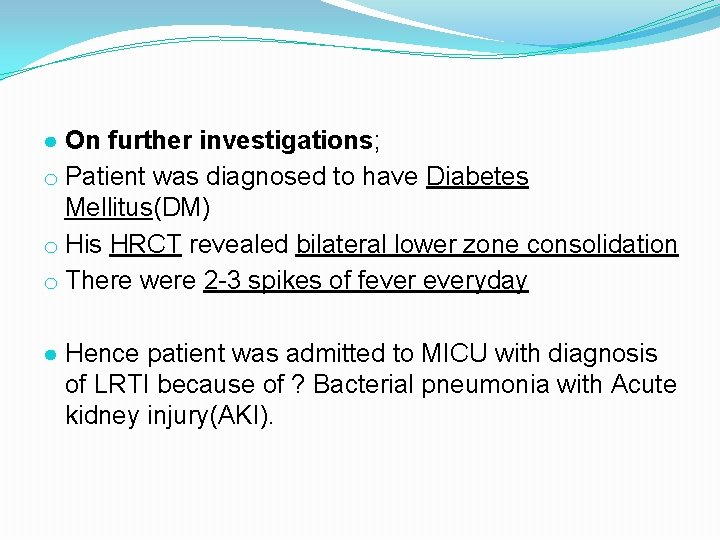
● On further investigations; o Patient was diagnosed to have Diabetes Mellitus(DM) o His HRCT revealed bilateral lower zone consolidation o There were 2 -3 spikes of feveryday ● Hence patient was admitted to MICU with diagnosis of LRTI because of ? Bacterial pneumonia with Acute kidney injury(AKI).
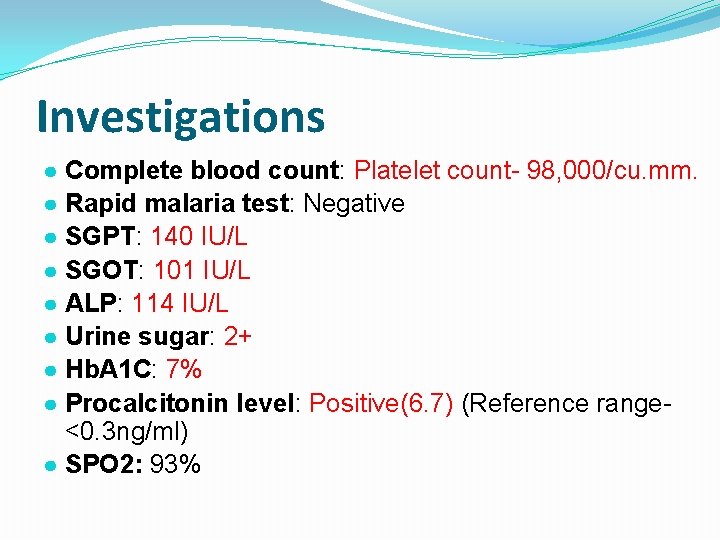
Investigations ● Complete blood count: Platelet count- 98, 000/cu. mm. ● Rapid malaria test: Negative ● SGPT: 140 IU/L ● SGOT: 101 IU/L ● ALP: 114 IU/L ● Urine sugar: 2+ ● Hb. A 1 C: 7% ● Procalcitonin level: Positive(6. 7) (Reference range- <0. 3 ng/ml) ● SPO 2: 93%
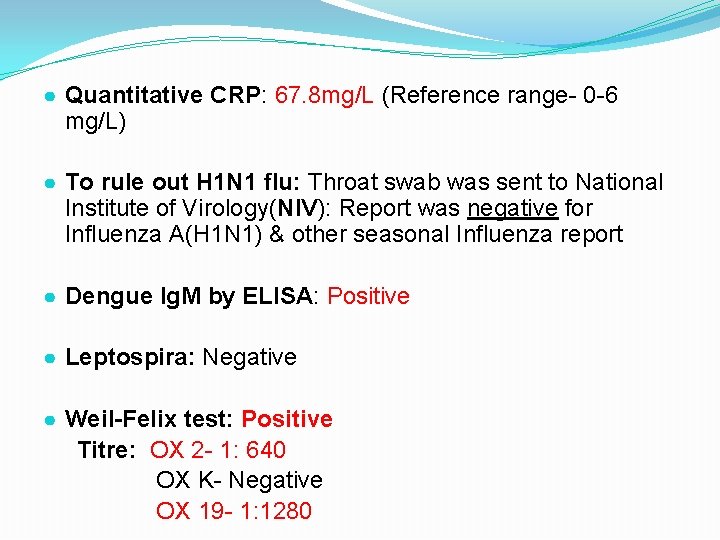
● Quantitative CRP: 67. 8 mg/L (Reference range- 0 -6 mg/L) ● To rule out H 1 N 1 flu: Throat swab was sent to National Institute of Virology(NIV): Report was negative for Influenza A(H 1 N 1) & other seasonal Influenza report ● Dengue Ig. M by ELISA: Positive ● Leptospira: Negative ● Weil-Felix test: Positive Titre: OX 2 - 1: 640 OX K- Negative OX 19 - 1: 1280
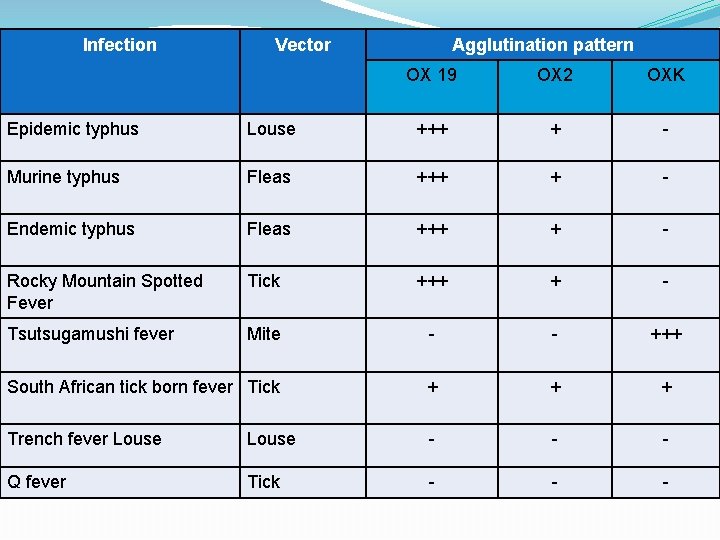
Infection Vector Agglutination pattern OX 19 OX 2 OXK Epidemic typhus Louse +++ + - Murine typhus Fleas +++ + - Endemic typhus Fleas +++ + - Rocky Mountain Spotted Fever Tick +++ + - Tsutsugamushi fever Mite - - +++ South African tick born fever Tick + + + Trench fever Louse - - - Q fever Tick - - -
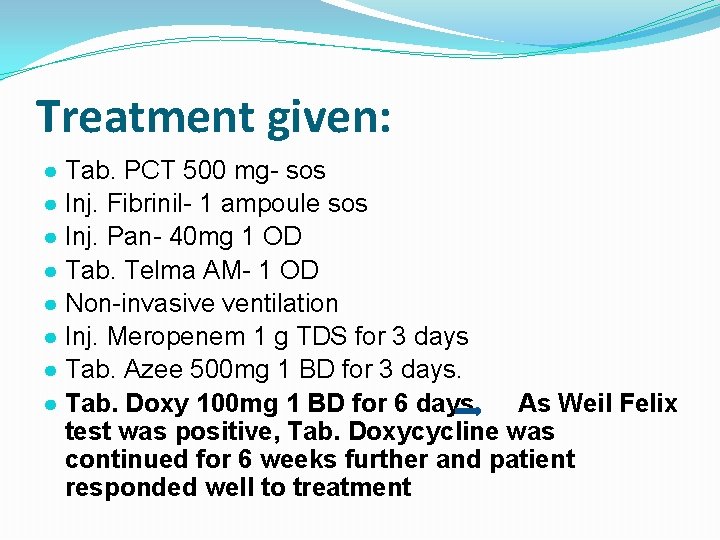
Treatment given: ● Tab. PCT 500 mg- sos ● Inj. Fibrinil- 1 ampoule sos ● Inj. Pan- 40 mg 1 OD ● Tab. Telma AM- 1 OD ● Non-invasive ventilation ● Inj. Meropenem 1 g TDS for 3 days ● Tab. Azee 500 mg 1 BD for 3 days. ● Tab. Doxy 100 mg 1 BD for 6 days As Weil Felix test was positive, Tab. Doxycycline was continued for 6 weeks further and patient responded well to treatment
● Patient got discharged on request after 3 days of admission. ● He got admitted to another tertiary care hospital for further management. ● After further follow up with patient by telephonic conversation; it was confirmed that patient responded well to o 6 weeks Tab Doxycycline treatment(100 mg BD) o Symtomatic treatment for Dengue fever
Dengue & co-infection in tropics ● Acute febrile illness is a common clinical syndrome among patients seeking hospital care in India. ● Concurrent infection with two agents can result in an illness having overlapping symptoms creating a diagnostic dilemma for the treating physician. ● o o o o Common co-infection with Dengue virus in India Salmonella Typhi Chikungunya virus Plasmodium spp. Leptospira Influenza A virus Ricketssia JE virus
Discussion: ● Dengue- a mosquito-borne viral infection ● Ricketssial infections- caused by Ricketssiae which are diverse group of organisms transmitted by arthropod vectors(lice, fleas, ticks, mites) ● In India, Ricketssial infections are reported from Maharashtra, Tamil nadu, Karnataka, Kerala, Jammu and Kashmir, Uttaranchal, Himachal Pradesh, Rajasthan, Assam and West Bengal. ● Both diseases have several clinical and laboratory features in common, including rash, thrombocytopenia, and hepatic dysfunction. However, concurrent infection with both pathogens is exceedingly rare, primarily due to the different vectors involved. ● Concurrent infection with multiple pathogens is common in tropics, posing diagnostic and treatment challenges.
● Data on dengue and ricketssial fever co-infection is distinctly limited. ● Dengue-ricketssial fever co-infection may remain under- diagnosed in tropics, particularly confounded during dengue epidemics. ● Normal leukocyte counts, early drop in platelets and hypoalbuminemia in dengue patients could be clues to concurrent ricketssial fever infection. ● Prompt recognition and treatment of ricketssial infection in such cases may reduce unnecessary hospital stay and cost.
Similar case reports from India ● Pondicherry Institute of Medical Sciences, Puducherry- 2010 -2014 - 6 cases of Dengue fever- Scrub typhus co-infection ● I. G. Medical College, Shimla- 2015 - 1 case of Dengue fever- Scrub typhus co-infection ● Himalayan Institute of Medical Sciences, Dehradun- 2015 - Rare Co-infection of Malaria, Scrub Typhus and Dengue virus in an Immunocompetent Patient
Take Home Message ● Very limited data on dengue and ricketssial fever co- infection ● High index of suspicion about ricketssial fever ● Additional tests should be done for accurate diagnosis in a case of un-resolving fever in endemic regions to reduce morbidity & mortality
References ● Mediterr J Hematol Infect Dis. 2016; 8(1): e 2016028 ● The Indian Practitioner. Volume 68, Issue 9, September 2015 ● Int. J. Curr. Microbiol. App. Sci (2015) 4(5): 295 -297 ● Indian peadeatr. 2010 Feb; 47(2): 157 -64.
THANK YOU…