
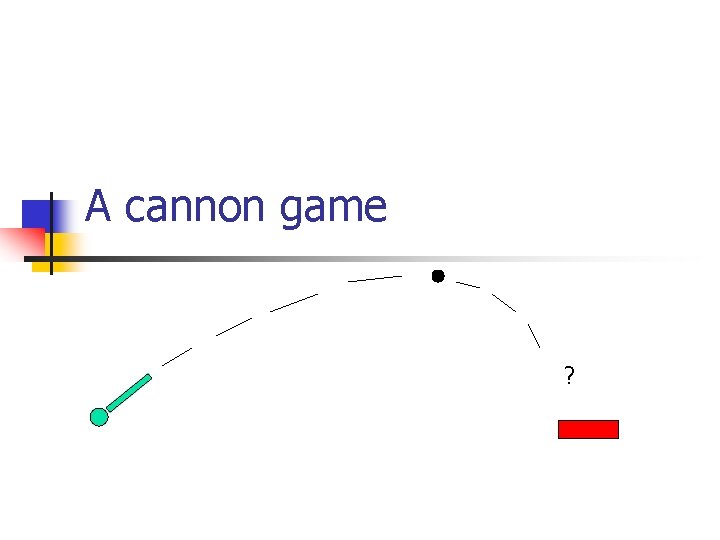
A cannon game Simple version n n angle
- Slides: 11
A cannon game ?
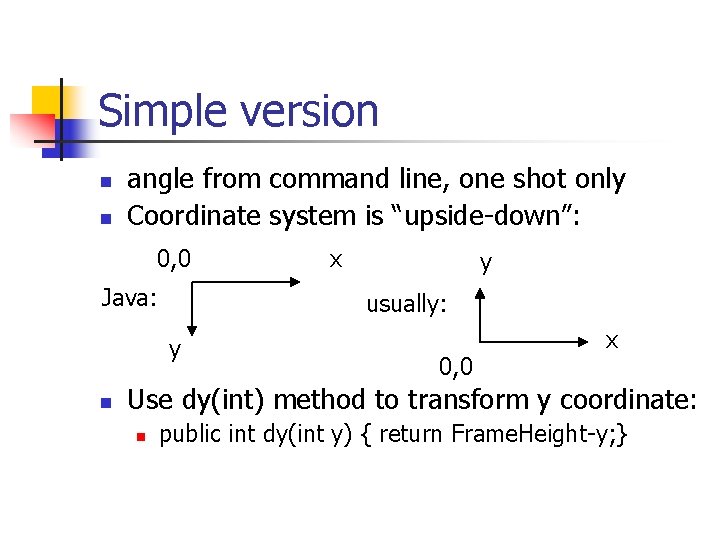
Simple version n n angle from command line, one shot only Coordinate system is “upside-down”: 0, 0 Java: y usually: y n x 0, 0 x Use dy(int) method to transform y coordinate: n public int dy(int y) { return Frame. Height-y; }
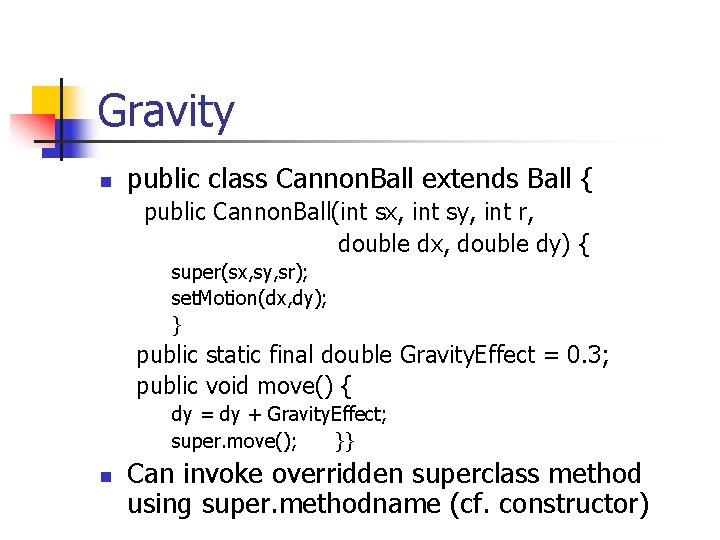
Gravity n public class Cannon. Ball extends Ball { public Cannon. Ball(int sx, int sy, int r, double dx, double dy) { super(sx, sy, sr); set. Motion(dx, dy); } public static final double Gravity. Effect = 0. 3; public void move() { dy = dy + Gravity. Effect; super. move(); }} n Can invoke overridden superclass method using super. methodname (cf. constructor)
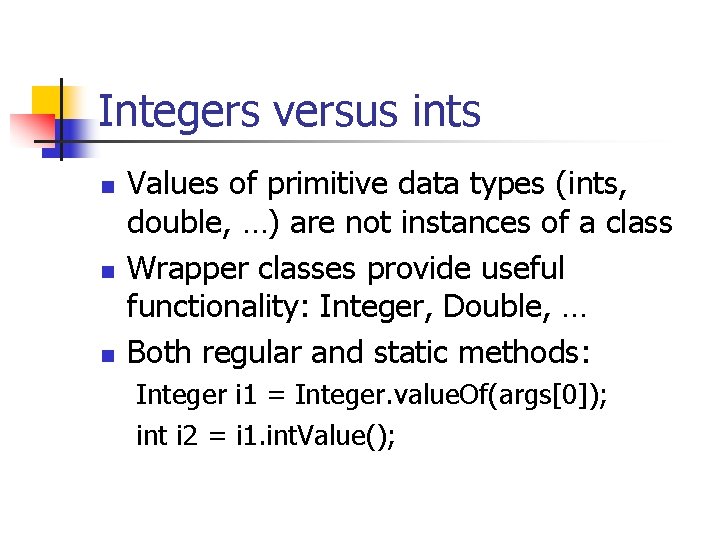
Integers versus ints n n n Values of primitive data types (ints, double, …) are not instances of a class Wrapper classes provide useful functionality: Integer, Double, … Both regular and static methods: Integer i 1 = Integer. value. Of(args[0]); int i 2 = i 1. int. Value();
Version 2: User interaction n Button: start/terminate, turn on/off something Slider: one way of selecting a quantity Need to import both java. awt. * as well as java. awt. event. *
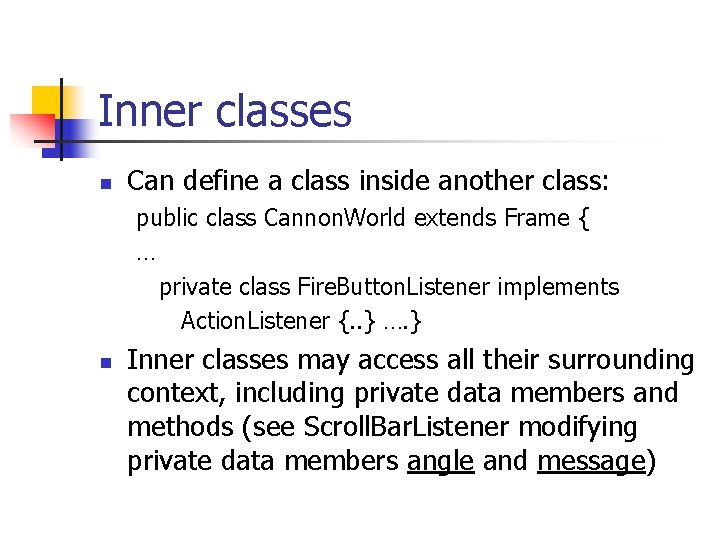
Inner classes n Can define a class inside another class: public class Cannon. World extends Frame { … private class Fire. Button. Listener implements Action. Listener {. . } …. } n Inner classes may access all their surrounding context, including private data members and methods (see Scroll. Bar. Listener modifying private data members angle and message)
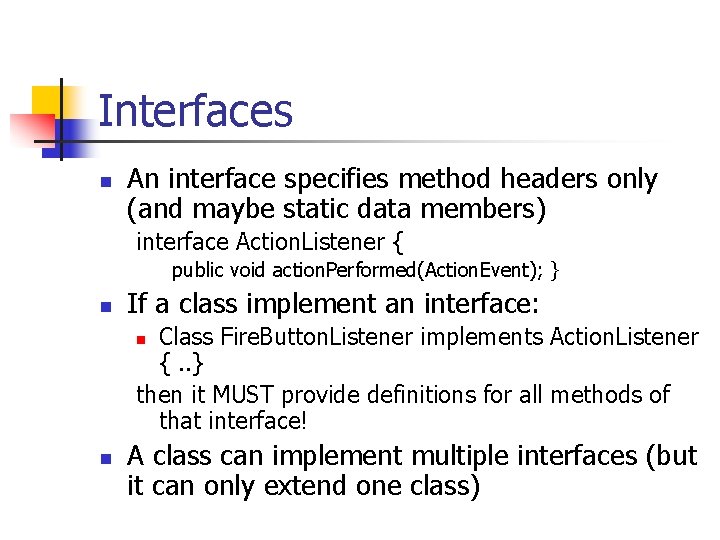
Interfaces n An interface specifies method headers only (and maybe static data members) interface Action. Listener { public void action. Performed(Action. Event); } n If a class implement an interface: Class Fire. Button. Listener implements Action. Listener {. . } then it MUST provide definitions for all methods of that interface! n n A class can implement multiple interfaces (but it can only extend one class)
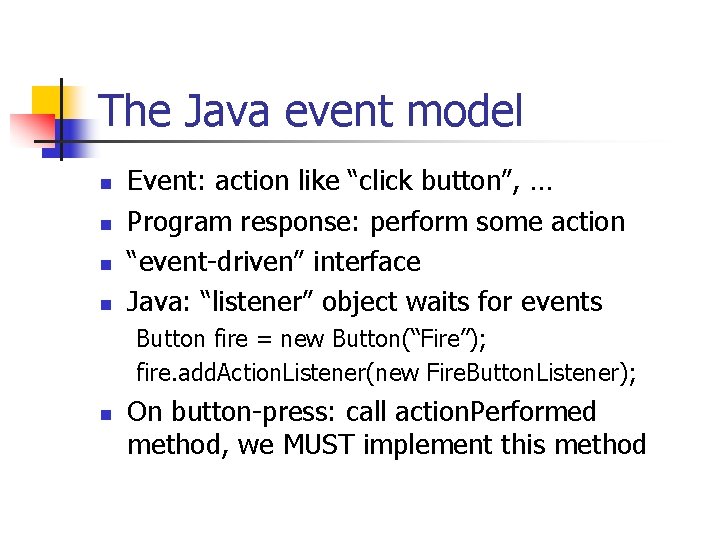
The Java event model n n Event: action like “click button”, … Program response: perform some action “event-driven” interface Java: “listener” object waits for events Button fire = new Button(“Fire”); fire. add. Action. Listener(new Fire. Button. Listener); n On button-press: call action. Performed method, we MUST implement this method
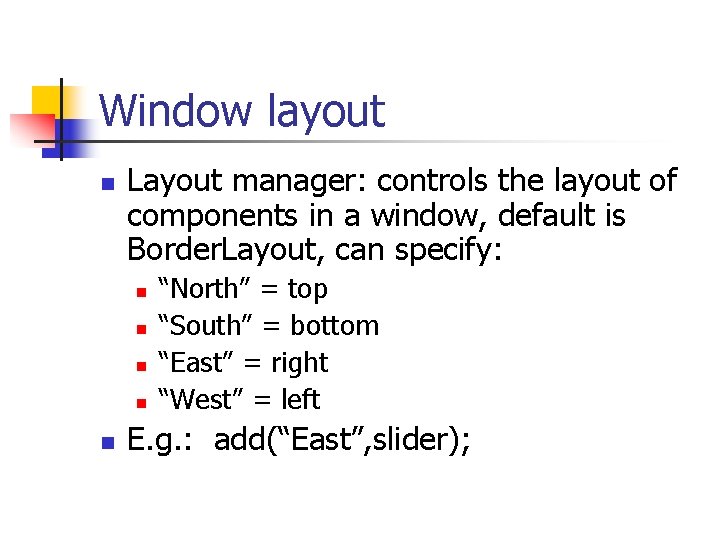
Window layout n Layout manager: controls the layout of components in a window, default is Border. Layout, can specify: n n n “North” = top “South” = bottom “East” = right “West” = left E. g. : add(“East”, slider);
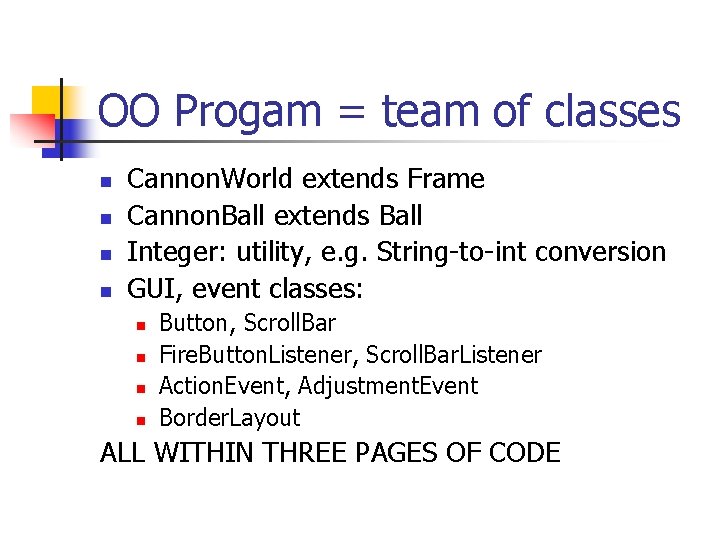
OO Progam = team of classes n n Cannon. World extends Frame Cannon. Ball extends Ball Integer: utility, e. g. String-to-int conversion GUI, event classes: n n Button, Scroll. Bar Fire. Button. Listener, Scroll. Bar. Listener Action. Event, Adjustment. Event Border. Layout ALL WITHIN THREE PAGES OF CODE
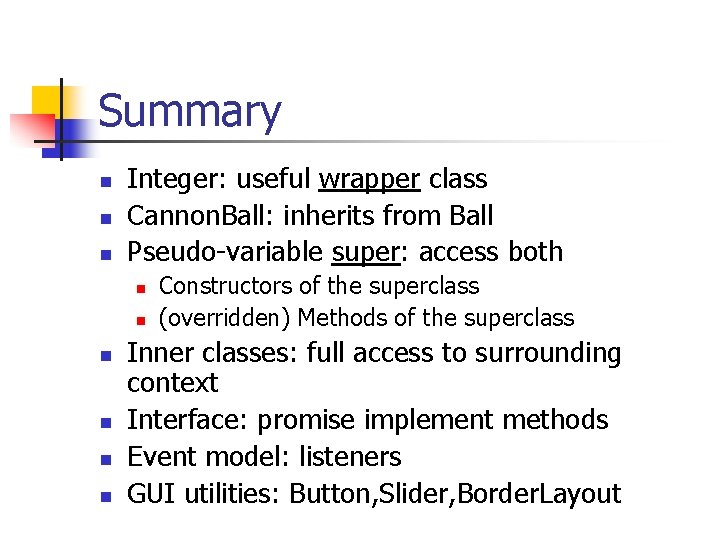
Summary n n n Integer: useful wrapper class Cannon. Ball: inherits from Ball Pseudo-variable super: access both n n n Constructors of the superclass (overridden) Methods of the superclass Inner classes: full access to surrounding context Interface: promise implement methods Event model: listeners GUI utilities: Button, Slider, Border. Layout