
A Budding Issue Marijuana and Gambling Timothy Fong
A Budding Issue: Marijuana and Gambling Timothy Fong MD UCLA Cannabis Research Initiative UCLA Gambling Studies Program NYCPG Annual Conference November 2017
Financial Disclosures Speaker’s Bureau: Indivior Research Support Connections in Recovery Constellation Health Consultant Onward, Inc. Alkermes
Recent Case at UCLA • 20 year old female admitted for violent outbursts, screaming after losing Instagram account • Could not settle down in ER and required restraints • 6 days to calm down in hospital, with meds (irritable, hostile, poor sleep, not learning / adapting)
Current Case in Hospital • History revealed – Initiated cannabis use at age 17 – Daily use of cannabis since age 18 – Grades declined, limited friends, isolates, aggressive toward family, slept poorly, stalled life development – Never tried to quit / stop
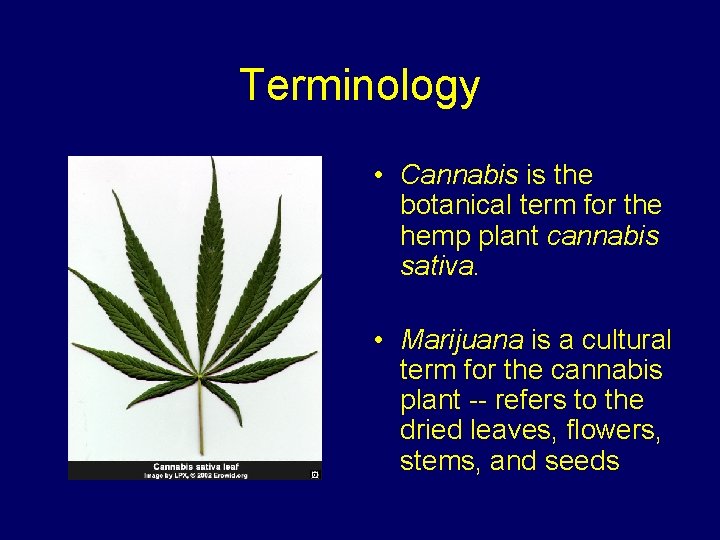
Terminology • Cannabis is the botanical term for the hemp plant cannabis sativa. • Marijuana is a cultural term for the cannabis plant -- refers to the dried leaves, flowers, stems, and seeds
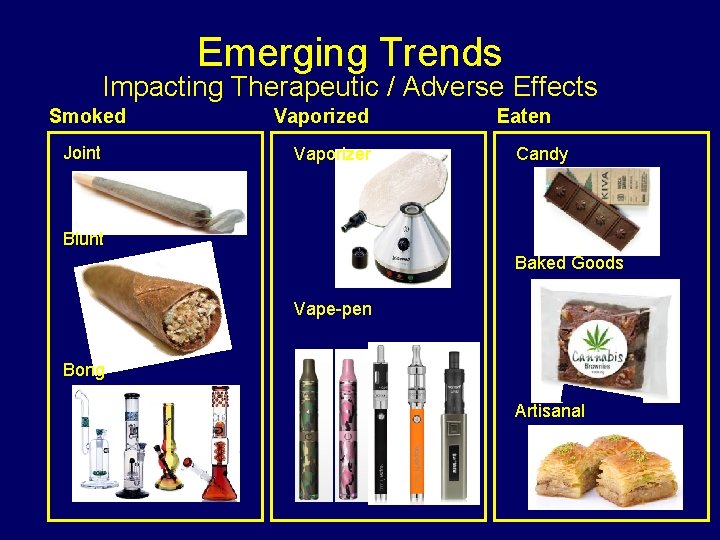
Emerging Trends Impacting Therapeutic / Adverse Effects Smoked Joint Vaporized Vaporizer Eaten Candy Blunt Baked Goods Vape-pen Bong Artisanal
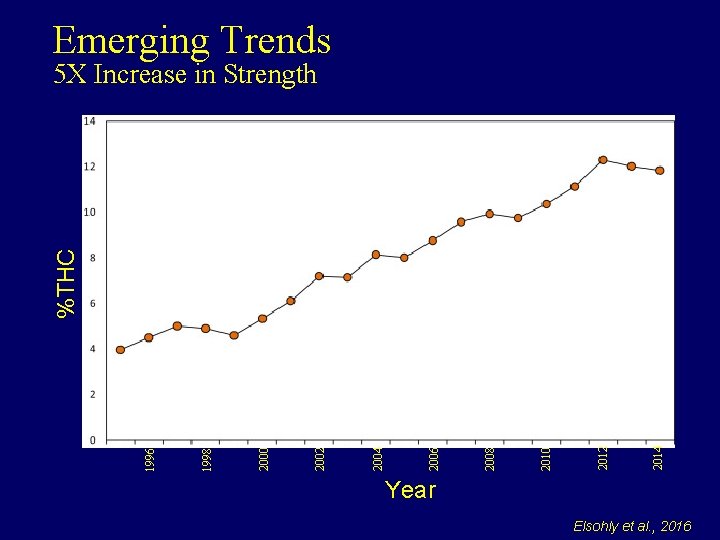
Emerging Trends 2014 2012 2010 2008 2006 2004 2002 2000 1998 1996 %THC 5 X Increase in Strength Year Elsohly et al. , 2016
Terminology Cannabinoids: Class of compounds that act on cannabinoid receptors Endogenous Plant-derived (THC, CBD; >100) Synthetic (Marinol, Spice)
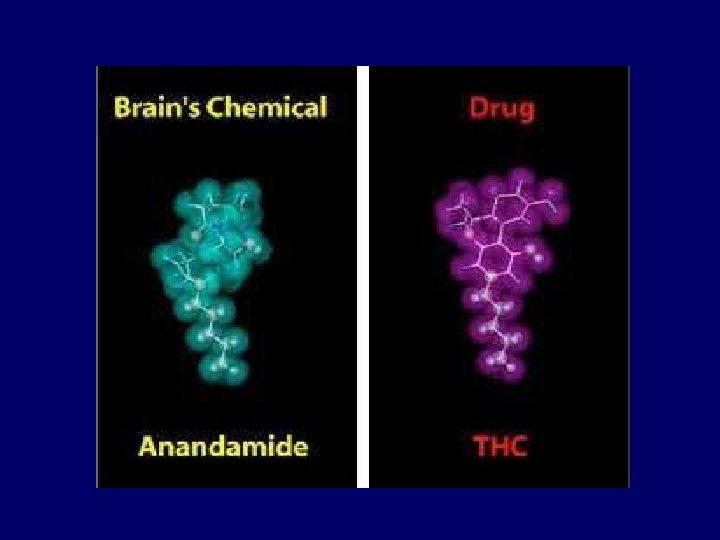
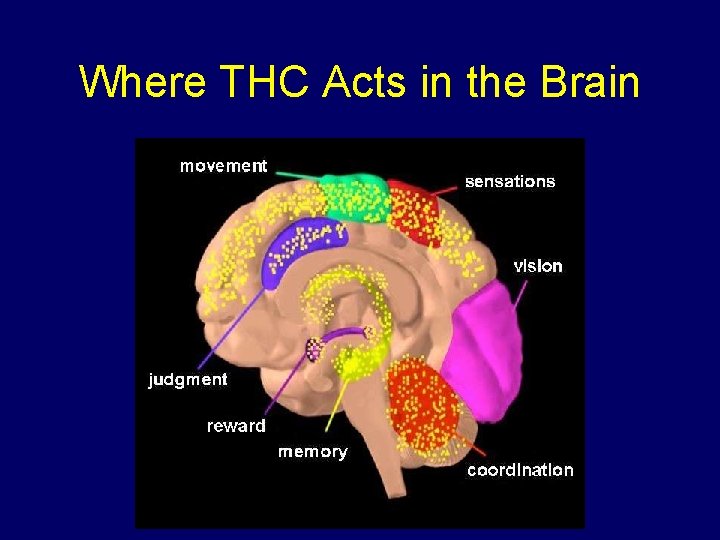
Where THC Acts in the Brain
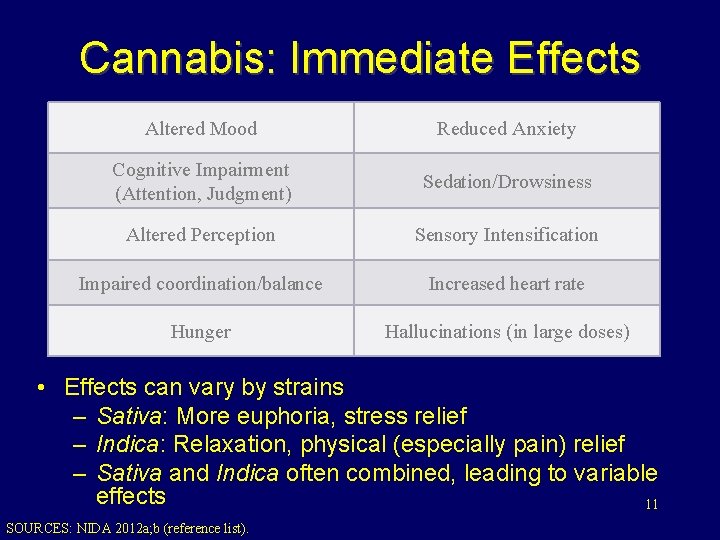
Cannabis: Immediate Effects Altered Mood Reduced Anxiety Cognitive Impairment (Attention, Judgment) Sedation/Drowsiness Altered Perception Sensory Intensification Impaired coordination/balance Increased heart rate Hunger Hallucinations (in large doses) • Effects can vary by strains – Sativa: More euphoria, stress relief – Indica: Relaxation, physical (especially pain) relief – Sativa and Indica often combined, leading to variable effects 11 SOURCES: NIDA 2012 a; b (reference list).
National Trends
National Trends • Since 2008, perception of harm among 12 th graders has decreased (softening) • Legalization occurring • Medical Marijuana expanding • Emergence of “Big Weed” – Environmental, economic, political power
VERY POPULAR • 89% agree on legal use of medical marijuana “if prescribed by a doctor” – June 2016, Quinnipiac University Poll • 60% agree on legal use of cannabis recreationally – October 2016 Gallup Poll
Commonly Used Marijuana is the 3 rd most commonly used substance after alcohol and tobacco: 22 Million Users in the last 30 days (8% of people 12 years and older) 2014 National Survey of Drug Use and Health
What does the science say about cannabis?
National Academies Press (2017)
National Academies Press There is “conclusive or substantial evidence” that marijuana or related compounds can effectively treat chronic pain, nausea caused by chemotherapy treatment for cancer, and spasticity caused by multiple sclerosis.
National Academies Press: Mental Health Conclusions • Substantial Evidence of a statistical association and cannabis use with: • The development of schizophrenia or other psychoses, with the highest risk among the most frequent user
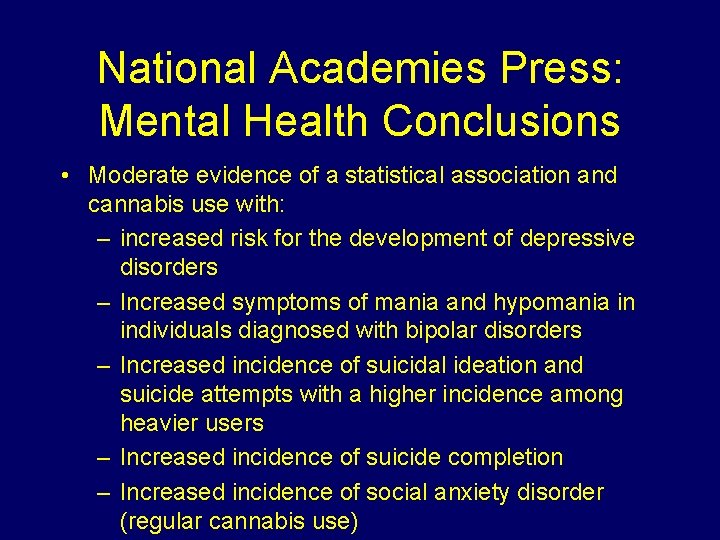
National Academies Press: Mental Health Conclusions • Moderate evidence of a statistical association and cannabis use with: – increased risk for the development of depressive disorders – Increased symptoms of mania and hypomania in individuals diagnosed with bipolar disorders – Increased incidence of suicidal ideation and suicide attempts with a higher incidence among heavier users – Increased incidence of suicide completion – Increased incidence of social anxiety disorder (regular cannabis use)
The California Cannabis Story
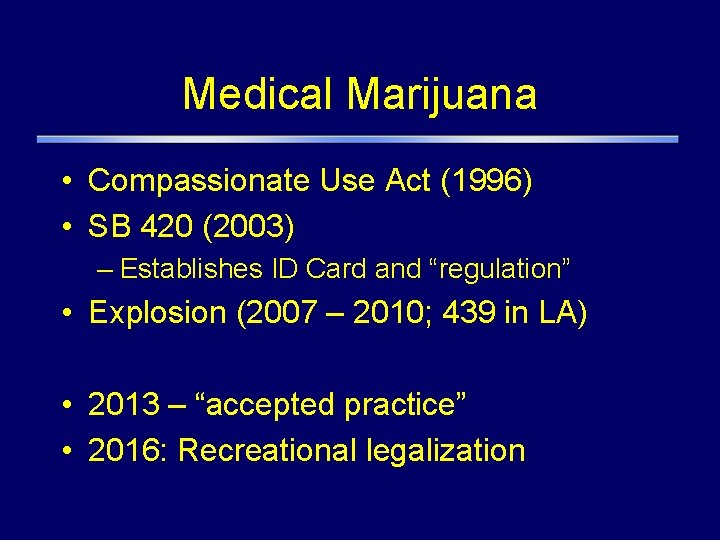
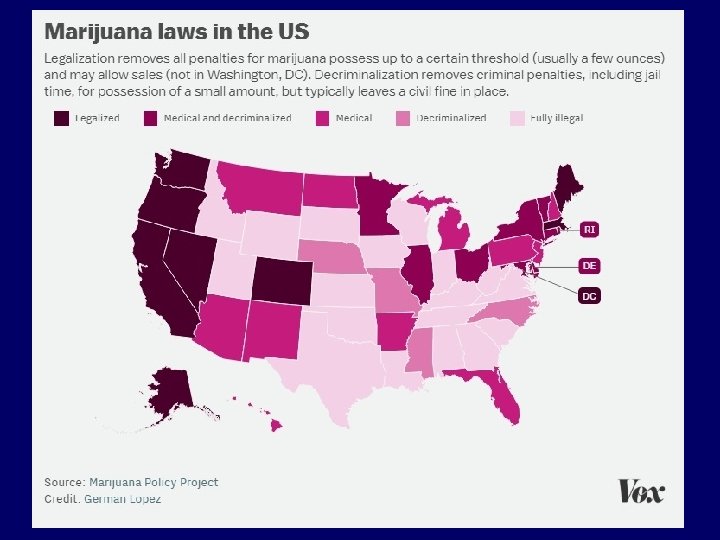
Medical Marijuana • Compassionate Use Act (1996) • SB 420 (2003) – Establishes ID Card and “regulation” • Explosion (2007 – 2010; 439 in LA) • 2013 – “accepted practice” • 2016: Recreational legalization
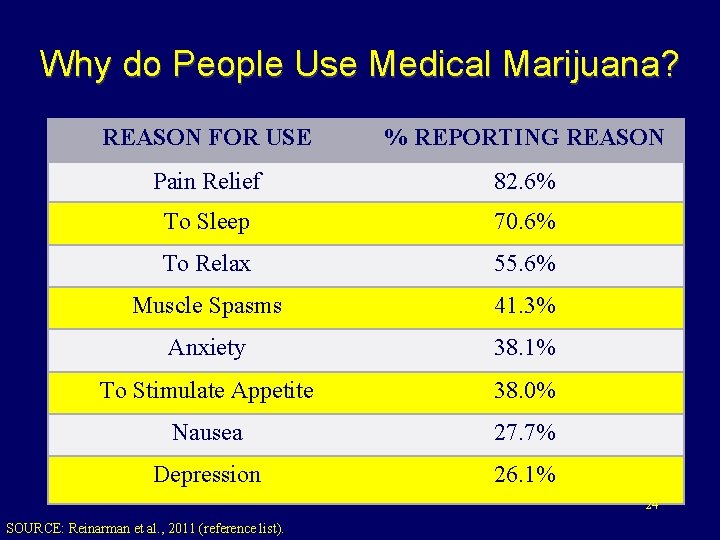
Why do People Use Medical Marijuana? REASON FOR USE % REPORTING REASON Pain Relief 82. 6% To Sleep 70. 6% To Relax 55. 6% Muscle Spasms 41. 3% Anxiety 38. 1% To Stimulate Appetite 38. 0% Nausea 27. 7% Depression 26. 1% 24 SOURCE: Reinarman et al. , 2011 (reference list).
Legalization in California
Bureau of Medical Cannabis Regulation • Persons 21 and over may purchase nonmedical cannabis when licensing authorities have enacted regulations and have a framework in place. • Licensing will begin in January of 2018. • All taxes collected are placed in the Marijuana Tax Fund.
Cannabis Use Disorder
Cannabis-Related Disorder • • • Cannabis Use Disorder Cannabis Intoxication Cannabis Withdrawal Other Cannabis-Induced Disorders Unspecified Cannabis-Related Disorder
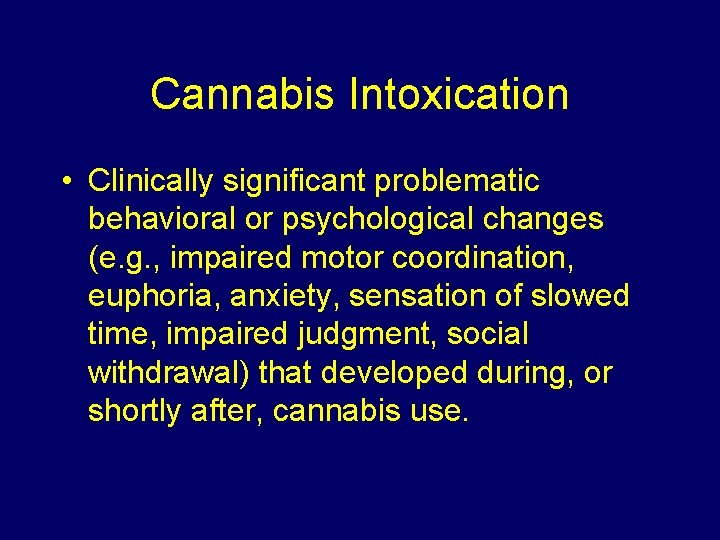
Cannabis Intoxication • Clinically significant problematic behavioral or psychological changes (e. g. , impaired motor coordination, euphoria, anxiety, sensation of slowed time, impaired judgment, social withdrawal) that developed during, or shortly after, cannabis use.
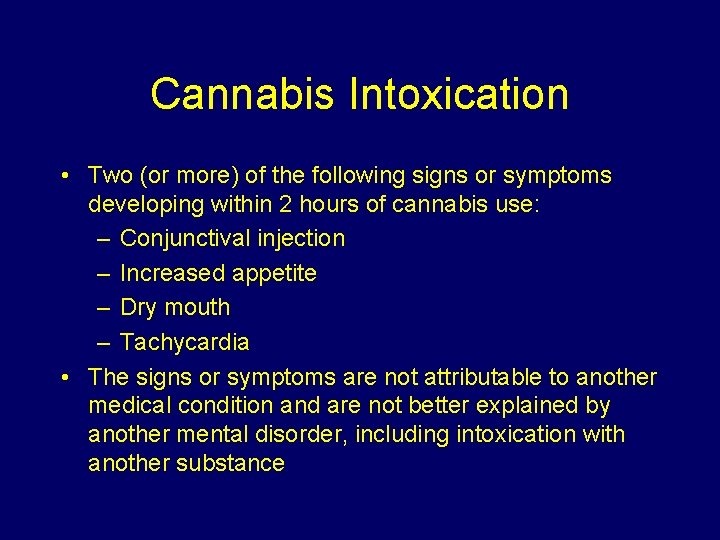
Cannabis Intoxication • Two (or more) of the following signs or symptoms developing within 2 hours of cannabis use: – Conjunctival injection – Increased appetite – Dry mouth – Tachycardia • The signs or symptoms are not attributable to another medical condition and are not better explained by another mental disorder, including intoxication with another substance
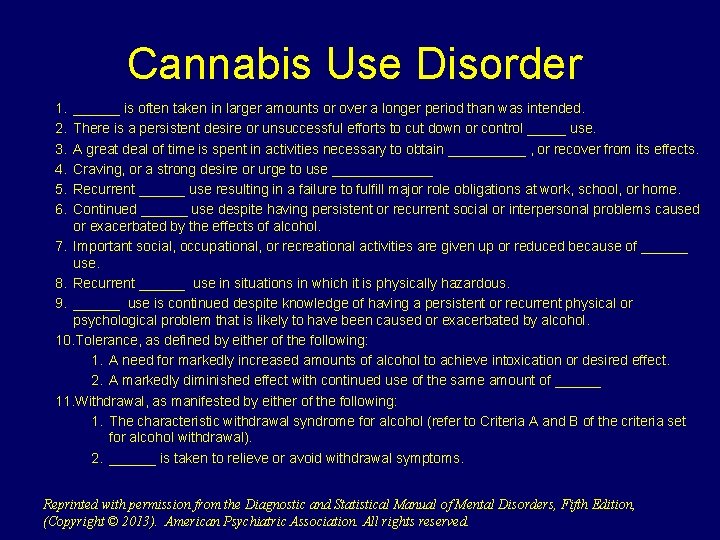
Cannabis Use Disorder 1. 2. 3. 4. 5. 6. ______ is often taken in larger amounts or over a longer period than was intended. There is a persistent desire or unsuccessful efforts to cut down or control _____ use. A great deal of time is spent in activities necessary to obtain _____ , or recover from its effects. Craving, or a strong desire or urge to use _______ Recurrent ______ use resulting in a failure to fulfill major role obligations at work, school, or home. Continued ______ use despite having persistent or recurrent social or interpersonal problems caused or exacerbated by the effects of alcohol. 7. Important social, occupational, or recreational activities are given up or reduced because of ______ use. 8. Recurrent ______ use in situations in which it is physically hazardous. 9. ______ use is continued despite knowledge of having a persistent or recurrent physical or psychological problem that is likely to have been caused or exacerbated by alcohol. 10. Tolerance, as defined by either of the following: 1. A need for markedly increased amounts of alcohol to achieve intoxication or desired effect. 2. A markedly diminished effect with continued use of the same amount of ______ 11. Withdrawal, as manifested by either of the following: 1. The characteristic withdrawal syndrome for alcohol (refer to Criteria A and B of the criteria set for alcohol withdrawal). 2. ______ is taken to relieve or avoid withdrawal symptoms. Reprinted with permission from the Diagnostic and Statistical Manual of Mental Disorders, Fifth Edition, (Copyright © 2013). American Psychiatric Association. All rights reserved.
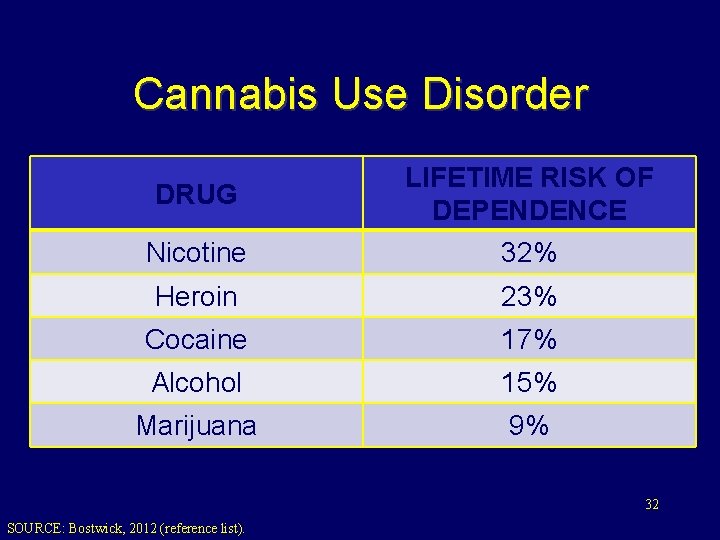
Cannabis Use Disorder DRUG LIFETIME RISK OF DEPENDENCE Nicotine 32% Heroin 23% Cocaine 17% Alcohol 15% Marijuana 9% 32 SOURCE: Bostwick, 2012 (reference list).
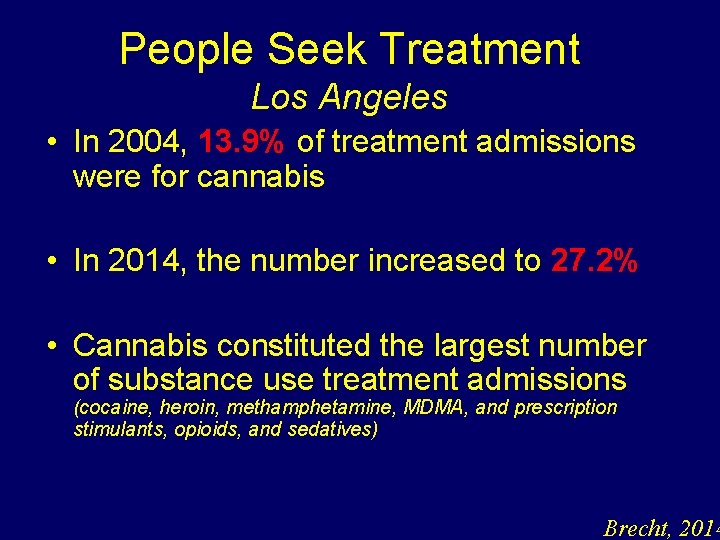
People Seek Treatment Los Angeles • In 2004, 13. 9% of treatment admissions were for cannabis • In 2014, the number increased to 27. 2% • Cannabis constituted the largest number of substance use treatment admissions (cocaine, heroin, methamphetamine, MDMA, and prescription stimulants, opioids, and sedatives) Brecht, 2014
Cannabis Withdrawal • Three (or more) of the following signs and symptoms develop within approximately 1 week: – Irritability, anger, or aggression. – Nervousness or anxiety. – Sleep difficulty (e. g. , insomnia, disturbing dreams). – Decreased appetite or weight loss. – Restlessness. – Depressed mood. • At least one of the following physical symptoms causing significant discomfort: abdominal pain, shakiness/tremors, sweating, fever, chills, or headache.
Cannabis Withdrawal • Most symptoms have their onset within the first 24– 72 hours of cessation, peak within the first week, and last approximately 1– 2 weeks. • Sleep difficulties may last more than 30 days. • Supportive treatment
Treatment Options: • No FDA-approved medications • Psychotherapy options – Similar to other addictive disorders – No superior treatment modality • 12 -step support groups • Nothing specific for cannabis
What should clinicians do? • Screen for cannabis use • Explore relationship with cannabis – Distinguish use vs. use disorder • Clarify connections of psychiatric sx to cannabis use • Update cannabis knowledge • Document accurately and confidently
A Prevention Checklist • No cannabis for under anyone under 21 • Focus on changing perception of risk – “Respect the power of cannabis” • Teach about history of marijuana • Teach about current legislative actions • Understand reasons behind cannabis demand
How will legalized recreational and medical marijuana impact gambling?
For now, Federal Law Above All “ The tilt is that there’s a federal law and we expect licensees to follow the federal law” – Nevada Gaming Commission
MJ and the Gambling Industry
Essential Question in Casinos • MJ in hotel rooms? – Especially edibles • Zero, low or high tolerance for MJ using employees? • The big “buffet” item? – How can MJ enhance gaming experience? – Cannabis lounge?
Marijuana Money • As state laws and federal laws don’t match up on marijuana, gambling industry are unable to accept money from anyone involved in the medical or recreational marijuana industry, whether it’s legal in the state or not.
Impact of marijuana on gambling
Essential Questions • • Does MJ use lead to gambling? Does gambling lead to MJ use Impact of MJ on gambling disorder? As legalization increases, how will it impact gambling behavior? • Could MJ treat gambling disorder?
Effects of various cannabinoid ligands on choice behaviour in a rat model of gambling
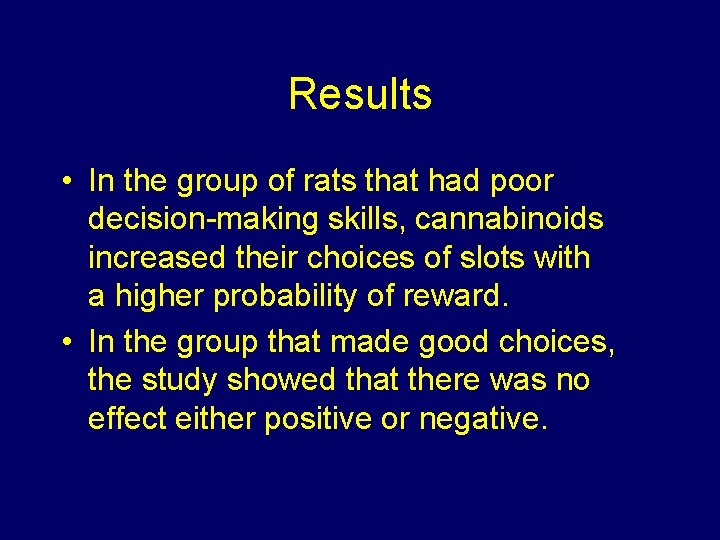
Results • In the group of rats that had poor decision-making skills, cannabinoids increased their choices of slots with a higher probability of reward. • In the group that made good choices, the study showed that there was no effect either positive or negative.
Leppink, Eric, et al. "A preliminary comparison of cannabis use in subsyndromal gamblers: select neurocognitive and behavioral differences based on use. " Journal of addiction medicine 8. 6 (2014): 443 -449.
Marijuana in Gamblers • Participants who consumed marijuana/cannabis gambled more often in any given week than the participants who did not consume the drug. • cannabis users had higher rates for alcohol use disorder,
Marijuana in Gamblers • gamblers who consumed marijuana/cannabis had higher levels of impulsive behavior than the gamblers who did not use the drug. • both the cannabis-using gamblers and the non-cannabis-using gamblers had higher impulsivity levels than the members of the comparison group that neither gambled nor consumed MJ
Neuroimaging Data • Adolescent marijuana users have enhanced neural responses to simulated monetary rewards and losses and relatively subtle differences in effective connectivity. • Acheson, Ashley, et al. "Functional activation and effective connectivity differences in adolescent marijuana users performing a simulated gambling task. " Journal of addiction 2015 (2015).
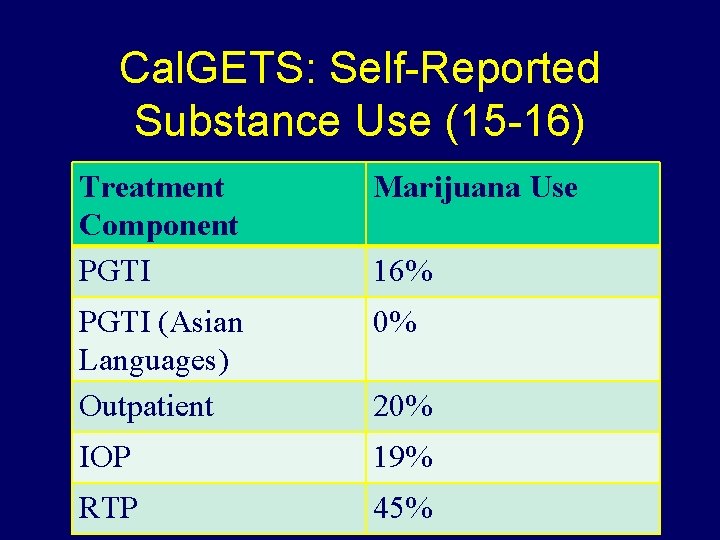
Cal. GETS: Self-Reported Substance Use (15 -16) Treatment Component PGTI Marijuana Use PGTI (Asian Languages) Outpatient 0% IOP 19% RTP 45% 16% 20%
Tools for Providers • Screen for MJ use • Observe how MJ impacts course of gambling and overall mental health • Discuss expectations of MJ impact with clients • Pay attention to local MJ rules • Visit Medical Marijuana Dispensary
A checklist for clinicians • Screen for cannabis use • Explore “relationship” with cannabis – Distinguish use vs. use disorder • Explore impact on mental health • Expand knowledge base about cannabis and culture • “No cannabis exposure under 21”
Myths to be Debunked • • Cannabis is harmless No one dies from cannabis overdose Cannabis is not addicting Cannabis does not have a withdrawal syndrome • Cannabis can treat other addictions
Summary • Cannabis has a long history and future in the US • Cannabis use carries significant adverse risks • Potential for cannabis as medicine is enormous • Prevention of underage exposure and stopping addiction before it starts is critical
The UCLA Cannabis Research Initiative • To investigate therapeutic potential and health risk of cannabis through the interdisciplinary study of all facets of cannabis’ effect on society, including legal, economic, and social impact. • UCLA-CRI will provide timely education, research, and service to lead public policy and public health decisions regarding cannabis.
UCLA Cannabis Research Initiative • • Annual Conference (4/20/18) Monthly, scientific advisory meetings Lectures, conferences, seminars Clinical Cannabis Committee – Advise UCLA Health Providers • Clinician’s Guide to Cannabis – Provide Local Cannabis Knowledge
Contact Information Timothy Fong MD UCLA Gambling Studies Program 310 -825 -1479 (office) tfong@mednet. ucla. edu uclahealth. org/cannabis/
- Slides: 59