
A Brief Introduction to Quarknet and Particle Physics
A Brief Introduction to Quarknet and Particle Physics Mike Strauss
Outline An introduction to Quarknet l Some Themes for the Week l l The Particles and Forces of Nature l The Nature of Science l Particle Physics Experiments l Other Good Stuff l Connection to Cosmology l OU/OSU Involvement
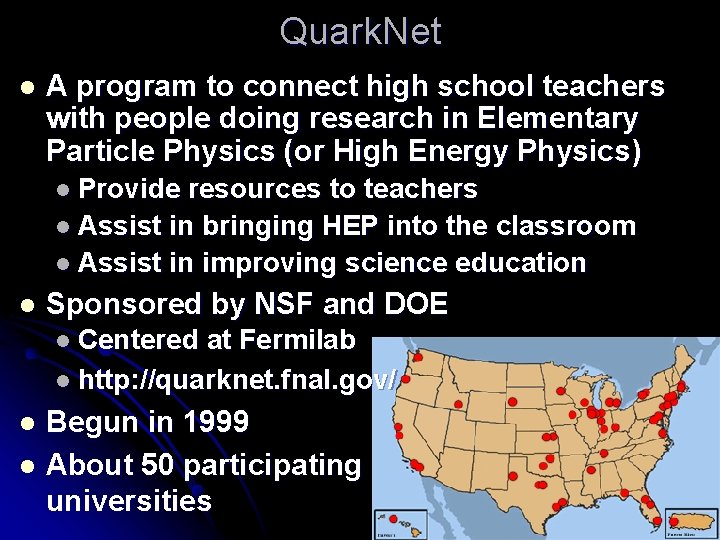
Quark. Net l A program to connect high school teachers with people doing research in Elementary Particle Physics (or High Energy Physics) l Provide resources to teachers l Assist in bringing HEP into the classroom l Assist in improving science education l Sponsored by NSF and DOE l Centered at Fermilab l http: //quarknet. fnal. gov/ Begun in 1999 l About 50 participating universities l
Quarknet at OU and OSU OU was one of the first 12 universities to be chosen to participate in Quarknet in 1999. l Approximately 60 teachers have participated l An ongoing program offering teachers the opportunity to participate annually l l We usually offer an annual one week program l Research opportunities available l Opportunities at Fermilab and CERN l OSU joined Quarknet in 2006 l Ongoing collaboration between OU and OSU in physics research and Quarknet
This Week Talks/Discussion on Particle Physics l Activities that teach particle physics and can be used in your classroom l Material from this and other Quarknet workshops can be found at http: //www. nhn. ou. edu/~strauss/Quarknet l l /PDF_Curriculum l /Powerpoint_Talks l /Resources l /Word_Worksheets l See also https: //quarknet. i 2 u 2. org
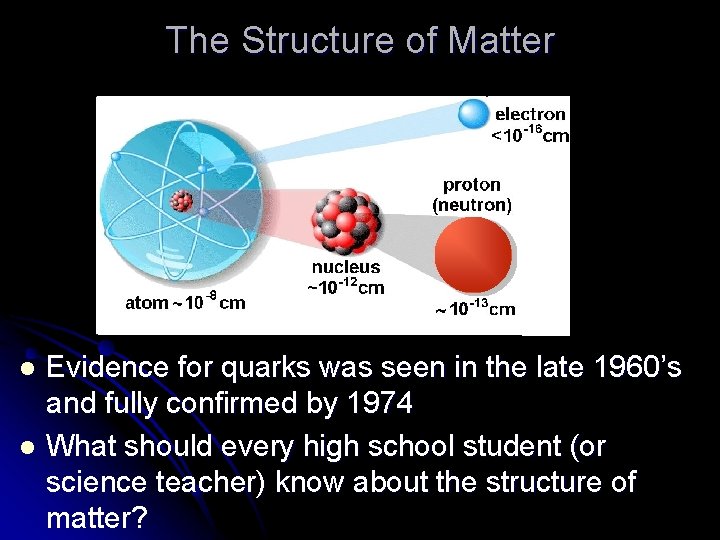
The Structure of Matter Evidence for quarks was seen in the late 1960’s and fully confirmed by 1974 l What should every high school student (or science teacher) know about the structure of matter? l
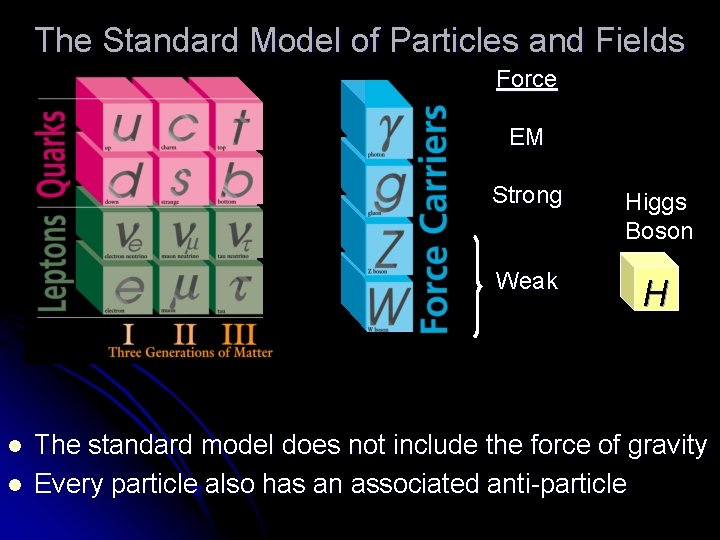
The Standard Model of Particles and Fields Force EM l l Strong Higgs Boson Weak H The standard model does not include the force of gravity Every particle also has an associated anti-particle
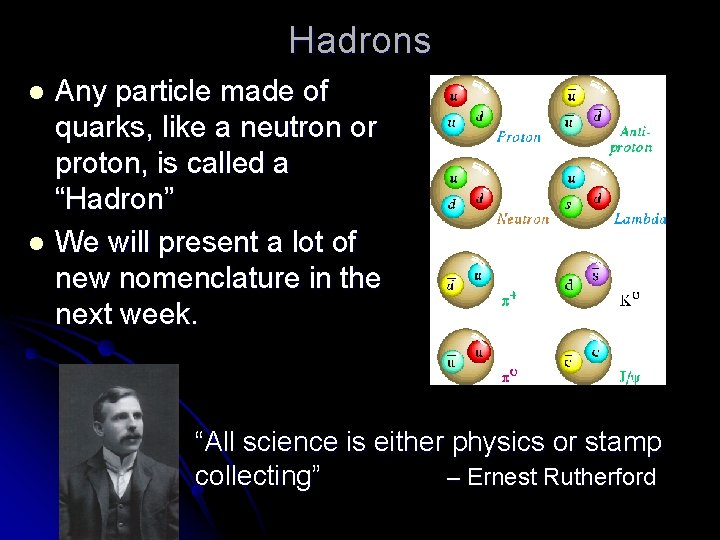
Hadrons Any particle made of quarks, like a neutron or proton, is called a “Hadron” l We will present a lot of new nomenclature in the next week. l “All science is either physics or stamp collecting” – Ernest Rutherford
The Nature of Science What is science? l How would the average student answer this question? l l Is there a problem with how they would answer the question? If so, what? l How can we address any of these problems? l Observations about the presentation of the standard model in this talk? l Is the standard model correct? l How do we know?
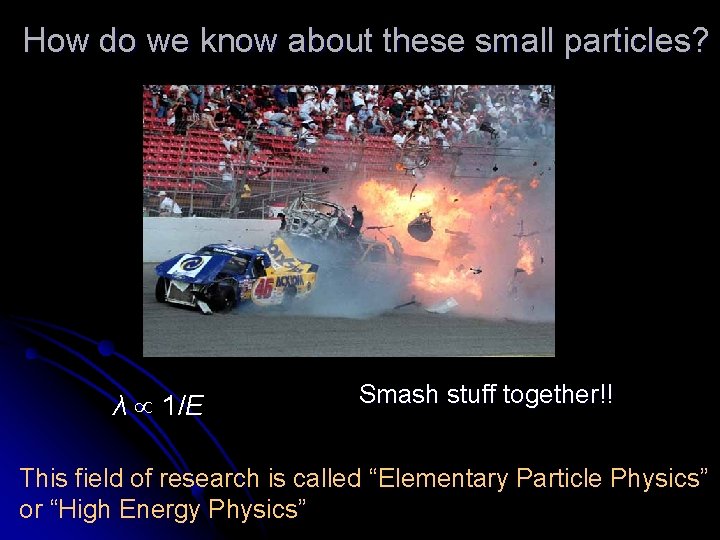
How do we know about these small particles? λ 1/E Smash stuff together!! This field of research is called “Elementary Particle Physics” or “High Energy Physics”
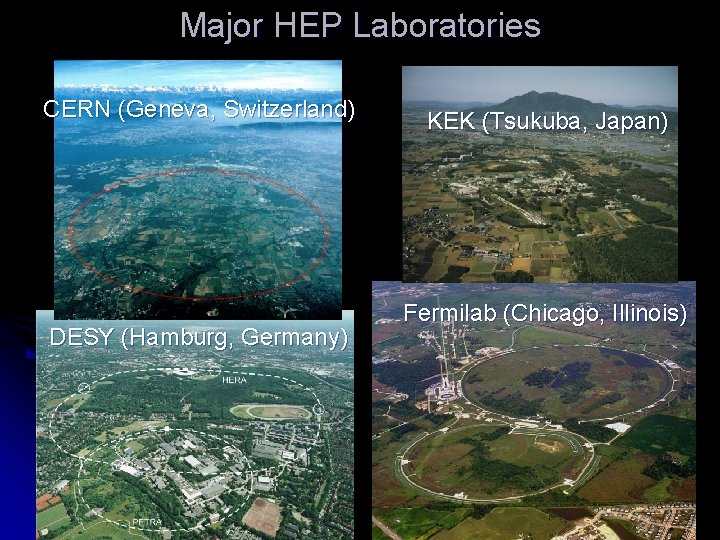
Major HEP Laboratories CERN (Geneva, Switzerland) DESY (Hamburg, Germany) KEK (Tsukuba, Japan) Fermilab (Chicago, Illinois)
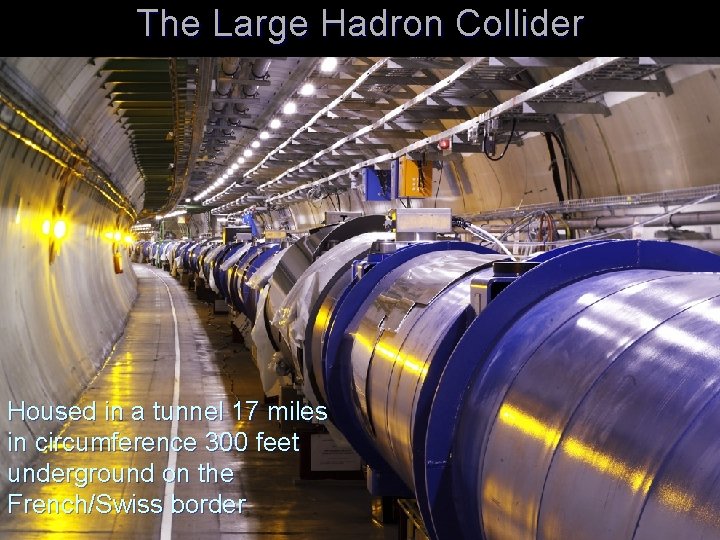
The Large Hadron Collider Housed in a tunnel 17 miles in circumference 300 feet underground on the French/Swiss border
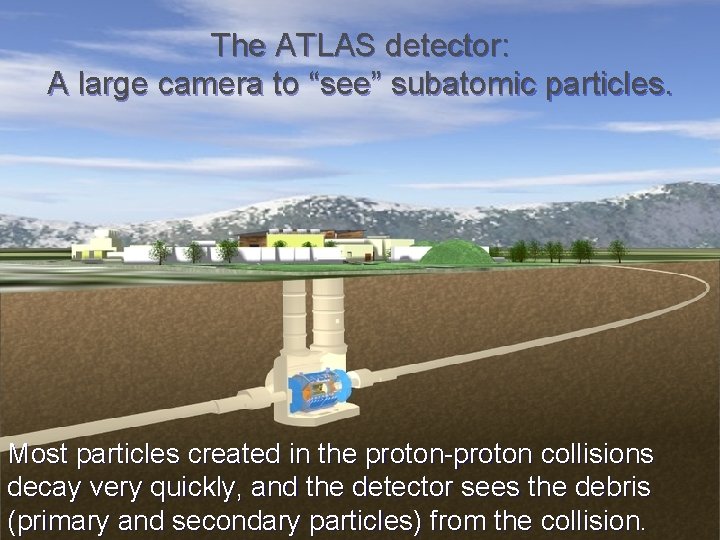
The ATLAS detector: A large camera to “see” subatomic particles. Most particles created in the proton-proton collisions decay very quickly, and the detector sees the debris (primary and secondary particles) from the collision.
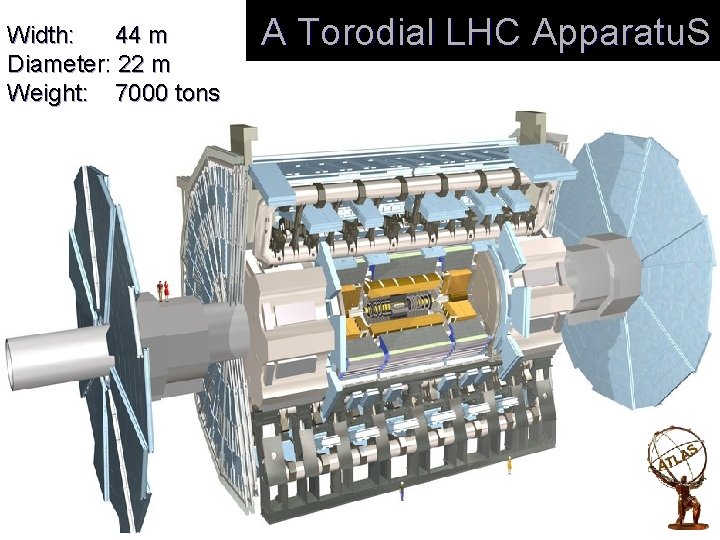
Width: 44 m Diameter: 22 m Weight: 7000 tons A Torodial LHC Apparatu. S
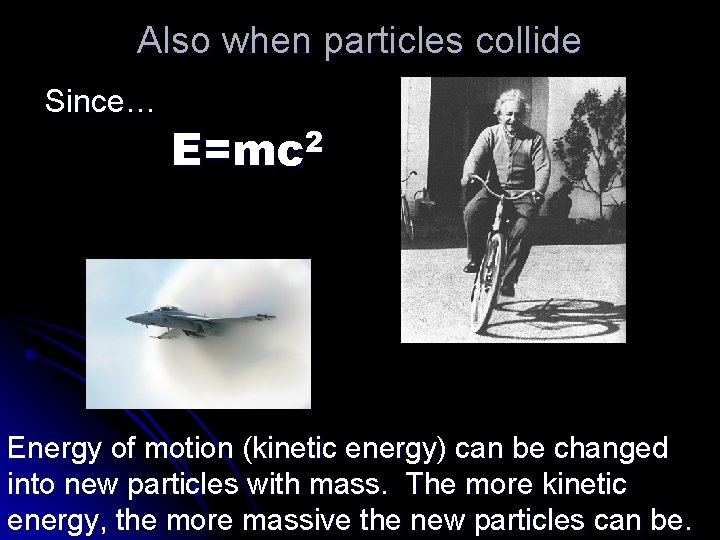
Also when particles collide Since… 2 E=mc Energy of motion (kinetic energy) can be changed into new particles with mass. The more kinetic energy, the more massive the new particles can be.
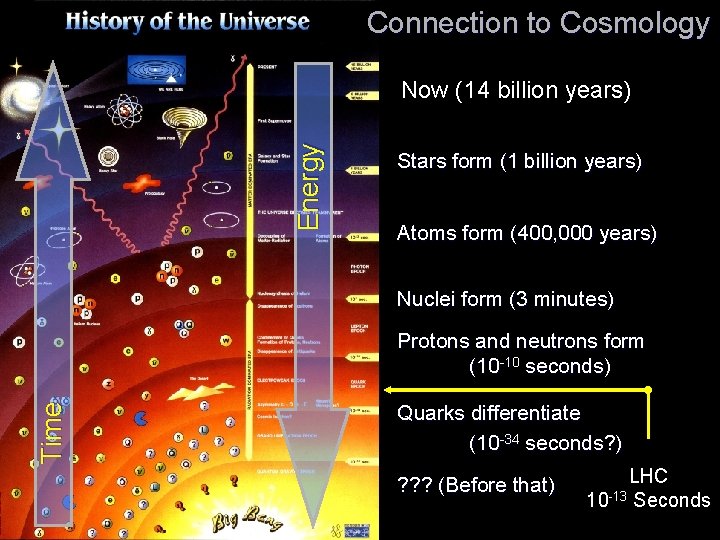
Connection to Cosmology Energy Now (14 billion years) Stars form (1 billion years) Atoms form (400, 000 years) Nuclei form (3 minutes) Time Protons and neutrons form (10 -10 seconds) Quarks differentiate (10 -34 seconds? ) ? ? ? (Before that) LHC 10 -13 Seconds
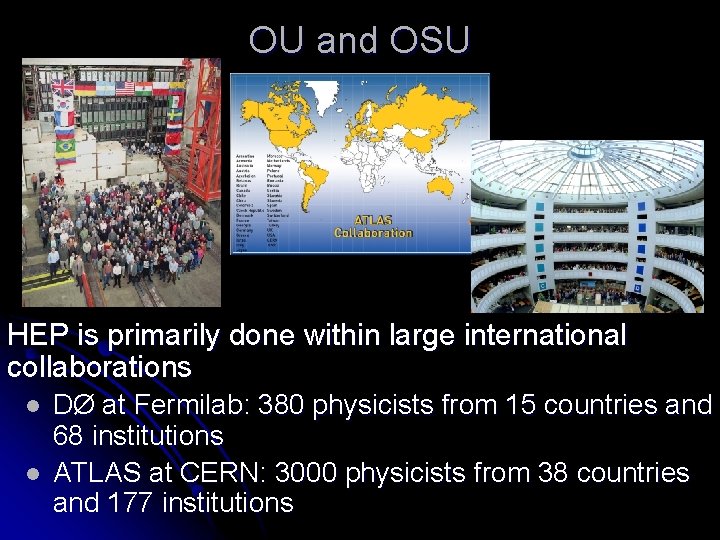
OU and OSU HEP is primarily done within large international collaborations l l DØ at Fermilab: 380 physicists from 15 countries and 68 institutions ATLAS at CERN: 3000 physicists from 38 countries and 177 institutions
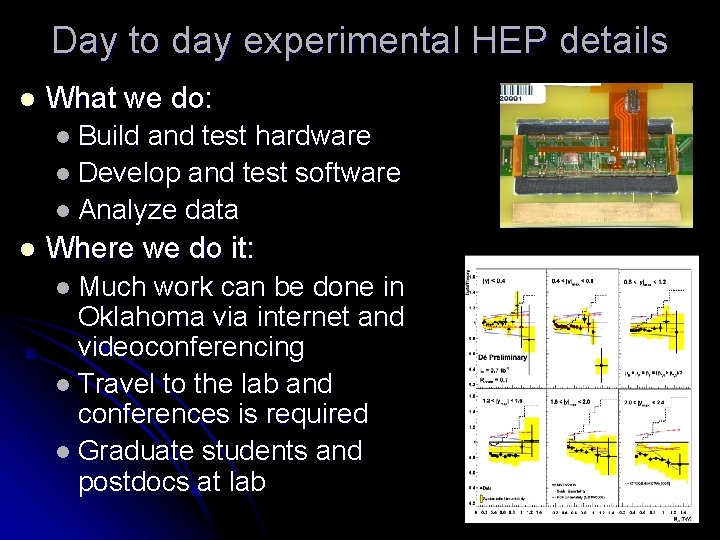
Day to day experimental HEP details l What we do: l Build and test hardware l Develop and test software l Analyze data l Where we do it: l Much work can be done in Oklahoma via internet and videoconferencing l Travel to the lab and conferences is required l Graduate students and postdocs at lab
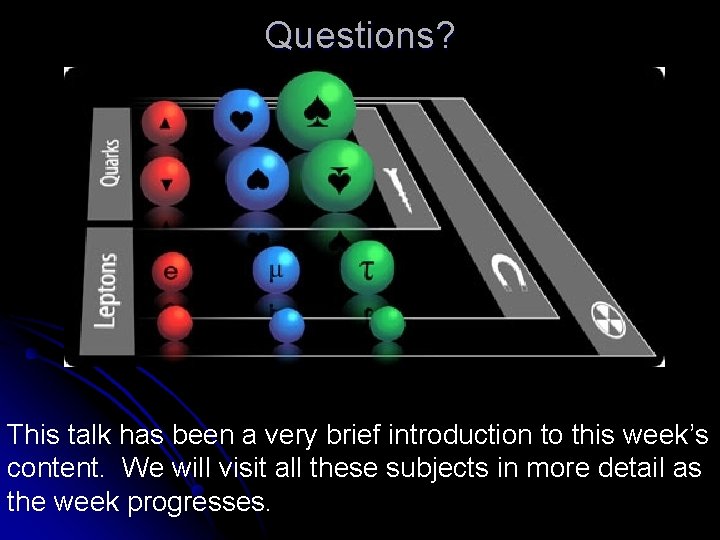
Questions? This talk has been a very brief introduction to this week’s content. We will visit all these subjects in more detail as the week progresses.
“Must Do” website https: //quarknet. i 2 u 2. org/document/workshop-must-do-items-2015 -edition
- Slides: 20