
A BRIEF HISTORY OF PUBLIC HEALTH Because well
A BRIEF HISTORY OF PUBLIC HEALTH Because, well, death….
What is Public Health? “To promote health and quality of life by preventing and controlling disease, injury, and disability. ” —CDC Mission Statement
By the time we are done you should be able to… Define public health. Describe what it was like before the advent of modern public health. Describe the role of the CDC.
Timeline – what’s coming up Early Humans/Civilizations Ancient Greece Roman Empire Middle Ages Birth of Modern Medicine “Great Sanitary Awakening” Modern Public Health
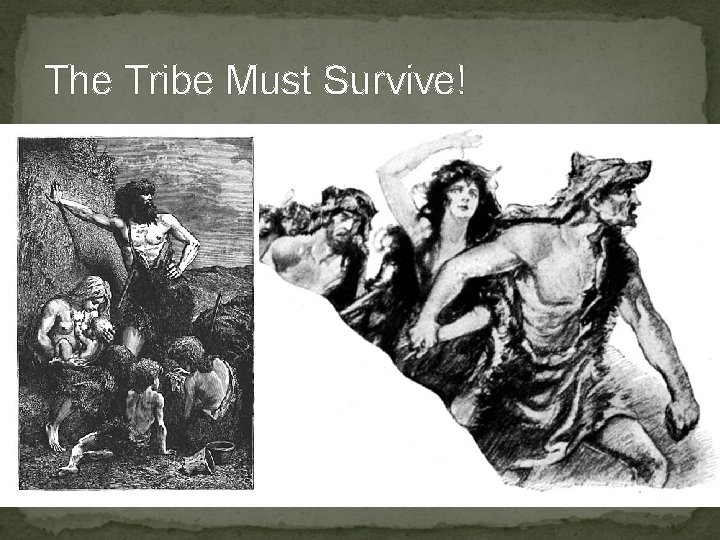
The Tribe Must Survive!
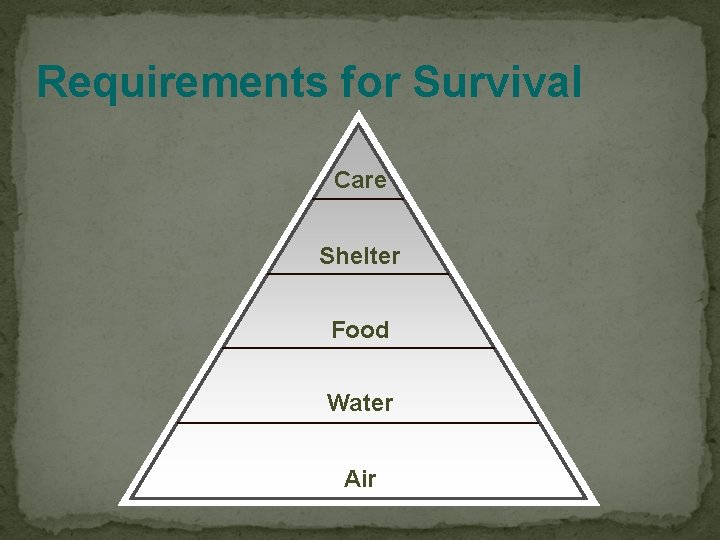
Requirements for Survival Care Shelter Food Water Air
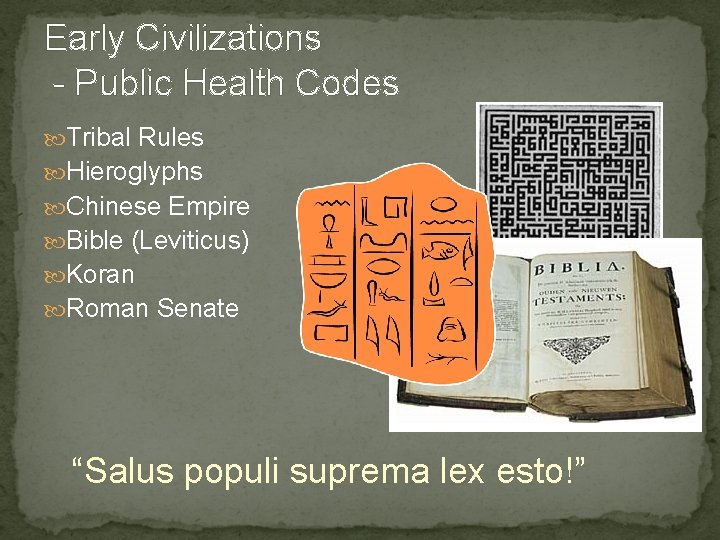
Early Civilizations - Public Health Codes Tribal Rules Hieroglyphs Chinese Empire Bible (Leviticus) Koran Roman Senate “Salus populi suprema lex esto!”
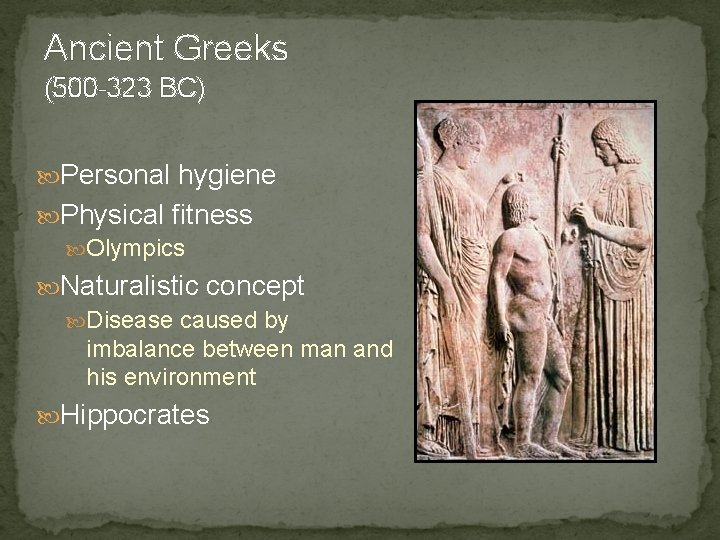
Ancient Greeks (500 -323 BC) Personal hygiene Physical fitness Olympics Naturalistic concept Disease caused by imbalance between man and his environment Hippocrates
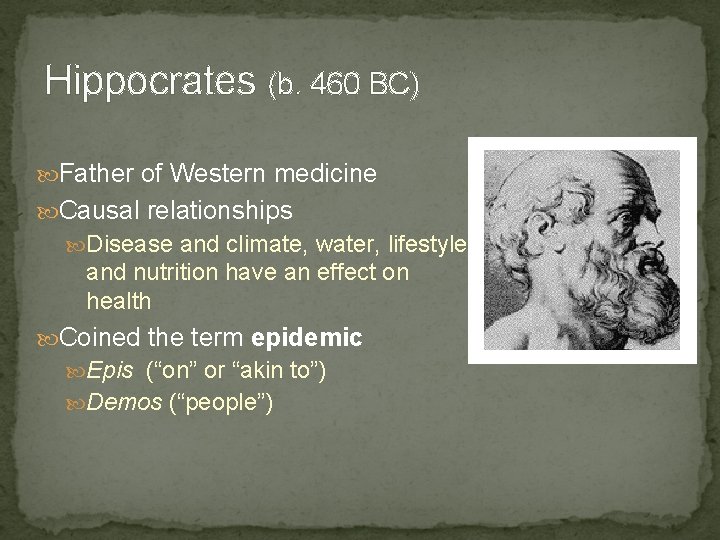
Hippocrates (b. 460 BC) Father of Western medicine Causal relationships Disease and climate, water, lifestyle, and nutrition have an effect on health Coined the term epidemic Epis (“on” or “akin to”) Demos (“people”)
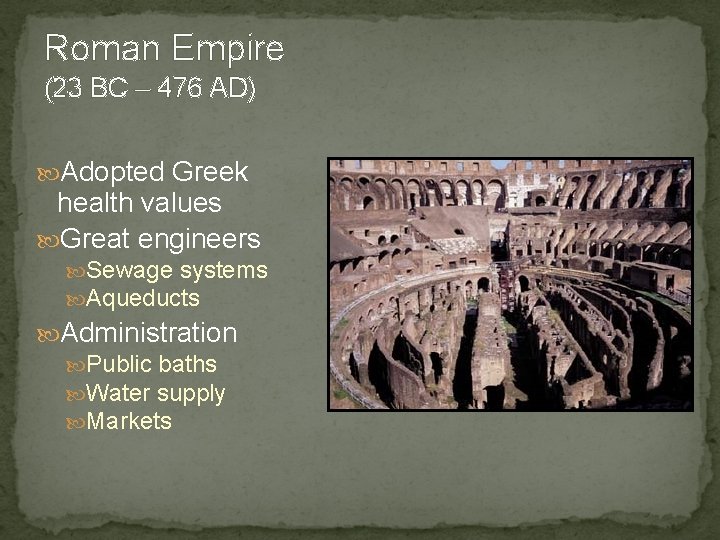
Roman Empire (23 BC – 476 AD) Adopted Greek health values Great engineers Sewage systems Aqueducts Administration Public baths Water supply Markets

Roman Aqueducts Le Pont du Gard
Middle Ages (476 -1450 AD) Shift away from Greek and Roman values Physical body less important than spiritual self Decline of hygiene and sanitation Beginnings of PH tools Quarantine of ships Isolation of diseased individuals
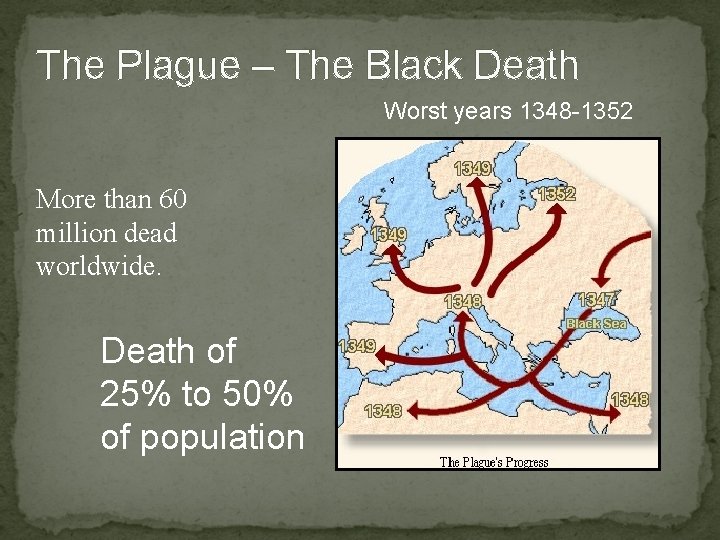
The Plague – The Black Death Worst years 1348 -1352 More than 60 million dead worldwide. Death of 25% to 50% of population
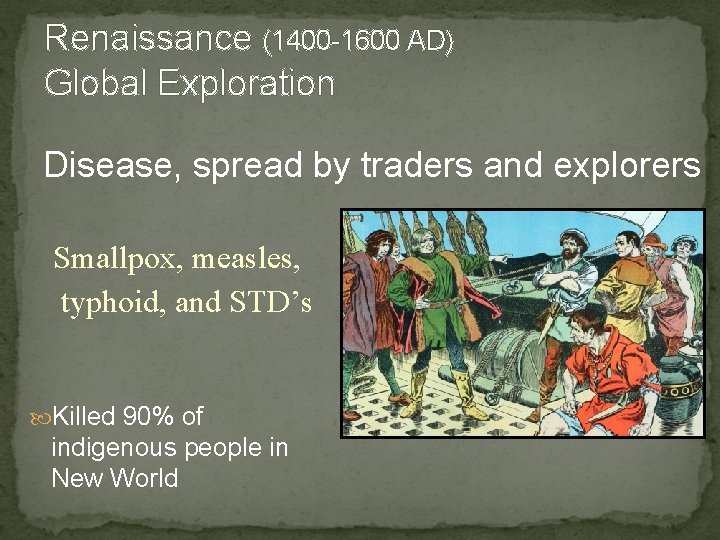
Renaissance (1400 -1600 AD) Global Exploration Disease, spread by traders and explorers Smallpox, measles, typhoid, and STD’s Killed 90% of indigenous people in New World
Age of Reason and Enlightenment (1650 -1800 AD) Birth of Modern Medicine William Harvey 1628 theories of circulation Edward Jenner 1796 cowpox experiment Coined the term vaccine (vacca, Latin for “cow”)
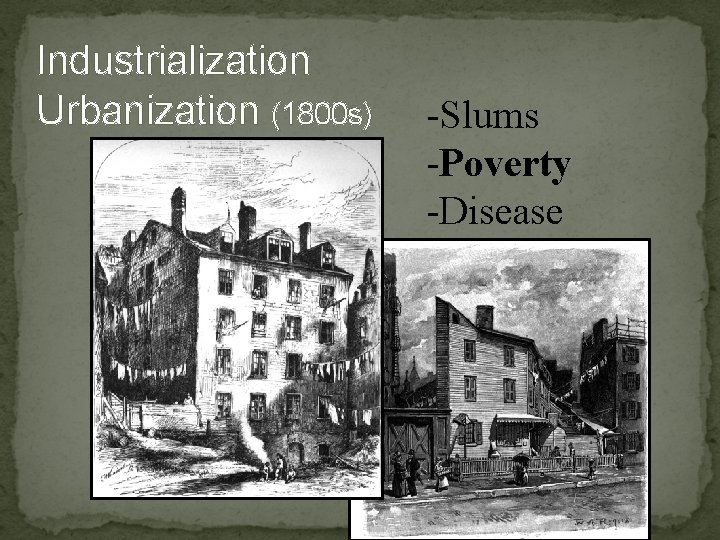
Industrialization Urbanization (1800 s) -Slums -Poverty -Disease
Great Sanitary Awakening (1800 s-1900 s) Growth in scientific knowledge Humanitarian ideals Water supply and sewage removal Monitor community health status Connection between poverty and disease Even today, poverty is the single best predictor of poor health.
Steps to a Healthier Society • 1840 s to 1890’s -focused on the environment of infectious diseases related to “urbanization, poverty and squalor”. • 1890’s to 1930’s - personal preventive medical services and health education on: immunization, family hygiene and family planning • 1930’s and on- improving organized medical services, new meds: insulin and antibiotics, etc. • 80’s on- A recognition that the ‘environment’ is also social, economic and psychological factors affect health
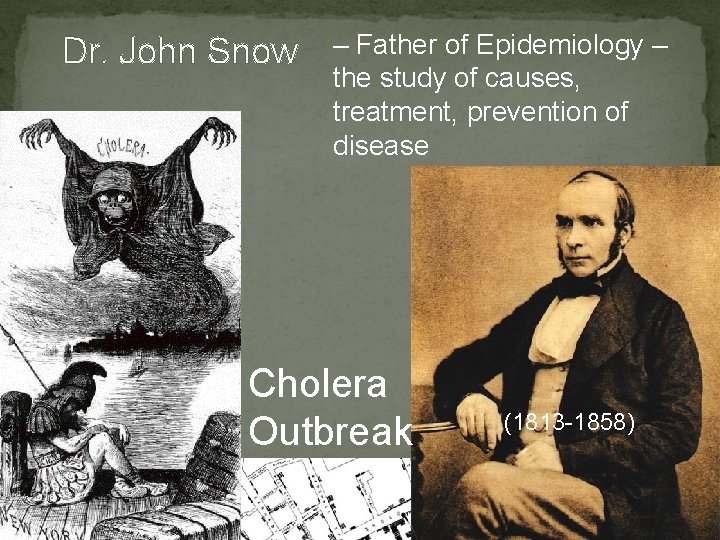
Dr. John Snow – Father of Epidemiology – the study of causes, treatment, prevention of disease Cholera Outbreak (1813 -1858)
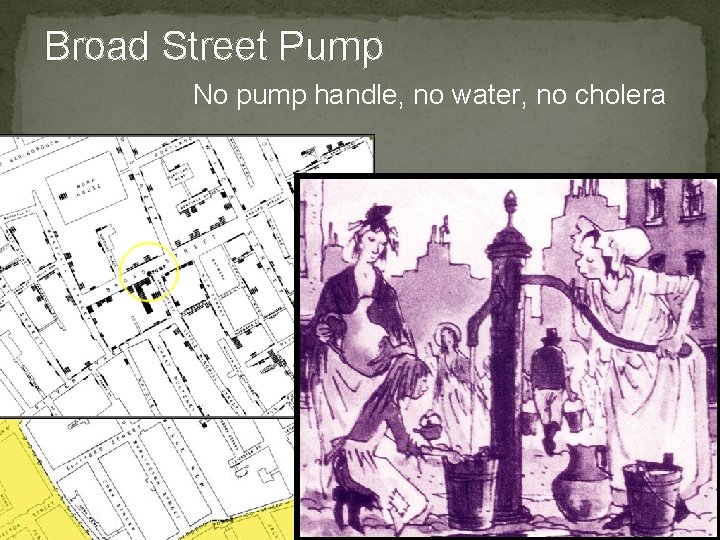
Broad Street Pump No pump handle, no water, no cholera
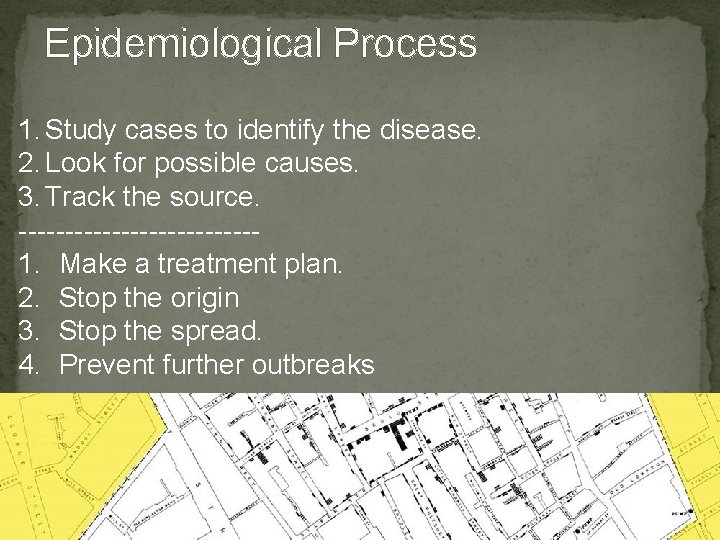
Epidemiological Process 1. Study cases to identify the disease. 2. Look for possible causes. 3. Track the source. -------------1. Make a treatment plan. 2. Stop the origin 3. Stop the spread. 4. Prevent further outbreaks
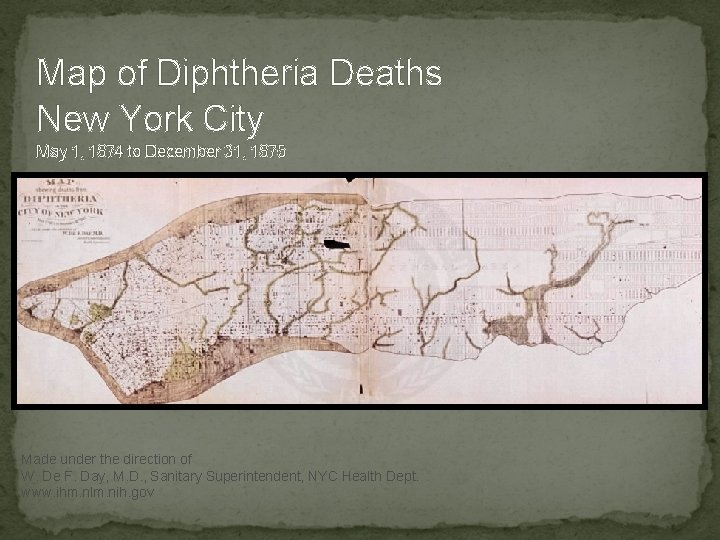
Map of Diphtheria Deaths New York City May 1, 1874 to December 31, 1875 Made under the direction of W. De F. Day, M. D. , Sanitary Superintendent, NYC Health Dept. www. ihm. nlm. nih. gov
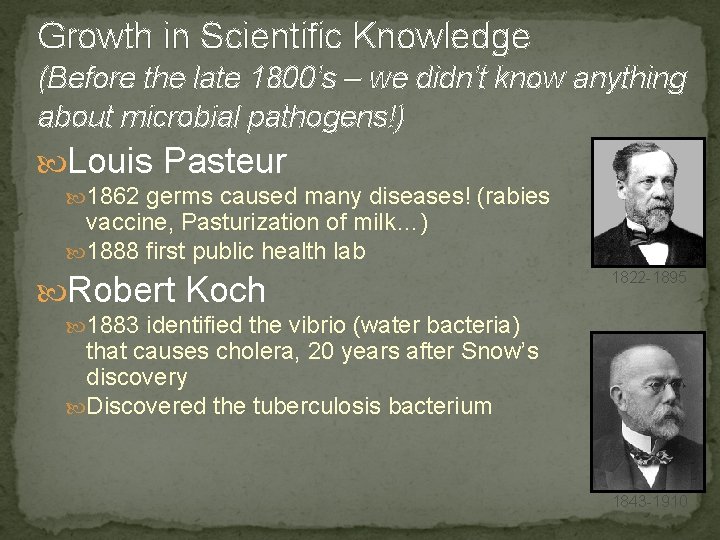
Growth in Scientific Knowledge (Before the late 1800’s – we didn’t know anything about microbial pathogens!) Louis Pasteur 1862 germs caused many diseases! (rabies vaccine, Pasturization of milk…) 1888 first public health lab Robert Koch 1822 -1895 1883 identified the vibrio (water bacteria) that causes cholera, 20 years after Snow’s discovery Discovered the tuberculosis bacterium 1843 -1910
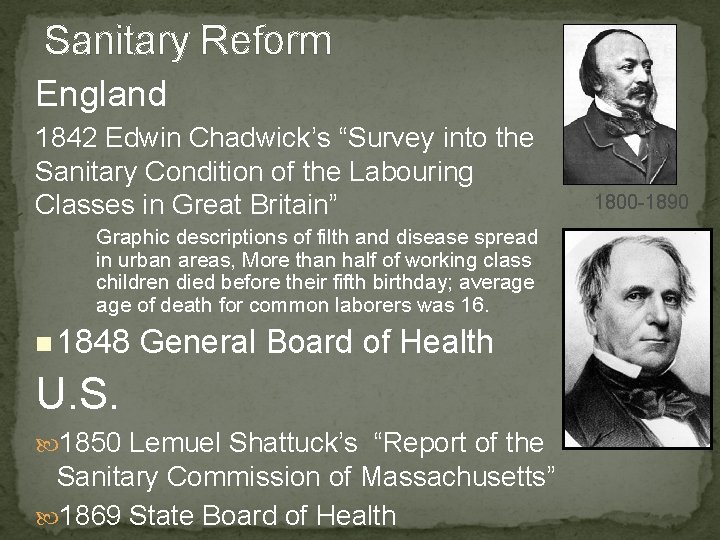
Sanitary Reform England 1842 Edwin Chadwick’s “Survey into the Sanitary Condition of the Labouring Classes in Great Britain” Graphic descriptions of filth and disease spread in urban areas, More than half of working class children died before their fifth birthday; average of death for common laborers was 16. n 1848 General Board of Health U. S. 1850 Lemuel Shattuck’s “Report of the Sanitary Commission of Massachusetts” 1869 State Board of Health 1800 -1890
Redefining the Unacceptable “The landmarks of political, economic and social history are the moments when some condition passed from the category of the given into the category of the intolerable…The history of public health might well be written as a record of successive redefinings of the unacceptable. ” - Geoffrey Vickers, Secretary, Medical Research Council, Great Britain, 1958
Sanitation Revolution – Cleaning Up! Clean water; water treatment Food inspection Soaps, disinfectants, and pharmaceuticals Personal hygiene (bathing) Public works departments; garbage collection, landfills, and street cleaning Public health departments and regulation -The death rate in children drops and the average life span increases over the years from less than 40 to 74.
The Rest of the Century: Ten Great Achievements in US Public Health, 1900 -1999 CDC, Morbidity and Mortality Country-wide vaccination. Weekly Report, December 24, 1999 / 48(50); 1141. 2. Motor-vehicle safety. Available at: http: //www. cdc. gov/mmwr/preview/ 3. Safer workplaces. mmwrhtml/mm 4850 bx. htm 4. Control of infectious diseases. 5. Decline in deaths from coronary heart disease and stroke. 6. Safer and healthier foods. 7. Healthier mothers and babies. 8. Family planning. 9. Fluoridation of drinking water. (of treated, safe water!) 10. Recognition of tobacco use as a health hazard. 1.
Twentieth Century U. S. Mortality Rate: 1900 -2001
Challenges Ahead New and Persistent Problems in Public Health
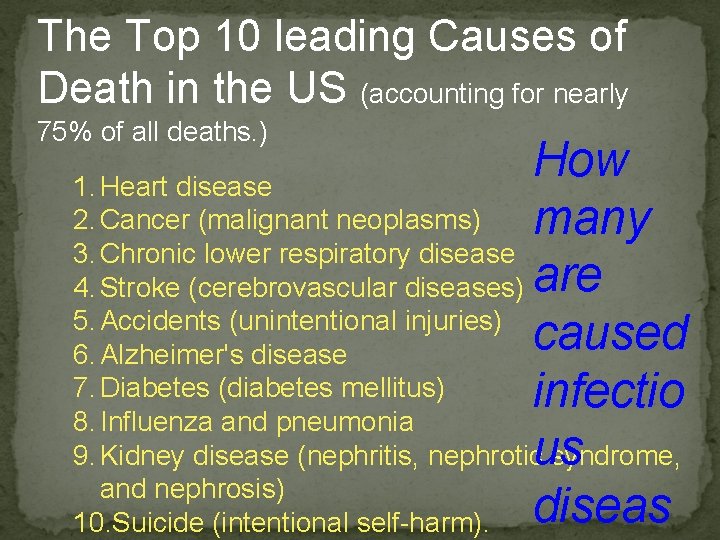
The Top 10 leading Causes of Death in the US (accounting for nearly 75% of all deaths. ) How 1. Heart disease 2. Cancer (malignant neoplasms) many 3. Chronic lower respiratory disease 4. Stroke (cerebrovascular diseases) are 5. Accidents (unintentional injuries) caused 6. Alzheimer's disease 7. Diabetes (diabetes mellitus) infectio 8. Influenza and pneumonia 9. Kidney disease (nephritis, nephroticus syndrome, and nephrosis) 10. Suicide (intentional self-harm). diseas
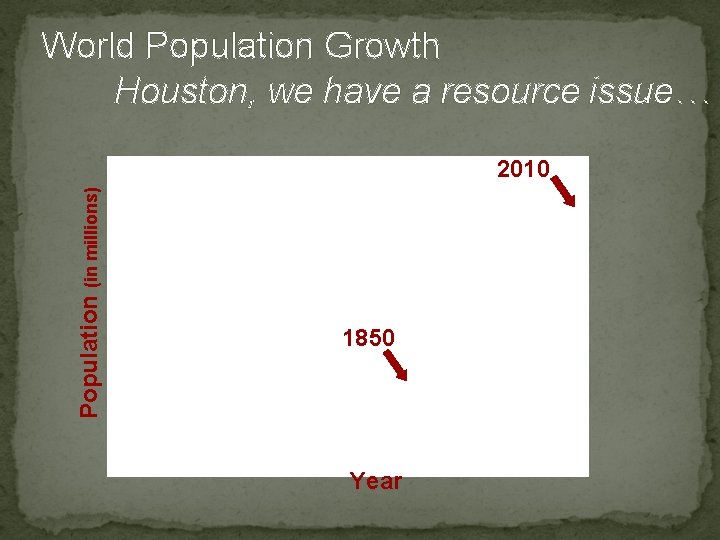
World Population Growth Houston, we have a resource issue… Population (in millions) 2010 1850 Year
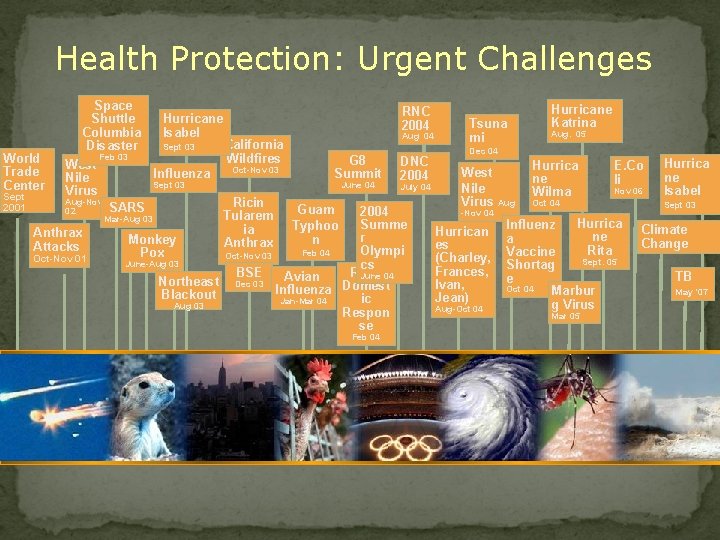
Health Protection: Urgent Challenges Space Hurricane RNC Hurricane Shuttle Katrina Tsuna 2004 Isabel Columbia Aug. 05 Aug 04 mi California Disaster Sept 03 Dec 04 Feb 03 Wildfires World G 8 DNC Hurrica West Hurrica E. Co Oct-Nov 03 Trade West Influenza Summit 2004 ne Nile ne li Sept 03 June 04 July 04 Center Nile Nov 06 Isabel Virus Wilma Sept Aug-Nov Oct 04 Virus Aug Ricin Sept 03 2001 SARS Guam 02 2004 -Nov 04 Tularem Mar-Aug 03 Hurrica Climate Summe Typhoo ia Hurrican Influenz Anthrax ne r a n Monkey Anthrax Change es Attacks Rita Olympi Feb 04 Vaccine Pox Oct-Nov 03 Oct-Nov 01 (Charley, Sept. 05 June-Aug 03 cs Shortag Frances, BSE Ricin June 04 Avian TB e Northeast Dec 03 Ivan, Domest Oct 04 Influenza May ‘ 07 Marbur Blackout Jean) ic Jan-Mar 04 g Virus Aug 03 Aug-Oct 04 Respon Mar 05 se Feb 04
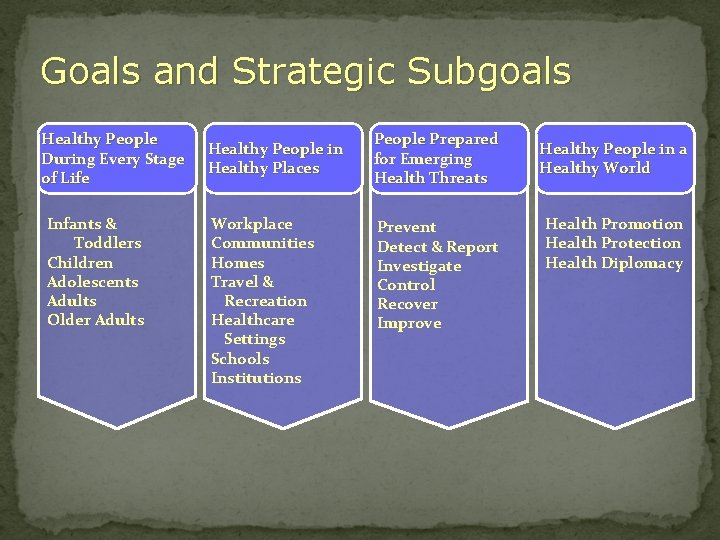
Goals and Strategic Subgoals Healthy People During Every Stage of Life Infants & Toddlers Children Adolescents Adults Older Adults Healthy People in Healthy Places Workplace Communities Homes Travel & Recreation Healthcare Settings Schools Institutions People Prepared for Emerging Health Threats Prevent Detect & Report Investigate Control Recover Improve Healthy People in a Healthy World Health Promotion Health Protection Health Diplomacy
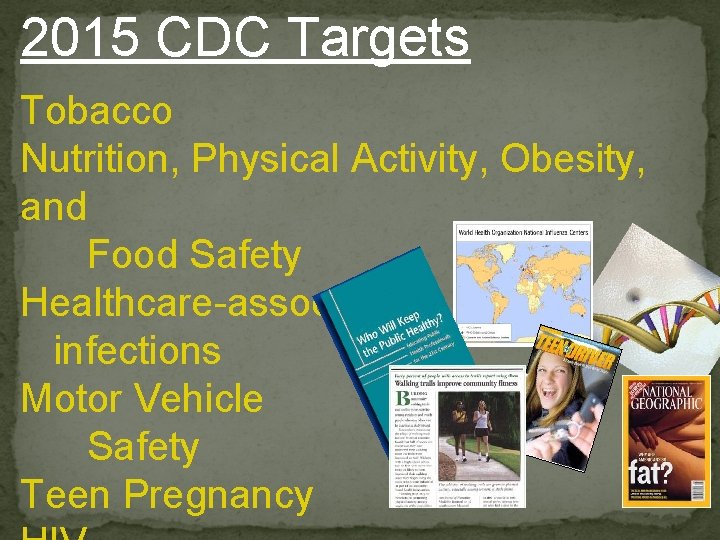
2015 CDC Targets Tobacco Nutrition, Physical Activity, Obesity, and Food Safety Healthcare-associated infections Motor Vehicle Safety Teen Pregnancy
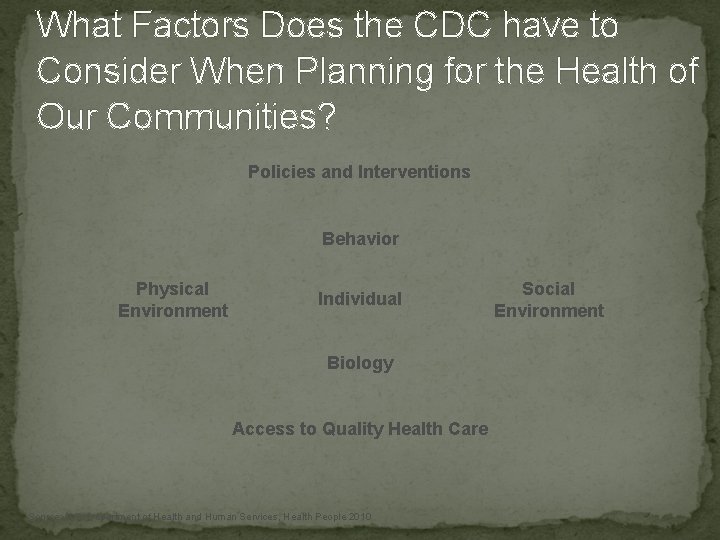
What Factors Does the CDC have to Consider When Planning for the Health of Our Communities? Policies and Interventions Behavior Physical Environment Individual Biology Access to Quality Health Care Source: U. S. Department of Health and Human Services, Health People 2010 Social Environment
- Slides: 35