
A BRIEF HISTORY OF ORGANIZATION THEORY Chapter 2
A BRIEF HISTORY OF ORGANIZATION THEORY Chapter 2 Mary Jo Hatch
Why A History of OT? Because it provides a basis for: • Understanding the current field • Understanding how and why the three perspectives emerged • Understanding the relationship between theory and practice • Avoiding reinventing the ‘theoretical wheel’
Organization Theory At Its Inception • Organization theory emerged as a recognizable field of study in the 1960 s. • Two major sources of thought that formed the prehistory of organizational theory were Sociological and Managerial.
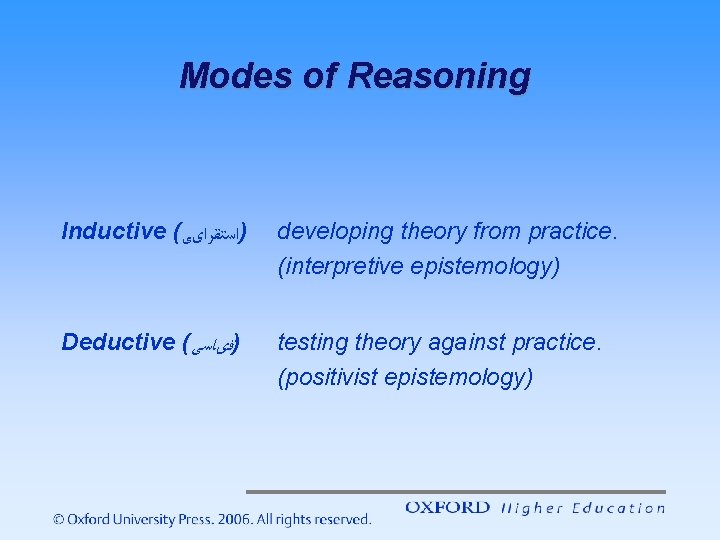
Modes of Reasoning Inductive ( )ﺍﺳﺘﻘﺮﺍیﻰ developing theory from practice. (interpretive epistemology) Deductive ( )ﻗیﺎﺳﻰ testing theory against practice. (positivist epistemology)
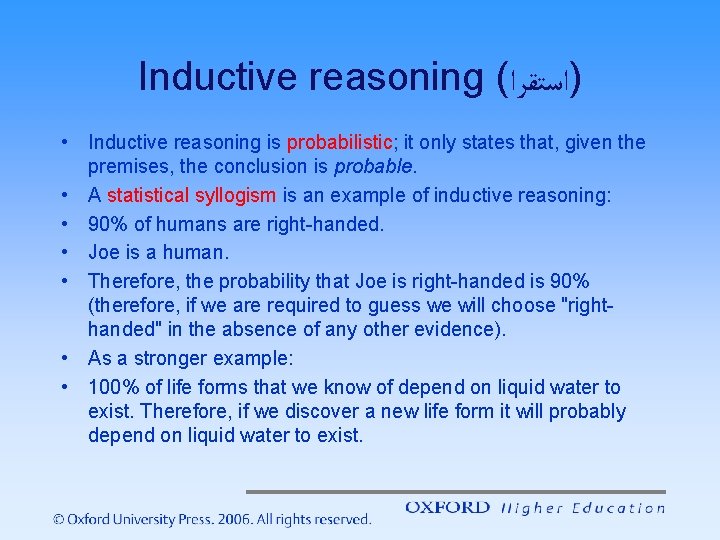
Inductive reasoning ( )ﺍﺳﺘﻘﺮﺍ • Inductive reasoning is probabilistic; it only states that, given the premises, the conclusion is probable. • A statistical syllogism is an example of inductive reasoning: • 90% of humans are right-handed. • Joe is a human. • Therefore, the probability that Joe is right-handed is 90% (therefore, if we are required to guess we will choose "righthanded" in the absence of any other evidence). • As a stronger example: • 100% of life forms that we know of depend on liquid water to exist. Therefore, if we discover a new life form it will probably depend on liquid water to exist.
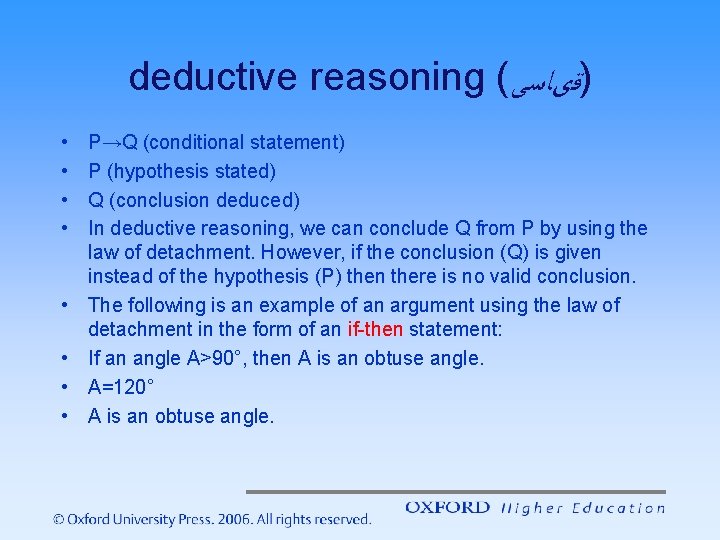
deductive reasoning ( )ﻗیﺎﺳﻰ • • P→Q (conditional statement) P (hypothesis stated) Q (conclusion deduced) In deductive reasoning, we can conclude Q from P by using the law of detachment. However, if the conclusion (Q) is given instead of the hypothesis (P) then there is no valid conclusion. The following is an example of an argument using the law of detachment in the form of an if-then statement: If an angle A>90°, then A is an obtuse angle. A=120° A is an obtuse angle.
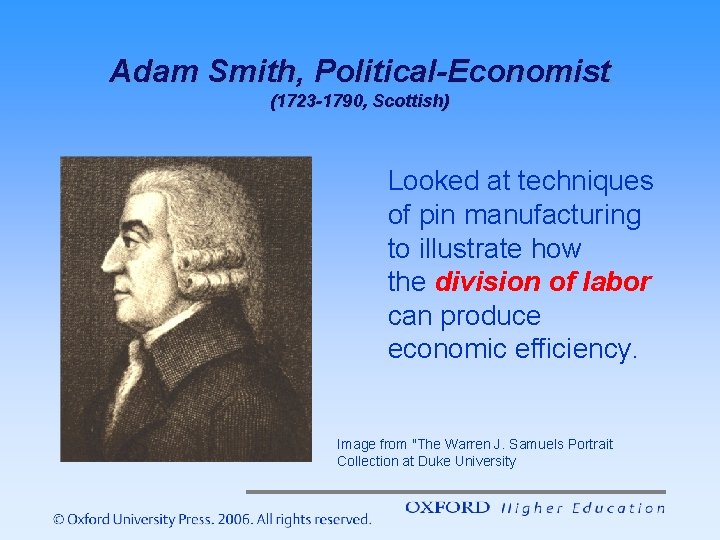
Adam Smith, Political-Economist (1723 -1790, Scottish) Looked at techniques of pin manufacturing to illustrate how the division of labor can produce economic efficiency. Image from "The Warren J. Samuels Portrait Collection at Duke University
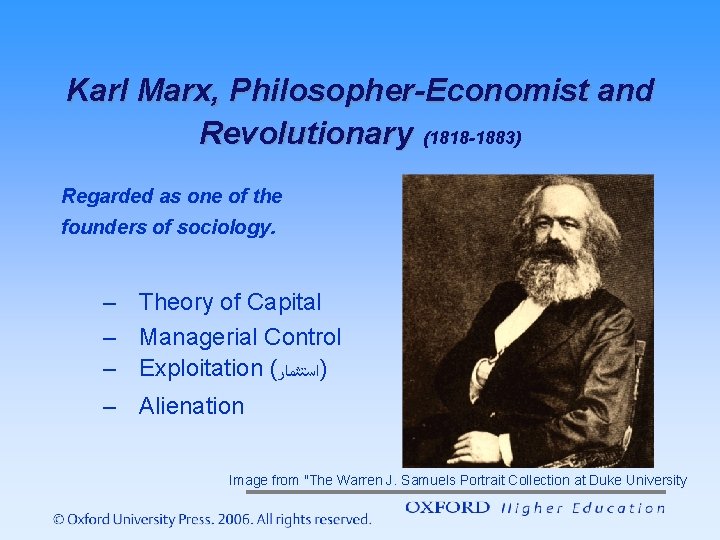
Karl Marx, Philosopher-Economist and Revolutionary (1818 -1883) Regarded as one of the founders of sociology. – Theory of Capital – Managerial Control – Exploitation ( )ﺍﺳﺘﺜﻤﺎﺭ – Alienation Image from "The Warren J. Samuels Portrait Collection at Duke University
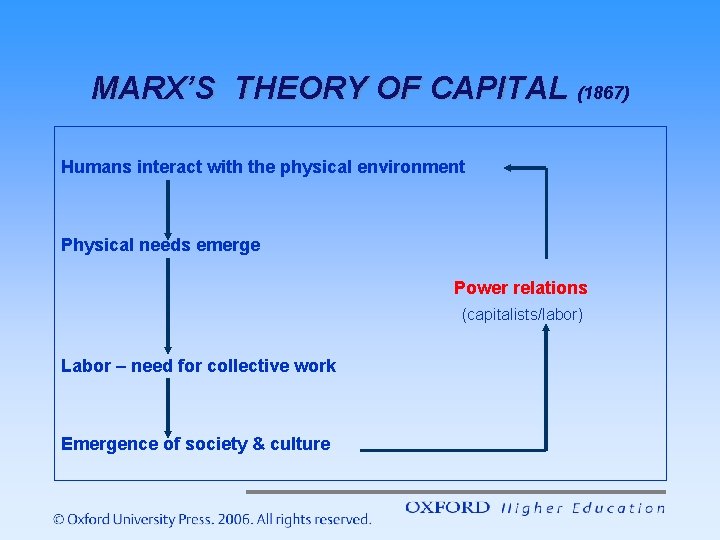
MARX’S THEORY OF CAPITAL (1867) Humans interact with the physical environment Physical needs emerge Power relations (capitalists/labor) Labor – need for collective work Emergence of society & culture
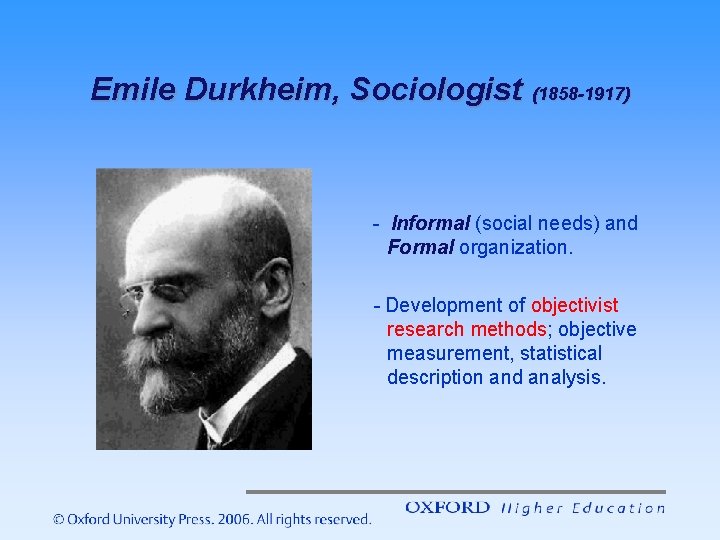
Emile Durkheim, Sociologist (1858 -1917) - Informal (social needs) and Formal organization. - Development of objectivist research methods; objective measurement, statistical description and analysis.
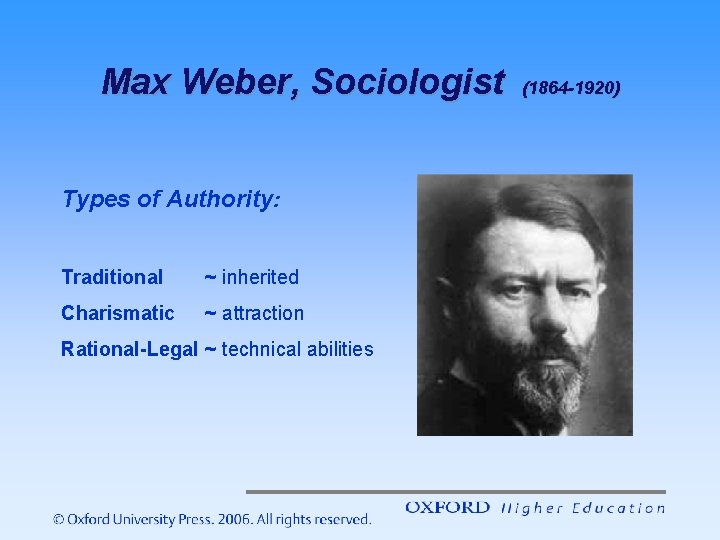
Max Weber, Sociologist Types of Authority: Traditional ~ inherited Charismatic ~ attraction Rational-Legal ~ technical abilities (1864 -1920)
Max Weber’s Theory of Bureaucracy can rationalize social order: Formal Rationality - calculative techniques Substantive Rationality - desired ends
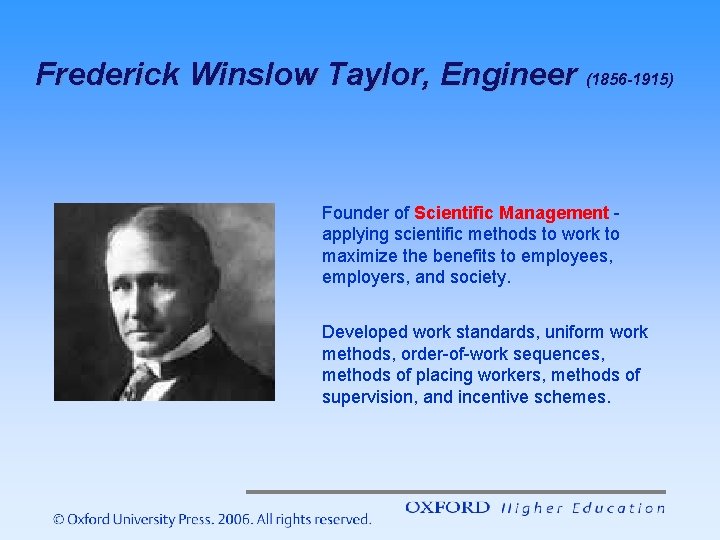
Frederick Winslow Taylor, Engineer (1856 -1915) Founder of Scientific Management - applying scientific methods to work to maximize the benefits to employees, employers, and society. Developed work standards, uniform work methods, order-of-work sequences, methods of placing workers, methods of supervision, and incentive schemes.
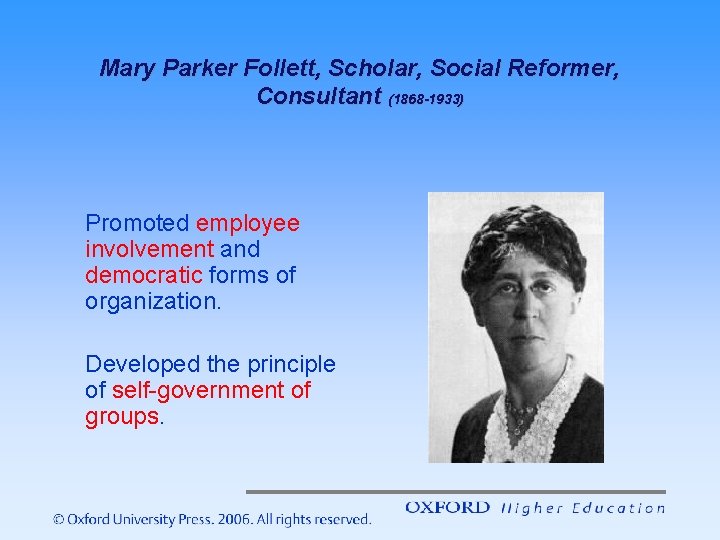
Mary Parker Follett, Scholar, Social Reformer, Consultant (1868 -1933) Promoted employee involvement and democratic forms of organization. Developed the principle of self-government of groups.
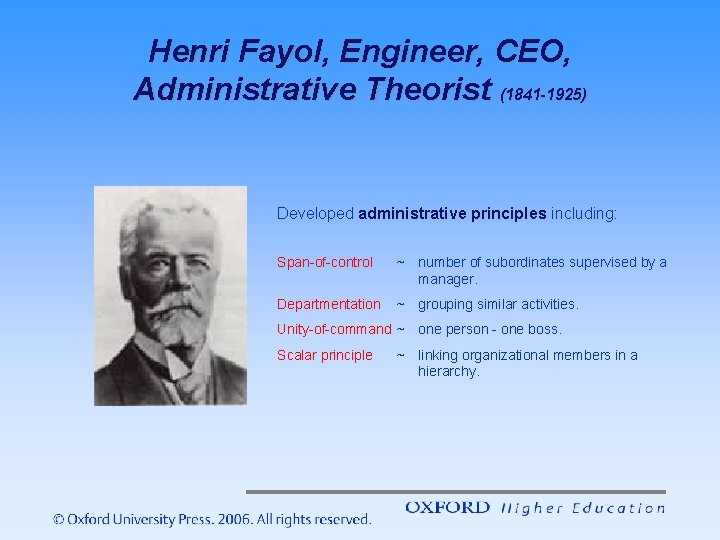
Henri Fayol, Engineer, CEO, Administrative Theorist (1841 -1925) Developed administrative principles including: Span-of-control ~ number of subordinates supervised by a manager. Departmentation ~ grouping similar activities. Unity-of-command ~ one person - one boss. Scalar principle ~ linking organizational members in a hierarchy.
Luther H. Gulick, Administrative Theorist (1892 -1992) Developed a science of administration: - Organizational efficiency through the division of work into small, specialized segments; clear task definition, instruction etc. - Defined the work of the chief executive through POSDCo. RB.
POSDCo. RB Planning Organizing Staffing Directing Coordinating Reporting Budgeting
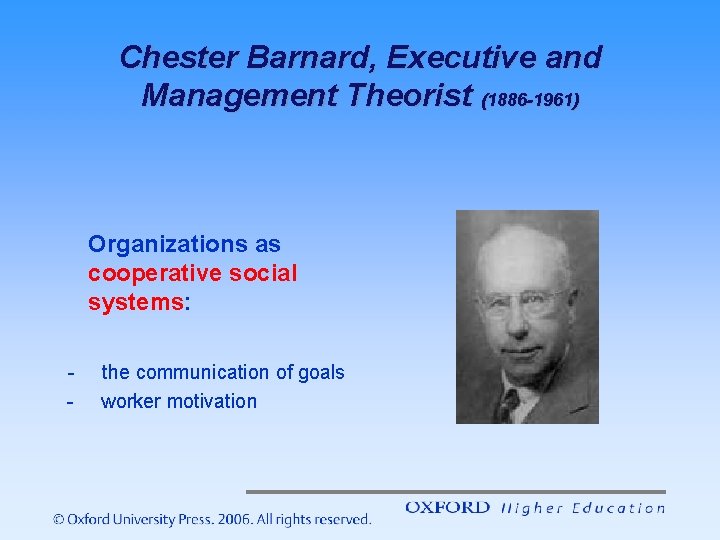
Chester Barnard, Executive and Management Theorist (1886 -1961) Organizations as cooperative social systems: - the communication of goals - worker motivation
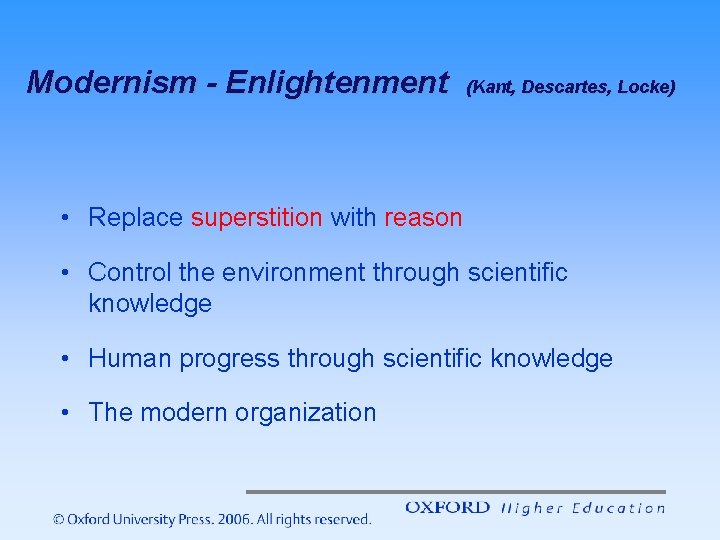
Modernism - Enlightenment (Kant, Descartes, Locke) • Replace superstition with reason • Control the environment through scientific knowledge • Human progress through scientific knowledge • The modern organization
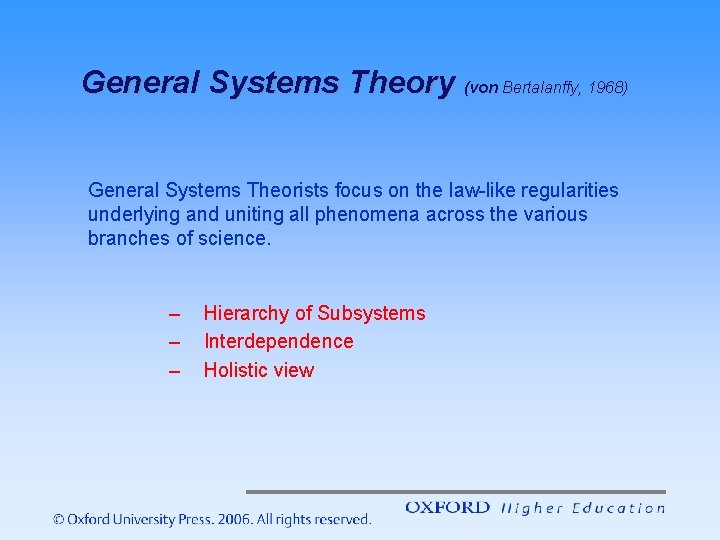
General Systems Theory (von Bertalanffy, 1968) General Systems Theorists focus on the law-like regularities underlying and uniting all phenomena across the various branches of science. – Hierarchy of Subsystems – Interdependence – Holistic view
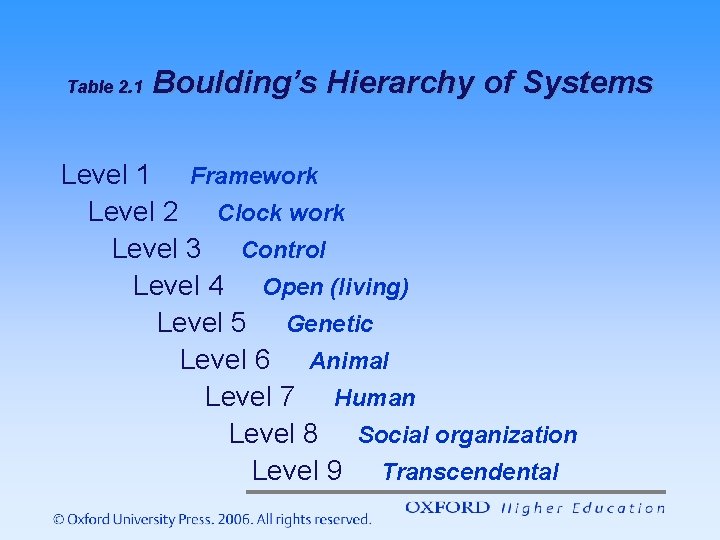
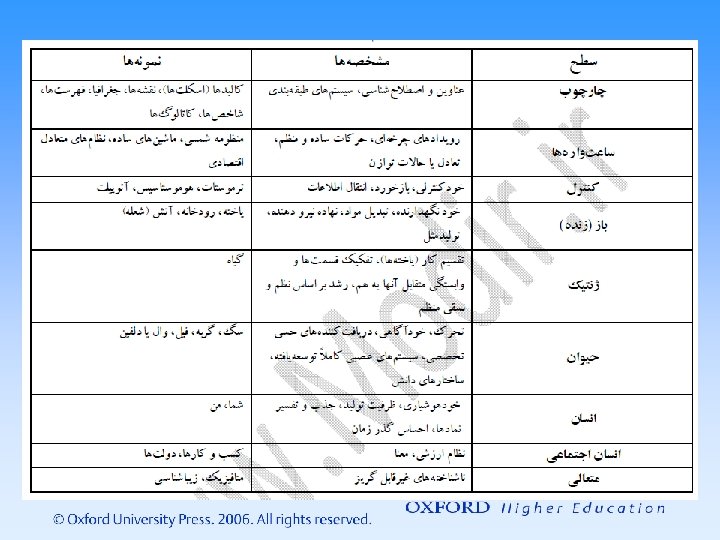
Table 2. 1 Boulding’s Hierarchy of Systems Level 1 Framework Level 2 Clock work Level 3 Control Level 4 Open (living) Level 5 Genetic Level 6 Animal Level 7 Human Level 8 Social organization Level 9 Transcendental
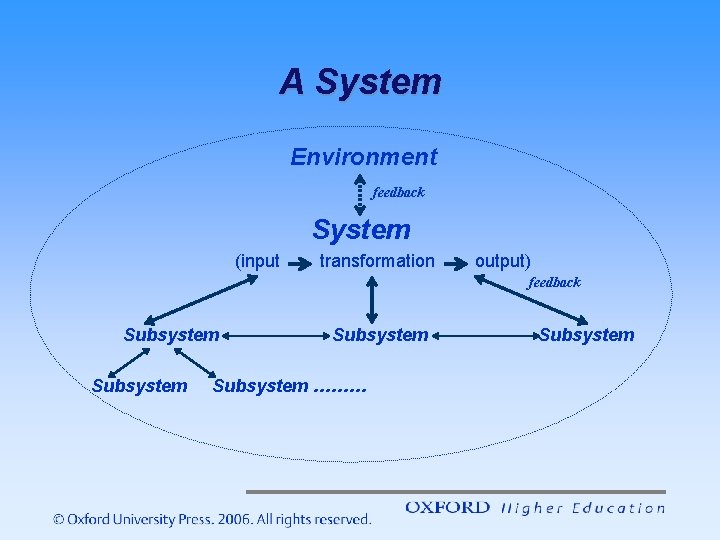
A System Environment feedback System (input transformation output) feedback Subsystem ……… Subsystem
Socio-Technical Systems Theory Human behavior and technology are interrelated, therefore any changes in technology will affect social relationships, attitudes, and feelings about work. Both need to be balanced. • Autonomous work groups • Psychological needs of individuals
Contingency Theory (1960 s) Contingency theorists believe that the most appropriate way of designing and managing an organization depends upon the characteristics of the situation in which the organization finds itself.
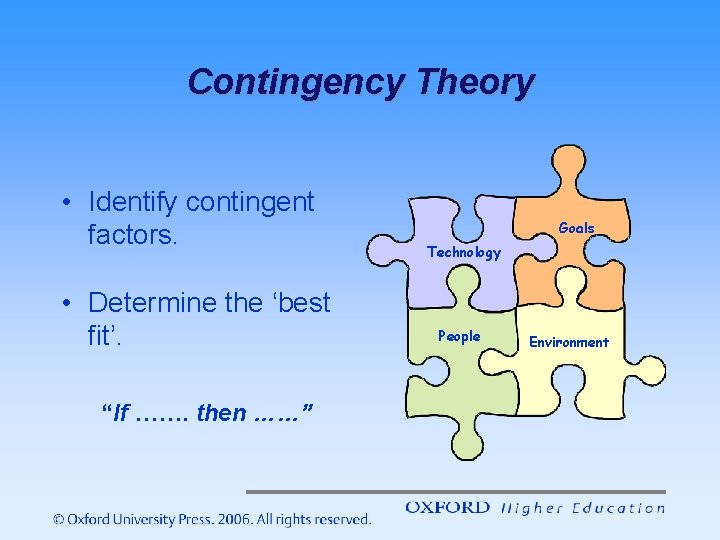
Contingency Theory • Identify contingent factors. • Determine the ‘best fit’. “If ……. then ……” Goals Technology People Environment
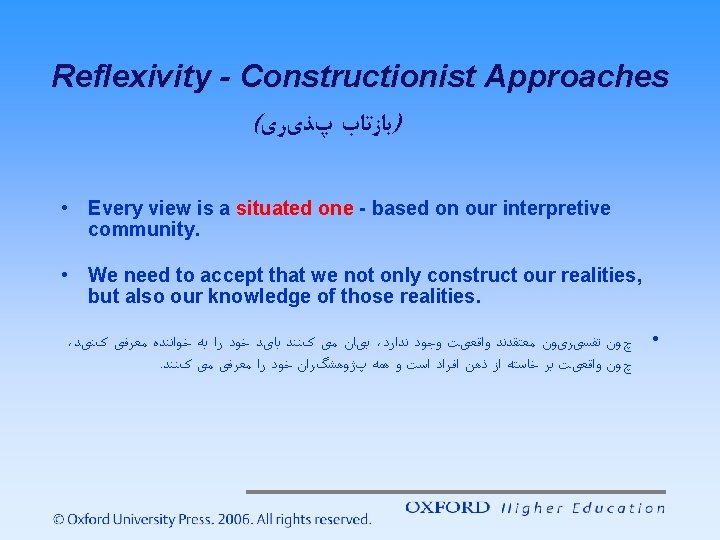
Symbolic Interpretive Influences 1. The crisis of representation: questions our relationship with our social world and the ways in which we account for our experience. 2. Social constructionism: we construct our social world and our knowledge of that world in our everyday interactions.
Symbolic-Interpretivism • Challenges objective science and modernism. • Applies ethnographic and interpretive approaches to organizations. • Uncovers multiple interpretations of organizational members. • Emphasizes the role of context in shaping and interpreting meaning.
Symbolic-Interpretivists Explore… • How people create meanings in organizations through their interpretation of utterances ( )ﻧﻄﻖ , stories, rituals ( )ﺗﺸﺮﻳﻔﺎﺕ , actions, and so on. • How individuals and groups create multiple meanings and interpret them from their own cultural contexts. • How multiple interpretations of individuals and subcultures blend to socially construct organizational reality.
Symbolic-Interpretive Theories Include: (Berger & Luckmann, 1966) ﻭﺍﻗﻌیﺖ ﺍﺟﺘﻤﺎﻋی ﺳﺎﺧﺖ ﺗﺌﻮﺭی (Weick, 1979, 1995) ﺗﺌﻮﺭی ﻭﺿﻊ ﻭﺍﻗﻌیﺖ (Selznick, 1949) (Clifford & Marcus, 1986) ﺳﺎﺯی ﻧﻬﺎﺩی ﺑﺎﺯﺗﺎﺏ پﺬیﺮی
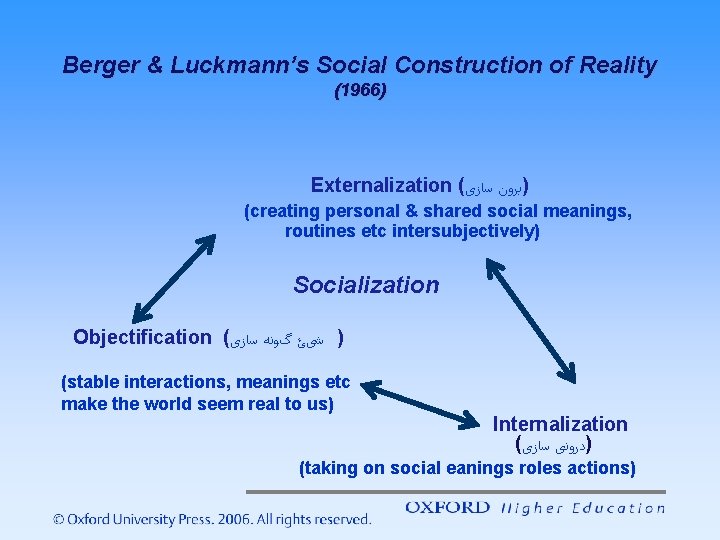
Berger & Luckmann’s Social Construction of Reality (1966) Externalization ( ﺳﺎﺯی )ﺑﺮﻭﻥ (creating personal & shared social meanings, routines etc intersubjectively) Socialization Objectification ( ﺳﺎﺯی گﻮﻧﻪ ) ﺷیﺊ (stable interactions, meanings etc make the world seem real to us) Internalization ( ﺳﺎﺯی )ﺩﺭﻭﻧی (taking on social eanings roles actions)
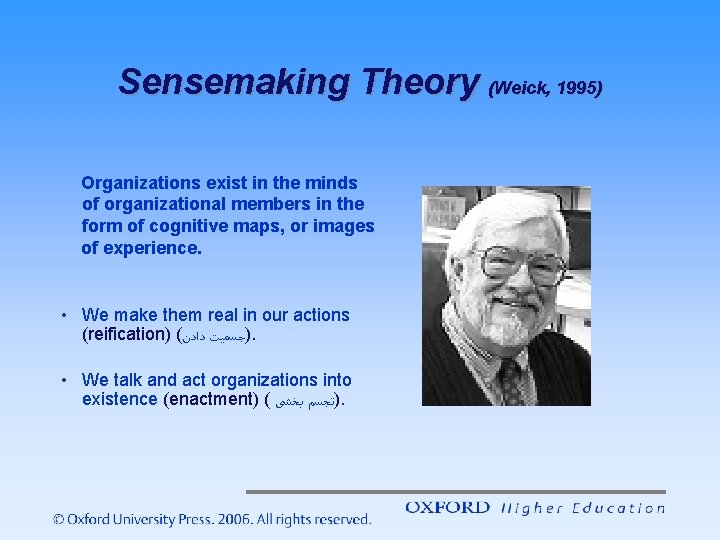
Sensemaking Theory (Weick, 1995) Organizations exist in the minds of organizational members in the form of cognitive maps, or images of experience. • We make them real in our actions (reification) ( ﺩﺍﺩﻥ )ﺟﺴﻤﻴﺖ. • We talk and act organizations into existence (enactment) ( ﺑﺨﺸی )ﺗﺠﺴﻢ.
Institutionalization Organizations compete and adapt to the demands and values of their environment, society, and of internal groups. . ﺭﻭﺩ ﻧﻤی ﺳﺆﺎﻝ ﺯیﺮ کﻪ ﺍﺳﺖ ﺍﺟﺘﻤﺎﻋی ﺳﺎﺧﺖ : ﻧﻬﺎﺩ Institutionalization occurs as actions are repeated.
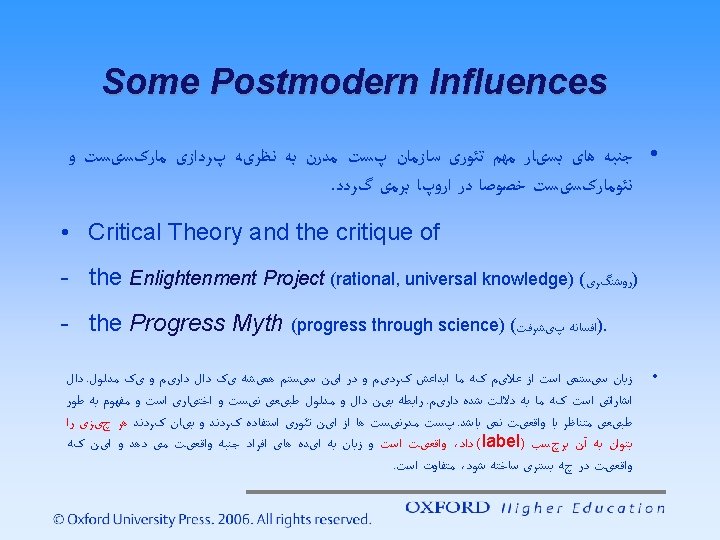
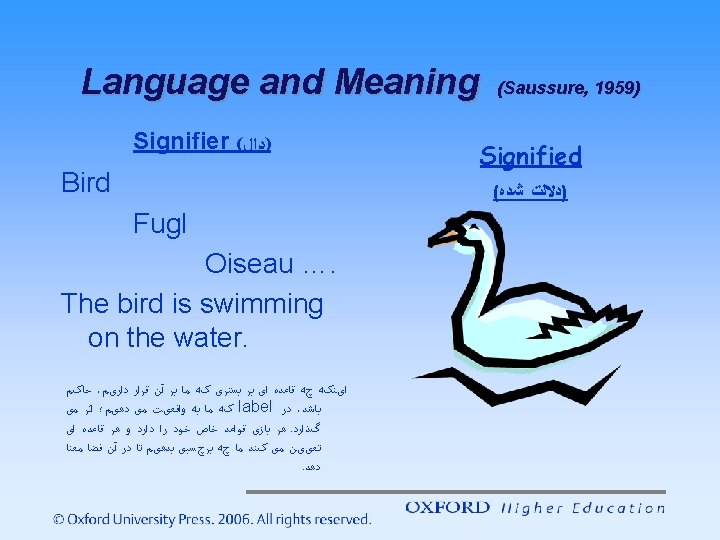
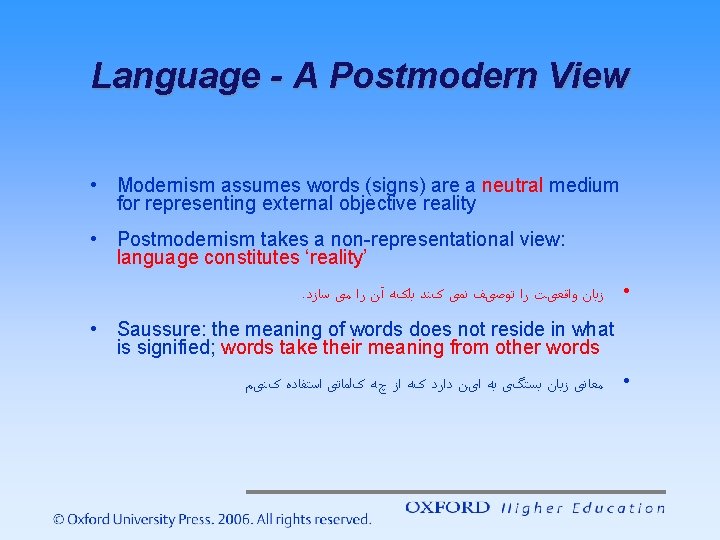
Language - A Postmodern View • Modernism assumes words (signs) are a neutral medium for representing external objective reality • Postmodernism takes a non-representational view: language constitutes ‘reality’. ﺳﺎﺯﺩ ﻣی ﺭﺍ آﻦ ﺑﻠکﻪ کﻨﺪ ﻧﻤی ﺗﻮﺻیﻒ ﺭﺍ ﻭﺍﻗﻌیﺖ • ﺯﺑﺎﻥ • Saussure: the meaning of words does not reside in what is signified; words take their meaning from other words کﻨیﻢ ﺍﺳﺘﻔﺎﺩﻩ کﻠﻤﺎﺗی چﻪ ﺍﺯ کﻪ ﺩﺍﺭﺩ ﺍیﻦ ﺑﻪ ﺑﺴﺘگی ﺯﺑﺎﻥ • ﻣﻌﺎﻧی
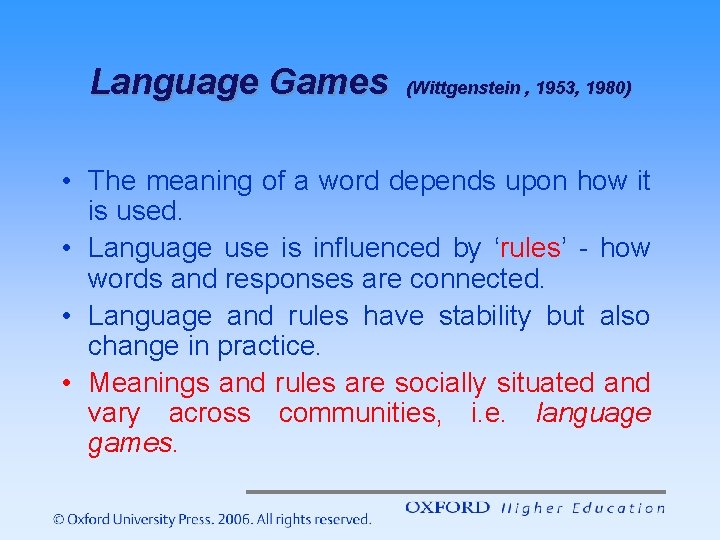
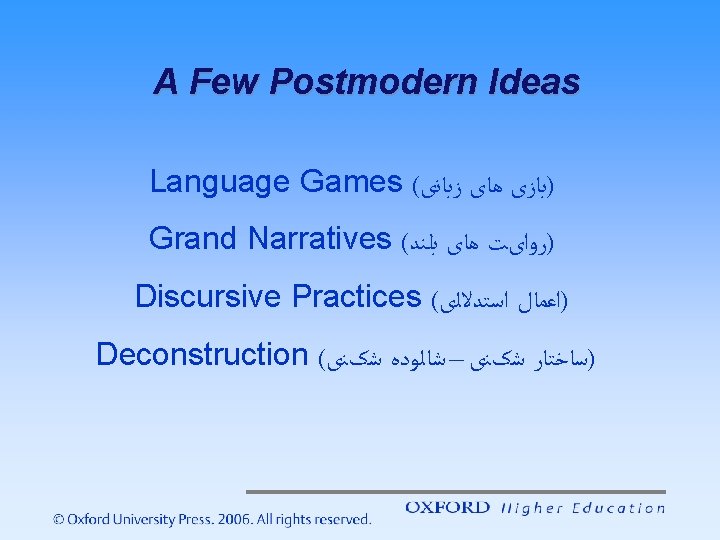
Language Games (Wittgenstein , 1953, 1980) • The meaning of a word depends upon how it is used. • Language use is influenced by ‘rules’ - how words and responses are connected. • Language and rules have stability but also change in practice. • Meanings and rules are socially situated and vary across communities, i. e. language games.
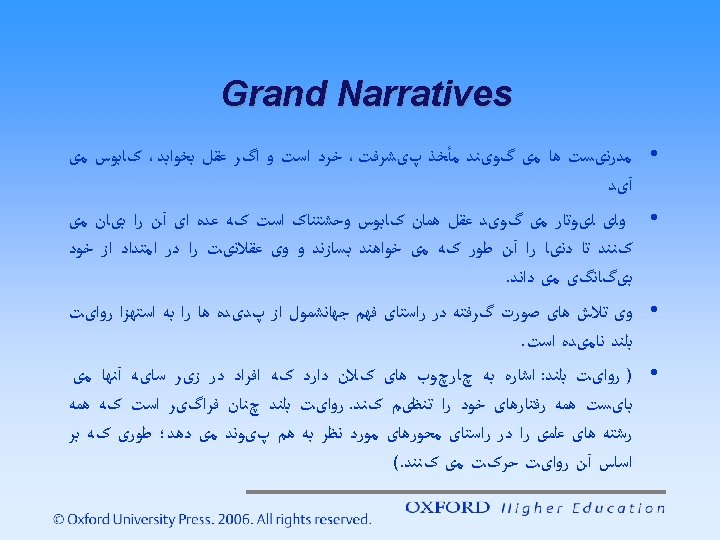
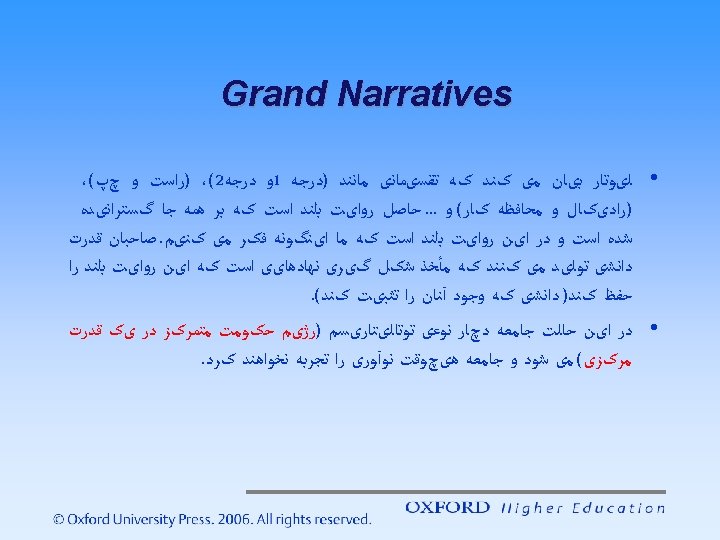
Grand Narratives Postmodernists criticize Grand Narratives (progress myth, universal Truth, wealth creation) because they legitimize ways of thinking and acting that promote: § what is True § what is ‘good’ knowledge § self-interest …. and silence and marginalize others. We need to give voice to silence.
Discourse and Discursive Practices ﺍﺳﺘﺪﻻﻟی ﺍﻋﻤﺎﻝ ﻭ گﻔﺘﻤﺎﻥ Foucault argued that power/knowledge are entwined and influence / are influenced by discursive practices. Discursive practices are systems of rules that determine the rationality and legitimacy of particular forms of knowledge. These rules are powerful because they create and regulate: - social institutions (the university, hospital) - ‘good’ knowledge - who we are (expert or not) - what we say (discourse) - how we act.
Power/Knowledge • Knowledge is produced and maintained through historical, cultural, and discursive codes and practices. • Certain people or groups define what is ‘normal’ and ‘not normal’ by codifying knowledge. • These groups use this knowledge to define and regulate who and what is ‘normal’. • Thus power is exercised through knowledge as individuals are disciplined and controlled based on these definitions and codes.
Power/Knowledge “In every society the production of discourse is at once controlled, selected, organized and redistributed according to a number of procedures whose role is to avert its powers and its dangers, to cope with chance events, to evade its ponderous, awesome materiality” (Foucault, 1972: 216)
Différance Derrida suggested that meaning is subject to the play of différance, because meaning: Defers ~ ( ﺍﻧﺪﺍﺧﺘﻦ )ﺑﺘﻌﻮیﻖ is postponed because we explain words by using yet more words, and so move further away from the original. Differs ~ ( ﺑﻮﺩﻥ )ﻣﺘﻤﺎیﺰ words derive meaning from the interplay with their opposite, e. g. , good/bad, organization/ disorganization

Deconstruction exposes the many ways in which texts can be interpreted: the silences, absences, and gaps. It exposes the instability of meaning; makes visible the ‘other’; and is suspicious of dichotomies( )ﺩﻭگﺎﻧگی.
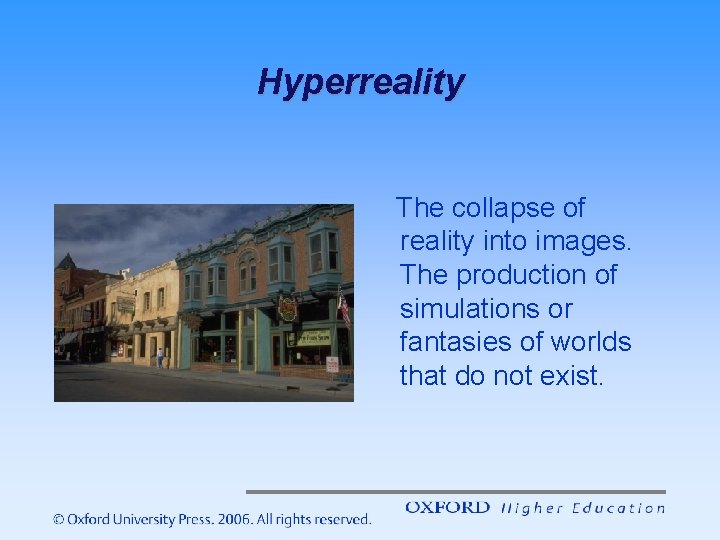
Hyperreality The collapse of reality into images. The production of simulations or fantasies of worlds that do not exist.
- Slides: 57