
A Brief History of Labor in the U
A Brief History of Labor in the U. S. Warm-Up: What are some of the government protections that we have in the United States as workers?
What does a union do? Represents workers at a company when a majority of workers vote to accept the union; company then required to negotiate with union on work contracts Collective bargaining: the process in which union and company representatives meet periodically to negotiate new labor contracts Negotiate on wages and benefits, working conditions, job security Union may fight on behalf of workers who are fired
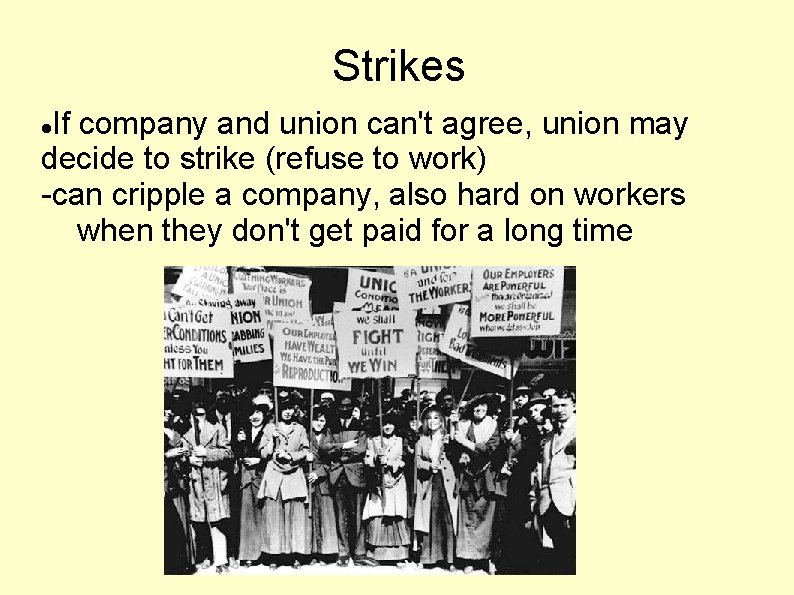
Strikes If company and union can't agree, union may decide to strike (refuse to work) -can cripple a company, also hard on workers when they don't get paid for a long time
The Industrial Age and Factory Jobs Laborers worked 12 -16 hour days, 7 days a week for very little pay Operated dangerous machinery; if you were injured you lost your job - In the year 1889, 22, 000 railroad workers were killed or injured on the job - 5. 5 million immigrants in 1880 s, more than 1 million child workers, creating a labor surplus that kept wages down
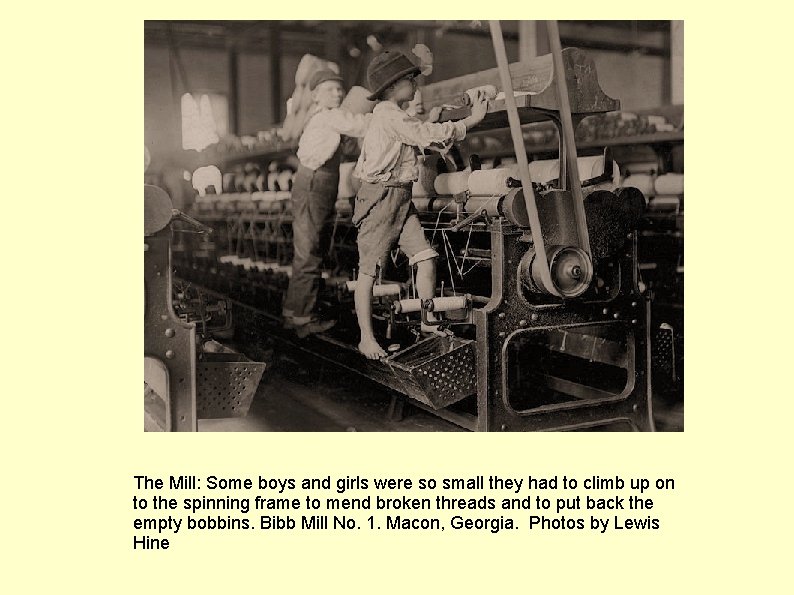
The Mill: Some boys and girls were so small they had to climb up on to the spinning frame to mend broken threads and to put back the empty bobbins. Bibb Mill No. 1. Macon, Georgia. Photos by Lewis Hine
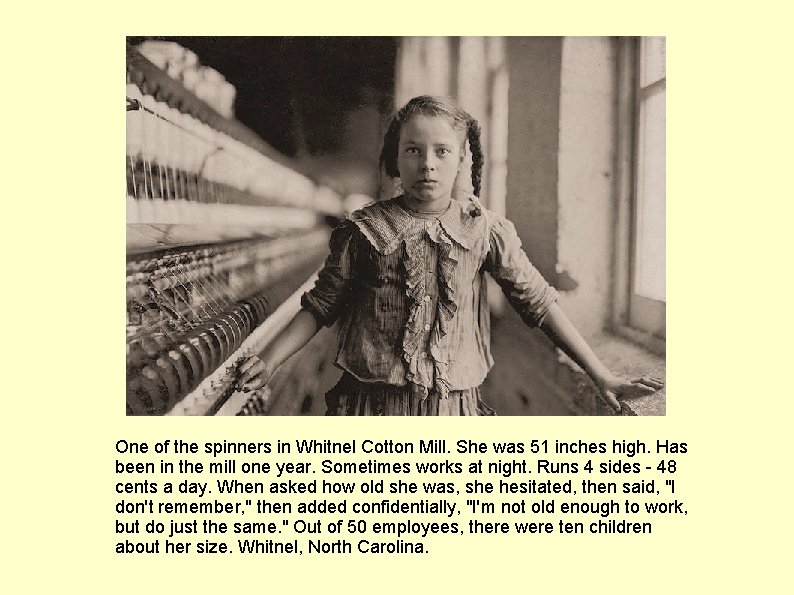
One of the spinners in Whitnel Cotton Mill. She was 51 inches high. Has been in the mill one year. Sometimes works at night. Runs 4 sides - 48 cents a day. When asked how old she was, she hesitated, then said, "I don't remember, " then added confidentially, "I'm not old enough to work, but do just the same. " Out of 50 employees, there were ten children about her size. Whitnel, North Carolina.
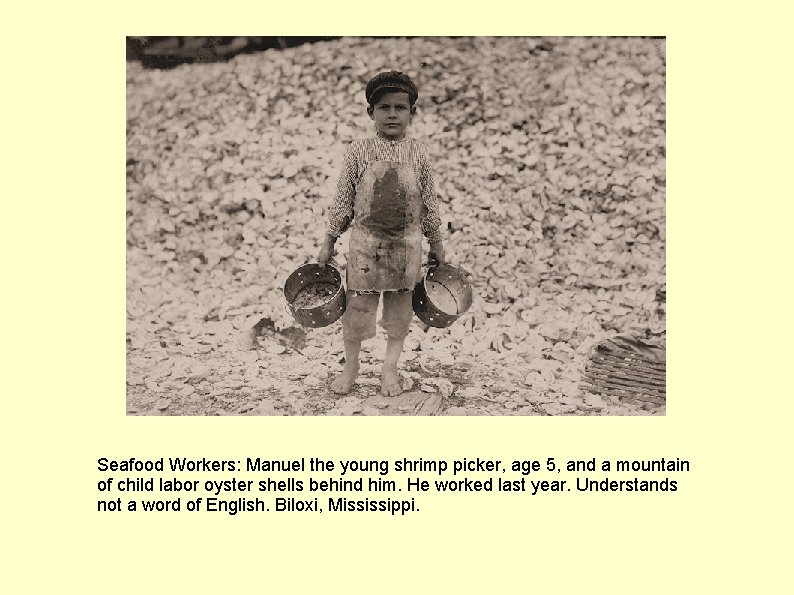
Seafood Workers: Manuel the young shrimp picker, age 5, and a mountain of child labor oyster shells behind him. He worked last year. Understands not a word of English. Biloxi, Mississippi.
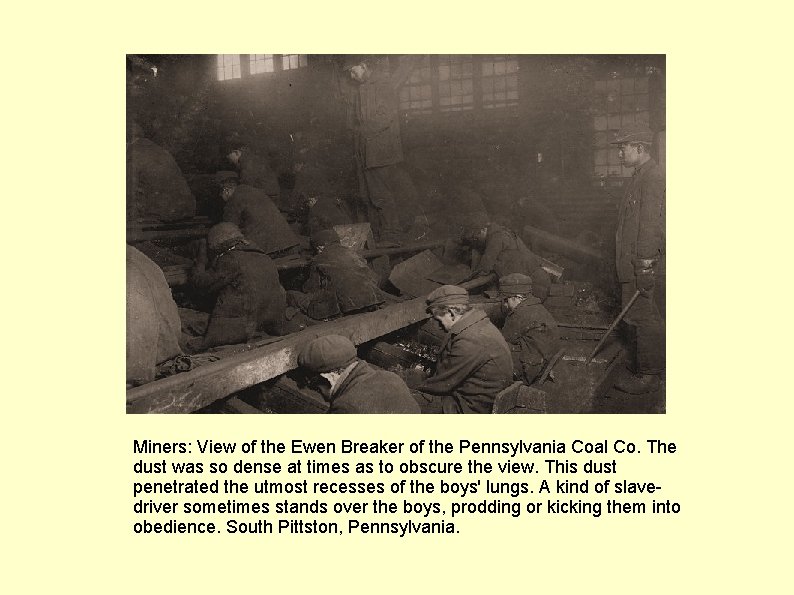
Miners: View of the Ewen Breaker of the Pennsylvania Coal Co. The dust was so dense at times as to obscure the view. This dust penetrated the utmost recesses of the boys' lungs. A kind of slavedriver sometimes stands over the boys, prodding or kicking them into obedience. South Pittston, Pennsylvania.
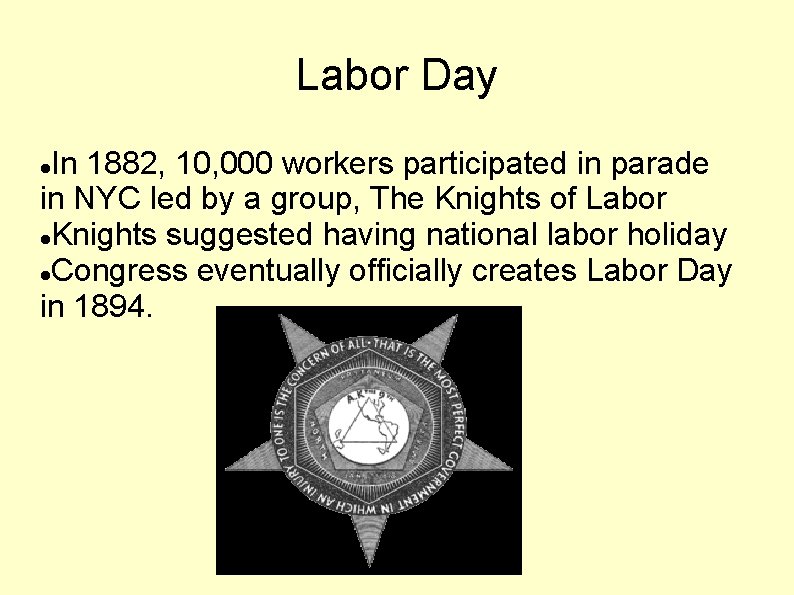
Labor Day In 1882, 10, 000 workers participated in parade in NYC led by a group, The Knights of Labor Knights suggested having national labor holiday Congress eventually officially creates Labor Day in 1894.
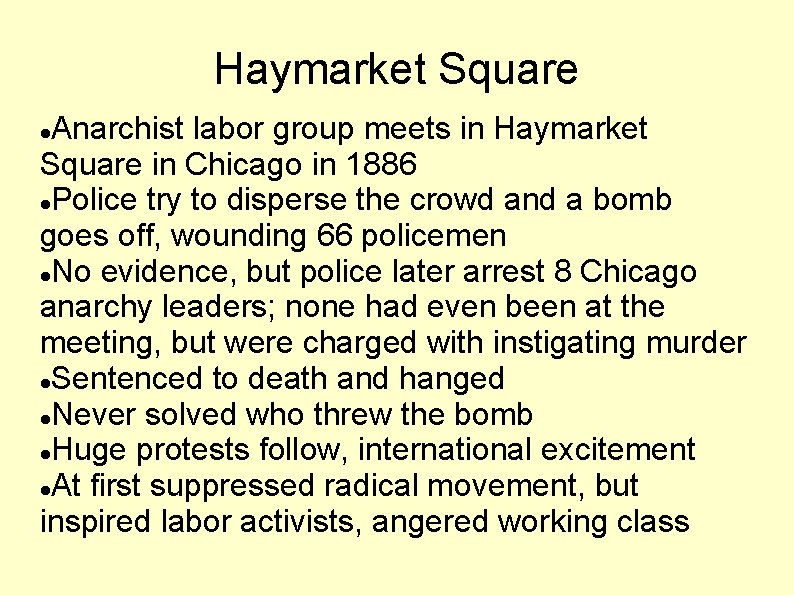
Haymarket Square Anarchist labor group meets in Haymarket Square in Chicago in 1886 Police try to disperse the crowd and a bomb goes off, wounding 66 policemen No evidence, but police later arrest 8 Chicago anarchy leaders; none had even been at the meeting, but were charged with instigating murder Sentenced to death and hanged Never solved who threw the bomb Huge protests follow, international excitement At first suppressed radical movement, but inspired labor activists, angered working class
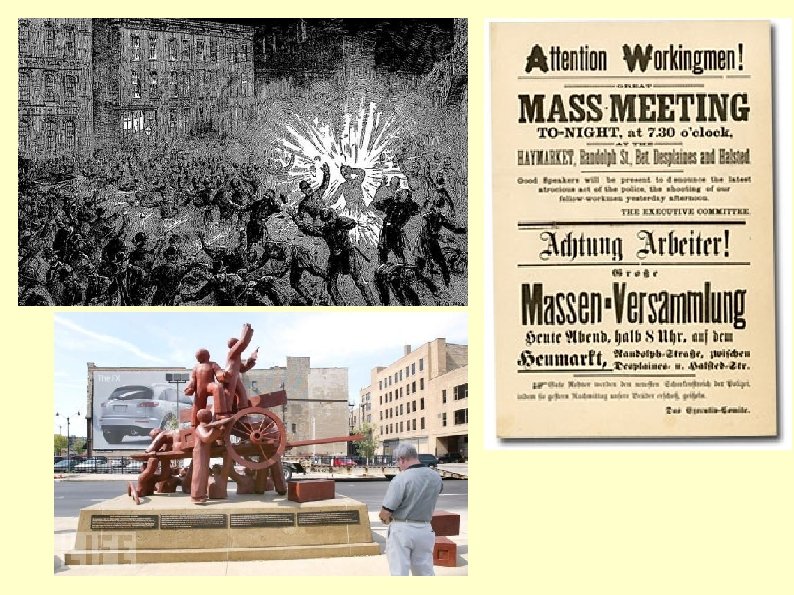
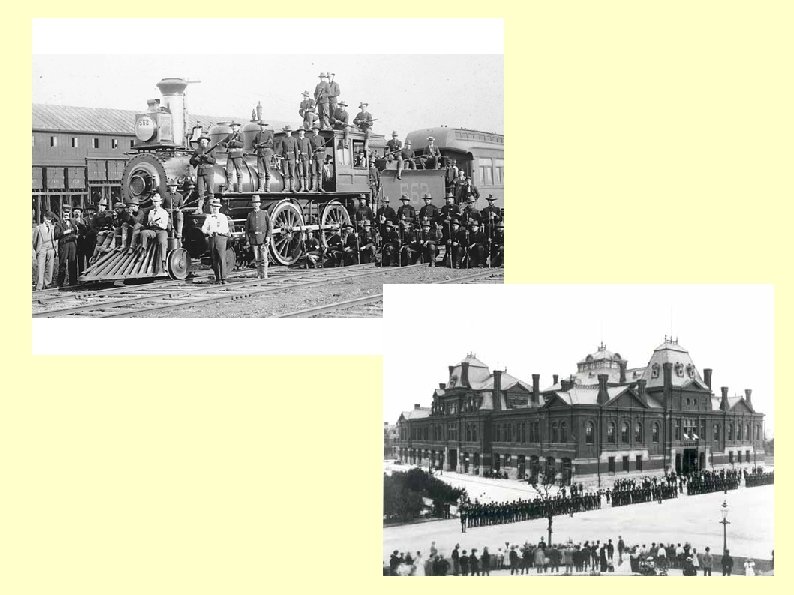
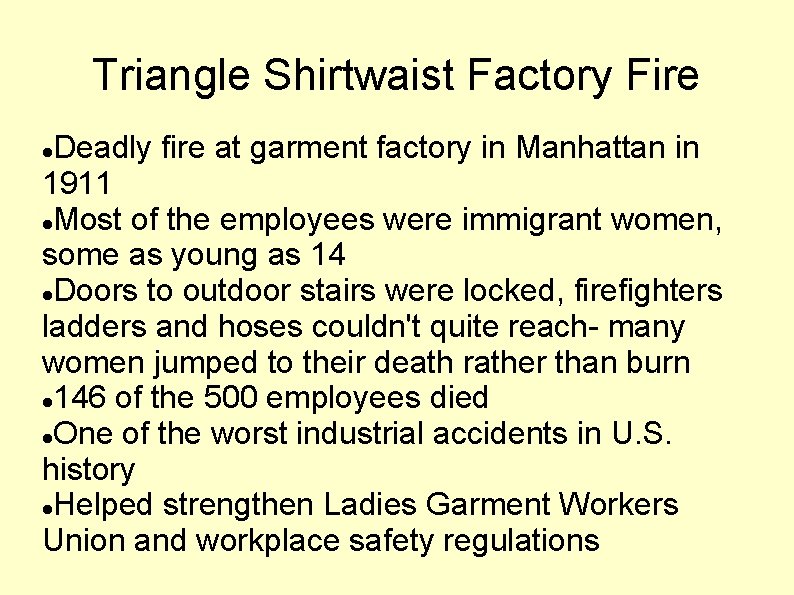
The Pullman Strike of 1894 Workers at the Pullman Car Company (railroad car manufacturers) go on strike Pullman, the owner, had reduced wages several times but not prices in “Pullman town” American Railway Union helps workers by refusing to use Pullman train cars; creates a virtual stoppage of all passenger trains in U. S. President Cleveland orders 14, 000 national and state militia in to break strike; turned into battlefield 13 people died, 700 arrested Eugene Debs, head of Am. Rail. Union goes to prison for 6 months, becomes socialist
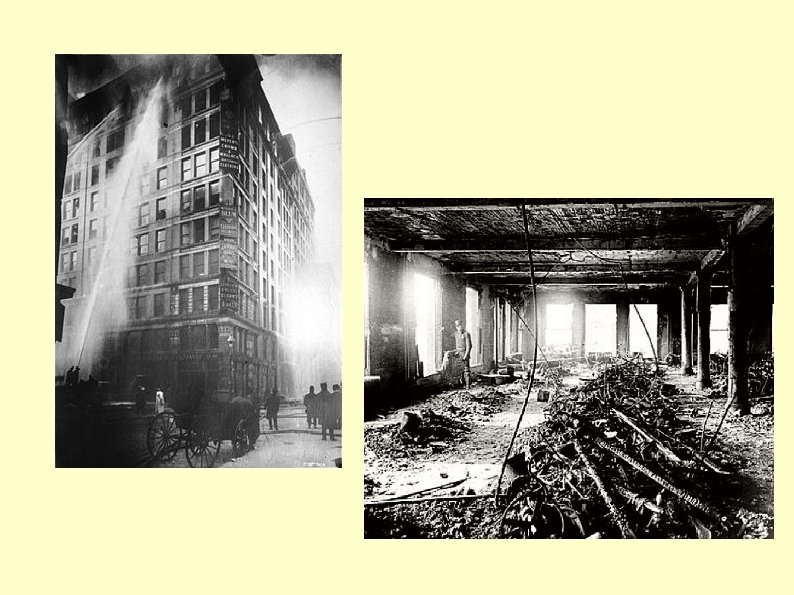
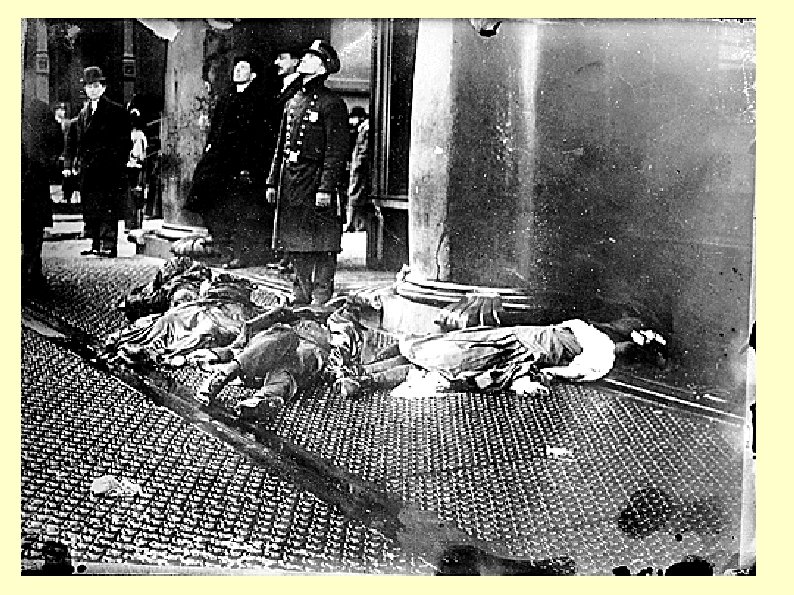
Triangle Shirtwaist Factory Fire Deadly fire at garment factory in Manhattan in 1911 Most of the employees were immigrant women, some as young as 14 Doors to outdoor stairs were locked, firefighters ladders and hoses couldn't quite reach- many women jumped to their death rather than burn 146 of the 500 employees died One of the worst industrial accidents in U. S. history Helped strengthen Ladies Garment Workers Union and workplace safety regulations
Ludlow Massacre of 1914 1, 200 Coal miners go on strike in Ludlow, Colorado at a Rockefeller owned mine Organized by United Mine Workers of America Strikers kicked out of company town and set up camp in tent villages nearby Strike-related violence rose between strikers and “scabs” (replacement workers) Colorado National Guard called in, fighting broke out, tent village in flames Many escaped, but several strike leaders killed; 2 women and 11 children hiding in a pit underneath tent smothered to death during fire Strikers eventually failed to obtain their demands
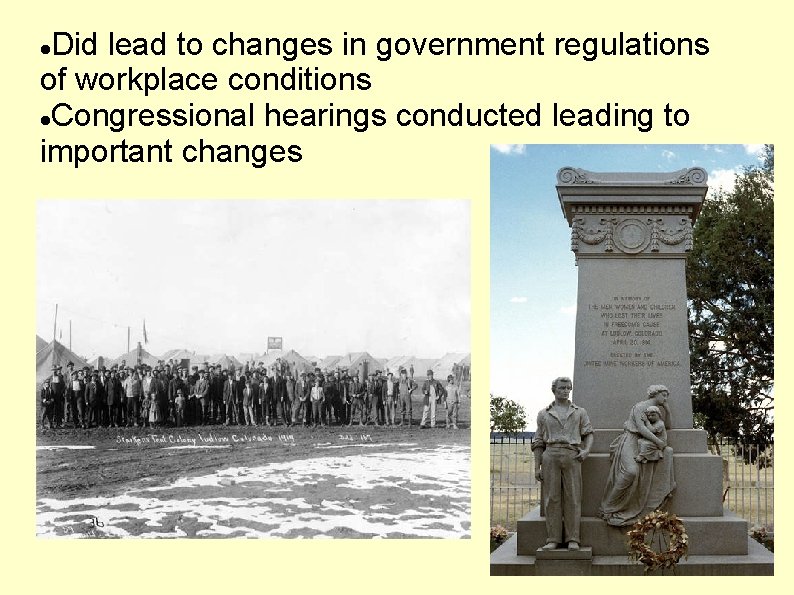
Did lead to changes in government regulations of workplace conditions Congressional hearings conducted leading to important changes
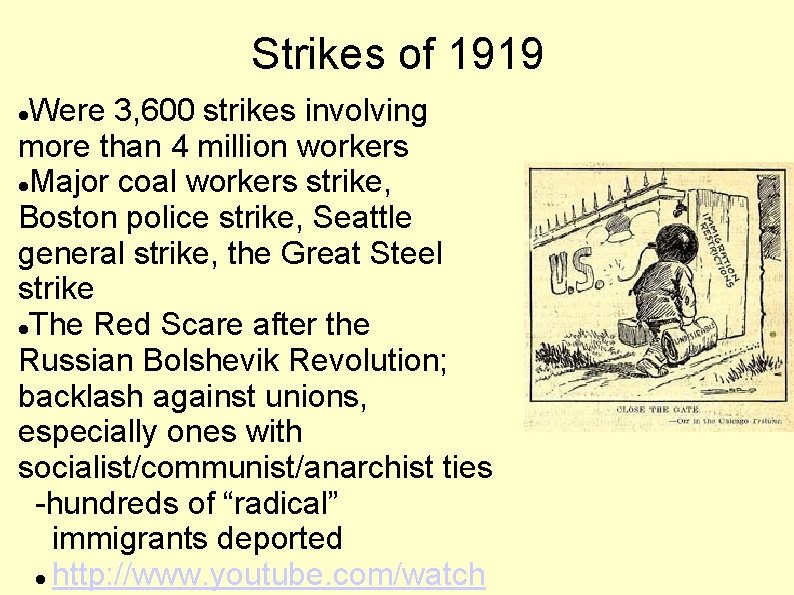
Strikes of 1919 Were 3, 600 strikes involving more than 4 million workers Major coal workers strike, Boston police strike, Seattle general strike, the Great Steel strike The Red Scare after the Russian Bolshevik Revolution; backlash against unions, especially ones with socialist/communist/anarchist ties -hundreds of “radical” immigrants deported http: //www. youtube. com/watch
Government Protections Norris-La Guardia Act of 1932 and Wagner Act of 1935: -yellow dog contracts made illegal- when workers were forced to sign a contract promising not to join union -companies couldn't interfere with workers right to unionize -companies can't get courts to issue injunctions to order striking employees back to work Fair Labor Standards Act of 1938: creates minimum wage, bans child labor, requires overtime pay
Peak of Organized Labor During 1930 s, 1940 s, government protections passed by congress contributed to rise in union strength Union membership peaks at about 35% of the nation's workforce Unions became dominant force, especially in some industries like shipyards, garbage collection, and steel production Raised millions of dollars in union fees
Corruption Some unions so powerful, they became corrupt -Links to organized crime: -the Teamsters, one of the largest unions, became very corrupt in some areas, soliciting bribes, embezzling money, involved in extortion, beatings, and even bombings -Jimmy Hoffa used union funds to finance mafia projects, eventually disappeared, presumed dead
Decline of Unions Congress passes Taft-Hartley Act of 1947 to try to curb union power: allowed states to pass rightto-work laws, which banned mandatory union membership Changing jobs: unions usually strongest in bluecollar manufacturing jobs; blue-collar jobs have been shrinking over time Loss of industries overseas: other manufacturing jobs such as automobile, steel, and textiles now largely overseas where labor is cheaper Government provides protections that unions used to fight for
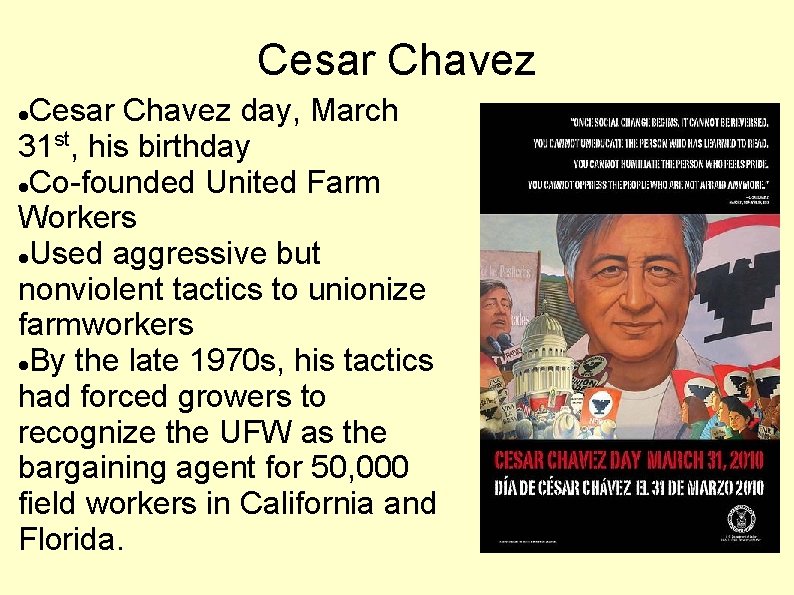
Cesar Chavez day, March 31 st, his birthday Co-founded United Farm Workers Used aggressive but nonviolent tactics to unionize farmworkers By the late 1970 s, his tactics had forced growers to recognize the UFW as the bargaining agent for 50, 000 field workers in California and Florida.
Unions Today Mostly public sector workers About 15% of entire workforce Unions less strong than in many European countries Many workers still struggle to unionize; example: Walmart Wisconsin in the news: gov. Scott Walker and state Republicans took away collective bargaining rights for public sector workers; claimed it was to balance budget http: //www. youtube. com/watch? v=n. Dcfqe. IT 0 PA

http: //www. thedailyshow. com/watch/thu-march-32011/crisis-in-the-dairyland---for-richer-and-poorer ---teachers-and-wall-street
- Slides: 26