
A Brief History of Computers PreMechanical Computing From
A Brief History of Computers
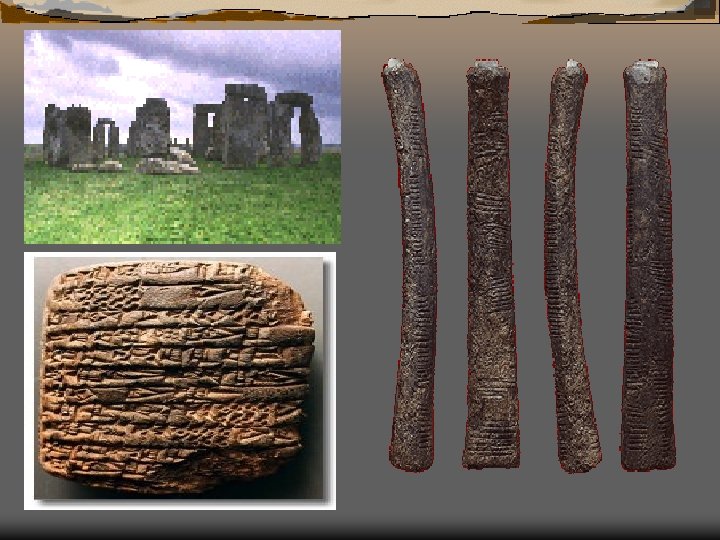
Pre-Mechanical Computing: From Counting on fingers to pebbles to hash marks on walls to hash marks on bone to hash marks in sand
Mechanical computers From The Abacus to Charles Babbage and his Difference Engine (1812)

Forefathers of the Modern Computer Blaise Pascal (1623 -1662) Charles Babbage (1812 -1833) Gottfried Wilhelm von Leibniz (1646 -1716)
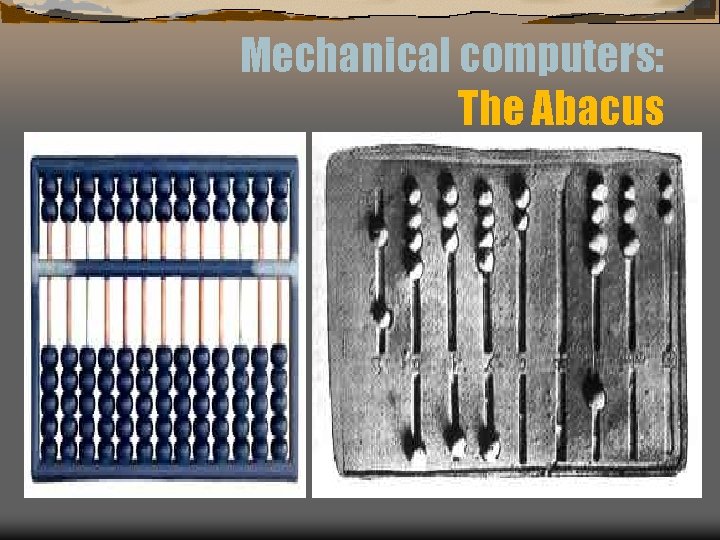
Mechanical computers: The Abacus
Mechanical computers: The Abacus The abacus is still a mainstay of basic computation in some societies. Slide the beads up and down on the rods to add and subtract. 8 The abacus, a simple counting aid, may have been invented in Babylonia (now Iraq) in the 3000 B. C. E. 8 This device allows users to make computations using a system of sliding beads arranged on a rack.
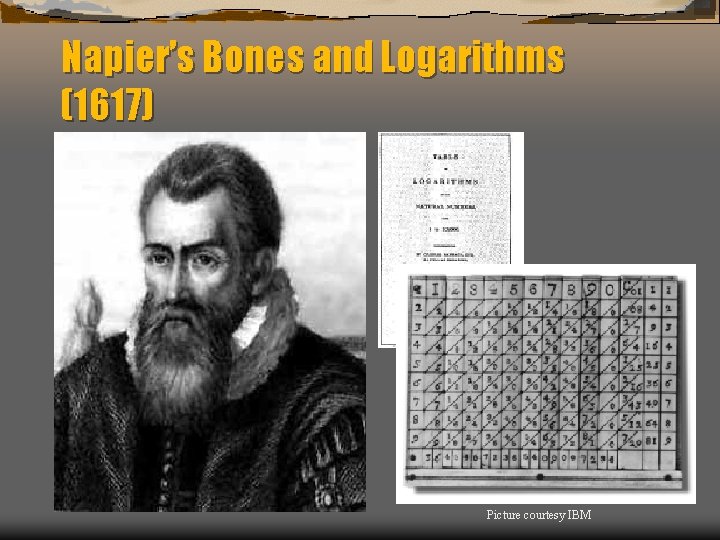
Napier’s Bones and Logarithms (1617) Picture courtesy IBM
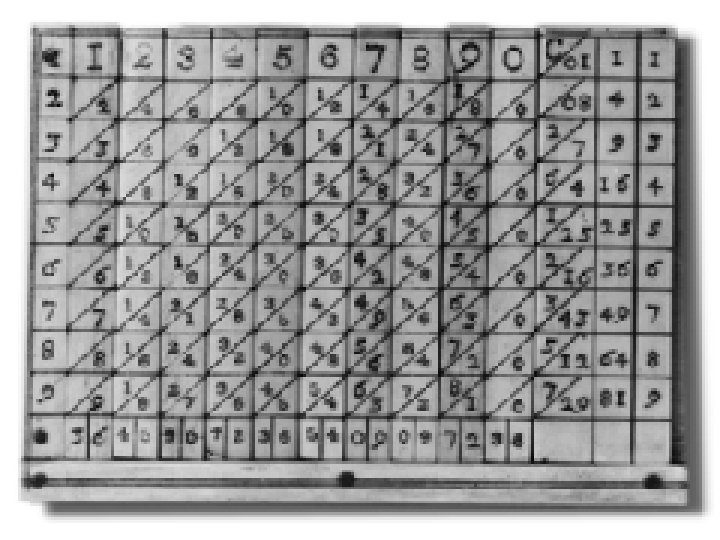
Napier’s Bones and Logarithms (1617) 8 John Napier, a Scotsman, invented logarithms which use lookup tables to find the solution to otherwise tedious and error-prone mathematical calculations. 8 Dated from the 16 th century. 8 The bones consist of a series of numbered rods, each inscribed with a multiplication table. The rods were usually made of ivory or bone, hence the name.
Blaise Pascal’s Pascaline (1645)
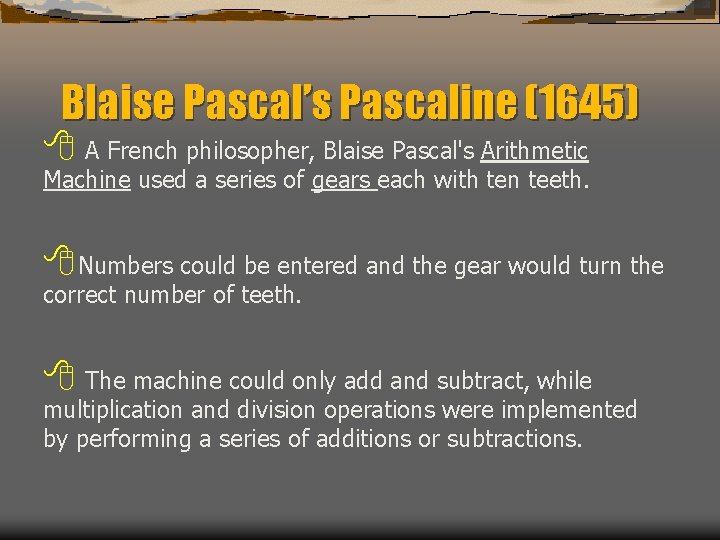
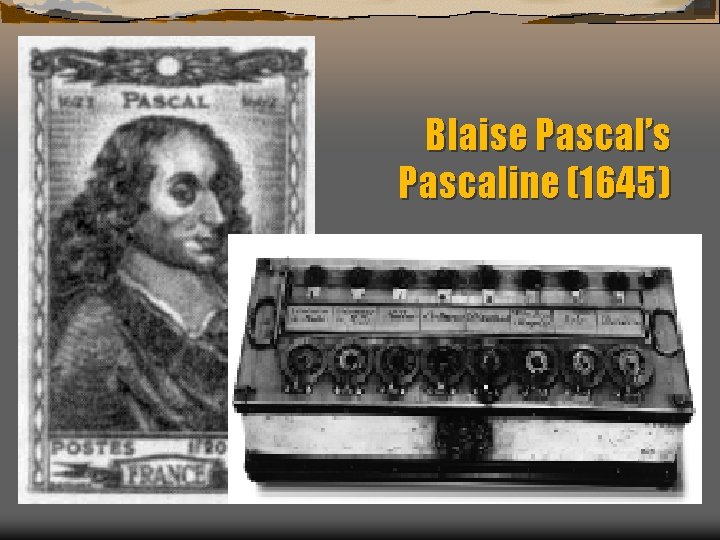
Blaise Pascal’s Pascaline (1645) 8 A French philosopher, Blaise Pascal's Arithmetic Machine used a series of gears each with ten teeth. 8 Numbers could be entered and the gear would turn the correct number of teeth. 8 The machine could only add and subtract, while multiplication and division operations were implemented by performing a series of additions or subtractions.
Gottfried Wilhelm von Leibniz’s Stepped Reckoner (1674)
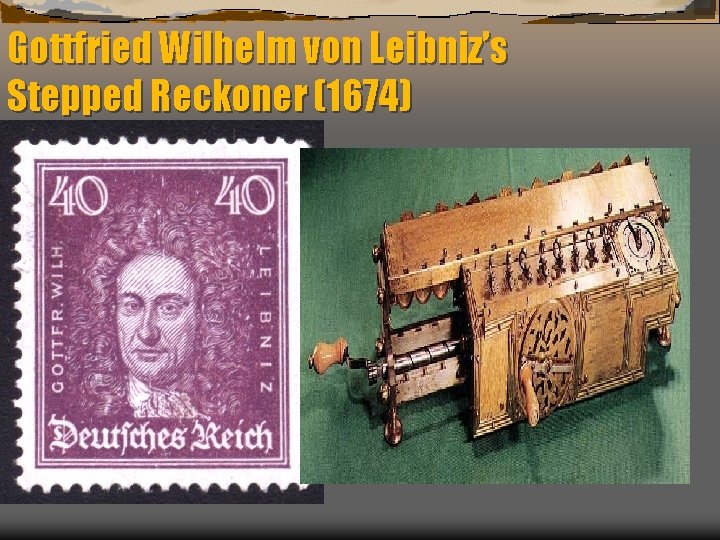
Gottfried Wilhelm von Leibniz’s Stepped Reckoner (1674) 8 Leibniz developed Pascal's ideas and, in 1671, introduced the Step Reckoner, a device which, as well as performing additions and subtractions, could multiply, divide, and evaluate square roots by series of stepped additions. 8 Leibniz also strongly advocated the use of the binary number system, which is fundamental to the operation of modern computers.
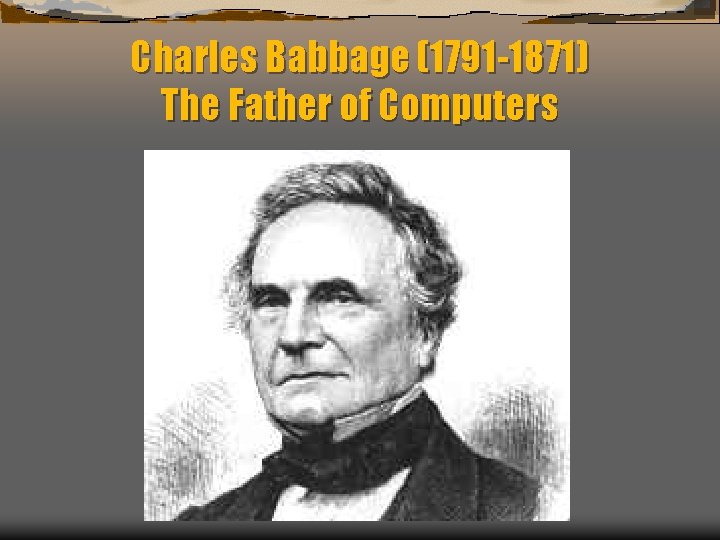
Charles Babbage (1791 -1871) The Father of Computers
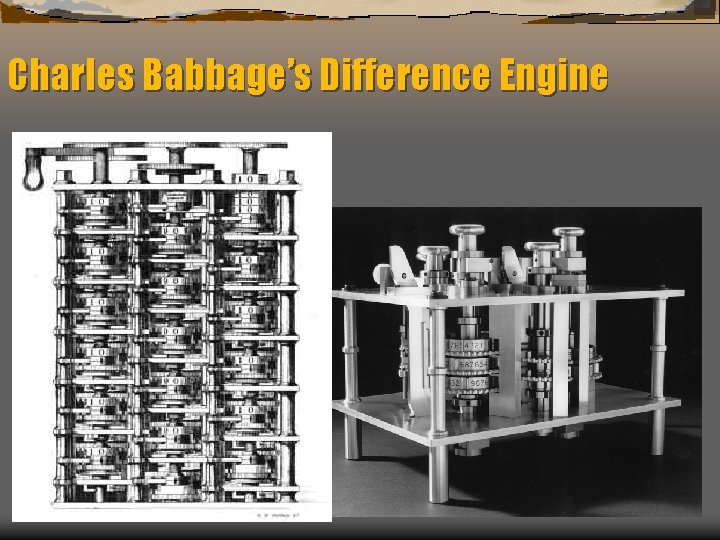
Charles Babbage’s Difference Engine
Charles Babbage’s Difference Engine 8 In 1822, Babbage proposed building a machine called the Difference Engine to automatically calculate mathematical tables. 8 The Difference Engine was only partially completed when Babbage conceived the idea of another, more sophisticated machine called an Analytical Engine.
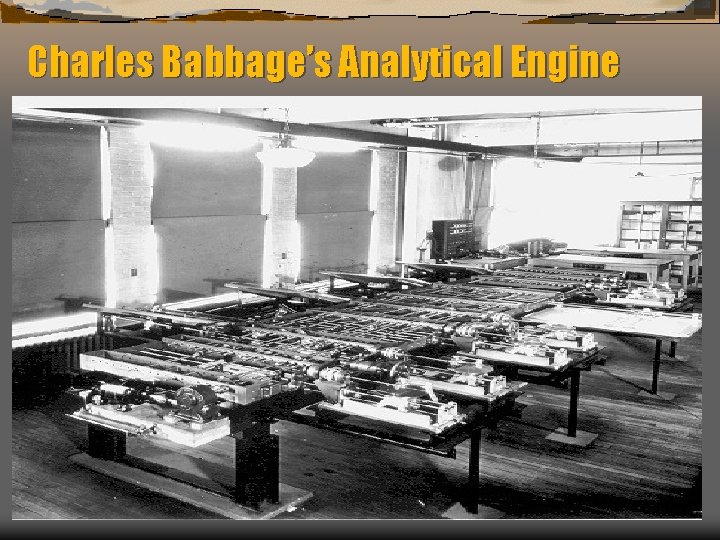
Charles Babbage’s Analytical Engine
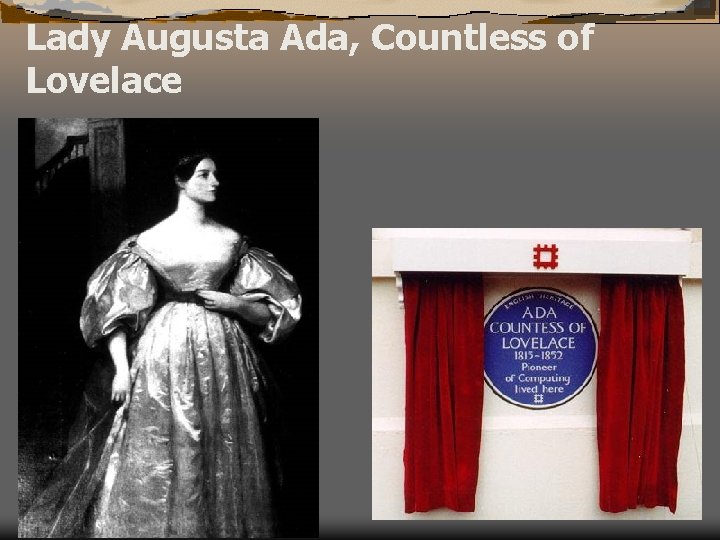
Lady Augusta Ada, Countless of Lovelace
Electro-mechanical computers From Herman Hollerith’s 1890 Census Counting Machine to Howard Aiken and the Harvard Mark I (1944)
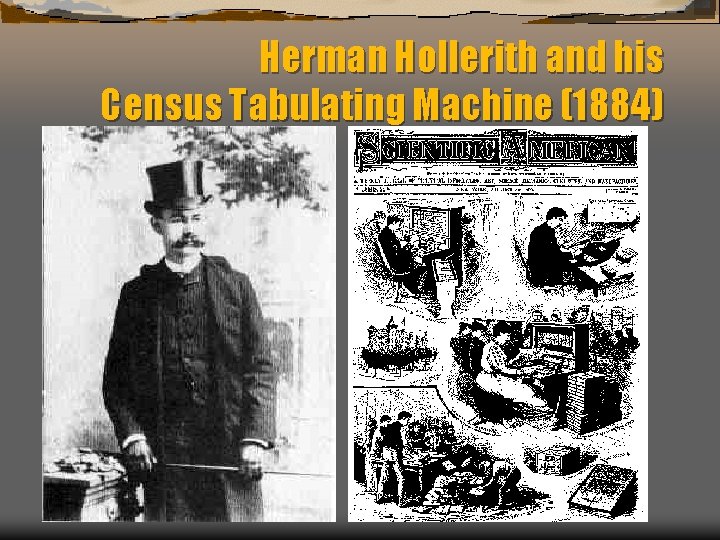
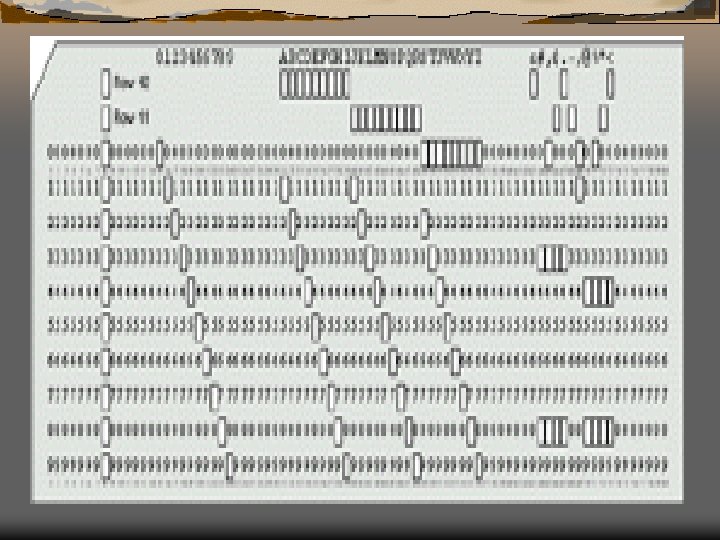
Herman Hollerith and his Census Tabulating Machine (1884)
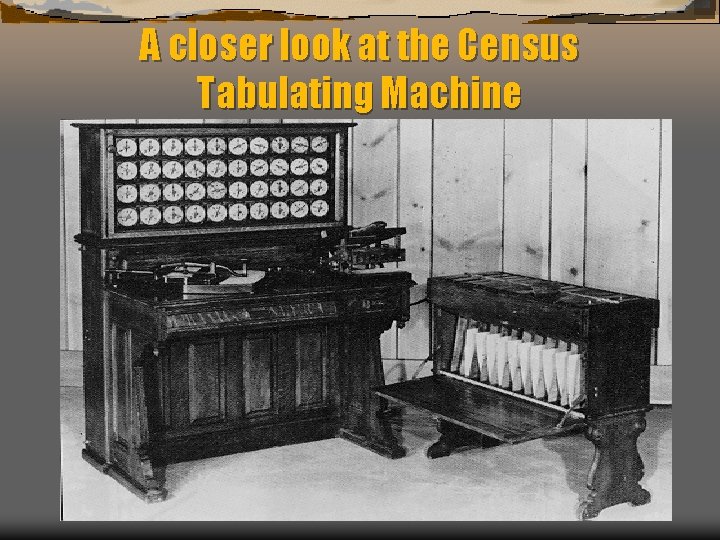
A closer look at the Census Tabulating Machine
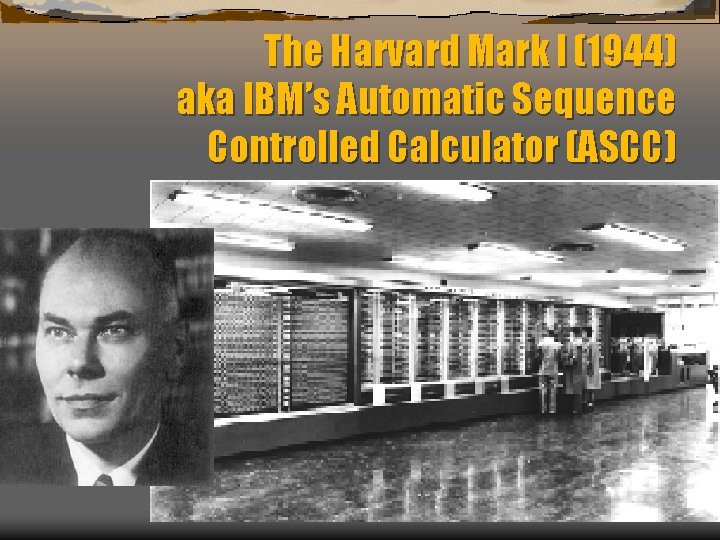
The Harvard Mark I (1944) aka IBM’s Automatic Sequence Controlled Calculator (ASCC)
The Harvard Mark I (1944) 8 Officially known as the IBM automatic sequence controlled calculator (ASCC) 8 Invented by Howard H. Aiken 8 The machine contained more than 750, 000 components, was 50 feet long, 8 feet tall, and weighed approximately 5 tons! 8 Instructions were read in on paper tape, data was provided on punched cards, and the device could only perform operations in the sequence in which they were received.
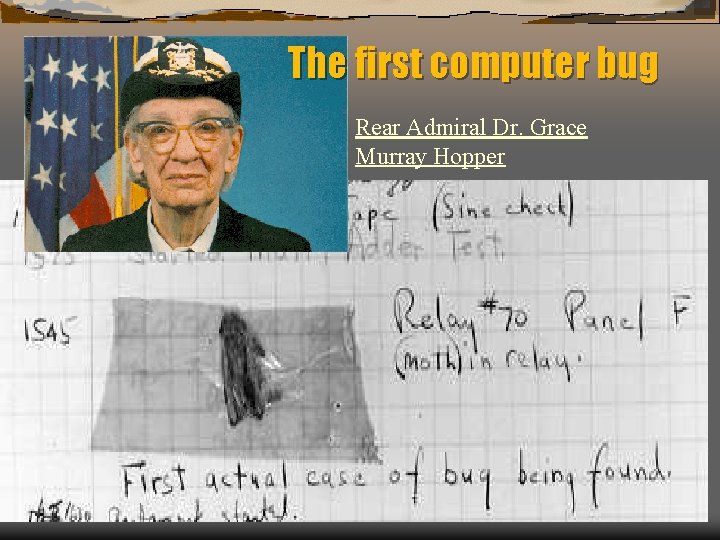
The first computer bug Rear Admiral Dr. Grace Murray Hopper
Electronic digital computers
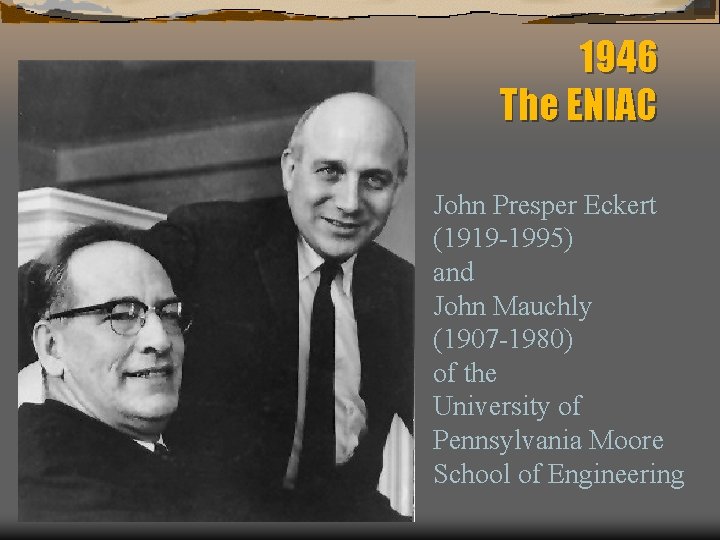
1946 The ENIAC John Presper Eckert (1919 -1995) and John Mauchly (1907 -1980) of the University of Pennsylvania Moore School of Engineering
![1946: The ENIAC 8 Was developed by [USA] Army Ordinance to compute World War](http://slidetodoc.com/presentation_image_h2/743cc2a187d25692672863b4746a086d/image-29.jpg "1946: The ENIAC 8 Was developed by [USA] Army Ordinance to compute World War")
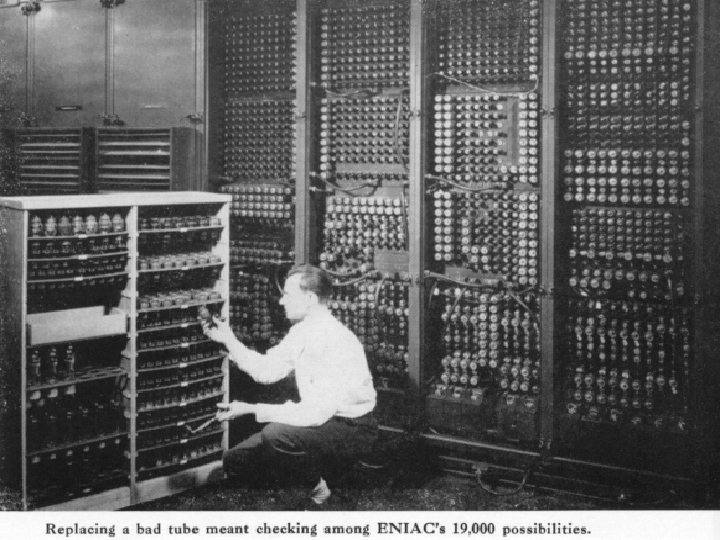
1946: The ENIAC 8 Was developed by [USA] Army Ordinance to compute World War II ballistic firing tables. 8 Using 18, 000 -19, 000 vacuum tubes, 70, 000 resistors and 5 million soldered joints this massive instrument required the output of a small power station to operate it. 8 ENIAC could discriminate the sign of a number, compare quantities for equality, add, subtract, multiply, divide, and extract square roots. ENIAC stored a maximum of twenty 10 -digit decimal numbers.
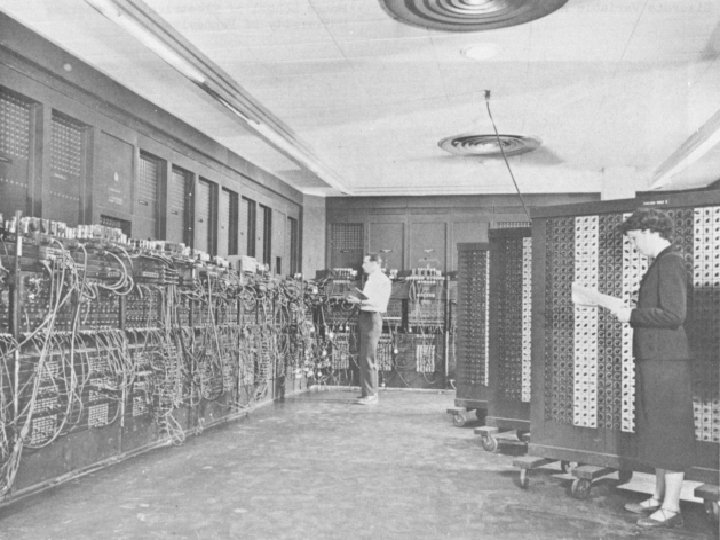
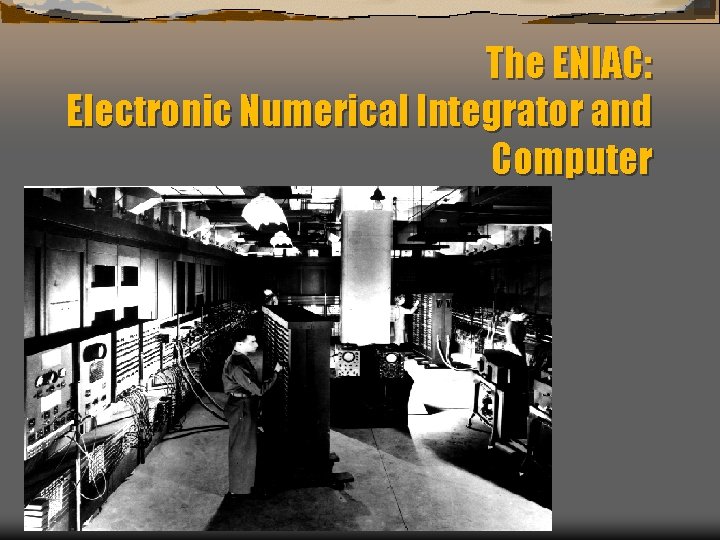
The ENIAC: Electronic Numerical Integrator and Computer
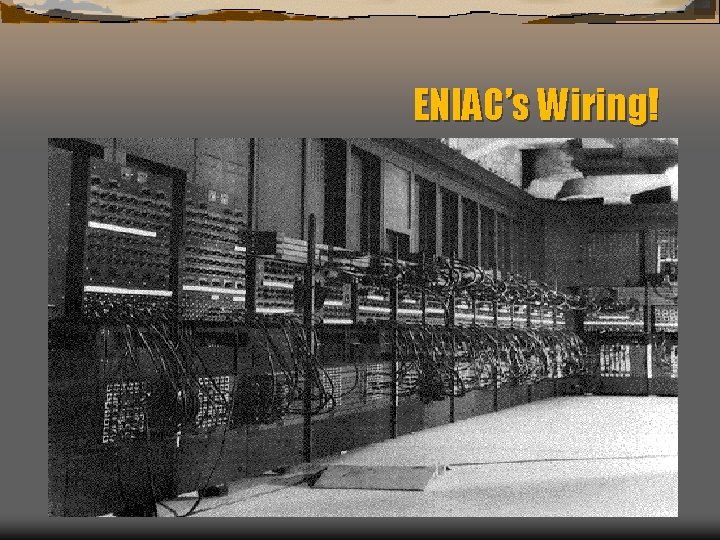
ENIAC’s Wiring!
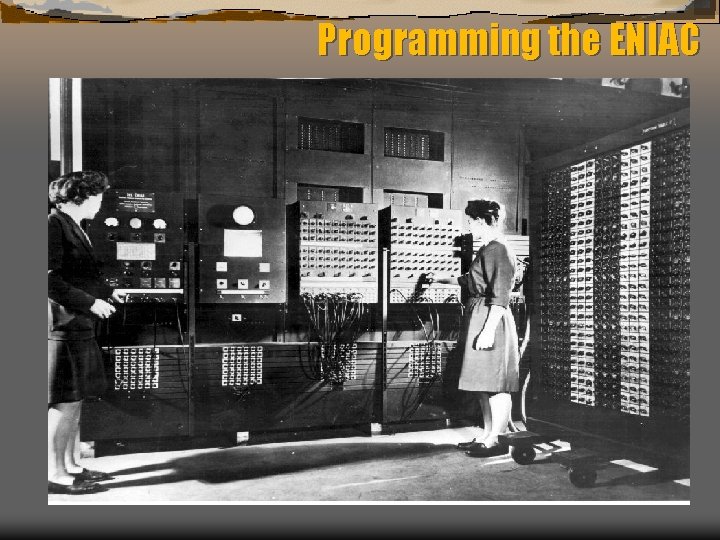
Programming the ENIAC
- Slides: 34