
A Blind CSI Prediction Method Based on Deep

A Blind CSI Prediction Method Based on Deep Learning for V 2 I Millimeter-Wave Channel Jingxiang Yang Zhejiang University
Contents 01 05 Introduction Conclusion 04 02 System model 03 Channel prediction model Simulation results

Research Background Present works Introduction Our works

Research Background • The application of 5 G in vehicular communication scenarios. • The high sensitivity of mm-wave wireless system to channel quality and environmental conditions. • The application of MEC and ACM technology.
Present works Ø Channel estimator: • Date-aided: maximum-likelihood (ML) estimator squared signal-to-noise variance (SNV) estimator • Blind: second- and fourth-order moments (M 2 M 4) estimator Ø Channel prediction: • Yadan Zheng proposed a modified ARIMA model for channel quality indication (CQI) prediction to solve the long delay problem in satellite environment. • G. Liu used long short-term memory (LSTM) network to predict SNR. • C. Luo proposed an OCEAN model to predict CSI in 5 G wireless communication system.
Our works Ø Blind channel information prediction model based on deep neural network(BCPMN): • Fast-varying channel model • No pilot required • CNN and LSTM used • Future CSI prediction

System model
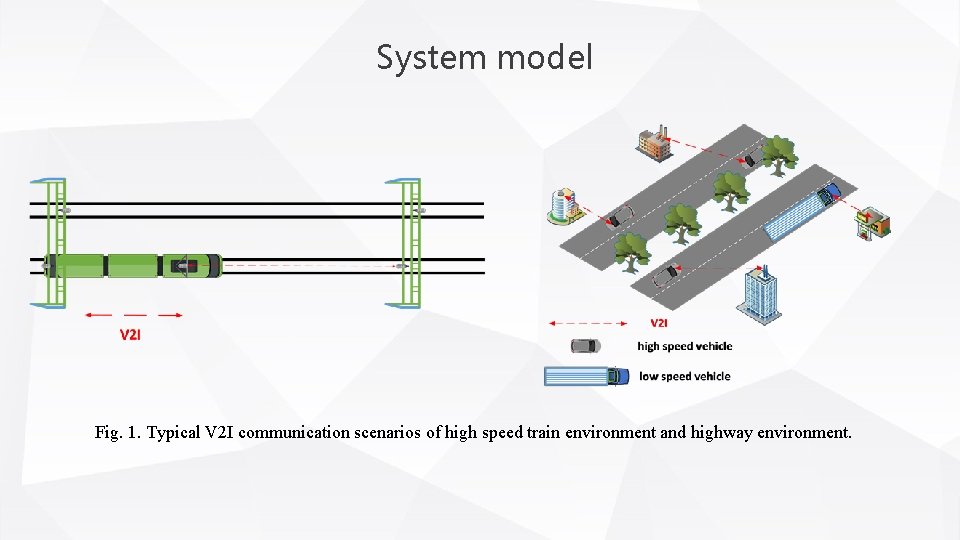
System model Fig. 1. Typical V 2 I communication scenarios of high speed train environment and highway environment.
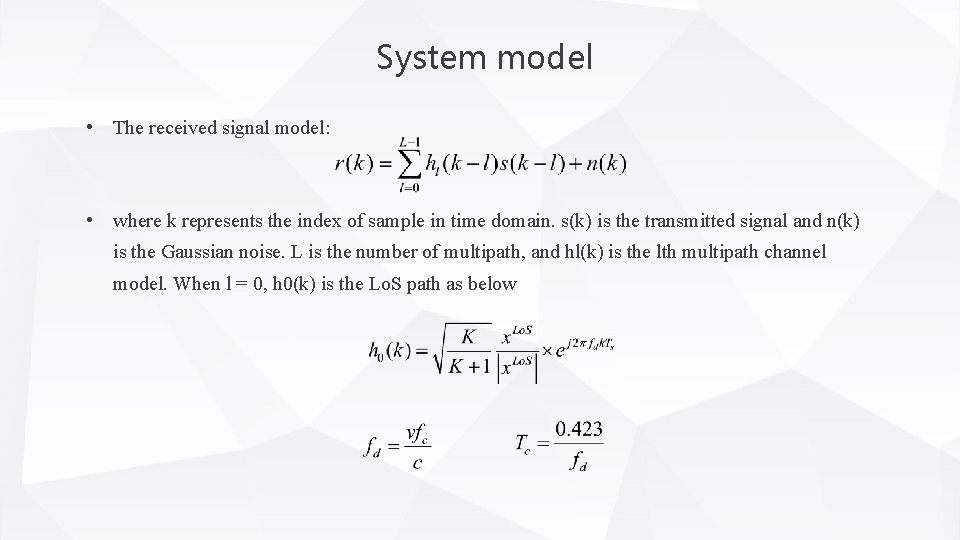
System model • The received signal model: • where k represents the index of sample in time domain. s(k) is the transmitted signal and n(k) is the Gaussian noise. L is the number of multipath, and hl(k) is the lth multipath channel model. When l = 0, h 0(k) is the Lo. S path as below
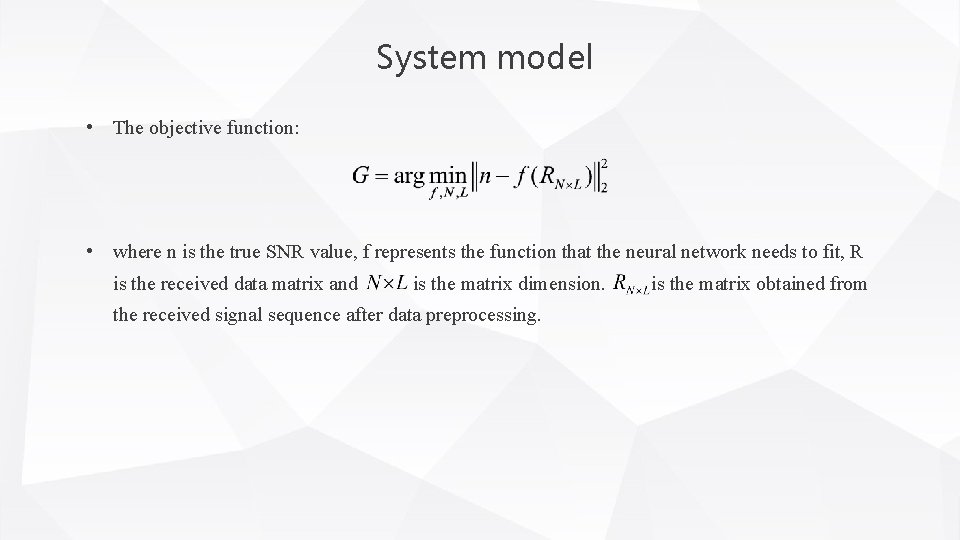
System model • The objective function: • where n is the true SNR value, f represents the function that the neural network needs to fit, R is the received data matrix and is the matrix dimension. the received signal sequence after data preprocessing. is the matrix obtained from
Channel prediction model Data Preprocessing The BCPMN
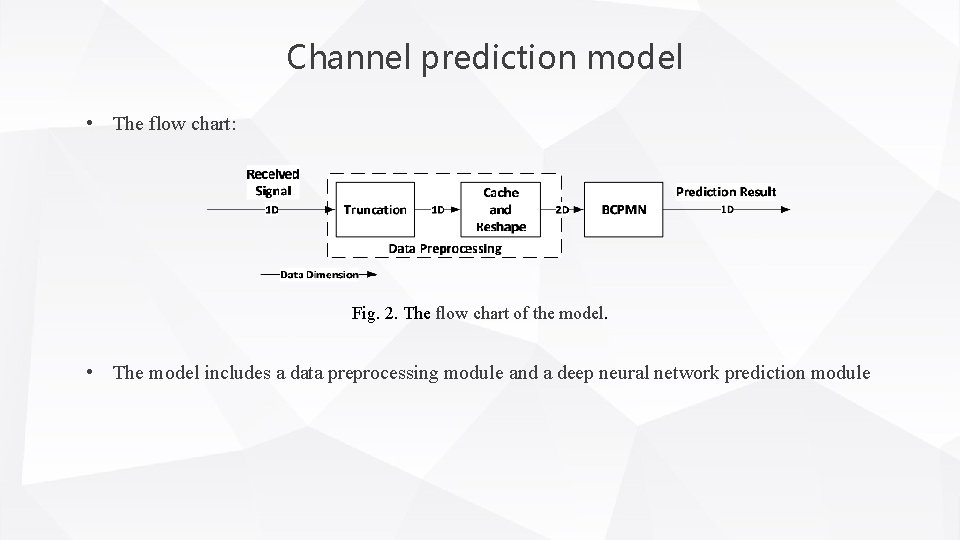
Channel prediction model • The flow chart: Fig. 2. The flow chart of the model. • The model includes a data preprocessing module and a deep neural network prediction module
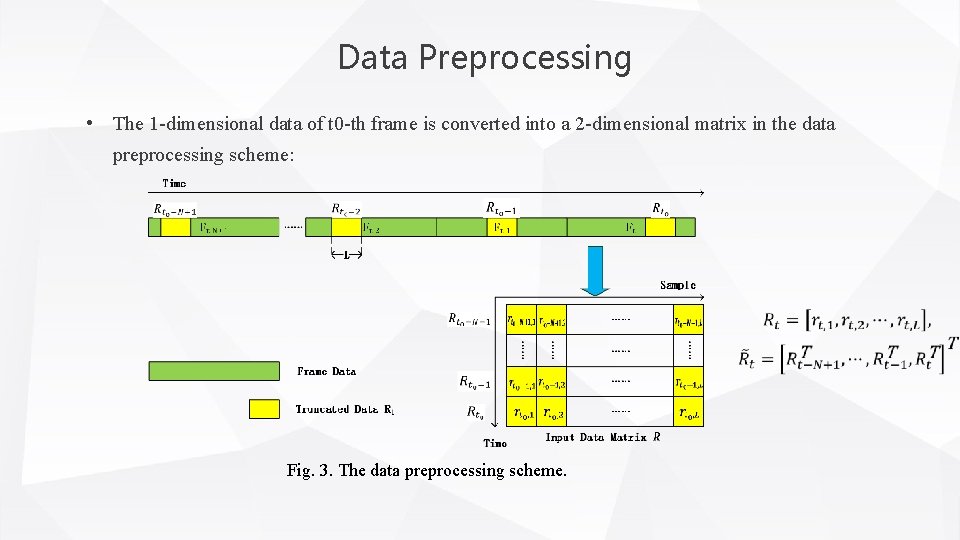
Data Preprocessing • The 1 -dimensional data of t 0 -th frame is converted into a 2 -dimensional matrix in the data preprocessing scheme: Fig. 3. The data preprocessing scheme.
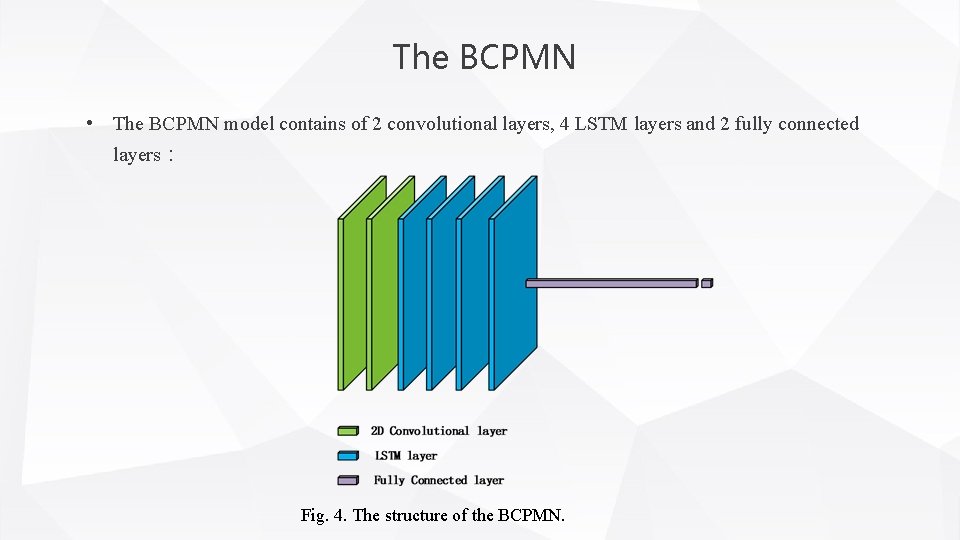
The BCPMN • The BCPMN model contains of 2 convolutional layers, 4 LSTM layers and 2 fully connected layers: Fig. 4. The structure of the BCPMN.

Simulation results
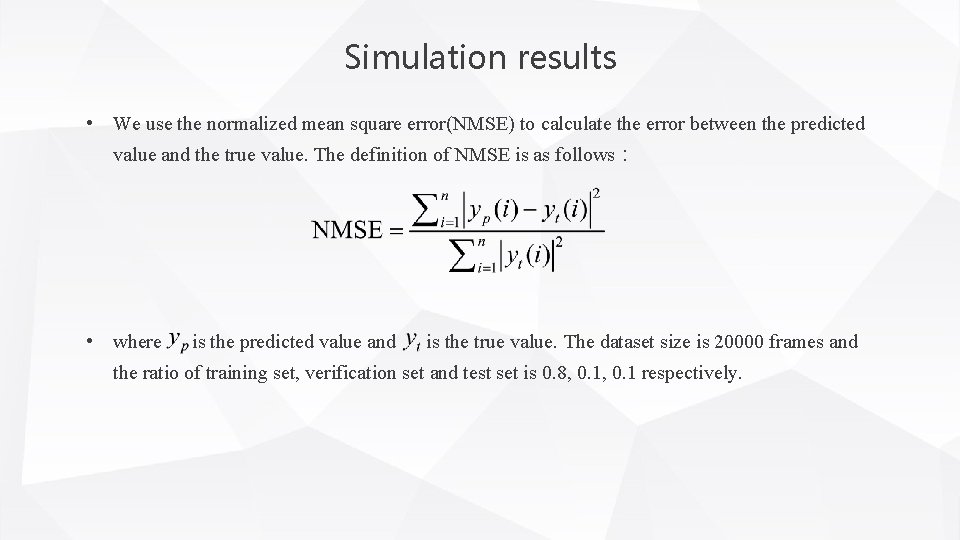
Simulation results • We use the normalized mean square error(NMSE) to calculate the error between the predicted value and the true value. The definition of NMSE is as follows: • where is the predicted value and is the true value. The dataset size is 20000 frames and the ratio of training set, verification set and test set is 0. 8, 0. 1 respectively.
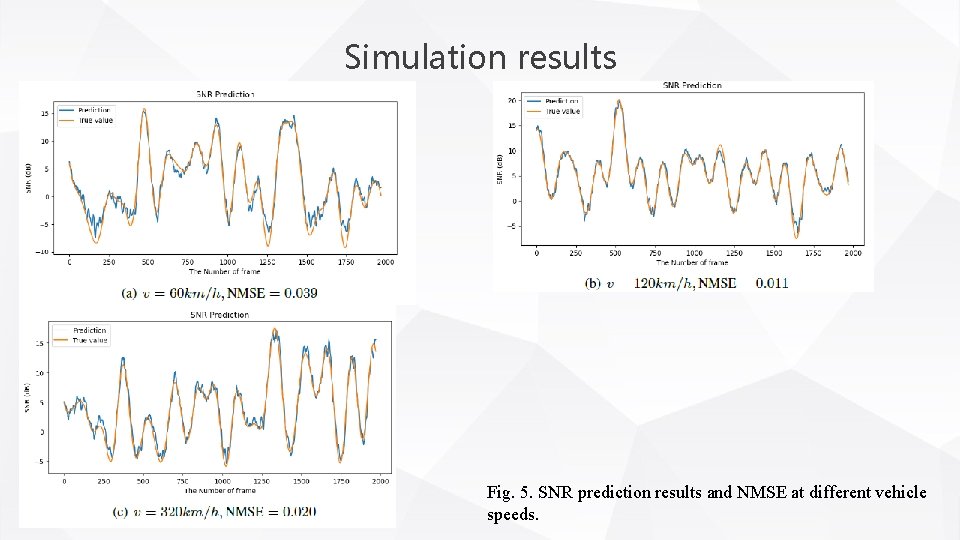
Simulation results Fig. 5. SNR prediction results and NMSE at different vehicle speeds.
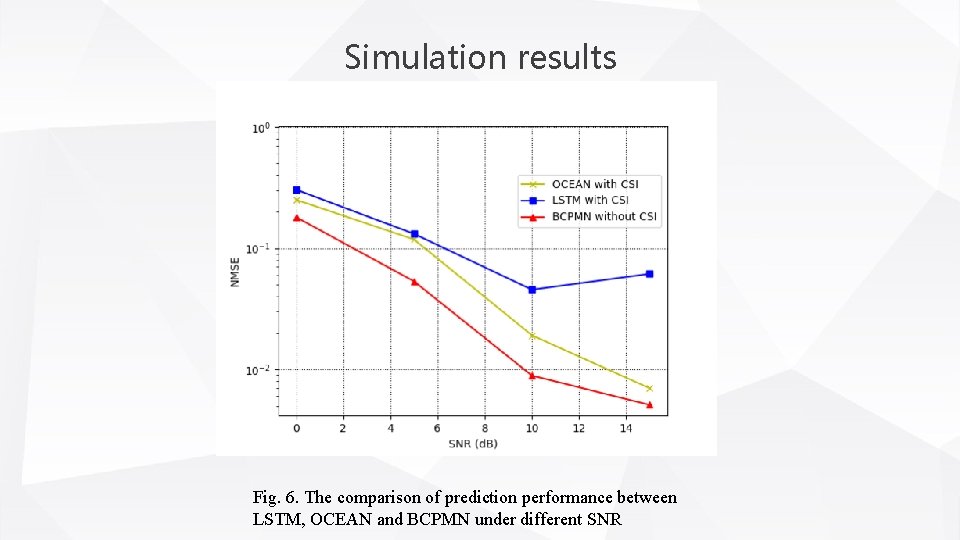
Simulation results Fig. 6. The comparison of prediction performance between LSTM, OCEAN and BCPMN under different SNR
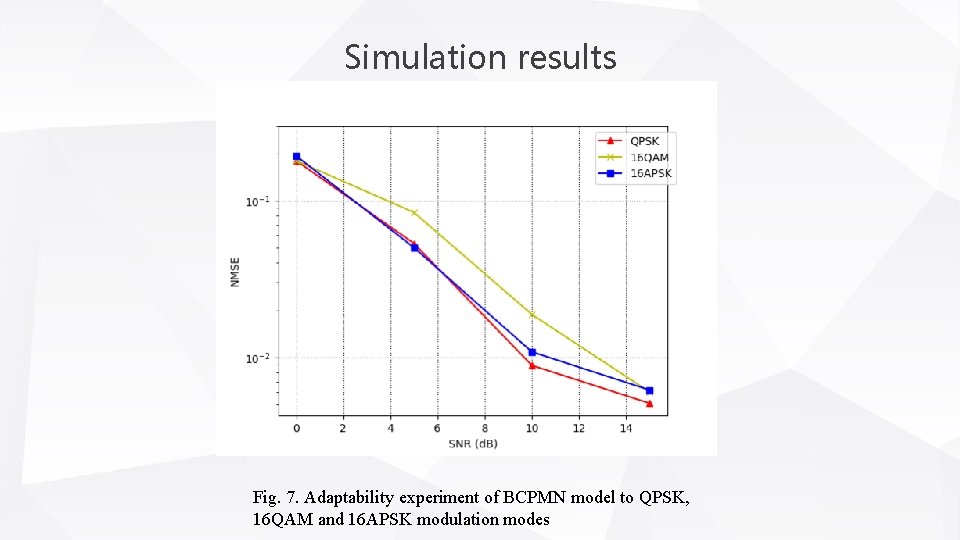
Simulation results Fig. 7. Adaptability experiment of BCPMN model to QPSK, 16 QAM and 16 APSK modulation modes

Conclusion
Conclusion • A blind channel information prediction model based on deep neural network(BCPMN) in mmwave wireless communication system. • Fast-varying channel • Data preprocessing method • Compared with LSTM and OCEAN

THANK YOU
- Slides: 22