
A Bird came down the Walk Emily Dickinson

A Bird came down the Walk Emily Dickinson
• Emily Dickinson’s life proves that it is not necessary to travel widely or lead a life full of Romantic grandeur and extreme drama in order to write great poetry; alone in her house at Amherst, Dickinson pondered her experience as fully, and felt it as acutely, as any poet who has ever lived. In this poem, the simple experience of watching a bird hop down a path allows her to exhibit her extraordinary poetic powers of observation and description.
• The key theme is the poet’s celebration of and joy in the beauty and wonder of a bird. • The bird displays the social qualities od a person (Stanza two) • Effective use of imagery. • This poem highlights the gap between the human and animal worlds.
• Despite the bird’s departure, the positive language in the final stanza (Ocean, silver, Butterflies) suggests the largely upbeat nature of the poem’s conclusion.
• In this poem, Dickinson describes her observations of a bird that enters the human world. • The poet seems to be taken aback and amused by the uncivilised nature of it’s behaviour: “And ate the fellow, raw”.
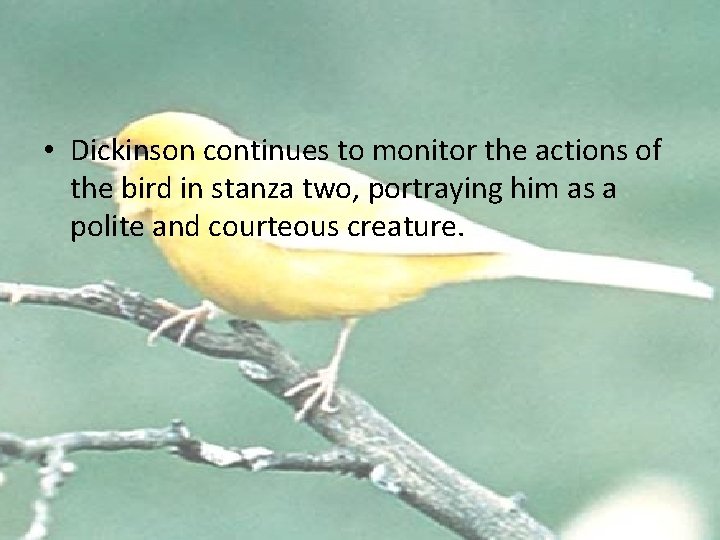
• Dickinson continues to monitor the actions of the bird in stanza two, portraying him as a polite and courteous creature.
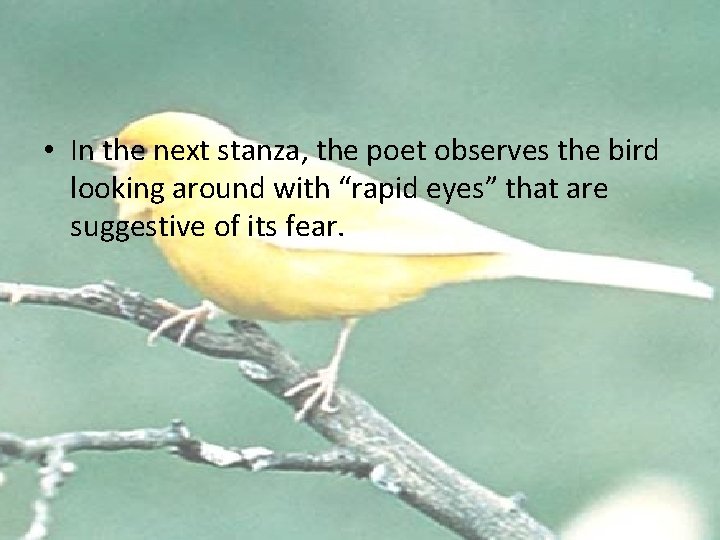
• In the next stanza, the poet observes the bird looking around with “rapid eyes” that are suggestive of its fear.
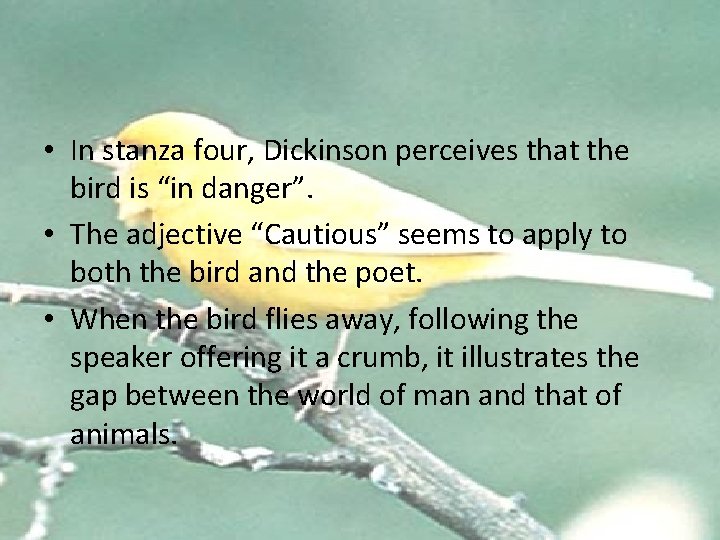
• In stanza four, Dickinson perceives that the bird is “in danger”. • The adjective “Cautious” seems to apply to both the bird and the poet. • When the bird flies away, following the speaker offering it a crumb, it illustrates the gap between the world of man and that of animals.
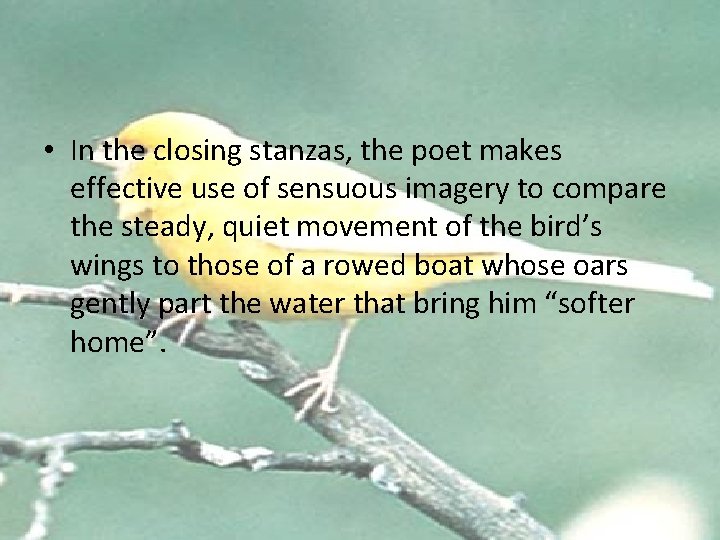
• In the closing stanzas, the poet makes effective use of sensuous imagery to compare the steady, quiet movement of the bird’s wings to those of a rowed boat whose oars gently part the water that bring him “softer home”.
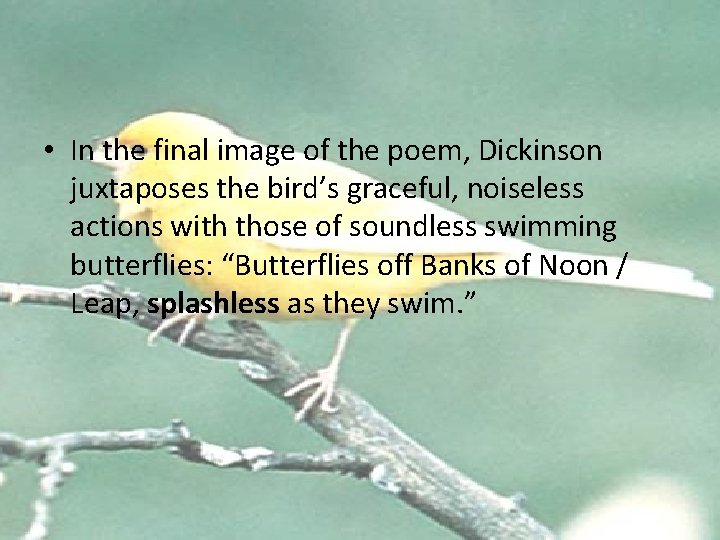
• In the final image of the poem, Dickinson juxtaposes the bird’s graceful, noiseless actions with those of soundless swimming butterflies: “Butterflies off Banks of Noon / Leap, splashless as they swim. ”
- Slides: 10