
A biologists mudmap of genome projects Christine Wells
A biologist’s mud-map of genome projects Christine Wells c. wells@uq. edu. au Christine. wells@glasgow. ac. uk
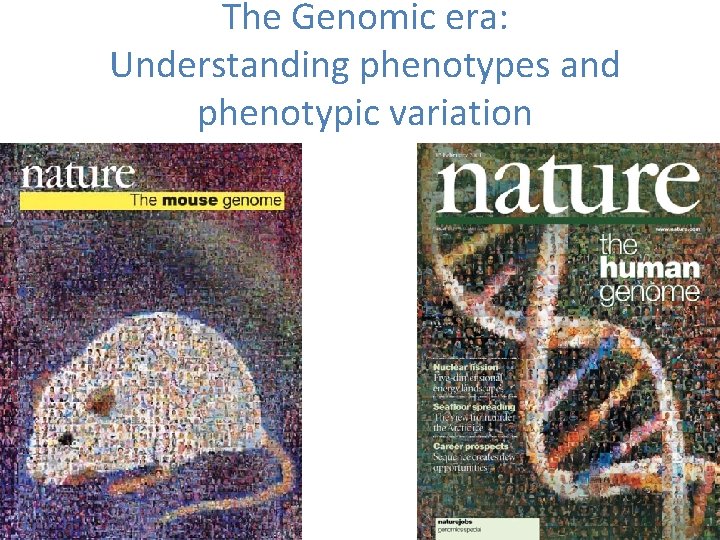
The Genomic era: Understanding phenotypes and phenotypic variation
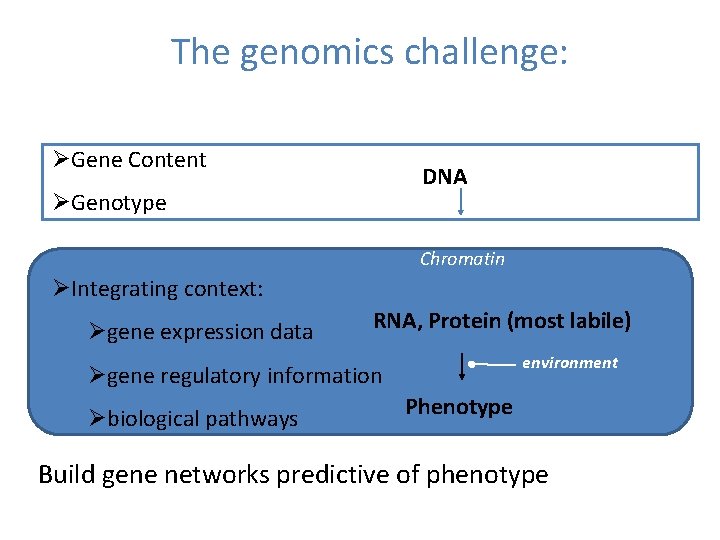
The genomics challenge: ØGene Content DNA ØGenotype Chromatin ØIntegrating context: Øgene expression data RNA, Protein (most labile) environment Øgene regulatory information Øbiological pathways Phenotype Build gene networks predictive of phenotype
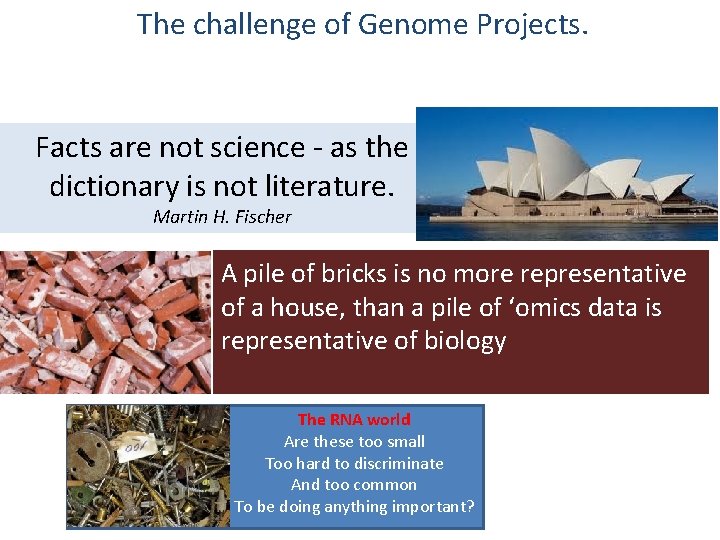
The challenge of Genome Projects. Facts are not science - as the dictionary is not literature. Martin H. Fischer A pile of bricks is no more representative of a house, than a pile of ‘omics data is representative of biology The RNA world Are these too small Too hard to discriminate And too common To be doing anything important?
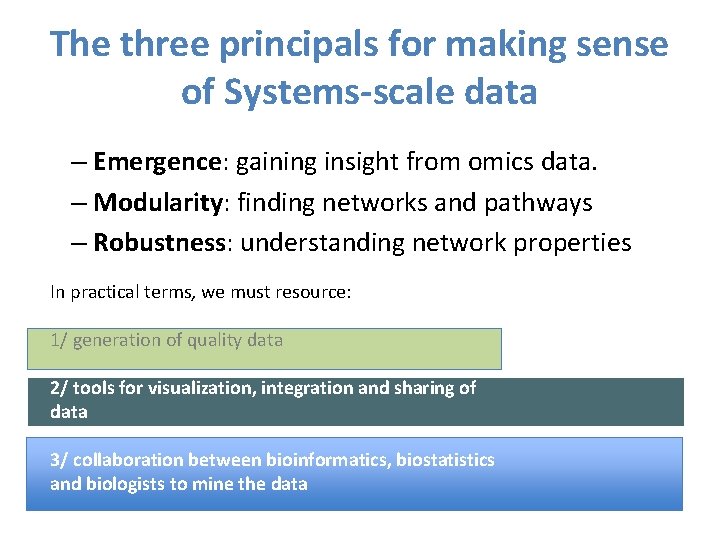
The three principals for making sense of Systems-scale data – Emergence: gaining insight from omics data. – Modularity: finding networks and pathways – Robustness: understanding network properties In practical terms, we must resource: 1/ generation of quality data 2/ tools for visualization, integration and sharing of data 3/ collaboration between bioinformatics, biostatistics and biologists to mine the data
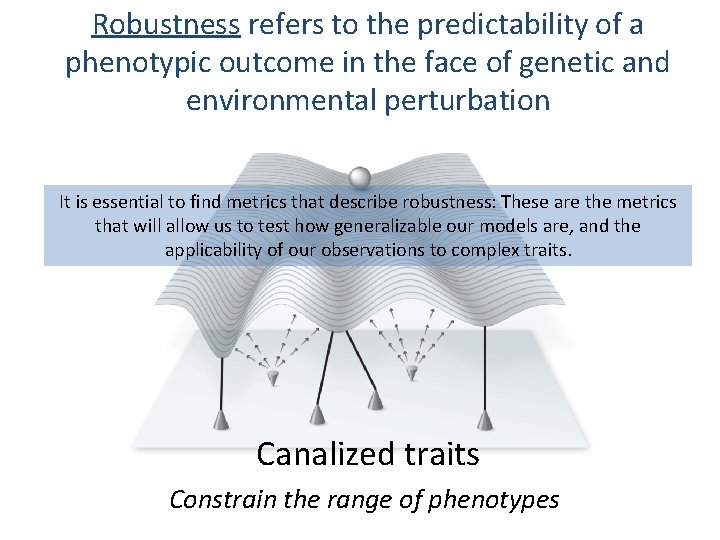
Robustness refers to the predictability of a phenotypic outcome in the face of genetic and environmental perturbation It is essential to find metrics that describe robustness: These are the metrics that will allow us to test how generalizable our models are, and the applicability of our observations to complex traits. Canalized traits Constrain the range of phenotypes
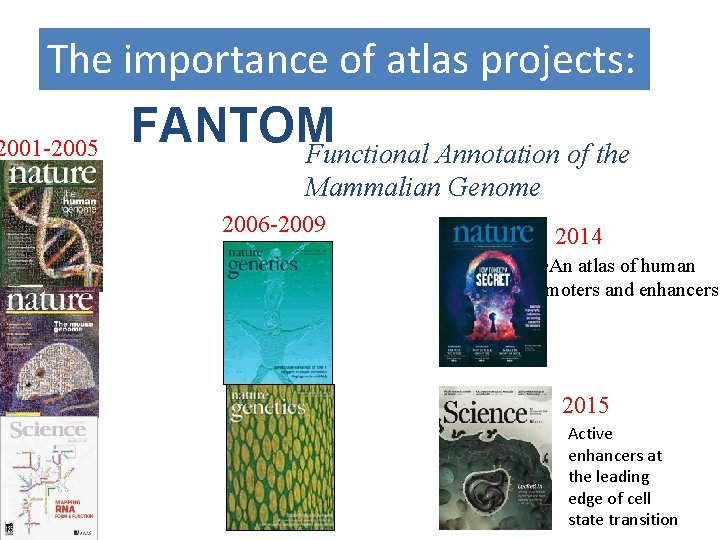
The importance of atlas projects: 2001 -2005 FANTOM Functional Annotation of the Mammalian Genome 2006 -2009 2014 • An atlas of human promoters and enhancers 2015 Active enhancers at the leading edge of cell state transition
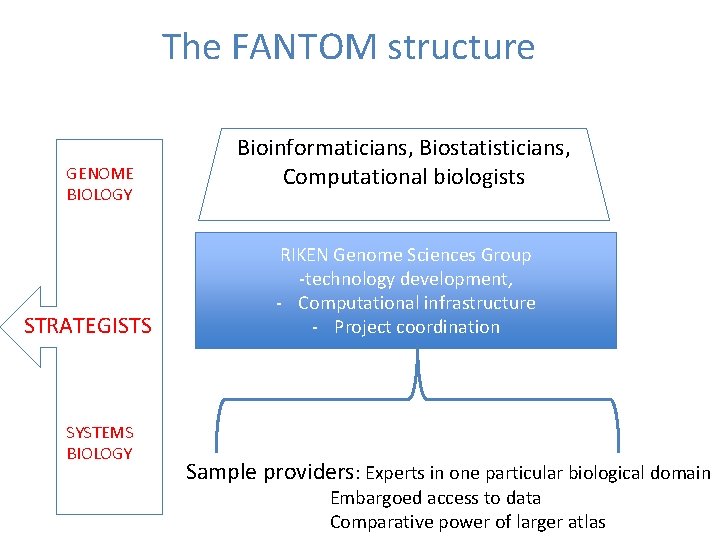
The FANTOM structure GENOME BIOLOGY STRATEGISTS SYSTEMS BIOLOGY Bioinformaticians, Biostatisticians, Computational biologists RIKEN Genome Sciences Group -technology development, - Computational infrastructure - Project coordination Sample providers: Experts in one particular biological domain Embargoed access to data Comparative power of larger atlas
The FANTOM structure Sample providers: ->Struggle to find/use/visualize data in the absence of embedded bioinformatics. -> May have unrealistic expectations of the project, project support and outcomes. -> Need to be proactively engaged. <- Frame the biological context, frame relevant biological questions. -> Analysis focus is often on a gene, gene network/pathway. -> Interested in functional validation – lengthy and expensive and difficult en masse. <-STRONGEST LINK to PHENOTYPE.
The FANTOM structure Bioinformatics and computational biology: -> Sandpit approach -> Agreed terms of “mutual respect” ->value in redundancy of effort -> danger in computational silos. Opportunity to form close and productive collaborations Danger of ‘food-court bioinformatics’ Need help framing the right questions Will experience a range of computational rigor/quality: standards need to be agreed Opportunity to form deep domain expertise in specialist data types
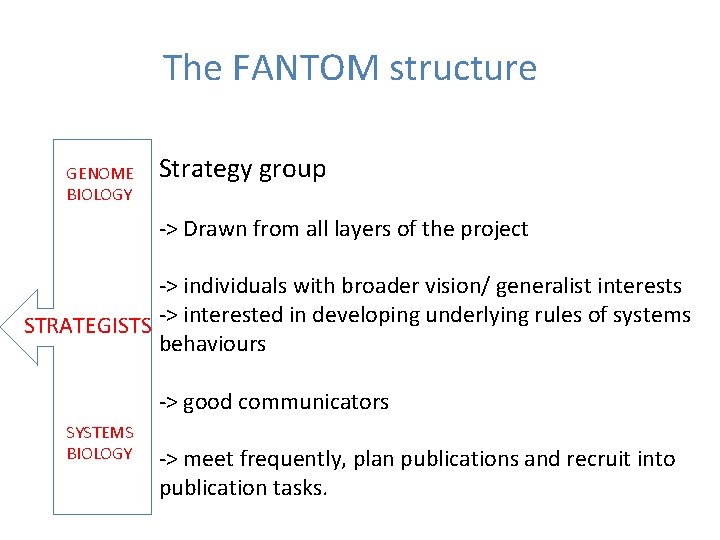
The FANTOM structure GENOME BIOLOGY Strategy group -> Drawn from all layers of the project -> individuals with broader vision/ generalist interests STRATEGISTS -> interested in developing underlying rules of systems behaviours -> good communicators SYSTEMS BIOLOGY -> meet frequently, plan publications and recruit into publication tasks.
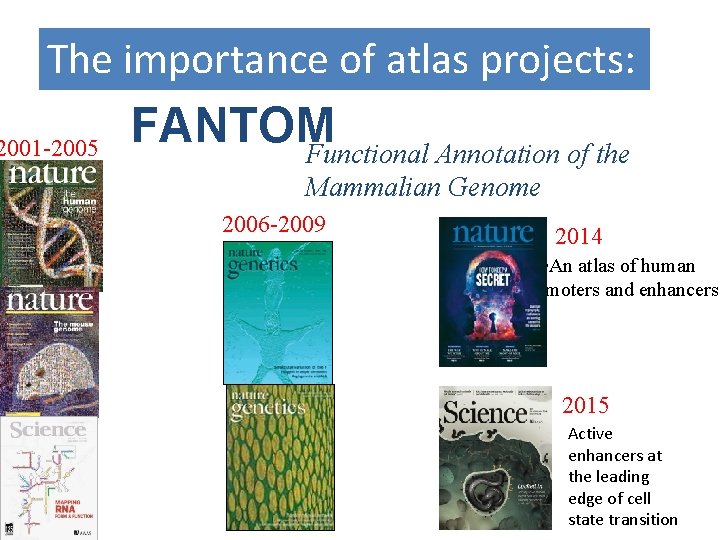
The importance of atlas projects: 2001 -2005 FANTOM Functional Annotation of the Mammalian Genome 2006 -2009 2014 • An atlas of human promoters and enhancers 2015 Active enhancers at the leading edge of cell state transition
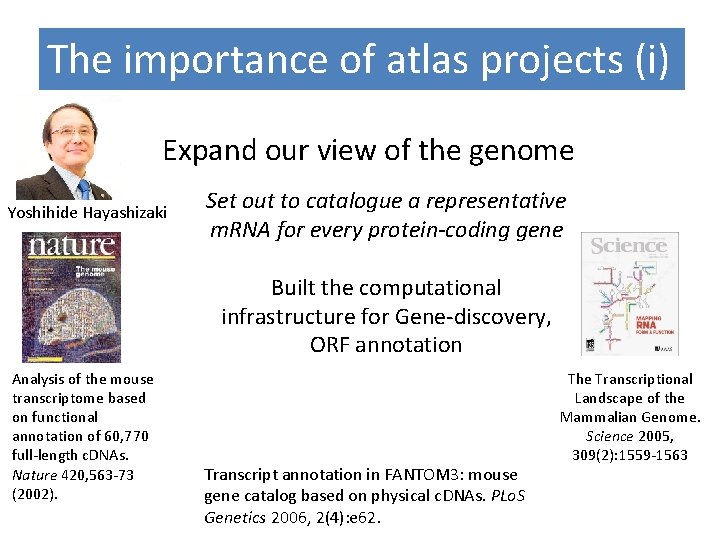
The importance of atlas projects (i) Expand our view of the genome Yoshihide Hayashizaki Set out to catalogue a representative m. RNA for every protein-coding gene Built the computational infrastructure for Gene-discovery, ORF annotation Analysis of the mouse transcriptome based on functional annotation of 60, 770 full-length c. DNAs. Nature 420, 563 -73 (2002). Transcript annotation in FANTOM 3: mouse gene catalog based on physical c. DNAs. PLo. S Genetics 2006, 2(4): e 62. The Transcriptional Landscape of the Mammalian Genome. Science 2005, 309(2): 1559 -1563
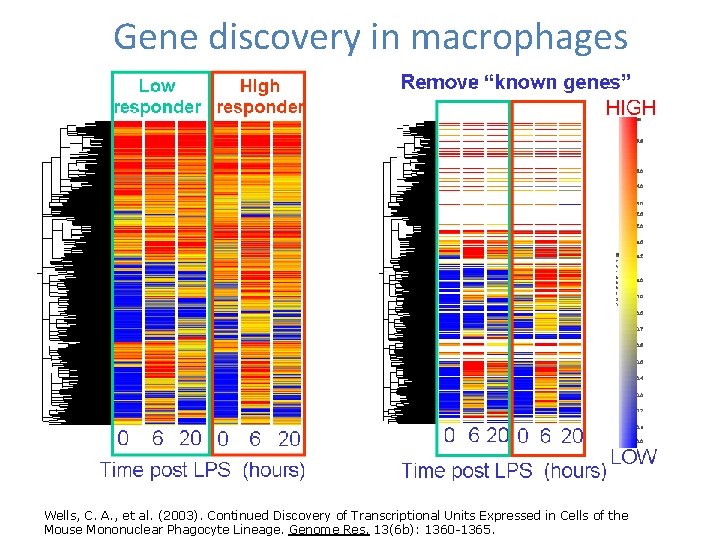
Gene discovery in macrophages Wells, C. A. , et al. (2003). Continued Discovery of Transcriptional Units Expressed in Cells of the Mouse Mononuclear Phagocyte Lineage. Genome Res. 13(6 b): 1360 -1365.
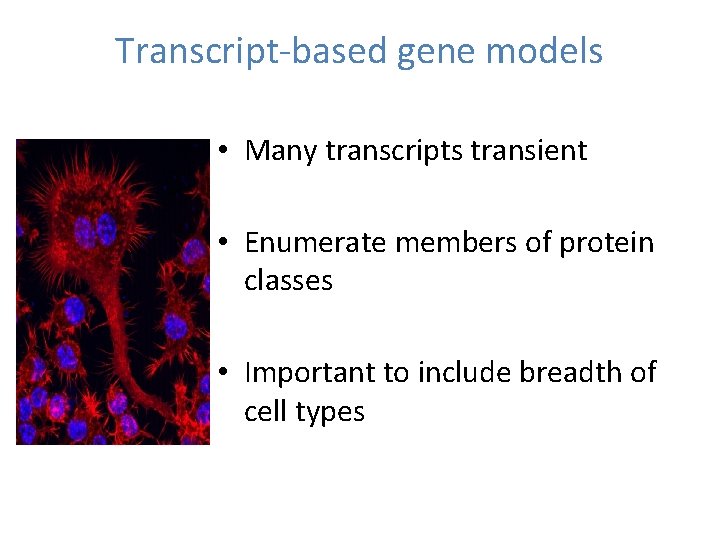
Transcript-based gene models • Many transcripts transient • Enumerate members of protein classes • Important to include breadth of cell types
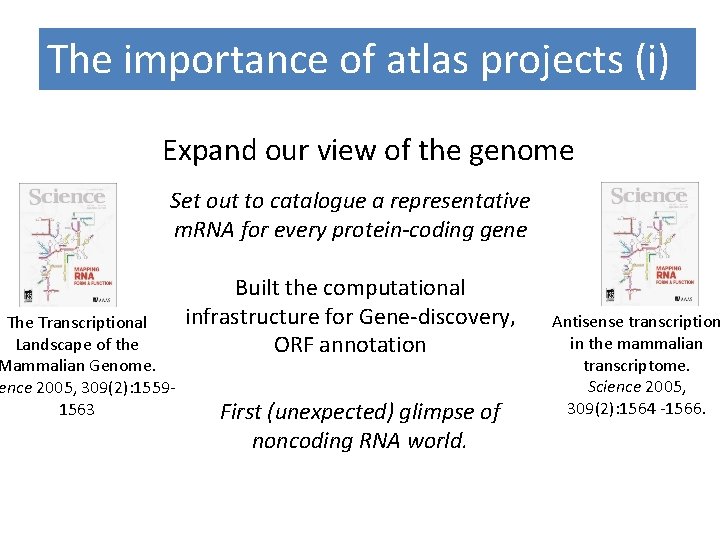
The importance of atlas projects (i) Expand our view of the genome Set out to catalogue a representative m. RNA for every protein-coding gene The Transcriptional Landscape of the Mammalian Genome. ence 2005, 309(2): 15591563 Built the computational infrastructure for Gene-discovery, ORF annotation First (unexpected) glimpse of noncoding RNA world. Antisense transcription in the mammalian transcriptome. Science 2005, 309(2): 1564 -1566.
The importance of atlas projects (ii) Collate unbiased descriptions of genome architecture and genome evolution Complex Loci in Human and Mouse Genomes. PLOS Genetics 2006 2(4): e 47. ->Noncoding RNA major product from RNA Pol II -> Phenomenology or new functional molecular class? -> required integration of many layers of evidence Genome-wide analysis of mammalian promoter architecture and evolution. Nature Genetics 2006, 38(6): 626 -635. -> New technology development to directly measure TSS
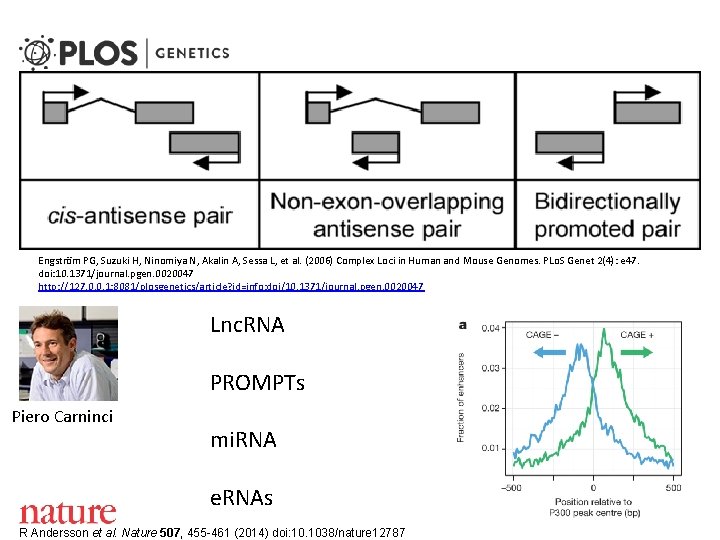
Engström PG, Suzuki H, Ninomiya N, Akalin A, Sessa L, et al. (2006) Complex Loci in Human and Mouse Genomes. PLo. S Genet 2(4): e 47. doi: 10. 1371/journal. pgen. 0020047 http: //127. 0. 0. 1: 8081/plosgenetics/article? id=info: doi/10. 1371/journal. pgen. 0020047 Lnc. RNA PROMPTs Piero Carninci mi. RNA e. RNAs R Andersson et al. Nature 507, 455 -461 (2014) doi: 10. 1038/nature 12787
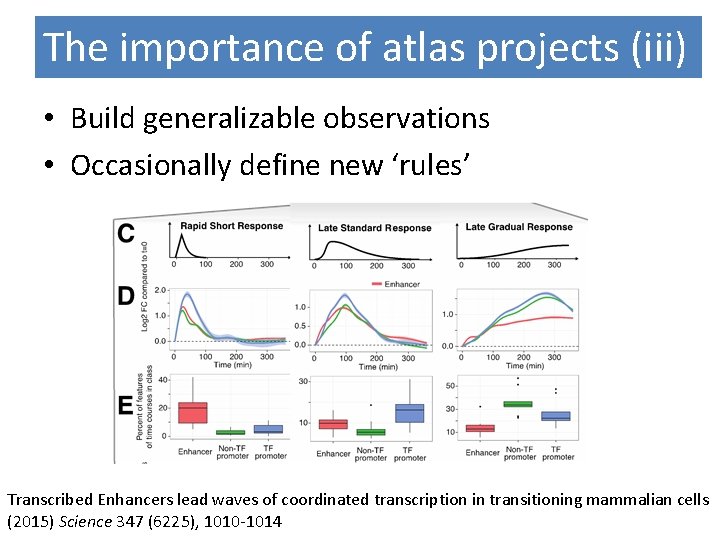
The importance of atlas projects (iii) • Build generalizable observations • Occasionally define new ‘rules’ Transcribed Enhancers lead waves of coordinated transcription in transitioning mammalian cells (2015) Science 347 (6225), 1010 -1014
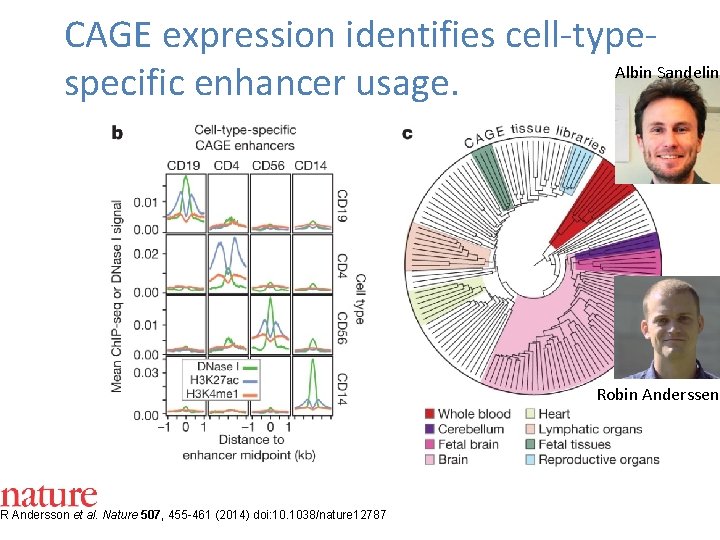
CAGE expression identifies cell-type. Albin Sandelin specific enhancer usage. R Andersson et al. Nature 507, 455 -461 (2014) doi: 10. 1038/nature 12787 Robin Anderssen
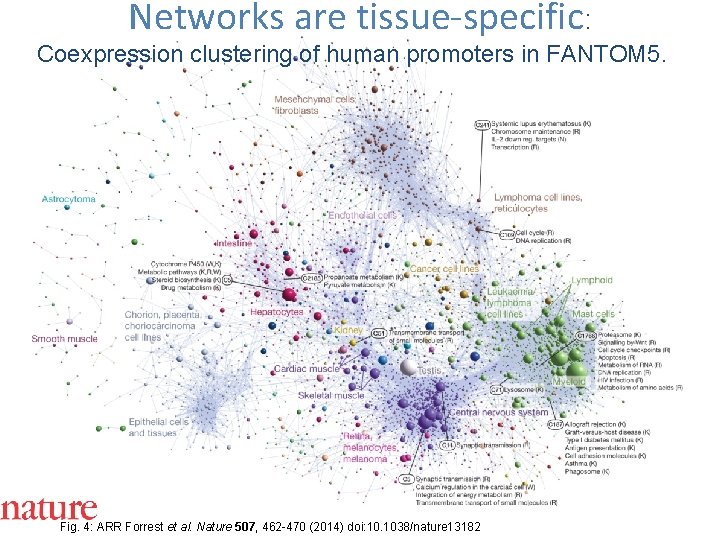
Networks are tissue-specific: Coexpression clustering of human promoters in FANTOM 5. Fig. 4: ARR Forrest et al. Nature 507, 462 -470 (2014) doi: 10. 1038/nature 13182
The importance of atlas projects (iv) • Increase power and potential of molecular phenotypes • help us find useful surrogates for chromatin behaviour • Help us understand complex biology
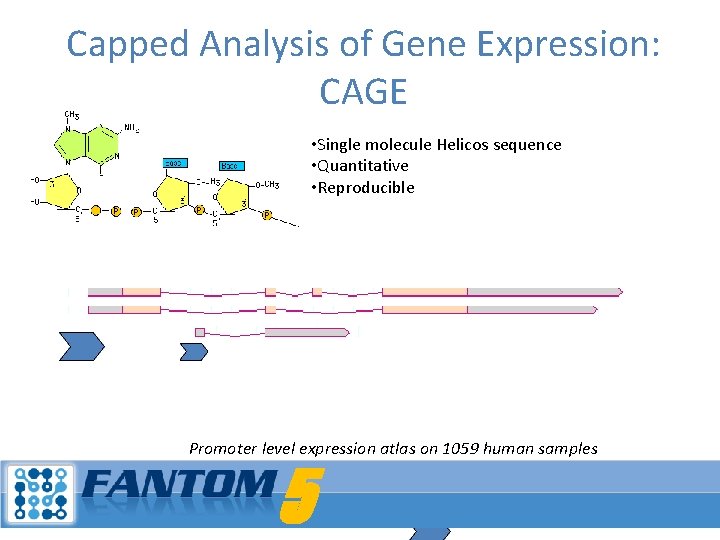
Capped Analysis of Gene Expression: CAGE • Single molecule Helicos sequence • Quantitative • Reproducible Promoter level expression atlas on 1059 human samples 5
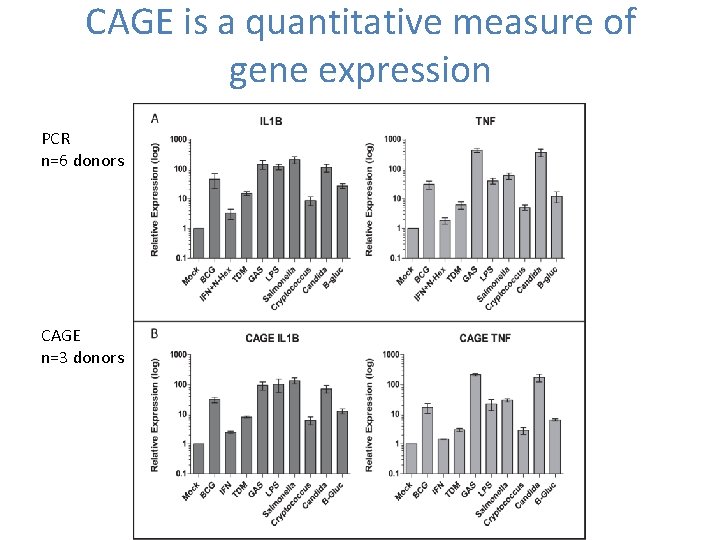
CAGE is a quantitative measure of gene expression PCR n=6 donors CAGE n=3 donors
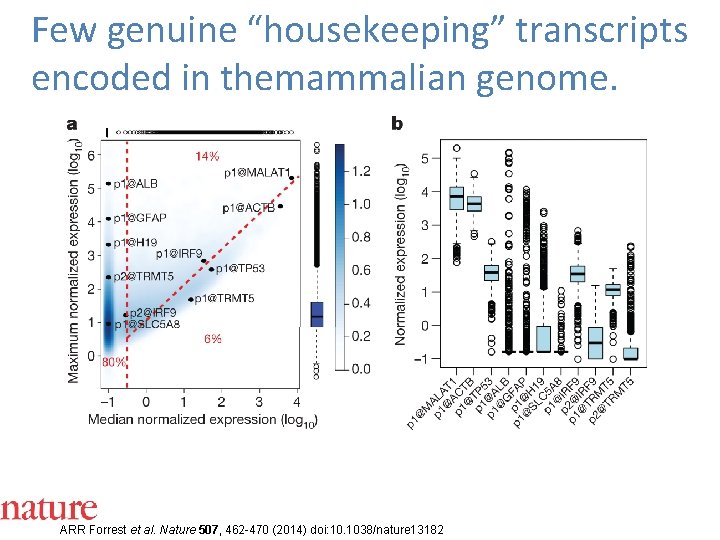
Few genuine “housekeeping” transcripts encoded in themammalian genome. ARR Forrest et al. Nature 507, 462 -470 (2014) doi: 10. 1038/nature 13182
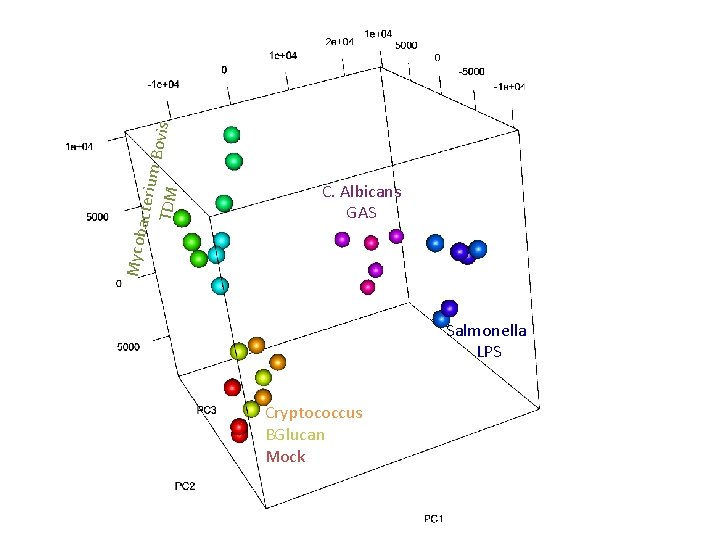
acteriu m Bov is TDM Mycob C. Albicans GAS Salmonella LPS Cryptococcus BGlucan Mock
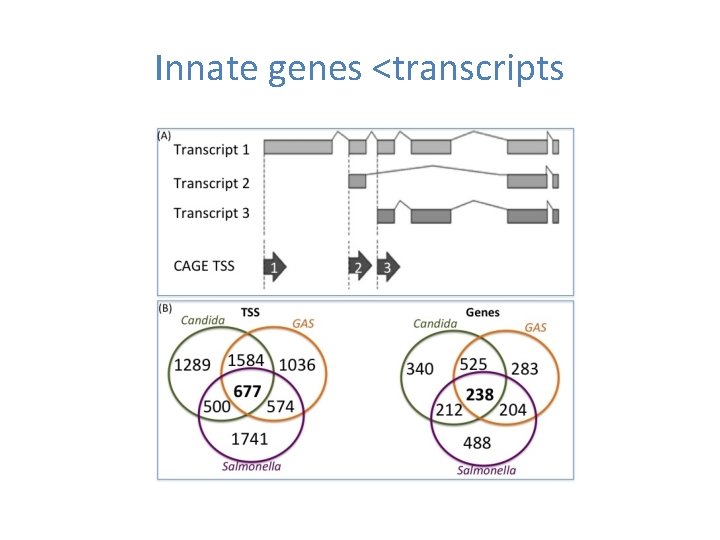
Innate genes <transcripts
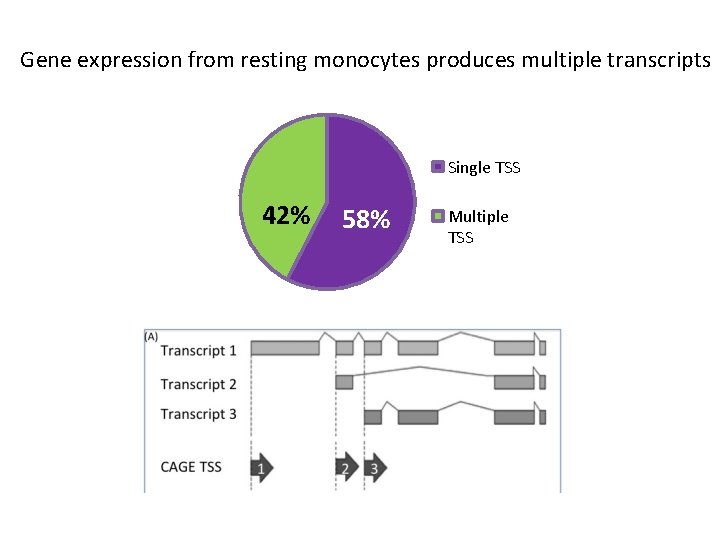
Gene expression from resting monocytes produces multiple transcripts Single TSS 42% 58% Multiple TSS
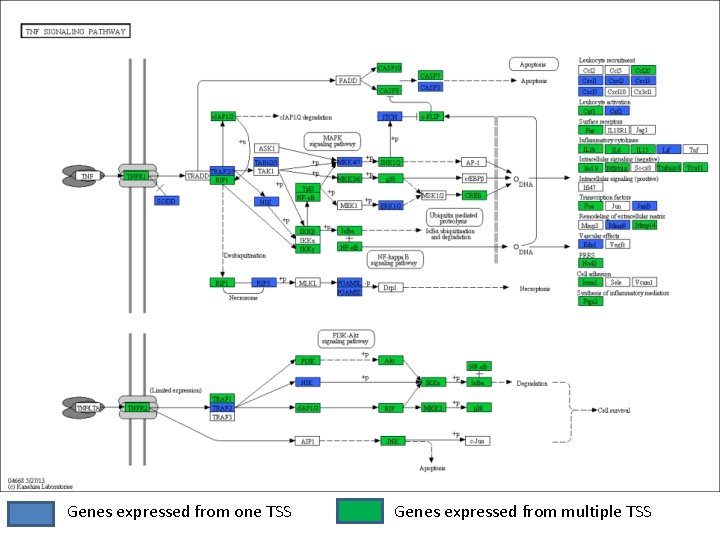
Genes expressed from one TSS Genes expressed from multiple TSS
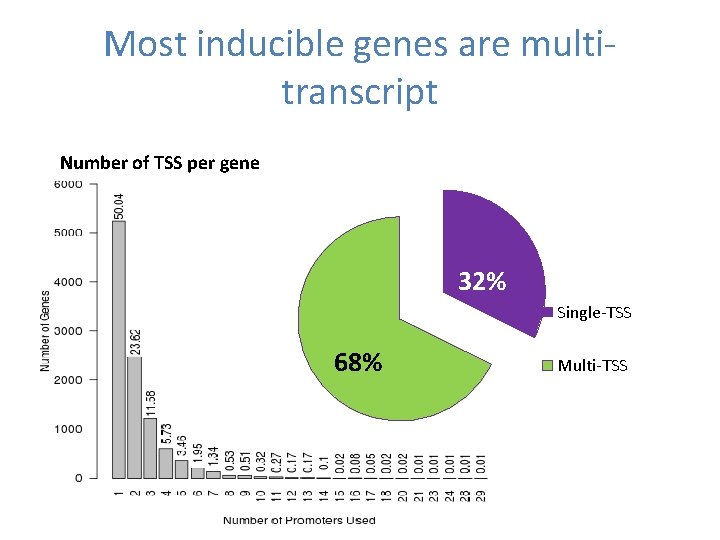
Most inducible genes are multitranscript Number of TSS per gene 32% Single-TSS 68% Multi-TSS
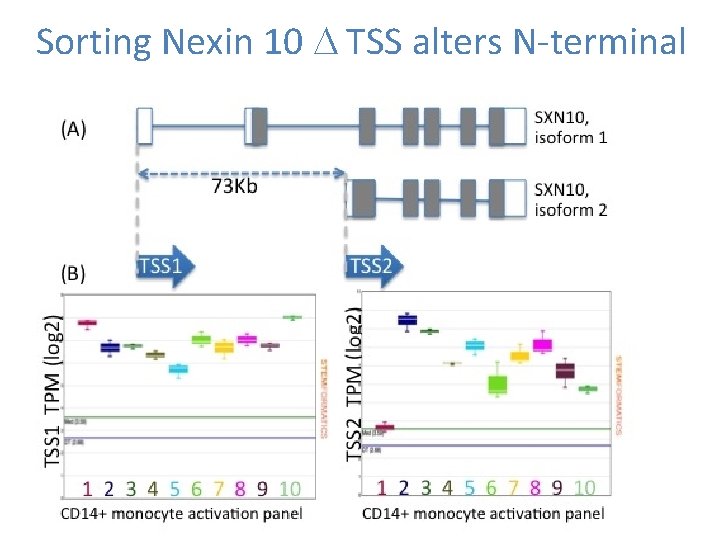
Sorting Nexin 10 D TSS alters N-terminal
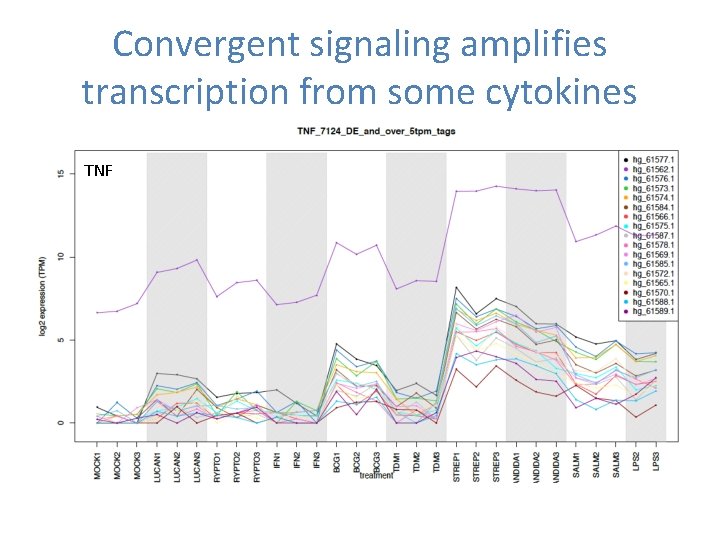
Convergent signaling amplifies transcription from some cytokines TNF
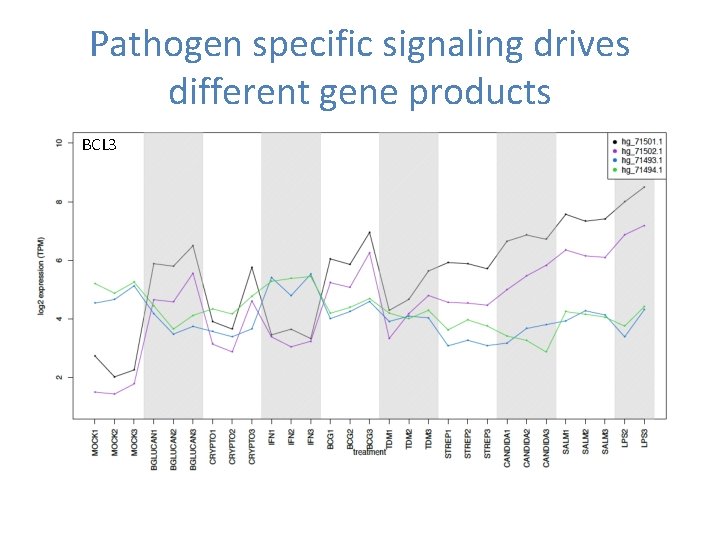
Pathogen specific signaling drives different gene products BCL 3
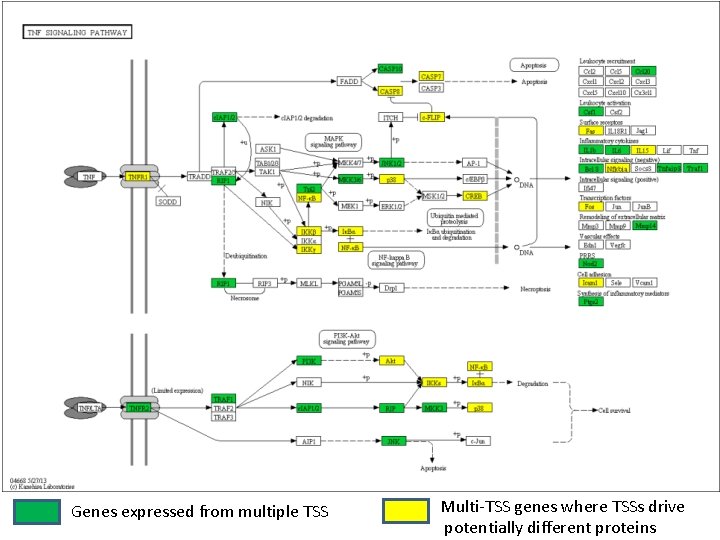
Genes expressed from multiple TSS Multi-TSS genes where TSSs drive potentially different proteins
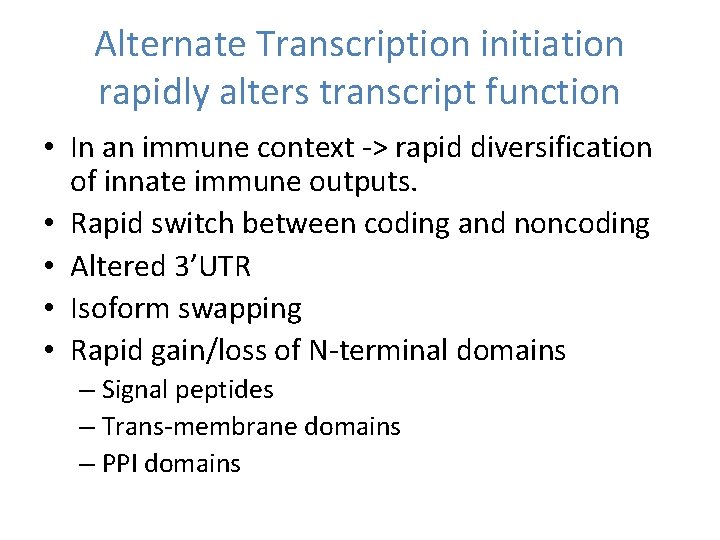
Alternate Transcription initiation rapidly alters transcript function • In an immune context -> rapid diversification of innate immune outputs. • Rapid switch between coding and noncoding • Altered 3’UTR • Isoform swapping • Rapid gain/loss of N-terminal domains – Signal peptides – Trans-membrane domains – PPI domains
A new RNA ontology? A rethink about enhancer/promoter terminology? New definitions of a gene? Integrating ideas on phenotype expressivity/penetrance Static vs transitioning genome.
Acknowledgements AIBN Wells Group Edward Huang Suzanne Butcher Florian Rohart Elizabeth Mason Nick Matigian Barbara Rolfe Sylvia Manzanero Stemformatics/3 iii Rowland Mosbergen Othmar Korn Tyrone Chen Shane Kelly Past lab members Anthony Beckhouse Kelly Hitchens Dipti Vijayan Jess Mar HSPH/Dana John Quackenbush Al Forrest Michael Rehli Albin Sandelin Piero Carninci Carsten Daub Hideya Kawaji Winston Hide Yoshihide Hayashizaki www. stemformatics. org Mark Walker Mikael Boden Matt Sweet James Fraser Antje Blumenthal Tim Barnett Lisa Seymour Nilesh Bokil Eve Chow 3 iiiformatics Rowland Mosbergen Othmar Korn Tom Muir Tyrone Chen Funding from Australia: Research Council, NHMRC, QLD Government UK: MRC, Wellcome trust and Arthritis UK
- Slides: 37