
A Biblical Pathway for Dealing with Difficult People
A Biblical Pathway for Dealing with Difficult People – Part 2

Let’s review Part 1
Part 1 The Believer's Impossible Instructions from the Lord Regarding Difficult People
Ten point summary… Love them Bearing (endure the unpleasant) them Forgive them Be at peace with them Accept them Tolerate them Be kind to them Be patient (long suffering) with them when they wrong you 9. Consider them more important than you 10. Serve them as if they were your master and you the slave 1. 2. 3. 4. 5. 6. 7. 8.
Part 2 A Starting Point: Contemplating what Would Cause this Person to Act this Way
So here is the big lesson here…
An overview of hurting people… 1. 2. 3. 4. 5. Hurt people often transfer their inner anger onto their family and close friends. Hurt people interpret every word spoken and action through the prism of their pain. Hurt people often portray themselves as victims and carry a “victim spirit. ” Hurt people often alienate others and wonder why no one is there for them. Hurt people have the emotional maturity of the age they received their (un-dealt with) hurt.
I was telling a friend of mine about this study and mentioned that “hurt people. ” When he heard it he almost fell off his seat. I told him that it has resonated deeply with me also. I spoke with him a few days later and he brought up this saying again. He had told me that he is in the process of finding a therapist to help deal with his life long hurt.
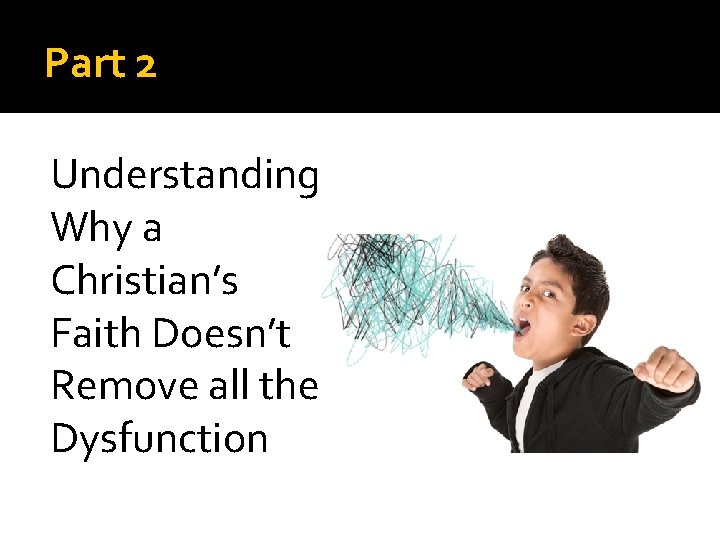
Part 2 Understanding Why a Christian’s Faith Doesn’t Remove all the Dysfunction
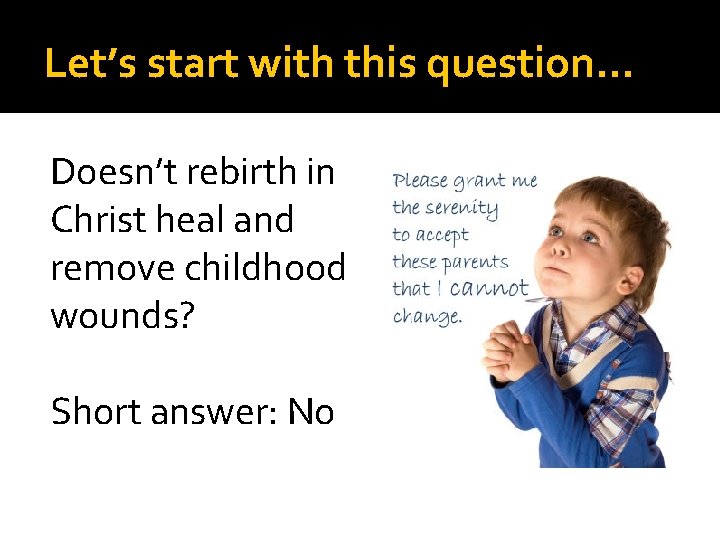
Let’s start with this question… Doesn’t rebirth in Christ heal and remove childhood wounds? Short answer: No
Our Conundrum… When the difficult people in our lives who claim to know God continue lashing out and acting as if they were unsaved, it fries our Christian minds. After all, wasn’t all that dealt with at the cross and we believers have been set free? 2 For the law of the Spirit of life in Christ Jesus has set you free from the law of sin and of death. Romans 8
Have you ever sung this song and wondered if it was true? Chris Tomlin has revised perhaps the greatest Christian song, Amazing Grace and calls it Amazing Grace (My Chains Are Gone). In the new chorus it says… My chains are gone I've been set free My God, my Savior has ransomed me And like a flood His mercy reigns Unending love, amazing grace It leaves you with the feeling that the old sin patterns in your life are now gone. This is not true, rather those old struggles become the raw material of new spiritual growth as one accepts Christ.

What the old self being crucified really means… Though you have been declared righteous, sinless, and perfect in heaven, the sin nature is still active. I believe the best example of this is the Emancipation Proclamation of 1863. The North freed all the slaves judicially, but it didn’t change the slaves experience until the war was over and the South was defeated. Though God’s kingdom has declared us free and the sin nature crucified, until our death or the second coming, we wait as Christ finishes the war with this rebellious planet at His second coming.
Put yourself back in time to 1863 You are a southern slave just hearing of your impending freedom. It must have meant so much. �There was now hope for an unchained future. �Such a great sacrifice was made to gain your freedom. �You needed to start seeing yourself differently, as a freeman in America. �You owed so much to those who set you free, and to live a life worthy of their sacrifice.
So what does the “set free” really mean… � Having been set free means that Christ paid for the penalty of the sin which you should have paid. � The truth of this reality is not a permission slip to continue sinning but of love for God to stop sinning. � When you talk with a difficult Christian person, and point out their bad behavior, they often agree but their Romans 7 war with themselves continues with their old dysfunction. � In some cases the Lord does remove dysfunction. Some alcoholics when saved no longer have a desire to drink, but this is the exception.
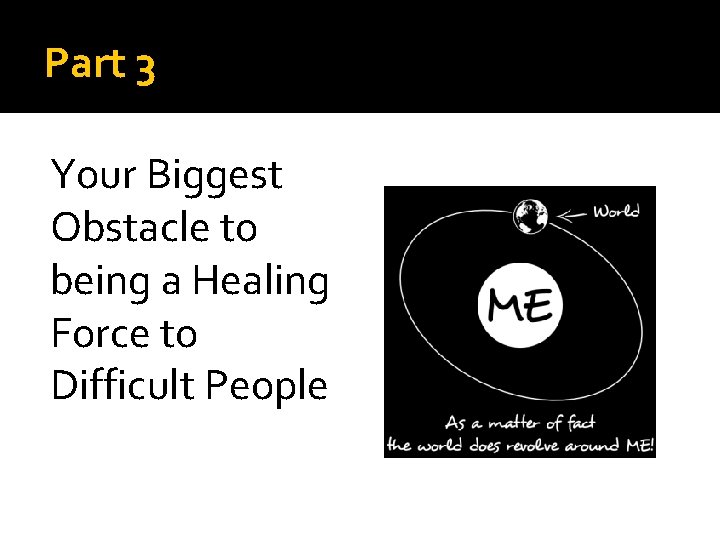
Part 3 Your Biggest Obstacle to being a Healing Force to Difficult People

Pat’s favorite pride buster passage… 9 “Which of you, having a slave plowing or tending sheep, will say to him when he has come in from the field, ‘Come immediately and sit down to eat’? 8 “But will he not say to him, ‘Prepare something for me to eat, and properly clothe yourself and serve me while I eat and drink; and afterward you may eat and drink’? 9 “He does not thank the slave because he did the things which were commanded, does he? 10 “So you too, when you do all the things which are commanded you, say, ‘We are unworthy slaves; we have done only that which we ought to have done. ’ ” Luke 17
So here is how it is suppose to work… �A hurt person hurts you and others with words and actions as a result of their own pain �You the Christian forgives them and loves them in identical form as when God did the same for you �The hurt person is now more open to your words and actions
But too often we do what the prodigal son’s pride controlled brother did… �I am angry and mad at you �You �I have hurt me and others will make you pay!
Here is the bottom line! �Your wounded pride is more important for you to protect than loving a wounded person for whom our Lord was crucified. �You wounded pride becomes an obstacle in loving them, praying for their healing, and in you being the heart and voice of God to them.

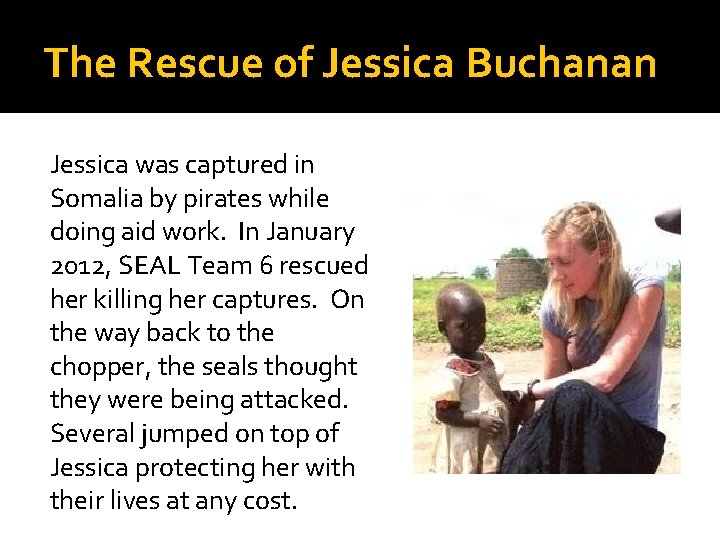
The Rescue of Jessica Buchanan Jessica was captured in Somalia by pirates while doing aid work. In January 2012, SEAL Team 6 rescued her killing her captures. On the way back to the chopper, the seals thought they were being attacked. Several jumped on top of Jessica protecting her with their lives at any cost.
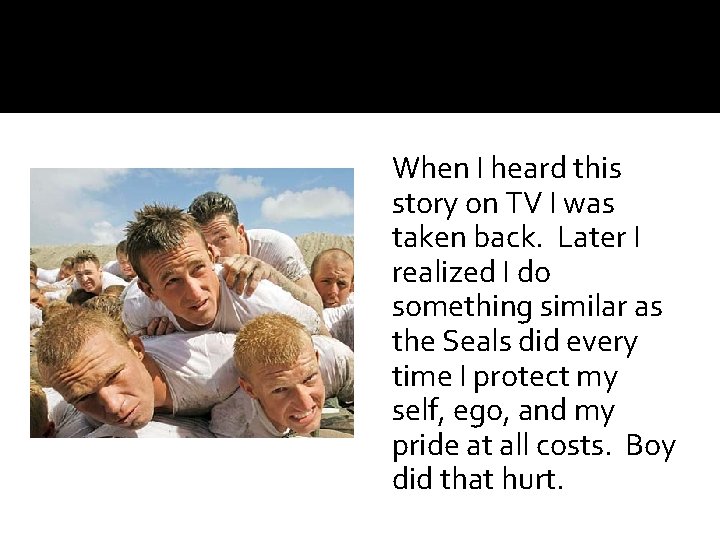
When I heard this story on TV I was taken back. Later I realized I do something similar as the Seals did every time I protect my self, ego, and my pride at all costs. Boy did that hurt.
Is this your priority list? 1. Protecting my pride 2. Something else 3. Blah, blah, 4. Some stuff 5. Another thing 6. Something else 7. An item that has no spiritual significance 8. Something to which you should be ashamed 9. Another thing 10. Loving a loved one that is hard to love
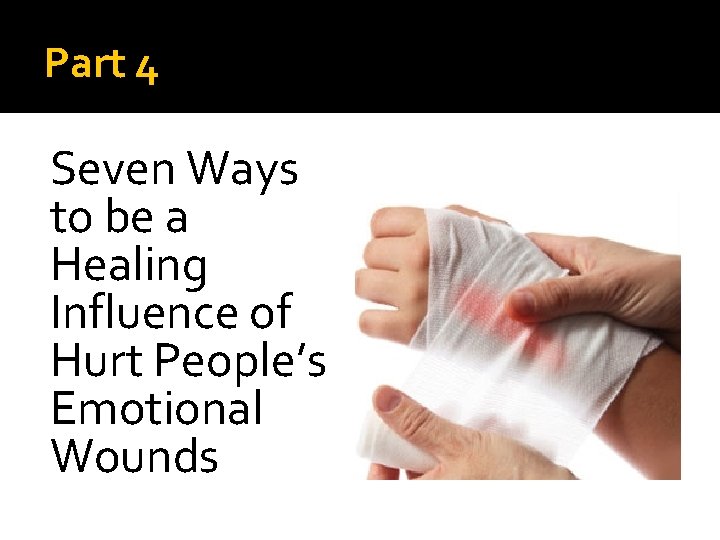
Part 4 Seven Ways to be a Healing Influence of Hurt People’s Emotional Wounds
Some pointers before we begin… 1. Don’t be naïve thinking, “If I just spend a few minutes with them and explain to them what they are doing wrong and what they should do differently and if they agree, everything will go back to normal. ” 2. You make things worse by not following our Lord’s instructions. It is like bringing gasoline to a fire in hopes of putting it out. 3. The ten point summery may also open a door rather than slamming a door when working with a difficult person. 4. Difficult people often know they are being difficult but have a difficult time changing their behavior.
On a personal note about your own stuff… �I believe some of the things that bother you most about yourself and others will perhaps in this life never completely go away. �So instead of spending your emotional energy wishing that they would go away, why not spend your time managing it.
1. Speak the truth in love 15 but speaking the truth in love, we are to grow up in all aspects into Him who is the head, even Christ. Ephesians 4 People will never care how much you know until they know how much you care. Use truth as a surgeon’s scalpel to heal, not a killer’s knife to attack.
This might help… We expect God and others to accept us with our dysfunction, blemishes, and sin. Yet when faced with others imperfections, because we don’t have those specific issues, we feel superior and judge them more harshly than we want others to judge us for ours.
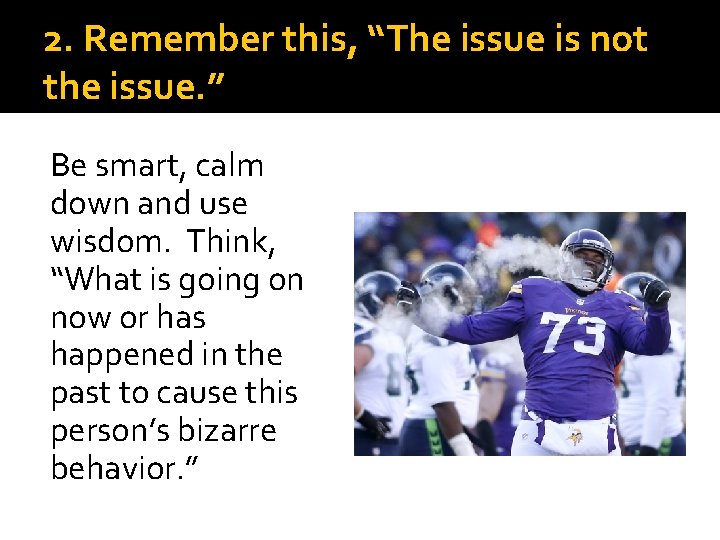
2. Remember this, “The issue is not the issue. ” Be smart, calm down and use wisdom. Think, “What is going on now or has happened in the past to cause this person’s bizarre behavior. ”
Story of my friend Joe (named changed for confidentiality) I was in a ministry meeting a while back and one member went a little weird on the board. Weird only in the sense that he was emotional and intense which was out of the ordinary for his normal temperament. I called him a few days later to discuss it with him. He started going over the facts which I quickly stopped him. I said lets assume everything you had said was true. Your emotions were off the charts and I am just calling to see how you are doing. Hey Joe, do you think this might have had to do with something else?
3. Keep angry emotions in check Hurt people who hurt people are normally ready to engage in conflict at the drop of a hat. Check your hat at the door. Speak calmly and caringly about their remarks and behavior or don’t speak at all. This usually requires prayer and prior preparation. Perhaps even role playing with someone else.
An example when an incident happens… You: Mike are you okay? Mike: Sure I’m okay, what are you talking about? You: Well, I’m not sure if you noticed, but you just insulted Sue. You said, “Don’t you ever dust your furniture? ” Mike: Well this place is a mess, you know that. You: That may or may not be, but why would you hurt Sue when I know how much you love your sister? Mike what is going on?
4. Connect with their feelings when describing how they hurt another’s feelings Mike do you remember when dad yelled at you when you dropped the ball in the playoffs? Do you remember how that made you feel? Well that is how you just made Sue feel.
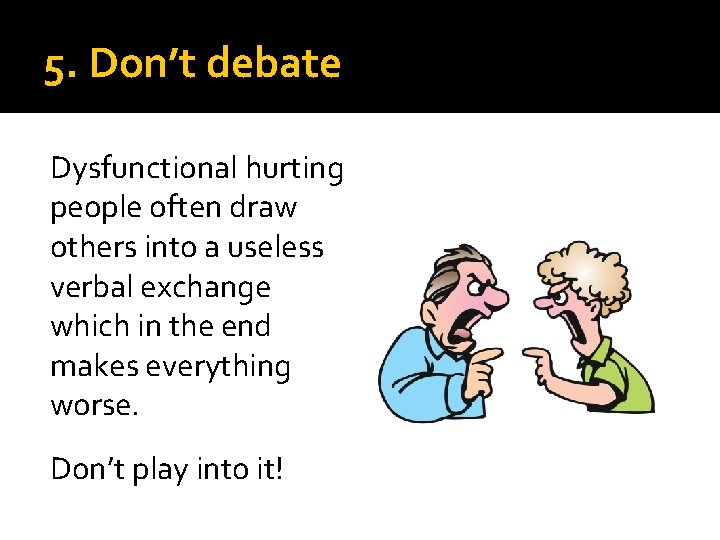
5. Don’t debate Dysfunctional hurting people often draw others into a useless verbal exchange which in the end makes everything worse. Don’t play into it!
Here is some advice… There are times to discuss but do not debate with a hurt person, it will go nowhere and generally will make the situation worse. Some years ago I was watching a public television program of a teacher’s conference. An instructor was showing the teachers how to deal with an unruly junior high student and did some role playing with a teacher in the audience. The teacher was to act as a problem student in class.
Here is the insanity… Teacher: Tina please stop talking, I am trying to teach here. Tina: Mr. Johnson why are you picking on me? Other people are talking and you don’t tell them to stop, only me. Teacher: Tina that is not true. You are the only one I saw talking. Tina: That is not true Mr. Johnson, Michelle and Judy were both talking. But you only picked on me. And on and on it goes, and where it stops nobody knows.
How to stop the insanity… Teacher: Tina in my class, students do not talk while I am teaching. Tina: Mr. Johnson why are you picking on me? Other people are talking and you don’t tell them to stop, only me. Teacher: Tina in my class, students do not talk while I am teaching. Tina: Mr. Johnson, Michelle and Judy were talking. But you only pick on me. Teacher: Tina in my class, students do not talk while I am teaching. The instructor said he has never had to repeat himself more than three times before the student stopped talking.
Sometimes you need to confront calmly, in love, and without emotion… You: Mike now you insulted Grandma about getting fat? Mike: I can’t help it, but she is. You: Mike you are hurting people you love with nasty remarks, and you need to stop it! Mike: I can’t help it if everyone is so sensitive to the truth. You: Mike please listen, you are hurting people you love with nasty remarks, and you need to stop it and apologize. Mike: Sure I always have to apologize, no one else just me. You: Mike, you are hurting people you love with nasty remarks, and you need to stop it and apologize.
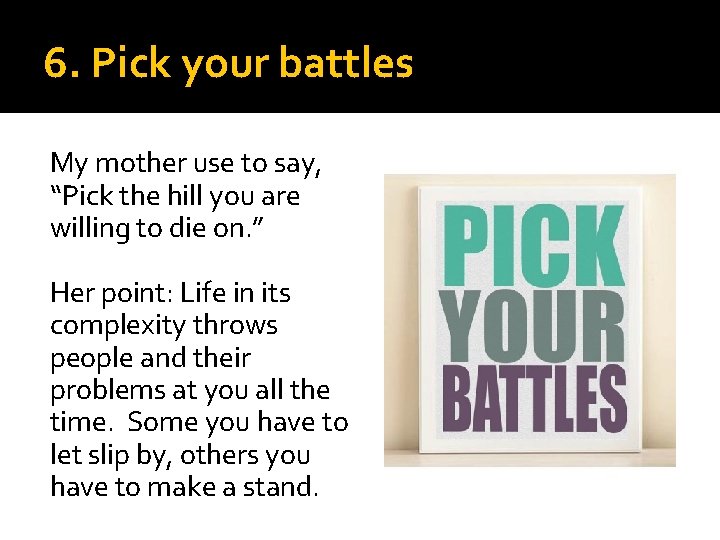
6. Pick your battles My mother use to say, “Pick the hill you are willing to die on. ” Her point: Life in its complexity throws people and their problems at you all the time. Some you have to let slip by, others you have to make a stand.
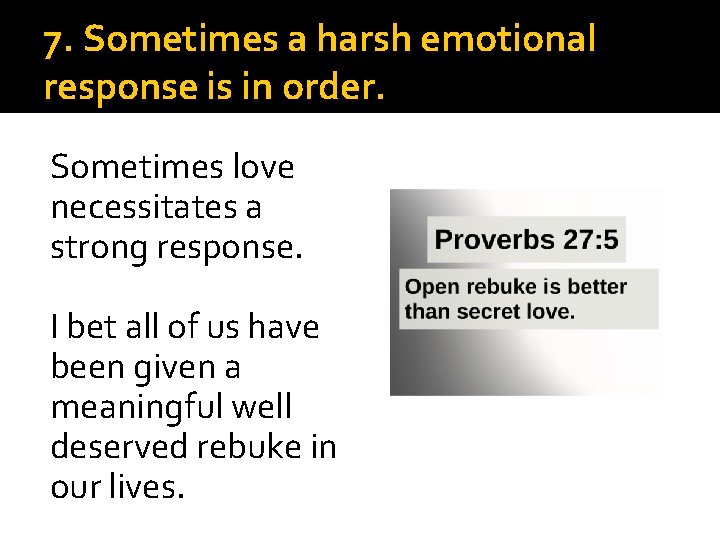
7. Sometimes a harsh emotional response is in order. Sometimes love necessitates a strong response. I bet all of us have been given a meaningful well deserved rebuke in our lives.
Some examples… Some examples: • A sixteen year old family member has been arrested for being under the influence while driving. • A friend or family member is unrepentant about an affair and is planning on destroying their marriage for another person. • A family member is unrepentant for stealing money from his company and has brought shame to the family.
- Slides: 43