
A B C Figure 1 Representative brain MRI
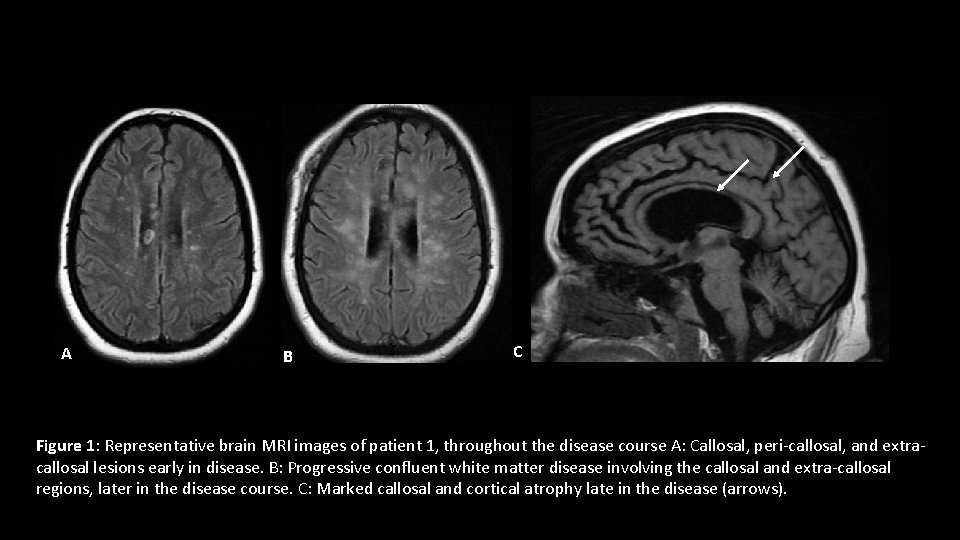
A B C Figure 1: Representative brain MRI images of patient 1, throughout the disease course A: Callosal, peri-callosal, and extracallosal lesions early in disease. B: Progressive confluent white matter disease involving the callosal and extra-callosal regions, later in the disease course. C: Marked callosal and cortical atrophy late in the disease (arrows).
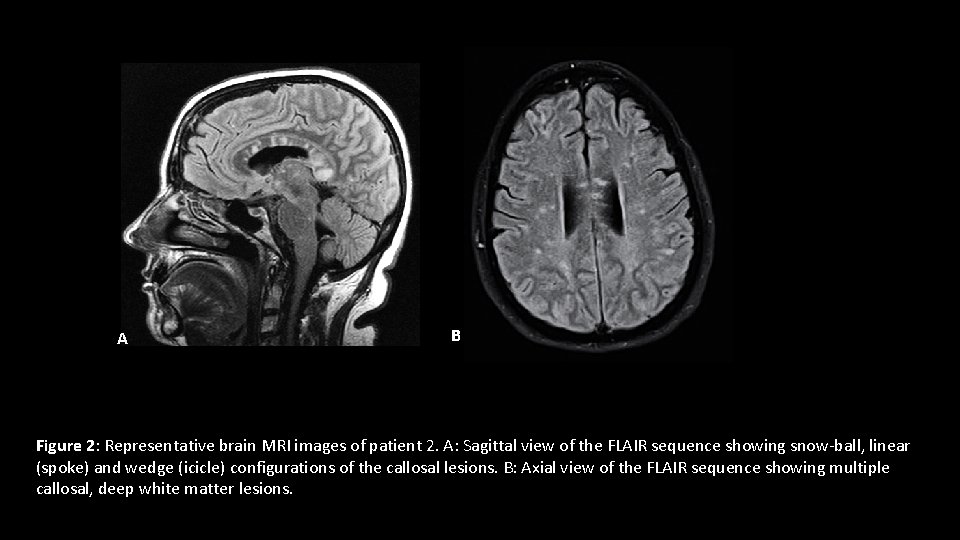
A B Figure 2: Representative brain MRI images of patient 2. A: Sagittal view of the FLAIR sequence showing snow-ball, linear (spoke) and wedge (icicle) configurations of the callosal lesions. B: Axial view of the FLAIR sequence showing multiple callosal, deep white matter lesions.

A B C D Figure 3: Representative brain MRI images of patient 3. A: Sagittal view of the FLAIR sequence showing mid callosal lesion. B: Axial view of the FLAIR sequence showing multiple callosal and C; deep white matter and subcortical lesions. D: Axial view of the brain showing periventricular and subcortical lesions.
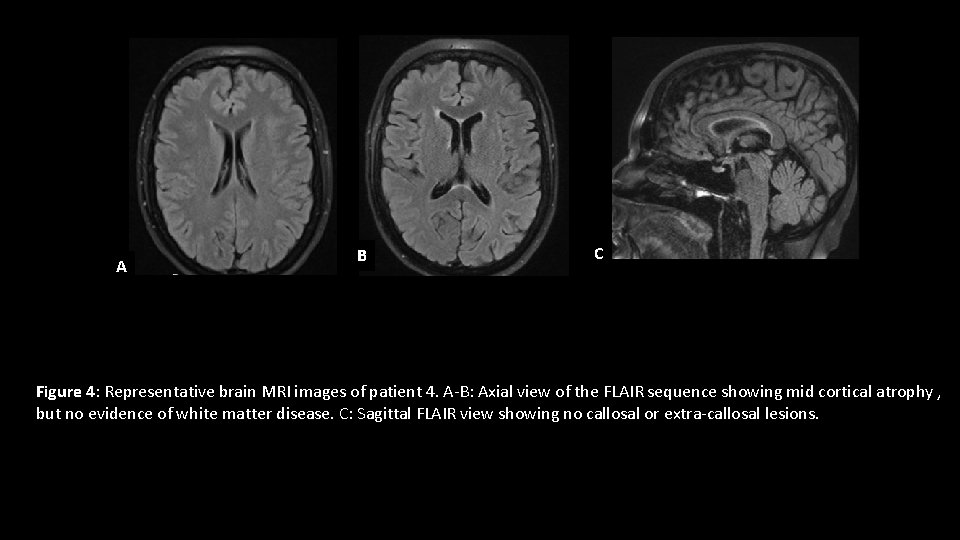
A B C Figure 4: Representative brain MRI images of patient 4. A-B: Axial view of the FLAIR sequence showing mid cortical atrophy , but no evidence of white matter disease. C: Sagittal FLAIR view showing no callosal or extra-callosal lesions.
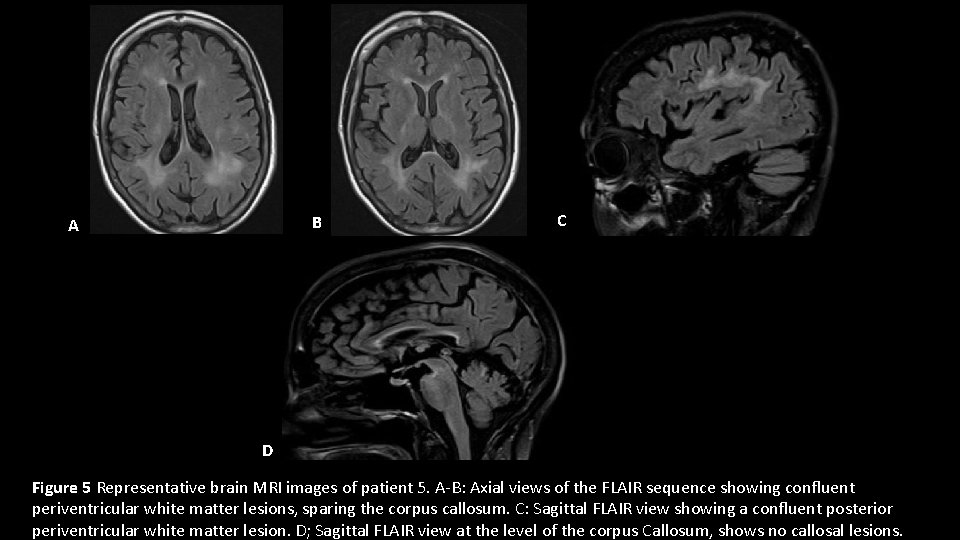
B A C D Figure 5 Representative brain MRI images of patient 5. A-B: Axial views of the FLAIR sequence showing confluent periventricular white matter lesions, sparing the corpus callosum. C: Sagittal FLAIR view showing a confluent posterior periventricular white matter lesion. D; Sagittal FLAIR view at the level of the corpus Callosum, shows no callosal lesions.
- Slides: 5