
A B C 100 100 300 300 400
A B C 100 100 300 300 400 400 500 500
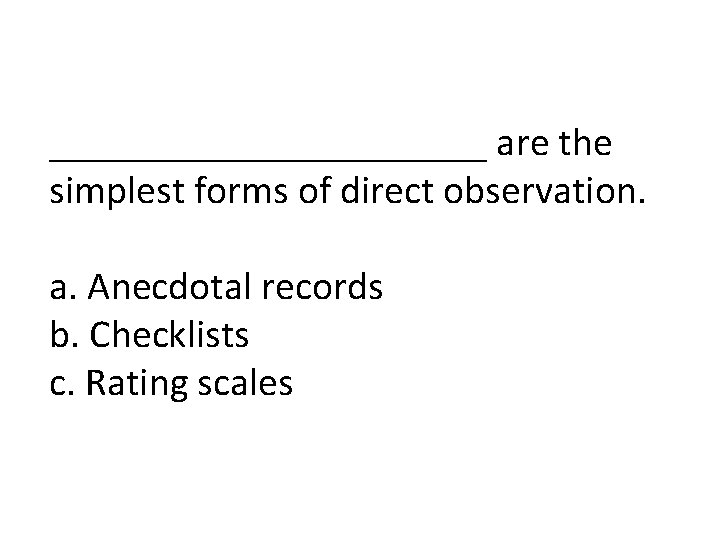
___________ are the simplest forms of direct observation. a. Anecdotal records b. Checklists c. Rating scales
Anecdotal Records
Approximately what percent of today’s children are in early childhood programs? a. 35 b. 67 c. 99
67
True or False: As a teacher, it is okay to laugh at a child.
False
Which is the most popular type of child care program?
Child Care Center
Describe 2 factors of families that have made childcare more popular.
Changes in Families • Dramatic change in the past 25 years • Women are becoming more highly educated • Couples are having fewer children • Young adults are getting married later in life • Many families need a second paycheck • Women are demonstrating an increased commitment to work • Families see the value of having children attend an early childhood program
List and describe 3 careers in early childhood
Career Opportunities in Early Childhood Nannies Au pairs Kindergarten teachers Early childhood assistant and associate teachers • Child care teachers and directors • • Family child care home Licensing specialist Playground designers Children’s librarians Salespeople of children’s products • Parents educators • Children’s artist • • •
Name the 4 eligibility requirements of a CDA credential.
CDA Eligibility Requirements • Experience – At least 480 hours work experience with 3 -5 year olds • Education – 120 clock hours divided among different program areas • Personal – 18 years old with a high school diploma – Academic skills – Signed statement of ethical conduct • Setting – State-approved center – Must be the head caregiver for 8 or more children ages 3 -5 – 10 children must be enrolled in program and two caregivers present – No more than 20% of children can have special needs
List and describe 3 aspects of Montessori
• Montessori Approach – Children “learn how to learn” – Children were allowed to explore materials that were meant to instruct – Stressed independence – Teachers provide little help
List and describe 4 aspects of Head Start
Head Start • Health – All children given a total health plan – Dental, medical, mental health services provided for – Children who have not had childhood immunizations prior to enrollment are given them • Parental Involvement – Recognizes the parent as the child’s first teacher – Parents are encouraged to help recruit new children, assist in the center, and take part in policy meetings
• Curriculum • Nutrition q. Designed to build self– Many do not receive nutritious meals at esteem home q. Variety of learning – At least one snack and experiences to meet the one hot meal is provided children’s needs in all each day four areas of – Food is served that development reflects the child’s q. Parental involvement is ethnic and cultural at the heart of the preferences. program – Designed to help children make healthy food choices and develop good eating habits.
List the 4 types of assessment
Anecdotal Records Checklists Rating Scales Sample Work Participation Record

What are 2 guidelines for protecting confidentiality?
• Do not discuss a child in a setting outside the classroom • Avoid using the child’s name (give a letter or #)
What is the difference between assessing and evaluating?
Assessing = what Evaluating = why
- Slides: 27