
a a 2020 2021 Robotics and Mechatronics Mobile
a. a. 2020 -2021 Robotics and Mechatronics Mobile Robotics Part II. 3

Mobile Robotics MAPPING
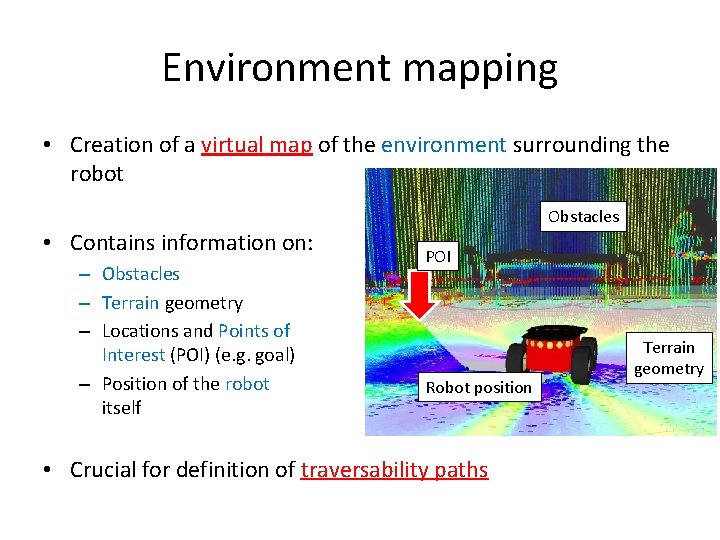
Environment mapping • Creation of a virtual map of the environment surrounding the robot • Contains information on: – Obstacles – Terrain geometry – Locations and Points of Interest (POI) (e. g. goal) – Position of the robot itself Obstacles POI Robot position • Crucial for definition of traversability paths Terrain geometry
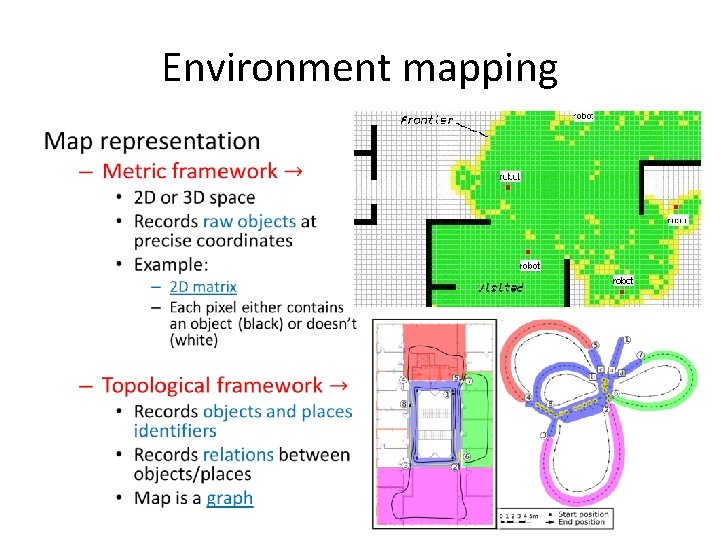
Environment mapping •
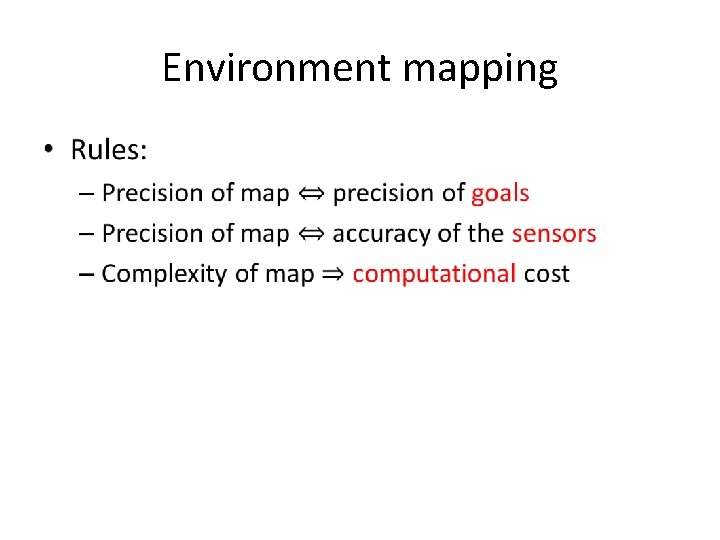
Environment mapping • Type of map: – Continuous • Features are determined by mathematically defined objects – Polygons, lines, points etc. – High accuracy – High computational cost – Discrete • Based on the decomposition of the environment in discrete elements – Grids: occupancy grid – Lower accuracy – Large datasets
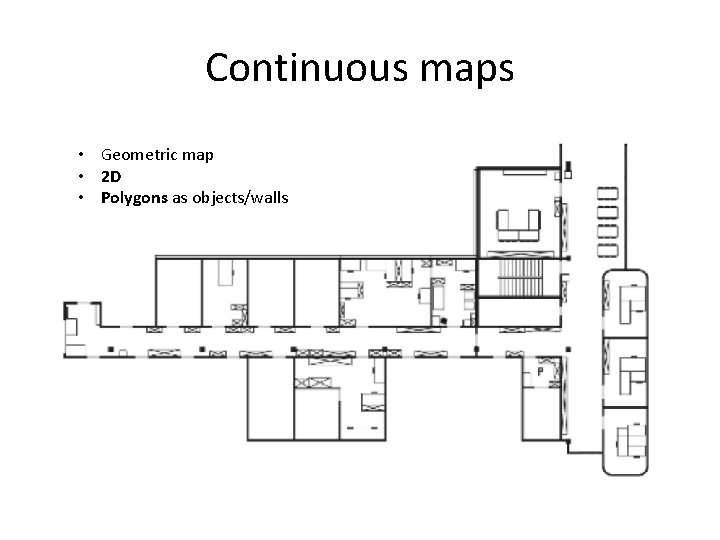
Continuous maps • Geometric map • 2 D • Polygons as objects/walls
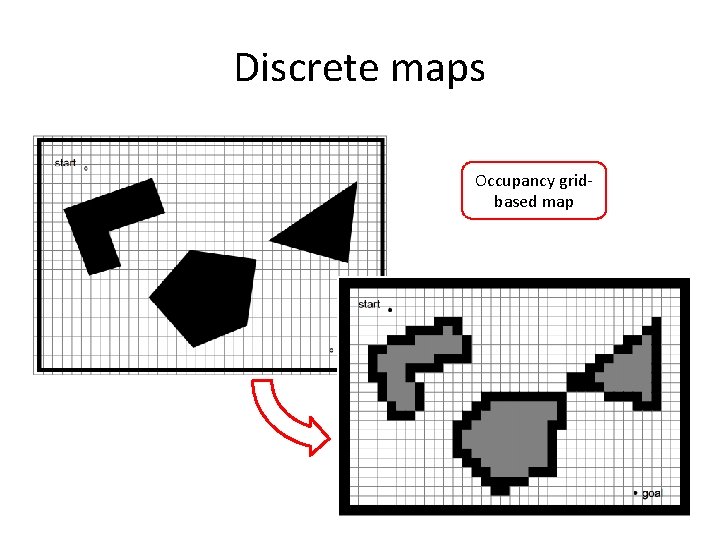
Discrete maps Occupancy gridbased map
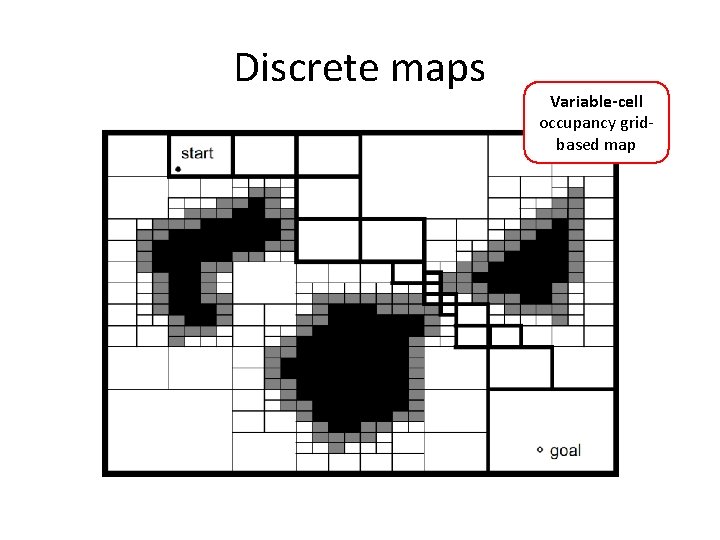
Discrete maps Variable-cell occupancy gridbased map
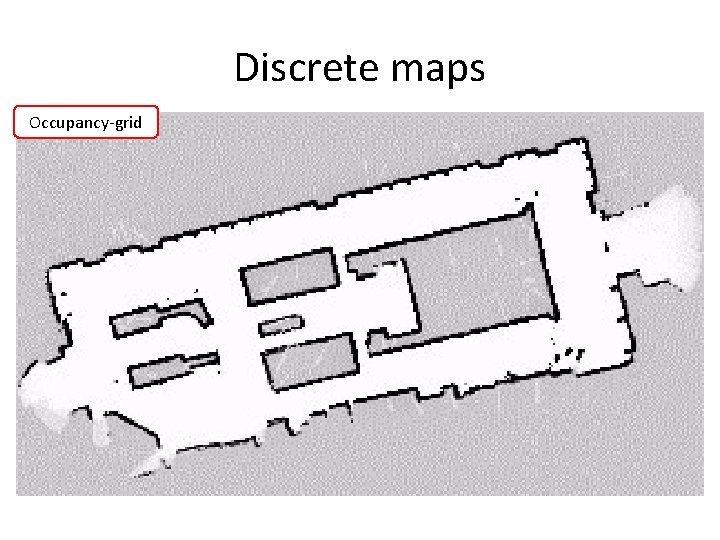
Discrete maps Occupancy-grid
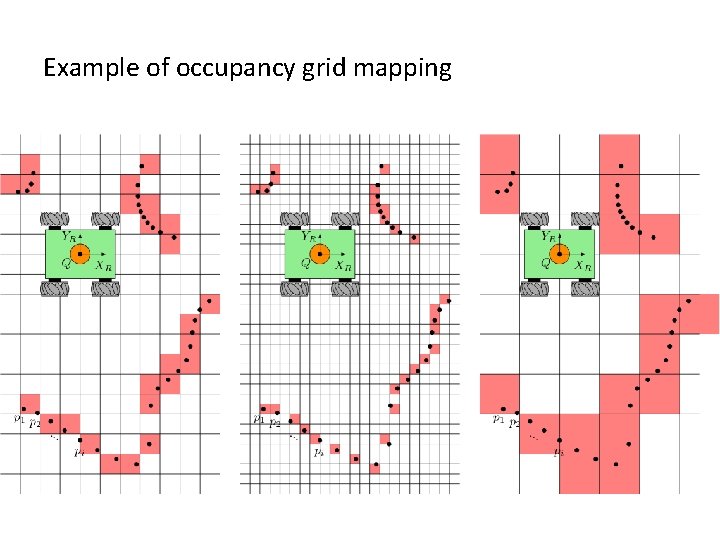
Example of occupancy grid mapping
Environment mapping •
Position determination •
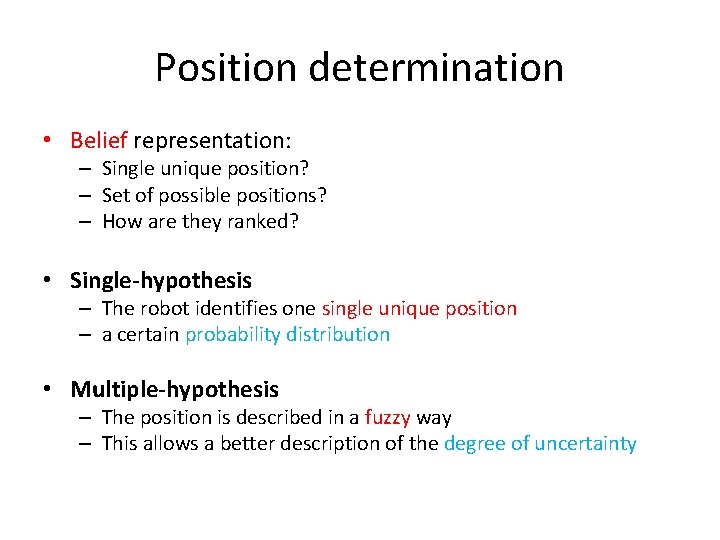
Position determination • Belief representation: – Single unique position? – Set of possible positions? – How are they ranked? • Single-hypothesis – The robot identifies one single unique position – a certain probability distribution • Multiple-hypothesis – The position is described in a fuzzy way – This allows a better description of the degree of uncertainty
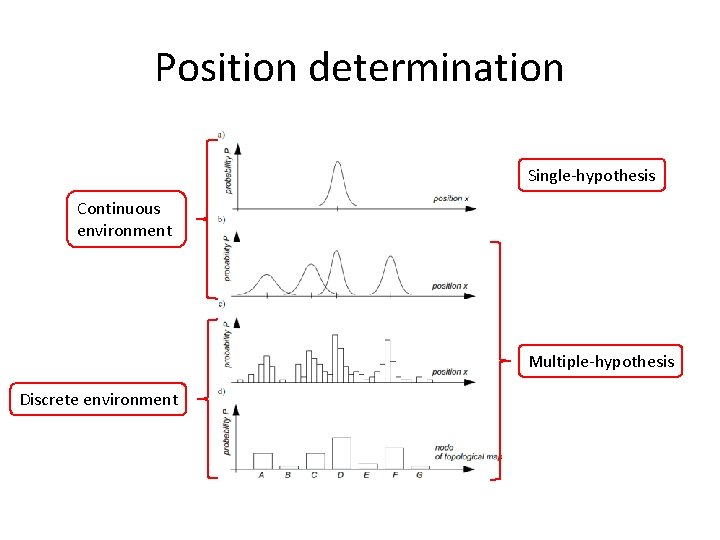
Position determination Single-hypothesis Continuous environment Multiple-hypothesis Discrete environment
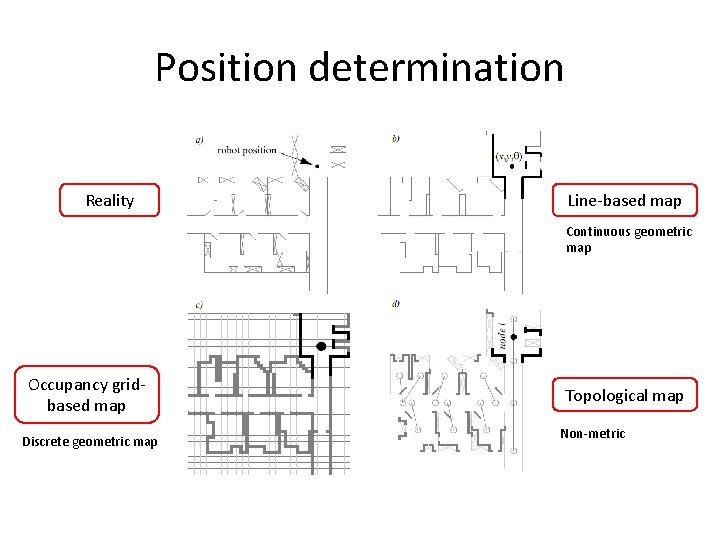
Position determination Reality Line-based map Continuous geometric map Occupancy gridbased map Discrete geometric map Topological map Non-metric

Mobile Robotics NAVIGATION
Navigation • Definition 1. Determination of position and orientation relative to the environment, 2. The planning and execution of the maneuvers required to get from point A to point B.

Map-based Navigation
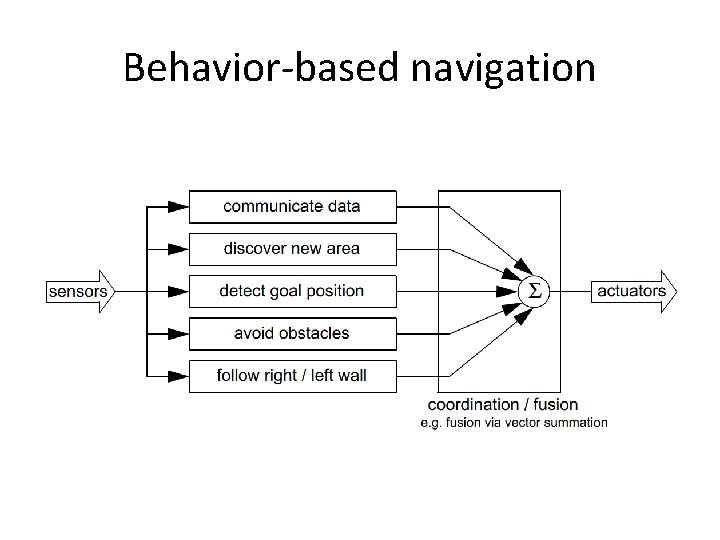
Behavior-based navigation
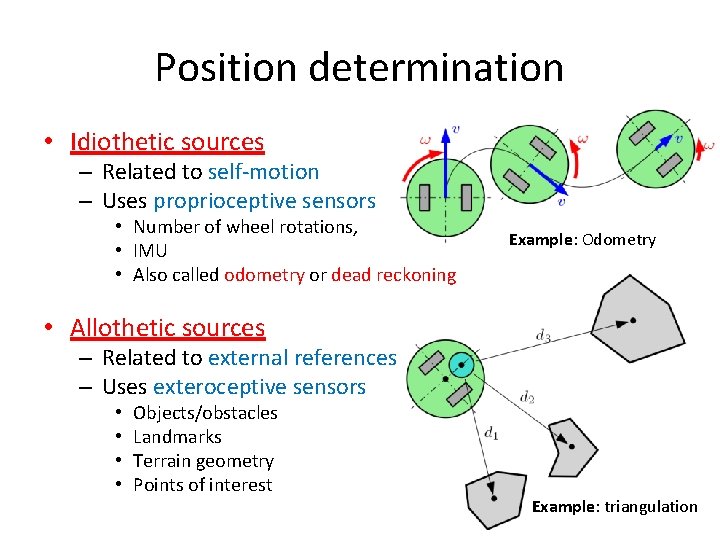
Position determination • Idiothetic sources – Related to self-motion – Uses proprioceptive sensors • Number of wheel rotations, • IMU • Also called odometry or dead reckoning Example: Odometry • Allothetic sources – Related to external references – Uses exteroceptive sensors • • Objects/obstacles Landmarks Terrain geometry Points of interest Example: triangulation
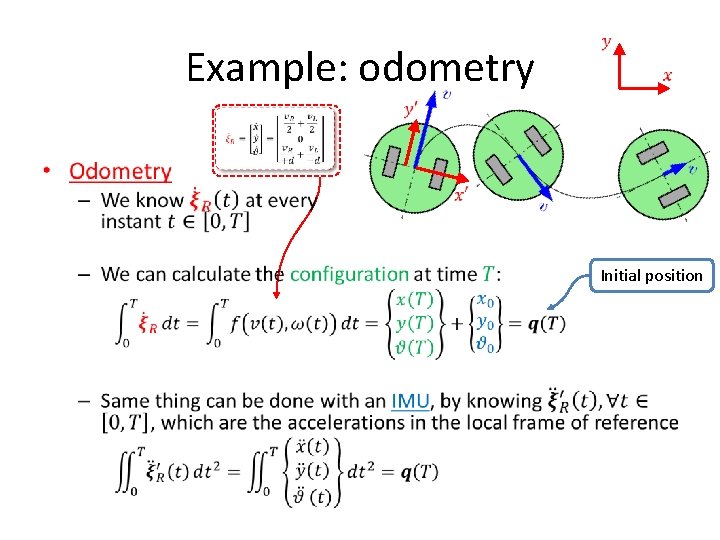
Example: odometry • Initial position
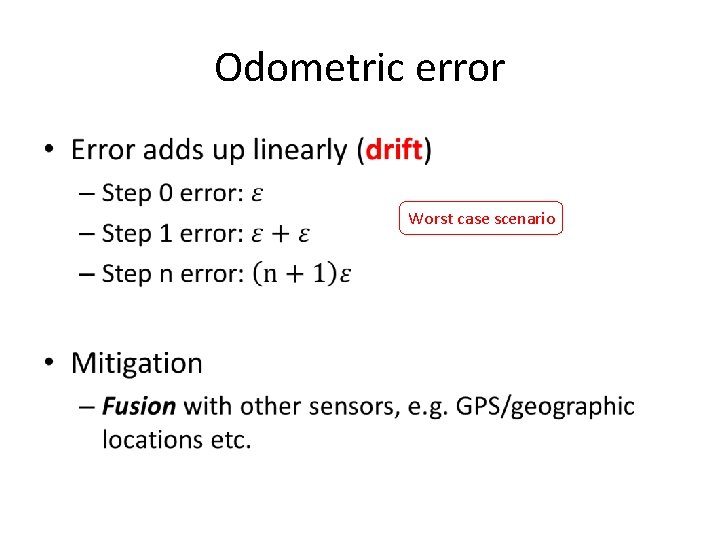
Odometric error • Worst case scenario
S. L. A. M. Simultaneous Localization and Mapping • The computational problem of simultaneously mapping the environment and localizing the robot within • Very computationally intensive • Implemented in varying ad-hoc architectures in the whole industry – E. g. Autonomous cars
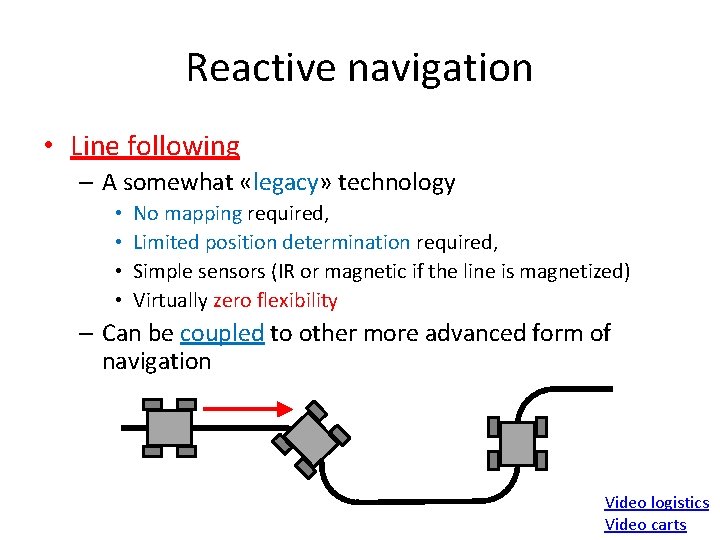
Reactive navigation • Line following – A somewhat «legacy» technology • • No mapping required, Limited position determination required, Simple sensors (IR or magnetic if the line is magnetized) Virtually zero flexibility – Can be coupled to other more advanced form of navigation Video logistics Video carts
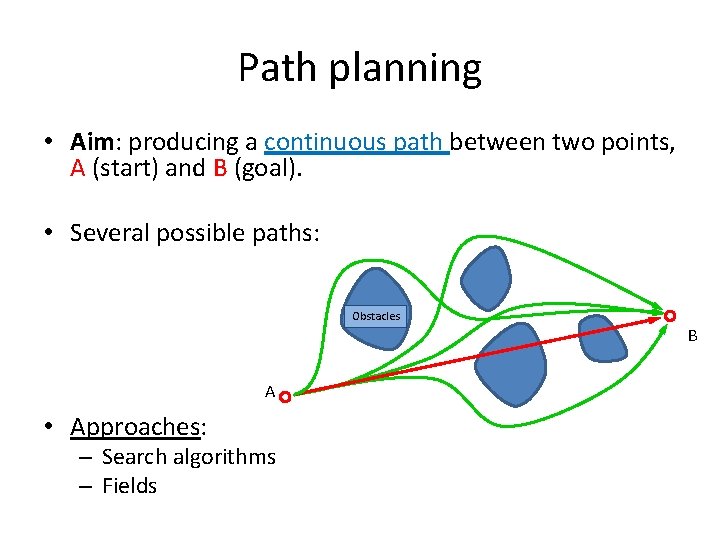
Path planning • Aim: producing a continuous path between two points, A (start) and B (goal). • Several possible paths: Obstacles B A • Approaches: – Search algorithms – Fields
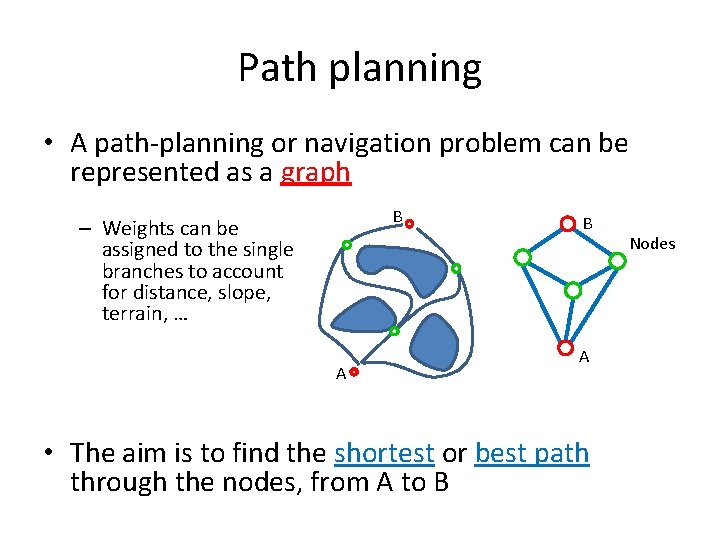
Path planning • A path-planning or navigation problem can be represented as a graph B – Weights can be assigned to the single branches to account for distance, slope, terrain, … A B A • The aim is to find the shortest or best path through the nodes, from A to B Nodes
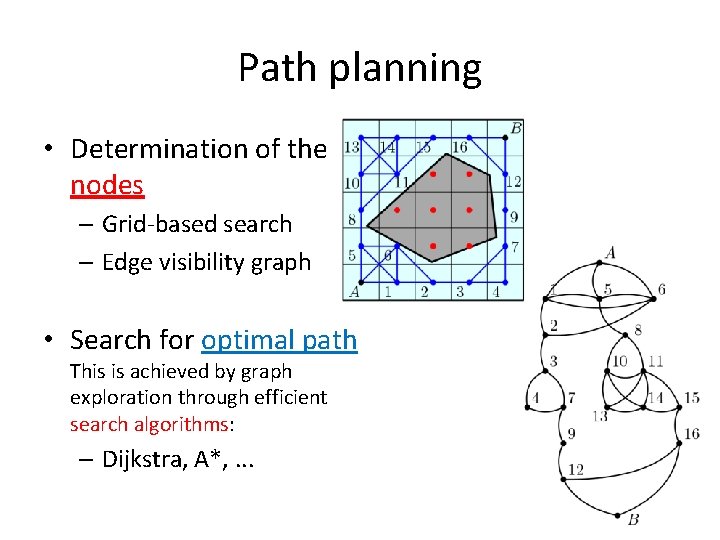
Path planning • Determination of the nodes – Grid-based search – Edge visibility graph • Search for optimal path This is achieved by graph exploration through efficient search algorithms: – Dijkstra, A*, . . .
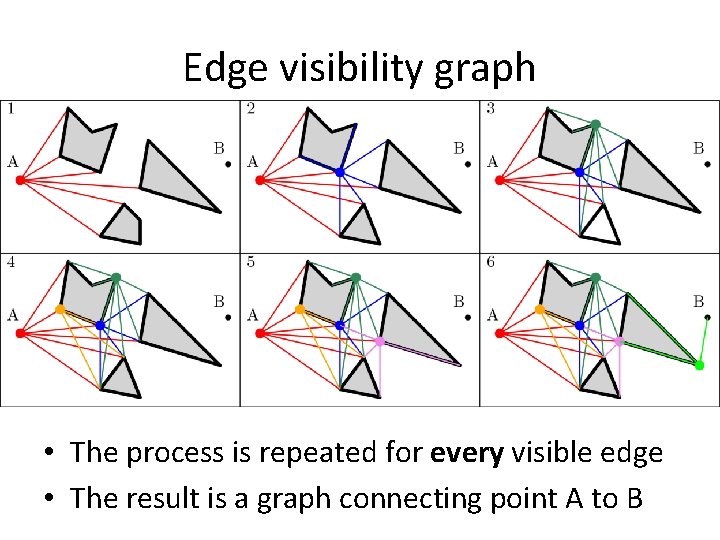
Edge visibility graph • The process is repeated for every visible edge • The result is a graph connecting point A to B
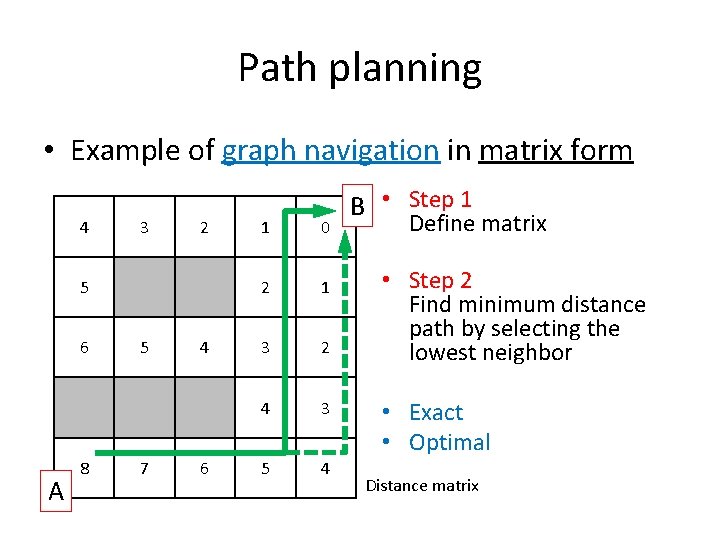
Path planning • Example of graph navigation in matrix form 4 3 2 5 6 A 8 5 7 4 6 1 0 2 1 3 2 4 3 5 4 B • Step 1 Define matrix • Step 2 Find minimum distance path by selecting the lowest neighbor • Exact • Optimal Distance matrix
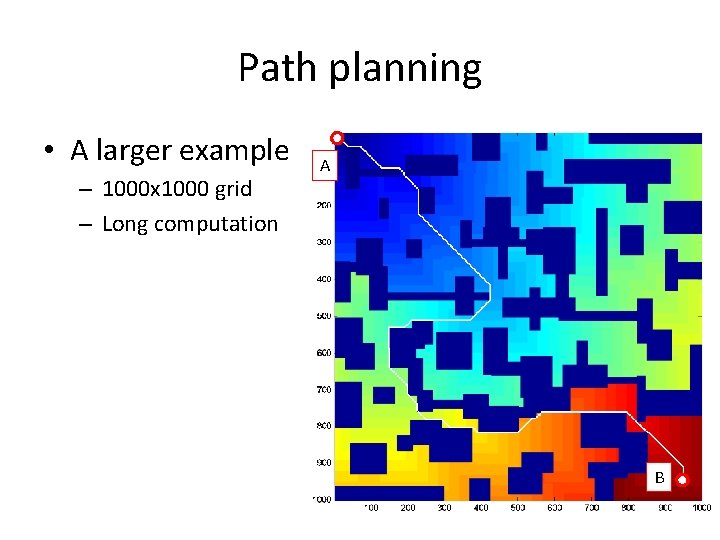
Path planning • A larger example – 1000 x 1000 grid – Long computation A B
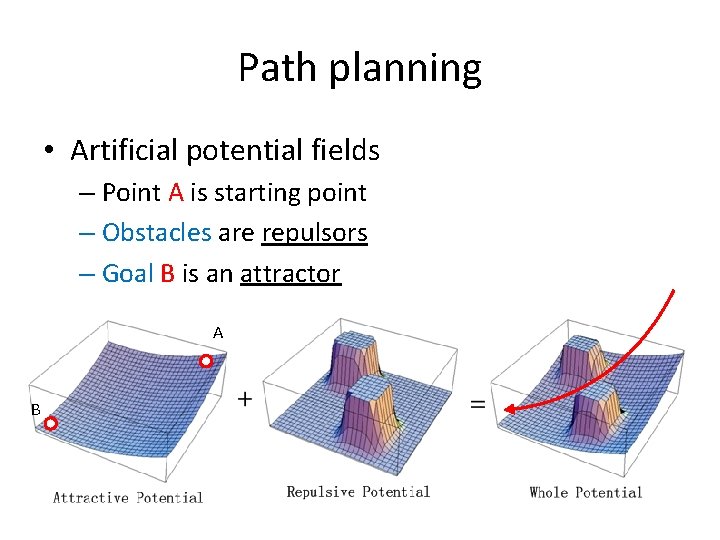
Path planning • Artificial potential fields – Point A is starting point – Obstacles are repulsors – Goal B is an attractor A B
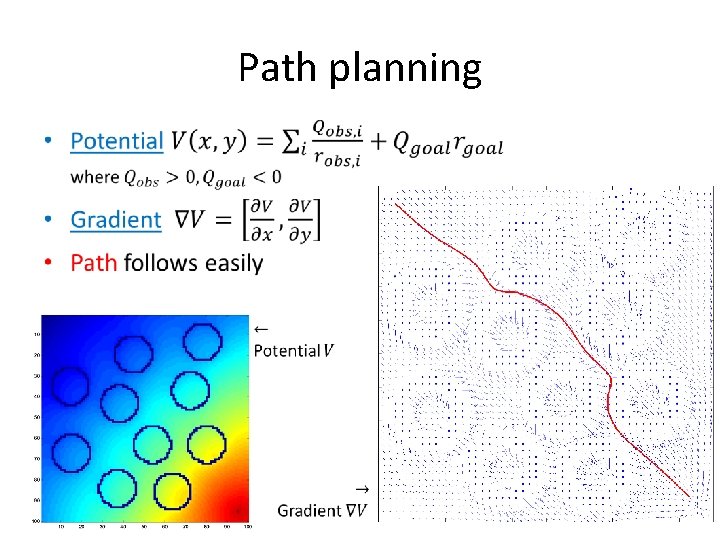
Path planning •
Example of artificial potential fields

Mobile Robotics THE “REAL WORLD” ISSUE
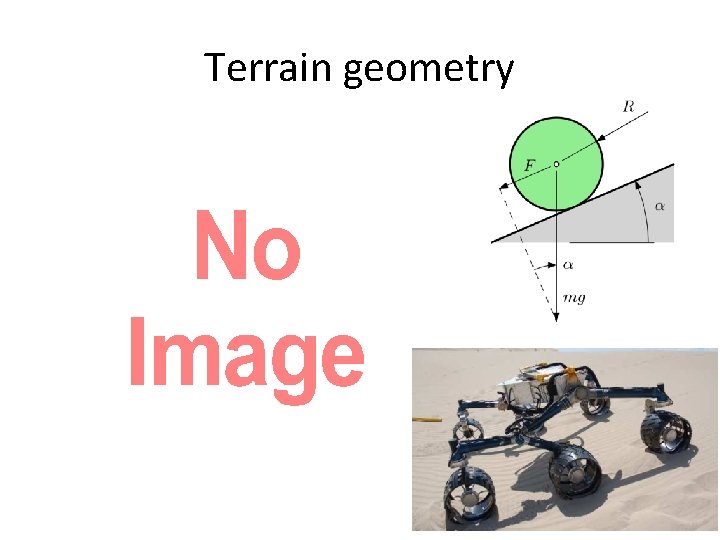
«The Real World» • Issues in the real world – Geometry of the terrain • Loss of contact with the ground • Slopes – Terrain yield • Traction loss • Sinking – Position determination accuracy
Terrain geometry •
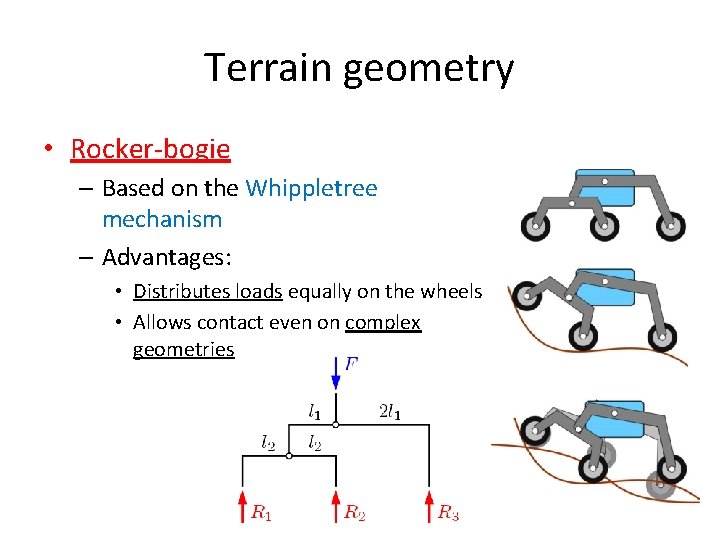
Terrain geometry • Rocker-bogie – Based on the Whippletree mechanism – Advantages: • Distributes loads equally on the wheels • Allows contact even on complex geometries
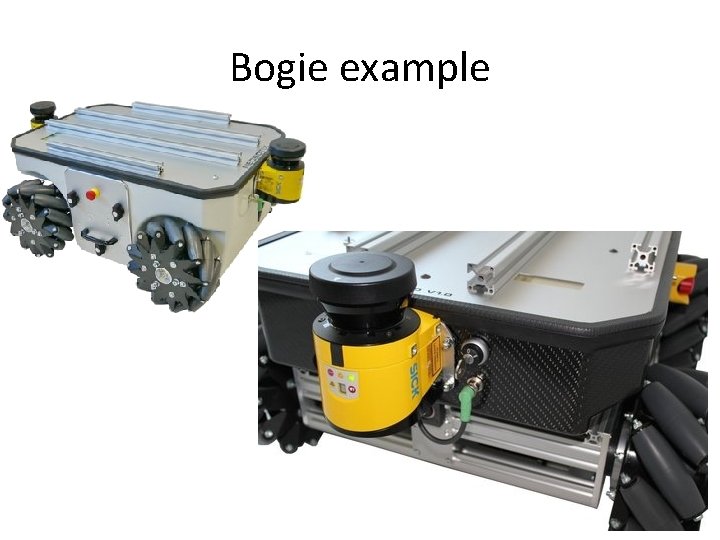
Bogie example
Terrain geometry •
Terrain Yield •
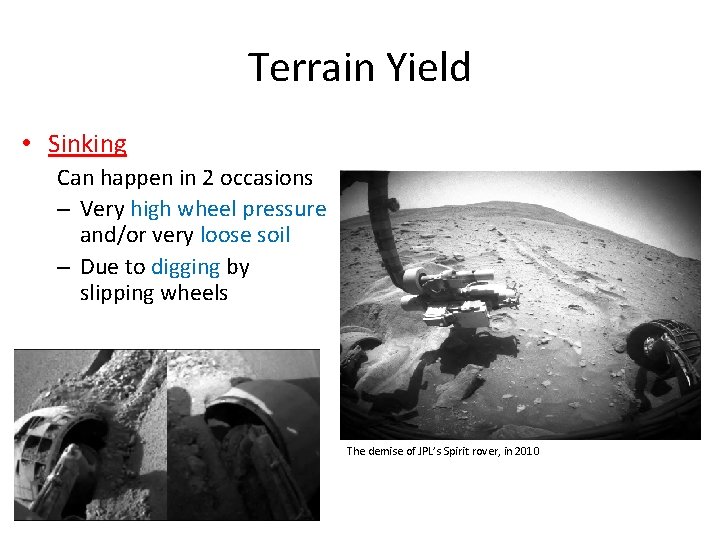
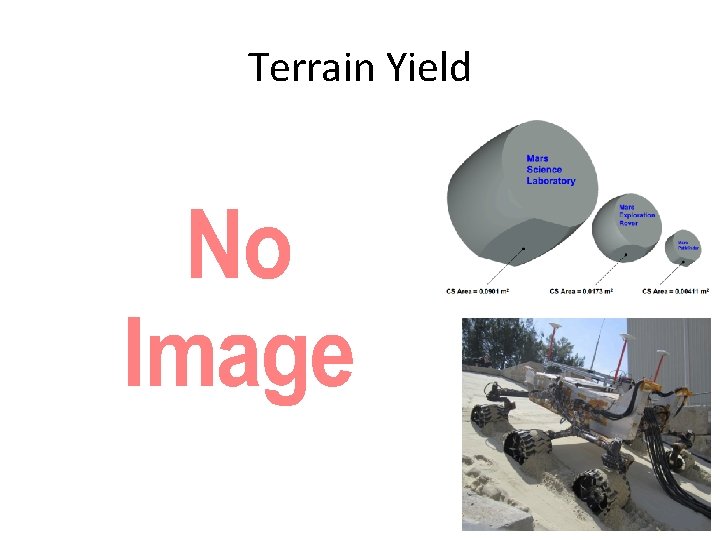
Terrain Yield • Sinking Can happen in 2 occasions – Very high wheel pressure and/or very loose soil – Due to digging by slipping wheels The demise of JPL’s Spirit rover, in 2010
- Slides: 41