
A 2 Theory and Methods Feminism Key Questions













- Slides: 65
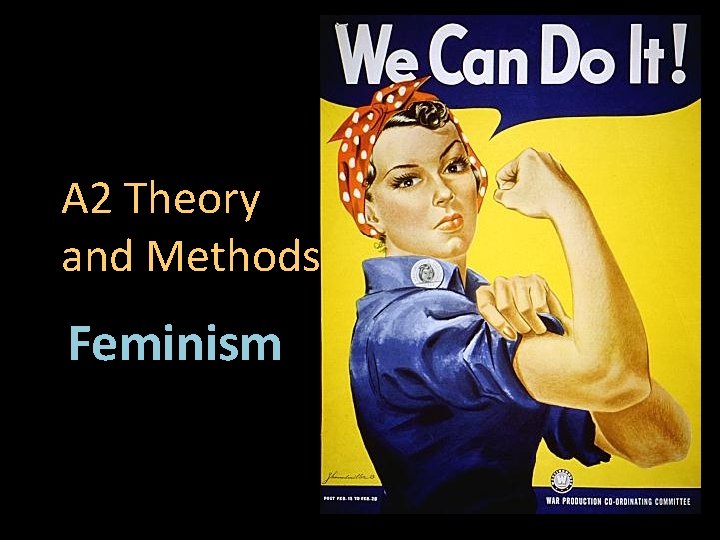
A 2 Theory and Methods Feminism
Key Questions (33 marks) • What contribution has feminism made to our understanding of contemporary society. • Is feminism still relevant today? Discuss sociological evidence. • “Sociology is not mainstream its malestream” Discuss the evidence for this claim.
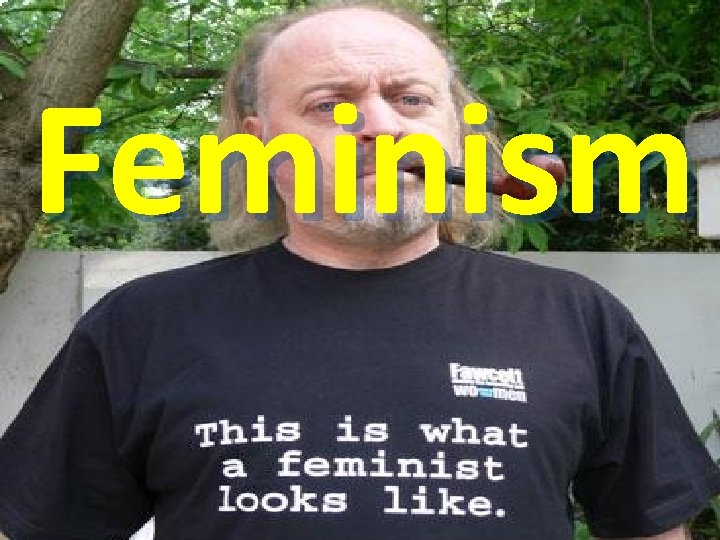
Feminism
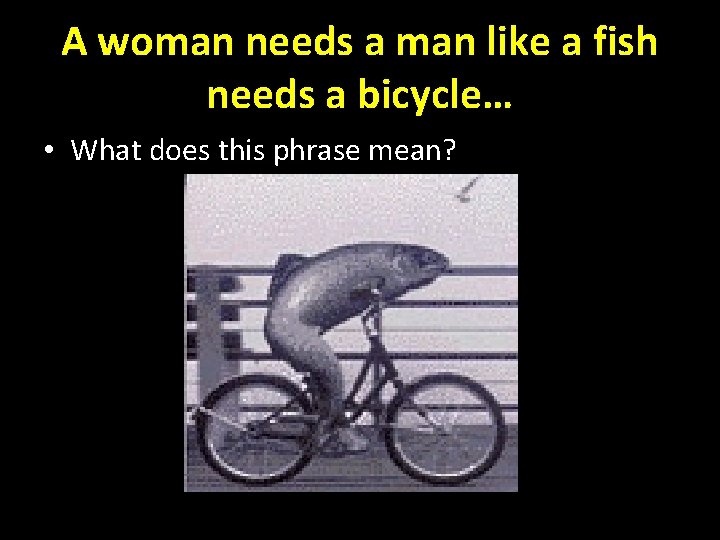
A woman needs a man like a fish needs a bicycle… • What does this phrase mean?
What can you remember about feminism?
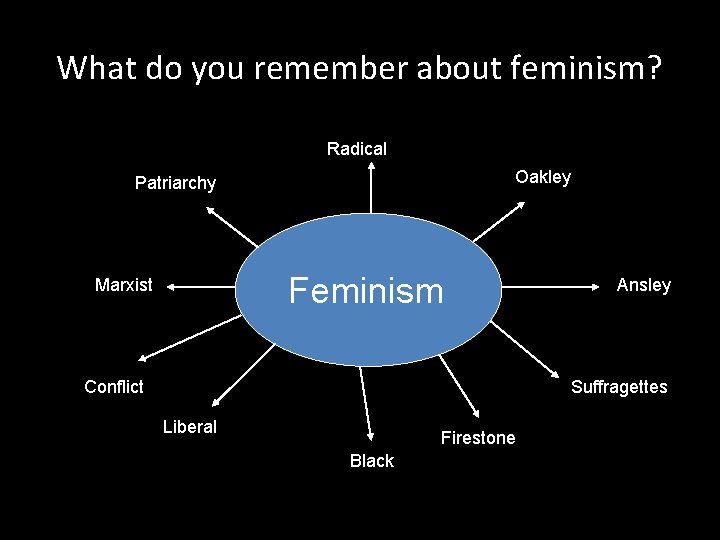
What do you remember about feminism? Radical Oakley Patriarchy Feminism Marxist Conflict Ansley Suffragettes Liberal Firestone Black
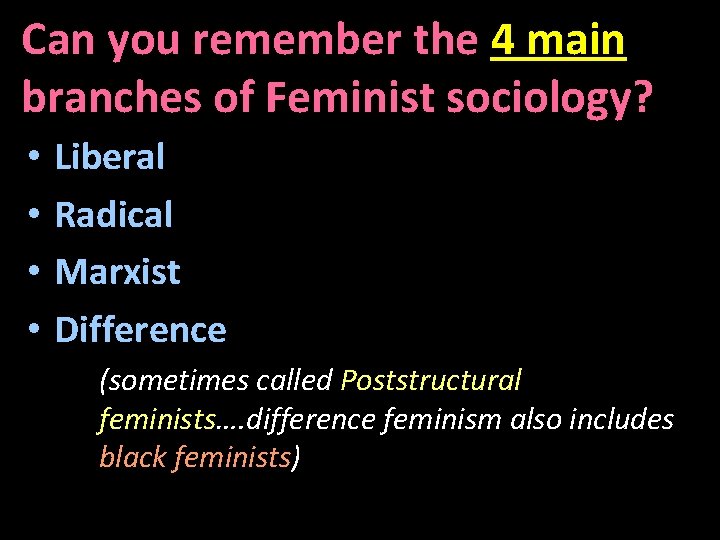
Can you remember the 4 main branches of Feminist sociology? • • Liberal Radical Marxist Difference (sometimes called Poststructural feminists…. difference feminism also includes black feminists)
Starter Activity: Key Feminist Ideas from each Unit. SCLY 1 Families SCLY 2: Education SCLY 3: Religion SCLY 4: Crime
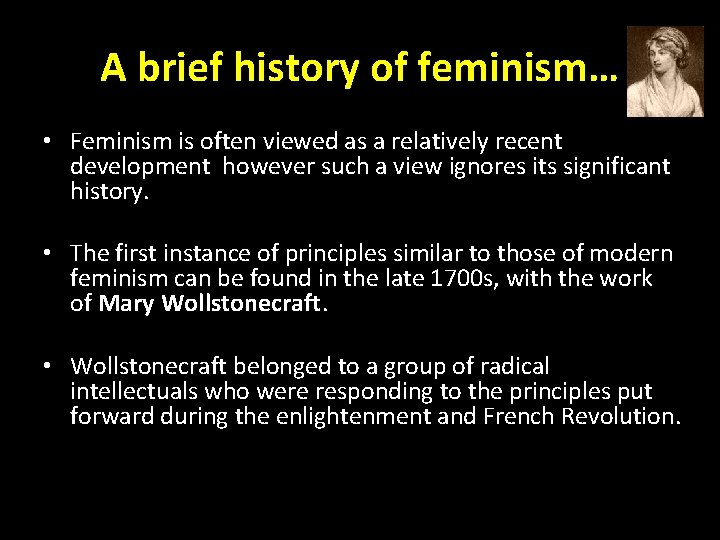
A brief history of feminism… • Feminism is often viewed as a relatively recent development however such a view ignores its significant history. • The first instance of principles similar to those of modern feminism can be found in the late 1700 s, with the work of Mary Wollstonecraft. • Wollstonecraft belonged to a group of radical intellectuals who were responding to the principles put forward during the enlightenment and French Revolution.
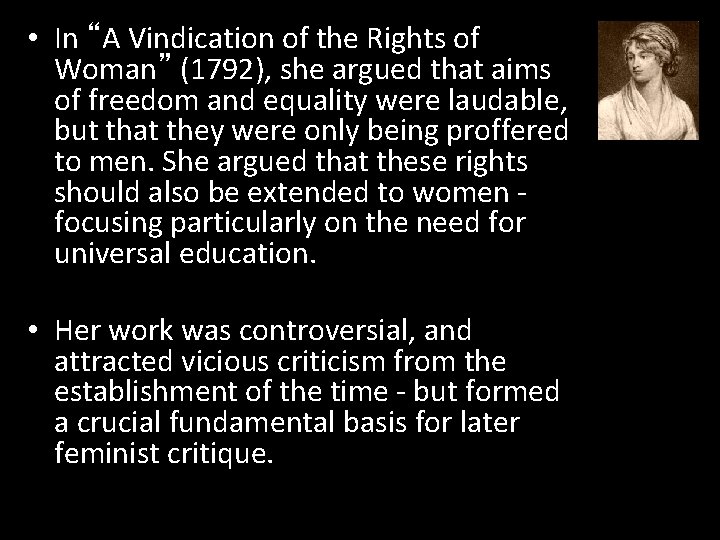
• In “A Vindication of the Rights of Woman” (1792), she argued that aims of freedom and equality were laudable, but that they were only being proffered to men. She argued that these rights should also be extended to women focusing particularly on the need for universal education. • Her work was controversial, and attracted vicious criticism from the establishment of the time - but formed a crucial fundamental basis for later feminist critique.
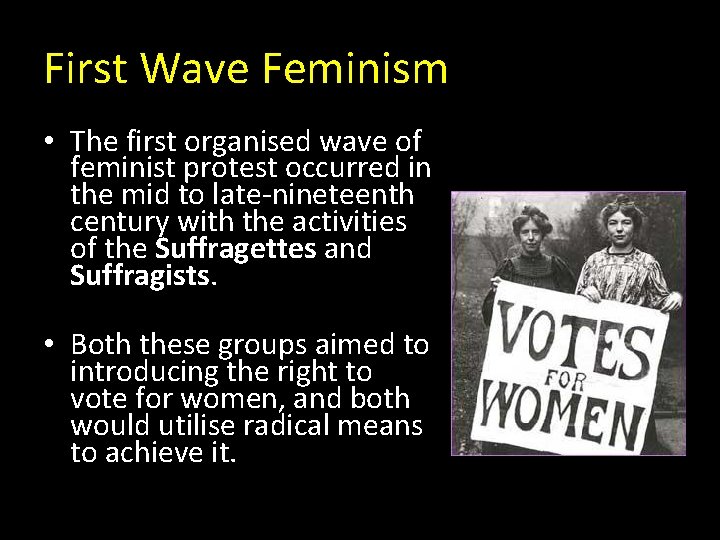
First Wave Feminism • The first organised wave of feminist protest occurred in the mid to late-nineteenth century with the activities of the Suffragettes and Suffragists. • Both these groups aimed to introducing the right to vote for women, and both would utilise radical means to achieve it.
First Wave Feminism • The two groups did, however, have differing views on the extent to which women's liberation should be achieved. • The Suffragettes campaigned mainly for the introduction of the vote only for those women who owned property. • Suffragists, by contrast, argued that partial enfranchisement would never be sufficient. For these activists, all adults - regardless of social class - should be entitled to vote at the age of 21. This position would mean the enfranchisement of women, but also for the small number of working-class men who were still unable to vote.
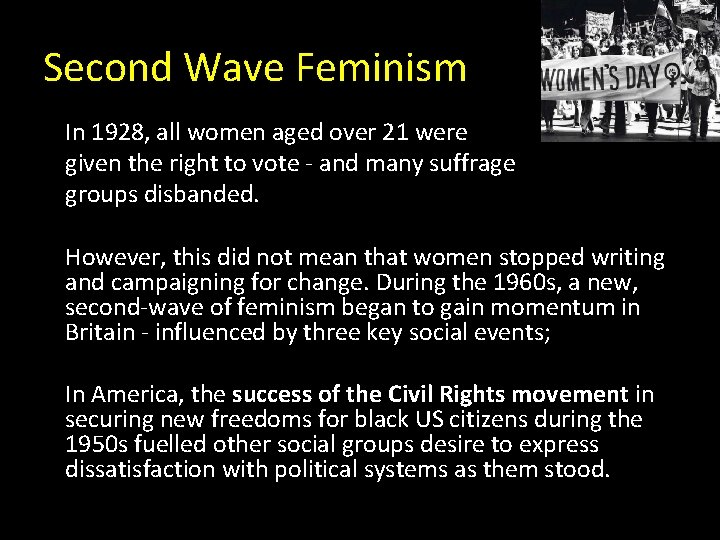
Second Wave Feminism In 1928, all women aged over 21 were given the right to vote - and many suffrage groups disbanded. However, this did not mean that women stopped writing and campaigning for change. During the 1960 s, a new, second-wave of feminism began to gain momentum in Britain - influenced by three key social events; In America, the success of the Civil Rights movement in securing new freedoms for black US citizens during the 1950 s fuelled other social groups desire to express dissatisfaction with political systems as them stood.
Second Wave Feminism • New technologies, particularly the contraceptive pill (available in 1961) meant that - for the first time – women were able to control their own fertility, raising confidence that they could be play roles other than that of mother. • During the second-world-war, many women had entered employment to replace the male workforce which had been called to fight. Following the war, men returned to reclaim their jobs - but women had now tasted a life which could be more fulfilling that they were expected to live.
Second Wave Feminism • In the 1960 s and 70 s, women's liberation groups began to appear. These groups aimed to fulfil a dual function. • Firstly, they engaged in consciousness raising - highlighting gender inequalities and arguing that women's lives should no longer be seen as trivial and unimportant. • At the same time, these groups began campaigning to bring about direct social change – for instance, organising protest marches, and more specific direct actions. In 1969, for instance, feminists famously infiltrated and disrupted the Miss World contest.
Footage of the Miss World protest: • http: //uk. youtube. com/watch? v=re. CX 3_OAkv 8
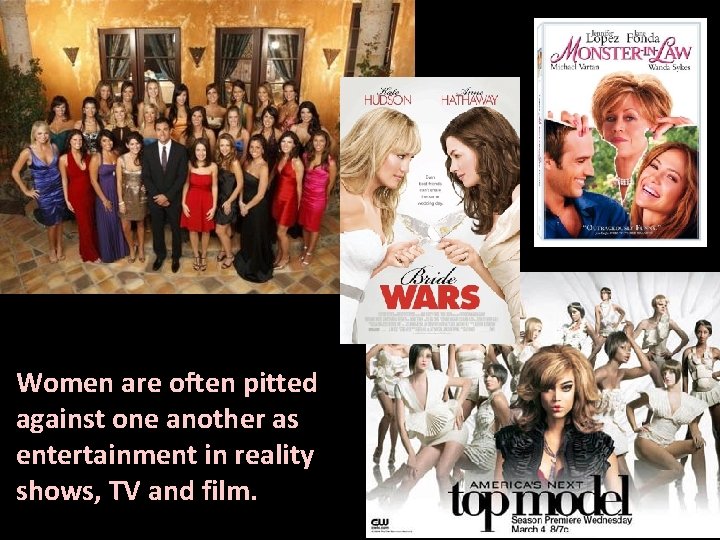
Women's rights have come a long way… but what might be perpetuating sexism?
Women are often pitted against one another as entertainment in reality shows, TV and film.
Branches of feminism Liberal Feminists • argue that equality can be brought about through legal reform. They therefore advocate attempting to change the existing system “from within” - lobbying and protesting to bring about change. The results of these activities include the 1970 Equal Pay Act and 1969 Divorce Reform Act
Branches of feminism Radical Feminists • propose the notion that society is patriarchal - that it is inherently and structurally biased towards men; and that this bias is reflected in each and every one of society’s institutions. For advocates of this perspective, therefore, lobbying for legal change in the ways suggested by their Liberal counterparts is unlikely to bring about equality. If the system itself is patriarchal, changes to the position of women brought about by working within that system will always be within the terms agreed by men.
Dual-system approaches • Black Feminism, which arose out of a concern that mainstream feminism only accounted for the experience of white women. Theorists argue that the effects of racism mean that black women faced a dual-oppression, and a new form of feminism was needed in order to explain their situation.
Dual-system approaches • Similarly, Marxist-Feminists explain patriarchy as a product of capitalism. This school actually has its roots in the work of Engels - in particular his view that the male dominated family is necessary for capitalism, as it allows inheritance and the growth of private property. More recently, theorists such as Oakley and Rowbotham have highlighted the ways in which capitalism has produced the "housewife" role.
Postmodern approach to feminism • The starting point for this school is the notion - first outlined by dual-systems feminism - that it is difficult to describe the experience of all women as an homogenous group. • For instance, women of different ethnicities, localities, sexualities and (dis)abilities have different experiences - for which the broad-brush approach of traditional feminism fails to account. Postmodern feminists, such as Butler, therefore reject the notion of femininity as a “catch-all” - and instead argue that there a range of different femininities. The research of postmodern feminists is consequently an attempt to sensitise the perspective to this diversity of experience.
Pam Abbott 'Sociology is not mainstream its malestream' 1. Sociology is concerned with research by men on men and produced theories for men 2. Research on men is generalised to the whole population 3. Issues that are important to women are overlooked/seen as unimportant 4. When women are represented in research it is in a sexist way 5. Sex and gender are vary rarely seen as an explanatory variable 6. Where included they are 'add on's' She concludes sociology is either sex blind {ignores women} or sexist {patriarchal}
Ann Oakley • Suggests sociology has been biased from its origin • Sociology is predominately a male profession • Ideology of gender results in assumptions about gender differences • Separation from home and work - sociology of public sphere results in the separation of home {private, woman's place} to work {public, man's place} • Sociology of work - through industrialisation men went out to work, becomes an outside male dominated world therefore nobody looked at women's roles
What has Feminism done for sociology? • Firstly, feminism has sensitised sociology to the experience of women in existing topics of research. • For instance, the perspective has alerted the subject to the gender inequalities in arenas such as educational achievement and employment. • Secondly, the perspective has introduced new topics into the remit of sociology. Areas of study such as housework, motherhood, childbirth and sexuality have moved from being peripheral concerns to become some of the most important topics in sociology.
Feminist Methodology • In response to the criticisms of people like Oakley and Abbott, a distinct type of feminist standpoint methodology has evolved - a movement which can be split into two branches; • On one hand, soft-feminist methodology views quantitative-positivist methodology as useful. • Jayaratne, for instance, argues that - although large-scale survey-type research tends to be patriarchal - it should be taken and made as gender-neutral as possible. • In doing this, the credibility attached to such methods can be used to further the position of women.
Feminist Methodology • In contrast, hard-feminist methodology rejects the use of quantitative-positivist research completely. • Instead, researchers such as Oakley advocate a more collaborative approach - for instance, conducting unstructured interviews in which the relationship between interviewer and interviewee is far more informal. • Some researchers go even further in breaking down the researcher researched power dynamic, by giving participants co-authorship of finished research papers.
In a nutshell… • In quantitative methods like questionnaires and structured interviews, the interviewer takes the lead. • The participant is in a passive role. • The PP does not decide the course of the interview, they are questioned – an object of the study. • Feminists argue that this mirrors patriarchy.
Graham (1983) • Q’aires and structured interviews give a distorted and invalid picture of women’s experiences. • They have the researchers views imposed on them and this makes it hard to express their experiences. • Graham believe sociologists should favour methods such as observation and unstructured interviews. • Oakley agrees – the methods are more collaborative, allow for rapport and verstehen and this improves the validity of research as we get a true understanding of how women might feel on a particular issue. • Positivists obviously disagree…
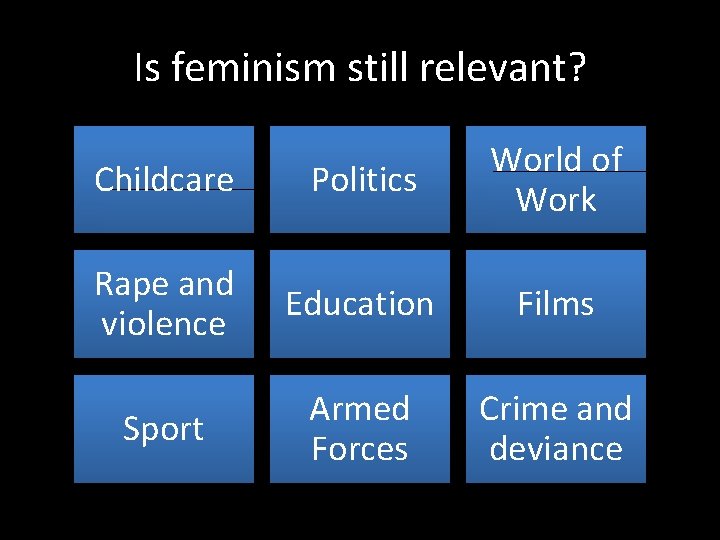
Is feminism still relevant? Childcare Politics World of Work Rape and violence Education Films Sport Armed Forces Crime and deviance
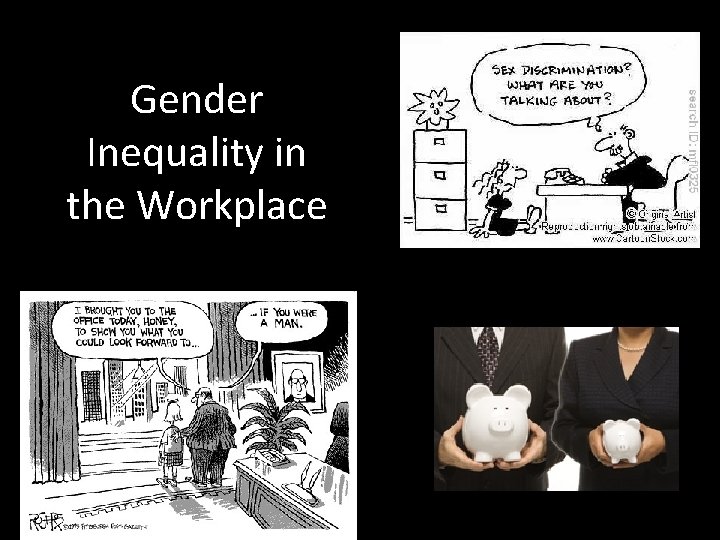
Gender Inequality in the Workplace
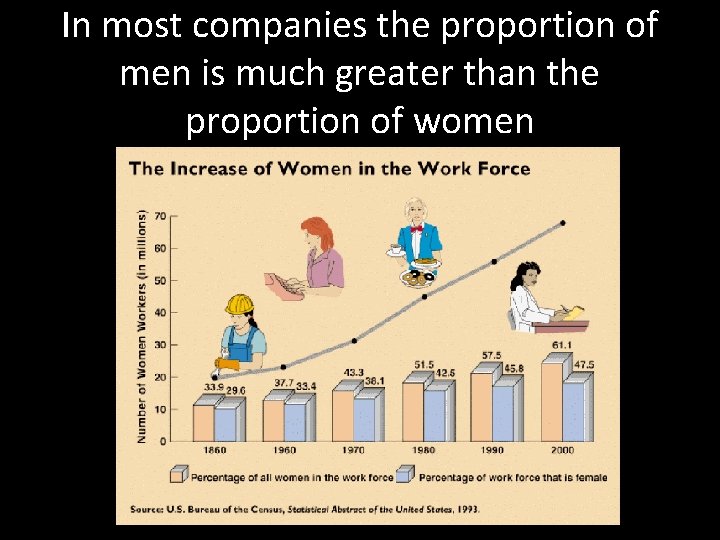
In most companies the proportion of men is much greater than the proportion of women
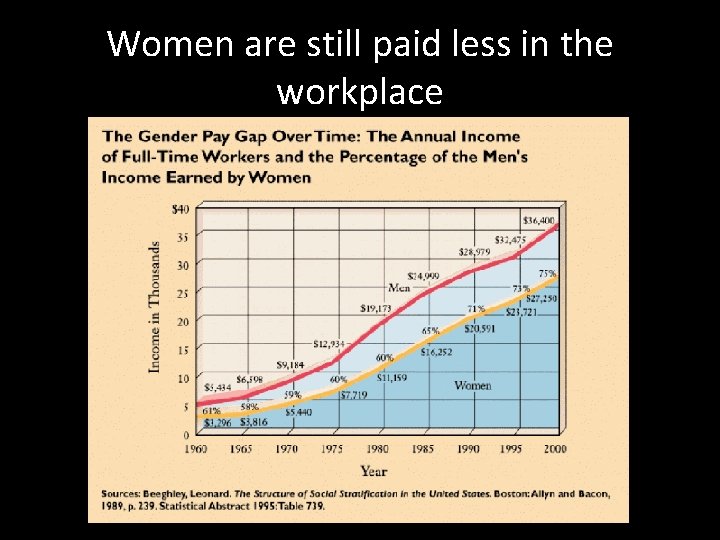
Women are still paid less in the workplace
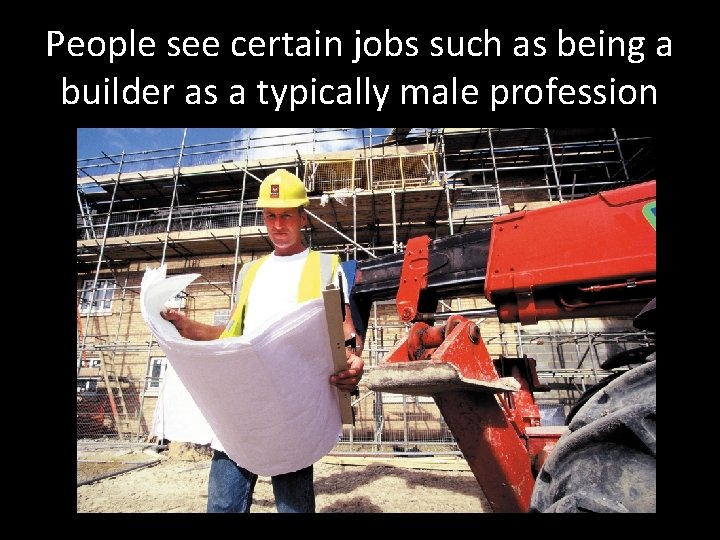
People see certain jobs such as being a builder as a typically male profession
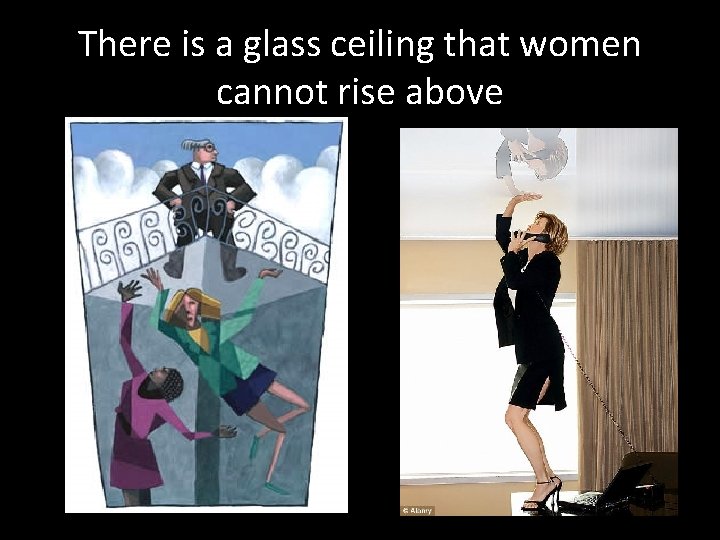
There is a glass ceiling that women cannot rise above
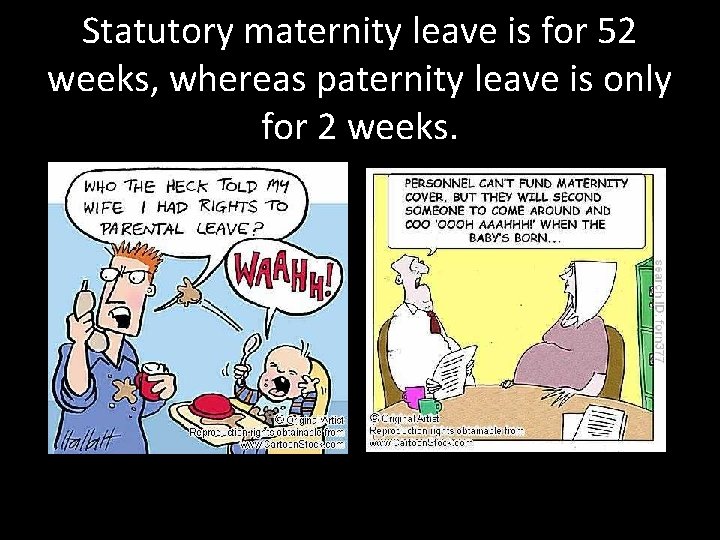
Statutory maternity leave is for 52 weeks, whereas paternity leave is only for 2 weeks.
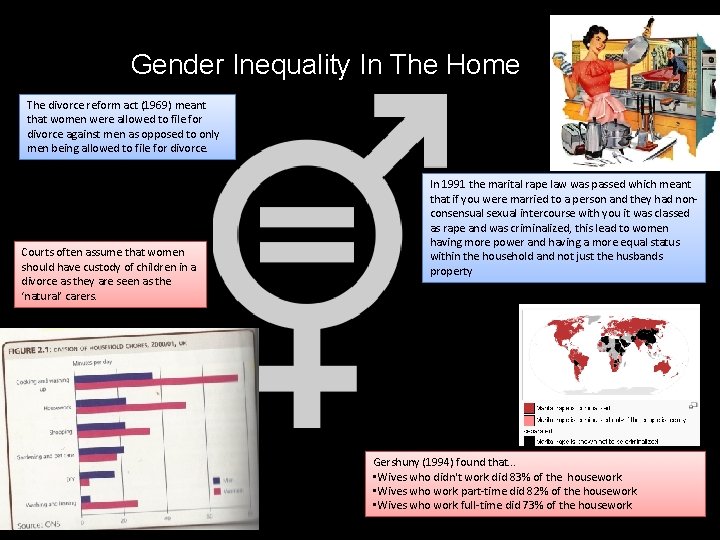
Gender Inequality In The Home The divorce reform act (1969) meant that women were allowed to file for divorce against men as opposed to only men being allowed to file for divorce. Courts often assume that women should have custody of children in a divorce as they are seen as the ‘natural’ carers. In 1991 the marital rape law was passed which meant that if you were married to a person and they had nonconsensual sexual intercourse with you it was classed as rape and was criminalized, this lead to women having more power and having a more equal status within the household and not just the husbands property Gershuny (1994) found that. . . • Wives who didn't work did 83% of the housework • Wives who work part-time did 82% of the housework • Wives who work full-time did 73% of the housework
Is gender inequality evident in films?
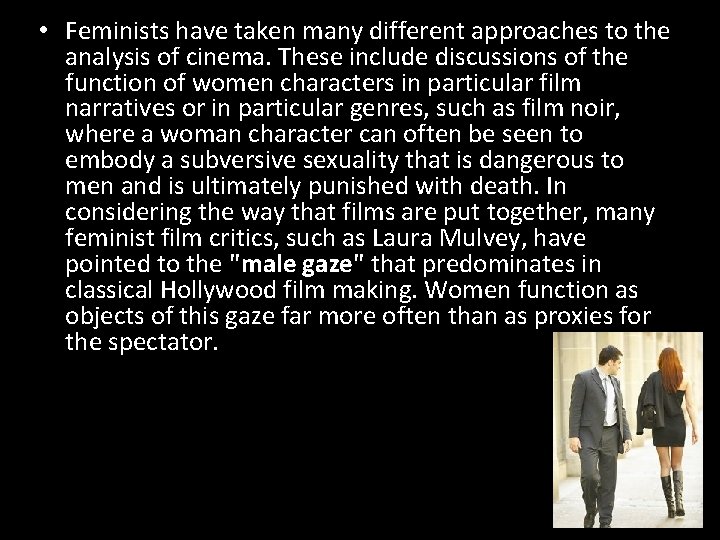
• Feminists have taken many different approaches to the analysis of cinema. These include discussions of the function of women characters in particular film narratives or in particular genres, such as film noir, where a woman character can often be seen to embody a subversive sexuality that is dangerous to men and is ultimately punished with death. In considering the way that films are put together, many feminist film critics, such as Laura Mulvey, have pointed to the "male gaze" that predominates in classical Hollywood film making. Women function as objects of this gaze far more often than as proxies for the spectator.
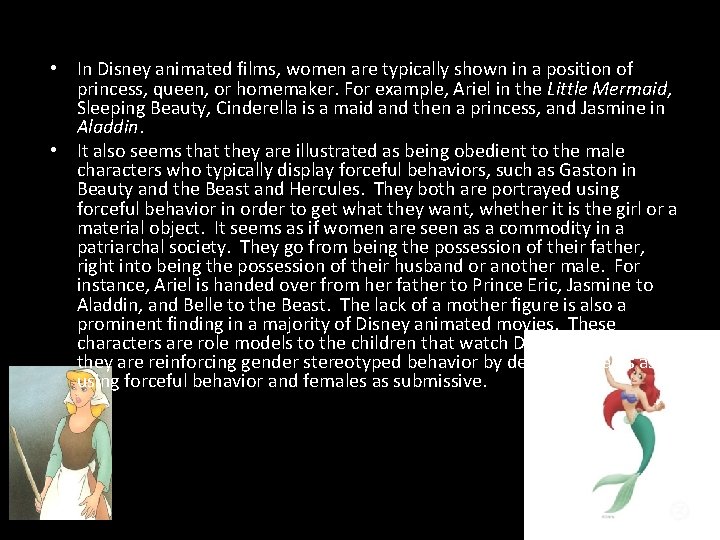
• In Disney animated films, women are typically shown in a position of princess, queen, or homemaker. For example, Ariel in the Little Mermaid, Sleeping Beauty, Cinderella is a maid and then a princess, and Jasmine in Aladdin. • It also seems that they are illustrated as being obedient to the male characters who typically display forceful behaviors, such as Gaston in Beauty and the Beast and Hercules. They both are portrayed using forceful behavior in order to get what they want, whether it is the girl or a material object. It seems as if women are seen as a commodity in a patriarchal society. They go from being the possession of their father, right into being the possession of their husband or another male. For instance, Ariel is handed over from her father to Prince Eric, Jasmine to Aladdin, and Belle to the Beast. The lack of a mother figure is also a prominent finding in a majority of Disney animated movies. These characters are role models to the children that watch Disney movies and they are reinforcing gender stereotyped behavior by depicting males as using forceful behavior and females as submissive.
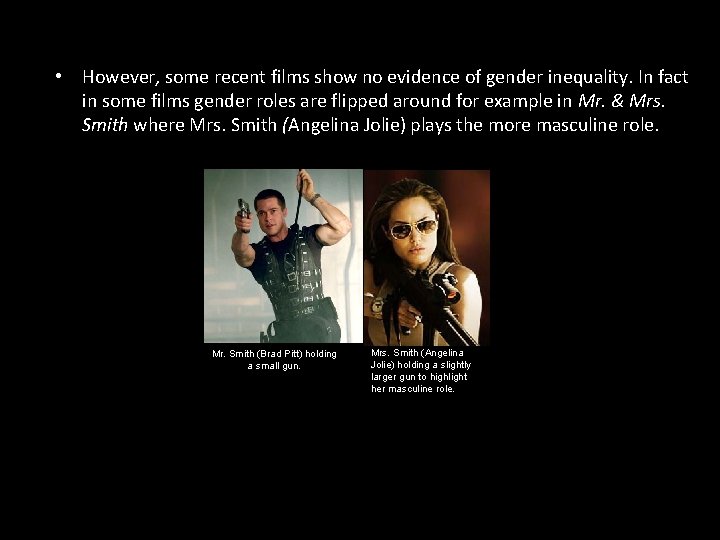
• However, some recent films show no evidence of gender inequality. In fact in some films gender roles are flipped around for example in Mr. & Mrs. Smith where Mrs. Smith (Angelina Jolie) plays the more masculine role. Mr. Smith (Brad Pitt) holding a small gun. Mrs. Smith (Angelina Jolie) holding a slightly larger gun to highlight her masculine role.
Random fact • Confirmed by science: Women are underrepresented in movies. According to the Los Angeles Times, a USC study finds that almost 70 percent of speaking roles belong to men.
Summary • It is common to see gender inequality in films from the past and even in recent films • Women are: - Usually objects of sexual desire - Portrayed as inferior to male characters - They usually have a less important role in the movie with fewer speaking roles
Is Gender Inequality Evident in Sport?
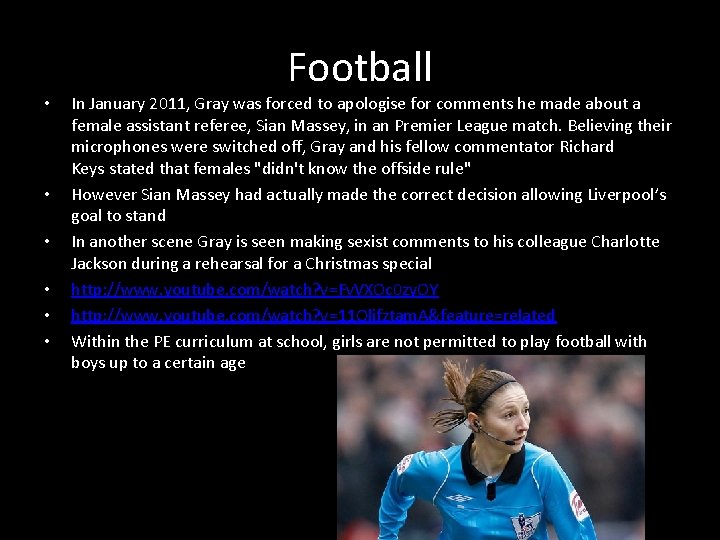
• • • Football In January 2011, Gray was forced to apologise for comments he made about a female assistant referee, Sian Massey, in an Premier League match. Believing their microphones were switched off, Gray and his fellow commentator Richard Keys stated that females "didn't know the offside rule" However Sian Massey had actually made the correct decision allowing Liverpool’s goal to stand In another scene Gray is seen making sexist comments to his colleague Charlotte Jackson during a rehearsal for a Christmas special http: //www. youtube. com/watch? v=Fv. VXOc 0 zy. OY http: //www. youtube. com/watch? v=11 Qlifztam. A&feature=related Within the PE curriculum at school, girls are not permitted to play football with boys up to a certain age
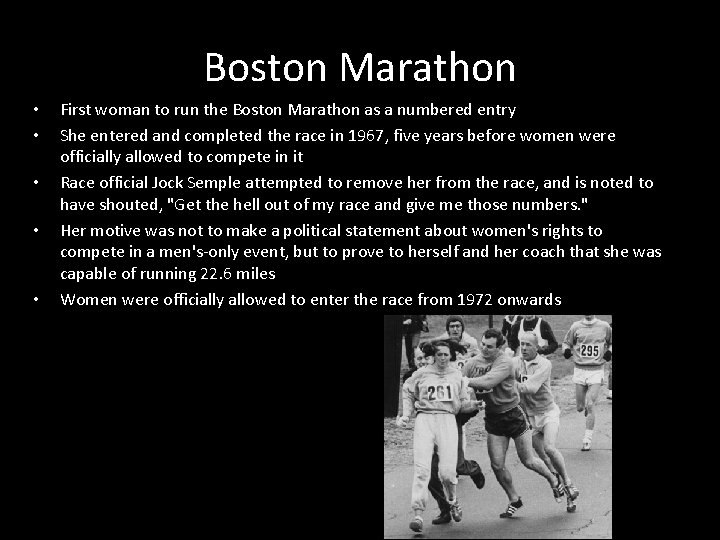
Boston Marathon • • • First woman to run the Boston Marathon as a numbered entry She entered and completed the race in 1967, five years before women were officially allowed to compete in it Race official Jock Semple attempted to remove her from the race, and is noted to have shouted, "Get the hell out of my race and give me those numbers. " Her motive was not to make a political statement about women's rights to compete in a men's-only event, but to prove to herself and her coach that she was capable of running 22. 6 miles Women were officially allowed to enter the race from 1972 onwards
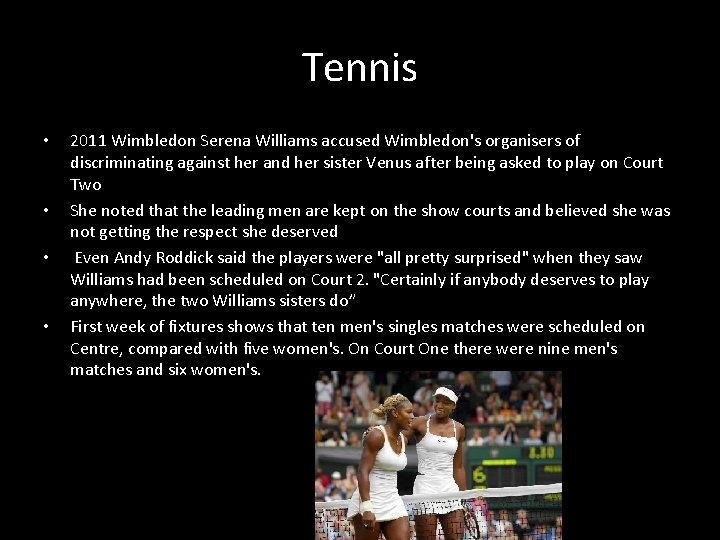
Tennis • • 2011 Wimbledon Serena Williams accused Wimbledon's organisers of discriminating against her and her sister Venus after being asked to play on Court Two She noted that the leading men are kept on the show courts and believed she was not getting the respect she deserved Even Andy Roddick said the players were "all pretty surprised" when they saw Williams had been scheduled on Court 2. "Certainly if anybody deserves to play anywhere, the two Williams sisters do” First week of fixtures shows that ten men's singles matches were scheduled on Centre, compared with five women's. On Court One there were nine men's matches and six women's.
• http: //www. youtube. com/watch? v=Q 8 a. XZt 1 G L 2 s
Is Feminism still relevant? • http: //www. youtube. com/watch? v=UOc. AYgj_ vy 4 • What do you think? • How would you answer a question like the one above? • Can you link any evidence from the 3 topics you have looked at in Sociology so far?
Positives • The contribution of feminism to sociology is substantial, and should not be understated. By challenging the androcentrism of traditional enquiry, for instance, the perspective brings to the fore the voices of 50% of the population who were previously unheard. The new topics raised by feminist researchers are also extremely important - and have become a central concern of academic sociology. • Furthemore, the methodological arguments put forward by feminists have been very influential. Whilst these approaches initially focused on research with women, awareness of the power-relationships between researched and researcher has influenced research on a much broader level. Many projects, particularly those involving marginalised groups (beyond those conducted directly by feminists), have therefore attempted to introduce an element of collaboration - and have an underlying sensitivity to the nature of power in the research environment.
Negatives • However, as with any perspective, feminism has been criticised. Firstly, the schisms within the school result in a great deal of internal cricisism. Radical feminists, for instance, are critical of Liberals for “propping up” the existing patriarchal system by attempting to work with in it. In turn, Marxist feminists criticise Radicals for turning women against men, thus ensuring that the proletariat are split, preventing revolution - and so on. • Furthermore, much of the early feminist work reflected the concerns of white middle-class women, at the expense of other groups (how, for instance, is the “glass ceiling” a concern of working-class women? ). Consequently, some have criticised feminism for creating what Derrida would call a violent hierarchy, in which women are made to feel guilty for playing the housewife and mother roles. It should - however - be noted that the later development of dual-systems and postmodern feminism have begun to partly address this problem.
Negatives • It has also been argued that, in focusing entirely on women, feminism has been far from even handed. It could be argued that - for any organic change in society occur - it is not just the nature of women’s roles which must change, but also those of men. • Again, it should be noted that the emergence of gender-studies has partly addressed this problem and researchers have begun to explore masculine identities (see box below) as a substantive topic of sociological research.
Negatives • Finally, critics have challenged the view that feminist methodology represents a distinct alternative. Ray Pawson, for example, argues that its principles are simply a reworking of interpretivist arguments which have existed for a substantial amount of time. • Furthermore, Hammersley dismisses the idea that power-relations can ever be removed completely from research, pointing out that even the most ardent feminist research tends to claim some authority by putting their name on theirresearch papers.
What about men? The feminist concern with gender identities has, in recent years, led to a matching concern with masculinity and the nature of changes to male identities. For instance, until very recently, Connell (1995) argues that British men were socialised into what he calls hegemonic masculinity - they were expected to be financial providers and authority figures in the home, to be individualistic, aggressive, risk taking and ambitious. However, Connell posits that, in contemporary society, masculinity is changing. He documents the emergence of three other forms of masculinity. • Complicit masculinity refers to those men who believe that men and women should share roles within families. Some sociologists have gone as far as to suggest that a "new man" has emerged, who is more in touch with his feminine and emotional feelings. It should be noted, however, that others have argued that this “type” is more of a media construction than a genuine trend in male-identity.
What about men? • Subordinate masculinity is used by Connell to refer to homosexual men - he chooses the term "subordinate" as, although this identity is tolerated far more in contemporary society, it remains stigmatised. • Marginalised masculinity is a response to the fact that the traditional male identity is "under attack". This feeling comes not just from feminist-led reforms, but also because of economic changes - which have led to a drop in the availability of manual work, and its replacement with more "female suited" communication-based employment. The result is what Mac an Ghaill (1996) calls a crisis of masculinity; manifesting itself in a bleak view of the future, with knock-on effects on educational attainment and rising delinquency.
Essay Title • “Feminism has revolutionised sociology by placing women at the centre of its analysis of society. However, while all feminists share this starting point, there are now many different ‘feminisms’ within sociology. ” • Assess the contribution of feminist theorists and researchers to an understanding of society today. (33 marks)